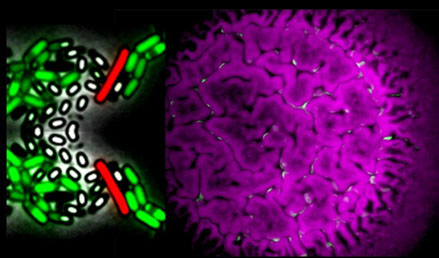
Oskar Hallatschek is an Associate Professor and McAdams Chair in the Department of Physics and Integrative Biology at the University of California, Berkeley. His research focuses on biological physics and evolutionary dynamics, particularly how collective patterns emerge from heterogeneous microbial populations. He leads the Hallatschek Lab, which maintains collaborations with institutions like the University of Leipzig. Research Emphasis: Microbial systems, population genetics, non-equilibrium statistical physics, evolutionary adaptation, and mechanical interactions in cellular populations. Publications span journals like Nature , PNAS , and Science , with recent work on allele surfing, jamming in microbial colonies, and long-range dispersal effects. Grants: Supported by NIH and NSF, as indicated by institutional logos in the lab web presence.
Dr. Kibret Mequanint is a full Professor at Western University's Department of Chemical and Biochemical Engineering, with cross-appointments in Biomedical Engineering. Holding a PhD from University of Stellenbosch and postdoctoral experience at Technical University of Darmstadt and McMaster University, his research bridges polymer science, materials engineering, and life sciences with applications in Biomaterials , Tissue Engineering , and Regenerative Medicine . His work spans both fundamental and translational research in cell-material interactions , polymer biomaterial design , and therapeutic radiation dosimeters , with technologies transferred to commercial applications. Leading scholar and educator with awards from NSERC, CIHR, and Western University Fellow of: American Institute for Medical and Biological Engineering (AIMBE), Ethiopian Academy of Sciences, International Union of Societies for Biomaterials Science and Engineering, Canadian Academy of Engineering Extensive editorial and panel service for NSERC, CIHR, and international journals His research program has produced over 170 refereed publications, focusing on conductive hydrogels , bioadhesives , and vascular tissue engineering . Recent work on endoscopy-deliverable bioadhesives and snake venom-derived hemostatic gels has attracted global media attention. He has served in leadership roles at the Canadian Biomaterials Society and university governance bodies including Senate and Board of Governors.
Dorota Kawa is an Assistant Professor at the Faculty of Science, Utrecht University , specializing in Plant Stress Resilience and Experimental and Computational Plant Development . Her research focuses on plant-microbiome interactions, root development under stress, and bioinformatics approaches to enhance crop sustainability. Education : PhD in Plant Physiology and Cell Biology (2017, University of Amsterdam) MSc in Plant Biotechnology (2011, Warsaw University of Life Sciences) BSc in Biotechnology (2010, Warsaw University of Life Sciences) Research Interests span plant adaptation to abiotic stresses, microbiome-driven root cell modifications, and computational modeling of development. She investigates how microbial communities and genetic pathways regulate root metabolomes and cellular traits, particularly under salt and drought stress. Publication Trends show her work centers on Striga resistance in cereal crops, stress-induced root architecture changes , and microbiome-root interactions . She explores auxin-independent signaling and mRNA decay mechanisms to improve multi-stress resilience. Teaching includes courses on plant development and research design at Utrecht University. Her work contributes to Pathways to Sustainability and Future Food initiatives.
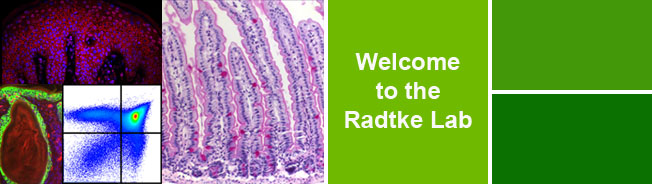
Freddy Radtke is a Full Professor at the School of Life Sciences at École polytechnique fédérale de Lausanne (EPFL), where he leads the Radtke Lab (UPRAD) within the Swiss Institute for Experimental Cancer Research (ISREC). He holds multiple affiliations across EPFL, including in the SSV-ENS and EDMS-ENS programs, reflecting his broad engagement in teaching and doctoral education in life sciences. His research is centered on the molecular mechanisms of stem cell maintenance and differentiation, particularly through the Notch signaling pathway. His work spans several self-renewing systems: the hematopoietic system, skin, and gut. Key findings include the identification of Delta-like 4 as the essential Notch1 ligand for T cell commitment, the tumor suppressor role of Notch1 in skin, and its critical function as a gatekeeper of intestinal progenitor cells by repressing CDK inhibitors. These discoveries have significant implications for understanding cancer development and regenerative processes. The recent publications highlight a consistent focus on Notch signaling across diverse biological contexts—hematopoiesis, skin development, intestinal regeneration, and stem cell systems biology. The keywords and subfields reflect deep mechanistic investigations into cell fate decisions, signal transduction, and tissue homeostasis, with strong translational relevance to cancer and inflammatory diseases. Freddy Radtke has mentored numerous Ph.D. students and is actively involved in teaching courses such as Stem Cells and Organoids and Scientific Project Design in Translational Oncology . His lab conducts research supported by external funding, and he collaborates across disciplines to integrate systems biology with stem cell research. The lab includes scientists, doctoral assistants, technicians, and administrative staff, indicating a vibrant and multidisciplinary research team.
Kari Vaahtomeri is a University Researcher at the University of Helsinki, affiliated with the Molecular and Integrative Biosciences Research Program and the CAN-PRO Translational Cancer Medicine Program. He serves as a Cellular Communication Supervisor in the Doctoral Programme in Integrative Life Science, focusing on lymphatic biology, immune cell migration, and tumor-endothelial interactions. Research Programs: Molecular and Integrative Biosciences, CAN-PRO Translational Cancer Medicine Supervision: Doctoral Programme in Integrative Life Science His research explores the lymphatic system's role in cancer metastasis, immune cell transmigration, and vascular network development. Key areas include chemokine signaling, endothelial cell dynamics, and the molecular mechanisms of antigen presentation in tumors. Recent publications highlight his work on lymphatic endothelial multicellular junctions, melanoma-lymphatic crosstalk, and AMPK signaling in lung cancer immune evasion. His projects span from 2017 to 2027, funded by the Sigrid Jusélius Foundation and the Academy of Finland. Key Collaborations: IST Austria, international lymphatic research networks Activities: Oral presentations at conferences, academic visits to research institutions
Dr. Hajk-Georg Drost is a Senior Lecturer and Principal Investigator in the Division of Computational Biology at the University of Dundee's School of Life Sciences. He leads the Digital Biology Group, focusing on integrating machine learning and high-performance computing with biological research to advance healthcare innovation. Previously, he established a Computational Biology group at the Max Planck Institute for Biology Tübingen (2019-2024) and conducted postdoctoral research at the University of Cambridge's Sainsbury Laboratory. His research explores: Evolutionary transcriptomics and phylotranscriptomic patterns across species Machine learning applications in genomics and proteomics Development of bioinformatics tools (DIAMOND, myTAI) for tree-of-life scale analyses Gene regulatory networks and transposable element dynamics His publications demonstrate a consistent focus on evolutionary constraints in development, with recent work expanding into single-cell resolution analyses of developmental diseases. Awards include: Royal Society Wolfson Fellowship (2024) Fellow, Cambridge Philosophical Society Postdoctoral Affiliate, Trinity College Cambridge He currently supervises PhD students including Stefan Manolache and leads projects funded by the Royal Society and others, focusing on protein alignment infrastructure and developmental disease research. His lab develops open-source software for genomic analyses and maintains active collaborations across Europe.
Dr. Steven Jacobsen is a Professor in the Molecular, Cell, and Developmental Biology Department at the University of California, Los Angeles (UCLA), where he leads the Jacobsen Lab. His work focuses on epigenetic inheritance and gene regulation in Arabidopsis thaliana and mammalian stem cells, utilizing genetic screens, genomics, epigenomics, and biochemical approaches. The lab also pioneers CRISPR-mediated genome editing techniques. University: University of California, Los Angeles Department: Molecular, Cell, and Developmental Biology Research Interests: Jacobsen's research spans multiple interconnected domains in epigenetics, including DNA methylation patterning, histone modification interplay, and transposable element silencing. His team investigates how chromatin structure influences gene expression and epigenetic inheritance, with applications from plant development to human health. Key areas include: CRISPR-based epigenetic modifications RNA-directed DNA methylation (RdDM) mechanisms Chromatin compaction via MORC proteins Histone variant functions in methylation Transposon control in plant genomes Comparative epigenomics across species Advising Legacy: Over two decades, Dr. Jacobsen has mentored 21 former lab members who now hold academic and industry positions globally, including professors at Chinese Academy of Sciences, University of Georgia, and Southern University of Science & Technology. His lab's publications reveal a consistent focus on DNA methylation dynamics, chromatin remodeling, and small RNA pathways, with recent work emphasizing CRISPR innovations and structural insights into epigenetic regulators.
Jose J. Muñoz is a Professor at the Universitat Politècnica de Catalunya (UPC), affiliated with the Department of Mathematics and the LACÀN research group. His work focuses on computational mechanics, mechanobiology, and inverse problems in biological systems. He holds a PhD in Aeronautics from Imperial College London (2004) and a dual degree in Mechanical Engineering from UPC and Civil Engineering from École Centrale Paris (1997). His research combines finite element methods, vertex models, and optimal control to study tissue morphogenesis, wound healing, and cancer mechanics. Current roles include leading the LACÀN research group and supervising PhD students in projects like optimal control of contractile systems and inverse mechanical analysis. Former students include Ashutosh Bijalwan and Cécilia Olivesi. He teaches Numerical Methods and Computational Mechanics at the UPC's Faculty of Mathematics and Statistics. His research interests span vertex and finite element modeling, cell rheology, and stability analysis of biological tissues. Notable contributions include models for epithelial wound healing, Drosophila embryo development, and mechanical oscillations in tissues. His work often integrates experimental data with computational frameworks to infer non-observable mechanical parameters.
Ben Larson is an Assistant Professor in the Department of Biological Sciences at Rensselaer Polytechnic Institute (RPI), affiliated with the Center for Biotechnology and Interdisciplinary Studies (CBIS). His research bridges biological physics, cell biology, and evolutionary principles to study complex cellular behaviors without nervous systems. BA in Physics, Reed College (2012) Postbaccalaureate Research Fellow, NIH NHLBI (2012-2014) PhD in Biophysics, UC Berkeley (2019) Postdoctoral Scholar, UCSF (2019-2024) Research Focus: The Larson Lab applies interdisciplinary tools from physics and computation to investigate sensorimotor activity in unicellular organisms like Euplotes , exploring how cells achieve sophisticated behaviors through cytoskeletal dynamics and finite-state mechanisms. Key themes include cellular decision-making, evolutionary biophysics, and multicellular morphogenesis. Scientific Awards: 2013 Orloff Science Award 2016-2019 NSF Graduate Research Fellowship 2016 Society of General Physiology Scholar 2020-2023 Merck Postdoctoral Fellowship 2022 Porter Prize for Research Excellence (ASCB)
Gurol Suel is a Professor in the Department of Molecular Biology at the University of California San Diego (UCSD), affiliated with the Division of Biological Sciences. His research focuses on understanding electrical signaling in bacterial biofilms and the emergent collective behaviors they exhibit. His lab integrates quantitative biology, mathematical modeling, and synthetic biology approaches to explore principles of microbial organization and coordination. Dr. Suel earned his PhD in Molecular Biophysics from UT Southwestern Medical Center under Dr. Rama Ranganathan, followed by postdoctoral training in Dr. Michael Elowitz's lab at Caltech, combining biology and applied physics. His work has revealed groundbreaking discoveries about ion channel-mediated electrical signaling in biofilms, including their role in nutrient time-sharing between distant communities and the segmentation clock driving cellular differentiation. Key research areas include: biofilm signaling networks, bacterial collective computation, membrane potential dynamics, and engineering controllable microbial systems. His lab develops novel tools for studying bioelectronic interactions, such as potassium ion-based bioelectronic delivery systems. Spatial and temporal patterning in biofilms, including fractal interface formation and memory encoding through membrane potentials, are central themes in his work. Though no specific student names are listed, his lab actively conducts PhD rotations and trains researchers in experimental and theoretical microbiology. His work is supported by grants enabling exploration of biofilm communication and synthetic microbial systems. Contact information includes the UCSD Pacific Hall address and the email 'gsuel@ucsd.edu'. The lab's physical location includes specialized equipment for biofilm electrophysiology and quantitative imaging, as shown in lab photo collections.
Anna C. Balazs is Distinguished Professor and John A. Swanson Chair of Engineering in the Department of Chemical Engineering at the University of Pittsburgh, with an adjunct appointment in Chemistry and visiting professorships at Scripps Research Institute, UT-Austin and Oxford University. In 2025 she receives the €10,000 Gutenberg Research Award from Johannes Gutenberg University Mainz (JGU) for her pioneering theoretical work on smart soft materials. She earned an A.B. in Physics from Bryn Mawr College (1975) and a Ph.D. in Materials Science from MIT (1981), followed by post-doctoral research at Brandeis, MIT and UMass. Research interests span theoretical and computational soft-matter physics, focusing on: Statistical-mechanical modelling of polymer blends and composites Self-oscillating and chemo-responsive hydrogels Active matter, enzyme-powered swimmers and self-propelling sheets Self-healing, shape-morphing and bio-inspired materials Computer simulation of colloidal and interfacial phenomena Recent publications (2023-2025) demonstrate a clear trend toward integrating chemistry, fluid mechanics and elasticity to create life-like, autonomous soft machines. Key contributions include: Harnessing enzyme pumps to drive macroscopic sheet locomotion Designing chemically communicating micro-post arrays Creating dissipative materials with programmable, hierarchical 3-D architectures Scientific awards include: Gutenberg Research Award 2025 Polymer Physics Prize, American Physical Society SF Boys-A. Rahman Award, Royal Society of Chemistry Langmuir Lectureship Award, American Chemical Society Election to the U.S. National Academy of Sciences (2021) She serves on the Advisory Board of the DOE-BES Materials Council and on editorial boards for Langmuir , Soft Matter and Polymer Reviews . Her group collaborates closely with experimental teams world-wide, including the DFG-NSF “Confine” partnership with JGU and the CoM2Life Cluster of Excellence initiative.
Dr. Hermann Cuntz is an Independent Group Leader at the Ernst Strüngmann Institute (ESI) for Neuroscience in cooperation with the Max Planck Society. He is also a Research Fellow at the Frankfurt Institute for Advanced Studies (FIAS) since 2014 and affiliated with the Goethe University Frankfurt via the Institute of Clinical Neuroanatomy . His email address is hermann.neuro@gmail.com , and he is based in Frankfurt am Main, Germany. Research Focus: Dr. Cuntz investigates principles of neuronal wiring, aiming to decode the "connection code" of the brain. His work bridges morphology and function using computational tools, mathematical laws, and morphological modeling. Key areas include dendritic constancy , structural plasticity , connectomics , and neuroinformatics , with applications in understanding neurodegenerative diseases like Alzheimer’s. Education: PhD from the University of California at Berkeley and Max Planck Institute of Neurobiology (2000-2004). Diploma in biology from Eberhard Karls Universität Tübingen (1994-2000). Recent Publications highlight research trends in dendritic structure, pattern separation, synaptic spine distribution, and cortical folding. His lab develops the TREES Toolbox , a MATLAB-based framework for neuronal morphology analysis. Scientific Awards: Bernstein Award (2013-2019) DFG Eigene Stelle (2014-2016) Feodor Lynen Fellowship (Alexander von Humboldt, 2006-2008) Minerva Fellowship (2004-2005) Wellcome Image Award (2011) 1st Prize Poster Competition, UCL Neuroscience Symposium (2010) Advising and Grants: Dr. Cuntz mentors numerous PhD and Master’s students, including Marcel Beining , Mariuss Schneider , and Marvin Weigand . His lab receives funding from the DFG , Bernstein Award , and collaborations with institutions like the 3R-Center Giessen and Interdisciplinary Centre for 3Rs (ICAR3R) . Labs and Collaborations: The Cuntz Lab specializes in computational neuroanatomy, with alumni working globally in academia and industry. Key collaborators include Prof. Peter Jedlicka (Justus Liebig University), Prof. Gaia Tavosanis (DZNE Bonn), and Prof. Alexander Borst (MPI Neurobiology).
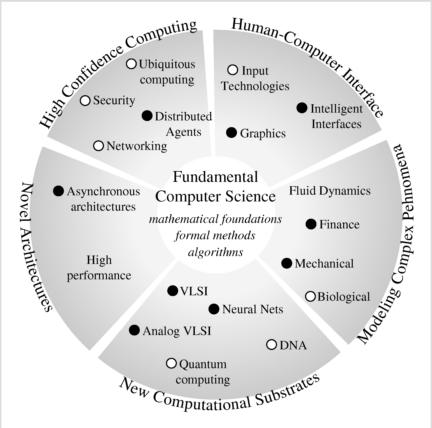
Alan H. Barr is a Professor of Computer Science at the California Institute of Technology (Caltech), affiliated with the Division of Engineering and Applied Science and the Computation & Neural Systems (CNS) department. He is a founding member of the Caltech Computer Graphics Group and a leader in developing mathematically rigorous methods for computer graphics and predictive modeling. His research focuses on enhancing computational modeling accuracy through approaches like interval analysis and constraint-based systems. Notable contributions include deformable models, quaternion interpolation, and cellular simulation frameworks. He has advised over 20 graduate students, many of whom became industry leaders at Pixar, Microsoft Research, and academic institutions like NYU and Brown University. Awards include the ACM SIGGRAPH Achievement Award (1988) and ACM Fellow (1995). Research Interests: Predictive modeling with error bounds Scientific visualization and MRI data analysis Biophysical systems simulation (e.g., cellular organelles) Self-assembling robotic structures for space colonization Mathematically robust computer graphics techniques Key Collaborations: Caltech Biological Imaging Center (Beckman Institute) JPL (Jet Propulsion Laboratory) New computational substrates research (quantum/DNA computing) Recent Work: Expanding into computational biology, medical imaging optimization, and high-confidence systems for managing complex computational interactions. Active in interdisciplinary projects across Caltech divisions.
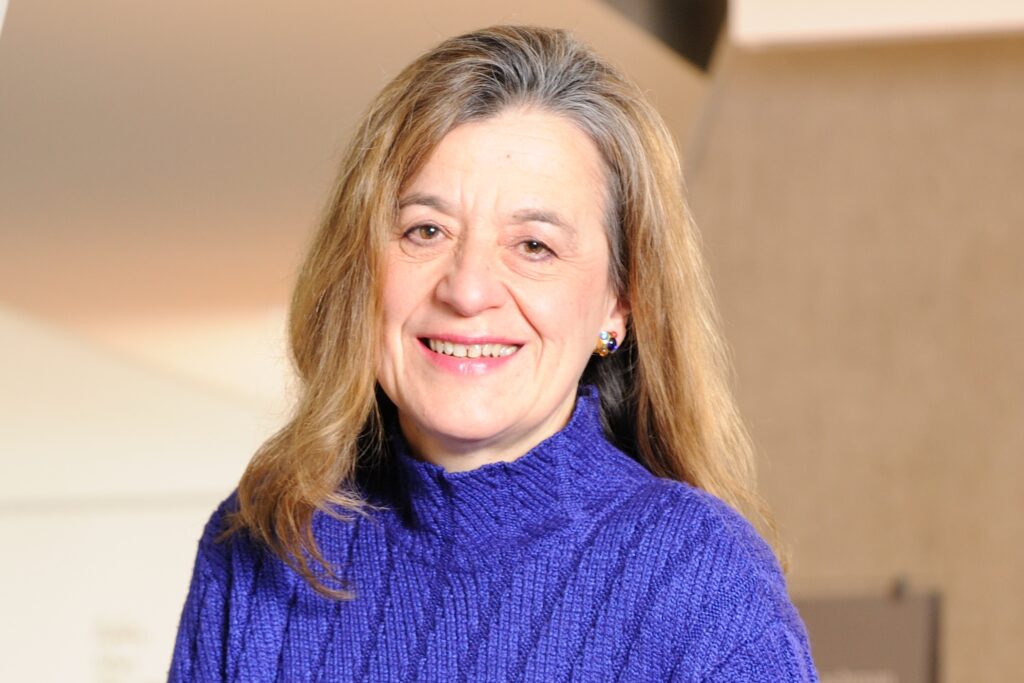
Prof. Julijana Gjorgjieva is a tenured W3 Professor of Computational Neuroscience at the School of Life Sciences Weihenstephan, Technical University of Munich (TUM). She leads an independent research group at the Max Planck Institute for Brain Research and is affiliated with the Bernstein Center for Computational Neuroscience. Her research focuses on the principles governing neural circuit development, balancing learning plasticity with functional stability through computational and theoretical approaches. Key interests include synaptic organization, energy-efficient neural computation, and evolutionary optimality principles. Education & Career: B.Sc. Mathematics, Harvey Mudd College (2006) M.A.St. in Applied Mathematics, University of Cambridge (2007) Ph.D. Applied Mathematics, University of Cambridge (2011) Postdoctoral Fellowships: Harvard University (2011-2014), Brandeis University (2014-2016) Max Planck Research Group Leader (2016-2022) W2/W3 Professor at TUM since 2016 Research Interests: Computational neuroscience, theoretical modeling of neural circuits, synaptic plasticity mechanisms, homeostatic regulation, and the interplay of development and evolution in shaping brain architecture. She employs mathematical frameworks to study how circuits achieve robustness while enabling adaptive learning. Awards: Heinz Maier-Leibnitz Prize (2022) Eric Kandel Young Neuroscientist Prize (2021) ERC Starting Grant (2018) Multiple postdoctoral and early-career fellowships Grants & Funding: Includes DFG Collaborative Research Center on Neural Homeostasis, HFSP grants, and EU Horizon 2020 initiatives. Active in mentoring and promoting computational neuroscience through programs like Neuromatch Academy. Labs & Collaborations: Leads a multidisciplinary lab integrating experimental and theoretical approaches. Collaborates with institutions such as the Max Planck Society and international computational neuroscience networks.
Bhama Ramkhelawon, PhD, is the Florence and Joseph Ritorto Associate Professor of Surgical Research in the Department of Surgery and Associate Professor in the Department of Cell Biology at NYU Grossman School of Medicine. She is also the Director of Vascular Surgery Scientific Research, leading a dynamic research program focused on vascular biology and disease mechanisms. Her research centers on understanding the molecular and cellular mechanisms underlying vascular aneurysms, peripheral vascular disease, and the interplay between metabolism, inflammation, and aging in the cardiovascular system. Utilizing advanced techniques such as single-cell transcriptomics, mouse models, and clinical data analysis, her lab investigates how immune cells, platelets, and metabolic pathways contribute to vascular pathologies. Recent publications highlight a strong trend in vascular mechanobiology, aging-related transcriptomic changes, adenosine signaling, and inflammatory responses in vascular tissues. Her work bridges basic science with clinical applications, particularly in post-surgical complications like endoleaks and aneurysm repair outcomes. Bhama Ramkhelawon has made significant contributions to the field with over 80 publications in high-impact journals such as Circulation Research , JCI Insight , and Cell Systems . Her research is supported by active clinical trials focusing on vascular aneurysms and peripheral vascular disease, indicating ongoing funding and translational research efforts. She mentors students and researchers as part of her role as a principal investigator and director. Her lab is involved in multi-disciplinary collaborations, integrating cell biology, immunology, and vascular surgery to advance understanding of cardiovascular diseases.