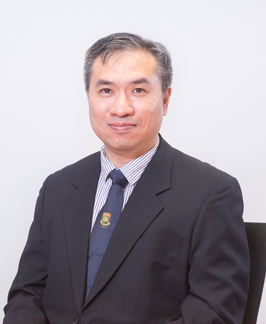
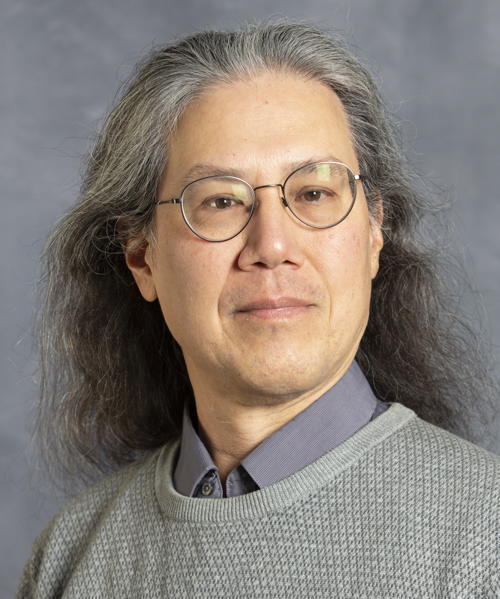
Professor Reynold Cheng is a faculty member at the University of Hong Kong (HKU), specifically within the Department of Computer Science in the School of Computing and Data Science (CDS). He currently serves as the Division Head of the AI & Data Science Division at CDS and is part of the Steering Committee of the Musketers Foundation Institute of Data Science. His academic journey includes a BEng and MPhil from HKU (1998–2000) and an MSc and PhD from Purdue University (2003–2005). Prior to HKU, he was an Assistant Professor at the Hong Kong Polytechnic University (HKPU) from 2005 to 2008. Cheng’s research focuses on data science, big graph analytics, and uncertain data management. He has received numerous awards, including the SIGMOD Research Highlights Reward 2020, HKICT Awards 2021, and HKU Knowledge Exchange Award (Engineering) 2021. His work has been recognized through grants such as the HKU-TCL Joint Research Centre for AI-funded project (HKD 1M, 2020–2022) and a CRF-funded project for real-time monitoring of infectious diseases (HKD 6.5M, 2021–2022). Cheng actively contributes to academic service, including serving as PC co-chair for IEEE ICDE 2021 and editorial roles in journals like IS and DAPD. His publications span top venues like SIGMOD, VLDB, and KDD, emphasizing algorithm design for large graphs and probabilistic data systems.
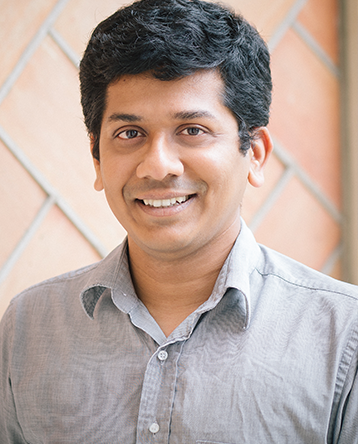
Venkatesan Guruswami is a Chancellor's Professor in the Department of EECS and a Senior Scientist at the Simons Institute for the Theory of Computing at UC Berkeley . He also holds a Professor position in the Department of Mathematics . His academic journey began with a B.Tech in Computer Science from the Indian Institute of Technology, Madras (1997) , followed by a Ph.D. in Computer Science from the Massachusetts Institute of Technology (2001) . After a Miller Research Fellowship at UC Berkeley (2001–02), he held faculty roles at the University of Washington and Carnegie Mellon University before returning to UC Berkeley in January 2022. Education : B.Tech, IIT Madras (1997) Ph.D., MIT (2001) Professional Affiliations : Chancellor's Professor, UC Berkeley (EECS) Senior Scientist & Interim Director, Simons Institute Professor, UC Berkeley (Mathematics) Guruswami's research spans multiple domains within Theoretical Computer Science , focusing on Error-Correcting Codes , Approximation Algorithms , Randomness in Computing , Probabilistically Checkable Proofs , and Computational Complexity . His groundbreaking work in List Decoding has enabled codes with minimal redundancy for correcting worst-case errors, while recent advancements include Polar Codes , Deletion-Correcting Codes , and Constraint Satisfaction Problems . He has also contributed to Quantum Coding Theory , Locally Recoverable Codes , and Approximation Hardness in various computational contexts. His publications reflect a deep engagement with interdisciplinary topics. Key trends include: Quantum Information Theory : Quantum LDPC codes, transversal gates, and quantum storage. Algebraic Coding : Reed-Solomon codes, AG codes, and polynomial-based constructions. Computational Complexity : Hardness of approximation, CSPs, and parameterized intractability. Data Transmission : Polar codes, deletion channels, and feedback mechanisms. Algorithmic Techniques : Spectral methods, semirandom models, and Lasserre hierarchy applications. Guruswami has received numerous accolades, including the Simons Investigator Award , Presburger Award , Packard Fellowship , Sloan Research Fellowship , ACM Doctoral Dissertation Award , and the IEEE Information Theory Society Paper Award . He is an ACM Fellow (2017) and IEEE Fellow (2019) , with recent honors like the Guggenheim Fellowship (2023) and AMS Fellow (2023) . As an advisor, he has mentored over 25 PhD and postdoctoral researchers , including Atri Rudra , Prasad Raghavendra , and Peter Manohar , whose work has won awards like the Edmund M. Clarke Doctoral Dissertation Award and CRA Outstanding Undergraduate Researcher Award . His research is supported by grants from the National Science Foundation , Packard Foundation , and Sloan Foundation . He also serves as Editor-in-Chief of the Journal of the ACM and holds leadership roles in IEEE and arXiv moderation. Guruswami is actively involved in Simons Institute programs and co-organized workshops on Coded Computation and Information Theory . His work bridges theoretical advancements with practical applications in Cloud Storage , Quantum Computing , and Group Testing , including pandemic-era contributions like AC-DC: Amplification Curve Diagnostics for SARS-CoV-2 .
Martin van Hecke is a Professor at Leiden University, affiliated with the Leiden Institute of Physics (LION) in the Biological, Soft and Complex Systems department. He leads the Van Hecke Lab, focusing on the organisation of disordered matter and the development of 'machine materials' for prostheses and wearable technology. Research Interests: Extreme phenomena in soft materials Mechanical metamaterials Disordered systems Computational physics Biophysics His work has pioneered methods to design 3D structures using simple building blocks, with notable projects like 'Computing with rubber' and 'A computer made of floppy rubber' showcasing interdisciplinary applications in engineering and biotechnology. Students & Collaborations: Current PhD students: Lennard Kwakernaak, Colin Meulblok, Margot Teunisse, Bernat Durà Faulí, Parisa Omidvar Former group members: Lennard Jurian Kwakernaak, Amitesh Singh, Jiangnan Ding, Anne Meeussen, Nitin Singh Collaborations with AMOLF and industry partners Scientific Recognition: Elected as an American Physical Society (APS) Fellow (2021) Teaching: Instructs the MSc course 'Mechanical Metamaterials' and the BSc course 'Experimentele Natuurkunde' (Experimental Physics).
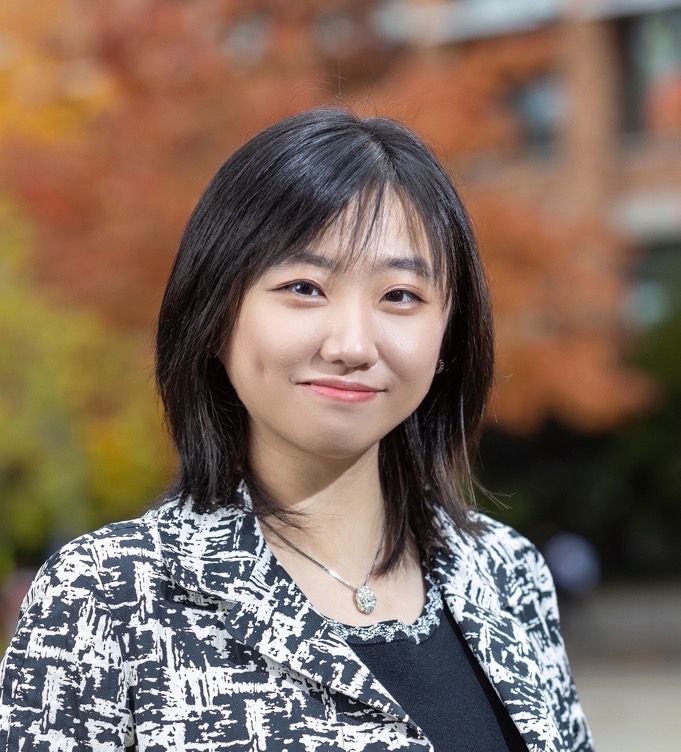
Sherry Tongshuang Wu is an Assistant Professor at Carnegie Mellon University's School of Computer Science, with primary appointments in the Human-Computer Interaction Institute (HCII) and secondary affiliation with the Language Technology Institute (LTI) . Trained at the University of Washington under Jeffrey Heer and Dan Weld, she bridges HCI and NLP to study human interactions with AI systems across diverse user groups. Her educational background includes a Ph.D. (2016-22) and M.S. (2016-18) in Computer Science and Engineering from the University of Washington, and a B.Eng. (2012-16) from Hong Kong University of Science and Technology. Industry experience includes research internships at Google Brain, Microsoft Research, and Apple. Wu's research focuses on three interconnected pillars: Real-world AI Evaluation (developing frameworks like SPHERE for systematic assessment), Task-specific AI Test & Distill (optimizing general-purpose models for specific use cases), and Human-AI Task Delegation (designing optimal collaboration between humans and AI). Her work emphasizes practical deployment, user-specific net gains, and error recovery mechanisms. Analysis of her 15 most recent publications reveals a strong trend toward evaluation frameworks (35%), human-AI collaboration systems (30%), and specialized model distillation (25%), with growing emphasis on educational applications (10%). Key methodological themes include checklist-based evaluation, perspective-aware retrieval, and structural analysis of AI outputs. Google Academic Research Award (2024) Amazon Research Awards (2024) AIED 2024 Best Paper Award ACL 2020 Best Paper Award Rising Stars in EECS Workshop (2020) Wu actively mentors 19 students across PhD, Master's, and undergraduate levels, with notable projects including synthetic data generation, LLM literacy tools, and retrieval system optimization. She leads significant grant-funded work through Amazon Research Awards and Google Academic Research Awards, focusing on deployable model generation and human-AI collaboration frameworks. Her lab develops practical tools like Promp2Model and SPHERE that bridge theoretical research with industry applications.
Artur Czumaj is a Professor in the Department of Computer Science at the University of Warwick and serves as the Director of the Centre for Discrete Mathematics and its Applications (DIMAP). He is a member of the Division of Theory and Foundations (FoCS) and holds affiliations with the Alan Turing Institute, the Warwick Data Science Institute (WDSI), and the Warwick Centre for Doctoral Training in Mathematics of Real-world Systems (MathSys). Previously, he served as Head of Department and President of the European Association for Theoretical Computer Science (EATCS) from 2020 to 2024. His research lies at the core of theoretical computer science, focusing on the design and analysis of algorithms, particularly randomized, sublinear, parallel, and distributed algorithms. His work spans graph theory, combinatorics, computational geometry, algorithmic game theory, and property testing. He has led major research initiatives funded by EPSRC, IBM, the Royal Society, and Weizmann-UK grants. The trends in his recent publications highlight a strong emphasis on sublinear algorithms, dynamic graph algorithms, and property testing, with recurring themes in randomized methods, graph processing, and efficient data structures. His work bridges foundational theory with applications in data summarization, network analysis, and computational geometry. EPSRC grants: EP/D063191/1, EP/G064679/1, EP/G069034/1, EP/J021814/1, EP/N011163/1, EP/V01305X/1, EPSRC studentship IBM Faculty Award Royal Society International Exchanges Scheme Weizmann-UK Making Connections Grants on combinatorial and algorithmic primitives and the interplay between algorithms and randomness Peter Davies received the 2020 Warwick Faculty of Science Thesis Prize under his supervision Artur Czumaj has supervised numerous PhD students, including Anna Adamaszek, Michal Adamaszek, Sam Coy, Peter Davies, Michail Fasoulakis, Jan Hladky, Wang Xin, and Hairong Zhao. His research has been supported by sustained grant funding, reflecting his leadership in theoretical computer science. He has organized major workshops at Dagstuhl, Oberwolfach, Simons Institute, and the University of Warwick, and has served on the steering committees of HALG and as PC Chair for SODA 2018 and ICALP 2020. He is actively involved in organizing key research events, including the Simons Institute Special Semester on Sublinear Algorithms (2024), the Workshop on Sublinear Graph Simplification (2024), and the Computational Complexity Conference (CCC 2023) at Warwick. He also co-organizes the Warwick-Weizmann workshops and the IGAFIT Algorithmic Postdocs Workshop, fostering international collaboration in algorithms research.
Dr. Edouard Boujo is a Scientist and Lecturer at the Swiss Federal Institute of Technology Lausanne (EPFL) , affiliated with the School of Engineering (STI) and working in the Institute of Mechanical Engineering (IGM) and Laboratory of Fluid Mechanics and Instabilities (LFMI) . He also teaches in the SGM-ENS department of the School of Engineering. Scientist at EPFL STI IGM LFMI Lecturer at EPFL STI-SGM SGM-ENS His research focuses on Fluid Dynamics with expertise in Flow Stability , Flow Control , Aeroacoustics , Thermoacoustics , Fluid-Structure Interaction , and Coating Flow Dynamics . He employs advanced mathematical modeling and computational methods to study complex fluid behaviors. Recent publications highlight his work on stochastic modeling of fluid instabilities, adjoint-based optimization of flow systems, and nonlinear dynamics of coating flows. His 15 most recent papers cover topics ranging from symmetry-breaking bifurcations to spin coating optimization and noise-induced transitions in fluid systems. Dr. Boujo actively collaborates with institutions across Europe and New Zealand, mentoring PhD student Atharva Lagwankar . He has received research funding from the Swiss National Science Foundation for two PhD theses and contributes to major fluid dynamics conferences like the European Fluid Dynamics Conference and APS Division of Fluid Dynamics meetings. His laboratory work at LFMI involves experimental and computational studies of fluid instabilities, with applications in aerospace, mechanical engineering, and industrial coating processes. He develops adjoint-based control methods for optimizing flow systems and reducing drag in various fluid configurations.
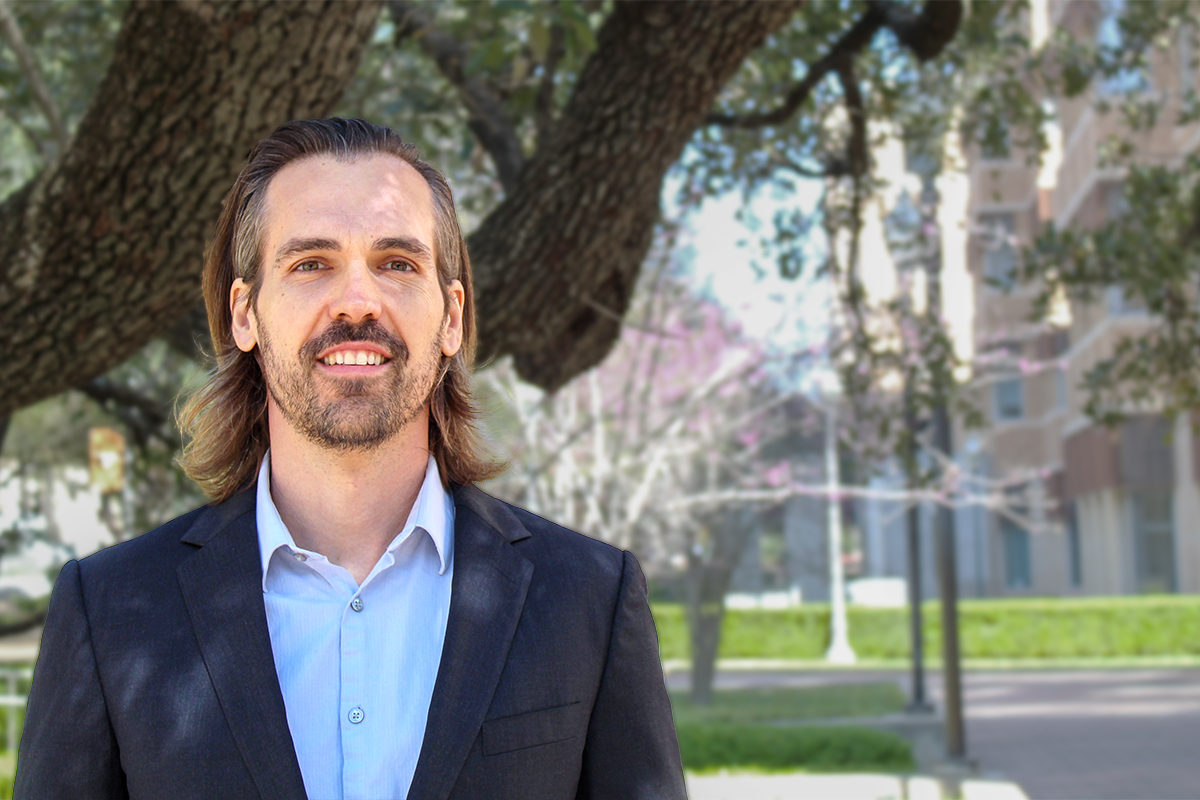
Brad Knox is a Research Associate Professor in the Department of Computer Science at the University of Texas at Austin . His work bridges machine learning, human-computer interaction, and computational cognitive science, with a focus on developing systems that learn from human feedback. Key research areas: Reinforcement Learning, Human-AI Interaction, Reward Design, Autonomous Systems Notable contributions: TAMER framework for human-guided learning, empirical studies on reward misdesign, and human preference modeling for autonomous agents Research Trends : His recent work (2023-2025) emphasizes reward alignment, safety in autonomous systems, and preference-based learning frameworks. Earlier studies (2012-2020) established foundational methods for integrating human feedback into reinforcement learning architectures and exploring behavioral signatures in decision-making. Scientific Honors : Bert Kay Dissertation Award (2013) Victor Lesser Distinguished Dissertation Award (IFAAMAS, Runner-up, 2013) NSF SBIR Grant (PI, 2016) NSF Graduate Research Fellowship (2008-2011) IEEE Intelligent Systems AI 10 to Watch (2013) Teaching & Leadership : Knox served as Principal Lecturer for MIT's Interactive Machine Learning course (2013) and held organizational roles at major conferences including Reinforcement Learning Conference (Scheduling Chair, 2025) and RLDM workshop (Co-chair, 2022).
Prof. Dr.-Ing. Andreas Thiede is a faculty member at the University of Paderborn , affiliated with the Faculty of Electrical Engineering, Computer Science and Mathematics and the Institute of Electrical Engineering and Information Technology . He serves as director of the High-frequency electronics (HFE) research group. Research Interests: High-frequency electronics and optoelectronics Quantum dots and exciton qubits Nonlinear photonics and ultrafast control Semiconductor device engineering Key Projects: Participates in TRR 142: Tailor-Made Nonlinear Photonics , focusing on functional structures for quantum and ultrafast systems. Teaching Roles: Analog CMOS circuits (does not apply) Analog CMOS ICs (cancelled) Contact Details: Email: andreas.thiede@uni-paderborn.de Phone: +49 5251 60-3040 Office: Pohlweg 47-49, 33098 Paderborn Space: P1.402.1
Aswin Sankaranarayanan is a Professor in the Department of Electrical and Computer Engineering at Carnegie Mellon University (CMU) , where he leads the Image Science Lab . His research focuses on computational photography , 3D shape estimation , and novel imaging system design . He earned his Ph.D. in Electrical and Computer Engineering (2009) from the University of Maryland and completed a postdoctoral fellowship at Rice University (2012) . Research Themes: Developing imaging systems that exploit low-dimensional signal models to overcome traditional sensing limitations Co-design of optics and processing algorithms for efficient sensing Application of non-linear signal models to high-dimensional data Advancing compressed sensing and big data processing techniques Scientific Recognition: SIGGRAPH 2023 Best Paper Award (Split-Lohmann Multifocal Displays) CVPR 2019 Best Paper Award (Fermat Paths for NLOS Reconstruction) NSF CAREER Award (2017) Dean’s Early Career Fellowship (2018-2021) Herschel Rich Invention Award (2016) Technical Contributions: His recent publications reveal expertise in non-line-of-sight shape reconstruction , VR/AR display systems , and biomedical imaging . Collaborations span institutions like University College London and University of Toronto.
Kevin Crowston is a Distinguished Professor of Information Science at Syracuse University's School of Information Studies (iSchool), where he examines how information technology enables new organizational forms through empirical studies, theoretical modeling, and system design. His work focuses on coordination-intensive processes in virtual settings, with significant contributions to citizen science, data science teamwork, and journalism transformation. Education A.B. in Applied Mathematics (Computer Science), Harvard University, 1984 Ph.D. in Information Technologies, MIT Sloan School of Management, 1991 Research Focus : Crowston investigates coordination mechanisms in human-AI collaboration, particularly through projects like Gravity Spy (combining citizen scientists with machine learning for gravitational wave analysis) and journalism innovation (e.g., ReelFramer for AI-assisted news-to-video translation). His framework addresses how intelligent systems reshape work design, knowledge production, and team dynamics in scientific and media contexts. Publication Trends : Recent articles (2024-2025) reveal three dominant threads: (1) Human-AI co-creation in journalism (deskilling/upskilling dynamics, creative tool adoption), (2) Citizen science evolution with AI (co-learning systems, lexical entrainment), and (3) Socio-technical governance of intelligent machines (control-accountability alignment, project archetypes). These reflect his central inquiry into how technology reconfigures work structures. Scientific Recognition ACM Distinguished Speaker Research Leadership : Crowston currently directs two major NSF initiatives: (1) HCC grant 21-06865 on intelligent support for non-expert information navigation, and (2) FW-HTF grant 21-29047 exploring human-technology collaboration in journalism. He spearheaded a Research Coordination Network establishing socio-technical frameworks for work in the age of intelligent machines, culminating in a special issue of Information, Technology & People . Collaborative Infrastructure : He co-leads the Gravity Spy citizen science ecosystem (integrating LIGO physicists, machine learning systems, and volunteers) and serves as co-editor-in-chief of Information, Technology and People , previously editing ACM Transactions on Social Computing . His MIDST platform research advances stigmergic coordination for data science teams.
Tom Schrijvers is a Professor at the Department of Computer Science in the Faculty of Engineering Science at KU Leuven, Belgium. He leads the Programming Languages Group within the Declarative Languages and Artificial Intelligence (DTAI) research group. His research focuses on programming languages, particularly functional and logic programming, with special emphasis on Haskell, type systems, and algebraic effects. His research interests include: Functional Programming, especially Haskell Type Systems and Type Theory Algebraic Effects and Handlers Logic Programming, particularly Prolog Constraint Programming Domain-Specific Languages Programming Language Theory Prof. Schrijvers' recent research has focused on effect systems, staged programming, and language composition. His work on algebraic effect handlers has been particularly influential, providing new insights into how effects can be modularly composed and handled in functional languages. He has also made significant contributions to the understanding of type classes and their implementation in Haskell. His publications demonstrate a consistent focus on practical applications of programming language theory, with work spanning from foundational type theory to applied domain-specific languages for areas like fluorescence microscopy. His research often bridges the gap between theoretical programming language concepts and practical implementation concerns. Prof. Schrijvers has supervised numerous PhD students to completion, including Pieter Wuille, Benoit Desouter, George Karachalias, Steven Keuchel, Amr Saleh, Alexander Vandenbroucke, and Ruben Pieters. He currently supervises PhD students Klara Mardirosian, César Santos, Gert-Jan Bottu, Koen Pauwels, Birthe van den Berg, and Roger Bosman. His research group has received funding from various sources including EU projects like GRACeFUL. The Programming Languages Group at KU Leuven, which he leads, focuses on functional (Haskell) and logic (Prolog, Datalog, CLP) programming languages, as well as general programming language theory. The group has been active in numerous research projects and collaborations across Europe.
Olga Kokshagina serves as an Associate Professor in Innovation & Entrepreneurship at The University of Sydney, with adjunct research appointments at Monash University's Emerging Technology Lab and the UNU Hub - Learning Planet Institute. She is also an active member of the French Digital Council. Her research program investigates technology-mediated collaboration in complex innovation systems, focusing on healthcare transformation, deep tech commercialization, and co-design methodologies. Kokshagina has led high-impact projects with global institutions including the World Health Organization, OECD, STMicroelectronics, Vall d’Hebron Hospital, and Roche, demonstrating strong translational research capabilities. Her scholarly work centers on value-based healthcare innovation, digital platform governance, and AI-enhanced collaborative systems. She examines how organizational capabilities evolve during technological transitions, particularly in healthcare ecosystems, and investigates regulatory frameworks for algorithmic control in digital markets. Kokshagina's research bridges theoretical innovation management with practical applications, evidenced by her co-founding of Ninti—an initiative advancing women's health in workplace environments—and her Open Covid-19 crowdsourcing campaign that mobilized global expertise during the pandemic. Analysis of her 2021-2025 publications reveals a cohesive trajectory examining innovation in socio-technical systems. Key themes include value digitalization in healthcare, mission-oriented interdisciplinary collaboration, and the impact of big data on technology management. Her work consistently addresses grand challenges through mixed-methods approaches, spanning conceptual frameworks in journals like Research Policy to applied studies in Technovation and R&D Management, with increasing focus on quantum readiness and AI-augmented learning systems. No scientific awards are documented in the provided materials. Kokshagina currently holds a 2025 research grant for "Co-designing societal readiness and scenario building for quantum" through the University of Sydney Nano Institute/Catalyst program. While no student supervision activities are mentioned, her collaborative projects involve multi-institutional teams across industry, government, and academic sectors. Kokshagina maintains active roles within the University of Sydney Nano Institute and contributes to international policy discourse through the French Digital Council. Her Ninti initiative exemplifies her commitment to human-centered innovation, while ongoing collaborations with healthcare providers like Roche and Vall d’Hebron Hospital demonstrate sustained engagement with real-world implementation challenges in value-based care systems.
Alison Galvani is the Burnett and Stender Families Professor of Epidemiology at Yale School of Public Health and Yale School of Medicine, where she serves as founding director of the Center for Infectious Disease Modeling and Analysis (CIDMA). Her interdisciplinary work bridges epidemiology, evolutionary ecology, and health economics to inform public health policies for diseases including HIV, Ebola, influenza, and COVID-19. Her research focuses on optimizing vaccination strategies and healthcare interventions through mathematical modeling. Recent studies examine SARS-CoV-2 transmission dynamics, RSV vaccine impact, and integration of social determinants into infectious disease models. She has pioneered frameworks for conflict-induced migration analysis and pharmaceutical policy evaluations. Notable scientific awards include the Bellman Prize, Blavatnik Award for Young Scientists, and Guggenheim Fellowship. Her publications span top journals like The Lancet , Nature Communications , and PNAS , with media coverage in major outlets and policy references.
Prof. Dr. Johanna Heitzer is a University Professor for Mathematics Education at RWTH Aachen University since 2011. She leads the Teaching and Research Area of Mathematics Education within the university's mathematics department. Her office is located in Room 352 of the Kreuzherrenstraße 2 building in Aachen. She serves as co-editor of the journal 'mathematik lehren,' co-author of the 'Mathematics - New Ways' textbook series, and holds numerous committee positions including membership in the Faculty Advisory Board and Structural Commission of the Center Council. 1989: High school diploma 1989-1994: Mathematics and Physics Teacher Training at RWTH Aachen 1994-1996: Traineeship at Aachen Teacher Training College 1997: Research assistant at University of Münster 1998-2007: Mathematics and Physics teacher at Korschenbroich Gymnasium 2007-2010: Scientific assistant and doctorate at RWTH Aachen 2011-present: University Professor at RWTH Aachen Professor Heitzer's research focuses on the training and further education of mathematics teachers, development of contemporary teaching materials, applied and interdisciplinary mathematics, and the transition from school to university. Her work emphasizes concept formation, linguistic communication in mathematics, and the historical development of mathematical ideas as teaching resources. She investigates mathematics-specific learning and cognitive processes through multiple research projects including the Aachen school-university project iMPACt. Her recent scholarly output demonstrates a strong trend toward integrating digital technologies in mathematics education, particularly 3D printing and e-learning tools. She has increasingly focused on the social relevance of mathematics, exploring concepts of fairness, sustainability, and citizen empowerment through mathematical modeling. Her work bridges theoretical mathematics education with practical classroom applications, maintaining a strong connection to both historical perspectives and contemporary educational challenges. Special prize from Sparkasse Bad Hersfeld-Rotenburg for best mathematics Abitur (1989) Borchers Plaque for doctoral examinations passed with distinction (2011) DMV honor as Mathemaker of the Month (2013) Brigitte Gilles Prize 2013 for the MINT-L4 Center Professor Heitzer has supervised numerous doctoral students, serving as primary or secondary advisor for at least nine PhD dissertations between 2016-2021. Her research projects include the School-University Project MathePlus Aachen (iMPACt), e-Learning 'Mathematics for Civil Engineers,' and the development of mathematics items for StudiChecks NRW. She has secured funding through the Quality Initiative for Teacher Education (both phases) and participates in the ComeIn project focused on digitalization in teacher training. Her grants consistently emphasize practical applications of mathematics education research with direct impact on classroom practice. As a founding member of the MINT-L4@RWTH center and initiator of the working group Mathematical Education for Sustainable Development, Professor Heitzer has established significant collaborative structures. She participates in the Subject Didactics Forum at the Teacher Training Center of RWTH Aachen and has served in leadership roles including Chair of the Center Council (2014-2016) and Board member of the Teacher Training Center (2014-2017). Her work connects with national and international networks through her membership in the Society for Mathematics Education (GDM), the German Association for Mathematics and Science Education (MNU), and the German Mathematical Society (DMV).
Yaoqing Yang is an Assistant Professor at the Department of Computer Science, Dartmouth College. He earned his PhD in Electrical and Computer Engineering (ECE) from Carnegie Mellon University (CMU) and completed postdoctoral research at UC Berkeley's RISE Lab. His work focuses on robustness in machine learning systems, spectral analysis of neural networks, and algorithm design for structured data like graphs and point clouds. PhD in ECE, Carnegie Mellon University Postdoc, RISE Lab, UC Berkeley BS in Electrical Engineering, Tsinghua University Research interests include diagnosing and mitigating model failures through heavy-tailed spectral analysis, decision boundary studies, and loss landscape visualization. He develops methods such as AlphaPruning and SharpBalance to enhance large language models and ensemble learning. Recent work spans 2025 publications on spectral evolution of neural networks, agentic AI for science, and LLM safety. Key collaborations include Michael W. Mahoney and other researchers. Burke Research Initiation Award, Dartmouth (2024) DOE grant for scientific foundation models (2024) DARPA grant for AI robustness (2024) He serves as Area Chair at NeurIPS 2025 and ICLR 2026, and has presented at Google Research, Lawrence Berkeley National Laboratory, and leading universities worldwide. His lab at Dartmouth engages in theoretical and applied research, with connections to UC Berkeley's RISE Lab and collaborations across institutions like CMU and Tsinghua University.