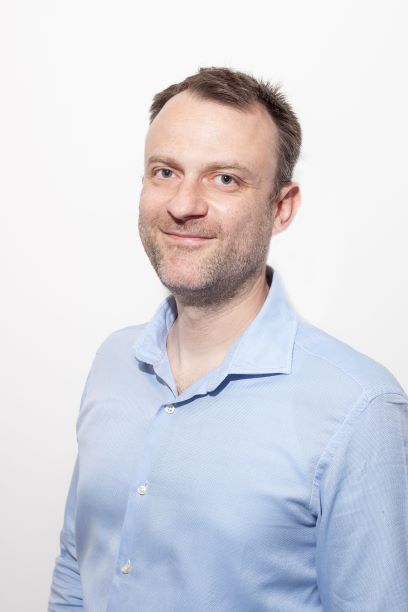
Amalia Foka is an Assistant Professor in Computer Science Applications for the Arts at the Department of Fine Arts & Art Sciences , School of Fine Arts , University of Ioannina , Greece. She has held academic positions at the University of Patras (2005-2013), University of Ioannina (2005-2008), and Computer Technology Institute & Press "Diophantus" (2014-2015). Her research bridges Artificial Intelligence with Digital Art , focusing on Generative AI , Social Media Mining , and Human-Computer Interaction within artistic contexts. Education: BEng in Computer Systems Engineering (1998) from the University of Manchester Institute of Science & Technology (UMIST) , UK MSc in Advanced Control (1999) from UMIST PhD in Robotics (2005) from the Department of Computer Science , University of Crete Her artistic research includes projects like Bushwalking (StyleGAN2 landscape generation), Breaking the Silence (NLP analysis of taboo topics), and The Invisible Structures of the Artworld (social media-driven network visualization). She leads the Multimedia Lab at the University of Ioannina, focusing on AI in Creative Processes and Digital Interaction methodologies.
Athanasios Rontogiannis is an Associate Professor at the School of Electrical and Computer Engineering of the National Technical University of Athens (NTUA). He holds a PhD in Signal Processing from the National University of Athens (1997) and has held roles including Research Director at the National Observatory of Athens (2017–2021). His research focuses on signal processing, machine learning, and hyperspectral image analysis. Education: MEng (Electrical Engineering, NTUA, 1991), M.A.Sc. (University of Victoria, Canada, 1993), PhD (Signal Processing, National University of Athens, 1997). Research interests include adaptive algorithms, sparse representations, and tensor models. He has served on editorial boards of IEEE Transactions on Signal Processing and EURASIP journals, receiving an honorary distinction in 2020. He is a Senior Member of IEEE and affiliated with EURASIP and the Technical Chamber of Greece. Key contributions span hyperspectral unmixing, Bayesian algorithms, and space data exploitation. His work integrates machine learning for applications in space science and signal processing.
Athanasios Liavas is a Professor at the Technical University of Crete in the School of Electrical and Computer Engineering , specializing in Signal Processing for Telecommunications and Information Theory . He has held administrative roles as Department Chair (2009-2011), Vice Chair (2011-2013), and Dean of the ECE School (2017-2021). Education: Diploma (1989) and PhD (1993) in Computer Engineering and Informatics from the University of Patras. Professional Background: Postdoctoral Marie Curie Fellow at INT, Evry (1996-1998); Lecturer at University of Ioannina (1999-2001); Assistant/Associate Professor at University of the Aegean (2001-2004) and Technical University of Crete (2004-present). His research focuses on Signal Processing for Telecommunications , Information Theory , and Tensor Decomposition . Recent work involves nonnegative tensor factorization , parallel algorithms , and fMRI data analysis , with applications in wireless communications and medical imaging . Articles show trends in optimization algorithms , LDPC code design , and MIMO system robustness . Scientific Awards include: Marie Curie Fellowship (1996-1998) Associate Editor, IEEE Transactions on Signal Processing (2005-2009) Elected Member, IEEE Signal Processing for Communications and Networking Technical Committee (2006-2011) He has taught courses like Telecommunications Systems II , Wireless Communications , and Information Theory , and supervised students such as Despoina Tsipouridou (PhD) and Alex Balatsoukas-Stimming (Graduate). He leads projects like Partensor (Parallel Tensor Toolbox) and COOPCOM (Cooperative Communications), and contributes to labs including the Telecommunications Laboratory .
Yannis Stylianou is Professor of Speech Processing at University of Crete and Senior Research Scientist at Apple. Former positions include AT&T Labs Research, Bell-Labs, and Toshiba Cambridge Research Lab. IEEE Fellow with PhD from ENST-Paris and over 200 publications. Research spans: Adaptive speech/audio modeling Neural speech synthesis/enhancement Biomedical signal processing Awards include: IEEE Fellowship French Ministry Research Fellowship ENST Graduate Scholarship Recent work focuses on neural TTS architectures, intelligibility enhancement, and multimodal synthesis. Organizes annual International Summer School on Speech Processing.
Balas Konstantinos is a tenured Professor at the School of Electronic & Computer Engineering , Technical University of Crete , and Director of the Electronics Laboratory . His academic journey began with a B.Sc. (1988) and Ph.D. (1992) in Medical Physics from the University of Patras, followed by postdoctoral research and industry consulting before joining FORTH-IESL in 1995. In 2002, he transitioned to academia at TUC, leading the Optoelectronics Group and founding DySIS-Medical Ltd. , a medical imaging spin-off with global reach.
Dimitris Maroulis is a Professor at the Department of Informatics and Telecommunications, University of Athens, leading the Real-Time Systems and Image Analysis Lab (RTS-image). With over 20 years of experience in data acquisition and real-time systems, and 15 years in image/signal analysis, he collaborates extensively with Greek and European hospitals in biomedical informatics. He has led 5 R&D projects and authored 150+ papers with 1400+ citations. University of Athens: Professor (2000–present) Meudon Observatory: Research Fellow (3 years) & Long-term Collaborator (10+ years) Research Interests focus on real-time systems , image/signal processing , and biomedical applications . Key areas include automated segmentation of proteomic images, noise removal methods, and stereo image coding. His 15 most recent publications (2003–2012) span 3D imaging , medical image analysis , and biomedical informatics , with sub-fields like autostereoscopic displays, wavelet-based coding, and computer-aided diagnosis. Awards : Best Paper Award (2012: Integral Image Analysis) Projects include European and national R&D initiatives in image analysis and real-time systems. Labs : RTS-image Lab develops methodologies for biomedical and proteomic applications.
Paschalis Antonis is a Professor at the Department of Informatics and Telecommunications, National and Kapodistrian University of Athens. His research focuses on hardware architectures for space systems, embedded systems, and image compression standards such as CCSDS. He specializes in FPGA implementations, radiation-hardened electronics, and biomarker development for immunogenic responses to cancer therapies. Research Interests: High-performance FPGA-based hardware accelerators Space-grade embedded systems and data compression CCSDS standard implementations for aerospace applications Molecular biomarkers for immunotherapy response prediction Recent Trends: His work emphasizes resilient systems against radiation effects (e.g., SEUs in FPGAs), high-throughput image compression cores for space missions, and interdisciplinary research linking computational hardware with medical diagnostics via prothymosin α analysis. Grants & Labs: Leads the ASPIICS coronagraph project for ESA's Proba-3 mission, involving advanced optical instrumentation and formation flying systems. Collaborates on COTS FPGA utilization in extreme environments.
Emmanouil Z. Psarakis is an Associate Professor at the Department of Computer Engineering & Informatics , University of Patras, Greece. Born in 1963, he has been affiliated with the university since 2005 and is a member of the Signal Processing and Communications Lab . His academic journey includes teaching courses such as Signals and Systems Theory , Digital Signal Processing , and Computer Vision and Graphics . PhD in Computer Engineering and Informatics, University of Patras (1991) Dr. Psarakis is renowned for his research in image processing , computer vision , and signal processing , with applications in biomedical imaging , seismology , and robotics . His work spans deep learning , filter design , and 3D reconstruction , reflecting a multidisciplinary approach. His 15 most recent publications (2020–2025) focus on sign language recognition , adversarial defense , 3D shape analysis , and medical imaging . These works integrate machine learning , stochastic modeling , and computer vision to address challenges in video summarization , image inpainting , and seismic signal analysis . Dr. Psarakis has supervised over 10 PhD students , including Fotini Fotopoulou (2016–2019) and Panagiotis Georgantopoulos (2020–2023). He has participated in EU-funded , Hellenic , and bilateral R&D projects related to biomedical signal processing , robot vision , and forest fire monitoring . He leads the Signal Processing and Communications Lab , which collaborates with institutions like the Computer Technology Institute and international universities. His contributions include filter design , image alignment , and stereopsis techniques , with a focus on practical implementations in telecommunications and medical diagnostics .
Dr. Vivi Tornari is a Research Fellow and head of the Holography laboratory at IESL/FORTH, specializing in optical metrology and cultural heritage preservation. She has held this position since 1996 and has coordinated major EU projects such as E-RIHS and CHARISMA . Her work focuses on developing holographic interferometry techniques for structural diagnosis of artworks, fraud detection, and environmental impact assessment. She holds a PhD in Applied Science from the University of Sunderland and has authored over 70 scientific publications. Education: Postdoctoral Fellow in Optical Holography, Royal College of Art (RCA), London (1990) PhD in Applied Science, University of Sunderland, UK (2009) MSc in Chemical Engineering/Material Science, National Technical University of Athens (1996) Research interests include laser-based structural analysis, speckle interferometry, and the integration of optical methods for heritage preservation. She has pioneered non-invasive diagnostic tools such as the Applied Holography Metrology Laboratory and has advised on EC projects as an evaluator. Funding highlights include: Leadership in EU projects totaling over €20M Coordinator of SYDDARTA (FP7) and CLIMATE FOR CULTURE (FP7) PI for HOLOAUTHENTIC (FP5) and LASERACT (FP6) Her publications emphasize interdisciplinary collaboration, combining optical engineering with conservation science. Key innovations include: Development of DHSPI (Digital Holographic Speckle Pattern Interferometry) Integration of thermography with interferometry for defect analysis Laser ablation studies on polymer substrates Labs/Teams: Lead the Holography Lab at IESL, collaborating with international institutions like the V&A Museum and Imperial College London. Current projects focus on European research infrastructures (E-RIHS) and climate change impacts on heritage materials.
Ioannis Andreadis is a Professor in the Department of Electrical and Computer Engineering at the School of Engineering, Democritus University of Thrace. He has been a faculty member since 1993, following his appointment as a Visiting Professor at the School of Technological Applications of TEI Kavala (1991-1992). His academic journey began with a Diploma in Electrical Engineering from Democritus University of Thrace (1983), followed by an M.Sc. in Electrical Engineering & Electronics (1985) and a Ph.D. in Instrumentation & Analytical Science (1989), both from the University of Manchester. Professor Andreadis's research spans the Design and Implementation of Electronic Systems with particular emphasis on Intelligent Systems and Machine Vision . His work has resulted in over 230 publications in international journals, book chapters, and conference proceedings. He has made significant contributions to image processing, particularly in mathematical morphology, color image processing, and real-time implementation of image processing algorithms. His research has practical applications in seismic signal processing, crowd management systems, and 3D reconstruction technologies. The analysis of his recent publications reveals a strong focus on advanced image processing techniques, with increasing integration of deep learning approaches. His work spans both theoretical foundations (such as entropy estimation and moment calculations) and practical applications (including image stabilization, multi-focus image fusion, and crowd management systems). The interdisciplinary nature of his research connects electrical engineering, computer vision, and signal processing with applications in safety engineering, structural analysis, and robotics. Among his notable achievements are the IET Image Processing Premium Award (2009) , Best Paper Award at PSVIT 2007 , and Best Paper Award at EUREKA 2009 . He was elected Fellow of the Institute of Engineering & Technology (IET) in 2006 and Fellow of the Institute of Measurement & Control (InstMC) in 2021. He has also served as Subject Editor of the IET Electronics Letters and as Guest Editor for special issues of Pattern Recognition journal. Professor Andreadis has supervised 14 PhD theses , 21 Master's theses , and 88 Diploma works , demonstrating his commitment to academic mentoring. His research has been supported by significant grants including the EDUnet project (€280,000), wireless network implementation (€37,000), laboratory infrastructure development (€120,000), school information systems support (€478,000), the RESCUER project (€350,000 as Deputy P.I.), and the EDUSAFE project (Marie Curie Actions). He leads the Electronics Laboratory at Democritus University of Thrace, which has undergone significant infrastructure development through multiple funding sources. His work on the RESCUER project demonstrates collaboration with European partners on emergency risk management systems, while his EDUSAFE involvement shows commitment to advanced AR/VR safety systems development. His research group applies computational intelligence techniques to diverse challenges from seismic analysis to pedestrian evacuation modeling.
Konstantinos G. Arvanitis is a Professor in the Department of Natural Resources Management & Agricultural Engineering at the Agricultural University of Athens, affiliated with the Agricultural Engineering Laboratory. He holds a PhD in Electrical and Computer Engineering from the National Technical University of Athens and has held diverse research and teaching roles across Greek institutions. Teaches courses on electrical engineering, sensors, automation, and AI in agriculture Supervised 2 PhD, 9 MSc theses, and guides 6 ongoing PhD projects Member of FEANI, EurAgEng, and IFAC Technical Committee (2000-2017) His research integrates IoT, machine learning, and cyber-physical systems into agricultural practices, focusing on precision agriculture and sustainability. He contributes to editorial boards of journals like Sensors and Energy , and has published over 342 technical works with significant citation metrics. His recent work explores quantum technologies, edge computing, and 3D printing in agricultural systems, emphasizing energy efficiency and educational innovation. He actively reviews for 130+ journals and conferences.
Christos Diou is an Associate Professor of Artificial Intelligence and Machine Learning at the Department of Informatics and Telematics, Harokopio University of Athens, Greece. His academic career spans over 15 years of participation in national and international research projects, with a focus on machine learning algorithms, domain generalization, causal inference, and bias mitigation. He earned a BSc and Ph.D. in Electrical and Computer Engineering from Aristotle University of Thessaloniki. His research emphasizes the application of machine learning to healthcare, addressing challenges such as visual bias mitigation, causal effect estimation from observational data, and fairness-aware representation learning. Notable projects include REBECCA and RELEVIUM , both EU-funded, and MELIORA , targeting lifestyle interventions for breast cancer risk reduction. He has published extensively in top-tier venues like IEEE TPAMI, CVPR, and ICCV. Christos is a leading voice in AI ethics and healthcare innovation, with over 150 publications and best paper awards at IEEE Big Data Service 2023 and AIAI 2022. His work includes developing platforms like Effector for feature effects and Beam for behavior studies. He collaborates with institutions such as Karolinska Institutet and CERTH/ITI, and his students include PhD candidates Ioannis Sarridis and Aristotelis Ballas.
Professor Papaloukas Konstantinos is affiliated with the University of Ioannina, where he leads research in bioinformatics and computational biology. His work focuses on integrating machine learning with biomedical data to address challenges in healthcare, such as disease prediction, biomarker discovery, and personalized medicine. He teaches courses including Bioinformatics and Introduction to Computer Science, and directs the Bioinformatics Laboratory. Research interests span computational analysis of proteins, automated tissue classification, and biomedical signal processing. Key areas of exploration include cardiovascular disease mechanisms, diabetes management, autoinflammatory disorders, and cancer biomarkers. His most recent studies leverage ensemble learning for hypoglycemia prediction and deep learning for autoinflammatory biomarker discovery. Publications highlight contributions to multimodal patient data integration, synthetic data generation for chronic diseases, and multimodal glucose prediction systems. Collaborative projects span cardiology, oncology, and infectious disease research. Despite no explicitly listed awards, his work demonstrates significant impact in computational medicine and bioinformatics. As part of his academic role, he advises students in bioinformatics and computational biology, though specific advisee names are not documented in available materials. His laboratory focuses on translating genomic and clinical data into actionable insights for clinical decision support.
Georgios Keramidas is an Assistant Professor in Computer Architecture at the Department of Informatics, Aristotle University of Thessaloniki . He also holds an Adjunct Professor position at the Hellenic Open University and collaborates with institutions like the University of Peloponnese and University of Patras . Research Interests : Computer Architecture, Memory Systems, Multicore/GPU Design, Low-Power Techniques, Fault-Tolerant Systems His work focuses on cache optimization , energy-efficient computing , and security-aware memory design . Key contributions include DVFS frameworks , reuse-distance prediction , and non-deterministic cache mechanisms . Recent article trends highlight innovations in computation-in-memory , IoT platform components , and security/low-power co-design . Patents on image compression and GPU optimization reflect practical applications of his research. Academic Network : Collaborates with institutions including University of Patras , University of Manchester , and TU Dresden
Zervakis Michalis is a full Professor at the Technical University of Crete (TUC), serving as Rector and Director of the Digital Image and Signal Processing Laboratory (DISPLAY). He holds a Ph.D. in Electrical Engineering from the University of Toronto (1990) and has been a faculty member at TUC since 1995. His expertise spans Digital Image/Signal Processing, biomedical applications, and neural network implementations in automation. Education: Ph.D., Electrical Engineering, University of Toronto (1990) M.Sc., Electrical Engineering, University of Toronto (1985) B.Sc., Electrical Engineering, Aristotle University of Thessaloniki (1983) Research Interests: Signal/image processing for biomedical applications Machine learning for healthcare diagnostics EEG/ECG analysis and seizure detection Neural network architectures for automation Multi-sensor systems and aerial surveillance His research emphasizes clinical applications like epilepsy monitoring and cardiovascular diagnostics, leveraging deep learning and multimodal data fusion. He has led over 20 international projects and published >90 papers in image/signal processing. Current work focuses on AI-driven medical systems and UAV-based infrastructure monitoring. Labs/Teams: Director of the DISPLAY Lab, collaborating on projects like the BorderUAS semiautonomous surveillance platform and the Pulsense cardiovascular monitoring system. Grants/Contributions: Extensive involvement in EU-funded initiatives and industry partnerships, advancing smart farming, power line inspection, and emergency response systems.