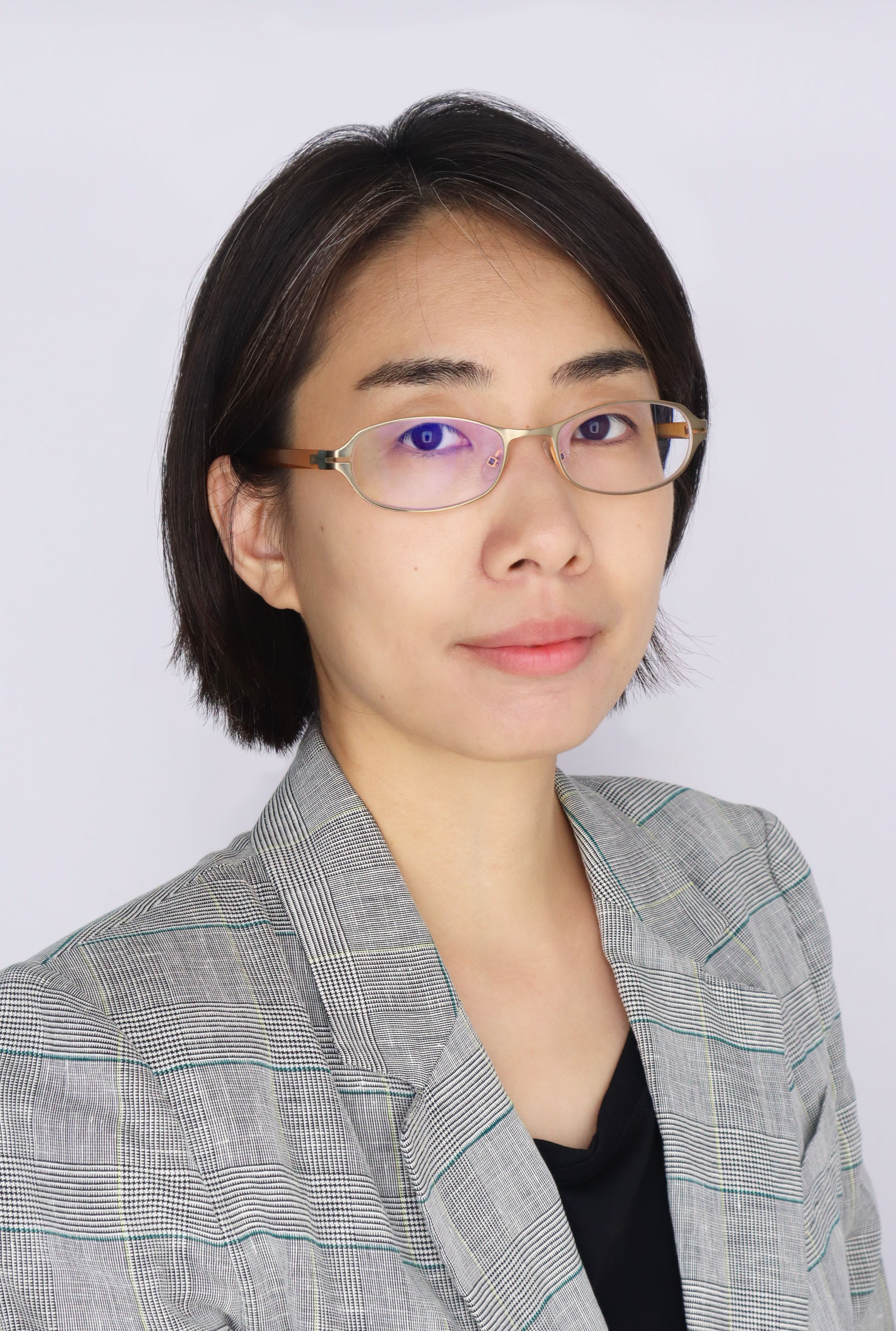
Anton Ehrmanntraut is a researcher at the University of Würzburg, affiliated with the Chair of Computational Philology and Modern German Literary History. His work bridges computational methods with literary and linguistic analysis. Institution: University of Würzburg Role: Researcher Location: Emil-Hilb-Weg 23, Campus Hubland Nord Contact: anton.ehrmanntraut@uni-wuerzburg.de Research Focus: Computational Linguistics Digital Humanities German Literary History Natural Language Processing Computer Science Publishing Trends: Recent publications demonstrate a dual focus: (1) advancing NLP techniques for German texts (e.g., ModernGBERT, text normalization, literary pipelines) and (2) theoretical computer science contributions to complexity classes like UP, DisjNP, and DisjCoNP.
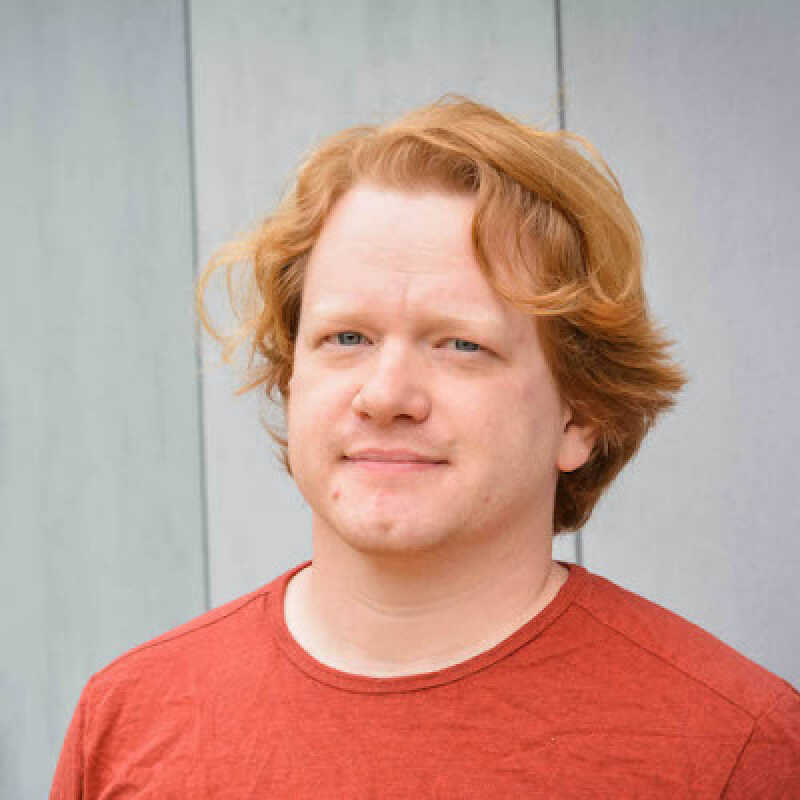
Hongmi Lee is an Assistant Professor in the Department of Psychological Sciences at Purdue University. Her research focuses on human long-term memory , naturalistic memory , and functional neuroimaging , using behavioral experiments and fMRI to explore how the brain encodes and retrieves complex real-world experiences. PhD, New York University (2018) Lee investigates how memories for naturalistic events are structured in the brain, emphasizing the roles of the posterior medial cortex and parietal cortex in memory reactivation. Her work examines semantic integration, contextual binding, and neural dynamics during spontaneous recall and future thinking. The 15 most recent articles highlight trends in episodic retrieval , event segmentation , and neural activity patterns during memory processing. Key methodologies include fMRI , naturalistic stimuli , and network science . Labs: Lee Memory and Cognition Lab
Mark Batty is a Professor in the School of Computing at the University of Kent, specializing in formal methods for concurrent systems. His work bridges hardware-software interfaces, focusing on memory models for C/C++, OpenCL, and architectures including x86, ARM, POWER, and GPUs. As a member of the Programming Languages and Systems Research Group, he develops mathematical specifications and verification tools for real-world concurrency challenges. His research centers on empirical testing of hardware/compiler behavior, formal modeling of system components, and verification of fine-grained concurrent algorithms. Key contributions address relaxed memory semantics, transactional memory, and compositional reasoning for concurrent data structures. His work combines theoretical rigor with practical tool development to ensure correctness in complex concurrent environments. Analysis of his 2015-2025 publications reveals consistent focus on memory consistency models, formal verification of weak memory concurrency, and compiler optimizations. Dominant themes include C/C++11 standards, GPU concurrency semantics, and mechanized verification techniques. His research demonstrates strong industry relevance through collaborations with hardware vendors and contributions to language standards. Mark Batty has received significant recognition: John C. Reynolds Doctoral Dissertation Award (2015) from ACM SIGPLAN CPHC and BCS Distinguished Dissertation Award (2015) Lloyds Register Foundation and Royal Academy of Engineering Research Fellowship (2016) He actively leads major research initiatives and mentors next-generation researchers: Current Funding: EPSRC Standard Grant 'Verifiably Correct transactional memory' (2018), VeTTS Grant 'Specification and verification of C++ data structure libraries' (2018), EPSRC First Grant 'Compositional, dependency-aware C++ concurrency' (2018) PhD Recruitment: Actively seeking candidates for UKRI-funded studentship in Verified Trustworthy Software Systems Batty drives community engagement through Kent Concurrency Workshop (2016) and South of England Programming Language Seminars, fostering national collaboration in programming languages research. His leadership in organizing Royal Society discussions underscores his influence in trustworthy systems verification.
Mathias Benedek is an Associate Professor at the Institute of Psychology, Faculty of Natural Sciences, University of Graz, Austria. He directs the Creative Cognition Lab and is actively involved in several research networks, including the "Complexity of Life" profile area, the "Brain and Behavior" research network, and the "FUTURE EDUCATION" research network at the University of Graz. His research focuses on the cognitive and neural mechanisms underlying creative thinking, with particular emphasis on the role of memory processes, metacognition, and eye movement patterns during creative ideation. Dr. Benedek's work bridges psychological theory with empirical research methods including eye tracking, neuroimaging, and computational modeling of creative processes. His research has important implications for understanding how creative potential develops and how it can be assessed and nurtured in educational and professional contexts. Dr. Benedek's publication record demonstrates a consistent focus on creative cognition across multiple dimensions. His recent work has expanded into emerging areas such as human-AI collaboration for creative tasks, automated assessment of creativity using large language models, and the relationship between physical activity and creative performance. His research shows a strong trajectory toward more ecologically valid methods for studying creativity in real-world contexts, moving beyond traditional laboratory paradigms. Seraphine Puchleitner Anerkennungspreis (PhD Supervision Award), University of Graz, 2021 William-Stern-Preis, German Psychological Society, 2019 Research Prize, University of Graz, 2017 Research Prize (Publication Category), Initiative Gehirnforschung, 2016 Berlyne Award, Division 10, American Psychological Association, 2015 Dr. Benedek has demonstrated strong commitment to mentoring the next generation of researchers, as evidenced by his 2021 PhD Supervision Award. His research has been supported by multiple grants from national and international funding bodies, though specific grant details are not provided in the available information. His professional service includes leadership roles in the Initiative Gehirnforschung Steiermark since 2010 and active membership in several psychological societies across Europe and North America. Dr. Benedek leads the Creative Cognition Lab at the University of Graz, which employs a multidisciplinary approach to studying creative processes. The lab integrates methods from cognitive psychology, neuroscience, and computational modeling to investigate the mechanisms underlying creative thought. Current research projects examine the relationship between eye movements and internal cognitive processes, the development of automated assessment tools for creativity, and the application of creativity research to educational contexts.
Goran Oreški is an Associate Professor and Head of the Laboratory at the Faculty of Informatics in Pula (University Jurja Dobrile, Croatia), where he has been employed since 2019. He teaches courses on databases, object-oriented programming, data warehousing, and artificial intelligence at both undergraduate and graduate levels. Education: Ph.D. in Informatics (2016), Faculty of Organization and Informatics Industry Experience: 9 years as software architect and programmer in banking sector Research Focus: Artificial Intelligence systems, classical machine learning algorithms, and deep learning architectures. His work bridges theoretical advancements with practical applications in autonomous vehicles, traffic monitoring, and financial risk assessment. Recent Publication Trends: 2023-2025 works emphasize generative AI for synthetic credit data, traffic object segmentation with monocular cameras, and context-aware detection models (YOLO*C). Earlier works focus on genetic algorithms and ensemble learning for imbalanced datasets. Awards: Google RFP Award for autonomous vehicle research Highly Cited Paper (Web of Science, top 1%) Best Paper at CECIIS conference Leadership: Director of FIPU Laboratory since 2022, leading projects like ai.Shuttle (autonomous mini-bus) and CenAI (industry collaboration with Cenosco).
Mila N. Koeva is a Vice Dean Research and senior Associate Professor at the University of Twente's Faculty of Geo-Information Science and Earth Observation (ITC), Department of Urban and Regional Planning and Geo-Information Management. Her research focuses on 3D modeling and Digital Twins for land management and urban planning, integrating geospatial technologies, UAV data, and AI/ML methods. PhD in architectural photogrammetry MSc in Engineering (Geodesy) Research Themes: Digital Twinning for urban ecosystems AI-driven cadastral boundary extraction 3D modeling with LiDAR and satellite data Global partnerships in Rwanda, Kenya, and Ethiopia Interoperability standards for local digital twins Scientific Contributions: Geospatial World Innovation Award 2021 Copernicus Masters Competition (3rd place 2016) Editorial roles in Photogrammetric Records and MDPI journals Keynote speaker at 3D GeoInfo, GI Forum, and FIG events Her educational impact includes developing courses, lecturing, and supervising students whose work has received top awards in The Netherlands and international competitions.
Professor Clinton Fookes is a faculty member at the Queensland University of Technology (QUT) within the School of Electrical Engineering & Robotics . His research focuses on leveraging computer vision and artificial intelligence to develop automated systems that understand, anticipate, and interact with human behaviors, with applications in medical diagnostics, autonomous vehicles, defense, and industrial efficiency . Research areas include AI adaptability, multimodal biosignal analysis, and human-machine interaction Collaborates with CSIRO Data61, Defence Science and Technology Group, Orica, Airbus, and Sentient Vision Systems Develops systems for human action detection, infrastructure monitoring, and stress response prediction His work addresses critical challenges in AI deployment, such as environmental adaptability and reducing diagnostic errors in medical and autonomous systems. Recent publications highlight trends in self-supervised learning, zero-shot knowledge transfer, multimodal integration , and 3D reconstruction for healthcare , while exploring ethical AI use in sectors like mining and defense . Professor Fookes emphasizes interdisciplinary collaboration, bridging engineering, medicine, and social sciences to advance AI systems capable of real-world impact. His research agenda includes improving AI memory capabilities and explainability for safer, more reliable automation.
Timothy Williamson is a prominent Professor of Philosophy at the University of Oxford, holding the prestigious Wykeham Professorship of Logic. His academic career spans several decades with continuous contributions to analytic philosophy, particularly in epistemology, metaphysics, and philosophical logic. His work has positioned him as one of the leading philosophers of his generation. Williamson's research interests concentrate on epistemology (particularly his influential knowledge-first approach), metaphysics, philosophy of language, and philosophical logic. His work on vagueness champions epistemicism—the view that vague predicates have sharp boundaries that we cannot know. His book Knowledge and its Limits revolutionized epistemological thinking by placing knowledge rather than belief at the center of epistemological theory. Williamson has also made significant contributions to modal metaphysics, higher-order thought, and the philosophy of logic. His publication record reveals consistent engagement with foundational philosophical problems across several decades. His most recent work continues his exploration of knowledge-first epistemology while expanding into moral epistemology and methodological questions in philosophy. Williamson's articles demonstrate a distinctive blend of logical precision and philosophical depth, often using formal methods to address traditional philosophical problems. His work frequently intersects with debates in philosophy of language, metaphysics, and philosophical methodology. Williamson has been actively engaged in scholarly debate through numerous replies to critics, demonstrating his commitment to rigorous philosophical dialogue. His publications span major philosophy journals including Synthese , Canadian Journal of Philosophy , Analysis , and Philosophy and Phenomenological Research . Throughout his career, Williamson has mentored numerous graduate students and collaborated with leading philosophers across the globe. His methodological approach emphasizes the value of formal modeling in philosophical inquiry, arguing that philosophy can benefit from the model-building approaches common in natural sciences.
Xin Peng is a Professor and Deputy Dean at the School of Computer Science, Fudan University, China. He leads the CodeWisdom research team focusing on intelligent software engineering techniques for development, maintenance, and operation of software systems. His educational background includes a PhD in Computer Science (2001-2006) and Bachelor's degree in Computer Science (1997-2001), both from Fudan University. He progressed through the academic ranks from Assistant Professor (2006-2010) to Associate Professor (2010-2015) and finally to Professor (2015-present). Professor Peng's research interests span Software Analytics, Intelligent Software Development, Microservice systems, and AIOps. His work leverages AI technologies including deep learning and knowledge graphs to develop intelligent software engineering techniques. A significant portion of his recent work focuses on applying Large Language Models to various software engineering tasks, including vulnerability detection, API usage analysis, and test automation. His publication record shows a clear trend toward increasingly sophisticated applications of AI in software engineering, with recent work heavily featuring LLMs for tasks ranging from vulnerability patch porting to resource leak detection. The research spans multiple domains including microservice systems, automotive software, and Web of Things security. Best Paper Award of ICSM 2011 ACM SIGSOFT Distinguished Paper Award of ASE 2018 and 2021 IEEE TCSE Distinguished Paper Award of ICSME 2018, 2019, and 2020 IEEE Transactions on Software Engineering Best Paper award for 2018 Professor Peng serves in numerous leadership roles including Deputy Director of CCF Technical Committee on Software Engineering, Co-Editor-in-Chief of Journal of Software: Evolution and Process, and Associate Editor for ACM Transactions on Software Engineering and Methodology. He has been actively involved in program committees for major software engineering conferences including ICSE, ASE, ESEC/FSE, and ICSME. He leads the CodeWisdom research team at Fudan University, which has developed several benchmark systems including TrainTicket for microservice research. The team's work bridges academic research with industrial applications, particularly in microservice systems analysis and intelligent software development tools.
Dr. Frederic Bosche is a Reader in Construction Informatics at the University of Edinburgh's School of Engineering, leading the CyberBuild Lab. His research focuses on advancing digital construction technologies, including BIM, sensing systems, and digital twinning to enhance infrastructure management and workforce safety. Education: PhD in Civil Engineering (University of Waterloo), M.Sc. from University of Texas at Austin, and M.Eng. from Ecole Centrale de Lille. Research interests include automated construction processes, data-driven infrastructure lifecycle management, and integrating emerging technologies like AI and IoT into construction workflows. His CyberBuild Lab has pioneered projects in defect detection, roof monitoring, and smart construction inspection. Notable contributions include over 100 publications, 12 research projects (e.g., 'Digital Facility' and 'Monitoring Roofs of Traditional Buildings'), and awards such as the Charles M. Eastman Top PhD Paper Award. He actively engages in public outreach through science festivals and collaborates internationally with institutions like ETH Zurich and Heriot-Watt University.
Dr. Chuanxia Zheng is a Marie Skłodowska-Curie Actions (MSCA) Fellow and Research Fellow at the Visual Geometry Group (VGG) within the Department of Engineering Science at the University of Oxford, working with Professors Andrea Vedaldi and Andrew Zisserman. He holds a PhD from Nanyang Technological University (NTU), where his thesis on 'Synthesizing Photorealistic Images' earned the NTU Outstanding PhD Thesis Award in 2022. Starting Fall 2025, he will assume the position of Nanyang Assistant Professor at NTU's College of Computing and Data Science, leading the Physical Visual Group. His research focuses on Creative AI , emphasizing systems that perceive, reconstruct, and interact with the physical world. Key areas include 3D/4D reconstruction, generative models, and digital twins integrating geometric, dynamic, and physical properties. He has pioneered methods like feed-forward 3D reconstruction (Flash3D), amodal completion (Amodal3R), and physics-aware generative models (DSO). Notable awards include the Singapore NRF Fellowship (2025), DAAD Ainet Fellowship (2024), and MSCA Fellowship (2024). His work spans over 30 peer-reviewed publications in top venues like CVPR, ECCV, NeurIPS, and ICCV, with contributions to open-source projects like CVQ-VAE on GitHub. Current openings include PhD, postdoc, and research assistant positions focused on advancing physical-aware AI systems and generative modeling.
Wenchao Li is an Assistant Professor in the Department of Electrical and Computer Engineering at Boston University, directing the Dependable Computing Laboratory. He holds a B.S., M.S., and Ph.D. in Electrical Engineering and Computer Sciences, along with a B.A. in Economics from UC Berkeley. His research focuses on dependable computing, applying formal verification, machine learning, and control theory to cyber-physical systems, electronic design automation, and AI safety. Key research interests include neural network verification, safe reinforcement learning, autonomous systems security, and resilient control strategies for connected vehicles. His work emphasizes provable safety guarantees and defense against adversarial attacks in critical infrastructure systems. Notable awards include the ACM Outstanding Ph.D. Dissertation Award and the Leon O. Chua Award. His lab investigates topics such as neural network repair, secure multi-robot coordination, and formal methods for autonomous systems. He advises students like Jiameng Fan and collaborates on projects funded by grants in AI safety and cyber-physical systems. Labs/Teams: Dependable Computing Laboratory Grants: Focus on formal verification, AI safety, and autonomous systems resilience
Dr. João Henriques is a Research Fellow of the Royal Academy of Engineering (RAEng) at the Visual Geometry Group (VGG), University of Oxford. His research focuses on advancing computer vision, deep learning, and robotics, particularly in areas like 3D scene understanding, reinforcement learning, and multi-agent systems. He is renowned for developing the KCF and SiameseFC visual trackers, which won the VOT Challenge and are deployed in consumer hardware. His work spans 3D geometry, self-supervised learning, causal inference, and neuro-symbolic systems. Key contributions include methods for egocentric video analysis, unsupervised reconstruction, and robot navigation. He leads the VGG's research on neural feature fields, hierarchical scene understanding, and real-time 3D perception. Recent publications emphasize 3D-aware segmentation, universal place recognition, and neuro-symbolic world modeling for robotics. His research often bridges theoretical guarantees with practical applications, such as medical imaging and autonomous systems. Dr. Henriques collaborates with industry and academia on AI ethics, friendly AI, and interpretable learning. His lab hosts DPhil students advancing creative AI applications, such as generative models for gameplay design and LLM evaluations in real-world editorial workflows.
Dr. Tim Oates is a Professor in the Department of Computer Science and Electrical Engineering at the University of Maryland, Baltimore County . His research spans machine learning, artificial intelligence, and brain-machine interfaces, with a focus on weakly supervised methods, human-in-the-loop reinforcement learning, and grounded policy development for robotics. Ph.D., Computer Science, University of Massachusetts, Amherst, 2000 M.S., Computer Science, University of Massachusetts, Amherst, 1997 B.S., Computer Science and Electrical Engineering, 1989 Current research threads include: Developing non-invasive brain injury severity assessment via medical time series Modeling human brain development through computational frameworks Designing algorithms for autonomous robotic learning Recent publications highlight AI security mechanisms (backdoor detection via tensor decomposition, matrix factorization) Medical applications (3D artery reconstruction, skin lesion diagnosis, EEG denoising) Neuro-symbolic integration (holographic representations, language-guided reinforcement learning) Mathematical reasoning (schema-based problem solving, subitizing algorithms) Contact: oates@cs.umbc.edu | Office: 336 Information Technology and Engineering (ITE) Building
Gemma Boleda is an ICREA Research Professor at Universitat Pompeu Fabra in Barcelona, Spain, where she co-directs the Computational Linguistics and Linguistic Theory (COLT) research group. Her research focuses on understanding how humans convey meaning through language, investigating the formal properties that support communication, and exploring how languages are shaped by cognitive and communicative factors. Her primary interests include lexical semantics, cross-linguistic variation, and the integration of linguistic theory with computational methods. She employs interdisciplinary approaches combining linguistics, artificial intelligence, and cognitive science, utilizing large-scale data analysis to study universal patterns and variations across languages. Boleda's publications demonstrate a consistent focus on computational semantics, lexical variation, and language evolution. Her recent work explores the intersection of symbolic and neural approaches to language processing, lexical creativity across development and evolution, and computational models of semantic phenomena like colexification and polysemy. She teaches Computational Semantics in the Master's in Theoretical and Applied Linguistics program and has secured significant research funding including ERC Starting Grants. Her work has contributed valuable linguistic resources such as the ManyNames dataset and Database of Catalan Adjectives.