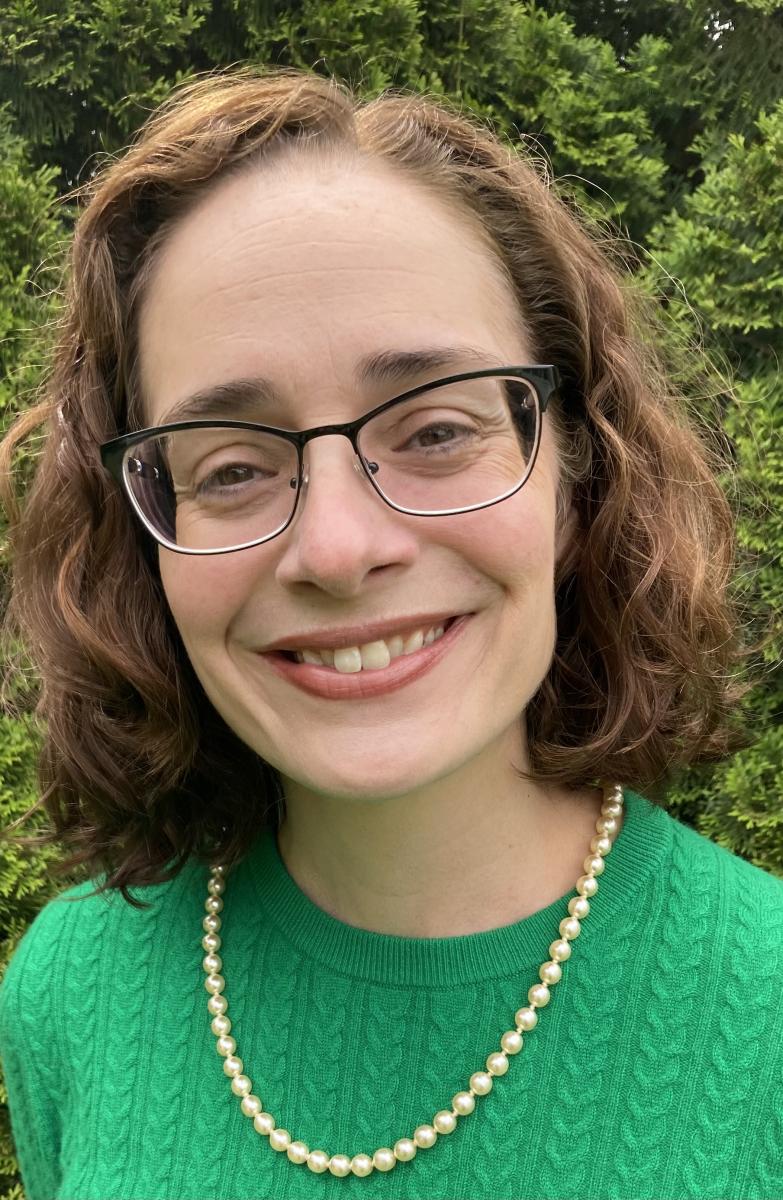
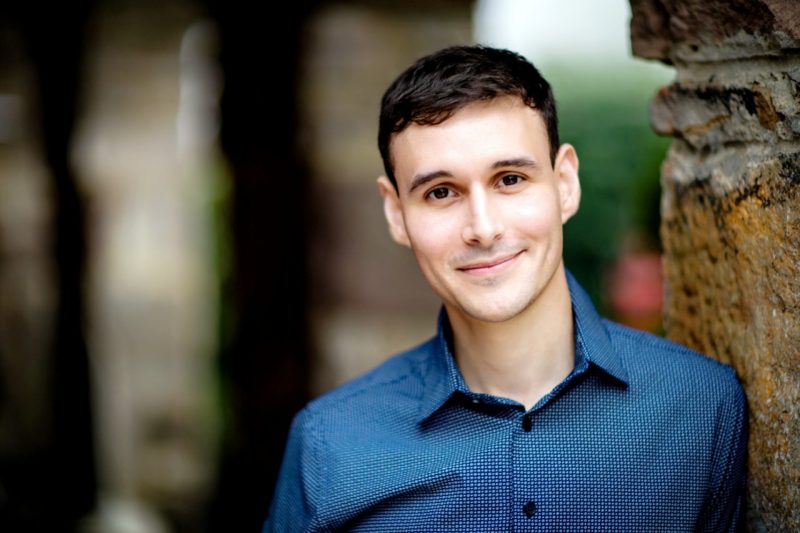
Ju Yeon (Julia) Park is Associate Professor in the Department of Political Science at Ohio State University, specializing in American political institutions and data science. She holds a PhD from NYU and previously held positions at University of Essex and University of Pittsburgh. Her research examines: Legislative and communication strategies in Congress Information dynamics in committee hearings Interbranch relationships between legislators and bureaucrats Textual analysis of political discourse Methodologically, Park employs machine learning, causal inference models, and experimental designs to study how institutional constraints shape political communication. Recent publications analyze argumentation patterns in legislative debates and witness testimony. As faculty affiliate of the Center for Effective Lawmaking, she investigates determinants of legislative success. Her book 'Hearings on the Hill: The Politics of Informing Congress' is forthcoming from Cambridge University Press.
Sarah Ryan is an Associate Professor at the University of North Texas (UNT), specializing in Law Librarianship, Empirical Legal Research, and Social Science methodologies. Her work bridges legal practice, education, and interdisciplinary research, with a focus on statutory reform, veterans' law, and human subjects research ethics. She holds a J.D. from Quinnipiac University, a Ph.D. from Ohio University, and advanced degrees in Library Science and Public Affairs. Education: J.D., Quinnipiac University Ph.D., Ohio University M.L.S., Texas Woman's University M.A., Ohio University B.A., Capital University Her research interests include: Empirical legal methodologies for policy analysis Interdisciplinary approaches to energy and education equity Legal frameworks for end-of-life planning Ethical research practices in human subjects studies Recent publications highlight her work in big-data rhetoric, judicial authority under US legislation, and global energy-education linkages. She has contributed to debates on IRB processes, NGO activism, and pedagogical innovations in legal research training. No scientific awards are explicitly mentioned in the profile. Her advising and grant activities remain unspecified, though her extensive publication record suggests active involvement in collaborative research teams. Professional links include UNT’s FIS Profile.
Cornelius Puschmann is a Professor of Communication and Media Studies at the University of Bremen's ZeMKI, leading the Digital Communication and Information Diversity (DCID) Lab. He has held affiliations with institutions including Zeppelin University, the Alexander von Humboldt Institute for Internet and Society, and the Leibniz Institute for Media Research / Hans Bredow Institute. His research focuses on computational communication, digital media usage, hate speech, and algorithmic impacts on digital communication. Current projects: Informed by Influencers? (INDI), Political Polarization and Individualized Online Information Environments (POLTRACK) Member of Deutsche Gesellschaft für Publizistik- und Kommunikationswissenschaft (DGPuK), European Communication Research and Education Association (ECREA), and International Communication Association (ICA) His recent publications explore topics such as alternative news consumption, political polarization, and communicative AI. He has also contributed to open-source methodologies like the RPC-Lex dictionary for analyzing right-wing populist discourse. Notable affiliations include visiting scholar roles at the Oxford Internet Institute, Berkman Klein Center for Internet and Society, and University of Amsterdam's Department of Media Studies.
Lisa Zehnter is a Researcher at the Center for Civil Society Research within the WZB Berlin Social Science Center, where she contributes to the Manifesto Project—an international initiative analyzing election manifestos from over 60 countries to map party positions and preferences. Her role centers on political communication research using computational text analysis methodologies. Her academic background includes: Doctorate in Populist Political Communication, Humboldt University Berlin Master's Degree in Social Sciences, Humboldt University Berlin Bachelor's Degree in German Literature and Social Sciences, Humboldt University Berlin (with a semester abroad at the University of Gothenburg) Zehnter specializes in the intersection of populism, political discourse, and computational social science. Her work employs advanced text analysis to dissect election manifestos and political communication strategies, particularly examining populist rhetoric, gender-fair language usage, and crisis responses like the pandemic. She develops hybrid methodologies combining manual and automated coding to enhance analytical precision in large-scale textual datasets. Her 2021-2025 publications reveal a concentrated focus on German politics—especially the Alternative for Germany (AfD) party—and cross-national manifesto analysis through the Manifesto Project. Key trends include methodological innovations in text analysis, scrutiny of populist communication during crises, and longitudinal studies of party positioning in European democracies. No scientific awards were documented in the source material. No information regarding student advising or research grants was provided in the available text. She actively participates in the Manifesto Project (MARPOR), the Observatory of Political Texts in European Democracies (OPTED), and a collaborative initiative on hybrid text analysis coding techniques, working within international research teams to advance political text analysis frameworks.
J. Elliott Casal serves as an Assistant Professor in the Department of English at the University of Memphis, where his research centers on applied linguistics with emphases in corpus linguistics, discipline-specific writing, and genre-based language pedagogy. His work bridges theoretical frameworks with practical applications for language teaching and academic literacy development across diverse disciplinary contexts. His academic credentials include: Ph.D. (2016-2020) from Pennsylvania State University M.A. (2012-2014) from Ohio University B.A. (2004-2008) from Ohio University Casal's research investigates functional linguistic conventions in professional communication, development of discipline-specific literacies, and corpus tool integration in language education. His scholarship critically examines syntactic complexity, phraseological patterns, and academic literacy across disciplines through both quantitative corpus analysis and qualitative assessments of learner agency, creativity, and intentionality in writing development. Analysis of his 15 most recent publications (2019-2024) reveals consistent focus on corpus-driven methodologies applied to academic writing across STEM and humanities disciplines. Key trends include syntactic complexity development in L2 legal writing, AI-writing detection ethics, frame-based formulaic features in academic genres, and cross-disciplinary variation in research article structures, demonstrating evolving applications of corpus linguistics to contemporary language education challenges.
Joshua M. Scacco is an Associate Professor in the Department of Communication and founding Director of the Center for Sustainable Democracy at the University of South Florida, College of Arts & Sciences. His work bridges political communication, media effects, and quantitative research methods, with a focus on democratic governance in the digital age. Education: PhD, University of Texas at Austin Dr. Scacco’s research explores how communication technologies can strengthen democratic institutions, addressing topics like presidential digital rhetoric, health misinformation, election integrity, and media accountability. He employs computational methods and experimental designs to analyze media ecosystems. Recent publications examine: Health communication challenges during the pandemic Political misinformation on social platforms Democratic backsliding and press responsibility Interactive media effects on political behavior Dr. Scacco partners with the U.S. Department of State, journalism nonprofits, and local governments. He is affiliated with the Center for Media Engagement at the University of Texas at Austin.
John Jones is an Associate Professor at The Ohio State University specializing in Digital Media Studies, with a focus on rhetoric, professional/technical communication, and digital literacies. His academic journey includes a PhD in English from the University of Texas – Austin and an MA from the University of Tennessee – Chattanooga. Previously, he served as an associate professor at West Virginia University and a visiting assistant professor at the University of Texas at Dallas. Research explores intersections of writing, computational processes, and digital culture Expertise spans digital media studies, visual rhetoric, and networked communication His work investigates the impact of wearable technologies, algorithmic systems, and network structures on knowledge creation and communication practices. Current projects examine computational ethics in digital writing and the role of digital networks in shaping rhetorical strategies. Analysis of John Jones’s publications reveals consistent engagement with: Digital media and computational rhetoric Networked communication frameworks Wearable technology implications Medical usability challenges Visual data representation Collective intelligence dynamics
Prof. Dr. Vita Akstinaitė is a Professor and Vice-Rector for Research and Faculty at ISM University of Management and Economics (Lithuania). She leads the Master's program 'Global Leadership and Strategy' and the Executive Master's module on rhetoric/communication. As a Visiting Researcher at IDIAP (Switzerland) and Visiting Fellow at the University of Lausanne, she bridges academic and applied research. Her work focuses on leadership dynamics, hubris, linguistic markers, and AI applications in leadership assessment. Education: MSc Organizational Psychology (King's College London) and PhD in Business (University of Surrey), with research on linguistic markers of hubris. She co-founded The Hubris Hub and Knowledge4Hubris initiatives, fostering interdisciplinary collaboration. Notable projects include EU-funded AI leadership research (2021) and NordForsk's remote work study (2023-2026, €99k+). Research emphasizes innovative methods like AI-driven text analysis to evaluate leadership behaviors. Key areas include: executive hubris measurement, AI's role in leadership skill assessment, and ethical leadership frameworks. Her work spans international collaborations with institutions like Umeå University (Sweden), Murdoch University (Australia), and the London School of Economics. Awards include ISM Research Communicator of the Year (2023), Murdoch Teaching Excellence (2021), and EU research grants. Her publications explore topics like linguistic predictors of hubris, AI in leadership diagnostics, and pandemic leadership failures. Recent articles address data-driven executive role transformations and ethical leadership in AI contexts. Grants include €59k for AI leadership research (2021-2023) and €99k NordForsk funding. Active in conferences such as British Academy of Management and interdisciplinary leadership symposia. She advises on leadership development and serves as a module leader for global leadership courses. Labs/Teams: Co-leads The Hubris Hub research collective and directs ISM's executive communication initiatives. Current work explores AI ethics in leadership assessment and cross-industry sustainability leadership preferences.
Edward J. Balistreri is the Duane Acklie Chair and Professor of Economics at the University of Nebraska-Lincoln, where he also serves as Department Chair. He became the Duane Acklie College of Business Yeutter Institute Chair in August 2020 and is a core faculty member of the Clayton Yeutter Institute of International Trade and Finance. Prior to joining UNL, he held academic positions at Iowa State University and the Colorado School of Mines, and has contributed to climate and trade-policy debates as both an academic and consultant. Ph.D. in Economics, University of Colorado-Boulder (1995) B.A. in Economics, Arizona State University (1989) Professor Balistreri specializes in international economics with a focus on trade policy analysis using computable general equilibrium (CGE) modeling. His research examines the impacts of trade agreements, trade disputes, and policy responses on economic outcomes, with particular expertise in agricultural and energy products trade. He has made significant contributions to the theoretical and empirical understanding of international trade structures, including Armington, Krugman, and Melitz models, and has applied these frameworks to analyze contemporary trade issues including the US-China trade war and the economic impacts of the COVID-19 pandemic. Balistreri's recent publications demonstrate a strong focus on contemporary trade policy challenges, particularly the analysis of disruptive trade policies and their economic impacts. His work spans theoretical advancements in trade modeling and applied policy analysis of recent trade conflicts. Notably, he has applied his expertise to analyze the economic impacts of the COVID-19 pandemic on global food security and regional economies, showcasing the versatility of his methodological approach across different economic contexts. Professor Balistreri has served as a research economist at the United States International Trade Commission and as a consultant, providing expertise on trade policy matters. His research has been supported by various funding sources, including a cooperative agreement between the U.S. Department of Agriculture, Economic Research Service, and the University of Nebraska-Lincoln for his work on global food security during the pandemic. Balistreri is a core faculty member of the Clayton Yeutter Institute of International Trade and Finance at the University of Nebraska-Lincoln, which serves as a hub for research and policy analysis on international trade issues. His collaborative work with researchers like David G. Tarr, Christoph Böhringer, and Thomas F. Rutherford demonstrates his engagement with international research networks focused on advancing trade modeling methodologies and policy analysis.
Randy Harris is a Professor in the Department of English Language and Literature at the University of Waterloo, with a cross-appointment to the David Cheriton School of Computer Science. His career spans over three decades, focusing on the intersection of rhetoric , cognitive science , and computational linguistics . He holds a PhD in Communication and Rhetoric from Rensselaer Polytechnic Institute, with postdoctoral experience at the University of Alberta. Education : PhD (Rensselaer), MSc (Rensselaer, Alberta), MA (Dalhousie), BA (Queen's) Research Interests : Cognitive Rhetoric, Computational Rhetoric, Rhetorical Figures, Construction Grammar, Rhetoric of Science, and Neurocognitive Stylistics. His work explores how rhetorical figures like chiasmus and antimetabole reflect brain structure and cognitive processing. Recent projects involve building the Rhetoricon , a collocational database of rhetorical figures, and investigating their role in large language models . He has received numerous awards, including the University of Waterloo Arts Award for Excellence in Research (2023) and Fellow of the Royal Society of Canada (2022) . Harris has supervised graduate students in professional communication , linguistics , and science writing . His grants include NSERC Discovery Horizon (2024-2029) and multiple SSHRC grants for Computational Rhetoric and Rhetorical Figure Ontology . He actively organizes interdisciplinary workshops like Computing Figures and contributes to media discussions on language, AI, and rhetoric.
S. Scott Graham is an Associate Professor of Rhetoric & Writing and Associate Director for A.I. Science & Culture at the Humanities Institute of the University of Texas at Austin . He is affiliated with the Center for Health Communication , the Addiction Research Institute , the University of Texas Opioid Response Consortium , and the Health Informatics Research Interest Group . PhD, Iowa State University Research focuses on AI and machine learning in bioscience/health policy communication, bioethics, and health AI Author of three books: The Doctor & The Algorithm , The Politics of Pain Medicine , and Where's the Rhetoric? Projects include Transparency to Visibility (T2V) and Spectacular Specimens: A Global Study of Cadaverous Rhetorics at Anatomical Museums His work combines science and technology studies , critical algorithm studies , and public interest informatics to analyze health AI's societal implications. He has developed tools for parsing conflicts of interest in biomedical publishing and studies the ethics of anatomical museum displays. Scientific Awards & Grants: NEH Digital Humanities Advancement Grant (T2V project) NSF's XSEDE computational resources NIH funding for health communication research National Endowment for the Humanities support for Spectacular Specimens He teaches courses like Arguing With Scientists , Rhetoric And Algorithms , and Research Methods In Rhet/Wrt . Current research explores ethical frameworks for health AI and global anatomical museum rhetorics.
Adam M. Enders is an Associate Professor in the Department of Political Science at the University of Louisville. He also teaches advanced courses on measurement and scaling at the ICPSR Summer Program. His research examines the intersection of political psychology and societal dynamics, focusing on conspiracy theories, core values, partisanship, and polarization. Enders holds a Ph.D. (2016) and M.A. (2013) in Political Science from Michigan State University, and a B.A. (2011) in Political Science and Public Policy from Albion College. His work investigates how conspiratorial thinking influences public opinion, the role of racial prejudice in political behavior, and how subjective perceptions contribute to polarization. Publications appear in top journals like the American Journal of Political Science and Journal of Politics . He has also contributed to The Atlantic and Politico Magazine , analyzing modern conspiracism and its political ramifications. Teaching focuses include political psychology, public opinion dynamics, and quantitative research methods. His methodological expertise in scaling and measurement underpins much of his empirical work, emphasizing rigorous design to explore complex belief systems.
Sean Lawson is a Professor in the Communication department at the University of Utah, where he has been employed since July 2023. Previously, he served as an Associate Professor at the same institution from July 2015 to June 2023. He was also an Adjunct Scholar at the Modern War Institute (United States Military Academy at West Point) from 2019 to 2020. PhD in Science & Technology Studies from Rensselaer Polytechnic Institute (2008) MA in Arab Studies from Georgetown University (2003) BA in History from California State University, Stanislaus (2000) Dr. Lawson's research centers on the intersections of science, technology, and security, with a focus on national security, military thought, and information/communication technologies (ICTs). His work explores how cyber-doom rhetoric, nonlinear science (chaos and complexity theories), and social media dynamics shape cybersecurity policies and conflict narratives. His publications include analyses of cyberwarfare metaphors, the influence industry, and drone journalism. He has co-authored works on UAVs, cybersecurity discourse, and the role of social media in social movements like Occupy Wall Street. Nonlinear Science and Warfare (2013) Cybersecurity Discourse in the United States (2019) Masspersonal Social Engineering (2024) Dr. Lawson has received awards such as the Simmons Fellow in History and Communication (2009), Faculty Fellow Award (2011), and Non-Resident Fellow status (2020). He teaches courses like "IT & Global Conflict" and "Great Science Books" and has been involved in projects examining drones, cybersecurity, and military imaginaries.
Prof. Yazan Badran is an Assistant Professor in International Media and Communication Studies at the Vrije Universiteit Brussel , affiliated with the ECHO: Media, Culture & Politics Research Group . His research focuses on media, journalism, and politics in the MENA region, particularly Syrian and Tunisian mediaspheres, and diasporic communities. He holds a PhD from VUB (2021), MSc in Communication Studies (2015), and BEng in Computer Science (2013). Affiliations: Vrije Universiteit Brussel, ECHO Research Group, Centre for Democracy, Signification, and Resistance. Teaching: BSc Social Sciences, MSc Communication Studies. Research interests include emerging media systems, journalistic precarity, and media in conflict zones. Key projects include FWO-funded studies on pan-Arab satire and Syrian exiled journalism. Awards include the Best Paper by an Emerging Scholar (2018) and FWO fellowships (2016–2025). Recent publications analyze media framing in Syria, Kurdish media in Iraq, and digital archives of conflict. He advises 26 students and collaborates with institutions in Turkey, Tunisia, and others. Active in editorial roles for Journalism Practice and Journal of Global Diaspora and Media .
Chris Thomas is an Assistant Professor in the Department of Computer Science at Virginia Tech’s College of Engineering. His research focuses on computer vision, cross-modal retrieval, and multimodal knowledge representation, with applications in information extraction, fake news detection, and AI safety. He leads the Sanghani Center for Artificial Intelligence and Data Analytics and has received grants from the Commonwealth Cyber Initiative and a Google Research Scholar award. Education: Ph.D. (2020) and B.S. (2013) in Computer Science, University of Pittsburgh. Research Interests: Developing robust cross-modal systems that bridge vision and language. Key areas include fine-grained visual entailment, multimodal inconsistency detection, and defending AI models against adversarial attacks. His work emphasizes practical applications like fact-checking and cybersecurity. Recent Contributions: Led the development of JourneyBench (a vision-language benchmark) and the Semantic Shield defense framework. Recent grants include cybersecurity for embodied agents and safer multimodal web agents. Awards: Google Research Scholar Award (2025), multiple Commonwealth Cyber Initiative grants (2024–2025). Advising & Grants: Advises students like Hani Alomari (ACL 2025) and collaborates with institutions like Columbia University and UCLA. His work integrates multimodal data to address real-world challenges in AI safety and information integrity. Labs/Teams: Active in Virginia Tech’s AI initiatives, focusing on interdisciplinary research at the intersection of vision, language, and security.