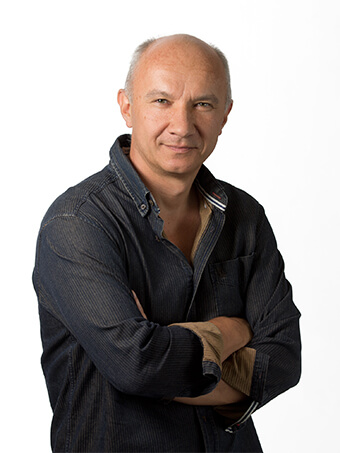
Olaf Kaczmarek is a researcher at the Faculty of Physics , Bielefeld University , specializing in Lattice Quantum Chromodynamics (QCD) and Strongly Interacting Matter . He leads projects related to QCD thermodynamics , quark-gluon plasma , and heavy quark transport . Principal Investigator in TRR 211/2 Subproject A06: Hadronic Excitations and Spectral Functions in the Medium (2025) Co-PI in TRR 211/2 Subproject Z02: Software Development Center (2025) Contributor to GPUHEP2014 and LATTICE2024 symposia Research Focus: Thermal QCD phase transitions, heavy quark diffusion , transport coefficients , lattice simulations , and quarkonium spectroscopy . His work bridges theoretical physics and high-performance computing , particularly in Multigpu Systems for QCD calculations. Recent Publications explore topics like the chiral crossover , spatial string tension , and thermal photon production , with keywords spanning Quantum Chromodynamics , Lattice Gauge Theory , and High Temperature Physics . Teaching: Offers courses in Lattice Field Theory , GPU Computing , and Gradient Flow for graduate students. Contributes to collaborative seminars in the CRC-TR211: Strong-interaction matter under extreme conditions .
Anton Petrunin is a Professor in the Department of Mathematics at The Pennsylvania State University, affiliated with the Eberly College of Science. He holds a Ph.D. from the University of Illinois at Urbana-Champaign (1995). His research focuses on Geometry, particularly Alexandrov geometry, metric geometry, differential geometry, and their applications. He is known for contributions to curvature bounds, isometric embeddings, and geometric analysis. Teaching: Petrunin instructs courses such as MATH 471 (Geometry for Teachers) and actively engages in mathematical outreach, including organizing the Tournament of Towns, an international mathematics competition for school students. He emphasizes problem-solving and rigorous foundations in his pedagogy. Publications: Petrunin has authored influential books, including Alexandrov Geometry: Foundations , Pure Metric Geometry , and Euclidean Plane and Its Relatives . His work bridges theoretical advancements with accessible educational materials. Contributions: Beyond academia, he advocates for open-access research and self-publishing in mathematics. His GitHub repository reflects his commitment to sharing educational resources and collaborative projects in metric geometry and topology.
Tor Söderström is a Professor at the Department of Education at Umeå University. His research focuses on learning and development in sports, computer simulation training, and professional knowledge development in police education. He has contributed extensively to understanding talent identification in sports, particularly in Swedish football, and the efficacy of simulation-based training methodologies in law enforcement education. His research spans topics including athlete development trajectories, the impact of physiological testing on elite athlete performance, and the role of childhood athletic ability in long-term sports participation. Notable projects include a study on dropout processes in Swedish football talent systems and analyses of Swedish gym-goers' training patterns over two decades. Publications highlight interdisciplinary approaches, combining sports science, sociology, and educational technology. Recent work explores children’s rights in sports through scoping reviews and examines athlete retention strategies from adolescence into adulthood. His research often emphasizes practical applications in training design and policy development for both sport and professional education sectors. No scientific awards are explicitly mentioned in the provided texts. His work has involved collaborations with institutions like the Swedish Football Association and police education programs, focusing on scenario-based training methodologies and competency development in high-stakes professions.
Kyle DeMars is an Associate Professor and Associate Department Head for Theoretical and Computational Research in the Department of Aerospace Engineering at Texas A&M University. He holds a Ph.D. from The University of Texas at Austin (2010) and has expertise in space situational awareness, navigation systems, Bayesian filtering, and information theory. His work focuses on advanced estimation techniques for spacecraft autonomy and space surveillance. Dr. DeMars' research emphasizes robust nonlinear filtering, multitarget tracking, and information-theoretic approaches to orbital dynamics. He has developed innovative methods for spacecraft navigation, including terrain-relative systems and anonymous feature processing. His contributions address challenges in uncertainty quantification, sensor fusion, and cislunar space domain awareness. Education: Ph.D./M.S.E./B.S. in Aerospace Engineering (UT Austin, 2004–2010) Awards: AIAA Young Professional Award (2017), NASA Innovation Award (2014), and multiple teaching/research recognitions Labs/Teams: Active in space situational awareness, guidance & control, and probabilistic navigation systems Key trends in his publications include: Advances in particle flow and Gaussian mixture methods for nonlinear estimation Cislunar trajectory analysis and resonance-based surveillance strategies Development of fault-resistant and anonymous navigation frameworks Integration of information theory into sensor tasking and uncertainty management His work bridges theoretical developments with practical applications in planetary landing navigation, space traffic management, and autonomous spacecraft systems.
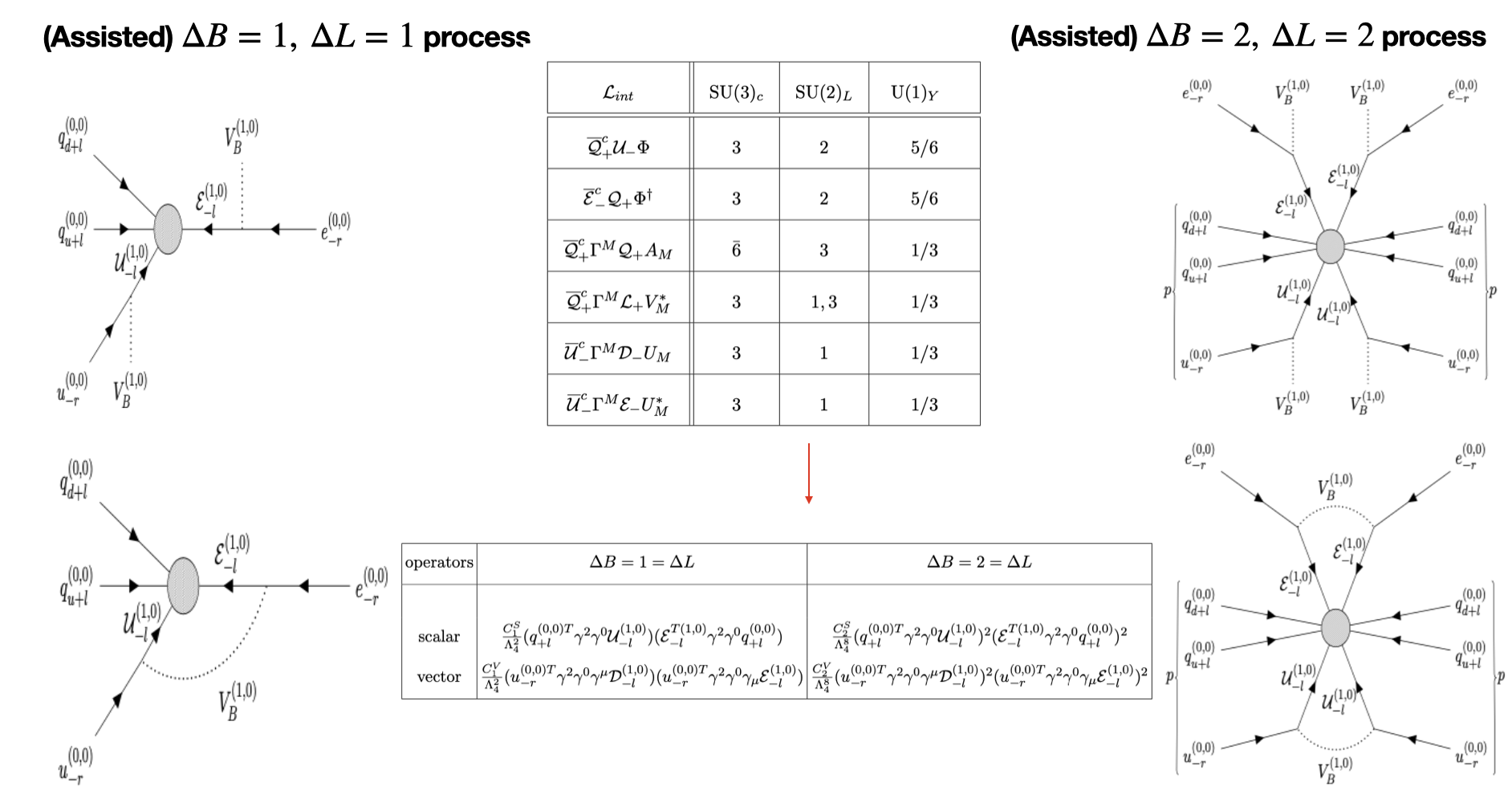
Dr. Mathew Arun Thomas is an Assistant Professor at the Indian Institute of Science Education and Research Thiruvananthapuram (IISER-TVM), specializing in Theoretical Particle Physics. His research focuses on phenomena beyond the Standard Model, including Baryon Number Violation, Extra Dimensions, Effective Field Theory, and Flavour Physics. Education: BSc (Hons) from St. Stephen's College, University of Delhi; MSc and PhD in Physics and Astrophysics from the University of Delhi (supervised by Prof. Debajyoti Choudhury). Postdoctoral work at the Indian Institute of Science (supervised by Prof. Sudhir K Vempati). His recent work explores Dark Matter-assisted Baryon Number Violation processes, such as Hydrogen-antihydrogen oscillation and Proton decay suppression, using six-dimensional orbifolded torus models. He also investigates constraints on Randall-Sundrum models from charge lepton flavour violations and phenomenology of low-energy Flavour Physics. The 15 most recent publications span neutrino oscillations, dark matter phenomenology, warped geometry models, and collider signatures, reflecting his expertise in connecting high-energy theory with experimental observables. Scientific Awards: INSPIRE Faculty Fellowship. He has mentored students like Akshay Anilkumar and Krishnanand N, contributing to projects on Flavour Violations and Cosmological Bounce models. He teaches courses including Quantum Field Theory and Scientific Computation, with a 2023 Mechanics course for 330 students.
Jaouad Mourtada is an Assistant Professor in the Department of Statistics at ENSAE/CREST, École Nationale de la Statistique et de l'Administration Économique since September 2020. Previously, he was a postdoctoral researcher at the Laboratory for Computational and Statistical Learning at the University of Genoa (2019-2020). He completed his PhD in Statistics at École Polytechnique under the supervision of Stéphane Gaïffas and Erwan Scornet. His educational background includes a Master's degree in Mathematics with specialization in Probability and Random Models (2016), a Master's degree in Fundamental Mathematics (2015), and a Bachelor's degree in Mathematics from Pierre and Marie Curie University and École Normale Supérieure (2013). Dr. Mourtada's research focuses on the intersection of statistics and learning theory, with particular interest in high-dimensional statistics, online learning, and density estimation. His work explores the complexity of prediction and estimation problems through rigorous theoretical analysis. His research spans statistical learning theory, robust statistics, and the theoretical foundations of machine learning algorithms. His publication record since 2017 demonstrates consistent contributions to top-tier venues in statistics and machine learning, with recent work focusing on universal coding, aggregation methods, robust regression, and the theoretical analysis of kernel methods and random forests. His research shows a progression from online learning and expert aggregation to more complex statistical learning problems involving high-dimensional data and model misspecification. He teaches courses including Statistical Learning Theory for Master 2 Data Science students and Probability Theory at ENSAE. His teaching spans theoretical foundations of machine learning and core probability concepts for advanced statistics students.
Stefania Degaetano-Ortlieb is an Associate Professor of English Linguistics and Corpus Linguistics at Saarland University's Department of Language Science and Technology. She serves as Principal Investigator for the Collaborative Research Center (SFB 1102) 'Information Density and Linguistic Encoding,' leading Project B1 on diachronic information density in English scientific writing (17th century-present). Her interdisciplinary work bridges computational methods with sociolinguistics, focusing on register variation, language change, and digital humanities. Research interests center on text mining, data analytics, and probabilistic modeling of language variation. Key areas include: Diachronic evolution of scientific registers and linguistic densification Information-theoretic approaches to language efficiency Computational sociolinguistics and register diversification AI applications in humanities education (e.g., ChatGPT integration) Her publications show a strong trend toward quantitative diachronic analysis, with recent work emphasizing: interpretable AI models for linguistic change detection; propagandistic narrative analysis in conflict zones; and multi-word expression dynamics in scientific discourse. Cross-disciplinary collaborations frequently intersect with history, psychology, and media studies. Awards include the Fellowship Excellence Program for Young Female Scientists (2015-2018). Current grants: EU Horizon MSCA Doctoral Network 'CASCADE' (€521K to UdS, 2024-2027) Data-Pin Project for AI in education (€50K, 2023-2024) SFB 1102 Project B1 (€595K, 2022-2026) Advises PhD candidates in the EU CASCADE project on computational semantic change. Leads a research team exploring Russian media narratives, personality modeling in LLMs, and multi-word expressions. Directs teaching modules integrating AI tools for humanities students.
Juan Manuel Pérez Pardo is an Associate Professor in the Department of Mathematics at Universidad Carlos III de Madrid, where he has been a faculty member since 2019, progressing from Assistant Professor to his current position as Associate Professor since December 2022. His academic journey includes postdoctoral research at prestigious institutions including the Istituto Nazionale di Fisica Nucleare in Naples, Italy, and the Instituto de Ciencias Matemáticas in Madrid. Dr. Pérez Pardo earned his PhD in Mathematics from Universidad Carlos III de Madrid in 2013, following a Master's degree in Mathematical Engineering from the same institution and a Master's degree in Theoretical Physics from Universidad Complutense de Madrid. His undergraduate studies were in Physics at Universidad Complutense de Madrid. His research focuses on the intersection of functional analysis and quantum physics, particularly in three main areas: Functional Analysis : Applying functional analytical tools to quantum systems, with emphasis on quadratic forms associated with differential operators and evolution equations in Hilbert spaces. Quantum Systems with Boundary : Studying quantum dynamics when boundaries are present, combining operator theory, spectral theory, and differential geometry. Quantum Control on Infinite Dimensional Systems : Developing mathematical theory for controlling quantum systems that are infinite dimensional in nature, relevant to quantum computation technologies. His publication record shows a strong focus on quantum control theory, self-adjoint extensions of differential operators, and the mathematical foundations of quantum mechanics. Recent work (2022-2025) has concentrated on stability of non-autonomous Schrödinger equations, quantum controllability, and relativistic quantum systems. Dr. Pérez Pardo has received several prestigious awards including the Juan de la Cierva Fellowship and the QUITEMAD+ Postdoctoral Fellowship. His work on boundary dynamics driven entanglement was highlighted in Europhysics News and tagged as IOPselect by the Institute of Physics. He actively mentors students at all levels, currently supervising PhD candidate Ángel Aitor Balmaseda Martín on "Quantum Control at the Boundary." He has also supervised numerous Master's and Bachelor's students on topics ranging from numerical solutions of quantum control problems to modeling Josephson junctions. Dr. Pérez Pardo is a key member of the Q-Math Research Group at UC3M and has organized multiple international workshops on Information Geometry, Quantum Mechanics, and Applications. He also serves on the editorial board of the International Journal of Geometric Methods in Modern Physics.
Kelvin McQueen is an Assistant Professor of Philosophy at Chapman University's Schmid College of Science and Technology , with affiliations to the Institute for Quantum Studies . His academic journey includes a Bachelor of Arts and Master of Philosophy from the University of Otago , and a Ph.D. in Philosophy from the Australian National University (2013). Dr. McQueen's research bridges quantum mechanics and philosophy of mind , focusing on topics like the integrated information theory (IIT) of consciousness, Orch OR theory , and many-worlds interpretation . He explores how quantum collapse might relate to consciousness, mereological composition, and the philosophical implications of quantum theories. His recent publications analyze the empirical challenges to IIT , the quantum Zeno effect in measurement-collapse interpretations, and local causal explanations in many-worlds scenarios. Collaborations with prominent figures like David Chalmers and Lev Vaidman highlight his interdisciplinary approach. Dr. McQueen teaches courses in philosophy of science , quantum physics , metaphysics , and symbolic logic , emphasizing the intersection of philosophy and emerging technologies like virtual reality .
Dr. Patrick S. Market is a Professor of Atmospheric Science and currently serves as the Director of the School of Natural Resources at the University of Missouri. He also acts as Interim Co-Director of the Missouri Water Center. His research focuses on synoptic and mesoscale dynamics, particularly winter weather, heavy rainfall, flash flooding, and severe local storms. He has contributed to advancements in precipitation efficiency studies and operational forecasting techniques. His work explores the role of artificial intelligence in weather prediction and communication, emphasizing the continued importance of human expertise in an automated forecast process. Dr. Market has secured grants for data stream maintenance and digital equity planning, and he has led educational initiatives integrating research into synoptic meteorology classrooms. Notable collaborations include projects with the National Weather Service and studies on the Ozark Plateau's topographical influence on weather systems.
Sehrish Akhtar serves as a Postdoctoral Fellow and Part-time Lecturer at the Faculty of Social Sciences, Oslo Metropolitan University. Her academic work centers on technology-driven solutions for social challenges in elderly care and inequality. She is embedded within the 'Living conditions, health, work and social inequality' research group, collaborating with institutional partners including the City of Oslo Nursing Home Agency (SYE) and No Isolation. Her research spans Gerontechnology, Social Connectedness in Elderly Care, and Welfare Technology implementation, with emphasis on participatory design alongside older adults. Key projects include adapting KOMP telepresence technology for nursing homes to combat loneliness ('Safe and Simple Point of Contact with Relatives') and cultural analysis of telepresence as loneliness solutions ('Virtual Presence'). She prioritizes user-centered approaches that bridge technological capabilities with social needs in vulnerable populations. Publication trends reveal a methodological shift from qualitative cultural analysis (2023) toward mixed-methods evaluation of technology efficacy in care settings (2024-2025). Her work consistently addresses social isolation through digital inclusion frameworks, examining how tools like KOMP mediate family connections while navigating institutional constraints in elderly care. Emerging research extends into interprofessional collaboration dynamics within educational systems.
Davide Scaramuzza is a Professor and Director of the Robotics and Perception Group at the University of Zurich. He holds a Ph.D. from ETH Zurich and has conducted postdoctoral research at the University of Pennsylvania and Stanford. His research focuses on autonomous drone navigation using visual and event-based sensors, leading to breakthroughs like AI drones outperforming human pilots in racing (Nature 2023). He pioneered algorithms for Mars helicopter navigation and developed the PX4 autopilot system. Key awards include the Kiyo-Tomiyasu IEEE Technical Field Award (2024), ERC Consolidator Grant (2019), and multiple best paper awards. His entrepreneurial ventures include co-founding Zurich-Eye (later Meta Zurich) and SUIND for agricultural drones. He co-authored the textbook Introduction to Autonomous Mobile Robots , widely used in academia. Research spans event camera algorithms, visual-inertial SLAM, and reinforcement learning for agile flight. His lab's work is featured in IEEE Spectrum, The Guardian, and Forbes. He advises UN initiatives on AI for disaster response and nuclear safety. Current projects include Graph-Generating State Space Models (CVPR 2024) and event-based vision for automotive systems (Nature 2024).
Wenbin Lu is an Assistant Professor in the Department of Astronomy at the University of California Berkeley, where he conducts theoretical research on high-energy transient phenomena. He is also affiliated with the Theoretical Astrophysics Center at UC Berkeley. PhD in Astronomy, University of Texas at Austin (2018) Bachelor in Physics, Peking University (2013) Professor Lu specializes in extreme astrophysical events that serve as natural laboratories for studying physics under conditions of high energy density, strong gravity, and intense magnetic fields. His work integrates multiple physical domains including plasma physics, relativistic hydrodynamics, radiative transfer, and stellar dynamics. He maintains active collaborations with researchers worldwide and encourages student involvement in his projects. Analysis of his recent publications reveals a strong focus on tidal disruption events and fast radio bursts, with increasing emphasis on multi-messenger approaches and theoretical modeling of observational data from facilities like JWST, Chandra, and radio telescopes. His work demonstrates consistent theoretical innovation in explaining complex transient phenomena. Burke Fellow at Caltech (2018-2021) Lyman Spitzer Fellow at Princeton University (2021-2022) Professor Lu actively mentors students and postdocs, with many projects originating from discussions with junior researchers. He teaches courses in Radiation and Stars at UC Berkeley. His research is supported by multiple grants that enable computational modeling and observational collaborations across various wavelengths. His theoretical work often involves complex numerical simulations of astrophysical phenomena, particularly focusing on the hydrodynamic evolution of stellar debris in tidal disruption events and plasma processes in fast radio burst emission mechanisms.
Keith LeGrand is an Assistant Professor in the School of Aeronautics and Astronautics at Purdue University, part of the Cislunar Space Initiative. He holds a Ph.D. in Aerospace Engineering from Cornell University (2022), an M.S. (2015), and a B.S. (2014) in Aerospace Engineering from Missouri University of Science and Technology. His research focuses on multi-object tracking, spacecraft navigation, space domain awareness, and intelligent sensor control. Key projects include developing probabilistic filters for cislunar space object tracking and information-driven autonomy systems. LeGrand leads the Sensing, Controls, and Probabilistic Estimation (SCOPE) Group, which advances space surveillance and autonomous systems. Notable awards include the 2025 AFOSR and ISIF Young Investigator Awards, 2023 AMOS Best Paper Award, and the E.F. Bruhn Teaching Award for excellence in undergraduate instruction. LeGrand advises a diverse group of graduate and undergraduate students in astrodynamics and space applications. His work is supported by grants from AFOSR, ISIF, and partnerships with institutions like Sandia National Laboratories and Draper Labs. The SCOPE lab collaborates on projects such as lunar landing navigation, satellite proximity operations, and multi-sensor fusion for space surveillance.
Artur Konrad EKERT is a Research Professor at the National University of Singapore , a Lee Kong Chian Centennial Professor , and a Fellow of the Royal Society (FRS) . His work bridges theoretical and experimental quantum physics, computer science, and information theory, with a focus on quantum cryptography and quantum computing. Education: DPhil from the University of Oxford (1991). His research explores the foundational principles of quantum information processing, emphasizing secure communication protocols and algorithmic efficiency. Key contributions include advancing entanglement-based cryptography and analyzing quantum privacy limits. His publications span quantum key distribution, relativistic quantum effects, and computational complexity, reflecting interdisciplinary collaborations. Scientific awards include: Fellow of the Royal Society (FRS) Lee Kong Chian Centennial Professorship He has mentored researchers in quantum cryptography and contributed to experimental implementations of quantum communication technologies.