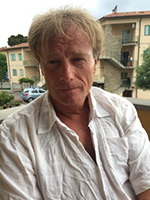
Professor Morten Hjorth-Jensen is a theoretical physicist affiliated with the Department of Physics at the University of Oslo and the Department of Physics and Astronomy at Michigan State University. He has held a shared professorship between these institutions since 2012, with prior roles as an associate professor (1999) and full professor (2001) at the University of Oslo. Education: PhD in Physics, University of Oslo (1993) His research spans computational physics, nuclear many-body theory, quantum computing, and machine learning, focusing on solving Schrödinger's and Dirac's equations for complex systems. He explores algorithmic methods, quantum mechanical properties, and interdisciplinary applications of machine learning in nuclear and particle physics. Recent publications highlight his expertise in quantum computing algorithms for many-body systems, machine learning in nuclear physics, and computational modeling of neutron stars. Themes include neural networks, Bayesian methods, and quantum simulations. Supervision: Geoscience: Optimal Climate Physics: Frictional properties of surface structures generated by machine learning Machine-learning-based molecular modeling of nanoscale geological processes Quantum computing algorithms for quantum mechanical many-body systems
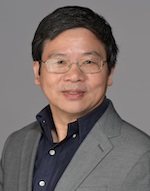
Prof. Eran Rabani is a distinguished researcher and professor holding dual appointments at Tel Aviv University's School of Chemistry and the University of California, Berkeley's Department of Chemistry. At UC Berkeley, he holds the prestigious Glenn T. Seaborg Chair in Physical Chemistry and serves as a Faculty Scientist at Lawrence Berkeley National Laboratory. His research bridges theoretical chemistry, computational physics, and nanomaterials science, with significant contributions to understanding quantum phenomena at the nanoscale. Prof. Rabani earned his Ph.D. in Theoretical Chemistry from The Hebrew University in 1996, followed by postdoctoral research at Columbia University. His academic career progressed from Senior Lecturer to full Professor at Tel Aviv University, where he has maintained a continuous appointment since 1993. His educational background includes a summa cum laude B.Sc. from the Special Program "Amirim" at The Hebrew University. Rabani's research program centers on three interconnected pillars: Optoelectronic Properties of Nanomaterials , where his group develops computational models to describe exciton fine structure and phonon interactions in nanocrystals; Quasiparticle Dynamics , investigating electron transfer processes in nanoscale systems; and Stochastic Electronic Structure Methods , pioneering computational approaches that dramatically reduce the complexity of quantum simulations. His work combines theoretical innovation with practical applications in renewable energy, sensing technologies, and quantum information processing. Analysis of Rabani's recent publications reveals a strong emphasis on quantum confinement effects, exciton dynamics, and the development of stochastic computational methods that enable simulations of previously intractable systems. His research demonstrates increasing interdisciplinary collaboration, particularly with experimental groups working on quantum dots, perovskites, and other nanomaterials, with a clear trajectory toward solving real-world problems in energy conversion and quantum technologies. Prof. Rabani's contributions have been recognized with numerous prestigious awards: International Association of Advanced Materials Fellow (2023) Humboldt Research Award (2022) Vebleo Fellow for Prominence and Leadership in Science (2021) Glenn T. Seaborg Chair in Physical Chemistry (2017) Baker Symposium Speaker at Cornell University (2016) Kavli Frontiers of Science Alumni (2015) Marko & Lucie Chaoul Chair for Theoretical and Computational Nanoscience (2013) His research program is supported by substantial funding from major agencies including the National Science Foundation, Department of Energy, and Israel Science Foundation. Current grants (2021-2025) total over $2.5 million, focusing on semiconductor nanowires, computational materials science, and optoelectronic materials. As Director of The Sackler Center for Computational Molecular and Materials Science at Tel Aviv University, he leads a vibrant research group that bridges theoretical innovation with experimental validation. Prof. Rabani directs The Sackler Center for Computational Molecular and Materials Science at Tel Aviv University and has served in various administrative roles including Vice President for Research and Development. His research group maintains strong collaborations with experimentalists worldwide, creating an intellectual community focused on advancing fundamental understanding of nanoscale phenomena while exploring practical applications in energy, sensing, and quantum technologies.
Romain Duboscq is a Lecturer at the National Institute of Applied Sciences (INSA) in Toulouse and a member of the Institute of Mathematics of Toulouse (IMT). He is affiliated with Paul Sabatier University (University Toulouse III) as evidenced by his contact information at the Toulouse Institute of Mathematics. His research spans several interconnected areas in mathematical physics: Analysis and numerical simulation of partial differential equations related to quantum mechanics Numerical methods for Gross-Pitaevskii type equations in Bose-Einstein condensates Stochastic Schrödinger equations and their numerical approximation Cauchy problem for stochastic Gross-Pitaevskii equations Stochastic regularization effects and the Itô-Tanaka trick Minimization of quantum entropies under local constraints Duboscq has developed the GPELab toolbox, a free-access Matlab resource for solving Gross-Pitaevskii equations, in collaboration with Xavier Antoine. His research often addresses challenging cases with strong nonlinearity and fast rotation in quantum systems. His work demonstrates a consistent integration of theoretical analysis with practical computational methods, making contributions to both fundamental understanding and applied methodology in quantum mechanical systems. His publication record shows sustained productivity across prestigious journals including Journal of Mathematical Physics, Annales Henri Lebesgue, and ESAIM: Mathematical Modelling and Numerical Analysis. The recent publications (2022-2025) demonstrate continued engagement with multiple research threads, particularly in quantum PDEs, stochastic methods, and computational approaches to quantum systems. Duboscq has received recognition through numerous publications in high-impact journals: Multiple publications in Annales Henri Lebesgue (2022) Work published in Journal of Mathematical Physics (2022) Contributions to ESAIM: Mathematical Modelling and Numerical Analysis (2025) Publications in Annals of Probability (2025) Research in Journal of Functional Analysis (2021) Duboscq maintains active research collaborations with several prominent researchers including Xavier Antoine, Christophe Besse, Renaud Marty, Anthony Réveillac, and Olivier Pinaud. His GPELab toolbox represents a significant contribution to computational tools for quantum physics research. While specific student supervision details aren't provided in the available information, his numerous collaborations suggest an active mentoring role in the research community. Duboscq leads the GPELab research group, which focuses on developing numerical methods and computational tools for quantum mechanical systems, particularly Bose-Einstein condensates modeled by Gross-Pitaevskii equations. The group's work bridges theoretical mathematics with practical computational applications, providing resources that enable more accurate simulations of complex quantum phenomena.
Hong Ling serves as Professor and Assessment Coordinator in the Department of Physics & Astronomy at Rowan University's College of Science & Mathematics. Her research spans ultracold atomic physics, condensed matter systems, and quantum light-matter interactions with focus on many-body quantum phenomena at low temperatures. Her research expertise centers on: Topological phases in non-Hermitian quantum systems Bose/Fermi polarons in ultracold gases Quantum phase transitions and symmetry breaking Many-body phenomena in optical lattices She investigates how quantum statistics, interactions, and symmetries interplay to create exotic states like unconventional superconductors and topological matter. Dr. Ling's publication record shows consistent high-impact output in Physical Review A, with recent work on topological amplifiers and polaron physics. Her research demonstrates strong theoretical rigor combined with conceptual clarity, often using vivid analogies to explain complex phenomena. Notable recognitions include: Rowan University Research Achievement Award (2011) KITP Scholar appointment (2013-2015) Long Term Visitor at Harvard-Smithsonian's ITAMP (2014-2015) She maintains active collaborations evidenced by consistent co-authorship with Ben Kain across multiple publications. Her research program benefits from connections to major theoretical physics institutes including Kavli Institute and Harvard-Smithsonian Center. Dr. Ling leads a theoretical research group focused on quantum many-body systems, with her work accessible through her research website and Digital Commons repository. She emphasizes conceptual understanding through analogies while maintaining mathematical rigor in quantum phenomena exploration.
Dr. Viorel DINU serves as a Scientific Researcher III at the National Institute of Materials Physics (NIMP) in Magurele, Romania, where he has maintained continuous research activity since 2001 within the Laboratory of Theoretical Physics and Computational Modeling. His institutional affiliation represents a dedicated career trajectory in materials physics research at Romania's premier materials science institute. His academic foundation includes a Ph.D. in Physics from Bucharest University (2010), preceded by an M.Sc. (2002) and B.S. (2000) in Physics from the same institution. His international research experience features a Marie Curie Actions Early Stage Researcher fellowship at the Institute of Molecular Physics, Polish Academy of Sciences (2006). Ph.D. in Physics, Bucharest University, 2010 Marie Curie Actions Early Stage Researcher, Institute of Molecular Physics Polish Academy of Sciences, 2006 M.Sc. in Physics, Bucharest University, 2002 B.S. in Physics, Bucharest University, 2000 Dr. DINU's research program centers on theoretical investigations of interacting many-particle systems under equilibrium and non-equilibrium conditions, with significant contributions to modeling conduction mechanisms in semiconducting metal oxide (SMOX) gas sensors. His methodological approach integrates quantum transport theory , disorder physics , and computational modeling using specialized tools including Wolfram Mathematica and Python-based scientific environments. His 2004 publications reveal foundational work in two-dimensional electron systems, demonstrating expertise in magnetic field effects on quantum localization and spin polarization phenomena. These studies establish his research trajectory through Landau level physics , Anderson disorder modeling , and correlated electron gas behavior in confined geometries. His distinguished recognition includes the highly competitive Marie Curie Actions Early Stage Researcher Fellowship. Marie Curie Actions Early Stage Researcher Fellowship (2006) While explicit details of student supervision remain undocumented, his sustained research output since 2001 indicates active participation in scientific collaboration and potential mentorship within NIMP's research ecosystem. His grant history prominently features the Marie Curie fellowship as a cornerstone international research opportunity. As a core member of NIMP's Laboratory of Theoretical Physics and Computational Modeling, Dr. DINU contributes to Romania's national materials research infrastructure through advanced computational physics methodologies applied to semiconductor sensor development and fundamental condensed matter problems.