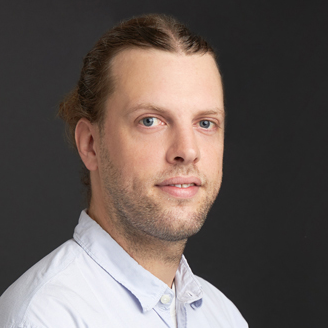
Marius Huber is a Postdoctoral Researcher at the Digital Linguistics Lab, University of Zurich, working with Prof. Lena Jäger on the SNSF-funded ProPoSaL project. His research develops topological data analysis methods for linguistic data and natural language processing applications. Education: PhD in Mathematics, Boston College (supervised by Joshua Greene) His research bridges low-dimensional topology and computational linguistics, specializing in topological data analysis, knot theory, and their applications to NLP. Current work focuses on translating abstract mathematical frameworks into practical tools for analyzing linguistic structures through persistent homology and clustering algorithms. While his foundational publications explore ribbon cobordisms in 3-manifolds, his recent trajectory demonstrates a strategic pivot toward interdisciplinary applications where topological methods solve complex problems in computational linguistics and machine learning. Dr. Huber secures research funding through the SNSF Sinergia grant for ProPoSaL and teaches graduate courses including Mathematical Foundations of Computational Linguistics (Fall 2024), Bayesian Statistics (Spring 2024), and Linear Algebra for Machine Learning (Spring 2023). He leads software development for the Digital Linguistics Lab, creating open-source topology tools including DowkerRipsComplex, DowkerComplex, AuToMATo, and SoaPy – the latter enabling computation of Heegaard Floer invariants for Seifert fibered spaces.
Thorsten Koch is a Professor for Software and Algorithms for Discrete Optimization at Technische Universität Berlin , with multiple leadership roles including Head of the Applied Algorithmic Intelligence Methods (A²IM) , Digital Data and Information for Society, Science, and Culture (D²IS²C) , Kooperativer Bibliotheksverbund Berlin-Brandenburg (KOBV) , and Forschungs- und Kompetenzzentrum Digitalisierung Berlin (digiS) . Based at Zuse Institute Berlin and affiliated with TU Berlin's Institute for Mathematics, he focuses on integrating mathematical optimization with high-performance computing and artificial intelligence to solve complex real-world problems. Research Pillars : Mathematical optimization algorithms Quantum computing applications AI/ML integration in decision systems Energy systems optimization Scientific software development Leadership Roles : Head of Applied Algorithmic Intelligence Methods (A²IM) Head of Digital Data & Information for Society, Science, and Culture (D²IS²C) Head of Kooperativer Bibliotheksverbund Berlin-Brandenburg (KOBV) Head of Forschungs- und Kompetenzzentrum Digitalisierung Berlin (digiS) Key Collaborations : Working with IBM Quantum on quantum optimization Collaborating across institutions for energy system modeling Developing open-source optimization tools like SCIP Contributing to digital library infrastructure Recent Research Trends : Quantum optimization benchmarking Machine learning-aided optimization Multi-objective decision frameworks Energy infrastructure optimization Adaptive algorithm design CO2 network modeling Impact : Advancing hybrid optimization methods Developing open-source tools for scientific computing Building digital infrastructures for libraries and research Exploring quantum-classical algorithm synergies
Robb W Lindgren is a Professor at the University of Illinois at Urbana-Champaign with appointments in Curriculum and Instruction and Educational Psychology . He serves as Associate Dean for Research in the College of Education and holds affiliations with the National Center for Supercomputing Applications (NCSA) , Beckman Institute for Advanced Science and Technology , and Center for Social & Behavioral Science . His research focuses on Embodied learning through gesture and physical interaction Design of mixed/augmented reality educational systems Collaborative STEM education with immersive technologies Recent publications highlight his work in: Biochemistry simulations using haptic feedback (2024) VR-based spatial reasoning for astronomy education (2023) Metaverse learning environments with theory-driven design (2023) Climate change simulations with full-body tracking (2022) His research group explores how physical movement and gestural interfaces shape scientific understanding and conceptual change. Key collaborations include work with Jee Hyang Park , Jun Kang , and Thomas Kim , focusing on Gesture-mediated collaboration XR learning analytics Agency in embodied design
Ingve Simonsen is a Professor in the Department of Physics at the Norwegian University of Science and Technology (NTNU), specializing in surface physics and light scattering phenomena. His research focuses on the theoretical and experimental characterization of randomly rough surfaces, electromagnetic wave interactions, and nanoscale optical phenomena. Affiliated with NTNU's Faculty of Natural Sciences, he maintains an active research program with extensive collaborations across international institutions. His research interests center on surface physics and light scattering , particularly the inversion of scattering data for surface characterization, plasmonics in nanostructures, and statistical properties of rough surfaces. His work bridges theoretical modeling with experimental validation, applying techniques like Mueller matrix ellipsometry and reduced Rayleigh equations to solve complex problems in optical metrology and nanomaterial characterization. Analysis of his recent publications reveals strong emphasis on multi-scale surface topography , polarized light interactions with disordered systems, and nanophotonic applications . His research demonstrates consistent innovation in developing computational frameworks for surface characterization and exploring novel optical phenomena in two-dimensional materials. Professor Simonsen actively mentors students and researchers, evidenced by frequent co-authorship with junior researchers on complex projects. His collaborative approach spans disciplines including condensed matter physics, materials science, and biomedical optics, as seen in his work on graphene-based virus detection sensors.
Michael D. Byrne is a Professor in both the Department of Psychological Sciences and the Department of Computer Science at Rice University. His interdisciplinary work bridges cognitive psychology, human-computer interaction, and computational modeling. Ph.D. in Experimental Psychology, Georgia Institute of Technology, 1996 M.S. in Computer Science, Georgia Institute of Technology, 1995 M.S. in Experimental Psychology, Georgia Institute of Technology, 1993 B.S. in Engineering (Magna Cum Laude), University of Michigan, 1991 B.A. in Psychology (High Distinction), University of Michigan, 1991 Byrne's research focuses on human factors and human-computer interaction, with particular emphasis on cognitive modeling, visual attention, decision-making, and human performance modeling. His work applies computational cognitive architectures like ACT-R to understand human behavior in complex interactive systems. He has made significant contributions to understanding procedural errors, visual search behavior, and usability of complex systems including voting technologies. His interdisciplinary approach combines rigorous experimental methods with sophisticated computational modeling techniques to predict and explain human performance. His recent publications reveal a strong focus on human error prevention, particularly in routine procedural tasks and voting systems. The research demonstrates consistent application of cognitive modeling approaches to practical human-computer interaction problems, with particular attention to visual attention mechanisms, error patterns, and usability assessment. His work spans theoretical cognitive science and applied human factors research, often addressing real-world challenges in system design and evaluation. Kavli Fellow, National Academy of Science, Fall 2009 Outstanding Associate for 2001-2002, Mary Gibbs Jones residential college, Rice University Distinguished Faculty Associate for multiple years at Rice University NIMH Postdoctoral Fellow National Science Foundation Graduate Fellow Georgia Institute of Technology President's Fellow Byrne has successfully secured substantial external funding from NASA, NSF, NIST, and ONR for research on human performance modeling, cognitive architecture, and human-computer interaction. His grants portfolio demonstrates strong interdisciplinary collaboration across computer science, psychology, and engineering domains. He has advised numerous graduate students and mentored undergraduate researchers in his lab. Beyond research, Byrne has served prominently on editorial boards for major journals including Human Factors, Cognitive Science, and Journal of Experimental Psychology: Applied. Byrne directs the Computer-Human Interaction Laboratory (CHIL) at Rice University, where his team conducts cutting-edge research on human performance modeling, cognitive architectures, and human-computer interaction. His lab has been particularly active in applying computational cognitive models to practical problems in system design, voting technology, and aviation human factors. The laboratory environment fosters interdisciplinary collaboration between psychology, computer science, and engineering students and researchers.
Pedro Orvalho is a Research Associate in the Department of Computer Science at the University of Oxford, working with Professor Marta Kwiatkowska on the FUN2MODEL ERC project. His research bridges theoretical computer science with practical applications in software engineering and programming education. His educational background includes: PhD in Computer Science and Engineering (2025) from Instituto Superior Técnico, Universidade de Lisboa MSc in Information Systems and Computer Engineering (2019) from Instituto Superior Técnico BSc in Information Systems and Computer Engineering (2017) from Instituto Superior Técnico Orvalho's research spans Artificial Intelligence, Automated Reasoning, Formal Methods, and Program Repair, with significant contributions to programming education tools. His work integrates formal methods with machine learning techniques to develop novel approaches for program verification and repair, particularly focused on introductory programming assignments. His scientific achievements have been recognized with prestigious awards: Vencer o Adamastor (VoA) - 3rd Edition (2025) ELISE Mobility Grant (2024) COST Travel Grant (2022) Excellence in Teaching IST Awards (2021 and 2024) ACM SIGSOFT Distinguished Paper Award (ESEC/FSE 2021) FCT PhD Scholarship (2020-2024) With five years of teaching experience at Instituto Superior Técnico, Orvalho has developed educational tools like GitSEED and MENTOR that bridge his research with practical classroom applications. His research has been supported by multiple grants including the ERC FUN2MODEL project and FCT PhD Scholarship, demonstrating both academic and practical impact. He maintains active collaborations with researchers from Czech Technical University in Prague, Carnegie Mellon University, and industry partners like OutSystems, contributing to an international research network focused on software reliability and educational technology.
Leonhard Summerer is an Associate Professor at the Faculty of Mathematics, Department of Mathematics . His research primarily focuses on Diophantine Approximation , Geometry of Numbers , and Parametric Approximation . His work explores the Approximation Property in parametric settings, Lattice Theory , and Linear Dependence in number theory. Recent publications include studies on Jarník’s identity, simultaneous approximation to multiple reals, and geometric interpretations of number-theoretic problems. He has authored numerous peer-reviewed articles and contributed chapters to educational books such as 77-mal Mathematik für Zwischendurch , emphasizing mathematical outreach and pedagogical innovation . Active in academic discourse, he has delivered talks on topics like Packings and Tilings in Z and Simultane Approximation m reeller Zahlen since 2006.
Marco Vacca is an Associate Professor in the Department of Electronics and Telecommunications (DET) at Politecnico di Torino and a member of the Interdepartmental Center PIC4SeR - PoliTO Interdepartmental Centre for Service Robotics. His work bridges electronics, nanotechnology, and computing architecture with a focus on innovative solutions to the memory wall problem. His research spans Logic-in-memory computing, Machine learning hardware acceleration, and Nanocomputing with specific emphasis on circuit architectures for probabilistic computing, magnetic devices, hybrid technologies integration, and CAD tools for emerging technologies. Dr. Vacca leads research in RISC-V extensions, hardware accelerators for AI, and autonomous robot systems for agricultural applications through the VLSILAB research group. Recent publications reveal a strong trend toward solving fundamental computing challenges through nanoscale innovations, particularly in memory-centric architectures, molecular field-coupled computing, and novel transistor technologies. His work demonstrates how logic-in-memory approaches can overcome traditional von Neumann limitations while improving energy efficiency for AI workloads. Editorial board member of ELECTRONICS (2021-2023) Program committee member for Design, Automation and Test in Europe Conference (DATE) 2020-2021 Dr. Vacca supervises PhD student Alessandro Varaldi working on 'Hardware AI Accelerators for Automotive Applications' and has led significant research projects including 'Device for Storage and Processing Data and Related Method' (2020-2021) and 'Quantum Computing and Quantum Communication: State of the Art and Applications in the Telco Sector' (2020). His grant portfolio shows strong industry and competitive funding support. As a core member of the VLSILAB research group, Dr. Vacca contributes to advancing VLSI theory and design applications with particular focus on implementing Big Data, Machine Learning, and Neural Networks in specialized hardware architectures that push the boundaries of conventional computing.
Iza Marfisi is a Professor at the University of Le Mans where she became a University Professor in 2024 and was appointed Head of the IEIAH (Computer Environments for Human Learning) team in 2025. She works within the Claude Chappe Institute of Computer Science, focusing on developing educational technologies that empower teachers to create their own digital learning tools. Her research bridges computer science and educational theory to enhance teaching practices through accessible technology solutions, with particular emphasis on making advanced tools usable for non-technical educators. Marfisi's research spans Educational Technology, Serious Games for Education, Mobile Learning, and Extended Reality (XR), with a consistent focus on teacher-centered design. She develops "no-code" authoring tools enabling educators to create custom digital learning experiences deployable across various hardware platforms. Her work specifically targets situated learning with mobile devices, human-computer interactions for learning, and educational applications of mixed and extended reality. This approach democratizes access to advanced educational technologies by removing technical barriers for teachers. Analysis of her recent publications reveals a clear evolution from foundational mobile learning frameworks toward increasingly sophisticated integration of mixed reality and artificial intelligence in educational contexts. Her 2024-2025 work shows particular emphasis on generative AI for educational activity design, immersive pharmacology learning, and collaborative frameworks that connect multiple learning technologies. The publications consistently emphasize practical teacher needs, with many studies conducted in authentic educational settings rather than controlled laboratory environments. Marfisi actively supervises doctoral research across multiple dimensions of educational technology. Her current advisees explore artificial intelligence for mixed reality activity creation, mixed reality for professional training, free software approaches to serious games, and innovative interaction techniques for collaborative learning. Previous students have investigated mixed reality for fraction learning, educational game indexing systems, and mobile educational game design models. Her supervision portfolio demonstrates both depth in specific technical areas and breadth across the educational technology landscape. As Head of the IEIAH team at LIUM since 2025, Marfisi leads a research group focused on computer environments for human learning. She also serves on the Board of Directors for both the Serious Game Society and the IKIGAI association (Games for citizens), and was elected Deputy Director of Research at the Claude Chappe Institute of Computer Science since 2018. Her leadership extends to communications management for the IEIAH team and participation in the LIUM Laboratory Council (2022-2024), demonstrating significant institutional impact beyond her direct research contributions.
Romain Raveaux is an Associate Professor at the LIFAT Computer Science Laboratory, University of Tours, affiliated with Polytech Tours. His research focuses on Image Analysis, Machine Learning, Structural Pattern Recognition, Graph Matching, Graph Neural Networks, Discrete Optimization, Reinforcement Learning, and Transfer Learning . Email: romain.raveaux@gmail.com , romain.raveaux@laposte.net Address: 64 av. Jean Portalis, Tours, France, 37200 Phone: +33 (0)2 47 36 14 27 Research Interests Graph Matching and Neural Networks Discrete Optimization for Pattern Recognition Transfer Learning in Graph-Based Models Historical Document Analysis Scientific Trends His recent work bridges Graph Neural Networks with Mixed-Integer Programming , focusing on Image Semantic Segmentation and Graph Cycle Detection . Earlier studies emphasize Genetic Algorithms for graph classification and Graph Edit Distance optimization in pattern recognition.
Patrick Ciarlet is a Professor at ENSTA Paris, part of the Institut Polytechnique de Paris, where he is a member of the POEMS (Wave Propagation, Mathematical Study and Simulation) research team within the Applied Mathematics Unit (UMA). He also serves as the responsible person for the Master's degree in Mathematics and Applications at the Institut Polytechnique de Paris. His research is structured around two main poles in applied mathematics: Modeling in electromagnetism, neutron scattering and fluid mechanics Numerical analysis of PDEs and scientific computing Professor Ciarlet's work demonstrates a strong focus on mathematical methods for solving problems in wave propagation and electromagnetism, particularly with challenging materials such as metamaterials that have sign-changing coefficients. His research spans theoretical mathematical analysis and practical numerical implementations, with applications in nuclear engineering (neutron diffusion equations) and plasma physics. His publication record shows consistent contributions to finite element methods, with particular expertise in stability analysis, error estimation, and specialized approaches like T-coercivity for handling problems with sign-changing coefficients. He has also developed educational resources through lecture notes on Maxwell's equations and variational methods for non-coercive problems. As an academic leader, he plays a significant role in shaping mathematics education at the graduate level through his responsibility for the Master's degree program in Mathematics and Applications, contributing to ENSTA Paris's research focus on cutting-edge areas with applications in sustainable energy, transportation, and defense.
Matthias Becker is a Professor at the Institute for Practical Computer Science within the Faculty of Electrical Engineering and Computer Science at Leibniz University Hannover, where he has been a core member of the Human-Computer Interaction group since 2019. He serves as Internship Coordinator for Computer Science and Computer Engineering and holds key roles in the Computer Science Examination Board and Selection Committee, actively shaping academic governance and student development. His academic journey began with PhD studies at the University of Bremen (1996-2000) supported by a DFG grant, followed by a postdoctoral permanent position at Leibniz University Hannover (2000-2019), an Associated Assistant Professor role at École des Mines de Nantes (2000), and a Habilitation in Computer Science in 2013. This foundation enabled his transition to a full professorship in 2019. Becker's research spans Human-Computer Interaction, Simulation and Modeling, and Bio-inspired Computing, with applications in agriculture, renewable energy, and manufacturing. His work integrates distributed systems, optimization algorithms, and wireless sensor networks to solve complex real-world problems, such as greenhouse monitoring, wind farm logistics, and tire noise reduction. Recent publications reveal a strategic focus on practical validation of simulation models and cross-domain applications of nature-inspired algorithms. His 15 most recent publications (2018-2024) demonstrate consistent innovation in applying simulation techniques to offshore wind farm installation, agricultural pest management, and sports science. These works emphasize real-world validation, collaborative problem-solving, and the development of domain-specific optimization frameworks that bridge theoretical algorithms and industrial implementation. As Internship Coordinator, Becker facilitates critical industry-academia connections for students, while his examination board responsibilities ensure rigorous academic standards. His leadership in the Human-Computer Interaction group drives research on interactive systems for agriculture, energy, and health, with particular emphasis on user-centered design in complex operational environments like wind farm logistics and greenhouse automation.
Debabrota Basu is a tenured faculty member (Inria Starting Faculty Position - ISFP) at the Scool team (previously called SequeL) of Inria Centre at University of Lille in France. He teaches postgraduate-level courses on privacy, responsible machine learning, and research methods in AI at École normale supérieure-PSL University, Université de Lille, and Centrale Lille. He is also a member of the ELLIS Society (European Laboratory for Learning and Intelligent Systems) and the Paris unit of ELLIS. Dr. Basu earned his PhD in Computer Science from the Department of Computer Science, School of Computing, National University of Singapore, advised by Stéphane Bressan and Pierre Senellart. Prior to that, he obtained a B.E. degree with Honours in Electronics and Telecommunication Engineering from Jadavpur University. Before joining Inria, he was a postdoctoral researcher at Chalmers University of Technology's Data Science and AI Division. Dr. Basu's research focuses on constructing algorithms for developing efficient, robust, private, and ethical learning machines that solve real-world problems. His methodological approach blends statistics, machine learning, and optimization. His application interests span sustainable agro-ecology, medical and pharmaceutical applications, energy-efficient autonomous systems, and algorithmic audits. Recent collaborations include the Inria-Indian Statistical Institute associate team SeRAI for developing Sequential Testing and Learning Algorithms for Verifiably Robust and Responsible AI, and the Inria-INRAE collaboration on Resilient Agricultural Decision Making under Environmental Risks. His publication record demonstrates expertise in bandit algorithms, reinforcement learning, and privacy-preserving machine learning. Recent work shows a strong theoretical foundation with practical applications, particularly in pure exploration bandits, differential privacy mechanisms, constrained optimization, and fairness verification. His research bridges the gap between theoretical guarantees and real-world deployment challenges across multiple domains. Dr. Basu has received notable recognition for his contributions: Best Student Paper Award at ACM EAAMO 2022 for 'On Meritocracy in Optimal Set Selection' Young researcher (JCJC) grant from the French National Research Agency (ANR) in 2022 in 'Artificial Intelligence and Data Science' He leads the project 'RL under Real-life Constraints: Regrets and Algorithms' and supervises PhD students and postdoctoral researchers. His research is supported by multiple projects including REPUBLIC ('Vers l'IA responsable avec l'apprentissage par renforcement sous contraintes') and 'Foundations of robustness and reliability in artificial intelligence.' Dr. Basu actively collaborates with institutions worldwide, including establishing the RELIANT associate team with Kyoto University for investigating structured multi-armed bandit problems.
Roie Levin is an Assistant Professor at Rutgers University's Department of Computer Science. He received his PhD in Algorithms, Combinatorics and Optimization from Carnegie Mellon University in 2022, advised by Anupam Gupta. Prior to that, he worked at the Allen Institute for Artificial Intelligence (2015-2017) and earned dual BSc degrees in Computer Science/Applied Mathematics and Mathematics from Brown University (2015). Before joining Rutgers, he was a Fulbright Postdoctoral Fellow at Tel Aviv University under Niv Buchbinder. Current Role: Assistant Professor in Computer Science Academic Training: PhD (2022) CMU, BSc (2015) Brown University Postdoctoral: Fulbright Fellow at Tel Aviv University Levin's research focuses on approximation algorithms for uncertain environments (online/dynamic/streaming models) and submodular function optimization. His work spans theoretical foundations and practical implementations across distributed systems, geometric constraints, and reinforcement learning paradigms. Teaching includes graduate and undergraduate algorithms courses (CS 344, CS 513) with emphasis on problem-solving techniques, computational complexity, and modern algorithmic trends. His publications showcase expertise in online algorithms, submodular optimization, and approximation theory with applications in clustering, caching, and machine learning. The 2025 articles demonstrate continued exploration of online consistency and contention resolution, while 2023-2024 works focus on submodular optimization under uncertainty and dynamic environments. Earlier publications (2015-2017) cover semantic parsing, geometric approximation, and planar graph optimization. Fulbright Postdoctoral Fellow Levin's research connects theoretical guarantees with practical implementations, bridging classical algorithm design with modern machine learning applications. His recent work explores primal-dual methods in online settings and robust subspace approximation techniques for streaming data environments.
Professor Kenneth Harris is a Distinguished Research Professor in the School of Chemistry at Cardiff University, specializing in the fundamental properties of solids and the development of advanced experimental techniques for materials characterization. His work bridges the gap between traditional crystallography and modern analytical methodologies, with a particular focus on overcoming limitations in structural analysis of complex materials. His research spans three primary interconnected themes: the development of techniques for determining crystal structures of organic solids directly from powder X-ray diffraction data; the advancement of in-situ solid-state NMR strategies for monitoring crystallization processes in real time; and the investigation of structural properties of anisotropic materials using polarized X-ray beam techniques, including the pioneering development of X-ray Birefringence Imaging (XBI). This work has significant implications for pharmaceutical development, materials science, and understanding biological crystallization processes. Analysis of his recent publications reveals a consistent trajectory toward increasingly sophisticated multi-technique approaches to materials characterization. His work increasingly integrates 3D electron diffraction, powder XRD, solid-state NMR, and computational methods like DFT calculations to solve previously intractable structural problems. A notable trend is the application of these methods to biologically relevant molecules (xanthine, riboflavin, L-tyrosine) and the development of techniques to monitor dynamic processes like crystallization and phase transitions in real time. His research demonstrates a shift from purely structural determination toward understanding the dynamic processes that govern material formation and transformation. Distinguished Research Professor title at Cardiff University Key contributor to the development of X-ray Birefringence Imaging Significant contributions to NMR crystallography methodologies Extensive publication record in top chemistry and materials science journals Professor Harris leads a research group focused on developing and applying cutting-edge techniques for materials characterization. His work has significant implications for pharmaceutical development, where understanding crystal structure and polymorphism is critical for drug efficacy and safety. His group has developed innovative approaches to monitor crystallization processes in real time, which has applications in both industrial manufacturing and understanding natural biomineralization processes. The group maintains strong collaborations with researchers across multiple disciplines, including physics, biology, and engineering, reflecting the interdisciplinary nature of modern materials science research.