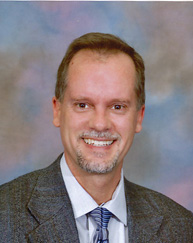
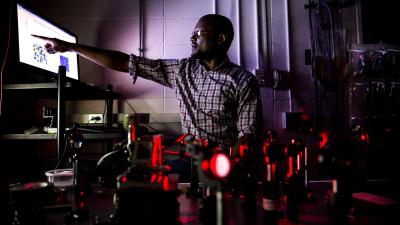
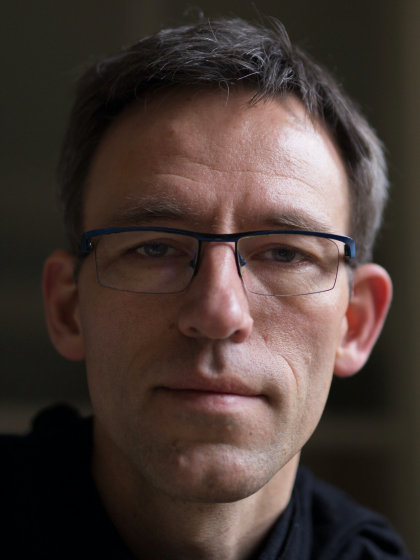
Benoit Forget is the Korea Electric Power Professor of Nuclear Engineering and the Department Head of Nuclear Science and Engineering at MIT. He joined MIT in 2008 and leads the MIT Computational Reactor Physics Group (CRPG), which focuses on advancing computational methods for reactor simulation. His research spans Monte Carlo and deterministic transport methods, multiphysics coupling, and uncertainty quantification. He co-developed OpenMC and OpenMOC, open-source tools for reactor analysis. Forget holds a PhD from Georgia Tech and has received awards including the 2013 Landis Young Member Engineering Achievement Award. He teaches courses such as 22.05 Neutron Science and Reactor Physics, and actively contributes to MIT’s computational science initiatives. Educations: PhD in Nuclear Engineering (Georgia Tech, 2006), MS and BS in Energy Engineering (École Polytechnique de Montréal, 2003). Research Interests: Computational reactor physics, radiative transport, high-performance computing, Monte Carlo and deterministic methods, multiphysics coupling, nuclear data uncertainty. Labs/Teams: MIT Computational Reactor Physics Group (CRPG), Consortium for Advanced Simulation of Light Water Reactors (CASL).
M. Granger Morgan is the Hamerschlag University Professor of Engineering at Carnegie Mellon University , with appointments in the Department of Engineering and Public Policy , Department of Electrical and Computer Engineering , and H. John Heinz III College . He co-directs the NSF Center for Climate and Energy Decision Making and the Electricity Industry Center at CMU. Education: Ph.D., Applied Physics and Information Science, University of California, San Diego (1969) M.S., Astronomy and Space Science, Cornell University (1965) B.A., Physics, Harvard College (1963) His research spans science, technology, and public policy with focus areas in energy systems , climate change mitigation , electric grid resilience , and uncertainty characterization in policy analysis . Recent publications analyze hydrogen market barriers , carbon sequestration timelines , and interdependent energy infrastructure risks . Scientific leadership includes: Member, National Academy of Sciences Member, American Academy of Arts and Sciences Co-chair, NAS Report Review Committee Board member, International Risk Governance Council Foundation Advisory Board, E.ON Energy Research Center, RWTH Aachen DOE Electricity Advisory Committee member Former EPA Science Advisory Board Chair Fellow of AAAS, IEEE, and Society for Risk Analysis Contact: Office 5220 Wean Hall, Phone 412-268-2672, Email granger.morgan@andrew.cmu.edu
David Bindel is an Associate Professor in the Department of Mathematics at Cornell University, affiliated with the College of Arts and Sciences, College of Engineering, and Cornell Ann S. Bowers College of Computing and Information Science. He earned his Ph.D. in Mathematics from the University of California, Berkeley in 2006. His research focuses on applied numerical linear algebra, eigenvalue problems, and their applications in plasma physics, network analysis, and nonlinear systems. He develops methods for analyzing complex systems, including magnetic confinement in stellarators, stability of MHD systems, and community detection in networks. His work bridges theoretical foundations with practical computational tools, such as formal verification of linear algebra algorithms and scalable Gaussian process models. Bindel’s research explores the interplay between structure and computation, leveraging eigenvalue analysis to address challenges in computer vision, opinion dynamics, and engineering design. He has contributed to advancements in numerical methods for large-scale systems, including iterative solvers, spectral approximation techniques, and stochastic optimization. His interdisciplinary approach spans applied mathematics, computer science, and physics, with applications in fusion energy, machine learning, and network science. Recent work highlights include high-order expansions for magnetic confinement, adaptive filtering for dynamical systems, and Bayesian optimization strategies. His publications emphasize rigorous analysis alongside computational scalability, addressing both theoretical and practical aspects of modern scientific computing. Despite no explicitly listed awards, his contributions reflect significant impact in his fields.
Prof. Prita Pant is a faculty member in the Department of Metallurgical Engineering and Materials Science at the Indian Institute of Technology Bombay (IIT Bombay). She holds a Ph.D. and M.S. in Materials Science from Cornell University and a B.E. in Metallurgical Engineering from Roorkee University. Her research focuses on the mechanical behavior of advanced materials, particularly thin films and shape memory alloys. B.E., Metallurgical Engineering, Roorkee University (1997) M.S., Materials Science, Cornell University (2001) Ph.D., Materials Science, Cornell University (2004) Her research interests include mechanical behavior of thin films , dislocation dynamics , nanoindentation studies , simulation of deformation processes , and Ni-Ti based shape memory materials . She employs both experimental and computational techniques to investigate microstructural evolution and deformation mechanisms in metals. The available publications indicate a strong focus on thin film mechanics , dislocation behavior , and microstructure-property relationships , particularly under mechanical loading. Her work bridges computational modeling and experimental characterization, with applications in structural and functional materials. There are no scientific awards explicitly mentioned in the provided text. While no specific students are listed, Prof. Pant leads the Computational Mechanics and Experimental Group (CMEG@IITB) , indicating active supervision of graduate students and involvement in research grants. Her research group website suggests ongoing funded projects and collaborative work. She is affiliated with the Computational Mechanics and Experimental Group (CMEG@IITB) , which conducts research on multiscale mechanics of materials, combining simulation and experimentation to understand deformation phenomena.
Nuno Loureiro is an Associate Professor at the Department of Nuclear Science and Engineering at MIT, with a secondary appointment in the Physics Department. He obtained his PhD in Physics from Imperial College London in 2005 and held postdoctoral positions at Princeton University and the UK’s Culham Centre for Fusion Energy before joining MIT in 2016. His research focuses on plasma physics , particularly theory and simulations of astrophysical and laboratory plasmas , including magnetic reconnection, turbulence, and kinetic effects. His work bridges classical plasma dynamics with emerging quantum computing applications. The 15 most recent publications highlight advancements in quantum algorithms for plasma simulations , magnetic reconnection mechanisms , and turbulence dynamics across relativistic and non-relativistic plasmas. Topics include plasmoid-mediated inverse energy transfer, data-driven fluid closures, and ion-acoustic instability impacts. 2015 Thomas H. Stix Award (American Physical Society) NSF CAREER Award
Francesca De Benetti is a Researcher at the Chair of Computer Aided Medical Procedures (Prof. Navab) at the Technical University of Munich (TUM), affiliated with the Interdisciplinary Research Laboratory (IFL) and NARVIS Lab at the Garching Campus. Her research focuses on Nuclear Medicine and Machine Learning for medical image processing, particularly in internal radiation therapy simulations and AI-driven segmentation. Education : M.Sc. in Biomedical Computing (TUM, 2018-2020), B.Sc. in Information Engineering (Università di Padova, 2015-2018) Francesca's recent publications highlight her work in Monte Carlo dosimetry , dynamic PET tracer modeling , and deep learning-based anomaly detection in medical imaging. Her projects emphasize personalized radiation therapy and cross-modality image translation , often involving collaborations with nuclear medicine experts and radiologists. She contributes to teaching at TUM, leading lectures and practical courses on topics including Medical Augmented Reality , Computer Aided Medical Procedures , and Deep Learning for Medical Applications . Francesca is actively involved in labs such as the IFL Lab and NARVIS Lab , focusing on interdisciplinary applications of computer vision and generative AI in medicine.
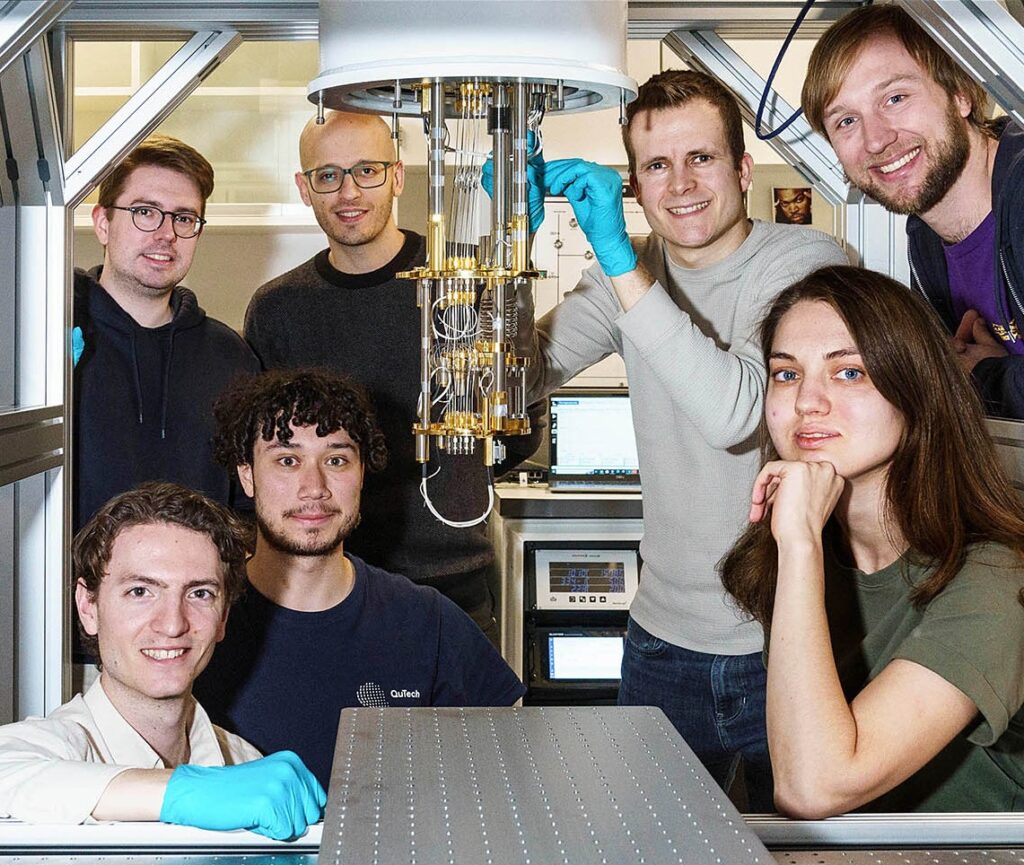
Carlos Errando Herranz serves as an Assistant Professor in the Quantum and Computer Engineering Division at Delft University of Technology's Faculty of Electrical Engineering, Mathematics and Computer Science (EEMCS) and as a Principal Investigator at QuTech. His research focuses on developing scalable quantum photonic integrated circuits using semiconductor fabrication processes compatible with existing infrastructure for quantum internet applications. He received Bachelor's and Master's degrees from Universitat Politècnica de València (2013) and a PhD in Micro and Nanosystems from KTH Royal Institute of Technology (2018), followed by postdoctoral positions at KTH and MIT as a Marie Curie fellow. His lab investigates quantum photonics, integrated photonics, and color centers with emphasis on diamond tin-vacancy systems and silicon-based quantum emitters. Recent publications demonstrate strong expertise in tuning quantum emitters via strain engineering, heterogeneous integration of spin-photon interfaces, and MEMS-enabled reconfigurable photonics. Key advancements include cavity-enhanced quantum memories, superconducting detector integration, and spectral control of solid-state emitters for quantum networks. Dr. Herranz advises seven graduate students including PhD candidates Vicky Dominguez Tubio, Arjan Mejas, Matteo Pirro, Christian Primavera, Jan Riegelmeyer, and Elena Volkova, along with Master student Bram Zijlstra. His team comprises postdocs Lin Jin and Pat Laferriere, and interns Elsa Herranz Valiente and Ernest Staffetti Cruañas. The Errando Herranz Lab operates within QuTech's Quantum Internet Division at Delft University, maintaining specialized facilities for nanofabrication and optical characterization of quantum photonic devices. Current research directions include developing CMOS-compatible quantum memories operating at telecom wavelengths and scalable architectures for quantum repeaters.
Andreas Pautz is a Full Professor at École Polytechnique Fédérale de Lausanne (EPFL), affiliated with the School of Basic Sciences, Institute of Physics, and the Laboratory of Reactor Physics and Systems Behaviour (LRS). He also contributes to educational leadership through his role in EDEY - Enseignement under AVP-DLE-EDOC. His office is located at PH D3 465, Building PH, Station 3, Lausanne, Switzerland, and he can be reached via email at andreas.pautz@epfl.ch or by phone at +41 56 310 34 97. His research focuses on nuclear reactor physics, reactor systems behavior, neutron interactions, computational modeling of nuclear reactors, and the decommissioning of nuclear power plants. As head of the LRS laboratory, he leads a team dedicated to advancing the understanding of reactor design and fuel cycle optimization. Prof. Pautz is deeply involved in graduate education, supervising numerous PhD students and teaching core courses such as Physics of Nuclear Reactors, Nuclear Computations Lab, and Decommissioning of Nuclear Power Plants. He also contributes to international education through the Frédéric Joliot / Otto Hahn Summer School on Nuclear Reactors Physics, Fuels and Systems. He has successfully supervised over 20 PhD theses at EPFL, indicating a long-standing and active role in doctoral education. His academic advising spans topics in reactor physics, computational methods, and nuclear safety. His laboratory, LRS (https://lrs.epfl.ch/), serves as a hub for research and training in nuclear reactor systems. The group engages in both theoretical and experimental aspects of reactor physics, aiming to address modern challenges in nuclear energy sustainability and safety. Professor, Laboratory of Reactor Physics and Systems Behaviour (LRS), EPFL SB IPHYS Professor, EDEY - Enseignement, EPFL VPA-AVP-DLE AVP-DLE-EDOC
Edoardo Charbon is a Full Professor at École Polytechnique Fédérale de Lausanne (EPFL) in the School of Engineering, where he leads the Advanced Quantum Architecture Lab (AQUA). He also serves on the School Council STI and is Co-Director of STI-SSIQ Administration. Previously, he was a full professor and chair at Delft University of Technology from 2008 to 2016. Charbon received his Elektrotechnik Diploma from ETH Zurich, M.S. from UC San Diego, and Ph.D. from UC Berkeley, all in electrical engineering. His career spans industry experience at Cadence Design Systems and Canesta Inc. before joining EPFL in 2002. His research focuses on ultra high-speed and 3D optical sensors, with applications in LiDAR, FLIM (Fluorescence Lifetime Imaging Microscopy), PET (Positron Emission Tomography), FCS (Fluorescence Correlation Spectroscopy), and NIROT (Near-Infrared Optical Tomography). He has pioneered deep-submicron CMOS SPAD technology, which is now mass-produced and used in smartphones, telemeters, and medical diagnostics. His recent work bridges cryo-CMOS circuits for quantum computing with advanced optical sensing techniques. Analysis of his recent publications reveals a strong trend toward integrating quantum technologies with practical imaging applications. His work spans from fundamental device development (SPAD sensors, cryo-CMOS circuits) to applied systems (LiDAR engines, medical imaging devices), with increasing integration of machine learning techniques for real-time processing. 2023 IISS Pioneering Achievement Award Fellow of the IEEE Distinguished visiting scholar, W. M. Keck Institute for Space at Caltech Fellow, Kavli Institute of Nanoscience Delft Distinguished lecturer, IEEE Photonics Society Professor Charbon has authored or co-authored over 500 papers and two books, and holds 27 patents. His research has been supported by collaborations with organizations including Bosch, X-Fab, Texas Instruments, Maxim, Sony, Agilent, and the Carlyle Group. He has driven significant innovation in CMOS SPAD technology, which is now commercially deployed in various applications. He leads the Advanced Quantum Architecture Lab (AQUA) at EPFL, which focuses on the development of advanced sensor systems combining quantum technologies with conventional electronics. The lab has been instrumental in creating SPAD-based imaging systems that push the boundaries of time-resolved optical detection.
Steven L. Manly is a Professor of Physics at the University of Rochester within the College of Arts, Sciences and Engineering. He has been affiliated with the University of Rochester since 1998, following a decade at Yale University as both a postdoc and faculty member. Professor Manly received his BA in chemistry, mathematics, and physics from Pfeiffer College in 1982 and his PhD in experimental high-energy physics from Columbia University in 1989 under Charles Baltay. His research spans high energy, nuclear, and gravitational physics, with a current focus on neutrino physics across multiple major experiments. His primary research interests include neutrino interactions and oscillations, with significant contributions to the T2K experiment (for which he shared the 2016 Breakthrough Prize in Fundamental Physics), the MINERvA experiment at Fermilab, and the Deep Underground Neutrino Experiment (DUNE). His work aims to understand neutrino properties, measure oscillation parameters, and investigate potential connections to matter-antimatter asymmetry in the universe. The recent publications reflect a strong focus on neutrino cross-section measurements, detector calibration techniques, and data analysis methods for the T2K and DUNE experiments. His research group contributes significantly to advancing our understanding of neutrino properties and interactions through precision measurements. NY State Professor of the Year (2003) Mercer Brugler Distinguished Teaching Professor (2002-2005) American Association of Physics Teachers (AAPT) Award for Excellence in Undergraduate Teaching (2007) Breakthrough Prize in Fundamental Physics (2016, shared as member of T2K) Professor Manly has authored or co-authored numerous publications in leading physics journals, with recent work focusing on neutrino interaction measurements, detector development, and data analysis techniques. His research has involved collaborations with major international facilities including Fermilab, J-PARC in Japan, and Brookhaven National Laboratory. While specific grant information isn't detailed in the provided text, his participation in large-scale international collaborations suggests significant research funding support.
Moussa Ngom is an Associate Professor in the Department of Physics, Applied Physics and Astronomy at Rensselaer Polytechnic Institute (RPI), affiliated with the School of Science and research centers including the Center for Ultrafast Optical Sciences (CUOS) and the Center for Materials, Devices, and Integrated Systems (CMDIS). His work focuses on wavefront shaping, quantum optics, and structured light manipulation to address challenges in biological imaging, quantum communication, and nuclear security.
Christoph F. Schmidt is the Hertha Sponer Distinguished Professor of Physics at Duke University with cross-appointments in the Thomas Lord Department of Mechanical Engineering and Materials Science, Biology, and Biomedical Engineering. He serves as Co-Director of the Duke Materials Initiative and leads an active research program at the intersection of physics and biology. His educational background includes a D.R. from the Technical University of Munich (Germany) in 1988. Schmidt has established himself as a leading researcher in biophysics through decades of innovative work. Professor Schmidt's research spans multiple scales of biological organization, from single molecules to whole organisms. His lab investigates cellular mechanics using advanced techniques including optical trapping, atomic force microscopy, and microrheology. A significant innovation from his group involves single-walled carbon nanotubes for high-bandwidth intracellular tracking. Current research focuses on cardiomyocyte mechanics, Drosophila tissue dynamics, and computational analysis of complex biological systems. His work on motor proteins like Eg5 and ncd has provided fundamental insights into cellular division mechanics. His recent publications (2021-2025) demonstrate increasing integration of computational approaches with experimental biophysics, particularly in analyzing cardiac tissue mechanics and Drosophila sensory systems. The work shows progression from fundamental biophysical measurements toward applications in understanding disease mechanisms and biological function. Professor Schmidt teaches several courses including PHYSICS 995 (Graduate Training Internship), PHYSICS 493 (Research Independent Study), PHYSICS 415 (Biophysics II), PHYSICS 174 (Introduction to Frontiers of Biophysics), and BIOLOGY 425 (Biophysics II). He has successfully mentored numerous graduate students to completion, including recent PhD graduates Dr. Mingru Li and Dr. Xiaoxuan Jian. The Schmidt Lab, part of Duke's Physics Department and the Duke Soft Matter Center, maintains state-of-the-art equipment for optical trapping, atomic force microscopy, and advanced light microscopy. The lab participates in the Triangle Soft Matter Workshop, fostering collaborations with researchers from Duke, UNC Chapel Hill, and NC State University. Current research directions include mechanical responses of suspended cells, tracking non-equilibrium cellular fluctuations, nuclear mechanics, and bacterial membrane mechanics under turgor pressure.
Zhe Ji is an Assistant Professor in the Department of Biomedical Engineering at McCormick School of Engineering and the Department of Pharmacology at Feinberg School of Medicine, Northwestern University. His research integrates computational and experimental genomics to study gene transcription and RNA translation in cell fate commitment and oncogenic processes, aiming to develop precision medicine strategies. **Education**: Postdoctoral Fellow in Cancer Systems Biology, Harvard Medical School Postdoctoral Fellow in Computational Biology, Broad Institute of MIT and Harvard Ph.D. in Computational Genomics, Rutgers University B.S. in Biotechnology, Nanjing University, China **Research Focus**: Keywords include Data Science, Computational Biology, Functional Genomics, RNA, Cancer, Inflammation, and Machine Learning. The lab explores regulatory mechanisms underlying disease, with a focus on translational control, cancer metastasis, and inflammatory networks. **Grants & Advising**: No specific grants or student advisees listed. The lab emphasizes collaborative projects and computational-experimental approaches. **Lab Affiliations**: Zhe Ji’s lab is part of Northwestern’s interdisciplinary environment, bridging engineering and medicine to advance genomic technologies and therapeutic strategies.
Prof. dr. Steven Hoekstra is an Associate Professor of Atomic and Molecular Physics at the University of Groningen's Faculty of Science and Engineering, within the Van Swinderen Institute. His research focuses on precision measurements using cold molecules to explore fundamental physics, including Stark deceleration, laser cooling, and searches for physics beyond the Standard Model. He leads the NL-eEDM program at Nikhef, investigating the electron's electric dipole moment. Hoekstra is also involved in educational innovation, having received the Teacher of the Year award (2020) and a Senior Teacher Qualification (2023). He has supervised over 11 PhD theses and currently mentors 5 students. His work combines experimental techniques with theoretical insights, addressing questions like symmetry violations and quantum dynamics. Key projects include manipulating BaF molecules with electrostatic fields and exploring levitated nanoparticles as sensors. Hoekstra has secured major grants, including NWO VICI (2022) and VIDI (2013), and collaborates internationally on projects like the European Strategy for particle physics. Recent articles highlight advancements in molecular beam control, spin-precession methods for EDM searches, and opportunities in radioactive molecules. He actively participates in the Physics Olympiad Netherlands as chair, contributing to science outreach and education.
Prof. Waldemar Kolanus leads the Molecular Immunology and Cell Biology department at the University of Bonn's Life & Medical Sciences Institute (LIMES) . His research bridges immunoregulation , stem cell dynamics , and metabolic stress responses in immune cells. Unit 2 member at LIMES Principal investigator in SFB 704 and ImmunoSensation Cluster Leads a multidisciplinary lab with postdocs, PhD students, and technical staff His work focuses on intracellular signaling pathways connecting immune activation to tissue homeostasis, particularly through: Cytohesin proteins in integrin-mediated adhesion and migration TRIM71 in stem cell regulation and congenital hydrocephalus High-salt environments affecting macrophage function Publication trends show expertise in immune cell migration , genetic models , and chemical inhibition , with frequent use of mice and zebrafish for in vivo studies. Key articles explore: TRIM71's dual role in auditory development and germ cell maintenance Cytohesin family's Golgi regulation and insulin signaling Ruxolitinib's off-target migration inhibition of dendritic cells Contact details: Address: LIMES Institute, Carl-Troll-Straße 31, Bonn Email: kolanus.sekretariat@uni-bonn.de Phone: +49 228 73-62788