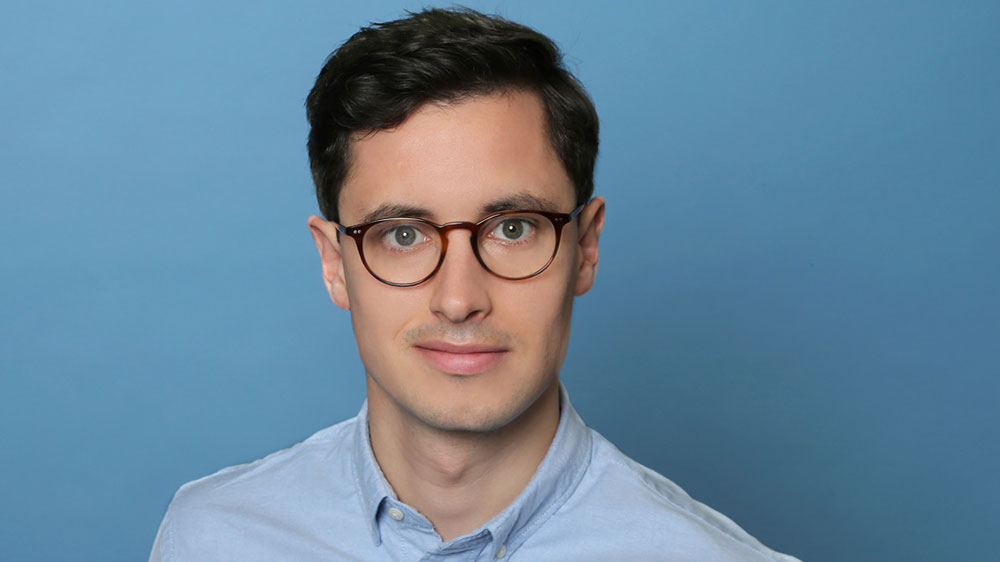
Sergii Nichenko is a Researcher at the Paul Scherrer Institute (PSI) within the Laboratory for Reactor Physics and Thermal-Hydraulics. He works in Villigen, Switzerland, and can be reached at sergii.nichenko@psi.ch or +41 56 310 22 96. Research Areas Nuclear Engineering Reactor Physics Thermal Hydraulics Energy Systems Computational Modeling Radiation Safety Nuclear Materials
André Hodder is a Senior Lecturer and Researcher at École polytechnique fédérale de Lausanne (EPFL) within the School of Engineering. He holds multiple affiliations across the institution, serving as Senior Lecturer in Electrical Engineering (SEL-ENS), Microengineering (SMT-ENS), and as a Researcher in the Distributed Electrical Systems Laboratory (DESL). His office is located in building ELG 037 with additional workspace in ELL 116. Dr. Hodder's research focuses on electrical machines, particularly linear induction motors for high-speed transportation systems. His work addresses critical challenges in maglev technology, Hyperloop systems, and transportation electrification. He has developed highly accurate analytical models for linear induction motors that consider multiple physical effects including finite motor length, magnetomotive force harmonics, slot effects, edge effects, and tail effects. His research contributes to the integration of propulsion, levitation, and guidance functionalities into single motor systems, aiming to improve efficiency and performance of future high-speed transportation solutions. His recent publications (2024-2025) demonstrate a strong research trajectory in advancing linear motor technology for sustainable transportation. The publications reveal a consistent focus on modeling, optimization, and control strategies for linear induction motors, with particular emphasis on enhancing levitation force capabilities and developing decoupled control schemes for propulsion and levitation. Dr. Hodder actively supervises doctoral research, having guided the theses of Lucien Pierrejean and Simone Rametti, both working on linear motor applications for high-speed transportation systems. His teaching portfolio includes fundamental courses in energy conversion, electrical machines, and advanced laboratory work in electrical energy systems. As a member of the Distributed Electrical Systems Laboratory, he contributes to EPFL's research mission in sustainable energy systems and transportation electrification, working within a collaborative environment that bridges theoretical modeling with practical implementation.
Dr. Arthur F. Petusseau is a biomedical optics researcher specializing in fluorescence-guided surgery, hypoxia imaging, and radiation therapy monitoring. His work focuses on developing advanced optical imaging techniques for tumor detection, oxygen quantification, and surgical navigation. Key affiliations: Collaborator with experts like Brian Pogue, Petr Bruza, and Marien Ochoa Institutional affiliation not explicitly stated in provided text Research Interests: Dr. Petusseau's work spans biomedical optics, surgical imaging, and tumor oxygenation analysis. He develops technologies leveraging porphyrin-based fluorescence, single-photon sensors, and real-time oxygen mapping to improve cancer treatment outcomes. Recent Publications: His research includes time-of-flight fluorescence imaging for tumor depth assessment, delayed fluorescence signal processing for hypoxia quantification, and Cherenkov imaging for radiation therapy monitoring. Keywords across his work include Photodynamic Therapy , Radiotherapy , SPAD Sensors , and Biological Imaging . Technical Innovations: Notable contributions include the PRESTO non-invasive skin lesion detection tool and pressure-enhanced tissue oxygen sensing. His 2025 work on deep learning-enhanced fluorescence reconstruction demonstrates cutting-edge computational applications in surgical imaging.
Ivana Kovacevic-Badstübner serves as a Lecturer at ETH Zurich's Department of Information Technology and Electrical Engineering, working within the Chair of Power Semiconductors under Prof. Ulrike Grossner. Her research focuses on advanced electromagnetic modeling techniques for power semiconductor devices and modules, with particular emphasis on Wide Bandgap (WBG) technologies. Her research interests span electromagnetic modeling of power electronics systems, multiphysics simulation of semiconductor devices, Wide Bandgap semiconductor applications, EMI filter design and analysis, and power module reliability. She has made significant contributions to the understanding of parasitic effects in power modules and the development of virtual prototyping methodologies for power electronics design. Kovacevic-Badstübner's publication record demonstrates a strong focus on practical engineering solutions for power electronics challenges, with numerous contributions to IEEE journals and international conferences. Her work shows consistent progression from fundamental electromagnetic modeling techniques to applied research in aircraft power systems and reliability prediction. Her scientific contributions primarily appear in the fields of power electronics and electromagnetic compatibility, with a particular emphasis on the design and analysis of power semiconductor modules using Silicon Carbide technology. Her research has addressed critical challenges in thermal management, parasitic extraction, and reliability prediction for next-generation power electronic systems. As a lecturer at one of the world's leading technical universities, she contributes to the education of future engineers in power electronics and semiconductor technology, bridging theoretical knowledge with practical industry applications.
Parissasadat Alavi is a Doctoral Assistant at the Computational Solid Mechanics Laboratory (LSMS) within the Institute of Computational Engineering and Sciences (IIC) at École Polytechnique Fédérale de Lausanne (EPFL). She is affiliated with the School of Architecture, Civil and Environmental Engineering (ENAC) and serves as a student in EPFL's Doctoral Program in Mechanics (EDME). Her research focuses on computational modeling and analysis of solid mechanics problems, leveraging advanced numerical methods and finite element techniques. She contributes to interdisciplinary projects at LSMS, which specializes in computational simulations of material behavior and structural systems. Contact: parissa.alavi@epfl.ch . Office: GC A2 504, Bâtiment GC, Station 18, Lausanne, Switzerland.
Pierre Beck is a Doctoral Assistant at the École Polytechnique Fédérale de Lausanne (EPFL), affiliated with the School of Engineering’s Institute of Mechanical Engineering (IGM) and the Emergent Complexity in Physical Systems (ECPS) group. He is also a PhD student in Mechanics at EPFL, currently pursuing his doctoral degree since 2022. BA (Hons) Mathematics, University of Cambridge (2016–2019) MMath, University of Cambridge (2019–2020) PhD Mechanics, EPFL (2022–present) Beck’s research focuses on leveraging data-driven methods to analyze and predict nonlinear dynamical systems, particularly chaotic attractors and periodic orbits. His work bridges machine learning with theoretical physics, aiming to uncover hidden structures in complex physical phenomena through computational modeling. The articles demonstrate expertise in applying deep learning to chaotic systems, topological analysis of attractors, and DSGE economic models. Key interdisciplinary themes include algorithmic innovation, pattern recognition, and mathematical physics, with a strong emphasis on numerical methods and non-existing solutions in dynamical systems. Beck is based in the ECPS group at EPFL, where he contributes to advancing understanding of emergent complexity in physical systems. His office is located in MED 2 2924, and he can be contacted at pierre.beck@epfl.ch.
Yi Zhao is a Researcher at École Polytechnique Fédérale de Lausanne (EPFL), affiliated with the School of Engineering and the SCI-STI-FM group (IPESE) at EPFL Valais Wallis. Their work bridges energy systems analysis, industrial decarbonization, and refrigeration engineering. Research Interests Energy storage technologies (e.g., solid oxide electrolysis) Refinery and heavy industry decarbonization strategies Application of genetic algorithms and active learning in energy optimization Low-GWP refrigerant systems for automotive use Development of databases for industrial sustainability (AIDRES project) Modeling of thermodynamic and fluid dynamics in refrigeration systems Scientific Contributions Leading the AIDRES database project for European industrial decarbonization Innovating cost estimation frameworks for hydrogen storage systems Advancing AI-driven optimization in energy system design Investigating CO2 electrolysis safety and efficiency Contact: yi.zhao@epfl.ch
Severin Häfliger is a Lecturer at the Department of Civil, Environmental and Geomatic Engineering at ETH Zurich, where he works at the Chair of Concrete Structures and Bridge Design within the Institute of Structural Engineering. His research focuses on the structural implications of corrosion in reinforced concrete structures, with particular emphasis on bond behavior and the assessment of corroded cantilever retaining walls. Häfliger completed his MSc in Civil Engineering at ETH Zurich with specialization in Structural Engineering and Hydraulic Engineering/Water Resources Management. His academic journey includes receiving the prestigious ETH Medal for his outstanding master thesis in 2015. Research Interests: Häfliger's primary research areas include structural engineering of reinforced concrete structures affected by corrosion, with specific focus on the bond behavior between corroded reinforcement and concrete, safety assessment of corroded retaining walls, and the development of advanced finite element models for predicting the structural behavior of corroded elements. His work bridges the gap between corrosion science and structural engineering, addressing critical challenges in infrastructure durability and safety assessment. The analysis of Häfliger's recent publications reveals a strong trend toward developing comprehensive methodologies for assessing the structural implications of localized corrosion. His research combines experimental testing with advanced numerical modeling, particularly non-linear finite element analysis, to understand how corrosion morphology affects structural behavior. This interdisciplinary approach spans civil engineering, materials science, and computational mechanics, with applications in infrastructure assessment, service life prediction, and structural safety evaluation. Scientific Awards: Best Paper Award for young researcher at the Conference on Capacity Assessment of Corroded Reinforced Concrete Structures in Parma (2023) ETH Medal for outstanding master thesis (2015) Professional Activities: Häfliger has been a Research Associate at ETH Zurich since 2015 and previously worked as a structural engineer at dsp Ingenieure & Planer AG in Greifensee (2014). Since 2018, he has been an active member of the Working Group on Reinforcing Steel within the Swiss Code Commission SIA 262 Structural Concrete, contributing to national standards development. Research Impact: Häfliger's work has significantly advanced the understanding of how corrosion morphology affects structural behavior, challenging traditional assumptions about corrosion damage in reinforced concrete. His research demonstrates that shallow, elongated corrosion pits (which are more common than previously thought) have less impact on structural capacity than deep, short pits with the same mass loss, potentially reducing unnecessary repair interventions in infrastructure.
Adrienne Grêt-Regamey serves as Full Professor at ETH Zurich's Department of Civil, Environmental and Geomatic Engineering, where she heads the Institute for Spatial and Landscape Development. Her academic career spans over 15 years at one of Europe's leading technical universities, with significant leadership roles including Head of the Engagement Platform for Future Cities Lab Global since 2021. Her research focuses on the complex interactions between human activities and landscape evolution across temporal and spatial scales. Specializing in landscape planning and environmental science, she investigates land-use decision models through forecasting and backcasting approaches. A key innovation in her work involves developing state-of-the-art 3D visualizations and auralizations within her laboratory to understand public perception of landscape changes and create decision support tools for participatory planning processes. Her methodology emphasizes iterative design-science collaboration to develop place-specific solutions that balance human well-being with environmental sustainability. Analysis of her recent publications reveals a strong trend toward interdisciplinary research integrating spatial analysis, ecosystem services assessment, and participatory decision-making. Her work increasingly addresses urgent global challenges including renewable energy transitions, climate adaptation strategies, and urban-rural dynamics, often employing advanced computational methods like machine learning and immersive virtual reality environments. Dandelion Entrepreneurship Award (2023) Most Influential Female Award in Land System Science (2022) ERC Starting Grant for GLOBESCAPE project (2017) Swiss National Science Foundation Transdisciplinary Award (2013) ETH Silver Medals for both Master and PhD theses Grêt-Regamey actively contributes to scientific governance as Member of the Swiss Science Council (since 2024) and Advisory Committee of the Wyss Academy for Nature. She serves as Associate Editor for Landscape and Urban Planning and Editor for disP - The Planning Review. Her research program has secured significant funding including an ERC Starting Grant and multiple Swiss National Science Foundation projects, with current work focusing on integrating design and land system science to foster place-making in peri-urban landscapes. Her laboratory at ETH Zurich specializes in developing immersive 3D environments for landscape assessment and planning, with recent work extending into therapeutic applications of virtual reality. She leads the Future Cities Lab Global engagement platform, facilitating knowledge exchange between researchers, practitioners, and policymakers on sustainable urban development challenges worldwide.
Tristan März serves as an Associate Professor in the Department of Health Sciences and Technology at ETH Zurich, where he leads the Musculoskeletal Bioengineering research group (Professur Musculoskeletal Bioengr.). His office is located at GLC G 13, Gloriastrasse 37/39, 8092 Zurich, Switzerland, with contact details including email tristan.maerz@hest.ethz.ch and phone +41 44 632 70 65. He is scheduled to teach the Colloquium in Biomechanics (Course 376-1974-00L) in Autumn Semester 2025. Professor März specializes in Musculoskeletal Bioengineering, focusing on the mechanical behavior of biological tissues, computational modeling of musculoskeletal systems, and the development of medical devices for orthopedic applications. His interdisciplinary work bridges engineering principles with biological sciences to address challenges in musculoskeletal health, rehabilitation, and tissue regeneration, operating at the intersection of biomechanics, health sciences, and medical technology innovation. No scientific awards were documented in the provided source material. While specific advising activities and research grants were not detailed, his leadership of the Musculoskeletal Bioengineering research group indicates active supervision within ETH Zurich's Department of Health Sciences and Technology. The research environment emphasizes translational approaches to solve clinical problems in orthopedics and sports medicine through engineering solutions.
Kyoung-Min Kim is a Researcher at the Data-Intensive Applications and Systems Laboratory (DIAS) within the College of Computing and Communication Sciences at École Polytechnique Fédérale de Lausanne (EPFL). His work intersects large language models (LLMs) and database systems, focusing on improving inference efficiency and reliability. Email: kyoung-min.kim@epfl.ch Office: BC 224, EPFL, Station 14, Lausanne Research Interests: Recent publications highlight his expertise in: LLM inference optimization GPU resource management Cost modeling for AI systems Scheduling algorithms for scalable inference Preemption strategies reducing computational costs Constraint satisfaction frameworks for system performance Key Contributions: Kim co-developed INFERMAX , an analytical framework comparing LLM inference schedulers. His work demonstrates 30% GPU cost reduction through preemption techniques.
Janna Hastings is Assistant Professor for Medical Knowledge and Decision Support at the Institute for Implementation Science in Health Care (Faculty of Medicine) at the University of Zurich since August 2022, while also serving as Vice-Director of the School of Medicine at the University of St. Gallen. Her research focuses on digitalization in clinical contexts, examining how AI-driven knowledge systems reshape clinical practice, professional identity, and doctor-patient relationships. Education: PhD in Computational Biology (University of Cambridge, 2019), part-time MSc in Computer Science (University of South Africa, 2011), MSc in Philosophy (Open University, 2012) Prior Roles: Group Coordinator at European Bioinformatics Institute (2006-2015), Postdoctoral Researcher at Otto-von-Guericke University Magdeburg (2019-2022), Co-Leader of Human Behaviour-Change Project at University College London (2017-2022) Her research spans ontology development for biomedical domains (ChEBI, Human Behaviour Ontology), AI applications in healthcare decision-making, and behavior change interventions. Key projects include: Building ChEBI molecular ontology Developing Human Behaviour-Change Project knowledge system Ontology-driven mental health frameworks LLM applications in radiation oncology Time-series modeling of metabolism in ageing She explores the capabilities and limitations of clinical AI systems, with publications in JMIR and Lancet Digital Health , covering topics like bias prevention in generative AI and proteomic biomarker discovery. Her work bridges biomedical research with implementation science and digital ethics.
Giuseppe Samo is an Associate Professor in Linguistics at Beijing Language and Culture University and a Research Associate at the University of Geneva's Centre Universitaire d’Informatique. He is affiliated with the University of Geneva's Faculty of Letters and the IDIAP research center. His work bridges quantitative computational syntax with syntactic cartography , focusing on V2 phenomena and toponym analysis. His research interests include syntactic structure modeling , machine learning applications in linguistics , and game-based research methodologies . He specializes in language variation , computational analysis of linguistic data , and digital humanities , particularly examining urbanonym semantics and multilingual corpora . Recent publications demonstrate trends in computational syntax (7/15), toponymic studies (4/15), and language technology (4/15). Key methodologies involve quantitative analysis of syntactic locality, cross-linguistic comparisons , and synthetic dataset creation for testing large language models. He leads the research project 'Encoding syntactic structures as vectorial representations for deep learning' (funded by Beijing Language and Culture University, #20YBB06). His collaborative work spans institutions in Switzerland, Italy, and China , with notable contributions to diachronic syntax and epigraphic data encoding .
Maria Pouri is a Lecturer and PhD candidate in Informatics at the University of Zurich , affiliated with the Faculty of Business, Economics and Informatics and the Department of Informatics . She contributes to the Digital Society Initiative (DSI) and teaches the Innovathon course, focusing on practice-oriented innovation. Education: Master's in ICT, Bachelor's in IT Engineering Collaborations: Network for the Digital Economy and the Environment (nDEE), sponsored by the US National Science Foundation Maria's research bridges the digital sharing economy and sustainability , exploring technical and social sharing mechanisms, value creation, and policy implications. Her work emphasizes designing sustainable digital systems and assessing the environmental impacts of sharing platforms. Her publications analyze sharing models, resource consumption, and socio-technical dynamics in digital sharing. She has contributed over 50 publications and presentations and served as a Senior Editor for Information Systems conferences.
Jan Bieser is an Assistant Professor at Bern University of Applied Sciences, leading the Data + Infrastructure specialist group within the Institute Public Sector Transformation. His research focuses on the environmental and societal impacts of digital technologies, particularly in digitalization and sustainability, assessment methods for ICT sustainability, and sustainable development. PhD in Informatics (2016-2020) at University of Zurich MSc in Business Administration and Information Systems (2011-2013) at Copenhagen Business School MSc in Management (2011-2013) at University of Mannheim BSc in Business Informatics (2008-2011) at Dualen Hochschule Baden-Württemberg His work spans projects like ReVerDi (sustainable national library digitization funded by SNSF) and Massnahmen Linked (Geo)data (Swiss linked data education analysis). He contributes to global sustainability dialogues, including World Economic Forum initiatives and European Green Digital Coalition advisory roles. Recent publications analyze ICT's GHG reduction potential, AI-climate alignment, and digital sufficiency frameworks. Projects emphasize Life Cycle Sustainability Assessment, geospatial data integration, and policy-relevant research for cultural institutions and public sector transformation. Jan Bieser serves on multiple committees, including: Advisory Board of the European Green Digital Coalition (2025–present) General Co-Chair for ICT4Sustainability Conference (2025–2026) Research Coordination Network on Digital Economy & Environment (2023–present) Global Future Council on Cities of Tomorrow (2020–2022)