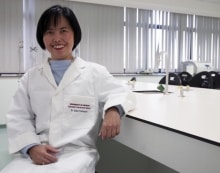
Stelios Timotheou is an Associate Professor at the Department of Electrical and Computer Engineering and faculty member at the KIOS Research and Innovation Center of Excellence, University of Cyprus. He holds a Dipl-Ing from National Technical University of Athens, and MSc/PhD from Imperial College London. His research focuses on developing real-time distributed methodologies using mathematical optimization, machine learning, and computational intelligence to enhance efficiency in critical infrastructure systems. Research interests center on data-driven decision making for urban mobility management, traffic control systems, and energy optimization. Key areas include: Intelligent UAV-based sensing for traffic monitoring Cooperative control algorithms for multi-agent systems Optimization of renewable energy integration Robust infrastructure protection strategies Recent publications demonstrate strong focus on traffic state estimation (76%), energy system optimization (16%), and UAV applications (8%). Awarded the Cyprus Research Award (2017) and ERC Consolidator Grant for URANUS project. Secured multiple research grants focusing on real-time control systems.
Marios Polycarpou is a Professor of Electrical and Computer Engineering and Director of the KIOS Research and Innovation Center of Excellence at the University of Cyprus. He holds honorary positions at Imperial College London and is a member of Academia Europaea. His expertise spans intelligent systems, adaptive control, machine learning, and critical infrastructure. Education: B.A. Computer Science (Rice University, 1987) B.Sc. Electrical Engineering (Rice University, 1987) M.S. Electrical Engineering (University of Southern California, 1989) Ph.D. Electrical Engineering (University of Southern California, 1992) Research Focus: Polycarpou’s work emphasizes fault diagnosis in cyber-physical systems, water distribution networks, and adaptive control. He pioneers digital twin technologies for infrastructure resilience and develops algorithms for real-time anomaly detection and system optimization. Article Trends: His recent publications address adaptive control strategies, cybersecurity in networked systems, and AI-driven solutions for water management. Key themes include distributed control, event-triggered mechanisms, and transformer-based anomaly localization. Awards: 2023 IEEE Frank Rosenblatt Technical Field Award 2016 IEEE Neural Networks Pioneer Award Fellow of IEEE and IFAC Grants & Leadership: He secured prestigious grants including ERC Advanced and Synergy Grants. He led KIOS CoE’s Horizon 2020 projects and served as IEEE Computational Intelligence Society President (2012–2013). Labs & Teams: Directs the KIOS CoE, a hub for AI in critical infrastructure. Collaborates on projects like ERC Water-Futures, focusing on long-term water system transitions and contamination mitigation.
Panayiotis Kolios is an Assistant Professor at the Department of Computer Science, University of Cyprus (UCY). Previously, he served as a Research Assistant Professor at the KIOS Research and Innovation Centre of Excellence (2013–2024) and a Visiting Lecturer at UCY. He holds a BEng and PhD in Telecommunications Engineering from King’s College London (2008 and 2012, respectively). His research focuses on networked intelligent systems, emergency management using AI and UAV technologies, and cyber-physical systems. Education: BEng in Telecommunications Engineering, King’s College London, 2008 PhD in Telecommunications Engineering, King’s College London, 2012 Research Interests: His work centers on autonomous systems, intelligent transportation, and emergency management. Key areas include AI-driven disaster response, UAV-based surveillance, and algorithmic optimization for critical infrastructure. He develops solutions for real-time situational awareness and decision-support in emergencies. Recent work trends show a focus on multi-UAV coordination, disaster management platforms (like AIDERS), and AI applications in emergency response. His team’s 2023 win in the Cooperative Aerial Robots Inspection Challenge highlights advancements in UAV inspection algorithms. Scientific Awards: First Prize in Cooperative Aerial Robots Inspection Challenge (CDC 2023) Grants and Advising: He has secured over €40 million in EU and industrial grants, leading projects like PREDICATE, SWIFTERS, and AIDERS. His team advises on emergency response strategies and has trained first responders through EU-funded programs such as the Exchange of Experts training. Labs and Teams: He leads the Security and Emergency Response Group at KIOS CoE and established the Cyprus Civil Defence Aerial Observation Unit. His team collaborates with institutions like the Cyprus Police and Fire Service to operationalize UAV technologies in disaster scenarios.
Christos Nicolaides is an Assistant Professor at the Department of Business and Public Administration within the School of Economics and Management at the University of Cyprus (UCY), holding a secondary appointment as a Digital Fellow at MIT's Initiative on the Digital Economy. Previously, he spent three years as a James McDonnell Foundation-funded Postdoctoral Fellow at MIT Sloan School of Management. His educational background includes a PhD in Engineering from Massachusetts Institute of Technology (2014), SM from MIT (2011), MSc in Applied Mathematics from Imperial College London (2009), and BSc in Physics from University of Thessaloniki (2008). Nicolaides' research applies mathematical, statistical, and computational tools to large-scale empirical questions in social influence mediated by digital technologies. His work spans Data Science , Machine Learning , Social Networks , and Computational Social Science , with significant contributions to understanding human mobility patterns, disease transmission dynamics, and social contagion effects. His research has established novel methodologies for analyzing complex network structures in mobility data and social interactions. Analysis of his 15 most recent publications reveals a consistent focus on applying network science to real-world problems, particularly in pandemic response (12 publications), human mobility analytics (9 publications), and social contagion dynamics (7 publications). His work demonstrates increasing interdisciplinary integration, combining computer science, epidemiology, and organizational behavior since 2020. Marie S. Curie Fellow Two Highly Cited Papers by Web of Science (2017, 2020) Best Paper Award by Risk Analysis Society (2019) Professor of The Week by Poets & Quants (2020) As principal institutional investigator, Nicolaides has secured over €1 million in research funding from the European Commission, industry partners, Cyprus Innovation and Research Foundation, and Cyprus Ministry of Health. His current teaching includes Social Networks and Entrepreneurship, Introduction to Operations Management, and Quantitative Methods in Management. Media coverage of his work spans major outlets including The New York Times, CNN, Nature, and Science, with significant impact on public health policy discussions during the COVID-19 pandemic.
Assoc. Prof. Dr. Yıltan Bitirim is a faculty member at the Computer Engineering Department of Eastern Mediterranean University in North Cyprus. With over two decades of academic experience, he has served in various roles including Vice Chair (2014-2022), Academic Affairs Coordinator (2025-), and committee member for ABET assessment, curriculum development, and faculty recruitment. Current academic rank: Associate Professor Active administrative roles: Senate Member (2023-), Information Technology Commission Member (2023-) Professional memberships: ACM, IEEE Senior Member, Cyprus Turkish Chamber of Computer Engineers Research Interests focus on four primary areas: Information Retrieval Systems – evaluating search engine effectiveness and reverse image search performance Machine Learning – applied to emotion classification, gender recognition, and medical diagnosis Data Mining – used in Turkish word-stemming analysis and user behavior studies Biometrics – specializing in hand/wrist/palm vein recognition systems and voice-based identification Publications demonstrate consistent contributions across disciplines, with recent works (2023-2025) emphasizing: Deep learning applications in biometric authentication Advanced emotion recognition systems Medical AI for diabetes management and retinopathy diagnosis Biometric spoof detection mechanisms Turkish language processing challenges Recommendation system innovations Awards & Recognition : Research Incentive Awards (2020, 2021) Best Paper Award at ICIW 2007 IEEE Senior Member status As an educator, he has supervised numerous thesis committees and taught foundational courses in computer engineering, including CMPE 112 and CMPE 342. His certifications (MCTS, MCITP) reflect technical expertise in Microsoft technologies.
George N. Papageorgiou is a Professor of Management & Information Systems at the Gregoriou School of Business Administration, European University Cyprus. He serves in leadership roles including Deputy Dean (2012–2017) and PhD Programme Coordinator (2015–2017). He holds a PhD in Systems Modelling and Simulation from City University, London (1997), along with an MBA (1994) and First Class Honours in Engineering (1992). His research focuses on digital marketing competencies, smart urban mobility systems, entrepreneurship education, and system dynamics modeling for healthcare and sustainability. Notable projects include the SPN (Smart Pedestrian Network) system, funded by Horizon 2020, and the DIMAS project addressing digital marketing frameworks. Awarded the IEEE Best Paper Award (2017) and Innovation Distinction (SPARKS 2019), his work spans over 50 publications in journals like IEEE and Emerald. He actively reviews for IEEE, Emerald, and the System Dynamics Society. His consulting roles include EU research proposal evaluation and editorial work for Emerald. Key achievements include developing frameworks for sustainable urban mobility and green entrepreneurship education. He has led EU-funded projects totaling millions in grants, emphasizing interdisciplinary approaches to innovation and education.
Andreas Athenodorou is an associate research scientist at the Computation-based Science & Technology Research Center (CaSToRC) of The Cyprus Institute. He holds a PhD in Theoretical Particle Physics from the University of Oxford (2004–2008) and has held postdoctoral positions at DESY Zeuthen, Swansea University, and the University of Cyprus. Prior to his current role, he was a Marie Sklodowska Curie Individual Fellow at the University of Pisa (2019–2021). He currently leads a work package in the NI4OS-Europe project. His research focuses on theoretical and computational aspects of particle physics, including lattice gauge theories, large-Nc limits, hadron structure, and beyond Standard Model physics. He specializes in applying high performance computing (HPC), data science, and machine learning to solve complex problems in quantum field theory. Notable areas include confinement dynamics via effective string theory, glueball spectroscopy, and topological susceptibility studies in QCD. His computational work spans lattice QCD simulations, development of reproducible open science workflows, and application of machine learning to phase transition analysis. He has contributed to understanding mass hierarchies in strongly-coupled systems and the neutron electric dipole moment using advanced simulation techniques. Key contributions include advancing effective string theory descriptions of flux tubes, analyzing Z_N gauge theories, and exploring β-function behaviors in SU(2) adjoint fermion systems. His work bridges fundamental theory with computational innovation, addressing both particle physics questions and methodological challenges in large-scale simulations.
Angelos Georghiou is an Associate Professor of Operations Management at the Department of Business and Public Administration, University of Cyprus. He previously held academic positions as Assistant Professor at McGill University (2016–2019), Post-Doctoral Researcher at MIT (2012–2013), and Postdoctoral Researcher at ETH Zurich (2013–2016). His work bridges computational methods in stochastic and robust optimization with applications in healthcare, energy systems, and operations management. Ph.D. in Operations Research, Imperial College London (2012) M.Sci. in Mathematics, Imperial College London (2008) His research focuses on stochastic optimization , robust optimization , and decision rules , addressing challenges in healthcare analytics , energy-efficient control systems , and machine learning integration . Recent publications in Management Science and Operations Research highlight his contributions to decision-dependent information discovery and computational frameworks. Key trends in his 15 most recent articles include: Advancing robust optimization techniques for multistage problems Applications in healthcare (psychiatric risk prediction) and energy systems Integration of machine learning with stochastic programming Development of tractable algorithms for complex decision environments Scientific Awards : Esdras-Minville Best Student Paper Award (2023) He serves on editorial boards of Operations Research Letters (Area Editor) and Management Science , and collaborates with institutions like MIT, ETH Zurich, and McGill University. His work with undergraduate students includes a 2021 paper in SIAM Undergraduate Research Online .
Professor Angelika Kokkinaki is Dean of the School of Business and MBA Director at the University of Nicosia. With a PhD in Computer Science from the University of Louisiana at Lafayette (1995), a M.Sc. from Northeastern University (1991), and a Diploma from Patras University (1987), her academic credentials are rooted in Information Systems and Computer Science. PhD in Computer Science (1995), University of Louisiana at Lafayette M.Sc. in Computer Science (1991), Northeastern University Diploma in Computer Engineering and Informatics (1987), University of Patras Her research spans e-business, e-government, e-learning, and smart city technologies, focusing on semantic search engines, distributed systems, and circular economy applications. Recent work emphasizes Smart Cities through projects like OpenDCO, CRISIS, and DEVOPS. Key article trends include smart city resilience, AI applications in education, e-learning adoption, marine sensor networks, and open data workforce development. Her scholarly output aligns with 6 UN Sustainable Development Goals , particularly in education, sustainability, and urban innovation. Scientific Awards : Innovation award by the Republic of Cyprus (for quality management system) She leads over 30 EU/national projects and contributes to the Center of Equality, Diversity, and Inclusion (CEDI) and OECD policy monitoring. Her work integrates Petri Net modeling , software agent systems, and 100+ publications in information systems.
Prof. Dr. Fadi AL-TURJMAN serves as the founding Dean of the Faculty of AI and Informatics at Near East University (NEU), Cyprus. He holds multiple leadership roles including Head of the Software Engineering Department and Director of the AI and Robotics Institute and the International Research Center for AI and IoT. With a PhD in Computer Science from Queen’s University (2011), he specializes in AIoT systems, wireless networks, and blockchain integration. Affiliation: Near East University Leadership: Founding Dean for AI and Informatics, Director of AI & Robotics Institute Research Focus: His work bridges Artificial Intelligence of Things (AIoT) , Blockchain Applications , and Smart Networking . He explores cybersecurity frameworks for smart cities, quantum state optimization techniques, and novel AI-driven solutions for healthcare, agriculture, and energy systems. Key Article Trends: Recent publications emphasize Transformer models for environmental monitoring, blockchain-enabled security protocols , and evolutionary algorithms for resource optimization. His research spans interdisciplinary domains including medical diagnostics, vehicular networks, and sustainable infrastructure. Scientific Awards: Lifetime Golden Award of Dr. Suat Gunsel (2022) Multiple Best Research Awards at International Venues Labs & Teams: Directs the International Research Center for AI and IoT at NEU, leading multidisciplinary teams in developing advanced networking technologies and AI-driven solutions for global value chain applications.
Christodoulou Chris is a Professor at the Department of Computer Science, University of Cyprus. He joined in 2005 and holds a Visiting Research Fellowship at Birkbeck College, University of London. His educational background includes a BEng in Electronic Engineering from Queen Mary and Westfield College (1991), a PhD in Neural Networks from King's College London (1997), and a BA in German from Birkbeck College (2008). His research focuses on Computational Neuroscience, Neural Networks, and Machine Learning, with specific interests in neural coding, self-control modeling, computational neuronal modeling, multi-agent reinforcement learning, and practical machine learning applications. Recent publications (2013-2025) demonstrate interdisciplinary approaches combining neuroscience, computer science, and optimization techniques, with emerging emphasis on protein structure prediction and biomedical applications. Scientific awards include: Best Paper Award, ICSR 2015 Best Paper Award, MODELS 2008 Doctoral Symposium He leads the Computational Intelligence and Neuroscience (CIN) research group and has secured funding from European projects (SocioCoast, CYberSafety, TAMIT). He mentors students through Google Summer of Code and collaborates internationally.
Valeria Filippou is a Researcher at the Computation-based Science & Technology Research Center (CaSToRC) within The Cyprus Institute. She holds an MEng in Medical Engineering, an MSc in Tissue Engineering and Regenerative Medicine, and a PhD in Medical Engineering with a focus on Machine Learning, Signal Processing, and Wearable Technologies from the University of Leeds. Her research spans interdisciplinary applications of AI in healthcare, financial services, and environmental monitoring. Key areas include developing credit risk models, medical diagnostics algorithms, AI-driven data privacy solutions, and consulting on large language models (LLMs) and retrieval-augmented generation (RAG) systems. Her recent publications focus on wearable sensor data analysis for activity recognition, multimodal prediction of psychological conditions like alexithymia, and advancements in medical imaging phantoms via 3D printing. These works bridge computational methods with practical healthcare and environmental monitoring challenges. No scientific awards or grant details are explicitly stated in the provided information.
Dr. Avgoustis Avgousti is a Senior Research and Technical Scientist at The Cyprus Institute's Science and Technology in Archaeology and Culture Research Center (STARC). He specializes in Research Software Engineering for Digital Humanities and Digital Cultural Heritage Informatics. With over 13 years at STARC, he leads digital transformation initiatives, focusing on advanced computational tools and methodologies to bridge technology and cultural heritage. Originally based in New York City, Dr. Avgousti completed a Postdoctoral Fellowship at the National Center for Supercomputing Applications (NCSA) at the University of Illinois Urbana-Champaign, where he contributed to software engineering and cultural heritage research. His expertise spans Big Data applications, semantic web technologies, and digital accessibility for cultural heritage institutions. His research interests emphasize democratizing access to small museum collections through platforms like CyprusArk, semantic content models, and interoperable digital systems. He advocates for reusable frameworks that empower non-technical scholars and small institutions. As a former college lecturer, he prioritizes education and mentorship in digital heritage. Dr. Avgousti’s work addresses challenges in digitizing archaeological and historical datasets, integrating computational methods into heritage preservation, and fostering international collaboration in cultural informatics. His projects often involve building web-based systems for data aggregation and public dissemination.
Professor George Giaglis is a prominent academic in the School of Business at the University of Cyprus, serving as Director of the Institute for the Future. He holds a PhD in Information Systems from Brunel University and a BSc (Hons) in Information Systems from the Athens University of Economics and Business. His academic journey includes roles such as Professor, Vice Rector, and Associate Professor at the Athens University of Economics and Business (2002–2017) and prior positions at the University of the Aegean and Brunel University. His research focuses on blockchain technology, IoT, digital currencies, and pervasive information systems. He has contributed to over 200 publications, exploring topics like blockchain integration in marine systems, NFTs, CBDCs, and social network dynamics. His work bridges technology and business, addressing digital transformation challenges and ethical implications of emerging technologies. Giaglis has organized major conferences like Decentralized 2019 and contributed to EU blockchain policy discussions. His research emphasizes practical applications of technology in sectors like healthcare, finance, and urban logistics. Despite prolific output, no specific awards are noted, though his h-index of 25 reflects significant academic impact. His current roles involve advancing the Institute for the Future’s projects, advising on digital innovation strategies, and mentoring researchers in decentralized systems. Ongoing work includes exploring AI-blockchain synergies and regulatory frameworks for digital currencies.
Professor Edna Yamasaki is the Head of the Department of Life and Health Sciences at the University of Nicosia's School of Sciences and Engineering, and serves as Vice Rector for Academic Affairs. Her career spans roles in academia, research, and administrative leadership. She holds a Medicine degree from Federal Fluminense University (Brazil), followed by MSc/PhD in Biophysics (Neurobiology) from Federal University of Rio de Janeiro, and postdoctoral training at institutions including Harvard Medical School (USA) and the University of Cyprus. Her research focuses on nervous system development/degeneration, public health implications of climate change, and biomedical materials. Notable projects include the CYPHEW initiative (identifying Cyprus's heat-related health risks), polymer development for biological applications, and Erasmus+ programs promoting health-enhanced physical activity. She has contributed to environmental hydrodynamic modeling, health information systems evaluation (DIPSA framework), and disaster risk assessments for oil spills. Her work bridges neuroscience, environmental science, and public policy. Recent studies highlight aging populations' health challenges and the impact of extreme weather on mortality and hospital admissions in Cyprus. She actively collaborates on EU-funded projects addressing work safety, healthcare informatics, and climate adaptation. Professional milestones include coordinating interdisciplinary teams across multiple continents and transitioning between laboratory research to institutional leadership roles. Her leadership emphasizes fostering curiosity-driven research while addressing societal health challenges.