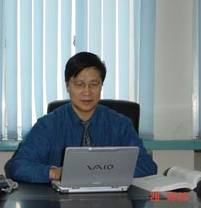
CHEN Xin is an Associate Professor in the Department of Statistics and Data Science at Southern University of Science and Technology (SUSTech), where he has been employed since January 2019. He initially joined the Department of Mathematics before transitioning to his current department in August 2019. Prior to SUSTech, he held academic positions as Assistant Professor at the National University of Singapore (2011-2019) and Syracuse University (2010-2011). Education History: PhD in Statistics from University of Minnesota, USA (2005-2010) MS in Statistics and Applied Probability from National University of Singapore (2001-2003) BS in Mathematics from Nankai University, China (1994-1999) Research focuses on developing statistical methodologies for high-dimensional and complex data analysis. Primary research domains include: sufficient dimension reduction techniques for efficient data representation; variable selection methods for high-dimensional models; robust statistical approaches for complex datasets; and optimization of computational efficiency in statistical estimation. His work consistently addresses theoretical foundations while developing practical implementations for modern data challenges. Publications demonstrate sustained focus on statistical methodology development, particularly in dimension reduction and high-dimensional analysis. Recent works emphasize robust methods for ultrahigh-dimensional data, efficient computation algorithms, and model diagnostics. Research consistently appears in top-tier statistics journals including Biometrika, Journal of the American Statistical Association, and Annals of Statistics. No scientific awards, student advising relationships, or research grants are mentioned in the source materials. Similarly, there is no information available regarding laboratory affiliations or research team composition.
Yun Li is a Research Assistant Professor and Master's Supervisor at Southern University of Science and Technology (SUSTech), affiliated with the Department of Earth and Space Sciences within the Faculty of Science. He serves as a youth council member of the mineral materials division of the Chinese Ceramic Society and holds multiple research grants including the National Natural Science Foundation of China Youth Fund Project. Research Assistant Professor at SUSTech (2022-present) Postdoctoral Research Associate at SUSTech (2020-2022) Youth Director of International Association of Clay Minerals (2025-2029) Principal Investigator for multiple research projects Dr. Li earned his B.S. in Petroleum Engineering from Yan'an University (2010-2014), M.S. in Oil and Gas Field Development Engineering from Southwest Petroleum University (2014-2017), and Ph.D. in Mineralogy, Petrology, Mineral Deposit Geology from Guangzhou Institute of Geochemistry, Chinese Academy of Sciences (2017-2020). Dr. Li's research focuses on mineral surface-interface interactions and gas hydrates, with particular emphasis on unconventional oil and gas resources including gas hydrates, shale oil and gas, and geological hydrogen/helium. His work investigates the geological storage and mineralization of carbon dioxide, employing surface-interface analysis techniques, molecular simulation methods, and in-situ visualization experimental techniques (X-ray and neutron) to study energy/environmental fluid interactions with clay minerals. His research has significant applications in unconventional oil and gas development and carbon capture technologies. Analysis of Dr. Li's recent publications reveals a strong focus on molecular dynamics simulations of hydrate formation mechanisms in clay minerals, particularly examining how different cations, organic matter, and mineral structures affect methane and carbon dioxide hydrate formation. His work bridges fundamental surface science with practical energy applications, showing increasing emphasis on carbon dioxide storage mechanisms in recent years. His publications appear in high-impact journals including ACS Sustainable Chemistry & Engineering, Applied Surface Science, Applied Clay Science, and Langmuir. Young Director of International Association of Clay Minerals (AIPEA) (2025-2029) Young Director of Mineral Materials Branch of Chinese Ceramic Society (2023-2028) SUSTech 'Qiming' and 'Taiyi' Star Scientific Research Achievement Awards (2024) Top Ten Young Scholars' Report at 10th National Conference on Mineral Science and Engineering (2024) Excellent Presentation Awards at multiple international clay and mineral conferences Outstanding reviewer for Applied Clay Science journal As a Master's Supervisor, Dr. Li mentors graduate students in earth sciences and energy-related research. He has secured significant research funding including the China Postdoctoral Science Foundation, Guangdong Basic and Applied Basic Research Foundation, and Shenzhen Science and Technology Program. His current projects include the National Natural Science Foundation of China Youth Fund Project (2025-2027) focusing on unconventional energy resources. Dr. Li has participated in major infrastructure projects including the material genomics experimental facility in Shenzhen and the high-pressure neutron diffraction/imaging spectrometer at Chinese Spallation Neutron Source. Dr. Li's research integrates computational modeling with experimental techniques through collaborations with major research facilities. His work on in-situ visualization techniques connects with neutron source facilities, while his molecular simulation research requires high-performance computing resources. He serves on editorial boards for journals including Unconventional Resources and special issues on unconventional oil and gas, demonstrating leadership in his research community.
Dr. Xiang Li serves as a Research Assistant Professor in the Department of Mechanics and Aerospace Engineering at the College of Engineering, Southern University of Science and Technology (SUSTech). He earned his Ph.D. in Mechanics from Harbin Institute of Technology in 2022 and previously held the position of SUSTech Presidential Postdoctoral Fellow. His academic journey includes: Ph.D. in Mechanics, Harbin Institute of Technology (2018-2022) Master in Mechanical Engineering, Shantou University (2015-2018) Bachelor in Mechanical Engineering, Shenyang University of Chemical Technology (2010-2014) Dr. Li's research specializes in experimental and computational fluid dynamics of complex multiphase systems, with particular focus on magnetic fluids. His work integrates theoretical modeling, numerical simulation techniques, and practical applications in microfluidics and advanced manufacturing. He has developed novel lattice Boltzmann methods for simulating ferrofluid behavior under magnetic fields, contributing significantly to the understanding of multiphase interface phenomena. His scholarly impact is evidenced by 19 research papers (including 4 ESI highly cited papers and 1 ESI Hot paper), 58 filed national patents in China (26 granted), and 3 PCT patents. His publications demonstrate a consistent focus on computational methods for magnetic multiphase flows, with recent work extending into biomedical applications such as COVID-19 detection systems. Professional recognitions include: Young Research Award of Guangdong Mechanics Society (2023) Excellent Postdoc of Shenzhen (2023) PoF Young Researcher Award (2017) National Scholarship at both Master's and PhD levels Outstanding Doctoral Graduate and Dissertation awards from SUSTech (2022) Dr. Li has secured five research projects totaling 930,000 yuan in funding, including the National Natural Science Foundation of China Youth Project. He actively contributes to the scholarly community as a reviewer for multiple journals, maintaining Star Reviewer status for Physics of Fluids from 2019-2023.
Dr. Feng Xingya is an Assistant Professor at the Department of Marine Science and Engineering , Southern University of Science and Technology (SUSTech), Shenzhen, China. He obtained his Ph.D. in Ocean Engineering from the National University of Singapore (NUS) in 2016 and held postdoctoral positions at NUS and the University of Oxford before joining SUSTech in 2019. His research focuses on marine hydrodynamics , nonlinear wave-structure interactions , and computational fluid dynamics , with applications in offshore renewable energy and oil & gas platforms. Ph.D., Ocean Engineering (2016), National University of Singapore B.Eng., Hydraulic Engineering (2011), Hohai University His work includes developing nonlinear potential flow models , numerical wave tank codes , and boundary element methods for analyzing wave interactions with floating systems. Recent projects involve marine renewable energy and machine learning tools for intelligent marine environment monitoring. Scientific contributions include the 2014 Outstanding Young Researcher Award at the KKHTCNN conference. He supervises Ph.D. students and leads a research group focused on marine hydrodynamics , offering opportunities for postdocs and doctoral candidates.
Dr. Lili Wang serves as an Associate Professor at Southern University of Science and Technology (SUSTech), joining in May 2024 as an independent Principal Investigator and PhD advisor. Her research focuses on theoretical and applied control systems for intelligent sensor networks through interdisciplinary integration of control theory, optimization, and machine learning. Her academic foundation includes: PhD in Engineering and Applied Science from Yale University (2014-2020) Master's in Control Theory and Control Engineering from Zhejiang University (2011-2014) Bachelor's in Automation from Zhejiang University (2007-2011) Dr. Wang's research spans social dynamics , distributed estimation , distributed control , formation control for multi-agent systems , and distributed learning applications . Her work develops novel algorithms for networked control systems with applications in intelligent sensor networks and multi-robot coordination, emphasizing theoretical rigor and practical implementation. Analysis of her publications reveals consistent advancement in distributed observer design, formation control strategies, and consensus algorithms. Key trends include innovative applications of graph theory and spectral methods to multi-agent systems, with growing integration of learning techniques for adaptive control in uncertain environments. Her distinguished recognition includes: IEEE Senior Member (2024) Lillian Gilbreth Fellowships at Purdue University (2023) CPS Rising Star Award (2023) Henry Prentiss Becton Graduate Prize (2019) Zhang Siying Outstanding Paper Award (2012) As a PhD advisor at SUSTech, Dr. Wang mentors graduate researchers in control theory and its applications. She is currently founding COL-LABORATORY, a dedicated research team advancing control systems for intelligent sensor networks through interdisciplinary collaboration, with ongoing projects in distributed learning frameworks and robust multi-agent coordination.
Pavlo O. Dral serves as Associate Professor at Xiamen University's Department of Chemistry, College of Chemistry and Chemical Engineering since 2019, following postdoctoral research at the Max-Planck-Institut für Kohlenforschung. His academic credentials include: BS (2004-2008), National Technical University of Ukraine M.Sc. (2008-2010), University of Erlangen-Nürnberg Mag. (2008-2010), National Technical University of Ukraine Dr. (2010-2013), University of Erlangen-Nürnberg Dr. Dral's research pioneers the integration of Machine Learning with Quantum Chemistry , focusing on developing the MLatom package for atomistic simulations, creating accurate NDDO-based semiempirical methods, and designing hybrid computational approaches. His work targets efficient solutions for complex physicochemical problems through innovative algorithm development. Analysis of his 15 publications (2014-2020) reveals consistent advancement in machine learning applications across quantum chemistry domains, including potential energy surface modeling, excited-state dynamics, and molecular property prediction. Key thematic trends involve hierarchical learning architectures, big data integration for quantum approximations, and methodological innovations in organic semiconductor characterization. Information regarding scientific awards, student advising, research grants, and laboratory teams is not provided in the source documentation.
Chen Qingwen is an Associate Professor at Tongji University's School of Art and Media, where he serves as a graduate student advisor and freshman mentor. Holding a PhD from Fudan University and postdoctoral training from Shanghai Jiao Tong University, he transitioned from media industry roles in Taiwan to academia in Shanghai, focusing on communication research and teaching. Education: PhD, Fudan University Postdoctoral Fellow, Shanghai Jiao Tong University Research Focus: His work examines children's media use , elderly digital inclusion , and cross-cultural communication , with emphasis on parental mediation strategies , media literacy education , and societal impacts of new media . Recent studies explore intergenerational digital divides and social robot companionship for aging populations. Publication Trends: His 15 most recent works (2012-2022) reveal evolving focus from global Chinese communication (2012-2013) to children's media (2016-2019) and elderly digital adaptation (2021-2022), utilizing mixed methods across Chinese and international journals. Scientific Recognition: Guided award-winning student video projects Secured 'excellent' rating for Shangchuang innovation project Received 2021 teaching achievement award (second place) Research Leadership: Directed four major projects including the Shanghai Philosophy and Social Science Fund study on children's new media use (2014-2019) and National Social Science Fund project on Chinese global communication strategy (2005-2010). His work appears in core journals like News Reporter and has been reprinted in Xinhua Digest . Academic Community: Actively participates in the Omnimedia Research Institute and presents at international forums including ICA and IAMCR conferences.
Yao Wen is a tenured Associate Professor and doctoral supervisor at Tsinghua University's School of Economics and Management, concurrently serving as Deputy Director of the University's Department of Liberal Arts Development. She holds affiliations with the China Finance 40 Forum as a Young Scholar. Before joining Tsinghua, she worked at the Bank of Canada and completed internships at the Federal Reserve Bank of New York and People's Bank of China. Research Focus: Her work centers on macroeconomics, Chinese economic transformation, and international finance. Key themes include structural shifts in employment, financial crisis transmission, income inequality, and neoclassical growth modeling. She employs quantitative methods to analyze policy impacts on China's development. Teaching Excellence: She teaches undergraduate, MBA, and doctoral courses including 'Principles of Economics' (national award-winning) and 'China's ESG Frontier Models.' Her executive education courses on economic fluctuations are highly regarded. Awards & Recognition: WILEY Highly Cited Paper (international recognition) Advanced Research Award & Advanced Worker Award (Tsinghua SEM) Teaching Rising Star Award (Tsinghua SEM) Research Leadership: She directs multiple national projects: NSFC grants on employment dynamics and income effects (2021-2024) Tsinghua research initiative on China's neoclassical growth (2024-2026) Policy studies for China's National Development and Reform Commission
Shu-Gang Ai is a Research Assistant Professor at the Southern University of Science and Technology's School of Earth and Space Sciences. He holds a PhD in Civil Engineering from Tongji University (2021) and a Master's in Architectural and Civil Engineering from the same institution (2016). His research focuses on carbon dioxide geological sequestration, disaster prevention in complex rock masses, and finite element-discrete element numerical software development. His publications highlight expertise in geosynthetic reinforcement mechanics, landfill stability analysis, and computational geoscience. Recent work includes multiscale modeling of material interfaces and leachate distribution monitoring using geophysical methods. While no formal awards are listed, his contributions span both theoretical and applied studies in geotechnical and environmental engineering.
Xueliang Li is an Assistant Professor at the School of Innovation and Creative Design at Southern University of Science and Technology (SUSTech) in Shenzhen, China. His academic position focuses on the intersection of design, technology, and mental wellbeing, with particular emphasis on creating intelligent systems that support human emotional states and social connections. Li received his Bachelor's degree in Industrial Design from Hebei University of Technology, followed by a Master's degree in Design from Jiangnan University. He completed his PhD at the Faculty of Industrial Design Engineering, Delft University of Technology (Netherlands), where his doctoral research centered on designing smart wearables to help people, particularly those with post-traumatic stress disorder (PTSD), manage stress in everyday contexts. His research interests span Human-Computer Interaction (HCI), Human-Robot Interaction (HRI), emotion-driven design, and design for mental wellbeing. Li adopts a Research-through-Design approach, viewing design activities as a method for advancing understanding of innovative technology applications in daily life. His work integrates perspectives from computer science, electronic engineering, mental healthcare, fashion design, and interaction design to create intelligent everyday objects that provide care and companionship. He is particularly interested in how design can cultivate emotional and psychological wellbeing through thoughtful technological interventions. Analysis of his publication record reveals a consistent focus on designing technologies for mental health and wellbeing, with particular emphasis on stress management, elderly care, and emotional support systems. His work demonstrates a progression from wearable stress management solutions toward broader applications in intergenerational communication and social wellbeing. The publications show strong interdisciplinary collaboration across computer science, mental healthcare, and design disciplines, with a methodological emphasis on field studies and user-centered design approaches. Li maintains an active research group with the HCI-X Group (https://www.hci-xgroup.com/), where he leads projects exploring the design of intelligent systems for emotional wellbeing and human-technology partnerships. His work bridges theoretical design research with practical applications that address real-world challenges in mental health and social connection.
Xiaotian Liu is a Research Associate Professor in the Department of Neurobiology at Southern University of Science and Technology (SUSTech) , where he joined in September 2020. He is affiliated with School of Life Sciences and works within the research group of Academician Mingjie Zhang . His academic background includes a Ph.D. in Bioengineering from HKUST (2015-2019) and a B.Sc. in Biotechnology from USTC (2003-2008). His research focuses broadly on Structural and functional study of protein machinery , Molecular mechanism of biomolecular self-assembly , and Decoding and programming biological condensation formation . His work bridges structural biology, biochemical engineering, and biomaterials science, with a particular emphasis on protein structure-function relationships and their applications in biomedical and nanotechnological contexts. Across his publications from 2010 to 2023, Liu has contributed to understanding protein condensates, developing advanced bioimaging techniques, and engineering protein hydrogels for regenerative medicine. His recent work in Nature and Nature Methods highlights his leadership in fungal enzyme structural analysis and AI-driven microscopy. Hong Kong Technology Talent Scheme Postdoctoral Hub for ITF (2020) Chan Tak Kei & Wong Kwai Ying Bioengineering Student Research Award (2019) HKJEBN Scholarship for Talents (2016-2019) Xiaotian Liu is an active researcher within the Mingjie Zhang’s group , combining structural biology with materials science to address fundamental questions in cellular organization and biomedical engineering.
Shengcai Liu is an Assistant Professor in the Department of Computer Science and Engineering at the Southern University of Science and Technology (SUSTech). Holding a PhD in Engineering, he has established himself as a researcher with over 10 publications as first or corresponding author in top artificial intelligence conferences and journals. His academic journey includes research positions at Singapore's Agency for Science, Technology and Research (A*STAR) before joining SUSTech's faculty. Education: PhD in Computer Science and Engineering, University of Science and Technology of China (2014-2020) Bachelor's in Computer Science and Engineering, University of Science and Technology of China (2010-2014) Dr. Liu's research centers on automatic algorithm design and evolutionary approaches to machine learning. He investigates how AI systems can autonomously construct efficient algorithms for complex optimization problems while maintaining robustness and reliability. His work bridges theoretical foundations with practical applications in combinatorial optimization, adversarial machine learning, and large language model development, with particular focus on making algorithm design processes more systematic and effective. His publication record demonstrates a clear trajectory from foundational work on algorithm portfolios to sophisticated integration of evolutionary methods with large language models. Recent work shows increasing focus on textual adversarial attacks, combinatorial optimization, and leveraging large language models as optimization tools themselves. This progression reflects both theoretical depth and practical relevance to current AI challenges. Professional Activities: Project Leader for Huawei-funded research on combinatorial optimization solvers (CNY 400,000) Member of IEEE, IEEE CIS, and AAAI Reviewer for top journals including TPAMI, TEVC, TCYB Conference reviewer for NeurIPS, ICML, AAAI, IJCAI Dr. Liu maintains active research collaborations through the Artificial Intelligence RAMS Technology Innovation Laboratory at SUSTech, where his team focuses on developing next-generation automatic machine learning systems with applications in optimization and security domains.
Siteng Fan is an Associate Professor in the Department of Earth and Space Sciences at Southern University of Science and Technology. His research focuses on planetary atmospheres, exoplanet observations, and Martian atmospheric dynamics, combining observational data from missions like TGO and EMM with climate models such as Mars PCM. Education: B.S. in Space Science and Technology from Peking University (2015), Ph.D. in Planetary Science from Caltech (2020). Research Interests: Dynamics of planetary atmospheres (Mars, Titan, Pluto), photochemistry, microphysical processes, and light curve analysis for exoplanet surface inversion. Scientific Awards: Xie Yibing Young Scientist Award (2023), Marie Skłodowska-Curie Postdoctoral Fellowship (2022), NSFC Excellent Young Scientists (Overseas) (2022). Publication Trends: Recent work spans Mars climate modeling, Pluto/Titan atmospheric haze, exoplanet proxy studies, and radiative transfer algorithms.
Luo Tao is an Assistant Professor at the School of Innovation and Creative Design at Southern University of Science and Technology (SUSTech) in Shenzhen, China. He is recognized as a young top talent in the Guangdong Province "Pearl River Talent Program" and has received SUSTech's Excellent Teaching Award. His educational background includes: Bachelor's degree in Mathematics and Applied Mathematics from Sun Yat-sen University Master's and Ph.D. degrees in Interaction Design from Kookmin University in South Korea Luo Tao is an interaction design practitioner, researcher, and educator focusing on micro-interaction, interactive prototyping, and formal methods of describing interactions. He has developed an interaction design language grounded in mathematical category theory and explores innovative interaction techniques across various scenarios including mixed reality, tangible user interfaces, smart home, and smart car applications. His research aims to improve designers' efficiency in innovating interactions on various platforms, transforming cutting-edge technology into elegant and delightful user experiences. His research demonstrates a clear progression from theoretical foundations of interaction design to practical implementations across multiple platforms. His work spans from fundamental theories of information (as seen in his 2016 paper) to concrete applications in mobile, wearable, and automotive contexts, showing an integrated approach to bridging academic research with industry applications. His notable achievements include: Principal inventor of 16 patents across China, the US, and South Korea on interaction methods Author of "Interaction Design Language: Designing the Beauty of Interactions" and "The Universal Interactive Gesture Dictionary" Development of an editing and prototyping toolkit based on his interaction design language Over 50 invention patents filed since 2019 in collaboration with students One patent recognized as among SUSTech's most valuable by IPwe Luo Tao has extensive industry experience, having previously worked as a UX Design Manager at SK Telecom, where he was responsible for interaction design for smartphones, smartwatches, and automotive applications. His academic journey includes serving as an Assistant Professor at Kookmin University before joining SUSTech, demonstrating a successful integration of industry practice and academic research.
Wenfang XU is a distinguished Professor at the College of Pharmacy, Shandong University , actively contributing to academic research since 2008. He served as Dean of the College from 1997-2008 and has held academic positions since 1978, including Associate Professor and Assistant Professor at Shandong Medical University. His research focuses on rational drug design, synthesis, and bio-evaluation of enzyme inhibitors targeting aminopeptidase N (CD13) , matrix metalloproteinases (MMPs) , and neuraminidase . He has authored multiple textbooks including Medicinal Chemistry and Drug Design . PhD in Medicinal Chemistry (specific education details inferred from career trajectory) His recent work emphasizes peptidomimetics , structure-activity relationships (SAR) , and QSAR modeling for anticancer and antiviral agents. He has secured significant grants including the National High Technology Research and Development Program (863 Project) and National Natural Science Foundation grants. Awards include the National Superexcellent Teacher (2004) and multiple Technological Advancement Awards from the Ministry of Education and Shandong Province. He serves as an editor for national textbooks and reviewer for journals like Bioorganic & Medicinal Chemistry . Notable affiliations include the American Chemical Society and leadership roles in national pharmaceutical and anticancer societies.