
Wojciech Jarosz is an Associate Professor of Computer Science at Dartmouth College, affiliated with the College of Engineering and Computer Science. His research focuses on computer graphics, particularly light transport simulation, rendering algorithms, and digital fabrication. He co-founded the Visual Computing Lab and previously led the rendering group at Disney Research Zürich. Jarosz holds a Ph.D. and M.S. from UC San Diego and a B.S. from the University of Illinois Urbana-Champaign. His educational background includes studies in computer science and engineering, with a strong emphasis on graphics and rendering. Research interests span light transport simulation, Monte Carlo methods, appearance capture, and fabrication. Notable achievements include the Eurographics Young Researcher Award (2013) and the NSF CAREER Award (2019). Jarosz's work integrates theoretical rigor with practical applications, such as real-time rendering techniques and volumetric light transport. His lab develops tools for artistic authoring, including intuitive metaphors for volumetric lighting in animated films. Recent projects explore wave-optics BSDF models, optical heterodyne rendering, and unifying radiative transfer models. Key awards include the SIGGRAPH 2024 Best Paper Award and Neukom Institute prizes. His teaching includes courses on rendering algorithms, computer graphics, and computational photography. Jarosz collaborates with industry (e.g., Disney, NVIDIA) and advocates for diversity in computer graphics research.
جستوجوی استاد و پژوهشگر
استاد راهنما، استاد دانشگاه یا پژوهشگر مناسب برای مسیر پژوهشیتان را پیدا کنید و با او ارتباط بگیرید.
نمایش ۱۶-۳۰ از ۵۷۱ استاد راهنما
اطلاعات این پروفایلها از صفحات عمومی دانشگاهها جمعآوری شده و ممکن است بهروز نباشد.
Axel Brunsمشاهده پروفایل
استاد پژوهشی
Professor Axel Bruns is a Research Professor at Queensland University of Technology’s (QUT) Digital Media Research Centre (DMRC), an institution renowned for its leadership in media and communication studies. His work focuses on the digital transformation of media, the role of social media in public communication, and the dynamics of political polarization in online environments. Bruns is an internationally recognized innovator in computational methods for social media analysis, emphasizing interdisciplinary mixed-methods approaches to study complex societal phenomena. Research Interests: His research addresses critical challenges such as polarization’s threat to democracy, the role of algorithms in shaping public discourse, and the spread of disinformation. Notable areas include filter bubbles, platform governance, and the interplay between social media and political systems. He has pioneered concepts like 'gatewatching' to analyze news curation practices of digital intermediaries. Key Achievements: Bruns leads a prestigious Australian Laureate Fellowship project examining polarization drivers and dynamics. His work combines rigorous methodological innovation with policy relevance, evidenced by submissions to parliamentary committees on social media regulation. He has mentored numerous doctoral students who have become leading methodologists in their fields. Awards and Collaborations: Recipient of the Australian Laureate Fellowship (2023), Bruns collaborates widely with institutions globally, including Algorithm Watch, the Centre for Responsible Technology, and the Alexander von Humboldt Institute for Internet and Society. These partnerships enable cross-border research into digital media’s societal impacts.

Adrienne Woodمشاهده پروفایل
استادیار
- Social Psychology
- Emotion
- Social Networks
- +۳ مورد دیگر
Adrienne Wood is an Assistant Professor in the Department of Psychology at the University of Virginia. Her research lab, Emotion and Behavior Lab, investigates social connections through multimodal approaches including mobile sensing, social network analysis, and behavioral economics. She holds a Ph.D. from the University of Wisconsin-Madison and a B.A. from Colorado College. Wood's research examines how people form and maintain social ties across cultural divides, addressing loneliness through analysis of nonverbal behavior, emotion contagion, and network dynamics. Her work emphasizes: Behavioral mechanisms of connection (laughter, synchrony) Social network formation in diverse communities Cross-cultural relationship building She employs innovative methodologies like acoustic analysis and agent-based modeling. Her recent publications (2023-2025) demonstrate strong focus on: Emotional communication in evolving relationships Cultural influences on social competence Crisis impacts on behavior Nonverbal synchronization mechanisms Longitudinal analysis of social interactions No scientific awards are mentioned in the source material. Wood leads the Emotion and Behavior Lab, studying verbal/nonverbal behaviors underlying social bonds. Her team explores: Real-world interaction patterns Diverse community integration Computational social science approaches
Professor Jason Dykes is a leading figure in the field of information and geovisualization at City, University of London, where he holds the position of Professor in the Department of Computer Science and co-directs the giCentre , a renowned research centre in visualization. He is affiliated with the School of Mathematics, Computer Science and Engineering and maintains an active research and teaching profile. His academic journey includes a PhD in Geography from the University of Leicester and extensive leadership in both research and education. Education: PhD in Geography, University of Leicester, 2000 MSc in Geographic Information Systems, University of Leicester, 1991 BA/MA in Geography, University of Oxford, 1989 Jason Dykes' research is centered on designing visual methods and tools for exploring, analyzing, and presenting information, with a strong emphasis on geographic data. His work integrates cartography, information visualization, GIScience, and human-computer interaction , leading to the development of innovative techniques such as geowigs, ODmaps, BallotMaps, and AttributeSignatures. He has published extensively in top-tier journals like IEEE Transactions on Visualization & Computer Graphics, with over 20 papers in the last decade, and co-authored the seminal book Exploring Geovisualization (2005). His research is supported by major funders including EPSRC and the EU, with projects like RAMP VIS (Covid-19 response) and VALCRI (criminal intelligence). The most recent articles highlight a consistent trend in applied and human-centered visualization , focusing on responsive design, education, pandemic modeling, and novel visual metaphors for complex data. His work increasingly emphasizes methodological rigor, design exposition, and the role of visualization in interdisciplinary and emergency contexts. Scientific Awards and Recognition: National Teaching Fellow, Higher Education Academy (2005) Best Paper Awards at GIS Research UK (consecutive years) Honorable Mentions, IEEE InfoVis (2009, 2010, 2016, 2018) Security Innovation Commercialisation Award (EU, 2022) Research Supervisor of the Year, City Student Union (2020) Innovations in Teaching Award and multiple teaching grants at City Jason Dykes has supervised eight PhD students to completion and advised many others, including notable researchers like Roger Beecham, Sarah Goodwin, and Susanne Bleisch. His teaching includes modules such as Visualizing Society and Data Presentation. He has received significant grant funding from UK research councils and the EU for projects like DIVA, VALCRI, and RAMP VIS. His service to the community includes leadership roles in IEEE VIS, ICA Commission on GeoVisualization, and editorial positions at IEEE TVCG and the Journal of Visualization and Interaction. He leads the giCentre , a dynamic research group that fosters innovation in visualization, and has been instrumental in establishing the field’s educational and methodological foundations through participation in Dagstuhl seminars and publications on visualization pedagogy.
Hugo Subtilمشاهده پروفایل
پژوهشگر
Hugo Subtil is a postdoctoral researcher at the Department of Political Science, Faculty of Arts and Social Sciences, University of Zurich, affiliated with the Chair of Comparative Politics in Political Institutions and European Politics. He is an active member of the University's Digital Society Initiative (DSI), particularly engaged with the DSI Community AI & Law and multiple other interdisciplinary communities including Cybersecurity, Digital Humanities, and Ethics. His academic background includes: Economics studies at École Polytechnique (France) PhD from École des Mines and École Polytechnique (France) Subtil's research program integrates Political Economy, Political Science, and Computational Social Science to investigate European political dynamics through quantitative text analysis. He specializes in extracting political ideologies from large-scale text corpora using machine learning algorithms and social media data, with dual research foci: (1) how institutional design shapes social norms and behaviors, and (2) longitudinal evolution of political ideologies. His methodological approach bridges traditional political science with cutting-edge computational techniques for analyzing legislative discourse and public communication. Analysis of his 12 publications (2020-2025) reveals a clear trajectory from historical economic analysis toward contemporary computational political science. Early work (2020-2021) examined Marxian economics and pandemic-era urban migration patterns, while recent research (2023-2025) increasingly focuses on European Parliament discourse, populism, and emotional rhetoric using advanced text mining techniques. This evolution demonstrates growing specialization in computational analysis of political communication within European institutions. No scientific awards or major honors are documented in the available information. While no formal advisees or grant funding details are specified, Subtil's collaborative work within the DSI framework suggests engagement with interdisciplinary research teams addressing digital society challenges. His position within the Chair of Comparative Politics indicates involvement in departmental research initiatives related to European governance. Subtil operates at the nexus of multiple research ecosystems: the Department of Political Science's European Politics research group, the university-wide Digital Society Initiative, and specialized DSI communities exploring AI-law intersections. His work contributes to the DSI's mission of addressing societal challenges through digitalization research, particularly in computational analysis of political discourse and institutional behavior.

Prof. Dr. Simone Winko holds the Chair for Modern German Literature and Literary Theory at the University of Göttingen since 2003. Her research spans literary theory, canonization, praxeology of literary studies, and the intersection of emotions with German poetry around 1900 and digital humanities. Academic Roles: Chair at Göttingen (2003–), DFG Priority Programme 2207 leadership (2017–), Courant Center collaboration (2009–) Key Projects: DFG projects on literary change (2023–), computational literary history (2020–2023), and argumentation practices in interpretations (2018–2020) Her recent work focuses on emotions in German-language poetry , using computational methods to model text similarity and analyze historical shifts between Realism and Modernism. She explores how emotional codes and narrative strategies are embedded in lyrical structures, particularly through projects like Anthologien zeitgenössischer deutschsprachiger Lyrik (2022). Scientific Awards : 2010: 1st prize for best doctoral supervision (KissWin, BMBF-funded) Teaching & Collaboration : Supervises B.A., M.A., and Ph.D. theses; co-edits the Journal of Literary Theory and Revisionen book series. Collaborates with Fotis Jannidis, Gerhard Lauer, and Matías Martínez on computational approaches to literary studies.
Eliot R. Smith is a Professor in the Department of Psychological and Brain Sciences at Indiana University Bloomington's College of Arts and Sciences. With over 126 publications and an h-index of 50, he has established himself as a leading scholar in social psychology, particularly in the areas of intergroup emotions and social cognition. His Scopus profile shows 10,991 citations across 8,796 documents, reflecting significant impact in his field. Smith's research focuses on how group membership shapes emotional experiences and social judgments. His work has significantly contributed to Intergroup Emotions Theory, exploring how people experience emotions on behalf of their social groups and how these group-based emotions influence intergroup relations. Recent research examines gender bias in hiring decisions through a large meta-analysis spanning 44 years of field experiments, human-robot interaction through social psychological lenses, and the dynamics of group-based emotions over time. His research integrates theoretical advances in embodied cognition with social psychological phenomena, examining how physical and social contexts shape cognitive and emotional processes. Analysis of his recent publications (2019-2024) reveals three dominant research trajectories: 1) gender bias and discrimination in organizational contexts, 2) extension of social psychological theories to human-robot interaction, and 3) refinement of Intergroup Emotions Theory with attention to temporal dynamics and regulatory processes. His work increasingly incorporates methodological innovations including meta-analyses, multi-analyst approaches, and cross-cultural comparisons.
Whitney Powمشاهده پروفایل
استادیار
Whitney (Whit) Pow is an Assistant Professor of Media, Culture, and Communication at the Steinhardt School of Culture, Education, and Human Development, New York University. Their research focuses on transgender media studies, trans of color critique, queer theory, and the intersection of these fields with electronic art, video game history, and computer history. Pow’s current book project examines how trans programmers and game designers contested computational limitations to critique institutional systems. Their work analyzes how state surveillance and biopolitical processes—mediated through documents like birth certificates and diagnostic manuals—intersect with computational systems like AI and software. Research interests include: Reparative video game history Queer orientations in software interfaces Glitch studies as trans historiography Racialized surveillance in digital systems Recent articles highlight themes like computational metaphors’ entanglement with medical surveillance (Camera Obscura, 2024) and the necessity of software studies for critical game studies (Just Tech, 2024). Earlier work (Feminist Media Histories, 2021) explores glitches as trans resistance in digital art. A 2019 essay in ROMchip advocates for archival recovery of trans game designers like Dani Bunten Berry. No scientific awards listed. Research grants or advising roles are not detailed in available texts. Pow’s lab/team work centers reparative digital historiography and antiracist methodologies in media studies.

Courtney N. Reed is a Lecturer in Digital Technologies at Loughborough University London, where she joined in November 2023. She maintains a dual role as a visiting research fellow at the Max Planck Institute for Informatics. Her academic journey includes a BMus in Electronic Production and Design from Berklee College of Music (2016), followed by an MSc (2018) and PhD (2023) in Computer Science from Queen Mary University of London. Prior to her current position, she completed postdoctoral research at both the Max Planck Institute for Informatics and King's College London. Bachelor of Music: Electronic Production and Design, Berklee College of Music (2016) Master of Science: Computer Science, Queen Mary University of London (2018) Doctor of Philosophy: Computer Science, Queen Mary University of London (2023) Dr. Reed's research explores the entangled relationships between humans, bodies, instruments, and technology in music interaction, with particular focus on vocal electromyography (VoxEMG) and the vocalist-voice relationship. Her work incorporates feminist and post-human theories to examine sociopolitical contexts within arts technology, aiming to design for creativity while acknowledging individual, messy bodies in artistic practice. She has developed an open-source platform for vocal electromyography to investigate how biosignal feedback changes understanding and perception of the body in vocal performance. Her interdisciplinary approach bridges music technology, human-computer interaction, and embodied interaction studies. Analysis of Dr. Reed's recent publications (2023-2025) reveals a strong thematic focus on embodied interaction in music technology, with particular emphasis on vocal performance, biosignal feedback, and the philosophical underpinnings of digital instrument design. Her work consistently integrates theoretical frameworks like Karen Barad's agential realism with practical applications in digital musical instruments. Key trends include the exploration of ambiguity in data representation, the sociocultural dimensions of timbre in instrument design, and the development of novel methodologies for understanding embodied musical experiences through micro-phenomenology and ethnographic approaches. ACM SIGCHI Outstanding Dissertation Award (2024) for her thesis 'Imagining & Sensing: Understanding and Extending the Vocalist-Voice Relationship Through Biosignal Feedback' Best Newcomer Award at Loughborough University London's Community Awards Celebration (2024) Dr. Reed actively contributes to the academic community through conference organization and leadership roles. She serves as Member-at-Large on the NIME Board, previously chaired papers for NIME 2024, and co-organized the IBM SkillsBuild Sprint at Loughborough London. She has also chaired sessions at the ACM TEI Conference and co-chaired the Student Design Competition. Her collaborative work spans multiple institutions and includes significant contributions to interdisciplinary projects that bridge music, technology, and human experience. She has been instrumental in developing the senSInt research group and the RaveNET wearable network project. Dr. Reed leads the senSInt research group which focuses on sensorimotor interaction in music and performance contexts. The group develops innovative technologies including the VoxEMG platform for vocal electromyography, the Bones anti-corset for vocal performance, and the RaveNET network of wearable biosensing nodes. These projects explore the intersection of biosignals, embodied interaction, and musical expression, creating novel frameworks for understanding how technology mediates human creativity and performance. The group frequently collaborates with musicians, technologists, and theorists to develop and test these systems in real-world performance contexts.

Michael Stevensمشاهده پروفایل
مدرس ارشد
Dr. Michael Stevens is a Senior Lecturer at University of New South Wales (UNSW) Canberra , where he focuses on advanced manufacturing and biomedical device control systems . His work bridges digital manufacturing for SMEs with smart artificial heart technologies , emphasizing industry collaboration and translational research. Specializes in physiological control systems for rotary blood pumps Develops unobtrusive fall detection systems for dementia patients Leads international projects on total artificial heart development Education : B.Eng (Medical - First Class Honours), Queensland University of Technology (2010) PhD in Physiological Control for Biventricular Assist Devices, University of Queensland (2014) Research Trends show consistent focus on: Machine learning for biomedical diagnostics (2018–2025) mmWave radar and thermal sensors in patient monitoring (2021–2024) Computational fluid dynamics in artificial heart modeling (2016–2024) Physiological control algorithms for rotary blood pumps (2011–2025) Scientific Awards : UNSW Scientia Education Award (2021) for contextual teaching Heart Foundation Runner-up for "Smart Artificial Hearts" pitch (2021) ARC PGC Supervisor Award (2017) for mentoring Grants & Supervision : Holds over $6 million in competitive funding including MRFF and ARC grants. Currently supervises 4 PhD students while maintaining industry partnerships with VitalCare and BiVACOR. Labs & Facilities : Works across UNSW Engineering labs and Graduate School of Biomedical Engineering platforms, including mock circulation loops and high-performance computing clusters for CFD simulations.

Prof. Dr. sc. techn. ETH Oliver Staadt is Full Professor of Computer Science and Chair of Visual Computing at the University of Rostock , Germany. Since 2023 he also serves as Director of the Institute for Visual and Analytic Computing within the Faculty of Computer Science and Electrical Engineering . Previously he was Dean (2016–2018) and Vice Dean (2010–2016) of the same faculty. Education Ph.D. in Computer Science, ETH Zürich (2001) M.Sc. in Computer Science, TU Darmstadt (1994) Research Interests Prof. Staadt’s research spans virtual and augmented reality , computer graphics , visualization , telepresence , immersive analytics , and human–computer interaction . A particular focus lies on real-time rendering and display technologies for large high-resolution display systems, depth-image enhancement for RGB-D sensors, and interaction techniques that leverage spatial cognition and eye-tracking. His work is frequently applied to collaborative settings and microgravity environments, including experiments aboard parabolic flights and the International Space Station. Recent Publication Trends Between 2019 and 2021 his output centers on foveated rendering , AR viewpoint guidance , collaborative analytics on wall-sized displays , and embodied interaction metaphors . Earlier work addressed bandwidth-efficient telepresence, depth-image filtering, and physically-based animation. The corpus reveals a steady evolution from fundamental graphics algorithms toward applied immersive systems. Scientific Awards & Honors Fellow of the Eurographics Association Associate Editor, IEEE Transactions on Visualization and Computer Graphics (past) Associate Editor, Computers & Graphics (past) Associate Editor, Computer Animation and Virtual Worlds (past) Associate Editor, Frontiers in Virtual Reality (current) Chair, Expert Group on Virtual & Augmented Reality, German Informatics Society (2013–2020) Advising & Funding He has successfully supervised more than ten PhD graduates whose dissertations range from collision detection and physically-based animation to 3D interaction in microgravity and predictive user modeling. Current PhD researchers include Bipul Mohanto, Mana Takhsha, and Sven Kluge. His projects are supported by national and EU programs such as EVOCATION, SMOOTH, ARGuide, 3DPick, DIVA, and Telepresence. Labs & Teams Prof. Staadt leads the Visual Computing Group at Rostock, operating state-of-the-art facilities including large tiled display walls, VR/AR laboratories, and motion-capture systems. The institute hosts interdisciplinary collaborations with partners in visualization, computer vision, psychology, and aerospace engineering.
Dr. Dave Murray-Rust is an Associate Professor in Human-Algorithm Interaction Design at TU Delft's Faculty of Industrial Design Engineering. He explores the intersection of humans, data, and AI through design research, focusing on ethical AI systems and sociotechnical interactions. His work bridges computer science, design theory, and digital sociology, addressing challenges like algorithmic fairness and human-AI collaboration. He leads initiatives such as the AI Futures Lab and Data-Centric Design Lab, advancing methods for leveraging behavioral data in design processes. His research emphasizes experiential AI frameworks, metaphors for designers, and the legibility of AI systems. He has been honored with awards including Best alt.HRI 2024 and a CHI 2023 Best Paper Award for contributions to fairness perceptions in algorithmic decision-making. Murray-Rust teaches courses like the Speculative Design Studio and collaborates on projects like DCODE (Designing the Future of AI) and the BrightSky Project. His work extends to public engagement through installations like GeoPact and explorations of blockchain's societal impact. He holds an Honorary Fellowship at the University of Edinburgh.

- Social Psychology
- Prosocial Behavior
- Synchronization
- +۱۳ مورد دیگر
Liam Cross is a Lecturer in Psychology at the School of Psychology, University of Bath. His research focuses on social psychology, particularly how synchronized movement (e.g., dancing, drumming) fosters prosocial behavior, affiliation, and group cohesion. He also investigates autism, theory of mind, deception, media effects on prejudice, and the therapeutic potential of games. His research interests span Social Psychology, Prosocial Behavior, Synchronization, Theory of Mind, Autism, Nonverbal Communication, Media Effects, and Gamification . He explores how rhythmic coordination influences social bonding and identity, and how digital and tabletop games can support individuals with autism. His work integrates experimental, virtual reality, and qualitative methods to understand complex social dynamics. The recent articles highlight a strong trend in using technology—especially virtual reality and games—to study and enhance empathy, reduce prejudice, and improve social interaction. Key themes include the Proteus Effect, synchronized movement in VR, video games for refugee empathy, and board games for understanding autistic experiences . These works reflect interdisciplinary approaches bridging psychology, human-computer interaction, and social intervention. Liam Cross has no explicitly listed scientific awards in the provided text. While no direct mention of student advising or grants is made, his collaborative publications suggest active mentorship and research leadership. He is affiliated with the NeuroPlay Lab , indicating involvement in a dedicated research team focused on play, technology, and social cognition. His work contributes to UN Sustainable Development Goals related to well-being and reduced inequalities. He is actively involved in research and teaching in Social Psychology, Research Methods, and Statistics , and leads innovative projects using immersive technologies and games to address social challenges. The NeuroPlay Lab serves as a hub for experimental and applied research in prosocial technology and autism interventions.
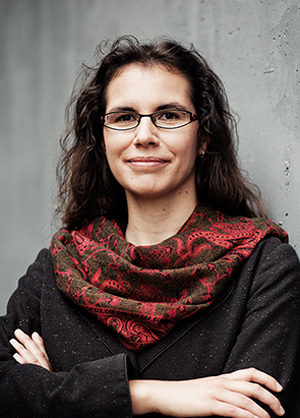
Prof. Dr. Andrea Dreyer is a full-time Professor of Art and its Didactics at the Bauhaus University Weimar , where she has served since 2013. She is Vice Dean for Strategic Development within the Faculty of Art and Design and actively participates in academic governance, including roles in graduation committees, teacher training advisory boards, and curriculum commissions. Her research focuses on teacher professionalization, architectural pedagogy, and digital art education, emphasizing interdisciplinary approaches and qualitative social research methodologies. First and Second State Examination for Teaching at Grammar Schools in Art Education and Social Studies (1994–2000, 2004–2006) Andrea Dreyer’s publications span topics such as Bauhaus-inspired pedagogy, urban-rural spatial education, and digital integration in art teaching. She has led initiatives like DigiProSMK and Denkraum.Bauhaus , and her work often bridges art, architecture, and societal transformation. She has served as Dean of Studies and Vice-Rector for Studies and Teaching at Bauhaus University, advocating for phase-transcendent teacher networks and reflective professional practices. Her recent articles address participatory architectural psychology, interdisciplinary curriculum design, and digitalization in art education. Despite extensive committee involvement and editorial contributions, no specific scientific awards are highlighted in the provided texts. She mentors students and collaborators within the kunst:pädagogik | netz:werk platform and maintains active partnerships with institutions like the Thuringian Ministry of Education and Friedrich-Schiller University Jena.

Katy Ilonka Gero is a Lecturer at the University of Sydney's School of Computer Science, with a PhD in Computer Science from Columbia University (2022). She holds a BSc in Mechanical Engineering from MIT, where she received the Carl G. Sontheimer Prize for Excellence in Innovation and Creativity. Education : BSc (MIT), PhD (Columbia) Her research focuses on Human-Computer Interaction , Creative Writing , and AI Ethics , particularly examining how language models impact writing processes, ownership, and agency. She advocates for community-driven language models trained on consensual data and explores technical innovations for personalized AI tools. Recent publications span language model ethics (Nature Machine Intelligence 2023), generative AI (CHI 2025 Best Paper), and creative collaboration (CHI 2023). Key trends include user-centered AI design , creative ownership , and data ethics . Scientific Awards : NSF Graduate Research Fellowship, Brown Institute for Media Innovation, Amazon Research Award, CHI Best Paper (2025), CHI Honorable Mention (2024) As co-founder of Ensemble Park and former taper editor, she bridges computational poetry and traditional literary practices. Her work at startups Rest Devices and Soofa demonstrates technical innovation in consumer and urban tech.