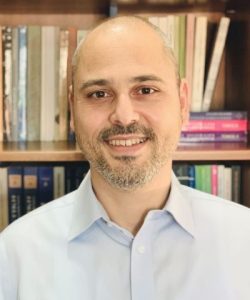
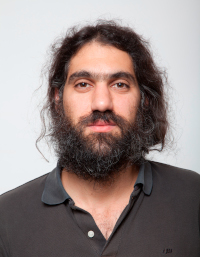
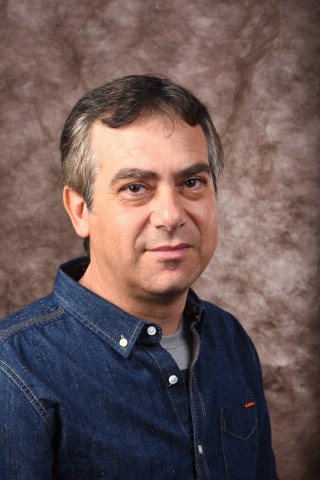
Stelios Timotheou is an Associate Professor at the Department of Electrical and Computer Engineering and faculty member at the KIOS Research and Innovation Center of Excellence, University of Cyprus. He holds a Dipl-Ing from National Technical University of Athens, and MSc/PhD from Imperial College London. His research focuses on developing real-time distributed methodologies using mathematical optimization, machine learning, and computational intelligence to enhance efficiency in critical infrastructure systems. Research interests center on data-driven decision making for urban mobility management, traffic control systems, and energy optimization. Key areas include: Intelligent UAV-based sensing for traffic monitoring Cooperative control algorithms for multi-agent systems Optimization of renewable energy integration Robust infrastructure protection strategies Recent publications demonstrate strong focus on traffic state estimation (76%), energy system optimization (16%), and UAV applications (8%). Awarded the Cyprus Research Award (2017) and ERC Consolidator Grant for URANUS project. Secured multiple research grants focusing on real-time control systems.
Christos Nicolaides is an Assistant Professor at the Department of Business and Public Administration within the School of Economics and Management at the University of Cyprus (UCY), holding a secondary appointment as a Digital Fellow at MIT's Initiative on the Digital Economy. Previously, he spent three years as a James McDonnell Foundation-funded Postdoctoral Fellow at MIT Sloan School of Management. His educational background includes a PhD in Engineering from Massachusetts Institute of Technology (2014), SM from MIT (2011), MSc in Applied Mathematics from Imperial College London (2009), and BSc in Physics from University of Thessaloniki (2008). Nicolaides' research applies mathematical, statistical, and computational tools to large-scale empirical questions in social influence mediated by digital technologies. His work spans Data Science , Machine Learning , Social Networks , and Computational Social Science , with significant contributions to understanding human mobility patterns, disease transmission dynamics, and social contagion effects. His research has established novel methodologies for analyzing complex network structures in mobility data and social interactions. Analysis of his 15 most recent publications reveals a consistent focus on applying network science to real-world problems, particularly in pandemic response (12 publications), human mobility analytics (9 publications), and social contagion dynamics (7 publications). His work demonstrates increasing interdisciplinary integration, combining computer science, epidemiology, and organizational behavior since 2020. Marie S. Curie Fellow Two Highly Cited Papers by Web of Science (2017, 2020) Best Paper Award by Risk Analysis Society (2019) Professor of The Week by Poets & Quants (2020) As principal institutional investigator, Nicolaides has secured over €1 million in research funding from the European Commission, industry partners, Cyprus Innovation and Research Foundation, and Cyprus Ministry of Health. His current teaching includes Social Networks and Entrepreneurship, Introduction to Operations Management, and Quantitative Methods in Management. Media coverage of his work spans major outlets including The New York Times, CNN, Nature, and Science, with significant impact on public health policy discussions during the COVID-19 pandemic.
Angelos Georghiou is an Associate Professor of Operations Management at the Department of Business and Public Administration, University of Cyprus. He previously held academic positions as Assistant Professor at McGill University (2016–2019), Post-Doctoral Researcher at MIT (2012–2013), and Postdoctoral Researcher at ETH Zurich (2013–2016). His work bridges computational methods in stochastic and robust optimization with applications in healthcare, energy systems, and operations management. Ph.D. in Operations Research, Imperial College London (2012) M.Sci. in Mathematics, Imperial College London (2008) His research focuses on stochastic optimization , robust optimization , and decision rules , addressing challenges in healthcare analytics , energy-efficient control systems , and machine learning integration . Recent publications in Management Science and Operations Research highlight his contributions to decision-dependent information discovery and computational frameworks. Key trends in his 15 most recent articles include: Advancing robust optimization techniques for multistage problems Applications in healthcare (psychiatric risk prediction) and energy systems Integration of machine learning with stochastic programming Development of tractable algorithms for complex decision environments Scientific Awards : Esdras-Minville Best Student Paper Award (2023) He serves on editorial boards of Operations Research Letters (Area Editor) and Management Science , and collaborates with institutions like MIT, ETH Zurich, and McGill University. His work with undergraduate students includes a 2021 paper in SIAM Undergraduate Research Online .
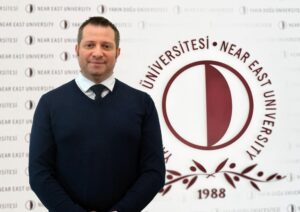
Prof. Dr. Fadi AL-TURJMAN serves as the founding Dean of the Faculty of AI and Informatics at Near East University (NEU), Cyprus. He holds multiple leadership roles including Head of the Software Engineering Department and Director of the AI and Robotics Institute and the International Research Center for AI and IoT. With a PhD in Computer Science from Queen’s University (2011), he specializes in AIoT systems, wireless networks, and blockchain integration. Affiliation: Near East University Leadership: Founding Dean for AI and Informatics, Director of AI & Robotics Institute Research Focus: His work bridges Artificial Intelligence of Things (AIoT) , Blockchain Applications , and Smart Networking . He explores cybersecurity frameworks for smart cities, quantum state optimization techniques, and novel AI-driven solutions for healthcare, agriculture, and energy systems. Key Article Trends: Recent publications emphasize Transformer models for environmental monitoring, blockchain-enabled security protocols , and evolutionary algorithms for resource optimization. His research spans interdisciplinary domains including medical diagnostics, vehicular networks, and sustainable infrastructure. Scientific Awards: Lifetime Golden Award of Dr. Suat Gunsel (2022) Multiple Best Research Awards at International Venues Labs & Teams: Directs the International Research Center for AI and IoT at NEU, leading multidisciplinary teams in developing advanced networking technologies and AI-driven solutions for global value chain applications.
Fatma Rızaner is a Senior Lecturer at the Department of Mathematics, Faculty of Arts and Sciences, Eastern Mediterranean University, North Cyprus. She earned her Ph.D. in Mathematics from the same institution and focuses on nonlinear dynamical systems and ecological modeling. B.S. in Applied Mathematics and Computers (1996-2000) M.S. in Mathematics (2000-2002) Ph.D. in Mathematics (2006-2012) Her research explores stability in nonlinear systems, habitat fluctuations, and the Allee effect in population dynamics, often integrating harvesting models and ecological theory. Recent publications highlight her work in computational methods for differential equations (2018) and ecological modeling (2012). These studies span topics like neural networks, population sustainability, and environmental variability. Contact: fatma.rizaner@emu.edu.tr | Web Page
Pieris Andreas is an Assistant Professor at the Department of Informatics, University of Cyprus. He holds a D.Phil. in Computer Science from the University of Oxford (2011), following a B.Sc. in Computer Science from the University of Cyprus (2006) and an M.Sc. in Mathematics and Foundations of Computer Science from Oxford (2007). Prior to his current position, he served as an Assistant Professor at the University of Edinburgh (2016–2020), Associate Professor at Edinburgh (since 2020), and held postdoctoral roles at Vienna University of Technology (2014–2016) and Oxford (2011–2014). His research focuses on database theory, particularly uncertain data, knowledge representation, and logic in computer science. He contributes to leading conferences and journals in these fields and has served on technical committees for major database and AI conferences. No specific grants, advising roles, or lab affiliations are detailed in the provided text.
Professor Panos Papanastasiou is affiliated with the Department of Civil and Environmental Engineering at the University of Cyprus, within the School of Engineering. He has held significant administrative roles including founding President of his department, Dean of the School of Engineering, and founding Director of the Master's Program in Natural Gas Engineering. PhD in Civil Engineering, University of Minnesota (1990) MS in Civil Engineering, University of Minnesota (1986) BSc in Civil Engineering, National Technical University of Athens (1984) His research focuses on geomechanics across petroleum engineering, energy transition, and environmental applications. Key areas include hydraulic fracturing , wellbore stability , sand production , and CO2 geological storage . He also investigates green hydrogen storage , photovoltaic cracking , and offshore pipeline dynamics . Recent publications highlight his leadership in hydraulic fracturing modeling (2025), green hydrogen integration (2024), and geomechanical analysis of faulted reservoirs (2025). His work spans computational mechanics, energy systems, and environmental risk assessment. Scientific Recognition : Top 2% scientist worldwide in Geoscience, Energy and Engineering (Stanford University ranking)
Georgios Kyriazis serves as a Professor in the Department of Mathematics and Statistics within the School of Natural and Applied Sciences at the University of Cyprus. His academic appointment is based in THEE 02 Building, Office 065 on the university campus. His educational foundation includes: B.Sc. in Mathematics (1986) from the University of Ioannina, Greece Ph.D. in Mathematics (1992) from the University of South Carolina, USA Professor Kyriazis specializes in Approximation Theory and Harmonic Analysis , with research emphasizing theoretical frameworks for function spaces. His work rigorously examines structural properties of Banach spaces, Triebel-Lizorkin spaces, and Besov spaces through decomposition techniques, frame constructions, and multilevel characterizations. This research bridges abstract functional analysis with practical computational methodologies in mathematical approximation. His publication trajectory reveals sustained focus on advanced function space theory since the early 2000s, evolving from foundational basis constructions toward sophisticated decompositions in anisotropic and weighted settings. Key thematic developments include spherical harmonic applications, Jacobi polynomial expansions, and directional approximation frameworks—all contributing to deeper understanding of multivariate function behavior.
Tasos Christofides is a Professor in the Department of Mathematics and Statistics at the University of Cyprus, School of Natural and Applied Sciences. He has been serving in this position since 2004 after previously holding the rank of Associate Professor from 1991 to 2004. Prior to his appointment at the University of Cyprus, he was an Assistant Professor at the State University of New York at Binghamton from 1987 to 1991. His educational background includes a Ph.D. (1987) and MSE (1985) in Mathematical Sciences from The Johns Hopkins University, USA, and a Mathematics degree (1983) from the University of Athens, Greece. Professor Christofides specializes in Probability Inequalities, Demimartingales, Stochastic Orders, Survey Methodology, and Indirect Questioning Techniques. His research primarily focuses on theoretical statistics with applications to survey methodology, particularly in developing techniques for handling sensitive questions while preserving respondent privacy. His work bridges probability theory with practical survey design, making significant contributions to both theoretical foundations and applied methodologies. His publication record demonstrates consistent contributions to statistical theory, with a particular emphasis on U-statistics, demimartingales, and randomized response techniques. The trajectory of his research shows progression from foundational work on U-statistics and probability inequalities in the early career to more applied survey methodology techniques in later years, while maintaining strong theoretical underpinnings. Professor Christofides serves as Associate Editor for several prestigious statistical journals including Communications in Statistics-Theory and Methods, Communications in Statistics-Computation and Simulation, Journal of Statistical Theory and Practice, and Statistics and Probability Letters. His editorial service reflects his standing in the statistical community and his expertise across multiple domains of statistical theory and methodology. While specific grant information is not provided in the available text, his sustained research output and editorial positions indicate active engagement with the research community.
Prof. Dr. Derviş Subası is a faculty member in the Department of Mathematics at Eastern Mediterranean University's Faculty of Arts and Sciences. His research focuses on numerical analysis, partial differential equations, and computational mathematics, with significant contributions to inverse problems and domain decomposition methods. He has supervised multiple master's and PhD students and is actively involved in academic research. Education: PhD and MS in Mathematics from Eastern Mediterranean University (1997, 1992), BS in Electrical and Electronics Engineering (1989). His research interests include numerical solutions of partial differential equations, preconditioning techniques, and iterative methods for linear systems. He has contributed to advancements in fractional calculus-based algorithms, block-grid methods for singular boundary conditions, and parallel computing for parabolic problems. Prof. Subası has co-supervised ongoing PhD research and mentored numerous master's students, with theses focusing on parabolic inverse problems, diffusion coefficient determination, and finite difference schemes. His work often intersects applied mathematics and computational modeling. Contact details: Office AS140, Phone +90 392 630 1138, Email dervis.subasi@emu.edu.tr .
Soulla Louca is a Full Professor and Head of the Department of Digital Innovation at the School of Business, University of Nicosia. With a PhD in Computer Science from the Illinois Institute of Technology (1994), she has built a career at the forefront of digital innovation. Her leadership includes chairing the COST Domain Committee for ICT (2008-2014) and pioneering blockchain initiatives at the University of Nicosia. Her educational background includes: PhD in Computer Science, Illinois Institute of Technology (1994) MSc in Computer Science, Western Michigan University (1991) BA in Computer Science and Mathematics, Kalamazoo College (1989) Prof. Louca's research spans blockchain technologies, ICT for sustainable development, and digital innovation. She has contributed to socio-economic aspects of ICT, e-learning, social integration, and the digital divide. Her work extends to personalized medicine and open access, driven by her involvement in European COST actions. She is particularly noted for her early work in blockchain (since 2014) and its applications across finance, governance, and identity management. Her recent publications (2024-2025) reveal a strong focus on blockchain adoption in the financial sector, tokenization, and metaverse technologies. These works collectively address the challenges and opportunities of decentralized systems in enhancing transparency, security, and sustainability across multiple domains including finance, government, and social media. Scientific awards: No specific awards were mentioned in the provided text. Prof. Louca has secured and managed significant research funding from diverse sources including the National Science Foundation (USA), Research Promotion Foundation (Cyprus), and the European Commission (Horizon 2020). Key projects include BLOCK4SME (blockchain for SMEs), the Austrian Blockchain Center, EUNOMIA (decentralized social media), and DLT4ALL (blockchain training). She has also served as a reviewer and evaluator for international bodies. She leads the Blockchain Initiative at the University of Nicosia, which has produced the world's first MSc in Digital Currency and the block.co platform for blockchain-based academic certificates. Her leadership in the COST program involved coordinating over 3000 researchers across Europe in ICT actions.
Dr. Andreas Savva is an Associate Professor at the Department of Computer Science , School of Sciences and Engineering , University of Nicosia . He has over 25 years of teaching experience across institutions like the University of North London, Kingsway College, Intercollege, and the University of Nicosia. Education: BSc Hons (First class) in Mathematics and Computing, University of North London PhD in Computer Graphics, University of North London His research focuses on Geometric Modeling , Subdivision Surfaces , and Spline Methods , with over 50 publications. Recent work includes interdisciplinary studies in Computing Education , Accessibility in Information Systems , and Real-Time Emotional Analysis via machine learning. The 15 most recent articles span topics in geometric modeling, software development, and educational technology. Trends include applications of subdivision surfaces in design, stakeholder-driven curriculum reform, and emotional analysis in educational contexts. Grants & Collaborations : He has participated in local and international funded projects, with collaborations across Cyprus, Greece, and the UK. His work aligns with UN Sustainable Development Goals, particularly education quality.
Dr. Nikos Savva is an Assistant Professor in Modelling and Simulation for Engineering Applications at The Cyprus Institute. His research bridges applied mathematics and engineering, particularly focusing on complex fluid dynamics and interfacial phenomena. Education: Holds a PhD in Applied Mathematics from MIT and a BSc in Applied Mathematics Engineering and Physics from the University of Wisconsin-Madison. Research Approach: Combines analytical methods with scientific computing to study wetting dynamics and multiscale flow systems. Previously held academic positions at Cardiff University and research appointments at Imperial College London.
Paris Skourides is a Professor at the Department of Biological Sciences , part of the School of Natural and Applied Sciences at the University of Cyprus . His research focuses on the molecular and cellular mechanisms underlying tissue morphogenesis and neural tube closure in vertebrates, particularly using the Xenopus laevis model organism. He also develops advanced imaging techniques using quantum dot nanocrystals and investigates the role of focal adhesion proteins in embryonic development and disease. Education PhD (1998-2004), The Rockefeller University: Morphogenetic Movements during Xenopus Gastrulation and Development of Biocompatible Quantum Dots BA Biochemistry (1994-1997), Brandeis University: Summa Cum Laude and Highest Honors in Biochemistry Research Interests include: Elucidating molecular mechanisms of vertebrate body plan formation Developing quantum dot-based imaging methods for morphogenesis studies Investigating focal adhesion proteins' roles in ciliogenesis and tissue mechanics Studying mechanotransduction pathways in embryonic development Creating high-throughput mucociliary flow assays for ciliopathy research His scientific contributions include the Marie Skłodowska-Curie Individual Fellowship. The Skourides Lab employs interdisciplinary approaches combining live imaging, 4D cell tracking, optogenetics, and molecular dynamics simulations to study: Ciliary adhesion complex formation Integrin-FAK signaling in spindle orientation Calcium signaling in apical constriction Quantum dot applications in developmental biology
Yiorgos-Sokratis Smyrlis is a Professor in the Department of Mathematics and Statistics at the University of Cyprus, where he has served since 1993, progressing from Assistant Professor to Associate Professor (2003) and finally to Professor (2010). His academic career includes prior positions as Research Assistant Professor at UCLA (1989-91) and Lecturer at the University of Manchester (1991-93). Professor Smyrlis received his secondary education at Model School of Anavruta, Kifissia, Greece (1977-1980), followed by undergraduate studies at the University of Athens, Department of Mathematics (1980-84), where he ranked 1st with a grade of 9.7/10.0. He earned his MS (1986) and Ph.D. (1989) in Mathematics from the Courant Institute, New York University, with a dissertation titled "Existence and stability of stationary profiles of the LW scheme" under Peter D. Lax. His research focuses on Conservation Laws, Numerical methods for elliptic boundary value problems, Density results with linear combinations of particular solutions of elliptic equations, Dissipative and dispersive–dissipative dynamical systems, and Development of linearly implicit schemes for nonlinear parabolic equations. His work often centers on the Method of Fundamental Solutions (MFS) and its theoretical foundations and practical applications. Analysis of his publication record reveals a strong emphasis on developing and analyzing numerical methods, particularly the MFS, for solving partial differential equations across diverse physical contexts. His research spans theoretical mathematical analysis to practical computational implementations, with significant contributions to understanding the Kuramoto-Sivashinsky equation and related dynamical systems. Professor Smyrlis has maintained extensive collaborations, particularly with A. Karageorghis, G. Akrivis, and D.T. Papageorgiou, resulting in publications in prestigious journals including Mathematics of Computation, Numerische Mathematik, and SIAM Journal on Scientific Computing.