Annalena Albicker is a Researcher at the Institute of Applied and Numerical Mathematics within the Faculty of Mathematics at the Karlsruhe Institute of Technology (KIT) . Her work focuses on Numerical Analysis and Inverse Problems , particularly in the context of Partial Differential Equations and Mathematical Physics . She is affiliated with the KIT's Institute of Applied and Numerical Mathematics Working Group 4: Inverse Problems . Her research explores the application of monotonicity methods to inverse scattering problems, including studies on Maxwell's equations and unbounded domains . Recent publications highlight her contributions to computational approaches for electromagnetic scattering and obstacle detection. Scientific Awards: No specific honors or awards are mentioned in the provided texts.
Johannes Maly is an Assistant Professor at the Bavarian AI Chair for Mathematical Foundations of Artificial Intelligence at LMU Munich. He previously held postdoctoral positions at Catholic University of Eichstaett-Ingolstadt and RWTH Aachen University, and completed his PhD at TUM Munich under Prof. Massimo Fornasier. PhD in Mathematics (2019, TUM Munich) M.Sc. in Mathematics (2015, TUM Munich) B.Sc. in Mathematics (2013, TUM Munich) His research focuses on mathematical data science and machine learning, specifically addressing: Robust covariance estimation under quantization Neural network approximation properties Implicit bias in gradient descent training Multi-structured signal recovery Quantization effects in deep learning and compressed sensing His recent publications analyze dithered quantization in covariance estimation, implicit regularization in overparameterized models, and multi-structured data recovery. He applies mathematical rigor to practical challenges in wireless communications (e.g., MIMO systems) and neural network training. Scientific recognition includes: relAI Fellow MCML Associate He supervises code/toolbox development for reproducibility and teaches graduate courses in convex optimization, high-dimensional probability, and mathematical data science. His work bridges theoretical mathematics and applied signal processing.
Andrea Barth is a W3-Professor of Computational Methods for Uncertainty Quantification at the University of Stuttgart, leading the Research Group for Computational Methods for Uncertainty Quantification within the Excellence Cluster for Simulation Technology. She holds a Ph.D. from the University of Oslo (2009) and has held positions at ETH Zürich and the University of Stuttgart. Her work focuses on stochastic partial differential equations, numerical methods for uncertainty quantification, and applications in engineering and natural sciences. Education: Ph.D. in Mathematics, University of Oslo (2006–2009) Lecturer/Postdoc at ETH Zürich (2010–2013) Junior Professor at University of Stuttgart (2013–2017) Research Interests: Stochastic PDEs, uncertainty quantification, Monte Carlo methods, Bayesian inverse problems, and numerical analysis of random fields. Her work bridges stochastic analysis and numerical simulations, addressing challenges in modeling and simulating complex systems with uncertainties. Grants & Funding: Principal Investigator in projects like 'Data-Integrated Simulation Science' (ExC 2075) and 'Quantitative Methods for Visual Computing' (SFB/TRR 161). Her research also explores applications in porous media, carbon dioxide storage, and optical flow analysis. Supervision: Advised PhD students including Oliver König, Fabio Musco, and Robin Merkle. Current students focus on topics like deep learning for stochastic PDEs and continuous level Monte Carlo methods.
Ayush Tewari is an Assistant Professor at the University of Cambridge. Previously, he was a postdoctoral researcher at MIT CSAIL under Bill Freeman, Josh Tenenbaum, and Vincent Sitzmann, and completed his Ph.D. at the Max Planck Institute for Informatics under Christian Theobalt. His research focuses on visual perception, developing methods to infer 3D structured representations from images and videos, aiming to bridge the gap between human perceptual capabilities and machine learning systems. Key research interests include neural rendering, inverse rendering, 3D reconstruction, and generative models. Notable contributions include advancements in Neural Radiance Fields (NeRF), diffusion models for inverse problems, and human-centric perception studies. His work has been published in top venues such as SIGGRAPH, CVPR, ICCV, and NeurIPS. Recent research trends emphasize ambiguity-aware inverse rendering, stochastic inverse problem solving using diffusion models, and integrating forward models for 3D scene inference. His work on Diffusion with Forward Models (NeurIPS 2023) proposes a novel framework for solving inverse problems without direct supervision. Awards: Best Paper Honorable Mention at BMVC 2022 (VoRF: Volumetric Relightable Faces). Labs/Projects: Core contributor to the DFM (Diffusion with Forward Models) project, advancing 3D scene understanding via probabilistic methods.
Lars Grasedyck is a Professor of Numerical Analysis at RWTH Aachen University. His research focuses on hierarchical matrices, tensor approximation, and numerical methods for partial differential equations and matrix equations. He has contributed to applications in biomedical engineering, particularly EEG/MEG inverse problems, and is involved in software development (HLIB, HLIB-pro). Education: Diploma and Ph.D. in Mathematics at Christian-Albrechts-Universität zu Kiel (1998, 2001), Postdoctoral work at Max Planck Institute, Leipzig (2002-2010). Research: Specializes in high-dimensional numerical methods, low-rank matrices, and tensors with applications in PDEs, uncertainty quantification, and biomedical modeling. Projects: Leads DFG-funded initiatives on adaptive tensor networks for parametric PDEs and tumor progression modeling. Advising: Supervises doctoral students including Thong Le, Maren Klever, and Dieter Moser. Software: Developed HLib and HLib-pro for hierarchical matrix computations. Conferences: Active in GAMM Fachausschuss Numerische Analysis, organizing workshops and symposia globally.
Andrea Walther is a Professor of Mathematical Optimization at the Humboldt University of Berlin, holding a position within the Faculty of Mathematics and Natural Sciences. She leads the Mathematical Optimization research group at the Institute of Mathematics, focusing on algorithmic differentiation, nonlinear optimization, and applied mathematics. Her academic journey includes a Diploma in Business Mathematics (1996, University of Bayreuth), a PhD (1999, TU Dresden), and habilitation (2008, TU Dresden). She has held roles such as Junior Professor at TU Dresden (2007–2008) and Professor at the University of Paderborn (2009–2019) before joining Humboldt in 2019 as a MATH+ Professor. Education : 1991–1996: Studies in Business Mathematics, University of Bayreuth 1996: Diploma in Business Mathematics, University of Bayreuth 1999: PhD in Mathematics, TU Dresden 2008: Habilitation, TU Dresden Her research interests center on optimization methods, particularly algorithmic differentiation (e.g., ADOL-C software), nonsmooth optimization, and applications in engineering and machine learning. She leads initiatives like the Cluster of Excellence MATH+ and contributes to projects such as the Transregio 154. Key Projects: Co-PI of DFG Project 'Mixed-integer non-smooth optimization for gas market problems' (2020–2022) Principal Investigator in MATH+ Projects (EF3-7, AA2-7) Co-developer of ADOL-C, a widely used tool for algorithmic differentiation Notable awards include being a SIAM Fellow. Her work bridges theoretical advancements and practical applications, with contributions to energy sector optimization, inverse problems, and computational frameworks for solving complex systems.
Prof. Dr. Rainer Heintzmann serves as Head of the Microscopy Department at the Leibniz Institute of Photonic Technology (Leibniz-IPHT) in Jena, Germany. His research focuses on advancing optical microscopy techniques, particularly super-resolution methods that surpass the diffraction limit to visualize cellular structures at nanoscale resolution. His primary research interests center on structured illumination microscopy (SIM), point spread function modeling, and computational imaging techniques. He has made significant contributions to developing automated multicolor SIM systems, extreme ultraviolet microscopy approaches, and deep learning-enhanced image analysis methods. His work bridges optical physics, computational algorithms, and biomedical applications, with particular emphasis on making advanced microscopy techniques more accessible through open-source hardware and software solutions. Analysis of his recent publications reveals a strong focus on overcoming fundamental limitations in optical microscopy. His research spans from theoretical modeling of optical systems to practical implementations for biological imaging. Key trends include the development of more accurate point spread function calculations, expansion of super-resolution techniques to new wavelength regimes, and integration of machine learning for image analysis and segmentation. Prof. Heintzmann actively collaborates with researchers across multiple institutions, as evidenced by his co-authorship on numerous interdisciplinary publications. His work has appeared in high-impact journals including Nature Methods, Nature Reviews Molecular Cell Biology, and Optics Express, reflecting the significance of his contributions to advancing microscopy techniques. His laboratory at Leibniz-IPHT appears to focus on developing novel microscopy instrumentation, particularly open-source implementations of super-resolution techniques. Recent projects include the openSIMMO platform for automated multicolor structured illumination microscopy and work on extreme ultraviolet microscopy that could potentially extend super-resolution capabilities into the X-ray regime.
Oliver G. Ernst is a Professor of Numerical Analysis at Technische Universität Chemnitz . His research focuses on Numerical Analysis , Uncertainty Quantification , and Inverse Problems , with applications in Thermo-Hydro-Mechanical (THM) processes , Electromagnetics , and Stochastic Partial Differential Equations . He is associated with the Numerical Analysis group at TU Chemnitz. Key Research Areas : Efficient numerical methods for PDEs Krylov subspace techniques Stochastic finite element methods Multi-physics modeling Geoscientific applications Recent Publications (2025-2010): THM simulations under uncertainty Neural network PDE solvers Bayesian inversion frameworks Rational Krylov algorithms Deflated restarting strategies Collaborations : TU Bergakademie Freiberg University of Manchester Technical University of Munich University of Maryland University of Geneva Software Development : Contributor to OpenGeoSys platform Developer of FEMALY MATLAB library Academic Recognition : h-index 32, i10-index 66, with over 4423 citations since 2020.
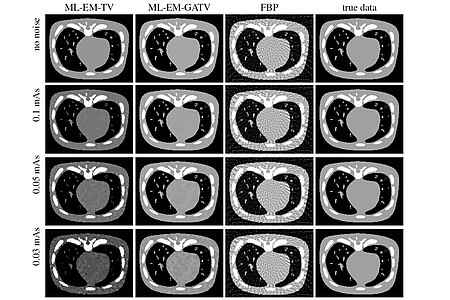
Jürgen Hesser is a Professor at the Mannheim Medical Faculty , Heidelberg University, specializing in Experimental Radiotherapy and Medical Imaging . His research focuses on solving inverse problems in imaging, particularly for CT reconstruction , brachytherapy planning , and low-dose imaging . Current affiliations: Clinic for Radiotherapy and Radiooncology, Mannheim University Hospital Collaborative ties: Interdisciplinary Center for Scientific Computing (IWR) and Center for Bioinformatics (ZITI) at Heidelberg University Research interests center on anisotropic total variation techniques for medical and industrial applications, including MR-guided interventions and real-time radiation therapy . His work has led to a 1000x speed improvement in brachytherapy planning algorithms. Recent publications highlight expertise in image reconstruction (CT/X-ray), noise optimization , machine learning for cancer classification, and big data management solutions. His methods are applied to both clinical and industrial imaging challenges. Additional contributions include scientific data infrastructure development and variance stabilization techniques for medical sensors. The research group maintains strong interdisciplinary links with Physics, Mathematics, and Computer Science faculties.
Karin Nachbagauer is a Professor of Applied Mathematics at the University of Applied Sciences Upper Austria, affiliated with the Faculty for Engineering's Mechanical Engineering Department. She holds a Hans Fischer Fellowship at the TUM Institute for Advanced Study (since 2020). Her research focuses on multibody system dynamics, numerical mathematics, optimal control, and inverse dynamics, with applications in mechanical engineering and robotics. She earned her PhD in Engineering Sciences (2012) and Diploma in Industrial Mathematics (2009) from Johannes Kepler University Linz. Notable awards include the 2020 Best Paper Award for optimal control research and 2019 Excellence in Teaching Award. Her work emphasizes adjoint gradient methods for optimization problems, parameter identification in multibody systems, and time-optimal control applications. Current projects include the VRoboCoop initiative for human-robot collaboration and IOMMS for innovative optimization in multibody systems. Publications span journals like Journal of Computational and Nonlinear Dynamics and Multibody System Dynamics , with over 80 peer-reviewed articles. She actively participates in international conferences and serves on editorial boards.
Jannik Matuschke is an Associate Professor of Operations Management at the Department of Decision Sciences and Information Management, KU Leuven (Belgium). He holds affiliations with the KU Leuven Institute for Artificial Intelligence (Leuven.AI) and the KU Leuven Institute for Mobility (LIM). His research focuses on combinatorial optimization, algorithm design, game theory, robustness under uncertainty, and applications in logistics and production systems. Education: PhD in Mathematics (2013) from TU Berlin, advised by Martin Skutella and Britta Peis Postdoctoral positions at Universidad de Chile (2014) and TU München (2016–2018) DAAD P.R.I.M.E. fellowship at University of Rome 'Tor Vergata' (2015) Research Themes: Design of resilient infrastructures using multi-stage optimization Stochastic and robust project scheduling Applications in logistics network analytics and congestion modeling Recent Contributions: Recipient of the 2024 Meritorious Service Reward from Operations Research Journal Co-chair of WAOA 2025 and editorial roles at Omega, Operations Research Letters, and OR Spectrum Active in international workshops like FRICO 2025 and the Santiago Summer Workshop on Combinatorial Optimization Academic Leadership: Supervises 5 current PhD/postdoc researchers across logistics and optimization Coordinates the Master's Thesis program in Production and Logistics at KU Leuven Manages research projects on robust infrastructure design (2022–present) and stochastic scheduling (2020–present)
Dr. Arved Bartuska is a Researcher at the Department of Mathematics, RWTH Aachen University, working in the Chair for Mathematics for Uncertainty Quantification under Prof. Raúl Tempone. His research focuses on developing efficient computational methods for Bayesian optimal experimental design, particularly in the presence of nuisance uncertainty. Education: PhD (Dr. rer. nat.) from RWTH Aachen University, supervised by Prof. Raúl Tempone, with co-advisors Prof. Luis Espath (University of Nottingham) and Prof. Robert Scheichl (University of Heidelberg). Dissertation: Hierarchical Methods for Bayesian Optimal Experimental Design . M.Sc. and M.A. (fields not specified in the text). Dr. Bartuska's research centers on Bayesian statistics and uncertainty quantification . He addresses computational challenges in Bayesian optimal experimental design by developing approximations like Laplace methods and leveraging Monte Carlo techniques to handle high-dimensional parameters and nuisance uncertainties in complex models. His 2022 publication introduced a small-noise approximation for Bayesian experimental design with nuisance uncertainty, significantly reducing computational burden by avoiding nested Monte Carlo sampling. This enables practical application to engineering problems through efficient expected information gain computation. Dr. Bartuska actively presents at international venues including the SIAM Conference on Uncertainty Quantification 2022 and the Stochastic Numerics Workshop at King Abdullah University. He maintains collaborations with institutions across Saudi Arabia, the UK, and Germany within the DFG-funded IRTG 2379 framework. He is a core member of the Mathematics for Uncertainty Quantification chair, contributing to the International Research Training Group 2379 Modern Inverse Problems focused on interdisciplinary approaches to inverse problems from geometry, data, and models.
Yakir Hadad is a Senior Lecturer (equivalent to Assistant Professor) at Tel Aviv University's School of Electrical Engineering, Department of Physical Electronics. He holds a B.Sc. and M.Sc. from Ben-Gurion University (2006, 2008) and a Ph.D. from Tel Aviv University (2014), followed by postdoctoral research at the University of Texas at Austin (2014-2016). His research focuses on fundamental wave phenomena in complex systems, with expertise spanning: Analytical methods in electrodynamics and acoustics Physical bounds in wave engineering Time-variant and nonlinear wave systems Metamaterials for RF/optical applications Plasmonics and nanophotonics Hybrid-physics wave interactions Publication analysis reveals consistent focus on wave manipulation through spatiotemporal modulation, non-reciprocal systems, and topological phenomena, with recent expansion into machine learning applications for electromagnetic field transformation. His work bridges theoretical foundations with practical devices like antennas, waveguides, and frequency converters. Major Scientific Awards: Krill Prize for Excellence in Research (2020) Alon Fellowship for Outstanding Young Researchers (2017-2020) Leopold B. Felsen Award for Excellence in Electrodynamics (2016) TAU Rector's 100 Best Teachers List (2019) Leads an active research group with 3 PhD candidates, 1 MSc student, and 3 undergraduate researchers. Current projects include time-varying metamaterials, acoustic wave guiding, and nonlinear device synthesis. Research is supported by: ISF Grant 1353/19 (2019-2023) MAFAT research grant Alon Fellowship (2017-2020) TAU Rector Startup Fund (2017-2020)
Matthias Baitsch serves as Professor of Construction Informatics and Numerical Methods in the Department of Civil and Environmental Engineering at Bochum University of Applied Sciences, where he concurrently heads the BIM Institute. His academic trajectory includes research assistant and senior engineer roles at Ruhr-University Bochum (2000-2009), academic coordination at the Vietnamese-German University (2009-2012), and an acting professorship at the University of Kassel (2012-2014). His educational foundation comprises: Civil Engineering studies at the University of Dortmund (1991-1997) under the interdisciplinary "Dortmund Model" Doctorate from Ruhr-University Bochum (2003) on geometric imperfection-based optimization of compressive beam structures Professor Baitsch's research integrates computational mechanics with civil engineering practice, specializing in construction informatics, numerical optimization, and high-order finite element methods. His work pioneers distributed optimization frameworks, structural health monitoring for wind energy infrastructure, and BIM-based construction informatics. Key methodological contributions include hp-FEM implementations, parallel optimization algorithms, and mobile structural analysis tools. Analysis of his recent publications reveals three dominant research trajectories: (1) Advanced numerical methods for structural optimization under uncertainty, (2) Health monitoring-driven lifetime prediction for wind turbine systems, and (3) Computational modeling of tunnel environments using viscoacoustic inversion techniques. These threads demonstrate consistent focus on robust numerical implementations and real-world civil engineering applications. As Head of the BIM Institute, he leads institutional efforts in digital construction technologies, fostering industry-academia collaboration on building information modeling standards and applications. His teaching portfolio spans foundational mathematics, numerical methods, and computer science for civil engineering students, emphasizing practical computational skills.
Audrey Repetti is an Associate Professor in the Department of Actuarial Mathematics and Statistics within the School of Mathematical and Computer Sciences at Heriot-Watt University in Edinburgh, UK. She also holds a dual affiliation with the Institute of Sensors, Signals, and Systems in the School of Engineering and Physical Sciences, and is part of the Maxwell Institute for Mathematical Sciences - Edinburgh. Her research spans mathematical imaging, optimization, and computational methods with applications across astronomy, medical imaging, and optical engineering. Dr. Repetti's research focuses on developing advanced mathematical frameworks for solving imaging inverse problems. Her work centers on optimization algorithms, Bayesian uncertainty quantification, and the integration of machine learning with traditional mathematical approaches. She has made significant contributions to radio interferometric imaging, computational optical imaging with photonic lanterns, and uncertainty quantification in medical imaging. Her research bridges theoretical mathematics with practical applications in astronomy, healthcare, and engineering. Analysis of her recent publications reveals a clear trajectory toward integrating traditional mathematical imaging approaches with modern machine learning techniques. Her work increasingly focuses on 'hybrid' methodologies that combine data-driven models with optimization frameworks. Key themes include plug-and-play algorithms, uncertainty quantification in imaging, and the development of efficient computational methods for high-dimensional inverse problems. Her research demonstrates strong interdisciplinary connections between mathematics, signal processing, astronomy, and medical imaging. Dr. Repetti is actively involved in academic service, including co-organizing the 2026 ICMS Workshop on Imaging inverse problems and generating models. She has received research funding supporting her work in computational imaging and inverse problems, though specific grant details aren't listed in the provided materials. Her teaching portfolio includes advanced courses in scalable inference, deep learning, and statistics for sciences. She leads several research projects with associated software toolboxes including BUQO (Bayesian Uncertainty Quantification by Optimization), SARA-COIL (Compressive optical imaging with a photonic lantern), and CALIM (Self direction-dependent effect calibration and imaging in radio-interferometry). These projects demonstrate her commitment to developing practical computational tools that advance both theoretical understanding and real-world applications in imaging science.