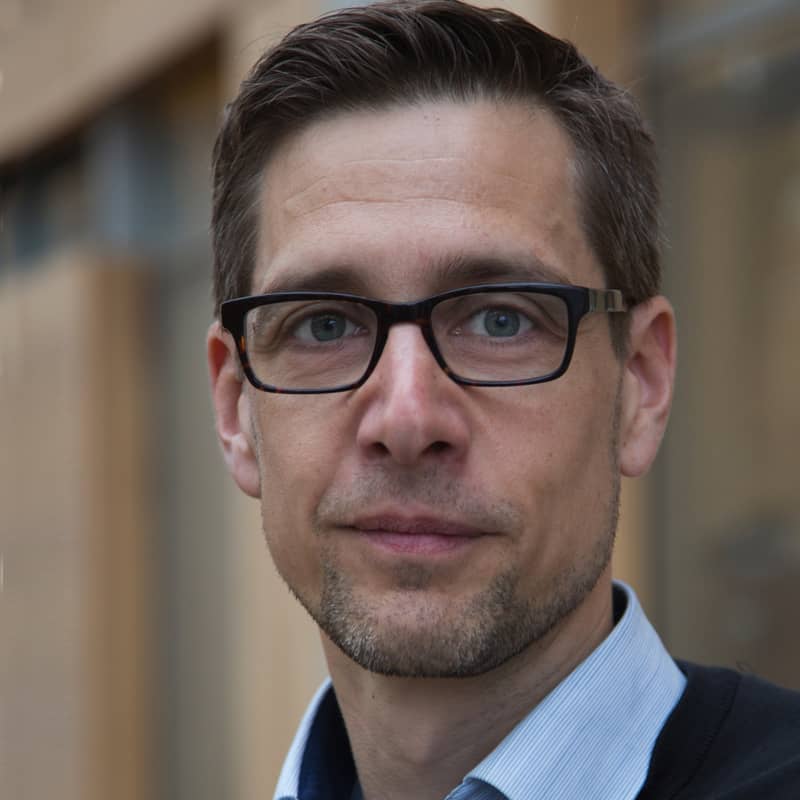
Steven Farber is an Associate Professor in the Department of Human Geography at the University of Toronto . His research focuses on transport geography , spatial analysis , accessibility , and public transportation equity , with a strong emphasis on Geographic Information Science (GIS) and social sustainability . Current research: Distributional aspects of transit accessibility, personal mobility, activity participation Teaching: Undergraduate courses on multivariate analysis and transportation geography, graduate seminars on transportation and urban form Key research trends include: Transport equity and social inclusion Time-geography in urban mobility Spatiotemporal accessibility modeling Behavioral impacts of transport infrastructure GIS-based spatial econometric methods Grants include multiple SSHRC Insight awards, Ontario Ministry of Research funding, and municipal partnerships for transport equity studies.
Dimitris Mitropoulos is an Assistant Professor at the National and Kapodistrian University of Athens (NKUA) in the Department of Business Administration, where he teaches courses on Distributed Ledger Technologies, Data Security and Privacy, Algorithms and Business Analytics, and Introduction to Programming. He also serves as Head of the Reliability Engineering Directorate at the National Infrastructures for Research and Technology (GRNET), Greece's national research and education network organization. Previously, he was a Postdoctoral Researcher in the Computer Science Department at Columbia University. Dr. Mitropoulos received his Ph.D. degree in Secure Software Development Technologies from the Athens University of Economics and Business (AUEB) in 2014. His doctoral research was supported by the Heracleitus II Scholarship, co-financed by the European Union and Greek national funds. He is a member of prestigious professional organizations including ACM, IEEE, and USENIX. Dr. Mitropoulos conducts pioneering research at the intersection of software engineering and cybersecurity, with particular expertise in secure software development, vulnerability analysis, and blockchain security. His work spans multiple dimensions of software security including code injection attacks, infrastructure as code security, smart contract analysis, and dependency management in software ecosystems. His research methodology combines static and dynamic analysis techniques with empirical studies of real-world software systems, particularly focusing on Java, Python, and Solidity ecosystems. His recent work has made significant contributions to understanding security vulnerabilities in modern software development practices and infrastructure management. Dr. Mitropoulos has received numerous prestigious awards for his research contributions, including the Research Excellence Award from NKUA (2025), Distinguished Paper and Artifact Awards at PLDI '22, Best Data Showcase Award at MSR 2018, and multiple postdoctoral research funding scholarships. His work on "Finding typing compiler bugs" was recognized with both Distinguished Paper and Artifact Awards at PLDI '22, highlighting the significance and reproducibility of his research. He has also received recognition for his service to the academic community, including a Certificate of Appreciation from ESEC/FSE '21 for his contributions to conference organization. Dr. Mitropoulos has been actively involved in securing research funding and leading significant research projects. He currently serves as Principal Investigator for the SecOPERA project (2023-Today), funded by the European Commission under Horizon Europe. Previously, he contributed to several major EU and US-funded projects including eSSIF-Lab (2019-2022), FASTEN (2019-2022), PRIViLEDGE (2018-2021), CERTCOOP (2017-2020), PANORAMIX (2016-2019), and TREDISEC (2016-2018). His research has been supported by diverse funding sources including the European Commission's Horizon 2020 program, the National Science Foundation, and the Defense Advanced Research Projects Agency (DARPA). Dr. Mitropoulos plays an active role in the international research community through various leadership positions. He serves on program committees for top-tier conferences including OOPSLA (2026), ICSE (2026), ESEC/FSE (2025), and ISSTA (2025). He has previously served as Workshop Co-Chair for ISSTA 2025 and Student Volunteer Chair for ESEC/FSE 2021. His contributions to mentoring the next generation of researchers include serving as a mentor for the ICSE Student Mentoring Workshop (2022) and supervising Google Summer of Code projects (2017).
Deepa Kundur is the Professor & Chair of The Edward S. Rogers Sr. Department of Electrical & Computer Engineering at the University of Toronto. She earned her BASc, MASc, and PhD in Electrical and Computer Engineering from the same institution in 1993, 1995, and 1999, respectively. Current roles: IEEE Spectrum Advisory Board Conference leadership: General Chair of 2018 GlobalSIP Symposium, TPC Co-Chair for IEEE SmartGridComm 2018, among others Her research focuses on cybersecurity , signal processing , and complex dynamical networks , particularly in smart grid applications. She has authored over 200 publications and pioneered techniques for detecting false data injection attacks, enhancing grid resilience, and integrating machine learning into power systems. Her recent work spans quantum learning for grid security , LLM-based mental health prediction , and resilient control systems . She has received 14 best paper recognitions, including IEEE SmartGridComm (2015) and IEEE INFOCOM Workshop (2008). Fellowships: IEEE Fellow (2015), Canadian Academy of Engineering Fellow (2016), Massey College Senior Fellow (2019) Teaching awards: Tenneco Meritorious Teaching Award (2005), Gordon Slemon Teaching of Design Award (2002) Early career honors: NSERC Scholarships (PGS A/B), Canada Scholarship She leads the Kundur Research Group , developing models for cyber-physical systems in smart grids and autonomous vehicle networks. Her team explores reinforcement learning for grid defense , transmissibility-based fault detection , and privacy-preserving smart grid analytics .
Rachee Singh is an Assistant Professor of Computer Science at Cornell University, leading the sysphotonics research group. She concurrently serves as an Amazon Scholar within the SageMaker Hyperpod teams, specializing in large-scale machine learning infrastructure development for cloud environments. Her research focuses on photonic interconnect systems for server-scale, rack-scale, and long-haul communication networks, targeting performance optimization for distributed machine learning and planet-scale cloud workloads. Key specialties include optical network design, fault-tolerant WAN architectures, and energy-efficient datacenter interconnects, with strong emphasis on practical deployment in real-world systems. Her group bridges theoretical networking principles with applied AI infrastructure challenges. Recent publications demonstrate concentrated innovation in photonic network optimization for ML workloads, particularly in wavelength management, collective communication algorithms, and chip-to-chip photonic fabrics. This work spans optical physics, distributed systems, and machine learning, revealing a trajectory toward sustainable, high-performance AI infrastructure. Scientific recognition includes: Amazon Research Award (2023) Cisco Research Award Dr. Singh actively mentors graduate researchers including Jonathan Aimuyo, Byungsoo Oh, and Arjun Devraj, whose co-authored publications form the core of her group's output. Research funding is secured through competitive grants from the NSF (including a $1M award for chip-to-chip photonic fabrics), SRC/DARPA JUMP 2.0 program, Cisco, and Cornell's Atkinson Center for Sustainability. The sysphotonics group operates as Cornell's hub for photonic network systems research, developing programmable integrated photonics solutions and collaborating with Amazon on SageMaker Hyperpod for next-generation ML infrastructure.
Dominik Roeser is a Professor and Associate Dean of Research Forests & Community Outreach at the University of British Columbia's Faculty of Forestry, Department of Forest Resources Management. With over 21 years of experience in forest research and innovation, he has built a comprehensive forest operations research program since joining UBC in 2018, following his tenure as Senior Director at FPInnovations where he managed multidisciplinary teams focused on improving forest sector competitiveness and wildfire management solutions in Western Canada. Professor Roeser's research interests center on sustainable forest management and the bioeconomy, with specific expertise in forest bioproduction, supply chain design, steep slope harvesting, and biomass operations. His work through the Forest Action Lab applies diverse research methods including productivity studies, field trials, and modeling to address sustainability challenges across different operational environments. His research portfolio spans sustainable forest biomass utilization, harvesting in difficult terrain, innovative forest planning tools, operational productivity, carbon management, and community sustainability impacts from reforestation. His publication record shows a strong focus on practical applications of forest science, with recent work emphasizing wildfire management, remote sensing technologies for precision forestry, biomass energy systems, and the socio-ecological dimensions of forest management. His research increasingly integrates advanced technologies like LiDAR and drone-based systems with traditional forest operations to address contemporary challenges in sustainable forest management. Roeser has received the Recognition Award from the Canadian Forest Service (2017) for his contributions to forest science and innovation. His work demonstrates significant impact on both academic understanding and practical implementation of sustainable forest operations across North America and Europe. As an educator, Professor Roeser teaches several key courses including FOPR 264 Introduction to Forest Operations, FOPR 362 Harvesting systems and forest access, FOPR 464 Operational planning and management, and FRST 452 Coastal field school. He considers educating the next generation of forestry professionals one of his passions, bridging theoretical knowledge with practical industry applications. The Forest Action Lab, led by Professor Roeser, represents a multidisciplinary research hub applying diverse methodologies to address forestry stakeholders' needs across British Columbia, Canada, and globally. The lab's work connects academic research with industry implementation, focusing on practical solutions for sustainable forest utilization in varied operational environments.
Dr. Johnson Xuesong Shen is an Associate Professor at the School of Civil and Environmental Engineering , University of New South Wales . His work integrates Digital Twins , Building Information Modeling (BIM) , and Construction Automation with a focus on robotics, AI, and LiDAR/UAS technologies. Research Interests: Digital Twins, BIM, Construction Robotics, Emissions Modeling, LiDAR/UAS, Structural Health Monitoring Education: Ph.D. in Construction Engineering and Management, The Hong Kong Polytechnic University His publications span 2025–2005, emphasizing construction automation , environmental impact reduction , and innovative tunneling solutions . Recent work includes IoT-Bayes fusion for real-time safety monitoring and life cycle analysis of construction waste. Scientific Awards: Vice Chancellor's Award for Teaching Excellence, UNSW, 2014 Best PhD Student Paper Award, CONVR, UK, 2013 Postdoctoral Fellowship, University of Alberta, 2011-2013 Best Paper Award, ASCE Construction Research Congress, 2010 Dr. Shen mentors 9 PhD candidates in areas like 3D object detection , fuel consumption modeling , and UAV-based LiDAR . His grants include $5.98M from the Australian Research Council (2022–2027) for resilient infrastructure systems and projects on modular construction and intelligent tunneling .
Prof. Dr. Christian Rossow is a faculty member at CISPA – Helmholtz Center for Information Security in Dortmund, Germany. He also serves as a professor at Saarland University and an honorary professor at TU Dortmund. His research focuses on network security , system/software security , and cyber attacks and countermeasures . His recent publications include work on CSS exploitation for browser fingerprinting, Spectre mitigations on ARM, DDoS attack analysis, and hardware-assisted security extensions. Christian Rossow regularly serves as a PC member and track chair for top cybersecurity conferences like ACM CCS and USENIX Security . He advises multiple PhD students and leads a research group exploring foundational and practical security solutions.
Thorsten Koch serves as Head of the Department of Applied Algorithmic Intelligence Methods within the Division of Mathematical Algorithmic Intelligence at Zuse Institute Berlin (ZIB). His research spans mathematical optimization, energy systems modeling, quantum computing applications, and scientometrics. Koch leads significant research projects including FAN (focusing on AI in scholarly communication), UNSEEN (energy scenarios), HPO-NAVI (research software visibility), and Multi-Energy Models for European Energy System Planning. Koch's research interests center on developing advanced optimization algorithms for complex systems, particularly in energy networks and scientific data analysis. His work bridges theoretical mathematics with practical applications in gas network optimization, wind farm design, portfolio management, and quantum computing. He has pioneered methods for large-scale mixed-integer programming, scenario generation, and the integration of machine learning with traditional optimization techniques. His recent publications demonstrate growing emphasis on quantum optimization, scientometrics, and the application of AI to scientific communication infrastructure. His publication trends reveal a strategic expansion from traditional mathematical optimization into quantum computing applications and scientific data infrastructure. Recent work shows increasing collaboration across disciplines - connecting energy systems analysis with financial modeling, integrating machine learning with optimization solvers, and applying computational methods to scientometrics. The 15 most recent articles highlight three major thrusts: quantum optimization (33%), energy systems modeling (27%), and scientific data infrastructure (40%), reflecting his leadership in both theoretical algorithm development and practical implementation for societal challenges. Koch actively contributes to research infrastructure through leadership roles in projects like KOBV (Berlin-Brandenburg Cooperative Library Network), HDC (Humanities Data Centre), and CIB (future library networks). His work on the DeepGreen initiative focuses on establishing legally secure workflows for implementing open-access components in scientific publication licensing agreements, demonstrating his commitment to open science principles and research data management.
Neil Shah is a Lead Research Scientist at Snap Inc., leading initiatives in user modeling, personalization, and trust and safety across Snapchat. His research focuses on advancing machine learning algorithms for large-scale structured data, including graph and sequential representations, with applications to recommendation systems and social platform security. PhD in Computer Science, Carnegie Mellon University (2017), advised by Christos Faloutsos B.S. in Computer Science, North Carolina State University Current research interests span: Graph Neural Networks (GNNs) for real-time inference and scalable training Cross-domain recommendation systems and generative modeling Test-time augmentation and hyperbolic geometry in representation learning Explainability methods for GNNs and fairness-aware outlier detection Recent publications highlight productionized GNN frameworks (GiGL), multimodal graph benchmarks, and novel approaches to link prediction and collaborative filtering. His work has appeared at top venues like KDD, ICLR, NeurIPS, and WWW. Scientific recognition includes: Outstanding Service Award at WSDM 2022 Best Paper Honorable Mention at CHI 2019
Professor Jing Meng is a leading academic at University College London's Bartlett School of Sustainable Construction, holding the position since 2023 after progressing from Lecturer (2019-2021) to Associate Professor (2021-2023). She concurrently serves as a fellow at the Cambridge Centre for Environment, Energy and Natural Resource Governance and maintains active editorial roles as Executive Editor of the Journal of Cleaner Production and Associate Editor for Journal of Geophysical Research: Atmospheres. Her research spans three interconnected domains: Energy Transitions and Technology Innovation (examining cost forecasts and structural emission declines in China), Climate Change Policies (analyzing South-South trade effects and multinational enterprise emissions), and Emission-Health-Socioeconomics Nexus (assessing air pollution impacts and integrated co-mitigation strategies). This interdisciplinary approach is reflected in her publication record across Nature family journals and PNAS. Analysis of her recent publications reveals a consistent focus on global carbon accounting methodologies, with increasing attention to subnational (city-level) analyses, health co-benefits of climate policies, and technological innovation pathways for hard-to-abate sectors. Her work frequently employs multi-regional input-output modeling to trace emissions through complex supply chains. AGU Global Environmental Change Early Career Award (2023) MIT Technology Review Innovators Under 35 Asia Pacific (2022) Clarivate Highly Cited Researcher (2020-2024) Nature Communications Top 50 Earth Sciences Article (2018) MDPI Emerging Sustainability Leader Award (2020) Environmental Research Letters Best Early Career Article (2017) Professor Meng has secured substantial funding from diverse sources including NERC, the British Council, Quadrature Climate Foundation, The Royal Society, and UCL internal grants. She leads an interdisciplinary research group focused on technology innovation and climate policy, with particular emphasis on China's role in global emissions systems. Her work directly supports Sustainable Development Goal 13 (Climate Action) through actionable policy insights.
Nicolas Riviere is a Professor at INSA Lyon in the Department of Mechanical Engineering, working within the Laboratory of Fluid Mechanics and Acoustics (LMFA - UMR 5509). He is part of the "Fluides complexes et transferts" (Complex Fluids and Transfers) group and the Environment team. His teaching activities primarily focus on fluid mechanics at the Mechanical Engineering Department of INSA Lyon, covering: General balances (mass, momentum, energy) Aerodynamics Compressible flows Numerical simulation of flows Free surface hydraulics Prof. Riviere's research centers on free surface hydrodynamics, with applications to natural and industrial risks. His work takes an experimental approach, utilizing the laboratory's channel facilities, particularly the channel intersection installation. His research spans river floods with compound beds, urban flooding, sanitation networks, torrential flows, and flow-obstacle interactions. He has developed a strong interdisciplinary focus, co-leading the "Baignades en Rivières Urbaines" studio with Oldrich Navratil from University Lyon 2 and the EVS Laboratory. His publication record demonstrates consistent contributions to the fields of fluid mechanics and environmental hydraulics, with recent work focusing on open-channel flows, urban flooding phenomena, vegetation-flow interactions, and experimental techniques for studying complex hydraulic phenomena. His research often bridges theoretical fluid mechanics with practical environmental applications. Prof. Riviere has received recognition for his work in environmental fluid mechanics, with numerous publications in high-impact journals in hydraulic engineering and fluid mechanics. He has supervised multiple PhD students and research projects related to environmental fluid mechanics and has collaborated with various institutions on interdisciplinary research projects addressing water-related challenges. The laboratory where he works, LMFA, provides extensive experimental facilities including wind tunnels, hydrodynamic channels, and advanced measurement techniques such as PIV (Particle Image Velocimetry), LDV (Laser Doppler Velocimetry), and other state-of-the-art instrumentation for fluid flow analysis.
Leid Zejnilovic is an Assistant Professor at Nova School of Business and Economics (Nova SBE), where he co-founded the Data Science Knowledge Center and serves as Academic Director, and co-founded the Open and User Innovation Knowledge Center as Scientific Deputy Director. He also co-founded the Patient Innovation platform, enabling patients and caregivers to share self-made healthcare solutions. With a double PhD from Carnegie Mellon University and Católica-Lisbon School of Business and Economics, his career spans over 20 years of international consulting, academic entrepreneurship, and teaching at institutions like Imperial College Business School and Ludwig Boltzmann Institute. PhD in Strategy, Entrepreneurship and Technological Change (Carnegie Mellon University / Catholic University of Portugal, 2014) Master in Engineering and Public Policy (Carnegie Mellon University, 2012) Master in Information Technology (Dzemal Bijedic University, 2007) Bachelor in Telecommunications (University of Sarajevo, 2002) His research focuses on Technology and Innovation Management, Human-Computer Interaction, and data-driven solutions across healthcare, tourism, and education. He has published extensively in journals like California Management Review , PLoS ONE , and Marine Policy , with recent work analyzing big data in tourism, machine learning for oral health, and pandemic impacts on fisheries. As an Associate Editor for Data & Policy Journal , his contributions bridge academic research and real-world applications. Co-founding the Data Science for Social Good Foundation and leading over 100 talks in industry and academia, Zejnilovic's career emphasizes translating innovation into social and economic impact through platforms, policy, and education.
Dr. Ava Fatah gen. Schieck is a Professor of Media Architecture and Urban Digital Interaction at The Bartlett School of Architecture, University College London (UCL) , where she has been affiliated since 2001. She teaches in the MSc Architectural Computation program, focusing on embodied interactions and urban digital experiences. Education: ATQ03 - Recognised by the HEA as a Fellow (UCL, 2008) Certificate in Learning and Teaching (UCL, 2007) Master of Science (UCL, 2001) Her research explores the intersection of architecture, digital media, and urban spaces. Key themes include: Mediated spatial experiences in museums and public environments Embodied interactions through dance, movement, and performative design Urban screens and community-centered digital installations Smart city critiques focusing on marginalized communities Pervasive computing's impact on social dynamics Her publication corpus (149+ outputs) predominantly addresses media architecture, HCI, museum technology, and sensory interactions , with recent work emphasizing olfactory interfaces, pandemic urbanism, and heritage digitization. Awards & Honors: Fellow of the Royal Society of Arts (FRSA, 2023) Projects & Grants: As Principal Investigator for the EPSRC-funded 'Screens in the Wild' , she examines networked urban screens for community engagement. She previously led the 'SCREAM' project (UrbanBuzz program) and contributed to EPSRC's 'Urban Design and Pervasive Systems'. She reviews grants for EPSRC, UKRI, SNSF, and other international bodies. She directs research through UCL's Space Research Group and VR Centre for the Built Environment , collaborating globally. As program chair for the Media Architecture Biennale (2012-2020), she fosters interdisciplinary dialogue across architecture, HCI, and interaction design.
Prof. Dr. Frederik Tilmann is a leading seismologist at the GFZ German Research Centre for Geosciences (Section 2.4 Seismology) and a professor at the Freie Universität Berlin . His work focuses on seismic waveform analysis to understand geodynamic processes in subduction zones and continental collisions. Current affiliations: Head of Seismology Section, GFZ Potsdam University Professor, Freie Universität Berlin Research interests include: Earthquake source characterization Seismic tomography methods Mantle dynamics and lithospheric deformation Machine learning applications in seismic data analysis Volcano-seismic monitoring Ocean bottom seismology techniques Recent publications highlight advancements in: Full waveform inversion for mantle dynamics Machine learning for seismic phase picking Anisotropy studies in Alpine and Himalayan regions Subduction zone microseismicity analysis Volcano-induced landslide detection Scientific awards include: Feodor-Lynen Fellowship (Humboldt Foundation) Trinity Hall College Staff Fellowship Multiple citations in high-impact journals Collaborative work spans global seismic infrastructure projects like SMART cables, the Collaborative Seismic Earth Model, and the AlpArray network. His methodology innovations in shear wave splitting and depth phase picking have become standards in computational seismology.
Hua Cai is the Thomas and Jane Schmidt Rising Star Associate Professor at Purdue University's Edwardson School of Industrial Engineering with a joint appointment in Environmental & Ecological Engineering. She holds a PhD in Environmental Engineering & Natural Resources from the University of Michigan, an MS in Environmental Engineering from Penn State, and a BS from Tsinghua University. Her research integrates operations research and production systems to address sustainability challenges, with focus areas including: Environmental implications of emerging technologies Urban sustainability modeling and infrastructure resilience Industrial ecology and complex adaptive systems Sustainable transportation and mobility systems Recent publications demonstrate strong focus on sustainable transportation systems, with extensive analysis of shared mobility patterns (bike/e-scooter systems), autonomous vehicle impacts, and microgrid resilience. Her work consistently applies advanced computational methods including reinforcement learning, agent-based modeling, and spatiotemporal analysis to urban sustainability challenges. Dr. Cai has received recognition including the Thomas and Jane Schmidt Rising Star Professorship for her contributions to sustainable systems engineering. She leads research on renewable energy integration in transportation infrastructure and advises projects on climate-resilient urban systems.