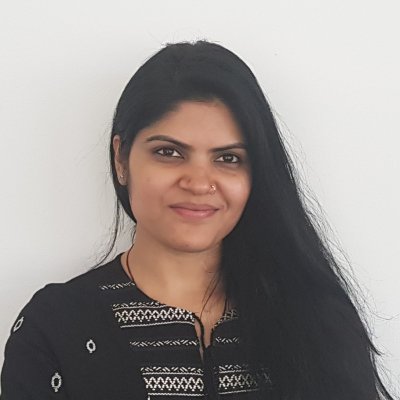
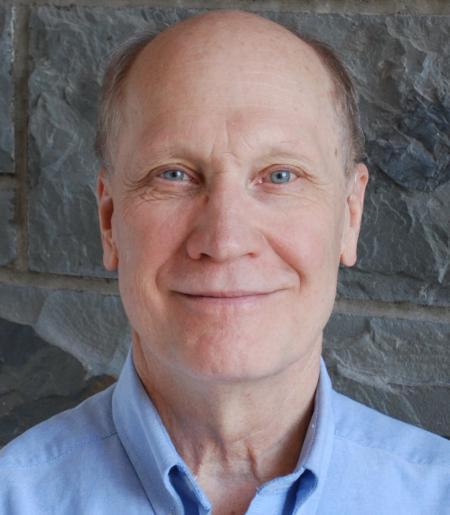
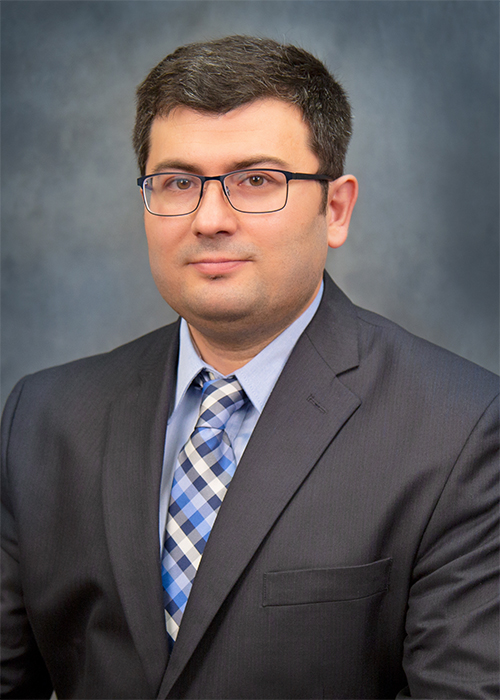
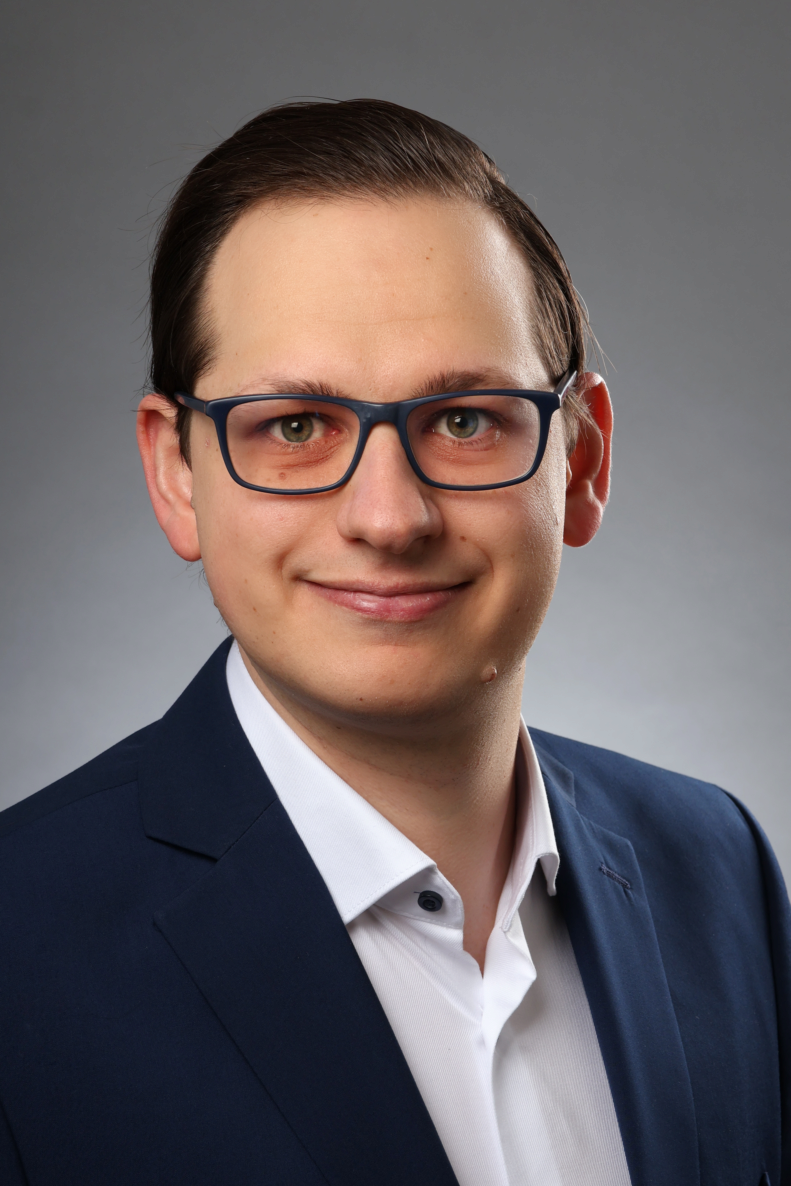
Dr. Su Talavera Soza is a Researcher at the Faculty of Geosciences, University of Utrecht, specializing in the DES - Seismology group. Their work bridges seismology, machine learning, and geophysical inversion to study Earth's crust, mantle, and inner core. They employ seismic normal modes and surface waves with advanced instruments like superconducting gravimeters and ocean bottom seismometers. Key Expertise Areas: Seismology, Global Seismology, Earth's Deep Interior, Machine Learning, Inverse Problems, Tomography Skills: Python, Fortran, MATLAB, Data Analysis, Visualization Current research focuses on physics-informed machine learning for full-waveform inversion and planetary-scale structure analysis. They collaborate internationally across the USA and Europe, contributing to 15+ publications between 2020-2025, including high-impact journals like Nature and Nature Geoscience . Notably, they developed the FrosPy Python toolbox for normal mode seismology. While no formal awards are listed, their work on mantle attenuation models and inner core dynamics has been widely shared (214+ X posts) and discussed in Wikipedia. They hold a 2021 PhD from Utrecht University titled Observing seismic attenuation in the Earth’s mantle and inner core using normal modes , supervised by A. Deuss.
Nishtha Srivastava is a Research Fellow at the Frankfurt Institute for Advanced Studies (FIAS) under the Theoretical Sciences school. Her work bridges Seismology and Artificial Intelligence, focusing on enhancing Earthquake Early Warning Systems (EEWs) and seismic event detection through AI/ML models. Her research explores seismic stress release patterns, deep learning architectures for earthquake magnitude estimation (e.g., CREIME, PolarCAP), and automated volcanic event analysis. Key projects include the BMBF-funded Seismology and Artificial Intelligence (SAI) initiative, which develops tools like AWESAM for real-time volcano monitoring. She collaborates with PhD students (Jonas Köhler, Abel Daniel Zaragoza Alonzo) and postdocs (Wei Li, Claudia Quinteros) at FIAS, contributing to advancements in seismic phase picking, P-wave detection, and industrial AI applications. Her work emphasizes rapid warning systems in high-risk regions like Southern California and Indonesia.
Bill Philpot is a Professor in the Department of Civil & Environmental Engineering at Cornell University's College of Engineering. His academic path began with a BA in Music from New York University in 1969, followed by military service, then transitioned to physics (BS from SUNY Stony Brook, 1973), and advanced degrees in Marine Studies from the University of Delaware (MS 1978, PhD 1981). Dr. Philpot's research specializes in remote sensing of Earth, focusing on mathematical modeling of light interactions with Earth's atmosphere and surface. His work spans multiple domains: Ocean optics and coastal zone remote sensing (bathymetry, water quality, bottom type) Soil characterization and moisture content analysis across saturation states Radiative transfer modeling for both aquatic and terrestrial environments Digital image processing and spectral analysis techniques LIDAR data interpretation, particularly bathymetric applications His publication record shows consistent contributions to the field, with recent work focusing on soil reflectance properties, spectral transmittance of sand, and correction techniques for coastal hyperspectral imagery. Dr. Philpot's research has evolved from early ocean applications to more recent land-based problems while maintaining a focus on physical interactions of light with Earth's surface. Dr. Philpot has received several prestigious awards for his contributions: Technical Excellence Award from JALBTCX (2018) Senior Member status in IEEE Geoscience and Remote Sensing Society (2016) Emeritus Member of ASPRS (2015) ASPRS Presidential Citation (2011) He has broadened his expertise through sabbatical leaves at RIT, University of Southern Mississippi, World Resources Institute, NASA, and Naval Research Laboratory. Dr. Philpot teaches core courses including CEE 6100 Remote Sensing Fundamentals and CEE 6150 Digital Image Processing, emphasizing understanding of underlying physics to enable intelligent use of remote sensing data across applications.
Dr. Ralph E. Flori is an Associate Professor and Assistant Chair for Undergraduate Studies in the Department of Geosciences and Geological and Petroleum Engineering at Missouri University of Science and Technology . Recognized as the Dean's Educator (2018) , he bridges petroleum engineering, geological research, and educational technology innovation. He earned all his degrees (B.S., M.S., Ph.D.) in Petroleum Engineering from Missouri University of Science and Technology, graduating in 1979 , 1981 , and 1987 respectively. His academic journey reflects a deep commitment to engineering education and applied research. Enhanced Oil Recovery (EOR) via low-salinity water flooding and thermal methods Reservoir Wettability analysis using SEM-BSE and contact angle measurements Educational Software Development , notably the BEST Dynamics system Geomechanics for wellbore stability in complex formations Machine Learning applications in petroleum engineering His 152+ scholarly works focus on unconventional reservoirs, with case studies in Kuwaiti carbonate and Southern Iraq formations. Recent publications address smart waterflooding , CO2-EOR coupling , and drilling risk mitigation via data-driven analytics. Scientific awards include the Dean's Educator (2018) for his contributions to curriculum innovation. He leads the development of multimedia-based engineering education tools and has mentored curriculum improvements for statics, dynamics, and mechanics of materials courses.
Ali Gurbuz is an Assistant Professor in the Department of Electrical and Computer Engineering at Mississippi State University's College of Engineering, specializing in smart sensing systems and machine learning applications. His research integrates signal processing with autonomous systems for environmental monitoring and medical imaging. His educational background includes a Bachelor's degree from Bilkent University (Turkey), and Master's/Doctoral degrees in Electrical and Computer Engineering from Georgia Institute of Technology. Since joining MSU in 2018 after a position at the University of Alabama, he has established himself as a leading researcher in sensing technologies. Gurbuz's research focuses on developing intelligent front-end sensing systems that optimize data acquisition using machine learning, addressing critical bottlenecks in processing capabilities for applications ranging from autonomous vehicles to precision agriculture. His work emphasizes efficient data collection through radar, lidar, and camera systems, with particular attention to soil moisture estimation and medical imaging applications. His publication portfolio demonstrates strong trends in UAS-based remote sensing, RF interference mitigation, and deep learning for signal processing. Key research areas include GNSS reflectometry for soil moisture mapping, radar-based sign language recognition, and seafloor gas seep detection using sonar data. NSF CAREER Award recipient (2021) for $500,000 to advance smart sensing systems research Gurbuz co-directs the Information Processing and Sensing (IMPRESS) research group at MSU, collaborating extensively with the Center for Advanced Vehicular Systems and Geosystems Research Institute. His work bridges theoretical signal processing with practical implementations in agricultural monitoring, environmental sensing, and medical applications, with several projects demonstrating hardware-software co-design approaches for next-generation sensing systems.
Dr. Benedikt Prifling is a Lecturer at Ulm University, specializing in computational materials science and electrochemistry. His research integrates advanced tomography, stochastic modeling, and machine learning to optimize materials for energy storage, particularly lithium-ion batteries. Research Focus: Prifling investigates microstructure-property relationships in porous media and battery electrodes. Key themes include: 3D microstructure modeling of battery components (anodes/cathodes) Synchrotron tomography for quantitative analysis of degradation Stochastic reconstruction of porous materials Data-driven prediction of mass transport phenomena His recent publications (2020-2024) demonstrate a strong emphasis on improving battery performance through computational design, manufacturing optimization, and electrochemical characterization. Common methodologies include lattice Boltzmann simulations, statistical learning, and digital twin generation.
Dr. Stephen Hicks is a NERC Independent Research Fellow and Proleptic Lecturer in Environmental Seismology at the Department of Earth Sciences, University College London . His research focuses on high-impact geophysical phenomena, including earthquake rupture processes, tectonic plate boundary imaging, and environmental monitoring via seismology. 2024 EGU Seismology Division Outstanding Early Career Scientist Prize for contributions to seismic imaging, earthquake dynamics, and science communication. Founding editorial board member of the open-access journal Seismica . Research interests span subduction zones , strike-slip faults , collisional zones , and human-induced seismicity , with methodological expertise in computational seismology , ocean-bottom seismology , and machine learning applications . 2024 Science paper on Greenland rockslide-generated tsunamis. 2023 Nature Geoscience study of back-propagating supershear ruptures. 2020 Science paper on global seismic noise reduction during pandemic lockdowns. Teaching includes Numerical Methods (2nd year) and Field Geophysics (3rd year module leader).
Dr. Vu Dong Pham is a Researcher at the Earth Observation and Geoinformation Science Lab within the Institute of Geography and Geology at the University of Greifswald, Germany. He is currently pursuing his PhD as part of the project "Spatiotemporal Patterns of Fragmented Transformations" under the Interdisciplinary Centre for Baltic Sea Region Research (IFZO). Education PhD candidate (since 2022), Earth Observation and Geoinformation Science Lab, University of Greifswald Exchange student (2021), Geoscience, University of Greifswald MSc in Cartography, Remote Sensing and Geographical Information System (2018–2021), VNU University of Science, Vietnam National University BSc in Land Management (2014–2018), VNU University of Science, Vietnam National University Research Focus Integration of machine learning and computer vision techniques into multispectral/hyperspectral remote sensing analyses Key areas: fraction mappings, classifications, segmentations, and model transferability Contact details: vudong.pham@uni-greifswald.de , Room 204, +49 3834 420 4492.
Dr. Michal Kruszewski serves as a Senior Researcher at the Department of Engineering Geology and Hydrogeology at RWTH Aachen University, where he leads investigations in reservoir geomechanics, rock mechanics, and fault mechanics with applications in deep geothermal energy systems. His expertise spans numerical modeling, hydraulic testing, and stress state analysis, contributing significantly to sustainable geothermal resource development. His academic credentials include: Ph.D. in Geosciences from Ruhr University Bochum (2023) M. Eng. in Geology and Mining from AGH University of Science and Technology, Cracow, Poland (2017) Dr. Kruszewski's research focuses on the critical relationship between crustal stress states and fault behavior in geothermal reservoirs. His work examines how stress conditions affect fault stability and permeability, with direct implications for induced seismicity risk during geothermal operations. He employs advanced numerical modeling techniques combined with field data analysis to address challenges in geothermal energy development, particularly in the Ruhr region of Germany and Los Humeros in Mexico. His investigations into fault reactivation potential during fluid injection operations have provided valuable insights for safer geothermal system design. His publication record demonstrates consistent research productivity with numerous high-impact articles focusing on geomechanical characterization of geothermal systems. A significant portion of his work addresses the practical challenges of deep geothermal energy development, particularly the relationship between stress states, fault reactivation, and fluid flow in the subsurface. His recent publications (2023-2025) show continued innovation in modeling techniques and field applications. Dr. Kruszewski maintains active membership in key professional organizations: European Geosciences Union (EGU) American Geophysical Union (AGU) International Geothermal Association (IGA) Polish Geothermal Society (PSG) Society of Petroleum Engineers (SPE) As project lead for SIEGFRIED (BMWK) and contributor to PRECODE (BGE), he oversees research initiatives addressing critical challenges in underground engineering and geothermal development. His work on the PRECODE project investigates excavation-induced damage in tunnel environments, with implications for deep geological repositories. Dr. Kruszewski maintains strong international collaborations, particularly with Mexican research institutions through the GEMex project, advancing understanding of superhot geothermal systems in volcanic environments.
Dr. Maria Prieto is an Assistant Professor in the Department of Civil, Geological and Mining Engineering at Polytechnique Montréal. Her research focuses on contaminant fate in subsurface environments, integrating stable isotope analysis, molecular biology, and reactive transport modeling to understand groundwater and soil pollution mechanisms. Baccalaureate in Environmental Engineering (Universidad Veracruzana, Mexico) Master's in Applied Geosciences/Hydrogeology (University of Tübingen, Germany) PhD in Hydrology (University of Strasbourg, France) Postdoctoral research at Aix-Marseille University (France) and University of Waterloo (Canada) Her research interests include: Legacy and emerging contaminant tracking (PFAS, chlorinated solvents, pesticides) Water-rock-microbe interactions Natural attenuation processes Isotope fractionation analysis Subsurface pollution remediation Hydrological-biogeochemical coupling Recent publications demonstrate expertise in: Abiotic pesticide degradation pathways Dichloromethane biotransformation dynamics Multi-ion isotope quantification Transient exposure effects on micropollutants Long-term waste leaching impacts Water table fluctuation modeling
E.C. Slob is a Professor at the Department of Applied Geophysics and Petrophysics , School of Civil Engineering and Geosciences , Delft University of Technology. His research focuses on electromagnetic induction, ground-penetrating radar, and subsurface modeling, with applications in geothermal energy, environmental monitoring, and civil infrastructure diagnostics. Active in electromagnetic subsurface characterization Pioneer in data assimilation for geothermal systems Develops advanced radar and machine learning methodologies Recent research trends emphasize: Integration of multi-physics geophysical methods Optimization of sensor placement in borehole systems Deep learning applications for tunnel inspection Monitoring of groundwater dynamics in polder systems Scientific recognition includes: Reginald Fessenden Award (2020) for electromagnetic geoscience contributions Professional engagement: Chair of 81st EAGE Annual Conference (2019) Program committee member, Near Surface Geoscience Conference (2019) Editorial board member, Geophysics (Journal) (2018) Keynote speaker, Virtual ground-penetrating radar technology (2017-2018)
Anna Schenfisch is a Research Fellow in the Faculty of Mathematics and Computer Science at Eindhoven University of Technology (TU/e), working within the Applied Geometric Algorithms research group. Her primary affiliation is with the university's mathematics department, and she can be contacted at a.k.schenfisch@tue.nl. Her research focuses on the intersection of algebraic topology and computational geometry, with significant contributions to topological data analysis. Her core research interests center on K-theory applications to persistence modules, simplicial complex reconstruction, and topological descriptors. She investigates how algebraic structures like monoids and parameter spaces interact with geometric representations, particularly through zig-zag persistence frameworks. Her work on faithful sets of verbose persistence diagrams addresses fundamental questions about minimality and optimality in topological data representations. Current projects involve developing theoretical frameworks for multiparameter persistence modules and their computational implementations. Analysis of her 15 most recent publications (2022-2025) reveals a strong trajectory in applying algebraic topology to computational problems. Her research demonstrates increasing sophistication in bridging abstract K-theory with practical geometric algorithms, particularly in simplicial complex reconstruction and descriptor optimization. The work consistently targets foundational questions in topological data analysis while developing novel computational approaches. Scientific Awards: No specific awards, fellowships, or medals are mentioned in the provided sources. Advising and Grants: Anna has supervised at least one academic work as indicated by "Supervised Work (1)" in her institutional profile. The nature of this supervision (e.g., thesis advising) isn't specified. No grant funding sources are explicitly referenced in the available materials. Labs and Teams: She is an active member of the Applied Geometric Algorithms research group at TU/e, which focuses on computational topology and geometric data analysis. This group serves as her primary research environment for developing algorithms related to persistence modules and topological descriptors.
Welcome to my website. I am a Professor and founding member of the Scientific Computing group at the Naval Postgraduate School , with an Adjunct Professor appointment in Applied Mathematics at the University of California at Santa Cruz . My research focuses on Scientific Computing , particularly the development of continuous and discontinuous Galerkin methods for solving nonlinear partial differential equations in fluid dynamics. My group constructs numerical models for atmospheric and oceanic systems, emphasizing applications like hurricane simulations , multi-scale modeling , and GPU acceleration . We also work on projects such as NUMA (Navier-Stokes solver), xNUMA (multi-scale framework), and NUMO (ocean model). Recent trends in my publications include adaptive mesh refinement for tropical cyclones, entropy-stable formulations , GPU-accelerated atmospheric models , and dynamic LES stabilization . These works span nonhydrostatic modeling , microphysics implementation , and high-order spectral element methods applied to geophysical fluid dynamics. Emails: fxgirald@nps.edu , fgiraldo@ucsc.edu , frank.giraldo@gmail.com Students advised include Soonpil Kang, Yassine Tissaoui, Michal Kopera, Sohail Reddy, Felipe A. V. B. Alves, and others working on hurricane simulations, mesh refinement, and GPU acceleration.
Thomas Vikhamar Schuler is a Professor at the Section for Geography and Hydrology (GeoHyd) within the Department of Geosciences at the University of Oslo, Norway. He also holds an Adjunct Professor position at the Arctic Geophysics program of UNIS since 2017. His research focuses on glacier mass balance, hydrology, and dynamics, with strong emphasis on cryosphere modeling and climate change impacts. Education: PhD in Glaciology (2002) from University of Oslo, with a thesis on subglacial water drainage in alpine glaciers. Research Themes: Cryospheric modeling, glacier hydrology, climate-glacier interactions, permafrost dynamics, and machine learning applications in glaciology. Teaching: Courses include GEO9440 – Cryosphere Modelling , GEO4432 – Surface Energy Balance in Cold Environments , GEO4420 – Glaciology , and GEO2300 – Physical Processes in Geoscience . His recent publications (2025-2019) span topics like Antarctic supraglacial lakes, Svalbard glacier mass balance, subglacial friction dynamics, and machine learning frameworks for glacial classification. Articles frequently involve interdisciplinary approaches combining glaciology, hydrology, and climate science, often using field measurements and computational models. Scientific Awards: ERC Starting Grant 'DYNAMICE' (2020) Projects: Leads initiatives like COLOSSAL, EMERALD, ESCYMO, MAMMAMIA, JOSTICE, and SatPerm Collaborations: Active in EarthFlows, Climate Cryosphere, LATICE, and Perma-Nordnet research groups
Douglas J. Hemingway is a Research Assistant Professor at the University of Texas Institute for Geophysics (UTIG), part of the Jackson School of Geosciences at the University of Texas at Austin. His research focuses on geophysical modeling of planetary bodies to understand their evolution and the diversity observed across the solar system. With extensive experience in both academic research and the space industry, he bridges practical engineering with theoretical planetary science. Education: PhD in Earth & Planetary Sciences, University of California Santa Cruz MSc, cum laude, Space Studies, International Space University, Strasbourg, France BASc, first class hon., Systems Design Engineering, University of Waterloo, Canada Research Focus: Hemingway's research primarily involves geodynamical modeling of planetary interiors, with constraints from spacecraft-based observations of gravitational and magnetic fields. He investigates magnetism, gravity, topography, elasticity/flexure/fracturing, heat production/transfer, and fluid dynamics across multiple planetary bodies. His work spans icy moons like Enceladus and Titan, as well as rocky bodies including the Moon, Mars, and Venus, with particular emphasis on understanding the processes that drive planetary evolution and diversity. Publication Analysis: Hemingway's recent publications demonstrate a concentrated focus on Saturn's icy moons, especially Enceladus and Titan, analyzing their gravity fields, interior structures, and potential subsurface oceans. His work integrates geophysical modeling with spacecraft data from missions like Cassini to develop comprehensive understanding of these planetary bodies. The research shows evolving sophistication in modeling techniques, increasingly incorporating multiple data sources to constrain interior properties, with significant contributions to understanding cryovolcanism, magnetic field generation, and surface evolution processes. Professional Background: Former Chief Scientist for Civil Space at Maxar Technologies Specialized in robotic servicing for International Space Station and Hubble Space Telescope Research positions at UC Berkeley's Miller Institute and Carnegie Institution for Science Teaching experience at UC Santa Cruz in geophysics Research Context: Working within UTIG's collaborative environment, Hemingway benefits from partnerships with the Bureau of Economic Geology, Department of Earth and Planetary Sciences, and Center for Planetary Systems Habitability. His research leverages planetary mission data and advanced computational resources to model complex geophysical processes across the solar system, with implications for understanding planetary habitability and evolution.