Inga Berre is a Professor at the Department of Mathematics, University of Bergen, and serves as Director of the Center for Modeling of Coupled Subsurface Dynamics (CSD). She leads the Porous Media Research Group and was appointed Argyris Visiting Professor at the University of Stuttgart's SimTech Cluster of Excellence in 2023. Research Interests: Mathematical modeling, partial differential equations, numerical methods for coupled thermo-hydro-mechanical-chemical processes in subsurface systems, and fault reactivation induced by injection/production. Scientific Leadership: Member of SIAM Council (2022-2027), Chair of SIAM GS activity group (2021-2022), Co-Chair of SET-Plan Deep Geothermal Implementation Working Group (2019-2021), and Chair of the Joint Program Geothermal, European Energy Research Alliance (2018-2021). Awards: 2011 Meltzer Award for Young Researchers. Advisory Roles: Member of Scientific Advisory Boards for GFZ (2024-2027) and SFB1313 (2018-), among others. Teaching: Developed courses on calculus, functional analysis, mathematical modeling, and numerical methods at the Bergen Summer Research School.
Behzad Alaei serves as an Associate Professor in the Section for Study of Sedimentary Basins within the Department of Geosciences at the University of Oslo's Faculty of Mathematics and Natural Sciences. His office is located in room K38 of the Geology Building at Sem Sælands vei 1, 0371 Oslo, with a professional email contact at behzad.alaei@geo.uio.no. Dr. Alaei maintains an active research profile with publications spanning from 2005 to the present, demonstrating his ongoing contributions to geological sciences. Dr. Alaei's research spans multiple critical areas within structural geology and sedimentary basin analysis, with particular expertise in fault zone architecture, seismic interpretation techniques, and CO2 storage site assessment. His work bridges theoretical geological concepts with practical applications in petroleum geology and carbon sequestration. A significant portion of his research focuses on the Norwegian Barents Sea region, where he has conducted extensive studies on normal fault systems and their geometric characteristics. His recent work increasingly integrates machine learning and deep learning approaches with traditional geological analysis, reflecting the evolving nature of geoscience research methodology. The analysis of Dr. Alaei's publication record from 2018-2024 reveals a strong thematic continuity in fault characterization research, with progressive incorporation of advanced computational methods. Early publications focused primarily on traditional structural analysis of fault systems in sedimentary basins, while more recent work demonstrates increasing integration of machine learning techniques for fault detection and characterization. A notable trend is the application of these geological insights to practical challenges in carbon capture and storage, particularly regarding fault risk assessment for CO2 storage sites in the North Sea region. His collaborative work with Anita Torabi appears consistently throughout this period, suggesting a strong research partnership. Dr. Alaei maintains an active research program with multiple ongoing projects related to sedimentary basin analysis and fault characterization. His work appears to involve significant collaboration with both academic and industry partners, particularly in the context of CO2 storage research. While specific grant details aren't provided in the available information, his consistent publication record across multiple high-impact journals suggests successful funding of his research activities over the past two decades.
Roger Flage is a Professor of Risk Management at the University of Stavanger, affiliated with the Faculty of Science and Technology and the Department of Security, Economics and Planning. His research focuses on foundational and applied aspects of risk analysis, uncertainty quantification, and decision-making under uncertainty, with applications in critical infrastructure, environmental systems, and offshore energy. Roger Flage's research interests lie at the intersection of risk science, safety engineering, and decision theory. He investigates how uncertainty—especially epistemic uncertainty and assumptions—affects risk assessments, and advocates for more transparent and robust frameworks. His work spans theoretical advances, such as the treatment of 'black swan' events and the concept of 'real risk', as well as practical applications in offshore safety, power systems, and geohazards. He emphasizes the integration of data-driven methods, AI, and digital twins while critically assessing their limitations and associated security risks. His recent publications show a strong trend toward integrating dynamic, data-rich, and interdisciplinary approaches to risk analysis. Themes include the role of time in risk, AI applications, infrastructure interdependencies, and environmental risk in the oil and gas sector. He frequently publishes in top-tier journals like Risk Analysis , Reliability Engineering & System Safety , and Safety Science , often in collaboration with leading scholars such as Terje Aven and Seth Guikema. No scientific awards are mentioned in the provided text. Roger Flage has supervised or collaborated with several researchers, though no formal list of advisees is provided. His work is supported through academic collaborations and institutional affiliations rather than explicit grant mentions. He is actively involved in advancing risk science methodology, particularly in the treatment of assumptions and uncertainty, and contributes to both theoretical foundations and real-world applications in safety-critical domains. He is associated with research groups and collaborative networks at the University of Stavanger, particularly within the Department of Security, Economics and Planning. His work often involves interdisciplinary teams focusing on risk in complex engineered systems, including energy, transportation, and environmental systems.
Vidar Hepsø is a Professor at the Department of Computer Technology and Informatics, Faculty of Information Technology and Electrical Engineering, Norwegian University of Science and Technology (NTNU). His work bridges anthropology of science and technology with practical challenges in digitalization, energy transition, and remote operations. Research focuses on digital infrastructures, socio-technical systems, and human factors in oil and gas industries Active in NTNU Applied Information Technology and NTNU Energy Transition Initiative Publications emphasize open-source ecosystems, autonomous systems, and environmental monitoring His scholarly output spans computer-supported collaborative work, IT infrastructure governance, and risk-informed anomaly detection in subsea systems. He leads projects connecting digital innovation with offshore wind and petroleum geoscience.
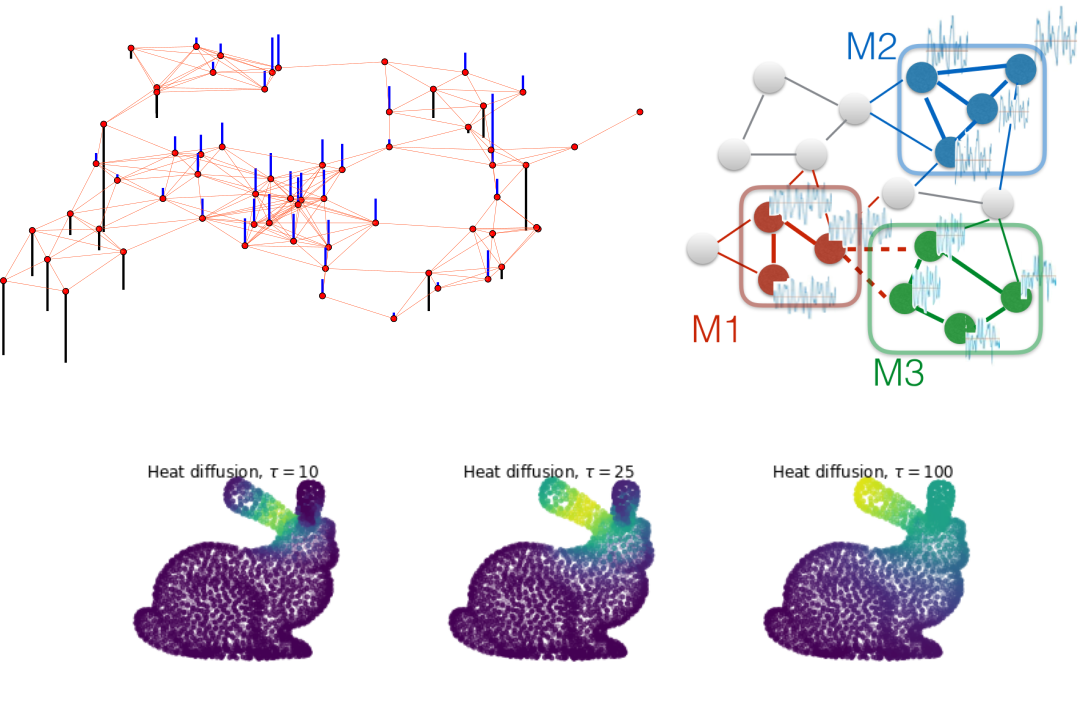
Benjamin Ricaud is an Associate Professor and Group Leader in Machine Learning at UiT The Arctic University of Norway's Department of Physics and Technology. His core affiliations include membership in the Machine Learning Group, Visual Intelligence center, and co-directorship of the Digital Technology Innovation Lab focused on Arctic-region tech startups. He also co-chairs the annual Northern Light Deep Learning conference. Ricaud's research spans: Fundamental ML : Graph signal processing, explainable AI, and generative models Applications : Microfossil classification, medical diagnostics (retinal aging), drug analysis, and climate data interpretation Emerging domains : Self-supervised learning and biological data analysis using Raman spectroscopy His recent publications (2020-2025) cluster in three domains: Graph ML methodologies (35%) Biomedical/biological applications (40%) Geoscience/climate informatics (25%) with consistent focus on interpretability and real-world data challenges. Teaching includes Image Processing (FYS-2010), Pattern Recognition (FYS-3012), and Machine Learning (FYS-2021). He leads outreach initiatives developing AI exhibits for Tromsø Science Centre.
Eduard Kamburjan is a Researcher at the University of Oslo , affiliated with the Reliable Systems (PSY) and Data and Knowledge Systems (DKM) research groups. His work bridges formal methods , digital twin engineering , and knowledge graph applications . Research interests include: Formal verification of hybrid systems using deductive methods Digital twin architecture with compositional correctness guarantees Semantic lifting and ontology-driven modeling for complex systems Concurrency analysis and non-determinism in program verification Interactive visualization as serious games for formal methods His 2024-2023 publications demonstrate expertise in digital twin reconfiguration , semantic interoperability , and knowledge-based runtime enforcement . Key contributions include Crowbar for active object verification and ABS simulator toolchain for model-driven engineering. Collaborations span institutions like Springer , ACM , and IEEE , with work featured in Lecture Notes in Computer Science (LNCS) , Software and Systems Modeling (SoSyM) , and Science of Computer Programming . His research integrates RDF data management , behavioral contracts , and modular analysis for distributed systems.
Jim Tørresen is a Professor of Computer Science at the Department of Informatics, University of Oslo, where he has been employed since 1999 (Associate Professor 1999-2005, Professor since 2006). He serves as group leader for the Robotics and Intelligent Systems (ROBIN) research group and is also a Principal Investigator at the Centre for Interdisciplinary Studies in Rhythm, Time and Motion (RITMO). His academic career includes visiting positions at Cornell University's Creative Machines Lab (2010-2011) and Kyoto University in Japan (1993-1994). His educational background includes a Dr.ing. (Ph.D.) in Computer Architecture from the Norwegian University of Science and Technology (1996) and an M.Sc. in Computer Architecture from the same institution (1991). Before his academic career, he worked in industry at Navia Aviation (1998-1999) and NERA Telecommunications (1996-1998). Tørresen's research spans artificial intelligence, robotics, and bio-inspired computing. His work focuses on biology-inspired algorithms, programmable logic (FPGA), robotics (simulation, prototyping, control), and human-robot interaction. He has made significant contributions to areas including evolutionary computing, reconfigurable hardware, and adaptive systems. His research often bridges theoretical computer science with practical applications in healthcare, music, and industrial settings. His recent publications demonstrate a strong focus on human-robot interaction, particularly in healthcare contexts for elderly care, as well as applications in sports science, musical robotics, and geological engineering. His work shows a consistent pattern of interdisciplinary research that combines machine learning techniques with domain-specific challenges. Tørresen has also authored a popular science book on artificial intelligence in the "what is" series by Universitetsforlaget, which discusses fundamental concepts, methods, future perspectives, and ethical aspects of AI. He has been active in academic leadership, serving as General Chair for the 22nd International Conference on Field Programmable Logic and Applications (FPL) in 2012 and the 9th Joint IEEE International Conference of Developmental Learning and Epigenetic Robotics in 2019. As group leader of ROBIN, he oversees research on intelligent systems that operate in dynamic environments requiring runtime adaptation. The group works at both fundamental and applied levels, using evolutionary algorithms for robot learning and machine learning techniques for classification and recognition tasks in various application domains.
Eirik Keilegavlen is a Researcher at the Department of Mathematics, University of Bergen. His primary research focuses on developing mathematical models, numerical methods, and simulation tools for multiphysics processes in porous media, particularly in geothermal energy, CO 2 storage, and subsurface energy systems. He leads the development of the open-source software PorePy, designed for simulating processes in fractured porous media. His work emphasizes coupled problems involving fluid flow, heat transfer, and mechanical deformation. Key research interests include: Mathematical modeling of coupled thermal-hydro-mechanical processes Numerical discretization methods for fractured media Development of open-source simulation tools Applications in geothermal energy extraction and carbon sequestration Recent publications highlight advancements in: Uncertainty quantification for CO 2 leakage Viscous fingering in fractured reservoirs Automated solver selection for multiphysics systems Collaborations involve interdisciplinary teams addressing challenges in geothermal reservoir stimulation, fault mechanics, and high-performance computing. His work bridges theoretical developments with practical applications in energy and environmental systems.
Bjarte Hannisdal is an Associate Professor in the Department of Geosciences at the University of Bergen, Norway, and affiliated with the Bjerknes Centre for Climate Research. He plays a key leadership role in iEarth, a national Centre of Excellence in geoscience education, serving as the iEarth Education Chair and Head of Focus Area 1, which aims to develop innovative frameworks for higher education in geosciences. Department of Geosciences, University of Bergen Bjerknes Centre for Climate Research iEarth – Centre of Excellence in Geoscience Education His research lies at the intersection of geobiology, paleontology, and Earth system science, with a strong focus on quantitative methods. He investigates Earth system evolution, causality in dynamical systems, and the co-evolution of life and the planet using advanced statistical and information-theoretic approaches applied to geological and fossil records. His work spans microbial ecology in deep-sea sediments, paleoclimatology through isotope analysis, and the detection of causal interactions in deep time. Hannisdal has made significant contributions through a high-impact publication record, with articles in top journals such as Science , Nature Geoscience , PNAS , and Physical Review E . His recent publications highlight trends in applying machine learning and information theory to geoscience problems, including microbial responses to oxygen, causality detection in incomplete records, and the calibration of geochemical proxies. These works reflect a strong interdisciplinary trend, integrating biology, physics, and computational methods into Earth sciences. He is actively involved in higher education, having developed and taught courses such as GEOV114 (Introduction to Geobiology) and GEOV302 (Data Analysis in Geosciences), and contributes to others like GEOV344 and BIO318. His educational research explores student-centered learning and computational skill development. He has supervised doctoral research, including Dario Blumenschein’s project on educational change. His work is supported by funding from the Research Council of Norway, Trond Mohn Foundation, and EU Horizon 2020. Hannisdal collaborates widely across institutions and disciplines, as evidenced by his co-authorship with researchers from Norway, the US, Germany, and others.
Stephanie Werner is a Professor at the University of Oslo's Department of Geosciences and serves as Co-Centre Leader of the Centre for Planetary Habitability since 2023. She has held various significant positions including Director of the Norwegian Research School for Dynamics and Evolution of Earth and Planets (2016-2024) and Team Leader of Earth and Beyond/Comparative Planetology at the Center for Earth Evolution and Dynamics (2013-2023). Her educational background includes: Dr. rer. nat. (PhD) from Free University of Berlin, Germany (2005) with thesis: "Major Aspects of the Chronostratigraphy and Geologic Evolutionary History of Mars" Diplom in Geophysics from the University of Kiel, Germany (1999) Professor Werner's research focuses on comparative planetology, planetary dynamics, exoplanet systems, and planetary geophysics . Her work spans the formation and evolution of planets and planetary systems, cratering chronology and processes, remote sensing of Earth and planets, and potential field data interpretation. She has made significant contributions to understanding the geological evolution of Mars, lunar cratering chronology, and the dynamics of planetary systems. Her recent publication trends reveal a strong focus on cratering chronology across solar system bodies , with particular attention to the Moon, Mars, and outer solar system satellites. She has led important revisions to lunar cratering chronology models and has investigated impact rates on Jupiter's, Saturn's, and Uranus' moons. Another major theme is the study of exoplanets around K-dwarf stars , examining their composition and formation processes. Her work also includes significant contributions to Mars exploration , particularly through the Planetary Terrestrial Analogues Library project supporting the ExoMars mission. Professor Werner holds several prestigious appointments: Co-Lead, ESA - Ariel Science Team Norwegian representative and Co-I, ESA - PLATO Consortium Member of the European Space Agency's ExoMars Rover Science Operations Working Group Member of the ESA - NASA Mars Sample Return Science Planning Group EGU Division President of Planetary and Solar System Sciences (2017-2021) She has supervised numerous students through the Norwegian Research School for Dynamics and Evolution of Earth and Planets, which she directed from 2016-2024. Her research has been supported by multiple grants from the European Space Agency and Norwegian research councils, enabling participation in major space missions including ExoMars, PLATO, and Ariel. Professor Werner leads the Planetary Terrestrial Analogues Library (PTAL) project, which provides crucial support for Mars missions by creating a comprehensive database of terrestrial analogues for Martian environments. She also contributes to the Mars Missions Analogue Sample Library (MM ASL) and the CRATER CLOCK project focused on calibrating cratering chronometers for planetary evolution studies.
Gwenn Peron is a Professor in Structural Geology at the Department of Geoscience, Norwegian University of Science and Technology (NTNU). Their research focuses on rifted margin architecture, extensional tectonics, and the interplay between tectonics and magmatism. Key areas of expertise include seismic interpretation, numerical modeling, and structural analysis of continental margins. Research interests emphasize the evolution of rifted margins such as the Mid-Norwegian and Angola-Gabon margins, with particular attention to crustal deformation, fault system dynamics, and the influence of pre-existing orogenic structures. Methodologies include geophysical data analysis, field mapping, and computational modeling. Publications span structural geology, tectonics, and geophysics, with notable contributions to understanding rift heterogeneity, detachment fault systems, and the geodynamic processes governing continental breakup. Recent work highlights the role of orogenic inheritance in shaping margin architecture. Teaching responsibilities include advanced courses in tectonics, structural geology, and petroleum geoscience. Active collaborations with industry and academic partners focus on applied structural analysis of hydrocarbon basins and continental margin evolution.
Egil Tjåland is an Associate Professor in the Department of Geoscience at the Norwegian University of Science and Technology (NTNU). His research focuses on geophysical methods, seismic attribute analysis, and applications in petroleum engineering and deep-sea mining technologies. His publications demonstrate expertise in seismic interpretation methods, attribute benchmarking, and geophysical data processing. Recent work explores the transfer of oil and gas technologies to deep-sea mining operations. He teaches courses in geophysics, petroleum engineering, and scientific communication. His research contributions include developing seismic analysis tools like A3Mark for attribute benchmarking and investigating elastic parameter estimation methods. No information regarding awards, supervised students, or research grants is provided.
David Landa Marban is a Researcher at NORCE Research AS, affiliated with the Energy and Technology division. His primary focus is on mathematical modeling and simulation of subsurface processes, including applications in CO2 storage (CCS), microbial enhanced oil recovery (MEOR), and microbially induced calcite precipitation (MICP). He has expertise in scientific computing, software development for multi-phase flow and reactive transport, and numerical simulations at pore, core, and field scales. Education: PhD in Applied Mathematics from the University of Bergen (2019), followed by a postdoctoral position at NORCE (2019-2021). Current role as a Research Scientist since 2022. Research interests emphasize computational geosciences, with projects such as MuPSI (multiscale pressure-stress impacts on CO2 storage) and CSSR (sustainable subsurface resources). He develops open-source tools like pyopmspe11 and contributes to frameworks like OPM Flow for reservoir simulation and history matching. Key contributions include modeling pressure interference in CO2 storage, machine-learned near-well models, and data-driven predictions for CO2 EOR. His work bridges lab-scale experiments with field-scale applications, addressing challenges in subsurface energy systems and leakage remediation.
Clinton Phillips Conrad is a Professor of Mantle Dynamics at the University of Oslo's Department of Geosciences and Centre for Planetary Habitability. His research focuses on understanding Earth's dynamic interior through 3D modeling of mantle deformation, constrained by seismic/geodetic observations and geological indicators. He studies interactions between Earth's interior and surface processes including topography, plate motions, volcanism, and climate change. Research Interests Conrad's group develops advanced models examining how mantle dynamics influence surface environments. Key research areas include: Mantle geodynamics and deformation mechanisms Interactions between deep Earth processes and surface topography/volcanism Impacts of ice mass changes on solid Earth deformation Seismic and magnetotelluric constraints on mantle properties Evolution of plate tectonics and continental stability His work integrates geophysical observations with computational modeling to understand planetary habitability. Publication Analysis Conrad's recent publications (2021-2025) demonstrate a strong focus on: Mantle water distribution and its role in volcanism Glacial-isostatic adjustment and ice sheet interactions Anisotropic viscosity and mantle rheology Plume-lithosphere interactions in continental settings Cratonic stability mechanisms Sea level and paleogeographic reconstructions Methodologically, his work combines numerical modeling with seismic, geodetic, and magnetotelluric data analysis. Projects and Leadership Conrad leads several major research initiatives: ANIMA: ANIsotropic Viscosity in MAntle Dynamics ERC Starting Grant: DYNAMICE (ice-mantle dynamics interplay) MAGPIE: Magnetotelluric Analysis for Greenland and Postglacial Isostatic Evolution POLARIS: Evolution of the Arctic in deep time He maintains the MAGPIE blog documenting field research and maintains a research group developing mantle convection models.
Henk Keers is an Associate Professor at the Department of Geosciences of the University of Bergen (UiB). His research focuses on geophysical modeling, seismology, and ocean acoustics, with contributions to seismic wave analysis, teleseismic tomography, and educational innovations in sedimentology. He actively collaborates on projects such as SEDucate, promoting active learning in geoscience education. Key research themes include: Body wave modeling for regional seismology Acoustic inversion techniques for ocean turbulence Tomographic imaging of crustal structures Development of efficient numerical methods for geophysical problems Recent work includes presentations at events like the AdriaArray Workshop (2023) and Nordic Seismology Seminar (2022) , addressing topics such as elastic isotropic modeling and waveform inversion. His research has been funded by institutions including the Research Council of Norway.