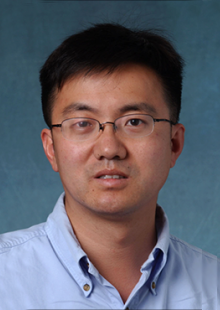
Mark Bocko is a Distinguished Professor of Electrical and Computer Engineering at the University of Rochester, affiliated with the Hajim School of Engineering & Applied Sciences. He holds roles as Director of the Center for Emerging and Innovative Sciences (CEIS) and Director of Audio & Music Engineering. He earned his PhD in Physics from the University of Rochester in 1984, focusing on gravitational wave detectors. His research spans audio signal processing, sensors, superconductivity, and quantum computing. Notable contributions include flat-panel loudspeaker development, non-contact ECG sensors, and quantum coherence studies in Josephson junctions. Research interests include audio and acoustic signal processing, computer audition, and sensor technologies. His work integrates interdisciplinary approaches, combining electrical engineering, physics, and computer science. Awards include the 2012 Goergen Award for Teaching and Mercer Brugler Distinguished Teaching Professor (2008–2011). Recent publications address modal crossover networks for loudspeakers, vibrational touch sensing, and room impulse response modeling. He has advised PhD students on topics like spatial audio rendering and musical vibrato analysis. His labs focus on advancing audio engineering and smart sensor systems through collaborative industry partnerships.
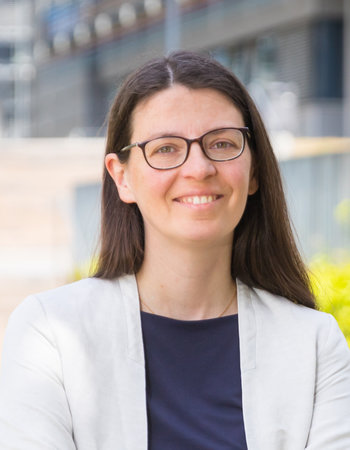
Susanna Thon is an Associate Professor in the Department of Electrical and Computer Engineering at Johns Hopkins University (JHU), affiliated with the Whiting School of Engineering. She serves as Associate Director of the Ralph O’Connor Sustainable Energy Institute (ROSEI) and a member of the Data Science and AI Institute. Her research focuses on nanomaterials engineering for optoelectronic devices, emphasizing solar energy conversion and sensing. Notable areas include plasmonic-photocatalytic systems using aluminum nanoparticles and nanostructured materials like colloidal quantum dots for next-generation devices. Thon holds a BSc from MIT (2005) and MSc/PhD in Physics from UC Santa Barbara (2008/2010). She joined JHU in 2013 after postdoctoral work at the University of Toronto. Her work is funded by agencies such as the NSF, U.S. Army, and Maryland Energy Innovation Institute. She has published over 50 peer-reviewed papers and received JHU’s Catalyst and Discovery awards. Key research projects include developing plasmonic systems to enhance light absorption in titanium dioxide and creating scalable fabrication techniques for optoelectronic materials. Thon’s team also advances quantum dot solar cells and novel characterization methods for energy materials. She actively participates in professional societies, including the Optical Society of America and IEEE. Her grants and collaborations aim to train the next generation in sustainable energy research, with recent initiatives funded through NSF and Space@Hopkins seed grants. Thon’s lab integrates nanophotonics, materials science, and machine learning to address global energy challenges.
Dr Anandadeep Mandal is an Associate Professor in Finance and the Scotcoin Distinguished Chair of Digital Finance at the University of Birmingham , within the Birmingham Business School and the Department of Finance . He is the founding director of the MSc Financial Technology programme and the Programme Director for the MBA (Distance Learning), demonstrating significant leadership in academic program development. Education: PhD in Probability Distribution Fitting, Cranfield University (2016) MRes in Management Science, Cranfield University (2012) MSc in Finance and Investments, Durham University (2008) Bachelor’s in Electronics Engineering Research Interests: Dr Mandal’s interdisciplinary research lies at the intersection of mathematical modelling, artificial intelligence, finance, and digital innovation . His work focuses on AI-enabled investment strategies , blockchain for financial transparency , ESG performance measurement , and the development of the Sustainable Efficiency Index (SEI) . He also pioneers AI applications in digital education , including a patent-pending platform for automated grading of multi-modal student submissions using ensemble AI methods. Publication Trends: His recent scholarly output spans high-impact journals and conferences, reflecting a strong focus on digital finance , climate and social media analytics , cryptocurrency regulation , and AI in financial forecasting . His work combines advanced data science techniques with real-world policy and financial applications, particularly in sustainability and public health. Scientific Awards: No specific awards are mentioned in the provided text. Advising and Grants: Dr Mandal has secured over £2 million in research funding from sources including UKRI, UoB QR Funding, and industry partners. While specific students are not listed, his role as programme director and research leader suggests active mentorship. His research has direct policy impact through collaborations with the NHS Trusts , NIHR , and the UK Government . Labs, Teams, and Impact: Dr Mandal leads a research agenda that bridges academia and public policy. His work extends beyond the university through public engagement at science festivals, outreach for young learners, and expert contributions to UK Parliamentary consultations on AI, sustainability, and financial innovation. He is a key figure in advancing digital finance education and research at the University of Birmingham.
Robert O. Ritchie is the H. T. & Jessie Chua Distinguished Professor of Engineering at the University of California, Berkeley, where he holds dual appointments as Professor of Materials Science & Engineering and Professor of Mechanical Engineering. He is also a Faculty Senior Scientist at Lawrence Berkeley National Laboratory. His distinguished career spans over four decades with significant contributions to the field of materials science and engineering. Professor Ritchie received his B.A. in Physics & Metallurgy (1969), M.A. in Materials Science (1973), Ph.D. in Materials Science (1973), and Sc.D. in Materials Science (1990), all from Cambridge University, UK. His research focuses on the mechanical behavior of advanced materials, with particular emphasis on fracture mechanics, fatigue properties, and damage tolerance. Professor Ritchie's work spans multiple domains including metallic glasses, high-entropy alloys, biomaterials, and nature-inspired structural materials. His laboratory employs cutting-edge techniques such as in situ high-temperature computed tomography to study failure mechanisms in ceramic-matrix composites and nuclear graphite. His research has significant implications for aerospace, biomedical, and energy applications. Analysis of Professor Ritchie's recent publications reveals a strong focus on advanced structural materials, particularly metallic glasses and high-entropy alloys. His work combines experimental approaches with computational modeling to understand deformation mechanisms at multiple length scales. There is a clear trend toward bioinspired materials design, with several papers examining natural structures like fish scales, horn sheaths, and bone to develop new engineering materials with exceptional mechanical properties. Member, National Academy of Sciences (2025) Foreign Fellow, Academy of Athens, Greece (2024) Robert Henry Thurston Award (ASME) (2022) ASM Gold Medal (ASM Intl.) (2021) William D. Nix Medal, inaugural winner (TMS) (2020) Fellow (Foreign Member) of the Royal Society (FRS), London, UK (2017) Morris Cohen Award (TMS) (2017) Acta Materialia Gold Medal (2014) David Turnbull Award (MRS) (2013) A. Cemel Eringen Medal (Society of Engineering Science) (2010) Professor Ritchie has advised numerous graduate students and postdoctoral researchers throughout his career. His research has been supported by various funding agencies including the Department of Energy, National Science Foundation, and industry partners such as Rolls-Royce. He has served on numerous advisory boards including the Rolls-Royce Materials & Structures Advisory Board (2011-2019) and the Scientific Advisory Board of the Advanced Light Source at LBNL (2013 to date). Professor Ritchie leads the Ritchie Group at UC Berkeley, which maintains strong collaborations with Lawrence Berkeley National Laboratory. The laboratory employs state-of-the-art techniques including electron microscopy, x-ray tomography, and mechanical testing across multiple length and time scales. His team has developed innovative in situ characterization methods that have significantly advanced the understanding of material failure mechanisms under extreme conditions.
Raphael Franzini serves as Associate Professor of Medicinal Chemistry at the University of Utah, actively contributing to the Biological Chemistry PhD Program. His research pioneers innovative chemical approaches for therapeutic development, with dual focus on DNA-encoded library technologies and bioorthogonal drug delivery systems. His educational foundation includes an M.S. from the Swiss Federal Institute of Technology (Lausanne) and a Ph.D. from Stanford University. This training underpins his group's multidisciplinary methodology combining organic synthesis, bioconjugation, computational modeling, and advanced imaging techniques. Dr. Franzini's research program centers on two transformative areas: First, advancing DNA-encoded library screening through computational integration to identify leads for challenging targets like Tankyrase and Sirtuin 6, with recent work addressing false negatives in machine learning prediction. Second, developing novel bioorthogonal release chemistry using isonitrile-tetrazine reactions for spatiotemporally controlled drug activation, validated in zebrafish models. His group emphasizes both technological innovation and therapeutic translation, with chemistry designed to minimize off-target effects in solid tumors. Analysis of his 15 most recent publications reveals escalating integration of computational methods with experimental library screening, alongside refinement of bioorthogonal release kinetics. The work spans chemical biology, medicinal chemistry, and pharmaceutical sciences, with growing emphasis on machine learning for library data interpretation and in vivo validation of drug-release systems. Dr. Franzini maintains an active research laboratory that provides comprehensive training in cutting-edge drug discovery methodologies. His group culture prioritizes both scientific innovation and researcher development, with projects spanning from fundamental reaction kinetics to therapeutic applications. The lab's infrastructure supports organic synthesis, molecular imaging, and computational analysis for advancing precision therapeutics.
Anders Krogh is a Professor at the Department of Computer Science, University of Copenhagen, and also holds a position at the Department of Public Health in the Section for Health Data Science and AI. He serves as the head of the Center for Health Data Science (HeaDS) in the Faculty of Health and Medical Sciences. Previously, he was affiliated with the Department of Biology at the University of Copenhagen until 2020. Dr. Krogh earned his PhD in theoretical physics but transitioned into machine learning and bioinformatics during his doctoral studies. His research spans both theoretical foundations and practical applications in these fields. He is particularly renowned for his pioneering work on hidden Markov models for biological sequences, which has had significant impact in computational biology. In recent years, Krogh's research has focused on deep generative models applied to gene expression data and other biomedical applications. His work bridges computer science with healthcare, developing AI-driven approaches for precision medicine, cancer diagnostics, and analysis of complex biological systems. His current research integrates machine learning with quantum computing applications in biomolecular modeling. Analysis of his recent publications reveals a strong trend toward applying artificial intelligence to healthcare challenges, particularly in rare diseases, cancer diagnostics, and personalized medicine. His work increasingly incorporates federated learning approaches to address privacy concerns while enabling collaborative research across institutions. There's also a growing emphasis on quantum computing applications in biomolecular modeling and drug discovery. As head of the Center for Health Data Science, Krogh leads interdisciplinary research efforts that bring together computer scientists, medical researchers, and clinicians. His team develops novel computational frameworks like MOSAIC for multimodal analysis of rare cancers and multiDGD for multi-omics data integration. These tools are designed to translate AI innovations into clinical practice while addressing the unique challenges of medical data.
Janusz Bujnicki is a Professor and head of the Laboratory of Bioinformatics and Protein Engineering at the International Institute of Molecular and Cell Biology in Warsaw (IIMCB), Poland. He holds concurrent roles in science policy advisory bodies, including the European Commission's Group of Chief Scientific Advisors (2015-2020, then expert) and the Polish Academy of Sciences’ advisory panel (2024-). He is also a founding member of the Association of ERC Grantees (AERG) and serves on the Scientific Advisory Board of Life Science Center at Vilnius University. Academia Europaea Member (2018-) EMBO Member (2018-) Leadership Academy for Poland (2018) His research spans structural biology, RNA modification, computational biology, and molecular evolution. He has pioneered computational methods like ModeRNA, SimRNA, and ClaRNA for RNA structure prediction and analysis, and developed databases like MODOMICS for RNA modification pathways. His work has applications in understanding RNA function and drug design targeting RNA-processing enzymes. The 15 most recent publications focus on RNA structural modeling (e.g., ModeRNA, ClaRNA, SupeRNAlign), RNA-ligand interactions (LigandRNA), and RNA modification biology (MODOMICS database). These works bridge computational methods with experimental validation in RNA enzymology and structure-function relationships. Scientific Awards: ERC Starting Grant (2010), EMBO Member (2018), Crystal Brussels Sprout (2016), Prime Minister’s Award (2014), Knight’s Cross of Polonia Restituta (2014) Grants & Leadership: Founded RNA bioinformatics infrastructure at IIMCB, led EU science policy advisory groups, and organized international research competitions (RNA Puzzles)
Mohammadreza Karamad is an Assistant Professor in the School of Sustainable Energy Engineering at Simon Fraser University (SFU), with a joint appointment in the Sustainable Energy Engineering department. His research focuses on computational materials discovery, leveraging quantum-mechanical methods (e.g., DFT) and machine learning (ML) to design advanced energy materials for clean technologies like hydrogen storage and catalysis. He holds a Ph.D. from the Technical University of Denmark (DTU) and completed postdoctoral research at Stanford University. His academic background includes leadership roles in the CMD Lab (Computational Materials Discovery), where he explores novel materials for electrochemical energy conversion processes. Key research areas include electrochemistry, heterogeneous catalysis, and material science, with a particular emphasis on CO2 reduction, ammonia synthesis, and sustainable energy storage solutions. Dr. Karamad collaborates with industry and academic partners to advance materials discovery through high-throughput computational screening and AI-driven approaches. He actively seeks motivated students (undergraduate and graduate) to join his research program, focusing on developing next-generation energy materials. His lab is located in room B8220, and he can be reached at mkaramad@sfu.ca. Notable technical contributions include pioneering work on transition metal nitrides for CO2 reduction, single-atom catalysts for ammonia synthesis, and machine learning frameworks for predicting material properties. His research bridges fundamental theory with practical applications, addressing global challenges in sustainable energy and environmental technology.
Katrina Morgan-Innes is a Lecturer (Assistant Professor) at the School of Electronics and Computer Science, University of Southampton. Her research focuses on advanced flexible materials for energy harvesting and storage, leveraging semiconductor industry fabrication techniques to develop wearable thermoelectric devices and next-generation batteries. She leads the Morgan Materials and Devices for Energy (MADE) research group and a £220k EPSRC New Horizons grant (Smart Cloth). Her work emphasizes commercial scalability and integration of 2D materials with flexible substrates. Education: MPhys in Physics (University of Sussex, 2011), CASE Award PhD in Electronics and Computer Science (University of Southampton, 2016–2022). Previous roles include Photonics Development Engineer at the AIM Photonics Programme (SUNY) and Visiting Fellow at the Optoelectronics Research Centre. Research interests include energy harvesters, flexible wearables, 2D materials, and nanofabrication. She has pioneered scalable manufacturing methods for photonic and energy devices and contributed to chalcogenide material applications. Her research group aims to create fully flexible systems enabling integrated sensing, power, and communication on lightweight platforms. Key grants include EPSRC funding for wearable thermoelectric generators and collaborations like the ChAMP/WAFT-funded projects on flexible ion sensors and 3D nanophotonics. She has published in high-impact journals (e.g., ACS Applied Materials and Interfaces , npj 2D Materials and Applications ) and conferences, focusing on thermoelectric materials, photonic heterostructures, and scalable manufacturing. Awards: UNSW Women in Engineering Visiting Fund (2019), Top 100 Physics Paper (2020), Outreach Engagement Award (2016) Labs/Teams: Morgan MADE Group, Collaboration with Optoelectronics Research Centre and Zepler Institute Advocacy: Chair of WiSET+ (University-wide STEM+ Equality Committee), founder of Early Career Researcher Forum
Christoph Bostedt holds dual appointments as a Professor of Physical Chemistry at the Ecole Polytechnique Fédérale de Lausanne (EPFL) and as Head of the Laboratory for Synchrotron Radiation and Femtochemistry (LSF) at the Paul Scherrer Institut (PSI). He leads strategic operations for the LSF, managing five research groups and overseeing four beamlines at the Swiss Light Source and the Alvra Endstation at SwissFEL. His research focuses on ultrafast x-ray science, including single-shot imaging, non-linear x-ray spectroscopy, and femtosecond pump-probe techniques. He collaborates globally on initiatives like the Athos project, aiming to advance ultrafast x-ray technologies. Bostedt has over 150 publications and is a Fellow of the American Physical Society, recipient of the Röntgen Prize. Education: Ph.D. from the University of Hamburg with research at Lawrence Livermore and Berkeley National Laboratories. Prior roles include leadership at Argonne National Laboratory and SLAC National Accelerator Laboratory. Research Interests: Single-particle imaging and coherent diffraction X-ray free-electron laser applications Ultrafast dynamics in nanoparticles and molecular systems Non-linear x-ray spectroscopy Time-resolved x-ray pump-probe methods Awards: Fellow of the American Physical Society Röntgen Prize (University of Giessen) Labs & Projects: Spearheads the Athos beamline project at SwissFEL, developing the Maloja endstation for ultrafast x-ray studies. Oversees the Laboratory for Femtochemistry and collaborates on advanced imaging techniques for nanoscale science.
Thomas Lectka is the Jean and Norman Scowe Professor in the Department of Chemistry at Johns Hopkins University, where he has been a faculty member since 1994. His research focuses on synthetic and physical organic chemistry, particularly in the area of organofluorine chemistry. PhD, Cornell University Postdoctoral Fellow, Heidelberg (Alexander von Humboldt Fellow) Postdoctoral Fellow, Harvard University (NIH Fellow) Dr. Lectka's research is centered on developing novel synthetic methods, especially for fluorination, and understanding the physical organic principles underlying reactivity. His work spans radical fluorination , catalytic asymmetric synthesis , and the design of fluorinated bioactive molecules . Using a combination of experimental and computational techniques, his lab investigates C-F bond formation , reaction mechanisms , and the biological applications of fluorinated compounds. His recent work, as reflected in publications from 2010 to 2024, shows a consistent trajectory in advancing fluorination methodologies, with increasing emphasis on site-selectivity , enantiocontrol , and biomedical relevance . Themes include the development of new reagents, mechanistic studies, and the synthesis of fluorinated natural product analogs and peptidomimetics. Dr. Lectka has received numerous honors and awards, including: ACS Arthur C. Cope Scholar (2024) ACS Maryland Chemist of the Year (2017) John Simon Guggenheim Memorial Fellowship Dreyfus Teacher-Scholar Award Sloan Fellowship NSF CAREER Award NIH First Award Eli Lilly Grantee Award He actively mentors graduate and undergraduate students in his research group, contributing to education and training in organic chemistry. His lab, The Lectka Group , is supported by grants from the NIH and NSF, enabling cutting-edge research in synthetic methodology and physical organic studies. The group fosters a collaborative environment focused on innovation in fluorine chemistry. The Lectka Group is an active research laboratory at Johns Hopkins University dedicated to pushing the boundaries of synthetic organic chemistry through the exploration of fluorine's unique properties. Current projects include site-selective radical fluorination and the synthesis of unusual fluorinated species, aiming to provide new tools for drug discovery and materials science.
Dr. Muhammad Rashed is an Assistant Professor in the Department of Computer Science and Engineering at the University of Texas at Arlington, within the College of Engineering. He holds a Ph.D. in Computer Engineering from the University of Central Florida (2024) and a B.S. in Electrical and Electronics Engineering from Bangladesh University of Engineering and Technology (2015). Ph.D. : Computer Engineering, University of Central Florida, 2024 B.S. : Electrical and Electronics Engineering, Bangladesh University of Engineering and Technology, 2015 His research focuses on electronic design automation (EDA), in-memory computing, AI acceleration, and sustainable computing. He explores novel computing paradigms to overcome the limitations of traditional architectures, particularly in data-intensive applications such as AI and scientific computing. His work emphasizes hardware-software co-design and leveraging emerging non-volatile memories for energy-efficient processing. The 15 most recent publications highlight a consistent focus on in-memory computing, particularly in path-based and flow-based architectures, logic synthesis, and AI acceleration. Key themes include optimization, fault tolerance, verification, and the use of advanced data structures like sentential decision diagrams. His work is published in top-tier venues such as DAC, ICCAD, ASP-DAC, and IEEE/ACM journals. Scientific Awards: UTA CARES Grant for OER Creation Research Experiences for Undergraduates (REU) Grant Alireza Seyedi Doctoral Research Innovation Endowed Scholarship David T. & Jane M. Donaldson Memorial Scholarship IEEE/ACM William J. McCalla ICCAD Best Paper Award Nomination Best Research Video Award, Design Automation Conference (DAC) Dr. Rashed advises several graduate and undergraduate students in the NextGen Computing Lab and is involved in research grants including the UTA CARES Grant and REU funding. He actively contributes to academic service through roles such as conference TPC member, journal reviewer (e.g., IEEE TCAD, ACM TODAES), and committee participation in the department and college. His lab, the NextGen Computing Lab, is dedicated to building scalable, energy-efficient computing systems for next-generation AI and scientific workloads, aligning with national initiatives in advanced computing.
Professor Stefan Goedecker is a distinguished faculty member in the Department of Physics at the University of Basel, Faculty of Science. He holds the position of Professor of Computational Physics and leads an active research group focused on developing advanced computational methods for materials science and quantum physics. Dr. Goedecker received his physics education at the Technical University Munich and the College of William and Mary, followed by a Ph.D. from EPFL Lausanne. His postdoctoral training included positions at Cornell University and the Max-Planck Institute in Stuttgart. In 2003, he was appointed Professor of Computational Physics at the University of Basel, where he has established himself as a leading researcher in computational methods development. His research interests center on computational physics with emphasis on electronic structure calculations, atomistic simulations, and the development of novel algorithms for materials science applications. His work has strong interdisciplinary connections spanning physics, mathematics, material sciences, chemistry, and computer science. Current research directions include machine learning applications in catalysis, fourth-generation neural network potentials for molecular chemistry, and methods for quantifying material synthesizability. Analysis of his recent publications reveals a strong focus on advancing computational methods for electronic structure calculations, with particular emphasis on machine learning potentials, molecular dynamics optimization, and accurate modeling of material properties. His work bridges theoretical physics with practical applications in materials science and nanotechnology, with increasing integration of artificial intelligence techniques into traditional computational physics frameworks. Machine learning for Catalysis (Ongoing) Fourth-Generation Neural Network Potentials for Molecular Chemistry (Completed) Towards Quantifying the Synthesizability of Materials (Completed) Professor Goedecker's research group operates within the Department of Physics at the University of Basel, which is part of the NCCR SPIN initiative focused on silicon-based quantum computing development. The department hosts over 20 research groups with more than 180 teaching staff members, creating a vibrant research environment for computational physics and quantum technologies.
H. Jerry Qi is a Professor in the Department of Mechanical Engineering at the Georgia Institute of Technology. He specializes in finite deformation multiphysics modeling of soft active materials, with a focus on shape memory polymers, 4D printing, and material recycling. His research integrates experimental and computational approaches to advance additive manufacturing technologies. Education: Sc.D., Massachusetts Institute of Technology, 2003 Ph.D., Tsinghua University, China, 1999 B.S., Tsinghua University, China, 1994 Research Interests: Dr. Qi's work spans 4D printing of active materials, mechanics in 3D printing, and sustainable polymer processing. His group develops hybrid printing methods and recyclable thermosetting polymers, collaborating with institutions like SUTD and AFRL. Key areas include smart material design, photomechanical experiments, and finite element modeling. Scientific Awards: ASME Fellow (2015) Woodruff Faculty Fellow (2015) J. T. Oden Faculty Fellowship (2012) NSF Career Award (2007) Advising & Grants: Dr. Qi actively seeks undergraduate, PhD, and postdoc researchers. His projects are funded by NSF, AFOSR, and industry partnerships. He leads a research group focused on advancing active materials and sustainable manufacturing. Labs & Teams: His lab integrates computational modeling, experimental mechanics, and additive manufacturing to create innovative materials and structures for applications in aerospace, biomedical, and environmental engineering.
Prof. Silvia Vignolini is a leading researcher in sustainable and bio-inspired materials. Since January 2023, she has served as Director at the Max Planck Institute of Colloids and Interfaces , where she leads the department of Sustainable and Bio-inspired Materials . Her academic career includes a Lecturer in Physics at University College London (2013-2017) and a Professor of Biomaterials and Sustainability at the University of Cambridge (2020-2022). Education: University of Florence (Physics, PhD) Postdoctoral Research: University of Florence , University of Cambridge Her research bridges chemistry , soft matter physics , optics , and biology , focusing on the self-assembly of natural materials into functional architectures. She pioneered work on cellulose-based photonic materials with applications in displays, pigments, and radiative cooling. The selected articles highlight her work on cellulose nanocrystals , structural coloration , and sustainable fabrication techniques . Key trends include mechanochromic hydroxypropyl cellulose systems, bio-inspired light management, and applications in microalgae growth and bacterial symbiosis. Scientific Awards : Philip Leverhululme Prize (2019) ACS Lectureship in Sustainable Chemistry (2018) Ipazia Prize for Women in Science (2012) PhD Thesis Award (University of Florence, 2009) At the Max Planck Institute, her interdisciplinary research group explores bio-inspired design principles for sustainable materials, combining experimental and computational approaches to create functional materials from natural resources.