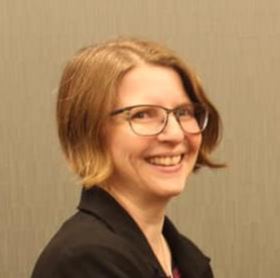
Cicek Cavdar is an Associate Professor at the School of Electrical Engineering and Computer Science (EECS) at KTH Royal Institute of Technology , Sweden. She leads the Intelligent Network Systems research group and specializes in Telecommunication Networks , with a focus on Beyond 5G/6G Mobile Networks , Energy Efficiency , and AI-Assisted Network Management . PhD in Computer Science (2009) from University of California, Davis and Istanbul Technical University Her research spans Cell-Free Massive MIMO , Reconfigurable Intelligent Surfaces (RIS) , UAV Communication Systems , and Green Network Technologies . She actively contributes to 6G Network Architecture and Non-Terrestrial Networks , including satellite and aerial systems. Recent publications highlight AI-driven network optimization for handover management, energy-aware resource allocation , and multi-agent reinforcement learning in complex communication environments. She teaches advanced courses in Communication Systems , Machine Learning , and Software Engineering at KTH.
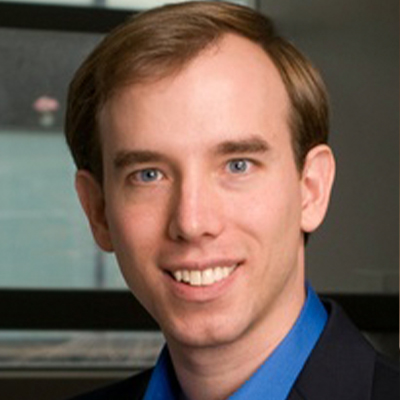
Kenji Kawaguchi is the Presidential Young Professor in the Department of Computer Science at the National University of Singapore (NUS), where he leads the Deep Learning Lab and is a faculty affiliate at the NUS Institute of Data Science. His research bridges theoretical and applied machine learning, focusing on deep learning, large language models, and physics-informed neural networks. His educational background includes a Ph.D. and S.M. in Computer Science and Electrical Engineering from the Massachusetts Institute of Technology (MIT), advised by Leslie Pack Kaelbling, and a postdoctoral fellowship at Harvard University’s Center of Mathematical Sciences and Applications. Dr. Kawaguchi’s research interests center on the theoretical foundations of deep learning, optimization, generalization, and applications in areas such as molecular modeling, AI safety, and efficient training of large models. He has made significant contributions to understanding in-context learning, diffusion models, and neural operators for partial differential equations. His recent publications (2023–2025) reflect a strong trend toward improving the efficiency, robustness, and interpretability of large-scale models, particularly in language and scientific domains. Key themes include LLM alignment and safety, diffusion model optimization, and physics-informed learning for high-dimensional problems. Presidential Young Professor He has served as Area Chair and PC Member for top-tier conferences including NeurIPS, ICML, ICLR, AAAI, and UAI, and as reviewer for journals such as JMLR and Annals of Statistics. He has delivered invited talks at Harvard, MIT, Stanford, CMU, Brown, and Google Research, reflecting his international recognition. He actively mentors students and welcomes PhD candidates and postdocs to join his research group.
Verdiana Grace Masanja is a Tanzanian mathematician and the first woman from Tanzania to earn a Doktor-Ingenieur (Doctor of Engineering) in mathematics. She holds the rank of Full Professor of Applied and Computational Mathematics at the Nelson Mandela African Institute of Science and Technology (NM-AIST). Born in 1954, she pursued her education at the University of Dar es Salaam (BSc and MSc in Mathematics) and earned her doctoral degree from the Technical University of Berlin. Her research focuses on fluid mechanics, optimal control theory, and mathematics education advocacy. She has been a leading advocate for girls' and women's participation in STEM, serving in prominent roles such as Vice-President for Eastern Africa on the African Mathematical Union's executive committee and chairperson of the Tanzania Education Network. Education: BSc (Mathematics & Physics, UDSM, 1976); MSc (Mathematics, UDSM, 1981); Doktor-Ingenieur (Technical University of Berlin, 1986). Research interests include applied mathematics with a focus on education equity. Her recent work combines optimal control methods with biological systems modeling, as seen in studies on disease dynamics and nanofluid behavior. Awards: 2011 UDSM Golden Outstanding Award for contributions to mathematics education. Leadership roles include coordinating initiatives like Female Education in Mathematics in Africa and serving on commissions such as the Commission on Women in Mathematics in Africa.
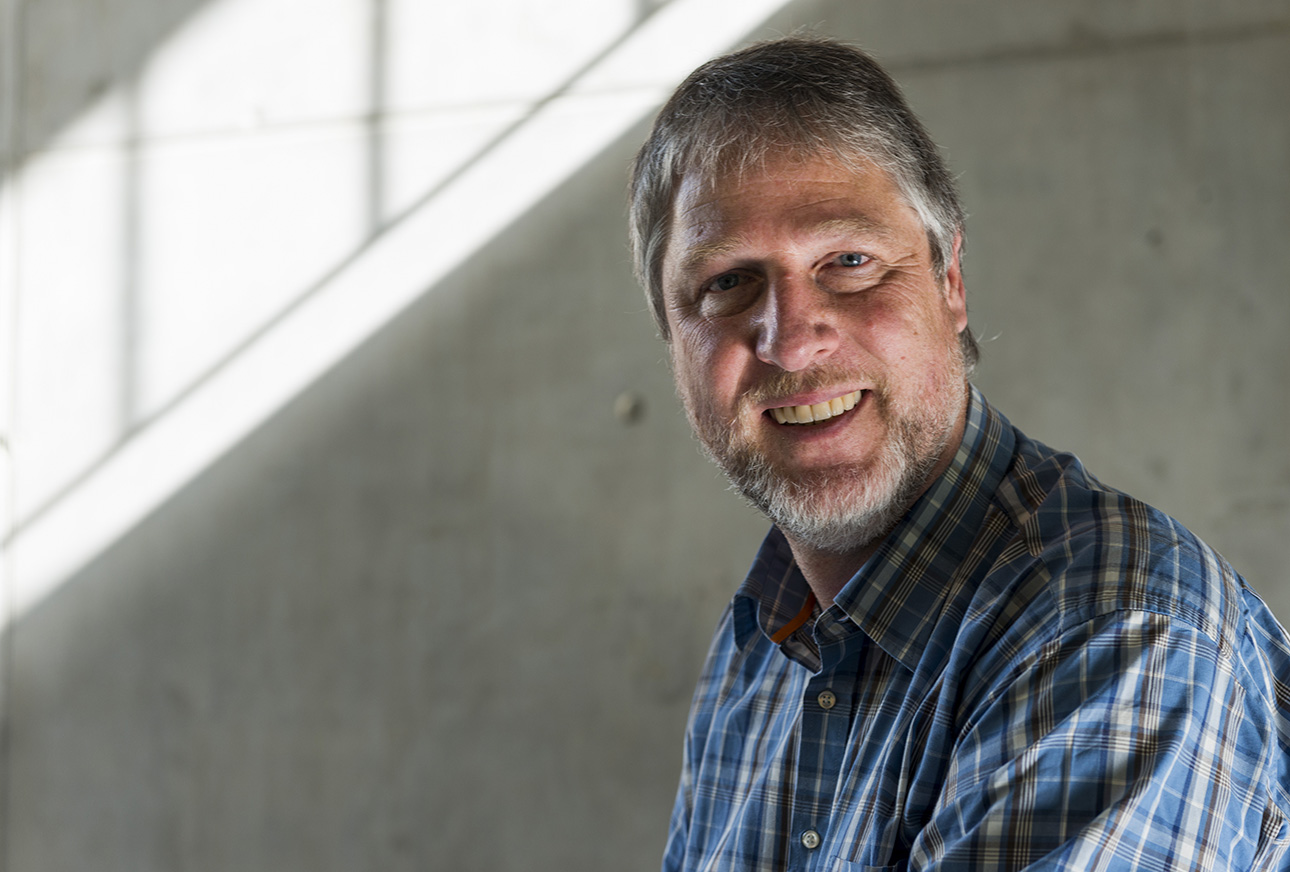
Andrew Stuart is the Bren Professor of Computing and Mathematical Sciences at the California Institute of Technology (Caltech), joining in 2016. He previously held faculty positions at the University of Warwick (1999–2016), Stanford University (1992–1999), and Bath University (1989–1992). He earned his PhD from the University of Oxford's Computing Laboratory in 1986. Professor Stuart's research focuses on applied and computational mathematics , particularly Bayesian inverse problems , data assimilation for dynamical systems , and stochastic modeling . His work bridges mathematical theory, algorithm development, and applications in geophysics, materials science, and biological systems. His recent publications emphasize operator learning , machine learning for PDEs , and uncertainty quantification . Key areas include ensemble Kalman methods , Gaussian processes , and neural operators for solving and learning from complex systems. Scientific awards include the Vannevar Bush Faculty Fellowship and election to the Royal Society of Great Britain . He advises graduate students in applied mathematics, computational science, and geophysics, including Edoardo Calvello , Hojjat Kaveh , and Florian Wolf .
Aarti Singh is a Professor in the Machine Learning Department at Carnegie Mellon University and Director of the NSF AI Institute for Societal Decision Making. She leads research at the intersection of machine learning, statistics, and decision making, with applications to scientific and societal domains. Her work focuses on designing principled interactive algorithms for learning and decision making under uncertainty. Education: Ph.D. in Electrical Engineering, University of Wisconsin-Madison (2008) M.S. in Electrical Engineering, University of Wisconsin-Madison (2003) B.E. in Electronics and Communication Engineering, University of Delhi (2001) Research Interests: Professor Singh's research centers on developing interactive machine learning algorithms that go beyond finding input-output associations to make higher-level decisions about the most informative data and actions. Her work spans autonomous decision making, including active sampling, stochastic optimization, bandits, and reinforcement learning that are statistically optimal, computationally tractable, and robust. She also investigates human factors in decision making, designing algorithms that model and leverage human feedback while accounting for bias, memory effects, and calibration. Her research has applications in material science, cosmology, and peer review systems. Research Trends: Professor Singh's recent publications demonstrate a strong focus on reinforcement learning, particularly in developing more efficient and robust algorithms for decision making under uncertainty. Her work bridges theoretical foundations with practical applications, spanning from fundamental algorithm development to real-world implementation in scientific domains. There's a clear trajectory toward integrating human factors into decision-making algorithms, with significant contributions to peer review systems and preference learning. Scientific Awards: NSF Career Award United States Air Force Young Investigator Award A. Nico Habermann Faculty Chair Award Harold A. Peterson Best Dissertation Award Multiple paper awards Advising and Grants: Professor Singh has advised numerous PhD and master's students, many of whom have gone on to faculty positions or research roles at leading institutions. Her research is supported by prestigious grants from ONR, Simons Foundation, AFRL, ARL, and NSF. She serves as General Chair (2025) and Program Chair (2020) for the International Conference on Machine Learning (ICML) and has held leadership roles in multiple professional organizations. Research Team: Professor Singh leads a vibrant research group within the Machine Learning Department at CMU, with current PhD students working on topics including reinforcement learning, human-AI collaboration, and decision making under uncertainty. She also directs the NSF AI Institute for Societal Decision Making, which brings together researchers from multiple disciplines to develop AI systems that support human decision making in societal contexts.
Prof. Niki Kilbertus is an Assistant Professor at the Technical University of Munich (TUM) in the Department of Informatics, and Group Leader at Helmholtz AI. His research focuses on causal machine learning, ethical AI systems, and applications in healthcare, climate science, and dynamical systems. He earned his PhD from the University of Cambridge (2020) and has held positions at DeepMind, Google, and Amazon during his studies. His research interests include causal discovery, fairness in AI, counterfactual reasoning, and integrating physics-based constraints into neural networks. Key contributions include foundational work on fair machine learning (e.g., avoiding discrimination through causal models) and developing methods for causal inference in complex systems like healthcare and climate modeling. Recent work emphasizes generative models for causal interventions, robust treatment effect estimation, and physically consistent neural differential equations. He leads a large interdisciplinary group with over 20 students and postdocs working on projects funded by Helmholtz Association, ERC, and industry collaborations. Notable awards include the Leopoldina Prize for Young Scientists (2024) and membership in the Junge Akademie. His lab maintains active partnerships with ELLIS, MCML, and the Zuse Institute Berlin.
Elaine Francis is a Professor of English and Linguistics at Purdue University's College of Liberal Arts, where she serves as Associate Head of the Department of English and directs the Experimental Linguistics Lab. She holds additional affiliations as an Affiliate Faculty Member in the Department of Linguistics and a Courtesy Faculty Member in the Department of Speech, Language, and Hearing Sciences. Ph.D. in Linguistics, University of Chicago (1999) B.A. in Linguistics, College of William and Mary (1993) MA in Linguistics, University of Chicago (1995) Former Assistant Professor at the University of Hong Kong (1999-2002) Professor Francis's research focuses on syntax and its interfaces with semantics, discourse information structure, and language processing in production and comprehension. She employs experimental methods to investigate syntactic, semantic, discourse-pragmatic, and cognitive factors underlying complex sentence structures. Her primary research areas include word order alternations, filler-gap dependencies, resumptive pronouns, and grammatical acceptability. She examines how various factors contribute to grammatical alternations in language use and explores how processing pressures in production and comprehension contribute to grammatical conventions. Her recent publication record shows consistent output across multiple linguistic subfields, with a strong emphasis on experimental syntax and psycholinguistics. Her 2022 book, Gradient Acceptability and Linguistic Theory , represents a significant contribution to understanding acceptability judgment tasks in relation to syntactic theory. Her work spans theoretical syntax, experimental linguistics, second language acquisition, and cross-linguistic comparison, often bridging the gap between theoretical frameworks and empirical evidence. Regularly teaches short courses at Linguistic Society of America Linguistic Institutes Member of Linguistic Society of America Ethics Committee Editorial board member of Glossa Psycholinguistics Co-editor of Polymorphous Linguistics: Jim McCawley's Legacy (2005) Co-editor of Mismatch: Form-Function Incongruity and the Architecture of Grammar (2003) Professor Francis actively supervises graduate students in linguistics, though she has indicated she will be unable to take on new graduate students for the 2025-2026 academic year. She has received research support for her experimental work, particularly for investigating syntactic phenomena through controlled experiments and corpus analysis. Her collaborative work extends across multiple institutions and disciplines, including collaborations with researchers in computational linguistics, cognitive science, and clinical linguistics. She directs the Experimental Linguistics Lab at Purdue University, which conducts research on syntactic processing using various experimental methodologies. The lab investigates how speakers produce and comprehend complex sentence structures, with particular attention to how grammatical knowledge interacts with processing constraints. Current projects include research on relative clauses, syntactic islands, and acceptability gradient phenomena across multiple languages.
Eric Eaton is a Research Associate Professor of Computer and Information Science at the University of Pennsylvania , and a core member of the GRASP (General Robotics, Automation, Sensing, and Perception) Laboratory . His expertise centers on lifelong machine learning , transfer learning , and interactive AI , with impactful applications to robotics, precision medicine, and computational sustainability. Education & Affiliations Ph.D. in Computer Science, University of Maryland, Baltimore County (UMBC) – dissertation on selective knowledge transfer advised by Marie desJardins Former Visiting Assistant Professor, Bryn Mawr College Former part-time faculty, Swarthmore College and UMBC Two years as Senior Research Scientist at Lockheed Martin Advanced Technology Laboratories Research Interests Eaton’s research advances versatile AI systems that can learn multiple tasks over long lifetimes, transfer knowledge across domains, and interact effectively with humans and other agents. Core themes include: Lifelong & continual learning – continual acquisition and refinement of knowledge across tasks Knowledge transfer – selective, cross-domain, and zero-shot transfer techniques Interactive AI – human-in-the-loop learning and interpretable models Applications – autonomous service robotics, precision medicine, sustainability, and search & rescue Selected Scientific Awards IJCAI-16 Distinguished Student Paper Award for zero-shot transfer research IJCAI-15 Best Paper Nomination for autonomous cross-domain transfer ICML 2020 Workshop Best Paper Award for lifelong policy gradient learning Grants & Funding Current and past research is supported by the Office of Naval Research (ONR), the National Science Foundation (NSF), and Lockheed Martin, enabling large-scale projects in lifelong robotics and medical AI. Students & Postdocs Eaton has advised a diverse cohort of scholars including current PhD students David Isele, Seungwon Lee, Jorge Mendez, and Mohammad Rostami, as well as postdocs Boyu Wang and numerous alumni now in faculty positions or leading industry research teams. Labs & Teams He leads the Autonomous Service Robot Fleet within GRASP, creating low-cost robots that learn lifelong skills in university and office settings. His group also collaborates with clinicians for AI-driven precision medicine, and partners with defense and sustainability initiatives.
Professor Bernd Möbius is a leading academic in Phonetics and Phonology at the Department of Language Science and Technology, Saarland University. His research bridges phonetic theory with speech technology applications, focusing on text-to-speech systems, prosody modeling, and computational simulations of speech processes. Current research projects: DFG SFB 1102, C1: Information density and phonetic structure predictability DFG SFB 1102, C4: Slavic intercomprehension and surprisal theory (INCOMSLAV) Research Themes: Key areas include text-to-speech synthesis, speech prosody analysis, experimental methods in speech production/perception, information density in phonetics, and cross-linguistic studies of Slavic-Germanic languages. Scientific Contributions: Recent work explores Parkinson-induced dysarthria detection, breath noise acoustics, surprisal-driven speech behaviors, multilingual BERT models for idiomaticity, and perceptual consequences of acoustic adjustments.
Sumanta Acharya is a Professor in the Department of Mechanical Engineering at Illinois Tech's Armour College of Engineering. His career spans computational methods, experimental fluid mechanics, and combustion, with affiliations including ASME, AIAA, and ASTFE. Ph.D. in Mechanical Engineering, University of Minnesota (1982) M.S. in Mechanical Engineering, University of Minnesota (1980) B.S. in Mechanical Engineering, Indian Institute of Technology (1978) A leading expert in thermal and fluid sciences, Acharya focuses on gas turbine heat transfer, turbulence modeling, and advanced cooling systems. His work integrates Computational Fluid Dynamics (CFD) with experimental validation for applications in biofuels , hydrogen combustion , and phase change materials . Recent publications highlight innovations in Brayton cycle integration, impingement cooling, and aerothermal performance optimization. Awarded by ASME, AIAA, and LSU, his honors include the ASME Heat Transfer Memorial Award (2011) and ASME Fellow (1999). He has contributed to key committees, including the ASME Heat Transfer Division Executive Committee and the Department of Energy's University Turbine Systems Research program. Researcher to Know, Illinois Science & Technology Coalition (2022) ASME Dedicated Service Award (2019) AIAA Thermophysics Award (2015) Contact: sacharya1@illinoistech.edu | Phone: 312.567.3701
Sanjiv Singh is a Research Professor at the Robotics Institute within Carnegie Mellon University's School of Computer Science. His academic journey at CMU spans from Systems Scientist (1995-2001), to Senior Research Scientist (2001-2003), Associate Research Professor (2003-2007), and finally Research Professor since 2007. He also holds an adjunct faculty position in Mechanical Engineering since 2009. Singh serves as Editor-in-Chief of the Journal of Field Robotics, demonstrating his leadership in the robotics community. His educational background includes a Ph.D. and M.S. in Robotics from Carnegie Mellon University (1995, 1992), an M.S. in Electrical Engineering from Lehigh University (1985), and a B.S. in Computer Science from the University of Denver (1983). Dr. Singh's research focuses on three primary themes: Autonomous Navigation (developing motion planning and control for ground and air vehicles with applications in agriculture, exploration, and low-flying aircraft), Coordinated Multi-Robots (examining team-based tasks like structure assembly and search/rescue operations), and Forceful Interaction with the world (using physical models to enable robots to handle complex, high-force interactions). His work spans aerial robotics, agricultural and forestry robotics, mining robotics, 3D vision, sensing and perception, visual servoing, motion planning, and field service robotics. Analysis of his recent publications (2016-2020) reveals a strong focus on collision avoidance algorithms, sensor fusion techniques, and real-time navigation systems. His research demonstrates consistent advancement in SLAM (Simultaneous Localization and Mapping) technologies, particularly in GPS-denied environments, with increasing sophistication in handling complex aerial maneuvers and multi-robot coordination. Editor-in-Chief of Journal of Field Robotics Dr. Singh has advised numerous graduate students throughout his career, with current advisees including Matt Aasted (Ph.D), Andrew Chambers (M.S), Hugh Cover (M.S), Michael Dille (Ph.D), and Justin Haines (M.S). His past students include prominent researchers like Sebastian Scherer, Joe Djugash, Fred Heger, Geoff Hollinger, and Ji Zhang who have gone on to make significant contributions in robotics. His research has been supported through various projects including CASC (agricultural applications), Riverine, Transformer, Trestle, and Ember. His laboratory work focuses on developing practical robotic systems capable of operating in challenging real-world environments, with particular emphasis on agricultural applications, search and rescue operations, and coordinated multi-robot teams that can work effectively alongside humans.
Prof. Kai S. Exner is a Professor of Theoretical Inorganic Chemistry at the University of Duisburg-Essen's Faculty of Chemistry and a member of the Zentrum für Medizinische Biotechnologie (ZMB). His research focuses on electrocatalysis , particularly optimizing electrode materials for energy applications such as batteries, electrolyzers, and fuel cells. He employs computational methods like ab initio calculations and microkinetic modeling to bridge theoretical insights with experimental and industrial applications, emphasizing sustainable catalyst design without relying on noble metals. His work integrates basic research with applied medical biotechnology through ZMB collaborations, though his primary affiliation lies in the Faculty of Chemistry. Exner has pioneered concepts like the electrochemical-step asymmetry index and free-energy span model, which are critical for screening electrocatalysts. His research group, 'Theoretical Inorganic Chemistry,' actively explores mechanisms behind oxygen and chlorine evolution reactions, emphasizing selectivity control and reaction pathway complexity. Exner received the Gottschalk-Diederich-Baedeker-Preis (2024) for advancing the energy transition through foundational electrocatalysis research. He leads Aktuelles Projekt funded by third-party grants and collaborates with facilities like the Analytics Core Facility Essen (ACE) and Imaging Center Campus Essen (ICCE). His advisory role focuses on guiding theoretical and computational approaches in electrochemistry, and he has established a reputation for interdisciplinary research connecting computational chemistry with practical energy solutions.
Sicun Gao is an Associate Professor in the Computer Science and Engineering department at the University of California, San Diego. His research focuses on practical algorithms for NP-hard search and optimization problems in computational systems, emphasizing combinatorial perspectives in numerical and statistical contexts to achieve reliable autonomy. Research Interests: Automated reasoning, Hamilton-Jacobi reachability, safe reinforcement learning, control barrier functions, and optimization in cyber-physical systems. Teaching: Courses on AI search, optimization, and graduate research seminars. The 15 most recent publications highlight advancements in safe AI control, motion planning, and policy optimization, often integrating neural networks with formal verification. Awards include the IEEE Power & Energy Society Technical Committee Prize Paper Award and the IROS RoboCup Best Paper Award. He advises PhD students working on AI-driven control and robotics, with alumni placed at institutions like Seoul National University, Amazon, and Apple. Grants include NSF Career, Air Force Young Investigator, and DARPA Assured Autonomy funding. His lab develops tools like dReal for automated reasoning in nonlinear theories over the reals.
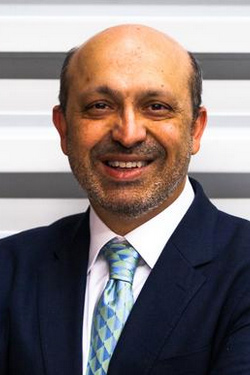
Farzad Mashayek is a Professor and Department Head of Aerospace and Mechanical Engineering at the University of Arizona, College of Engineering. He is a member of the Graduate Faculty and leads the Computational Multiphase Transport Laboratory. His research integrates high-fidelity simulations, machine learning, and experimental validation across diverse domains in fluid dynamics and energy systems. Educational Background: PhD in Mechanical Engineering, State University of New York at Buffalo, Buffalo, NY MS in Mechanical Engineering, Sharif University of Technology, Tehran, Iran BS in Mechanical Engineering, Sharif University of Technology, Tehran, Iran His research interests include turbulent reacting flows, plasma dynamics, electrostatic atomization, solid-ion and lithium batteries, computational fluid dynamics, and machine learning applications in engineering. He employs high-order spectral element methods, phase-field modeling, and deep neural networks to study complex multiphysics phenomena such as drop impact, battery degradation, and turbulence modeling. The recent publications reflect a strong trend toward integrating machine learning with multiphysics simulations, particularly in battery safety (thermal runaway prediction), materials characterization (STEM image analysis), and fluid dynamics (modal analysis of turbulence). His work often involves collaboration with experimental groups to validate models, especially in dental aerosol suppression and electrohydrodynamics. Scientific Awards: Sustained Service Award, American Institute of Aeronautics and Astronautics (AIAA), Spring 2022 Best Presentation Award, The 20th International Conference on Computational Mathematics, Parallel and Distributed Computing, Summer I 2018 Dr. Mashayek has secured funding from NSF (GOALI program) for controlled coating via charged droplet deposition. He advises graduate students and postdoctoral researchers in computational mechanics and energy systems, fostering interdisciplinary research. He has contributed to engineering education, particularly during the pandemic, with active learning strategies in online instruction. He leads a dynamic research team focused on advancing simulation tools and applying them to real-world challenges in energy, manufacturing, and public health.
Sean Cao serves as Associate Professor (with tenure) at the Robert H. Smith School of Business, University of Maryland, where he is Director and Co-founder of the AI Initiative for Capital Market Research. He also holds an affiliation as professor at Harvard Business School's D 3 Institute. His academic journey began with a Ph.D. from the University of Illinois at Urbana-Champaign. Dr. Cao's research focuses on the intersection of artificial intelligence and capital markets, with particular expertise in how machine learning transforms financial analysis, corporate disclosure practices, and investment decision-making. His work examines the evolving relationship between human analysts and AI systems, blockchain applications in financial reporting, and the strategic adaptation of corporate communications for machine readership. He has pioneered research on the "AI divide" among investor groups and developed frameworks for human-AI collaborative stock analysis. His publication portfolio spans top journals including Journal of Financial Economics, Review of Financial Studies, Journal of Accounting Research, and Management Science. The research demonstrates consistent thematic progression toward increasingly sophisticated AI applications in finance, with recent work exploring distributed ledger technologies for auditing, machine learning for extracting private information from disclosures, and the economics of greenwashing in ESG funds. His studies frequently combine textual analysis with traditional financial metrics to uncover novel market insights. Fama-DFA Prize from Journal of Financial Economics for best paper in capital markets and asset pricing Michael J. Brennan Award from Review of Financial Studies Deloitte Initiative for AI and Learning award for developing trustworthy AI for social equity PanAgora Asset Management's Dr. Richard A. Crowell Memorial Prize Multiple best paper awards from Midwest Finance Association, Global AI Finance Conference, and Asian Finance Association Dr. Cao has delivered over 200 invited research talks at major institutions including the Central Bank of Japan, Central Bank of Thailand, and U.S. Securities and Exchange Commission. He serves as Guest Associate Editor for Management Science and has co-chaired Review of Financial Studies conferences on FinTech and Machine Learning. His educational initiatives include a widely adopted free AI textbook for finance and accounting that has been implemented at universities worldwide including Indiana University, UT Dallas, and University of Minnesota. As Director of the AI Initiative for Capital Market Research, Dr. Cao leads a multidisciplinary team exploring practical AI applications in finance. The initiative has secured significant funding including a $150,000 grant from GRF CPAs & Advisors. His research group maintains strong industry connections through partnerships with regulatory bodies, financial institutions, and technology companies, facilitating the translation of academic research into practical financial applications.