Daniela Di Giacomo is an Associate Professor at the School of Information Science within the College of Communication and Information at the University of Kentucky. Her research focuses on media literacy, civic education, youth development, and the integration of technology in learning environments. She holds a position at 353 Lucille Little Library and can be reached at daniela.digiacomo@uky.edu. Her work explores the intersection of education practices and digital media, emphasizing equitable access and policy implications. Key areas include out-of-school learning programs, democratic classroom practices, and the ethical use of educational technologies. Notable projects investigate the long-term impacts of arts participation among marginalized youth and the role of ungrading in fostering student autonomy. Recent publications highlight trends in media literacy policy, intergenerational partnerships, and the challenges of online learning during the pandemic. While no specific awards are listed, her research demonstrates significant contributions to educational equity and technology integration.
Dr. Ahmed Elgammal is a Professor of Computer Science at Rutgers University, where he leads the Art and Artificial Intelligence Laboratory. His work focuses on applying AI and computer vision to digital humanities, particularly art analysis and generation. He has published over 180 peer-reviewed papers and received the NSF CAREER Award in 2006. Elgammal’s research bridges art and technology, including AI-generated art and computational methods for art history. His work has been featured in prominent media such as the Washington Post, New York Times, and PBS, which earned an Emmy for a segment about his research. His art installations have been exhibited globally in cities like New York and Frankfurt. He holds a Ph.D. and M.Sc. in Computer Science from the University of Maryland, College Park. His academic leadership includes roles as Executive Council Faculty at Rutgers’ Center for Cognitive Science. Research Interests: Creative AI and Art Generation Computer Vision Applications in Digital Humanities Machine Learning for Art Analysis Awards: National Science Foundation CAREER Award (2006) Grants & Projects: Includes NSF-funded projects and collaborations in AI-driven art analysis and structural engineering applications. Labs & Teams: Founder and Director of the Art & AI Lab at Rutgers, focusing on interdisciplinary art-tech innovation.
Liane Gabora is a Full Professor in the Department of Psychology at the University of British Columbia's Okanagan Campus, affiliated with the Irving K. Barber Faculty of Arts and Social Sciences. She holds additional research affiliations with the Australian National University's School of Music, University of Waterloo's Institute for Complexity & Innovation, and Free University of Brussels' Centre Leo Apostel for Interdisciplinary Studies. Her educational background includes a BSc from the University of Western Ontario, PhD from the Free University of Brussels, and postdoctoral positions at UC Berkeley and the Free University of Brussels. Gabora's research program explores creativity, cultural evolution, and cognitive transitions through interdisciplinary approaches. Her work examines: How concepts combine and adapt to new contexts The origins of modern cognition and human creativity Computational models of cultural evolution Quantum formalisms for concept interactions Self-Other Reorganization (SOR) theory of cultural evolution Honing theory of creativity integrating complex systems and memory Her publications demonstrate strong cross-disciplinary integration spanning psychology, physics, anthropology, and computer science. Major research awards include the 2011 Berlyne Award from the American Psychological Association for outstanding research by a junior scholar. She has secured over $1 million in funding from NSERC, SSHRC, and private donors. Gabora supervises graduate students in Psychological Science and Digital Humanities programs and leads research on cognitive transitions underlying cultural evolution. Her laboratory focuses on mathematical and computational modeling of creativity mechanisms, with ongoing projects exploring AI creativity, quantum models of cognition, and the evolution of behavioral modernity through autocatalytic network frameworks.
Angelo Corallo is an Associate Professor at the Department of Experimental Medicine, University of Salento, specializing in technologies and methodologies for collaborative processes in industrial systems. His research spans Digital Business Ecosystems , Cybersecurity , and Collaborative Product Design , focusing on the interplay between technology and organizational dynamics. He leads interdisciplinary research divisions in Open Networked Business Management , Learning and Innovation , and Collaborative Product Design . Research Interests : Corallo's work integrates Information and Communication Technologies (ICT) with Business Management, particularly in Digital Twins for healthcare and manufacturing Knowledge Modeling and Ontology Engineering Industry 4.0 and Smart Manufacturing Agri-Food Sustainability through digitalization Scientific Contributions : His recent articles explore trends in Cybersecurity for Industrial IoT Metaverse Applications in business models Traceability Systems in food supply chains Collagen-Based Biomaterials from aquaponics
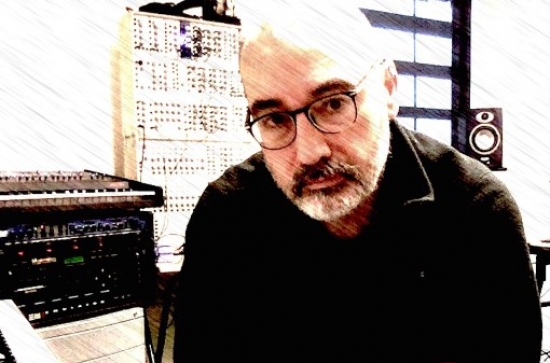
Victor Lazzarini is a Professor of Music at Maynooth University, Ireland, specializing in computer music and audio signal processing. He holds a BMus from Universidade Estadual de Campinas (UNICAMP), Brazil, and an AMusD from the University of Nottingham, UK. His research spans electroacoustic music, digital signal processing, and music technology. He leads the Csound project, a widely used sound and music computing system, and authored libraries like Aulib and Aurora. Education: Bachelor of Music (BMus), UNICAMP, Brazil Advanced Music Degree (AMusD), University of Nottingham, UK His research interests include sound synthesis, computer music languages, and the intersection of music with technology. He has authored over 150 peer-reviewed publications and books such as Spectral Music Design: A Computational Approach (Oxford UP, 2021) and co-edited volumes like Ubiquitous Music Ecologies (Routledge, 2020). His work bridges academic and industrial sectors through projects like the Enterprise-Ireland-funded commercialization initiative. Prof. Lazzarini’s contributions to music technology include pioneering tools like Csound, which enable real-time audio synthesis and processing. His articles span topics from digital filter design to historical computer music archaeology, reflecting his expertise in both theoretical and applied domains. Awards: AIC/IMRO International Composition Prize (2006) He advises on interdisciplinary projects such as the BeatHealth initiative, integrating ubiquitous computing and music. His creative output includes electroacoustic compositions performed globally and released on labels like FarPoint Recordings. Lazzarini actively collaborates with international teams, contributing to conferences like DAFx and ICMC, and leads initiatives like the Ubimus (Ubiquitous Music) research network.
Prof. Hester van de Bovenkamp is a Full Professor at the Erasmus School of Health Policy & Management (Erasmus University Rotterdam), specializing in Health Care Governance. She leads research in Patient Sciences, focusing on patient experiences, participation, and representation. Her work integrates qualitative research and text mining to analyze patient narratives, contributing to healthcare improvement and reflexive governance. She is a member of interdisciplinary research collaboratives involving academics, patients, healthcare providers, and policymakers. Her research emphasizes institutional layering, regulatory frameworks, and participatory approaches in healthcare. Notable contributions include exploring patient-parent-clinician relationships through arts-based projects and analyzing frontline professionals' experiences in complex care systems. She has received awards such as the 'Best Supervisor 2021' and contributed to datasets like 'From promise to practice: a guide to pooled procurement mechanisms'. Teaching roles include coordinating the HEPL course 'Comparative Health Policy' and supervising master’s theses. Her work aligns with UN Sustainable Development Goals, particularly improving healthcare quality and equity. Key Research Themes: Patient-centered care, regulatory governance, qualitative methodologies, and participatory healthcare. Recent Projects: Analysis of European Reference Network CRANIO’s arts-based initiatives and systemic reviews on rare congenital conditions. Awards: Vide publicatieprijs 2024, Best Supervisor 2021, Frans Rutten Research Award. She actively engages in media and public discourse, emphasizing the importance of patient voices in healthcare policy. Her interdisciplinary approach bridges academic research with practical healthcare challenges, fostering innovation in governance and care delivery.
Bruce Sterling is a Professor of New Media and Science Fiction at The European Graduate School (EGS), where he has taught intensive summer seminars since 2003. He also served as "visionary in residence" at the Art Center College of Design in Los Angeles starting in 2005. Sterling is internationally recognized as a science fiction writer, net critic, and cyberspace theorist, with significant influence in the cyberpunk movement. Sterling graduated with a degree in journalism from the University of Texas, Austin, in 1976. His academic journey was followed by a prolific writing career that began with the publication of Involution Ocean in 1977. Sterling's research interests span the intersection of technology, culture, and narrative. He is particularly known for his work on cyberpunk literature, new media theory, and futurism. His concept of "design fiction" has influenced how designers and technologists think about future scenarios. Sterling's Viridian Design Movement promoted environmental awareness through design, while his Dead Media Project documented obsolete communication technologies. His writings consistently explore how technological change reshapes human experience, society, and our understanding of the future. Sterling's recent publications reveal a continued focus on the cultural implications of emerging technologies. His articles examine topics ranging from wearable computing and hyperlocal media to sustainable design and energy transitions. A recurring theme is the relationship between technological progress and environmental sustainability. Sterling frequently employs speculative approaches, using science fiction techniques to explore possible futures and challenge current assumptions about technology's trajectory. Sterling's scientific achievements have been recognized with numerous prestigious awards: Campbell Award (1989) for Islands in the Net Hugo Award (1997) for Bicycle Repairman Hugo Award (1999) for Taklamakan Hayakawa Award (1999) for Taklamakan Clarke Award (2000) for Distraction Sterling has been instrumental in shaping digital culture discourse through his teaching, writing, and activism. As a co-founder of the Electronic Frontier Foundation, he has advocated for digital rights and freedoms. His work bridges academic theory, creative practice, and public engagement, making complex technological issues accessible to diverse audiences. Sterling founded both the Dead Media Project, an archive of obsolete media technologies, and the Viridian Design Movement, an environmental aesthetic initiative. These projects reflect his unique approach to understanding technology through both historical and future-oriented perspectives. His work often explores the lifecycle of technologies, from emergence to obsolescence, and considers how design choices today shape possible futures.
Michael L. J. Apuzzo is a Distinguished Adjunct Professor of Neurosurgery at Yale School of Medicine, Adjunct Professor at Weill Cornell Medicine, and Senior Consultant at West Virginia University’s Rockefeller Neuroscience Institute. He holds Emeritus status at the University of Southern California (USC) Keck School of Medicine. His academic journey includes a BA from Yale College (1961), MD from Boston University (1965), and advanced training in neurosurgery at Yale, McGill University, and the U.S. Naval Postgraduate School. He served in the U.S. Naval Nuclear Submarine Service and collaborated with NASA’s Jet Propulsion Laboratory during the Viking Mars mission. His research focuses on minimally invasive neurosurgery , stereotactic techniques , and molecular biology applications in neurological disorders. He pioneered the use of microsurgical corridors for third-ventricle surgeries and integrated computers into neurosurgical procedures. He has authored over 800 publications, including seminal texts like Surgery of the Third Ventricle and Brain Surgery: Complication Avoidance and Management . Apuzzo’s editorial leadership includes serving as Editor-in-Chief of Neurosurgery and founder of World Neurosurgery , which reached 23 million readers globally. He received the Founder’s Laurel Award, Herbert Olivecrona Award, and multiple honorary doctorates. His roles extend to NFL neurosurgical consultancy and advisory positions for U.S. Presidents and the National Institutes of Health. He advocates for global neurosurgical education and innovation, reflected in the Apuzzo Lecture on Creativity and Innovation established in his honor.
Francisco R. Ortega is a researcher at Colorado State University specializing in Virtual Reality (VR) , Augmented Reality (AR) , and Human-Computer Interaction (HCI) . His work focuses on improving user experience through multimodal interaction, cognitive load theory, and immersive analytics. Recent publications explore diverse applications including: Stress reduction via VR forest bathing Instruction methods for AR-based autism support systems Annotation design in extended reality AR notifications in cooking environments Gender-swapping VR for stereotype threat mitigation Comparative studies between AR and VR for data-driven storytelling His research integrates principles from: Computer Science Psychology Human Factors Education Technology Collaborations span institutions such as University of Florida, University of Seville, and technical teams across North America. While specific educational details remain undisclosed, his 20+ peer-reviewed publications since 2018 demonstrate deep contributions to VR/AR methodology, particularly in: Unconstrained gesture elicitation Spatial transformation challenges Immersive training systems Hybrid display environments Imperfect machine learning integration
Zhao Zhao is an Assistant Professor at the School of Computer Science, University of Guelph. Her work focuses on wearable systems, human-robot interaction, and gamification for health and education. She holds a PhD from Carleton University (2019) and completed a postdoctoral fellowship at the University of Toronto (2019–2023) before roles at McMaster University and her current position. Education includes a BSc in Computer Science from University of Electronic Science and Technology of China (2011), MSc from Carleton University (2014), and PhD in Electrical and Computer Engineering (2019). Research interests span physiological computing, AI-assisted creativity tools, and adaptive systems leveraging wearable sensors. Key research areas include: 1) Wearable-based gamification for health and education, 2) Emotion sensing via physiological signals, and 3) Human-robot interaction enhanced by wearable data. Her lab uses Empatica EmbracePlus wristbands and Emotiv EEG headsets to analyze real-time physiological responses in diverse interaction scenarios. Recent publications (2020–2025) emphasize personalized exergame systems, child-robot interaction studies, and AI linguistic competency analysis. She actively seeks graduate students and industry partnerships in wearable technology, education tech, and HRI.
Naho Matsuda serves as a Senior Research Fellow at Northumbria University within the School of Design Arts and Creative Industries, focusing on critical design practices that bridge art, technology, and social justice. Her academic credentials include: BA in Information Design from Tama Art University (awarded 2014) MA in Other Courses (awarded 2014) Matsuda's research interrogates more-than-human ecosystems through eco-feminist lenses , specializing in multispecies design methodologies and public art interventions . Her work challenges anthropocentric urban frameworks by developing participatory tools for reimagining food systems and smart cities, often employing sensory ethnography and critical making to expose hidden power structures in technological environments. Recent publications (2024-2025) reveal a concentrated trajectory toward artistic activism in ecological crises , with recurring motifs of pig symbolism, urban regeneration, and feminist technoscience. These works consistently deploy collaborative design workbooks and site-specific installations to facilitate community-driven reimagination of sustainable futures, particularly within London's financial districts and food infrastructure. No scientific awards were documented in the provided materials. Matsuda's advisory and grant activities remain unspecified in available records, though her collaborative projects demonstrate significant external engagement with cultural institutions and academic networks. She operates within Northumbria's Interaction Research Studio, co-developing the More-than-Human Smart Cities design framework through projects like SOW—a public art commission generating discourse across X, Bluesky, and academic platforms—with collaborators including Ella Gladkova, Bill Gaver, and the Nature Scenes collective.
Haemin Park is an Associate Professor at the Naveen Jindal School of Management, University of Texas at Dallas. His research focuses on how external resource acquisition strategies of technology-based ventures influence their development and performance, with a particular emphasis on corporate venture capital (CVC), knowledge governance, and intellectual property rights. He holds a Ph.D. in Technology Entrepreneurship and Strategic Management from the University of Washington, an MBA from Georgetown University, and a B.A. in Computer Sciences, Economics, and Mathematics from the University of Wisconsin. Education: PhD (UW, 2010), MBA (Georgetown, 2000), BA (UW Madison, 1994) Editorial Roles: Area Editor of Journal of Business Venturing ; Editorial Board Member of Strategic Entrepreneurship Journal Research interests include venture capital dynamics, innovation ecosystems, and strategic management of technology firms. His work explores topics like IPO underpricing, corporate venture capital syndicates, and the impact of gender diversity in decision-making groups. Awards: 2017 Journal of Business Venturing Best Reviewer; Finalist for Academy of Management TIM Division Best Dissertation Award. Professional Experience: Prior to academia, he worked as a corporate venture capitalist, business development manager, and management consultant in wireless telecommunications in the U.S. and Asia.
Bernhard Brehmer is a Professor of Slavic Linguistics at the University of Konstanz since 2020, holding a W3-professorship in Slavic Linguistics. He previously held academic positions at the Universities of Greifswald, Hamburg, and Tübingen, including a Juniorprofessur and W2-professorship. His research focuses on multilingualism, language attrition, heritage languages, and sociolinguistic aspects of Slavic languages. He earned his doctorate in Ostslavische Philologie from Eberhard Karls University of Tübingen in 2004 with a dissertation on politeness expressions in Russian. Brehmer has led numerous interdisciplinary research projects, including the DFG-funded 'Russian in Germany across Generations' (2021–2024) and the EU-funded 'Nachbarspracherwerb' initiative. His awards include the 2012 Junior Fellowship at FRIAS and the 2018 Sparkassen-Förderpreis for German-Polish collaboration. His scholarly contributions span monographs, edited volumes, and over 50 peer-reviewed articles. Key works include Politeness between Convention and Creativity (2009) and co-edited collections like Lost in Transmission (2020). He actively participates in academic governance, serving as director of Slavistik institutes and developing interdisciplinary programs like the Baltic Sea Region MA program. His research integrates corpus linguistics, sociolinguistics, and applied language policy, addressing contemporary issues such as minority language maintenance and digital language behavior.
Yanai Toister is an Associate Professor (tenure track) specializing in Communication Sciences, focusing on interdisciplinary research at the intersection of photography, media theory, and visual culture. His work explores topics such as post-visual imagery, drone aesthetics, sensory perception, and the philosophical underpinnings of photographic systems. He has been actively publishing since 2007, with notable contributions in journals like PHILOSOPHY OF PHOTOGRAPHY and Journal of Comparative Literature and Aesthetics . Research Interests: Toister's research spans photography history , digital art , information aesthetics , and sensory studies . He critically examines how technological advancements reshape visual perception, particularly through drone imagery, algorithmic programming, and electromagnetic spectrums. Publications: His recent articles analyze the speculative camera, post-visual imagery in drone culture, and the interplay between echolocation and participatory frameworks. Earlier works include studies on Flusserian theory, the Turin Shroud, and speed in photographic practice. Awards & Activities: While no specific awards are listed, Toister is an active academic, organizing exhibitions, reviewing for journals, and delivering lectures globally (e.g., University of Wyoming, 2025). He also serves in academic committees and evaluates funding applications.
Alethea Blackler is a Professor at Queensland University of Technology (QUT), specializing in design research with a focus on intuitive interaction, aging populations, and user-centered design. She is affiliated with the Creative Industries Faculty and has contributed to the ARC Centre of Excellence for Creative Industries and Innovation. Her work spans academic leadership, editing books like *Intuitive Interaction: Research and Application*, and collaborating on projects addressing challenges in healthcare, environmental technology, and education. Her research interests emphasize the design of products and systems that are intuitive for diverse user groups, including older adults and those with dementia. Key areas include tangible embodied interaction (TEIs), co-design methodologies, and the application of design in healthcare and disaster preparedness. She has led multidisciplinary teams on grants such as the *Development of non-invasive methods for hive health assessment* funded by Horticulture Innovation Australia. Dr. Blackler’s publications explore topics like smart device usability, disaster preparedness through immersive environments, and the emotional connection between users and products. She has also contributed to pedagogical strategies in design education, emphasizing the importance of historical context and critical thinking for students. Her work has been presented at global conferences (e.g., IASDR, OzCHI) and published in journals like *Applied Ergonomics* and *International Journal of Design Sciences and Technology*. She continues to advance design research through collaborative projects and mentoring emerging scholars in the field.