Dr. Philippe Morel is an Associate Professor at the Bartlett School of Architecture , University College London, where he directs the MSc in Architectural Computation. He previously held academic positions at École nationale supérieure d'architecture Paris-Malaquais, The Berlage Institute, and Architectural Association School of Architecture, establishing himself as a leading figure in computational architecture. Doctor of Design, Florida International University (2024) Co-founder, EZCT Architecture & Design Research Founding CEO, XtreeE (2015-2017) His research focuses on computational architecture , artificial intelligence , and radical design theories , exploring intersections between digital technologies, architectural theory, and socio-economic models. Key contributions include Disruptive Technologies: The Convergence of New Paradigms in Architecture (2023) and Computational Politics and Architecture (2017). Recent publications analyze 3D printing economics , parametric design , and AI-driven architectural production . He has received the Pierre Cardin Prize (2007) and joined Phi Kappa Phi (2024). Supervised PhDs at ETH Zurich, EPFL, and Université Paris-Sud Developed curriculum on algorithmic urbanism and machine learning in architecture
Martha Tsigkari serves as an Associate Professor at The Bartlett School of Architecture, University College London (UCL), where she bridges architectural practice with cutting-edge computational research. Her position situates her at the forefront of digital transformation in the built environment, with institutional affiliations spanning UCL's Faculty of the Built Environment and direct contributions to UN Sustainable Development Goals 4 (Quality Education), 11 (Sustainable Cities), and 13 (Climate Action). Her research program critically examines the integration of artificial intelligence, machine learning, and cognitive psychology into architectural design processes. Key investigations include spatial and visual connectivity analysis, XR-enhanced collaborative design environments, and AI-driven optimization of building performance. She explores how digital tools reshape creativity, professional identity, and sustainability outcomes in architecture, with particular focus on data commoditization, skills evolution, and human-AI collaboration in design workflows. Her interdisciplinary approach connects architectural theory with computational neuroscience and industrial digitalization trends. Tsigkari's publication trajectory reveals a clear evolution from computational structural analysis (2012-2017) toward AI ethics and professional transformation (2022-2024). Early work established foundations in performance-driven facades and material systems, while recent output confronts existential questions about architectural practice in the AI era. Her scholarship consistently addresses the tension between technological capability and human-centered design values, with growing emphasis on sustainable development frameworks and educational implications. Scientific Awards: No major awards are documented in the available records. Advising and Grants: While specific supervisees and funding mechanisms aren't detailed in current sources, her extensive collaborative network across 30+ publications indicates active mentorship and research leadership. Co-authorship patterns suggest involvement in multi-institutional projects addressing AECO industry digitalization, with potential ties to UK research councils and industry partnerships like RIBA. Labs and Teams: Tsigkari operates within The Bartlett's digital research ecosystem through recurring collaborations with Kosicki, Tarabishy, and Psarras. Her work manifests in experimental toolsets including Glaucon (XR design environment), HYDRA (optimization framework), and SandBOX (conceptual design system), indicating leadership in UCL's computational design labs focused on human-AI interaction and sustainable building technologies.
Jessica Young Schmidt is an Associate Teaching Professor in the Department of Computer Science at North Carolina State University, serving as ABET Coordinator since 2017 and Course Coordinator for CSC226: Discrete Mathematics. Her primary focus is undergraduate education, particularly CSC116: Introduction to Computing – Java and CSC226, where she implements flipped classroom models and comprehensive end-of-semester exercises. Her educational background includes: Ph.D. in Computer Science, North Carolina State University, 2012 M.S. in Computer Science, North Carolina State University, 2009 B.S. in Computer Science and Mathematics, Roanoke College, 2007 Dr. Schmidt's research centers on computer science education, emphasizing active learning, instructional design, and software engineering pedagogy. She has pioneered methods like collaborative software engineering exercises for CS1 materials and frameworks for assessing critical thinking, with her work on end-of-semester integration earning a SIGCSE 2020 award. Her publications reveal an evolution from privacy policy analysis (2009-2012) toward educational innovation in recent years. Her scholarly contributions demonstrate consistent focus on curriculum development and assessment, particularly in integrating software testing throughout computer science education and enhancing student comprehension through structured reflection. She has received the following recognition: Third Best Paper, SIGCSE 2020 Technical Symposium (Experience Reports and Tools Track) As ABET Coordinator, Dr. Schmidt drives curriculum assessment and continuous improvement, while her CSC226 coordination ensures pedagogical consistency across sections. Her teaching innovations directly support student success in foundational computer science concepts.
Christy F. Landes is the Jerry A. Walker Endowed Chair in Chemistry and Professor of Chemistry at the University of Illinois Urbana-Champaign, with additional appointments as Professor in Electrical and Computer Engineering and Materials Research Lab, and as an Affiliate in Chemical and Biomolecular Engineering. She joined UIUC in 2023 after serving as the Kenneth S. Pitzer-Schlumberger Chair of Chemistry at Rice University. Education: B.S. in Chemistry, George Mason University (1998) Ph.D. in Chemistry, Georgia Institute of Technology (2003) Postdoctoral positions at University of Oregon and University of Texas at Austin Professor Landes' research focuses on physical, analytical and materials chemistry with emphasis on predictive separations, spectro-electrochemistry, protein dynamics at interfaces, imaging and signal processing, and single-molecule spectroscopy. Her work aims to understand complex structure-function relationships in biological processes to inspire innovation for materials design. The Landes Research Group develops new spectroscopic tools to image chemical dynamics at interfaces at the limit of a single event, creating new models to understand and predict macroscale processes like protein separation and photocatalysis. Her research spans several specific areas including predictive separations, spectro-electrochemistry, protein dynamics at interfaces, computational imaging/AI/data science, and interfacial energy and charge transfer in hybrid nanomaterials. By studying individual molecules rather than ensembles, her group can identify the chemical complexity of nanoscale interfacial dynamics and reveal underlying populations that form ensemble measurements. Scientific Awards: 2023 Fellow of the American Association for the Advancement of Science 2024 Kazuhiko Kinosita Award in Single-Molecule Biophysics 2020 Award for Special Creativity, National Science Foundation 2019 Kavli Fellow, U.S. National Academy of Sciences 2016 Early Career Award in Experimental Physical Chemistry, American Chemical Society 2011 NSF CAREER Award Professor Landes has advised numerous graduate and undergraduate students throughout her career at University of Houston, Rice University, and now at UIUC. Her research has been supported by various grants including NSF funding. Her group has developed innovative methods to break the Abbe diffraction limit, achieving spatial resolutions of just a few nanometers and time resolutions faster than traditional cameras frame times. The Landes Research Group at UIUC continues to develop new spectroscopic tools to image chemical dynamics at interfaces, with specific focus areas including predictive separations, spectro-electrochemistry, protein dynamics at interfaces, computational imaging/AI/data science, and interfacial energy and charge transfer in hybrid nanomaterials.
Kathryn Seigfried-Spellar serves as an Adjunct Professor in the cyberforensics program within the School of Applied and Creative Computing at Purdue University's Polytechnic Institute. She holds a prominent international reputation as an expert in the psychosocial and technological factors associated with cybercriminal behavior, with particular expertise in the criminological characteristics and grooming strategies of online child sex offenders. Her professional appointments include membership in the Tippecanoe High Tech Crime Unit and Special Deputy status for the Tippecanoe County Prosecutor's Office. Dr. Seigfried-Spellar completed her academic training at Purdue University, earning a PhD in Technology with concentration in Cyberforensics and Psychology (2011), an MA in Forensic Psychology from City University of New York, John Jay College of Criminal Justice (2007), and a BA in Psychology and Law and Society from Purdue University (2005). Her research interests focus on the psychological aspects of cybercrime, particularly the personality and motivation of cyberdeviants, child sexual exploitation, and behavioral analysis of digital evidence. Her work bridges the gap between psychological theory and digital forensics practice, with significant contributions to understanding online child sex offenders' behaviors and characteristics. She has conducted international research including a 2022-2023 Fulbright Scholar position at the University of Valencia, Spain, studying criminological differences in online child sex offenders, and has been awarded the International Fellows Award for Summer 2024 at the University of Adelaide, Australia. Dr. Seigfried-Spellar's scholarly contributions have been recognized with numerous awards including the 2023 Jefferson Award, 2022 University Faculty Scholar designation at Purdue, the 2022 Outstanding Early Career Achievement in Forensic Science Award from the American Academy of Forensic Sciences, and multiple Outstanding Research Awards from the Digital and Multimedia Sciences Section of the American Academy of Forensic Sciences (2015-2018). She serves as the Chair of the Digital and Multimedia Sciences section of the American Academy of Forensic Sciences and is a Fellow of this organization. Her professional affiliations also include membership in the American Psychological Association, American Psychology-Law Society, and International Association of Law Enforcement Intelligence Analysts. In December 2023, she co-founded and co-organized the Child Sexual Abuse Reduction Research Network workshop at the University of Adelaide, bringing together academics, nonprofit institutions, and law enforcement professionals focused on combating online child sexual abuse.
Gerhard Schwabe is a Professor in the Department of Informatics at the University of Zurich, Faculty of Business, Economics and Informatics. His research spans collaborative technologies, information management, E-government, blockchain applications, and digital health. He leads the Information Management Research Group and contributes to the university's Digital Society Initiative (DSI). Research Focus: Human-AI collaboration, blockchain systems, crisis informatics, persuasive technologies Key Projects: RefuGPT (refugee support chatbots), Scripted Medicine (health worker assistance), PROMISE (AI prompt orchestration) Technical Expertise: Design Science Research, conversational agents, data-driven governance His recent publications emphasize AI integration in collaborative workflows, blockchain applications for data markets, and digital solutions for crisis management. He explores how generative AI impacts freelance development practices and transforms advisory services through automated systems. Contact: schwabe@ifi.uzh.ch
Malgorzata Zboinska is an Associate Professor at Chalmers University of Technology within the Department of Architecture and Civil Engineering . She is a licensed architect and member of the Swedish Association of Architects and National Chamber of Architects of Poland . Hybrid architecture-technology-art research Focus on bio-based materials , digital fabrication , and creative robotics Development Leader of Chalmers' Robotic Fabrication Laboratory Editorial board member of TAD | Technology, Architecture + Design journal Research Themes bridge architecture , digital technology , and art , with expertise in: Sustainable and circular architectural practices 3D printing and robotic construction Material bioinnovation and upcycling Interactive and kinetic architectural solutions Her publications demonstrate strong output in digital fabrication , bio-material applications , and environmental architecture , with international exhibitions at Tempe Center for the Arts (USA) , Dutch Design Week (NL) , and Färgfabriken (Sweden) .
Arianna Bisazza is an Associate Professor in the Computational Linguistics Group at the University of Groningen, where she leads the InClow research group focused on Interpretable, Cognitively inspired, Low-resource language models. Her work bridges computational linguistics, cognitive science, and language acquisition to develop more robust and interpretable language processing algorithms that can adapt to diverse linguistic phenomena worldwide. Dr. Bisazza's research interests span statistical modeling of human languages in multilingual contexts, with particular focus on improving language model performance for "challenging" or low-resource languages. Her work explores how insights from human language acquisition can inform better language modeling techniques, and she investigates methods to make state-of-the-art NLP systems more interpretable and transparent. As a cross-disciplinary researcher, she actively seeks to enhance our understanding of human language processing and evolution through computational modeling tools. Her recent publications reveal a strong emphasis on multilingual evaluation frameworks (like TurBLiMP and MultiBLiMP), interpretability of language models, and connections between human language acquisition and neural network learning. Her work consistently addresses the challenge of making language technology more robust across diverse linguistic structures and typological features. Outstanding Paper Award at the BabyLM Challenge (CoNLL'24 Shared Task) for "BabyLM Challenge: Exploring the Effect of Variation Sets on Language Model Training Efficiency" Dr. Bisazza currently leads a Vidi project funded by the Dutch Research Council (NWO) on improving low-resource language modeling through child language acquisition insights. She is also part of two national consortium projects funded by NWA-ORC initiatives: InDeep (Interpreting deep learning models for language, speech & music) and LESSEN (Low Resource Chat-based Conversational Intelligence). She supervises multiple PhD students, including two China Scholarship Council (CSC)-funded researchers working on simulating human patterns of language learning and change. Her earlier research was supported by a Veni grant (2017-2021) focused on understanding and improving the encoding of linguistic structure in Neural Machine Translation models. As head of the InClow research group, Dr. Bisazza oversees a team investigating interpretable, cognitively inspired approaches to low-resource language modeling. The group's work combines insights from cognitive science and linguistics with cutting-edge NLP techniques to develop language models that better reflect human language processing capabilities, particularly in resource-constrained settings.
Prof. Dr. Catrin Misselhorn serves as Professor of Philosophy at the University of Göttingen since 2019, focusing on theoretical philosophy, machine ethics, and human-AI interaction. She is Deputy Director of the Institute of Philosophy and a member of the supervisory board at KIT (Karlsruhe Institute of Technology). Education Studied at University of Tübingen and University of North Carolina at Chapel Hill (1991-1998) PhD in Philosophy (2003) and Habilitation (2010) at University of Tübingen Feodor-Lynen Fellowship at Center of Affective Sciences (2007-2008) Research Interests Her work bridges machine ethics , philosophy of artificial intelligence , and human-machine interaction , with emphasis on moral agency in autonomous systems, empathy in AI, and ethical evaluation of technologies. She explores applications in geriatric care, autonomous weapons, and self-driving vehicles. Recent Article Trends Her 15 most recent publications (2022-2025) highlight intersections between AI governance , robot empathy , and moral implementation . Topics span care robotics , autonomous weapons , AI-generated art , and ethics of language models . Scientific Awards Feodor-Lynen Fellowship (2007-2008) Member, Niedersächsische Akademie der Wissenschaften (2024) Academic Leadership Director of Institute of Philosophy (2012-2019), University of Stuttgart Current editorial roles and media engagements (ARD, Süddeutsche Zeitung, DWIH New York)
Trent Masiki is an Assistant Professor of English and Director of Black Studies at Suffolk University . He specializes in African American literature and intercultural studies, with a focus on connections between African Americans and other African diaspora communities. PhD and MA in Afro-American Studies from University of Massachusetts-Amherst MFA in Creative Writing MA in English BS in Computer Science His research examines African American literature and culture , emphasizing intercultural influences and global African diaspora dynamics. His first book, The Afro-Latino Memoir , explores intersections of race, ethnicity, and literary interculturalism. In 2024, his book received the Anna Julia Cooper and C.L.R. James Award from the National Council for Black Studies, recognizing its contribution to Africana scholarship. Contact: trent.masiki@suffolk.edu | Office: Rm. 8048, Rosalie K. Stahl Center, Boston, MA
Debarun Sarkar is a Research Fellow affiliated with the Department of Linguistic, Literary and Aesthetic Studies at the University of Bergen. He works on the ALGOFOLK project, examining sociotechnical systems and material-semiotic configurations. His research spans digital culture, AI ethics, urban studies, and cultural studies, with a focus on India and the Global South. Research Interests: Debarun focuses on the intersections between algorithms and folklore, exploring how digital technologies shape labor, creativity, and social structures. He critically analyzes blockchain adoption in India, AI auditing frameworks, and the sociopolitical implications of smart/green city initiatives. His cultural studies work includes examining heavy metal subcultures and hip-hop’s role in capitalist realism. Projects: He was co-PI for Audit4SG (2023), funded by the Notre Dame-IBM Technology Ethics Lab, and contributed to a Learning Analytics in Higher Education project (2022-24). Current work involves the ALGOFOLK project (Research Council of Norway and Trond Mohn Foundation funding). Education: PhD in Sociology from the University of Mumbai, where he served as a UGC Junior/Senior Research Fellow. His doctoral work engaged with urban scale debates in New Town, West Bengal.
Prof Alice Eldridge is Professor of Sonic Systems (Music) at the University of Sussex, School of Media, Arts and Humanities. She holds leadership roles including Director of the Sussex Humanities Lab and Co-director roles in interdisciplinary research centers. Her academic journey includes a BSc Psychology (University of Leeds), MSc Evolutionary and Adaptive Systems, and PhD in Computer Science and AI (University of Sussex). Research focuses on ecoacoustics, soundscapes, and music-technology intersections with ecology. Key areas include acoustic complexity analysis, participatory conservation projects (e.g., WILDSENS projects), and feedback musicianship. Fieldwork spans tropical, temperate, and Arctic regions including Indonesia, Ecuador, and Swedish Lapland. Collaborates with indigenous communities and organizations like Peck Labs and Emute Lab. Music performance includes free jazz, chamber compositions, and pop bassistry with groups like Collectress and Feedback Cell. Grants include AHRC/NERC/EU funding for projects like WILDSENS Arctic mapping and environmental wellbeing studies. Over 70 publications span ecoacoustic methodologies, digital humanities, and sound-based conservation. Labs affiliated with: Sussex Humanities Lab, Peck Labs (ecology), Emute Lab (music tech). Teaching includes BA Music Technology and MA Sonic Media programs.
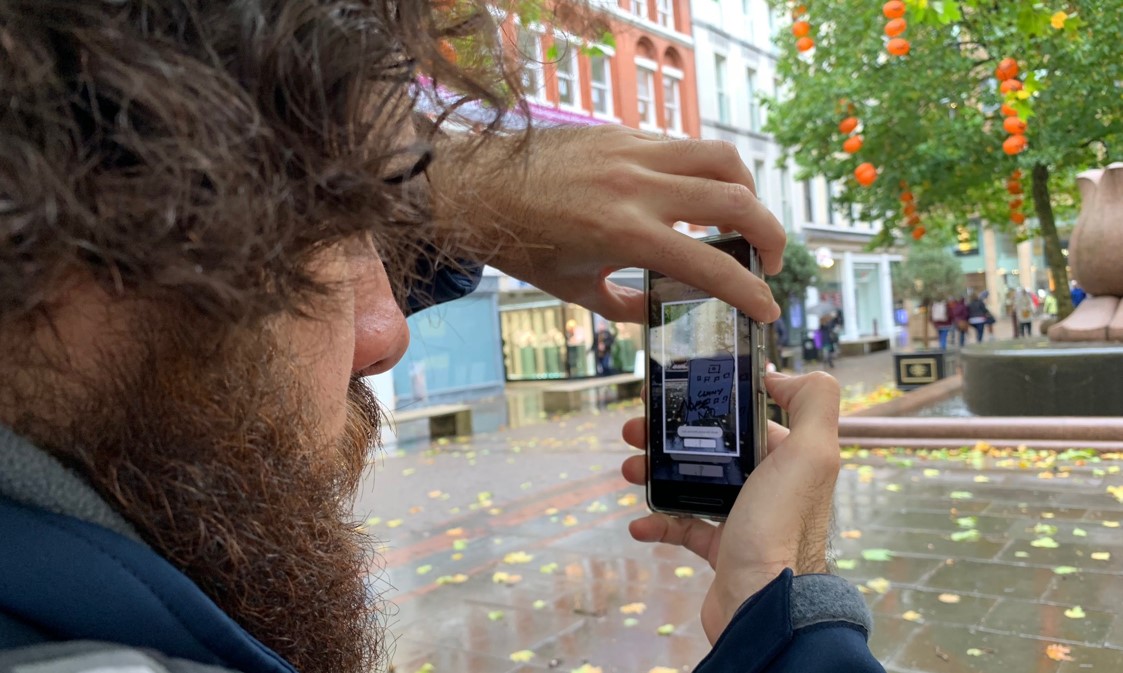
Tom Schofield is a researcher at Newcastle University's School of Arts and Cultures, specializing in Digital Cultures and Digital Media. His work bridges Augmented Reality (AR), digital humanities, and cultural heritage, focusing on creative methodologies for engaging communities with archives and spaces. Recent projects include Magical Reality , which uses AR to reinterpret children's literature archives through participatory design. Key research areas: AR, speculative design, cultural heritage, and child-centered digital interactions. Projects involve collaborations with institutions like Seven Stories: The National Centre for Children’s Books. Work explores the intersection of magical realism and technology, emphasizing imaginative engagement with physical and digital spaces. His publications highlight interdisciplinary approaches to archival digitization, participatory design, and the cultural implications of emerging technologies. While not explicitly stating formal academic awards, his funded research (e.g., AHRC/EPSRC grants) underscores his contributions to interaction design and digital humanities.
Dr. Liza-Anastasia DiCecco is an Assistant Professor in the Department of Systems Design Engineering at the University of Waterloo, where she leads the Regenerative Biomaterials Innovation Group. Her research focuses on biomimetic implant development for hard tissues, biomineralization processes, and advanced materials characterization using liquid phase electron microscopy. She holds a PhD in Materials Engineering from McMaster University and completed postdoctoral training at Penn State University supported by the NSERC Banting Fellowship. Education: PhD, Materials Engineering, McMaster University (2023) MASc, Materials Engineering, University of Windsor (2019) BASc, Mechanical Engineering, University of Windsor (2017) Research Interests: Biomaterials design for musculoskeletal applications Biomineralization mechanisms at organic-inorganic interfaces In situ liquid transmission electron microscopy (TEM) for dynamic material analysis 3D printing of functionalized medical implants Computational modeling of biomaterial behavior Awards & Recognition: 2023 NSERC Banting Postdoctoral Fellowship 2019-2022 NSERC Vanier Canada Graduate Scholarship 2024 M&M Microanalysis Society Creative Canvas Award 2023 McMaster University Fall Valedictorian Professional Affiliations: Councillor-At-Large, Microscopy Society of Canada Core Member, Waterloo Institute for Nanotechnology Member, Canadian Biomaterials Society Lab Focus: The DiCecco Team develops novel biomaterial characterization workflows linking atomic-to-macro scale structures, with emphasis on hydrated environments. Current projects explore titanium-based implants with genistein coatings and collagen mineralization mechanisms.
Kaiwen Sun is an Assistant Professor in the Luddy School of Informatics, Computing, and Engineering at Indiana University Bloomington. Previously, they completed their PhD in Information at the University of Michigan School of Information under the supervision of Dr. Florian Schaub and Dr. Chris Brooks. Their academic background includes an M.S. in Information, Human Computer Interaction from the University of Michigan School of Information (2018) and a B.S. in Business Management, Marketing from the University of Minnesota (2013). Dr. Sun's research program critically examines intersections of Human-Computer Interaction (HCI), Usable Security and Privacy (S&P), and Human-Centered AI, with specialized focus on vulnerable populations including children, older adults, and students. Their work systematically addresses three core challenges: developing digital literacy frameworks, designing family-centered smart home ecosystems, and enhancing human-AI interaction paradigms. Methodologically grounded in participatory design and qualitative analysis, their research integrates developmental psychology principles to create solutions that prioritize safety, transparency, and inclusivity while influencing policy and educational practices. Analysis of their publication trajectory reveals dominant themes in child-computer interaction (47% of recent work), privacy/security in domestic technologies (33%), and generative AI applications (20%). Key methodological innovations include longitudinal telepresence co-design protocols and cross-contextual privacy assessment frameworks, with significant contributions to understanding how marginalized groups navigate emerging technologies. Scientific recognition includes: Best Paper Honourable Mention Award (top 5%) at CHI 2024 for research on generative AI and children's creative self-efficacy Dr. Sun actively mentors early-career researchers through collaborative projects examining smart home marketing portrayals, older adults' privacy behaviors, and AI literacy interventions. Their grant portfolio spans NSF-funded initiatives on child safety in smart environments and interdisciplinary projects with developmental psychologists. Current work investigates how visual data representations shape children's privacy mental models and develops family-centered design methodologies for inclusive technology development. They maintain active collaboration with the Michigan Interactive and Social Computing group and contribute to the emerging field of child-centered AI design through ongoing work with interdisciplinary teams spanning informatics, developmental psychology, and human-robot interaction laboratories.