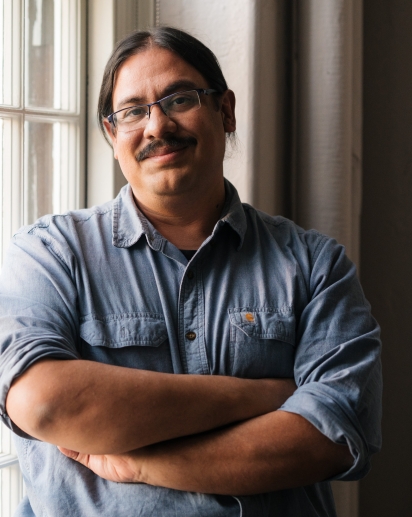
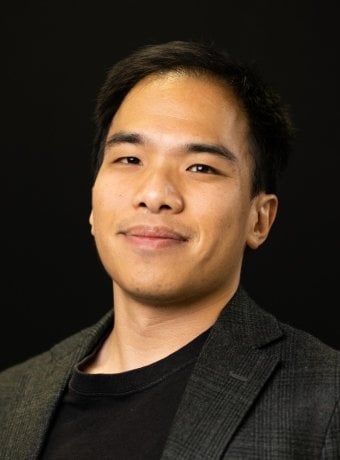
Adrian Lapico is a researcher affiliated with James Cook University , contributing to interdisciplinary projects in digital image processing and aquaculture. His work focuses on applying computational techniques to enhance selective breeding practices in marine organisms, particularly pearl oysters. Research Interests: Adrian's research bridges computer science and marine biology, emphasizing automated measurement systems, machine vision, and data-driven approaches in aquaculture. His 2019 publication at DICTA highlights applications of digital image computing for biological data analysis. Collaborative Work: He collaborates with multidisciplinary teams, including co-authors from institutions like James Cook University, to advance technologies in marine resource management.
Emily Bouck is a Professor and Associate Dean for Research at the College of Education, Michigan State University. Her research focuses on mathematics education for students with disabilities and at-risk populations, emphasizing response to intervention (RtI), virtual manipulatives, and technology integration. She holds a Ph.D. from Michigan State University. Her work addresses instructional strategies for students with disabilities, including virtual manipulatives, non-immersive VR, and evidence-based practices in math interventions. Key areas include life skills development, transition planning for students with intellectual disabilities, and online education post-pandemic. Bouck’s research spans elementary to secondary levels and explores topics like fraction instruction, algebra support, and computational fluency through games and technology. Bouck advocates for inclusive education practices and has contributed to systematic reviews on math interventions for autism spectrum disorder (ASD) and intellectual disabilities. Her studies often compare virtual and concrete manipulatives, emphasizing accessibility and generalization of skills. Recent work highlights the use of video modeling, schema-based instruction, and collaborative teacher leadership in special education settings. Her role as Associate Dean for Research underscores her commitment to advancing research in special education policies, transition services, and technology-driven solutions for students with extensive support needs.
Sameer Deshpande is an Assistant Professor in the Department of Statistics at the University of Wisconsin–Madison. His research bridges Bayesian methodology development with applications in public health and sports analytics. Prior to joining UW–Madison, he completed a postdoctoral fellowship with Professor Tamara Broderick at MIT and earned his Ph.D. in Statistics from the Wharton School under Professors Ed George and Veronika Rockova. His educational background includes undergraduate studies in mathematics at MIT and a year at Jesus College, Cambridge through the Cambridge-MIT Exchange program. His research focuses on advancing Bayesian hierarchical modeling, treed regression, and causal inference techniques, with particular emphasis on flexible tree-based methods like BART variants for complex data structures. Deshpande's recent publications reveal a strong trend toward developing scalable Bayesian methods for high-dimensional data while maintaining rigorous uncertainty quantification. His work frequently applies these techniques to sports analytics (particularly baseball and football) and public health studies examining long-term effects of adolescent sports participation. The consistent focus on methodological innovation paired with substantive applications demonstrates his dual commitment to statistical theory and real-world impact. He actively mentors graduate students at UW–Madison, requiring STAT 775 as preparation for research collaboration. His Deshpande Lab focuses on Bayesian computation and causal inference, though specific grant details are not publicly listed. Notable projects include the NFL Big Data Bowl submission analyzing quarterback decision-making using Expected Hypothetical Completion Probability. Outside academia, Deshpande maintains interests in cooking, cocktail making, and photography, while remaining a devoted fan of Dallas sports teams – often seen wearing a Texas belt buckle.
Dr. Tao (Kevin) Huang is a researcher at James Cook University's College of Science and Engineering, with expertise spanning autonomous driving, wireless communication systems, and medical imaging applications. His work integrates machine learning, sensor fusion, and multimodal data analysis to address complex challenges in vehicular networks, environmental monitoring, and healthcare technology. Research Interests: Dr. Huang's research focuses on Autonomous driving perception systems IoT-enabled vehicular networks AI for medical diagnostics and environmental sensing Signal processing and privacy-preserving communication protocols Recent Publications: His 2025 work emphasizes advancements in V2X cooperative perception, radar-LiDAR-camera fusion, and diffusion models for medical imaging. Key trends include cross-modal robustness, real-time processing for autonomous systems, and AI applications in sustainability.
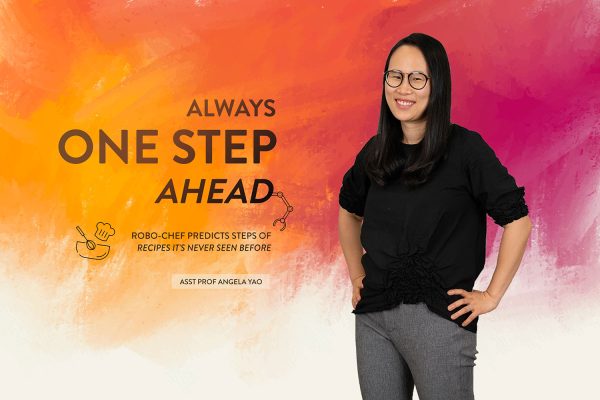
Angela Yao is a Dean's Chair Associate Professor and Assistant Dean of Research at the National University of Singapore's School of Computing, Department of Computer Science. She leads the Computer Vision and Machine Learning Group and specializes in visual perception of people, focusing on both high-level semantics of human actions and lower-level physical modeling. Her research interests span Computer Vision , Machine Learning , and Artificial Intelligence , with specific expertise in human action recognition, 3D human modeling, video understanding, and small data AI. Dr. Yao's work bridges theoretical advances with practical applications, particularly in activity anticipation and human-computer interaction. Dr. Yao's publication trends reveal a strong focus on zero-shot learning for activity anticipation, 3D human modeling, and techniques for working with limited training data. Her research has evolved from foundational work in 3D pose estimation to more recent innovations in diffusion models and cross-modal learning, demonstrating consistent contributions to advancing computer vision capabilities. NRF Fellowship for Artificial Intelligence (2019) German Pattern Recognition (DAGM) Award (2018) Dr. Yao has successfully mentored PhD students including Fadime Sener and secured significant research funding including the NRF Fellowship. Her research group focuses on developing AI systems capable of understanding and anticipating human activities with applications in robotics and human-computer interaction. She teaches CS4243 Computer Vision and Pattern Recognition and leads the Computer Vision and Machine Learning Group at NUS Computing.
Dr. Katharina Graf is a Research Fellow at the Institute of Cultural Anthropology and European Ethnology, Faculty of Linguistics, Cultures and Arts, Goethe University Frankfurt. She leads the DFG-funded ethnographic research project Cyborg Cook – Domestic Cooking in the Digital Age , investigating how digital technologies transform domestic cooking practices, knowledge reproduction, and socio-political negotiations around gender, class, and race in German households. Previously, she was a Postdoctoral Research Fellow at the SOAS Food Studies Centre, University of London, where she conducted research on bread as a measure of urban stability in Morocco, funded by the AXA Research Fund. Her educational background includes a PhD in Social Anthropology from SOAS, University of London (2016), with fieldwork in Marrakech, and a Diplom in Geography from the universities of Tübingen, Bonn, and Cologne, focusing on water supply in rural Morocco. Katharina Graf’s research lies at the intersection of cultural anthropology, food studies, gender, urban life, and science and technology studies. She explores how everyday practices—especially cooking—reflect and shape broader social, political, and technological transformations. Her work emphasizes the entanglement of material culture, digitalization, and human agency, particularly in domestic spaces. She investigates how food serves as a lens for understanding political legitimacy, social change, and human-machine relations. Her recent publications and blog posts from the Cyborg Cook project reveal a strong trend toward understanding digital domesticity through ethnographic, sensory, and feminist lenses. Themes include the role of mothers as technological pioneers, the disruption of routines by smart devices, and the multisensory experience of digital cooking practices. Her earlier work on bread in Morocco highlights how food security and culinary practices are deeply tied to political stability and state-society relations. Postdoctoral Fellowship, AXA Research Fund Principal Investigator, DFG-funded 'Cyborg Cook' project Dr. Graf has supervised undergraduate and postgraduate students at SOAS and Goethe University. While no specific grants beyond DFG and AXA are named, her role as principal investigator indicates leadership in competitive research funding. She is actively involved in academic service, including as associate book reviews editor for the FoodAnthropology Blog (Society for the Anthropology of Food and Nutrition) and former co-convenor of the Anthropology of Food Network at EASA. She disseminates research through innovative public formats such as photo exhibitions, cookery classes, and comedy clubs, reflecting a commitment to engaged scholarship. She is affiliated with the Cyborg Cook research team at Goethe University, an interdisciplinary group using ethnographic methods to study digital kitchen technologies. The project emphasizes collaborative, sensory, and participatory research approaches, often involving co-creation with participants through shared meals and observational cooking sessions.
Nathan Garland is a Lecturer in Applied Mathematics and Physics at Griffith University, Australia. He is affiliated with the Queensland Quantum and Advanced Technologies Research Institute (QUATRI) and the Centre for Quantum Dynamics. Prior to joining Griffith, Garland conducted postdoctoral research at Los Alamos National Laboratory and served as sessional teaching staff at James Cook University. Education: PhD in Electrical and Electronic Engineering and Mathematics from James Cook University B.Eng (Hons) and B.Sc in Electrical and Electronic Engineering and Mathematics from James Cook University His research focuses on computational plasma modeling, with applications in low-temperature plasmas, tokamak fusion, electron transport in liquids, and deep learning integration for plasma simulations. He combines advanced numerical methods with experimental validation to address challenges in energy systems and plasma medicine. Recent publications highlight trends in plasma physics, machine learning-driven cross-section determination, and electron transport across gas-liquid interfaces. Garland contributes to fusion energy discourse through media appearances and peer review roles in journals like Plasma Sources Science and Technology and European Physical Journal D . Grants: Quantum Mechanics: The Missing Link? - $1.2M LANL LDRD grant (2019-2021) Digitally Disrupted Demos - $7.5K Griffith Sciences grant (2022) Supervision: Principal Supervisor for PhD project 'Better Modelling of Solvents' Associate Supervisor for PhD projects on landscape evolution modeling and non-equilibrium electron scattering Collaborations: Member of Tokamak Disruption Simulation (TDS) SciDAC Center IAEA Fusion Energy Conference Program Committee member
Georgios Zouraris is a Professor at the University of Crete, where he has maintained an active research profile since earning his Ph.D. from the same institution in 1995. His work is centered in the School of Science and Engineering, focusing on advanced computational mathematics with applications in physics and engineering. Education: Ph.D. in Mathematics, University of Crete, 1995 Professor Zouraris specializes in the development and rigorous analysis of numerical methods for partial differential equations. His research spans finite element and finite difference techniques for nonlinear Schrödinger equations, logarithmic heat equations, and stochastic PDEs with space-time white noise. Key contributions include error estimation frameworks for relaxation schemes, convergence analysis of Crank-Nicolson methods, and efficiency improvements for multilevel Monte Carlo simulations. His theoretical work consistently addresses singular nonlinearities and complex domain geometries, bridging mathematical rigor with computational practicality. Analysis of his 2020-2025 publications reveals a sustained focus on high-accuracy numerical schemes for challenging PDEs, particularly those involving logarithmic singularities and stochastic forcing. Recent work demonstrates increasing sophistication in handling noncylindrical domains and coupling strategies, with applications ranging from quantum systems to material science. The publications show consistent emphasis on provable convergence rates and computational efficiency. Information regarding student advising, research grants, and laboratory facilities is not documented in the available sources. His active publication record through 2025 indicates ongoing research leadership in computational mathematics.
Dr. Lisa Jacka is an Associate Professor at the University of Southern Queensland's School of Education, specializing in curriculum and pedagogy with a focus on educational technology and virtual worlds. With over 20 years of experience, her research emphasizes innovative uses of virtual environments in teaching, including virtual reality (VR), augmented reality (AR), and hybrid learning models. She has held academic positions since 2003, including roles at Southern Cross University and James Cook University before joining USQ in 2021 as Senior Lecturer and later Associate Professor in 2025. Her qualifications include a PhD in Educational Technology from Southern Cross University (2015) and extensive teaching certifications. Jacka has been recognized with a Vice Chancellor's Citation (2015) for innovative online learning design. Research interests span virtual worlds in education, emerging pedagogies, and teacher professional development. Notable works include books like Using Virtual Worlds in Educational Settings (2018) and articles on hybrid learning frameworks and AI in education (2023-2025). She actively supervises doctoral and master’s students exploring topics like VR learning ecosystems and teacher STEM mindset development. Jacka collaborates with institutions globally, contributing to initiatives like the Australasian Society for Computers in Learning in Tertiary Education (ASCILITE). Her work bridges theory and practice, addressing challenges in rural education, digital literacy programs, and future-ready teaching strategies.
Ian J. Rhile is a Professor of Chemistry and Biochemistry and currently serves as the Department Chair at Albright College. He holds a B.S. from Ursinus College and an M.S. and Ph.D. from Cornell University. His postdoctoral work at the University of Washington preceded his appointment at Albright in 2005. Dr. Rhile’s research focuses on physical and mechanistic organic chemistry, particularly atomic orbitals and proton-coupled electron transfer. His lab investigates base-appended radical cations and their role in hydrogen abstraction from phenols, exploring how molecular structural variations influence reaction kinetics and thermodynamics. He is also dedicated to improving organic chemistry laboratory education through innovative techniques like parametric equations for orbital visualization. Dr. Rhile has received notable recognition, including the 2011 Dr. Henry P. and M. Paige Laughlin Annual Distinguished Faculty Award for Teaching and the 2013 Albright PRIDE Award. He has contributed to institutional committees such as the Middle States Reaccreditation Steering Committee and chaired the Educational Policy Council and Advisory Committee on Rank and Tenure. His service roles include faculty advisor to the Student Government Association and Pride+, underscoring his commitment to both academic excellence and campus community building. Dr. Rhile teaches a range of courses, including CHE102 (Science of Food and Cooking), CHE105/106 (General Analytical Chemistry), and CHE411/470 (Advanced Organic Chemistry and Chemical Education). He has also been involved in grant-funded research through the American Chemical Society-Petroleum Research Fund (2009-2012). His work in the Rhile lab emphasizes experimental and theoretical studies of molecular systems, with a focus on understanding fundamental chemical processes. This aligns with Albright’s mission to provide hands-on research opportunities for students, which he actively fosters through his teaching and mentorship.
Francisco R. Ortega is a researcher at Colorado State University specializing in Virtual Reality (VR) , Augmented Reality (AR) , and Human-Computer Interaction (HCI) . His work focuses on improving user experience through multimodal interaction, cognitive load theory, and immersive analytics. Recent publications explore diverse applications including: Stress reduction via VR forest bathing Instruction methods for AR-based autism support systems Annotation design in extended reality AR notifications in cooking environments Gender-swapping VR for stereotype threat mitigation Comparative studies between AR and VR for data-driven storytelling His research integrates principles from: Computer Science Psychology Human Factors Education Technology Collaborations span institutions such as University of Florida, University of Seville, and technical teams across North America. While specific educational details remain undisclosed, his 20+ peer-reviewed publications since 2018 demonstrate deep contributions to VR/AR methodology, particularly in: Unconstrained gesture elicitation Spatial transformation challenges Immersive training systems Hybrid display environments Imperfect machine learning integration
Rolando Coto Solano is an Assistant Professor of Linguistics at Dartmouth College , with an Adjunct Assistant Professor appointment in Computer Science and an Affiliate Professor role in the Quantitative Social Science Program (QSS) . He focuses on creating computational tools to document and revitalize Indigenous languages like Cook Islands Māori and Bribri. Education : PhD and MA in Linguistics from the University of Arizona; BA in Computer Science from the University of Costa Rica. Research Interests include: Natural Language Processing for Indigenous and Under-Resourced Languages Tonal Phonetics and Phonology, with a focus on tonal reduction Sociophonetics, particularly interisland variation in Cook Islands Māori Publication Trends show expertise in automatic speech recognition (ASR) for Indigenous languages, computational sociophonetics, tonal priming, and metadata standards in academic publishing. He collaborates on tools like Universal Dependencies treebanks and the ELPIS pipeline . Scientific Awards : Fulbright Foreign Student Program (Master’s Degree) National Science Foundation (NSF) Consultant Royal Society of New Zealand Marsden Fund Ship for World Youth Program (Office of the Prime Minister of Japan)
Dr. Ciarán Ó Catháin is a Lecturer in the Department of Sport and Health Science within the Faculty of Science and Health. He is actively engaged in research at the intersection of sports science, exercise physiology, and nutritional health, with a strong emphasis on athlete performance and well-being. His research interests include: Sports Science and Exercise Physiology Nutritional Science in Athletics Female Athlete Health, particularly menstrual cycle and hormonal contraceptive tracking Dietary intake and culinary nutrition among athletes Resisted sprint training and performance monitoring Systematic reviews and meta-analyses in sports interventions Application of machine learning and wearable technology in sports Dr. Ó Catháin’s recent publications demonstrate a trend toward evidence synthesis (systematic reviews and meta-analyses), interdisciplinary methodologies, and a growing focus on gender-specific considerations in sports performance. His work integrates engineering concepts such as gait analysis and phase velocity with health sciences, reflecting a cross-disciplinary approach. He also explores emerging technologies like augmented reality and synthetic data generation for performance prediction. While no formal scientific awards are listed, his research has contributed to high-impact journals including Sports Medicine , Frontiers in Sports and Active Living , and Nutrition Bulletin . His h-index of 10 and 254 citations reflect a solid and growing academic influence. There is no available information regarding student supervision, grant funding, laboratory affiliations, or collaborative teams. However, his frequent co-authorship suggests active research collaboration, particularly with researchers in sports physiology and nutrition.
Vinh Nguyen is an Assistant Professor in the Department of Mechanical and Aerospace Engineering at Michigan Technological University, where he directs the Michigan Tech Center for AI and coordinates the NIST-PREP program. His research focuses on advanced manufacturing through Industry 4.0, human-robot-machine interaction, and physics-based/data-driven modeling. He has developed solutions for machining, additive manufacturing, metal forming, and robotic assembly to promote smart and sustainable manufacturing. Prior to joining Michigan Tech in 2022, he was a National Research Council Postdoctoral Fellow at NIST (2020–2022). Dr. Nguyen earned his PhD (2020), MS in Mechanical Engineering (2017), and MS in Electrical & Computer Engineering (2017) from Georgia Institute of Technology. He received dual bachelor’s degrees in Electrical and Mechanical Engineering from Rensselaer Polytechnic Institute (2014). His research portfolio spans Advanced Manufacturing Industry 4.0 and 5.0 Human-Robot Interaction Physics-Based/Data-Driven Modeling Industrial Automation based on his lab’s interdisciplinary focus on human-centric, resilient solutions. His recent publications address trends in Machine Learning for Manufacturing Autonomous Vehicle Sensors Hybrid Additive/Subtractive Manufacturing Augmented/Mixed Reality Interfaces Industrial Robot Diagnostics Material-Specific Machining with keywords spanning Robotics, Data Science, and Industrial Engineering.
Sharon Cook is a Professor of Ergonomics and Human Factors at Loughborough University, serving as Academic Integrity Lead and Mental Health First Aider. Her career spans roles at the UK Atomic Energy Authority, Leyland DAF, and the Institute for Consumer Ergonomics. She holds fellowships from the Chartered Institute of Ergonomics and Human Factors (CIEHF) and the Higher Education Academy (FHEA). Education: BSc in Ergonomics & Business Admin, MSc in Industrial Design (Engineering). Research focuses on inclusive design, human factors in transportation, and aging populations. Key areas include Mobility-as-a-Service (MaaS), dementia-inclusive design, and ergonomic safety in vehicles. Publications highlight trends in VR for empathy modeling, inclusive service design, and accessibility challenges in public transport. Recent work explores MaaS exclusion barriers for older travelers and dementia patient participation in design. Awards include CIEHF’s 2023 Lifetime Achievement Award, 2024 Teaching Best Practice Award, and 2007 Queen’s Anniversary Prize. She actively contributes to ISO Automotive User Interest Group, SAE Human Factors Committee, and ANEC Accessibility Working Group. PhD supervision emphasizes real-world design applications. Technical expertise includes Digital Human Modelling (DHM) for field-of-view assessments and wearable simulations for occupational health awareness. Labs/Teams: Collaborates with Loughborough’s Institute for Consumer Ergonomics and SKInS project (wearable simulations for occupational health).