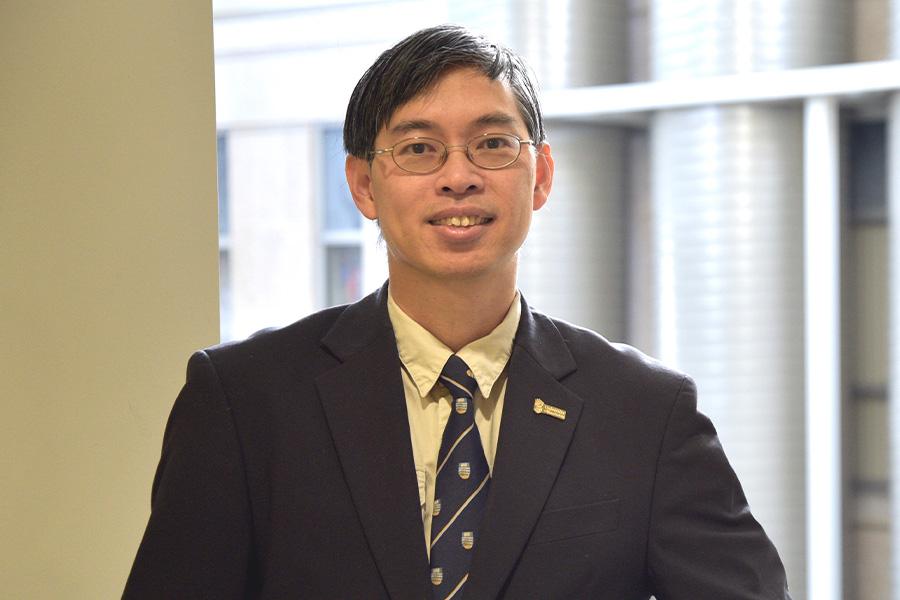
Dr. Carson Kai-Sang Leung is a Full Professor in Computer Science at the University of Manitoba's Faculty of Science. He founded and directs the Database & Data Mining Lab. His research focuses on big data science, data mining, machine learning, health informatics, and visual analytics. He holds SMIEEE and SMACM fellowships, reflecting his contributions to the field. Education: B.Sc., M.Sc., and Ph.D. from the University of British Columbia (UBC). Research interests include human-centered exploratory data mining, image databases, and scalable algorithms. He emphasizes user-driven constraints in mining processes and has developed techniques like the segment support map and OSSM for optimized frequency counting. His work on subimage queries in large image databases addresses real-world challenges in visual data retrieval. Publications span data mining, healthcare analytics, and transportation systems. His lab collaborates on projects like visual analytics for motor vehicle accidents and environmental data science for smart cities. He is affiliated with institutions such as the Institute of Industrial Mathematical Sciences (IIMS) and TRLabs. Key awards: Senior Member of IEEE (SMIEEE) and Senior Member of ACM (SMACM).
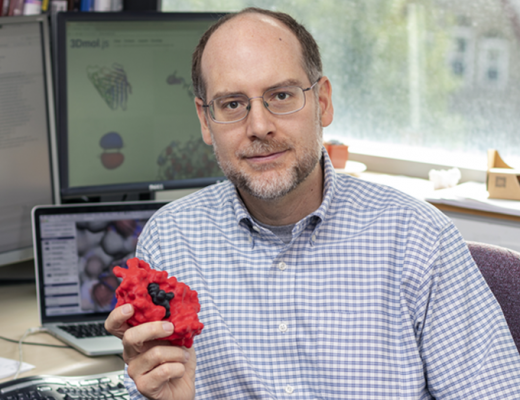
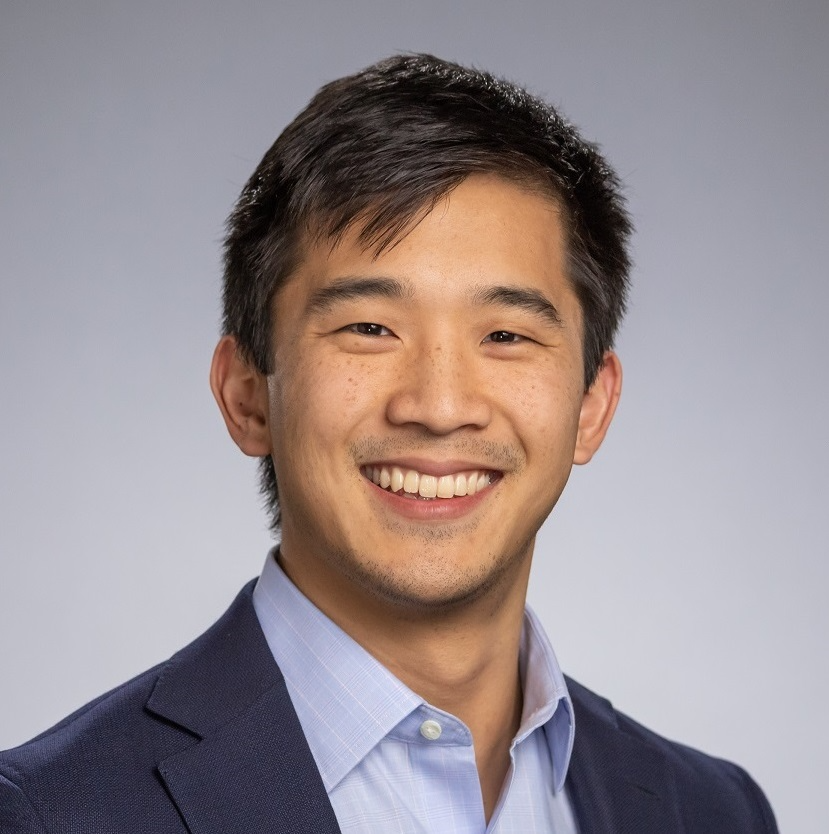
David Ryan Koes is an Associate Professor in the Department of Computational and Systems Biology at the University of Pittsburgh, affiliated with the Joint CMU-Pitt PhD Program in Computational Biology. His research focuses on computational drug discovery, deep learning, and discrete algorithms, aiming to develop novel methods for rapid drug development and open-source software tools. He holds an office at 3064 Biomedical Science Tower 3 and 748 Murdoch Building. Key roles include Associate Director of the CPCB program and leadership in initiatives like CompBio Academy. His software contributions include libmolgrid, gnina, and 3Dmol.js, which advance molecular modeling and visualization. Research interests emphasize AI-driven drug discovery, including molecular docking, pharmacophore modeling, and generative models for molecule design. Recent work involves deep learning for protein structure prediction and pharmacophore elucidation. He has secured NIH grants (e.g., R35GM140753) and collaborations with institutions like CMU and industry partners. Advising over 25 students in computational biology, biotech, and data science programs, Koes bridges academia and industry through projects like Pharmit and the Teach-Discover-Treat initiative. His lab's work spans from foundational ML research to applied drug discovery, with a focus on open science and reproducibility.
Neerav Kaushal serves as an Assistant Professor in the Department of Applied Computing at Michigan Technological University and is a member of the Institute of Computing and Cybersystems (ICC), leading the Molecular Intelligence and Drug Discovery (MIND) Laboratory where artificial intelligence advances drug design and molecular optimization. His research program integrates: Generative AI for Drug Design: Creating novel drug-like chemical structures through efficient chemical space exploration. Explainable Machine Learning: Developing transparent frameworks that link molecular representations to physical features for trustworthy predictions. Cheminformatics: Building computational pipelines for molecular property analysis and virtual screening. Chemical Language Modeling: Applying NLP techniques to SMILES/SELFIES representations to capture structure-property relationships. Molecular ADMET Prediction: Estimating solubility, toxicity, and binding affinity to reduce experimental trial-and-error. Work emphasizes representation learning to accelerate therapeutic development with synthetically feasible molecules. Scientific Awards: No awards were documented in the provided text. Dr. Kaushal mentors graduate students within Applied Computing; however, specific advisee names and research grant details were not disclosed. His MIND Laboratory directs student researchers toward AI-driven drug discovery innovation. The MIND Laboratory develops foundational algorithms for molecular generation, optimization, and predictive modeling, focusing on practical tools that bridge computational innovation with real-world therapeutic development challenges.
Pavlo O. Dral serves as Associate Professor at Xiamen University's Department of Chemistry, College of Chemistry and Chemical Engineering since 2019, following postdoctoral research at the Max-Planck-Institut für Kohlenforschung. His academic credentials include: BS (2004-2008), National Technical University of Ukraine M.Sc. (2008-2010), University of Erlangen-Nürnberg Mag. (2008-2010), National Technical University of Ukraine Dr. (2010-2013), University of Erlangen-Nürnberg Dr. Dral's research pioneers the integration of Machine Learning with Quantum Chemistry , focusing on developing the MLatom package for atomistic simulations, creating accurate NDDO-based semiempirical methods, and designing hybrid computational approaches. His work targets efficient solutions for complex physicochemical problems through innovative algorithm development. Analysis of his 15 publications (2014-2020) reveals consistent advancement in machine learning applications across quantum chemistry domains, including potential energy surface modeling, excited-state dynamics, and molecular property prediction. Key thematic trends involve hierarchical learning architectures, big data integration for quantum approximations, and methodological innovations in organic semiconductor characterization. Information regarding scientific awards, student advising, research grants, and laboratory teams is not provided in the source documentation.
Jacob Gissinger is an Assistant Professor in the Department of Chemical Engineering and Materials Science at Stevens Institute of Technology's Charles V. Schaefer, Jr. School of Engineering and Science. He leads the Gissinger Group, conducting computational research on polymer degradation, mechanical failure, and dynamic response of materials using molecular dynamics and machine learning. Education: PhD in Materials Science and Engineering from University of Colorado Boulder (2020) BS in Chemical and Biomolecular Engineering and Materials Science from University of Pennsylvania (2014) Research Focus: His work spans reactive dynamics in extreme environments, machine learning applications for material design, and collaborative development of high-performance polymer composites. Core research areas include molecular modeling of degradation processes and computational prediction of material behavior. Professional Experience: NASA Postdoctoral Fellow at Langley Research Center (2021-2023) Core developer of LAMMPS molecular dynamics software Developer of REACTER protocol for chemical reaction modeling Professional Affiliations: American Chemical Society, American Institute of Chemical Engineers, American Physical Society, Materials Research Society. Teaching: Currently instructs CHE 632 - Advanced Momentum Transfer.
Farhan Tanvir is a Lecturer in the Department of Computer Science at Georgia State University. His research focuses on graph mining applications in bioinformatics and computational biomedicine, particularly addressing challenges in drug-drug interaction prediction, drug repurposing, and disease modeling. He holds a PhD in Computer Science from Oklahoma State University and a BSc in Computer Science and Engineering from the Islamic University of Technology. His work emphasizes heterogeneous networks to model relationships between biological entities like drugs, proteins, and diseases. Recent research trends include tackling oversmoothing in graph neural networks (GNNs) through sparsification techniques and developing attention-based models for biomedical applications. His publications appear in top-tier venues such as KDD, DSAA, and ACM BCB. Tanvir has contributed to projects leveraging graph-based methods for computational biology, with a focus on predictive modeling and network analysis. His office is located at 1 Park Place, room 717.
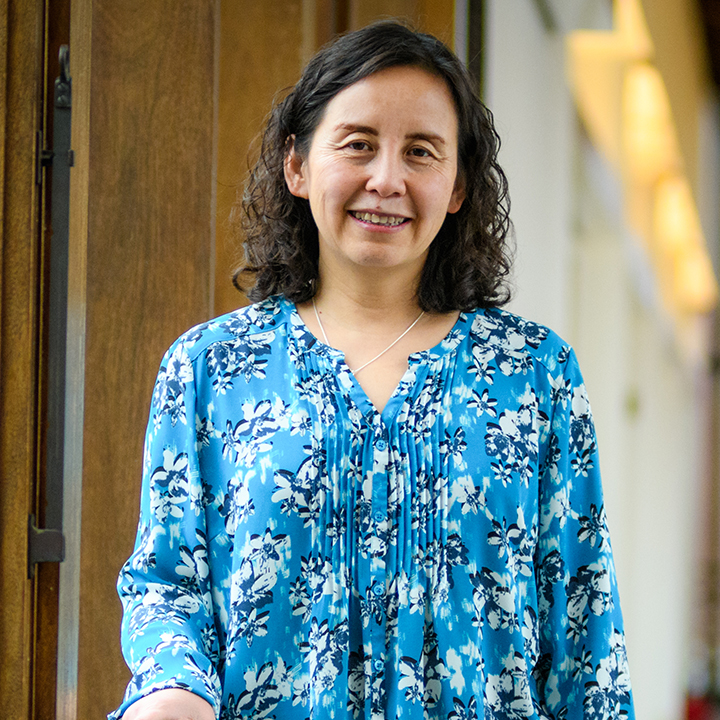
Li Han is Professor of Computer Science at Clark University's Becker School of Design and Technology, where she also directs the Data Science program. She holds a Ph.D. from Texas A&M University and M.S./B.S. degrees from Xi'an Jiaotong University. Her research spans computational protein studies, data science, and robotics, with current focus on protein dynamics and allosteric mechanisms. Her publications demonstrate consistent focus on computational approaches to biological systems, particularly protein dynamics, folding mechanisms, and conformation analysis. Recent work (2022) examines allosteric pathways in ubiquitin ligases using advanced simulation techniques. Methodological contributions include dimensionality reduction for protein conformation spaces and novel algorithms for molecular simulation. She teaches diverse courses including Introduction to Data Science, Algorithms, and Robotics, and advises student computing organizations. Her research has received funding from NSF and NIH.
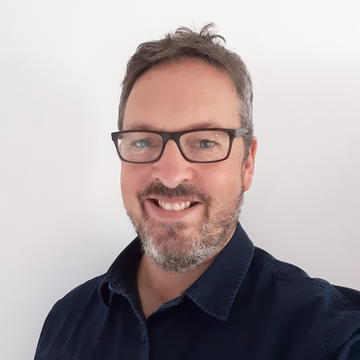
Ruaraidh D. McIntosh is an Associate Professor at Heriot-Watt University, affiliated with the School of Engineering & Physical Sciences and the Institute of Chemical Sciences. His research focuses on catalysis, polymer chemistry, and sustainable materials, with contributions to the UN Sustainable Development Goals related to sustainable consumption and production (SDG 12) and climate action (SDG 13). He has authored over 49 publications, including studies on photocatalytic CO₂ reduction, sustainable whisky production using coffee grounds, and chiral catalyst design. His work integrates computational methods like AI-driven large language models for materials discovery. He has organized conferences (e.g., RSC Scottish Dalton Meeting) and participated in workshops such as the HWU/EPFL CCU Workshop. He advises on PhD studentships (Lubrizol program) and engages in outreach activities like school lectures on bonding fundamentals. McIntosh contributes to interdisciplinary research through collaborations in materials science, environmental chemistry, and food technology. His datasets include studies on nickel and palladium catalysts for polymerization reactions, highlighting his experimental and computational expertise.
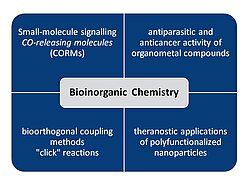
Prof. Dr. Ulrich Schatzschneider leads the Laboratory of Bioinorganic Chemistry and Inorganic Chemical Biology at the University of Würzburg's Faculty of Chemistry and Pharmacy. His research spans interdisciplinary projects at the intersection of chemistry, biology, and medicine. Research focuses on bioorthogonal "Click" reactions Development of bioactive metal complexes Design of CO-releasing molecules Application of mass spectrometry and DFT calculations Integration of cheminformatics and machine learning The international team includes members from six continents, with recent participants from Germany, Afghanistan, Egypt, Cameroon, China, Iran, Serbia, South Africa, and Spain. Prospective students must apply with transcripts and follow strict deadlines for thesis projects.
Calvin Tsay is a Lecturer (Assistant Professor) in the Computational Optimisation Group at Imperial College London, holding the BASF/RAEng Senior Research Fellowship in Scale-Bridging Modelling. Education: PhD Chemical Engineering (UT Austin 2020), BS/BA (Rice University 2015). Research develops optimization methods bridging machine learning and process systems engineering. Specializes in mixed-integer programming for neural networks and Bayesian optimization for energy applications. Awards: President's Medal for Early Career Researcher RAEng Senior Research Fellowship CACE Best Paper (2023) COIN-OR Cup (2022) Leads research on AI-driven chemical process optimization. Supervises PhD students in ML optimization and process control. Collaborates with BASF on industrial applications.
ANG Shi Jun is an Adjunct Lecturer in the Department of Chemistry at the National University of Singapore (NUS). He holds a B.Sc. (1st Class Honours) from NUS (2014), a Ph.D. from the NUS Graduate School for Integrative Sciences and Engineering (2018), and completed a postdoctoral fellowship at the Massachusetts Institute of Technology (2019–2021). His research focuses on high-throughput quantum chemistry, AI applications in chemistry, cheminformatics, and catalysis for sustainability. Key educational milestones include the Schering Plough Gold Medal (2013), A*STAR scholarships at undergraduate and postdoctoral levels, and the Chairman’s Honours List (2014). He has been recognized with the Royal Society of Chemistry Best Oral Presentation Award (2018) and secured the A*STAR Career Development Fund (2022). His research publications span topics like molecular language processing for compound databases, phase transitions in nanoparticles, and halogen bonding dynamics. His work bridges computational methods with practical applications in sustainable chemistry and materials science. ANG has received notable awards and grants, including the MIT Kaufman Teaching Certification (2020), highlighting his contributions to both research and education. While no specific lab or team is explicitly mentioned, his affiliations align with NUS’s Department of Chemistry, where he contributes to cutting-edge interdisciplinary research.
Richard Cooper is an Associate Professor of Chemistry and Head of Chemical Crystallography at the University of Oxford. His research focuses on experimental and computational methods in X-ray and neutron crystal structure analysis, with applications in materials science. He leads the Chemical Crystallography research group, maintaining the CRYSTALS analysis package. His work bridges diffraction-based structural characterization and machine learning-driven materials discovery. Research Interests: Crystal structure analysis, materials design, cheminformatics, and applications in sensors, catalysts, pharmaceuticals, and energy storage. Recent work applies drug discovery methodologies to materials chemistry for predicting crystallization propensities. Labs/Teams: Chemical Crystallography Group at the University of Oxford.
Evan Hepler-Smith is an Assistant Professor of History at Duke University's Trinity College of Arts & Sciences. He specializes in the history of modern science and technology, with research focusing on the global history of chemistry, computing, environmental health, and chemical information infrastructures. His current book project Compound Words: Chemical Information and the Molecular Ideal examines how molecular frameworks became foundational to chemical innovation and regulation. His research explores: The co-evolution of computing and molecular science since the mid-20th century Environmental justice through chemical life cycle analysis (e.g., DDT, PFAS) Epistemological shifts in chemical representation and nomenclature Transdisciplinary approaches to plastic pollution and toxicology governance Hepler-Smith holds a PhD from Princeton University (2016) and was a Ziff Environmental Fellow at Harvard. His pedagogical work includes developing intercollegiate online chemistry courses and teaching courses on information history and chemicals/health at Duke.
Yasmine Nahal serves as a Doctoral Researcher within the Department of Computer Science at Aalto University, Finland. Her position involves conducting cutting-edge research at the nexus of artificial intelligence and pharmaceutical sciences, specifically targeting the enhancement of drug discovery processes through human-AI collaboration. She is actively contributing to the development of novel computational frameworks that empower chemists with intelligent tools for molecule design and analysis. Her research expertise spans drug discovery, cheminformatics, machine learning, and human-computer interaction. Key focus areas include interpretable AI models for chemist preferences, robust detection of assay-interfering compounds, and goal-oriented molecule generation via active learning. She pioneers techniques that seamlessly integrate domain expert feedback into generative chemistry models, thereby bridging the gap between computational predictions and practical chemical intuition. Examining her publication record from 2023 to 2025, a clear trajectory emerges: advancing human-in-the-loop methodologies in drug discovery. Her contributions address critical challenges such as aligning proxy rewards with ground truth in molecular generation, creating user interfaces for expert feedback collection (Metis), and developing expert-guided augmentation strategies (E-GuARD) to improve compound screening reliability. This body of work underscores a commitment to making AI systems more transparent, reliable, and useful for medicinal chemists. No scientific awards are documented for Yasmine Nahal in the available sources. As a doctoral researcher, she is currently engaged in her PhD studies and does not supervise students. Information regarding research grants, laboratory affiliations, or team memberships was not provided in the source material.
Jamshed Anwar is Professor and Chair in Computational Chemistry at Lancaster University's Department of Chemistry, where he leads the Chemical Theory and Computation Research Group. His research spans computational chemistry, molecular simulation, and pharmaceutical sciences, with significant contributions to understanding molecular assemblies, nucleation processes, and drug delivery systems. His research interests focus on developing fundamental understanding of organic molecular assemblies through computer modeling and simulation. Key areas include self-assembly, phase transformations, crystal nucleation and growth (particularly how these processes can be modulated), nanocrystals, phase transformations in crystals, biological membranes, protein aggregation, and drug delivery systems. His work aims to develop predictive approaches for optimizing the macroscopic properties of chemical and pharmaceutical systems, reducing experimental effort through rational design. His recent publications demonstrate strong activity in computational pharmaceutical sciences, with research spanning molecular dynamics simulations of drug delivery systems, protein aggregation studies relevant to neurodegenerative diseases, force field development, and thermodynamic calculations of crystal properties. The research shows consistent focus on applying computational methods to solve pharmaceutical and materials science challenges. Jinnah Award 2009 Pfizer Award 1999 R. P. Scherer Award 1986 Fellow of the Royal Society of Chemistry Fellow of the Royal Pharmaceutical Society of Great Britain Fellow of Sidney Sussex College, University of Cambridge Visiting Professor of the Chinese Academy of Sciences Visiting Professor of the Shanghai Institute of Materia Medica Professor Anwar actively hosts academic visitors and participates in university events, as evidenced by his hosting of researchers like Jan Verlet, David Brook, and Eric Borguet between 2016-2022. His research group is multidisciplinary, welcoming researchers from chemistry, chemical engineering, physics, and pharmaceutical sciences backgrounds. He previously served as Director of Research for the School of Pharmacy at University of Bradford and has held positions at King's College London, University of Pennsylvania, AMOLF in the Netherlands, and Cambridge University. His laboratory, the Chemical Theory and Computation Research Group, focuses on molecular modeling of pharmaceutical systems, with particular emphasis on nucleation processes, membrane interactions, and drug delivery mechanisms. The group maintains strong international collaborations, as indicated by his visiting professorships in China and numerous co-authored publications with international researchers.