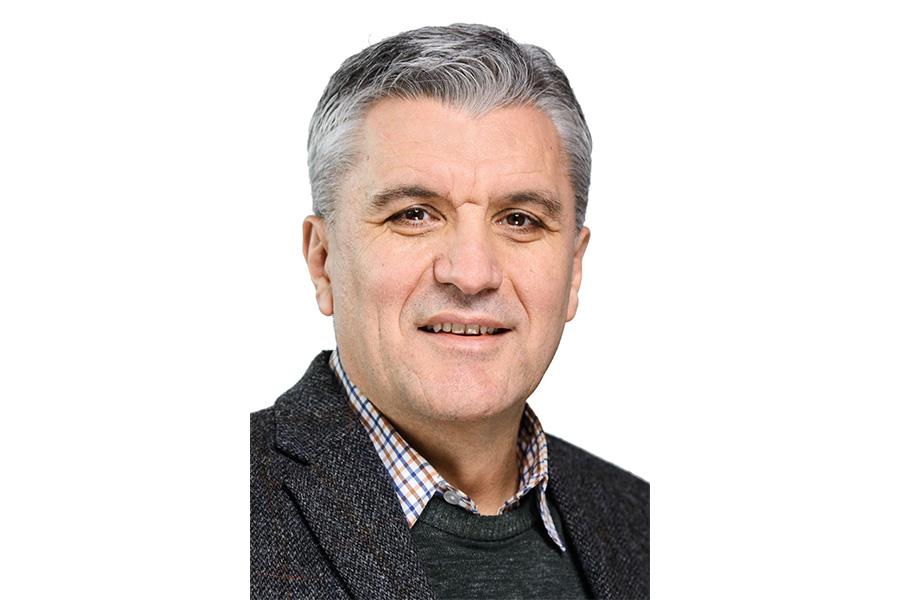
Prof. Cristian A. Strassert is a Professor of Chemistry at the University of Münster, leading the Strassert Lab focused on Coordination Chemistry and Functional Imaging. His research integrates synthesis, characterization, and application of luminescent materials, with particular emphasis on transition metal complexes (Pt, Re, Zn) for biomedical and optoelectronic applications. Key areas include photophysics, aggregation-induced emission, and hybrid materials for sensing and imaging. Affiliations: CeNTech, CiMIC, SoN Research Centers. Collaborations: Global partnerships with institutions like BAM, University of Bielefeld, Tsinghua University, and Ramon Llull University. Research interests span luminescent probes, nanomaterials, and functional polymers, with over 150 interdisciplinary publications. Notable achievements include the Goldener Brendel Award 2021 from the Chemistry Student Council. Publications emphasize design of phosphorescent Pt(II) complexes for bioimaging, photocytotoxicity studies, and hybrid nanomaterials. His work bridges chemistry with biomedical and materials science, driving innovations in optical sensors and therapeutic agents.
Nathalia Peixoto is an Associate Professor in the Department of Electrical and Computer Engineering and Affiliate Faculty in Bioengineering at George Mason University. Her work bridges neural engineering, biomedical applications, and assistive technology development with international collaborations across Israel, Ireland, Peru, and Korea. Educational background: PhD in Electrical Engineering, Universidade de Sao Paulo MS, University of Campinas Research Interests: Dr. Peixoto specializes in neural engineering with focus on brain-computer interfaces using wearable devices. Her lab develops: Neural prosthetics and implantable systems Bioimpedance-based medical sensors Low-cost electrophysiological recording platforms Community-centered engineering design solutions Publication Trends: Her 2022-2025 publications demonstrate strong interdisciplinary convergence between neuroscience, biomedical engineering, and AI. Key trends include machine learning for seizure detection in zebrafish models, electrochemical optimization of neural interfaces, and community-engaged design projects addressing societal challenges through transdisciplinary graduate training. Grants and Projects: Principal investigator for multiple NSF-funded initiatives: NRT-HDR: Transdisciplinary Graduate Training (2019-2024) Smart and Connected Communities: Networked Devices (2017-2019) Bioimpedance for retinal implants (2015-2017) C2MW: Classroom to Makers Week (2015-2016) Additional funding from VA STEM CoNNECT and Longwood University. Laboratory: The Neural Engineering Lab integrates chemistry, physics, and engineering disciplines through team-based projects involving high school to graduate students. Current work includes sustainable food-waste solutions, tremor-capturing robots for low-resource areas, and neural implants with international academic partnerships.
Professor Daniel Gryko leads a prominent research group at the Institute of Organic Chemistry, Polish Academy of Sciences, specializing in advanced functional dyes and photochemistry. His work bridges fundamental organic synthesis with practical applications in bioimaging, molecular electronics, and nanomaterials. With over 150 publications and numerous high-impact grants, including an ERC Advanced Grant and multiple Horizon Europe projects, Gryko has established himself as a leader in the field of novel chromophore design. Gryko's research focuses on developing innovative fluorescent dyes with exceptional photophysical properties, particularly exploring fluorescence of nitroaromatics, two-photon absorption phenomena, and excited-state intramolecular proton transfer (ESIPT). His group specializes in several key structural platforms including corroles, diketopyrrolopyrroles, pyrrolo[3,2-b]pyrroles, dipyrrolonaphthyridinediones, porphyrins, and coumarins. Recent work has centered on creating strongly emitting helicenes, quadrupolar dyes with unique symmetry-breaking properties, and developing specialized fluorophores for super-resolution microscopy applications. Analysis of Gryko's recent publications reveals a strong emphasis on molecular design strategies for controlling photophysical behavior. His group frequently employs π-expansion techniques, heteroatom doping, and strategic substitution patterns to tune emission properties. A significant portion of their work focuses on overcoming traditional limitations in fluorophore design, such as the non-fluorescence of nitroaromatics, through innovative molecular architectures. Gryko has received prestigious recognition including an ERC Advanced Grant for the ARCHIMEDES project targeting NIR-II emission efficiency, multiple Horizon Europe grants, and the TEAM grant from the Foundation for Polish Science supporting development of fluorescent probes for super-resolution microscopy. His group's work has resulted in numerous publications in top-tier journals including Journal of the American Chemical Society , Chemical Science , and Angewandte Chemie . Professor Gryko actively mentors a diverse research team including PhD students, postdoctoral researchers, and collaborators worldwide. His group has secured substantial funding including Horizon Europe grants for PhotoBrane and APACE projects, ERC funding, and multiple Polish National Science Centre grants. Current projects focus on developing novel fluorescent probes for super-resolution microscopy, creating bio-mimetic sunlight-pumped lasers, and designing photo-switchable membranes for molecular separation. The Gryko group operates a well-equipped laboratory focused on organic synthesis and photophysical characterization. Their work spans from fundamental molecular design to practical applications in bioimaging and materials science. Recent expansions of their research program include development of probes for detecting SARS-CoV-2 proteases, demonstrating the group's ability to pivot toward addressing pressing societal challenges.
Christopher B. Gorman is a Professor in the Department of Chemistry at North Carolina State University (NC State), affiliated with the College of Sciences. His research focuses on nanoscale materials chemistry, including synthesis of novel polymers and materials with tailored electronic and biological properties. He holds a Ph.D. from the California Institute of Technology (1991) and a B.A. in Computer Science and Chemistry from Drew University (1987). Education: Ph.D. in Chemistry, California Institute of Technology, 1991 B.A. in Computer Science and Chemistry, Drew University, 1987 Research Interests: Synthesis of conducting polymers for organic electronics Dynamic surfaces with self-regulating properties Drug delivery systems for biological barriers Nanomaterials for environmental remediation (e.g., phosphorus removal) Biomaterials with anti-fouling or antimicrobial functions Recent Publications: Focused on nanoscale materials for biomedical, environmental, and electronic applications. Key themes include quantum dots for antimicrobial materials, functionalized polymers for drug delivery, and surface coatings with controlled degradation. Labs/Teams: Leads the Gorman Research Group at NC State, mentoring students in nanomaterials synthesis and characterization. Current group members include Sam, Juliana, Dylan, Will, Quy, Carson, Lihan, and Ivan.
Nicolas Chiaruttini is a Lecturer and Scientist at École Polytechnique Fédérale de Lausanne (EPFL), affiliated with the School of Life Sciences. He serves in the BioImaging and Optics Core Facility (PTBIOP) and contributes to doctoral education through the EDMS - Teaching program. Institution: École Polytechnique Fédérale de Lausanne (EPFL) School: School of Life Sciences Department: BioImaging and Optics Core Facility Roles: Scientist, Lecturer Office: AI 0140, Building AI, Station 15, 1015 Lausanne, Switzerland Contact: +41 21 693 96 29 | nicolas.chiaruttini@epfl.ch ORCID: 0000-0003-4722-6245 Unit Websites: BioImaging and Optics Core Facility , EDMS Program His research and professional interests center on bioimaging, optics, and image processing, particularly in the context of life sciences and micro/nano-sciences. These areas are reflected in his dual role supporting advanced imaging technologies and teaching in doctoral programs. He teaches the course Image Processing for Life Science , which integrates computational techniques with biological imaging applications. While no recent publications or awards are listed in the provided text, his work is aligned with interdisciplinary research at the intersection of engineering, physics, and biology. Nicolas Chiaruttini is actively contributing to both research infrastructure and academic education at EPFL, demonstrating a commitment to advancing scientific methodology and training the next generation of researchers in quantitative imaging and analysis.
Peter Burke is a Professor of Electrical Engineering and Computer Science (joint appointments in Biomedical Engineering and Materials Science and Engineering ) at the Samueli School of Engineering, University of California, Irvine . His research bridges nanoelectronics with biotechnology , focusing on carbon nanotubes , graphene devices , and mitochondrial bioenergetics . He has received prestigious Young Investigator Awards from the Office of Naval Research and Army Research Office. Education: B.A. in Physics, University of Chicago (1992) Ph.D. in Physics, Yale University (1998) His work spans quantum electronics , high-speed semiconductor devices , and bio-nano interfaces . Recent publications highlight drone technology , mitochondrial electrical activity , and AI-driven nanoscale sensing . Research trends include terahertz spectroscopy , super-resolution imaging , and open-source medical devices like the NanoStat potentiostat . Scientific Awards Young Investigator Award, Office of Naval Research Young Investigator Program Award, Army Research Office As director of the BurkeLab , he develops nano-electronic interfaces for biological systems, including mitochondrial membrane potential assays and graphene-based biosensors . His lab's innovations in carbon nanotube arrays and scanning microwave microscopy have advanced bio-nano applications.
Jeremy Edwards serves as a Professor in the Department of Chemistry at the University of New Mexico, where he maintains an active research program at the intersection of pharmaceutical chemistry, genomics, and computational biology. His work spans multiple disciplines with a particular focus on developing innovative technologies for DNA sequencing and analysis. Professor Edwards' research interests center around Pharmaceutical Chemistry, Quantitative Biology, and Genomic Technologies. His work has significantly contributed to the fields of metabolic engineering, genome sequencing, and systems biology. He has pioneered approaches in nanopore sequencing technology and developed computational frameworks for analyzing complex biological systems. His research group has made notable contributions to understanding metabolic networks through flux balance analysis and in silico modeling, with applications ranging from bacterial metabolism to mammalian systems. Analysis of Professor Edwards' publication record reveals a strong trend toward developing cutting-edge genomic technologies and computational approaches for biological analysis. His recent work focuses on spatial transcriptomics, nanopore sequencing innovations, viral genome surveillance, and target illumination for drug discovery. The publications demonstrate a consistent trajectory from foundational metabolic modeling work toward increasingly sophisticated genomic technologies and applications in drug target identification and validation. Professor Edwards has established himself as a leader in computational genomics with an extensive publication record including highly cited papers such as "In silico predictions of Escherichia coli metabolic capabilities are consistent with experimental data" (1297 citations) and "The Escherichia coli MG1655 in silico metabolic genotype: Its definition, characteristics, and capabilities" (1295 citations). His work on metabolic modeling has been particularly influential in systems biology. As an active researcher, Professor Edwards has mentored numerous students and collaborators, though specific student names aren't documented in the available materials. His research has attracted significant funding supporting the development of genomic technologies and computational approaches. His laboratory appears to focus on the intersection of bioinformatics, molecular biology, and engineering, with particular emphasis on next-generation sequencing technologies and their applications. Professor Edwards leads a research group that integrates computational modeling with experimental approaches to tackle challenges in genomic analysis and metabolic engineering. His team has developed innovative tools like the Sentieon Genomics Tools, described as "a fast and accurate solution to variant calling from next-generation sequence data." The group's work spans from fundamental research on DNA sequencing technologies to applied projects in viral surveillance and drug target identification.
Dr. Giancarlo Pascali is a Conjoint Associate Professor at the School of Chemistry, UNSW Sydney , and Radiochemistry Team Leader at ANSTO's Camperdown cyclotron site. With a PhD in "Innovative Biomedical Technologies" from the University of Lecce (2004), he has held research positions at IFC-CNR , NIH , and GMP facilities in Milan and Pisa. His expertise spans radiochemical methods , radiopharmaceutical development , and microfluidic automation for nuclear medicine production. Education: PhD in Innovative Biomedical Technologies, University of Lecce (2004) BSc in Chemistry, University of Pisa (2001) Research interests focus on M 3 : Molecules, Methods, Machines . In Molecules , he designs radiopharmaceuticals for cancer , dementia , and inflammatory diseases . For Methods , his work explores photochemistry , electrochemistry , and mechanochemistry to label biomolecules with 18 F and other isotopes. Under Machines , he pioneers microfluidic systems for automated radiochemistry, emphasizing safety and process reliability . Editorial & Leadership Roles: Editorial Board Member of Nuclear Medicine and Biology , Contrast Media & Molecular Imaging , and Current Radiopharmaceuticals Executive Board of ANZSNM , ARTnet , and ASMI Asia-Oceania Director and iSRS2025 Chair for SRS
Professor Pascal Fua is a distinguished faculty member at EPFL (Swiss Federal Institute of Technology) in the School of Computer and Communication Science. He joined EPFL in 1996 and currently serves as Head of the Computer Vision Laboratory (CVLAB). His extensive research spans multiple cutting-edge areas in computer vision and geometric deep learning, with applications ranging from 3D reconstruction to medical imaging and aerodynamic optimization. Dr. Fua's research interests encompass Computer Vision, 3D Reconstruction, Shape Modeling, Geometric Deep Learning, Medical Image Analysis, Augmented Reality, Motion Recovery, Surface Mesh Processing, and Aerodynamic Shape Optimization. His work demonstrates a remarkable ability to bridge theoretical computer vision with practical applications across diverse domains. His research has evolved from traditional geometric computer vision techniques to incorporating deep learning approaches for 3D modeling, with recent focus on differentiable rendering, implicit surface representations, and applications in medical imaging and engineering design. His publication record shows a consistent trajectory of high-impact research, with recent work focusing on differentiable iso-surface extraction, geometric deep learning for aerodynamic shape optimization, and novel approaches to 3D reconstruction. His work spans both theoretical advances in computer vision algorithms and practical applications in medical imaging, autonomous driving, and computational fluid dynamics. IEEE Fellow Multiple ERC Grants recipient Associate Editor of IEEE Transactions for Pattern Analysis and Machine Intelligence Throughout his career, Professor Fua has mentored numerous PhD students who have gone on to make significant contributions in computer vision and related fields. His laboratory has established collaborations across multiple disciplines, including medical imaging, aerospace engineering, and neuroscience, demonstrating the broad applicability of his research. His current work continues to push the boundaries of geometric deep learning and 3D vision, with particular emphasis on making these techniques more practical and applicable to real-world engineering and medical problems.
Aleksandra Radenovic is a Full Professor at École Polytechnique Fédérale de Lausanne (EPFL) holding multiple positions across the institution. She is a Full Professor at the Laboratory of Nanoscale Biology (LBEN) within the School of Engineering (STI), a Full Professor in Teaching at the School of Life Sciences (SV), and a Full Professor in Teaching at the School of Engineering (STI). Additionally, she serves as Co-Director of both the IBI-STI and IBI-SV administrative units, and is a Member of both the STI School direction and SV School direction. Dr. Radenovic received her PhD from the University of Lausanne in 2003, where she worked with Prof. Dietler in the Laboratory of Physics of Living Matter. Prior to that, she studied physics at the University of Zagreb from 1994-1999, and completed her baccalaureate at a Classical gymnasium in 1994. She conducted postdoctoral research at the University of California, Berkeley from 2004-2007 in the group of Prof. Liphardt. Her research focuses on single molecule biophysics, with particular emphasis on developing techniques and methodologies based on optical imaging, biosensing, and single molecule manipulation. Her laboratory works on three major research directions: (i) developing and using nanopores as platforms for molecular sensing and manipulation, particularly solid-state nanopores in glass nanocapillaries and 2D-material membranes; (ii) studying biomolecular function, especially protein and nucleic acid interactions, using force-based manipulation techniques like optical tweezers and Anti-Brownian Electrokinetic traps; and (iii) developing super-resolution optical microscopy based on single molecule localizations for quantitative cellular imaging. Her work bridges physics, engineering, and biology to create innovative tools for understanding molecular processes at the nanoscale. Analysis of her recent publications reveals a strong focus on nanofluidics, 2D materials (particularly MoS 2 and hBN), nanopore sensing, super-resolution microscopy, and the development of novel instrumentation for biophysical applications. Her research demonstrates increasing interdisciplinary collaboration, integrating materials science, nanotechnology, and biological applications to address fundamental questions in molecular biophysics. Dr. Radenovic has received numerous prestigious awards and grants, including: 2021: ERC Advanced Grant 2021: Optica Fellow 2016: CCMX Materials challenge award 2015: SNSF-ERC Consolidator Grant 2010: ERC Starting Grant 2003: SNSF Fellowship She has successfully advised numerous PhD students whose research spans single molecule biophysics, nanofluidics, and optical techniques. Her laboratory, the Laboratory of Nanoscale Biology (LBEN), is well-equipped for advanced biophysical research, with capabilities in nanopore fabrication, optical trapping, super-resolution microscopy, and 2D materials characterization. Dr. Radenovic has secured significant research funding through competitive grants, including multiple ERC grants, which have supported her innovative research program at the intersection of physics, engineering, and biology.
Maeva Dhaynaut is an Instructor in the Department of Radiology & Biomedical Imaging at Yale School of Medicine. Her academic appointment is within the Division of Bioimaging Sciences, focusing on positron emission tomography (PET) research and applications. Dr. Dhaynaut's research spans multiple areas of molecular and neuroimaging, with particular emphasis on: Development and application of PET radiotracers for neurological disorders Tau imaging in Alzheimer's disease and related neurodegenerative conditions Opioid receptor imaging and neuropsychiatric applications Quantitative imaging methods and kinetic modeling Novel radiopharmaceutical development for CNS targets Her recent publications demonstrate strong expertise in tau PET imaging with tracers like [18F]MK6240, with applications ranging from Alzheimer's disease to sports-related neurodegeneration in former football players. She has also made significant contributions to opioid receptor imaging and potassium channel imaging. Dr. Dhaynaut frequently employs advanced computational methods including diffusion models and Bayesian approaches for kinetic parameter estimation in dynamic PET imaging. Dr. Dhaynaut's collaborative research network includes prominent scientists such as Georges El Fakhri, Marc David Normandin, and Nicolas Guehl. Her work spans from basic radiopharmaceutical chemistry through preclinical validation to clinical applications, demonstrating a comprehensive translational research approach.
Sheng Li is an Associate Professor of Cancer Biology at the University of Southern California's Keck School of Medicine. She co-leads the Epigenetic Regulation in Cancer Program at the Norris Comprehensive Cancer Center. Her research integrates multi-omics and computational approaches to study epigenetic heterogeneity in blood cancers, aging, and clonal hematopoiesis. Her lab focuses on single-cell spatial multi-omics, 3D epigenomics, and long-read sequencing to map epigenetic drivers of leukemogenesis. Awards include the Leukemia & Lymphoma Society Scholar Award and AACR NextGen Star recognition. She mentors PhD students and postdocs, with her team publishing extensively in high-impact journals. Her publications demonstrate a strong emphasis on computational epigenetics, cancer systems biology, and geroscience. Recent work includes developing tools for spatial transcriptomics interpretation and modeling IDH-mutant AML gene networks.
Dr. Thomas Spallek is a Junior Group Leader leading the Plant Biotic Interactions Group at Georg-August University Göttingen, Germany. His research focuses on functional genetics of parasitic plants, interspecific signaling, and haustoria formation mechanisms. Previously, he held roles as Project Leader (2019–2022) and Postdoc (2018–2019) at the University of Hohenheim, with postdoctoral experience at RIKEN (Japan) and The Sainsbury Laboratory (UK). Education: PhD in Plant Biology (Max Planck Institute, Cologne, 2011), Diploma in Biology (University of Konstanz, 2008). Research Interests: Parasitic plant genetics and host interactions Cytokinin signaling in plant-pathogen relationships Cellular and molecular mechanisms of haustorium development Publications span plant-parasite signaling, hormonal regulation, and genomic studies of parasitic weeds. Notable collaborations include work on Striga asiatica genome analysis and cytokinin-driven virulence factors. He is affiliated with the International Research Training Group 2172 - PRoTECT and coordinates the Plant Biotic Interactions research group. His work integrates molecular genetics, bioimaging, and computational tools to dissect plant defense and parasitic strategies.
Nediljko Budisa is a Professor and Tier 1 Canada Research Chair in Chemical Synthetic Biology and Xenobiology at the University of Manitoba's Faculty of Science, Department of Chemistry. His research program focuses on expanding the fundamental biochemical capabilities of living systems through genetic code engineering and synthetic biology approaches. Dr. Budisa's research spans multiple cutting-edge areas in synthetic biology, with particular emphasis on genetic code expansion , non-canonical amino acid incorporation , and protein engineering . His laboratory employs both classical biochemical techniques and advanced computational methods to develop orthogonal translation systems, engineer novel enzymes, and create synthetic cells with expanded biochemical repertoires. His work bridges chemistry, biology, and engineering to address fundamental questions about life processes while developing practical applications in biotechnology and medicine. Analysis of Dr. Budisa's publication record reveals a consistent trajectory of innovation in genetic code engineering, with recent work increasingly integrating machine learning approaches for protein design. His research spans from fundamental studies of protein structure-function relationships to applied research in metabolic engineering and antiviral strategies, demonstrating the versatility of synthetic biology approaches. Tier 1 Canada Research Chair in Chemical Synthetic Biology and Xenobiology Dr. Budisa leads an active research program supported by his Canada Research Chair position, with extensive collaborations across Canada and internationally. His work has resulted in numerous patents and commercial applications in biotechnology. He actively participates in the synthetic biology community through initiatives like Prairie iGEM BioExM and has delivered public lectures on methodological challenges in expanded genetic code research. His research is conducted through the Chemical Synthetic Biology and Xenobiology laboratory at the University of Manitoba, where his team explores the social, cultural, educational, ethical and philosophical aspects of synthetic biology alongside technical innovations, reflecting a comprehensive approach to advancing this transformative field.
Dr. Yonas Tekle is a Professor of Biology at Spelman College, where he has been a faculty member since 2010. His research laboratory at the Albro-Falconer-Manley Science Center focuses on evolutionary approaches to understanding microbial diversity and infectious diseases. Dr. Tekle received his educational training at prestigious institutions: Ph.D. from Uppsala University, Sweden B.S. from University of Asmara, Eritrea Dr. Tekle's research program implements fundamental principles of evolution to investigate the diversity, origins, and relationships of both medical and non-medical microbes. He is particularly fascinated by interdisciplinary research approaches that address challenging questions affecting everyday life. His laboratory specializes in integrating bioinformatics and phylogenetics with mathematical modeling to understand the evolution and epidemics of infectious diseases. This multidisciplinary approach bridges microbiology, evolutionary biology, computational methods, and public health applications. Analysis of Dr. Tekle's publication record reveals a strong focus on two primary research trajectories: amoeboid organism systematics and evolutionary biology, and mathematical modeling of infectious disease transmission. His earlier work established him as an expert in amoeboid taxonomy and phylogenetics, with numerous publications describing new species and elucidating evolutionary relationships within Amoebozoa. More recently, his research has expanded to include genomic analyses of microbial organisms and sophisticated mathematical models of infectious disease dynamics, particularly focusing on antibiotic-resistant pathogens and vaccination strategies. Dr. Tekle teaches a range of courses including Biological Communities, Evolution and Biodiversity (Bio 110), Cellular & Molecular Biology (BIO 471), Microbial Origins Research (BIO 416), and specialized courses on Microbial Diversity and Evolution (SBIO 491N). He also mentors undergraduate research through SBIO 491. While specific grant information isn't provided in the available materials, his extensive publication record suggests successful research funding and active laboratory operations. Dr. Tekle's laboratory appears to be an active research environment focused on evolutionary microbiology, with particular expertise in amoeboid organisms and infectious disease modeling. His work bridges fundamental evolutionary questions with practical applications for understanding and controlling infectious disease transmission.