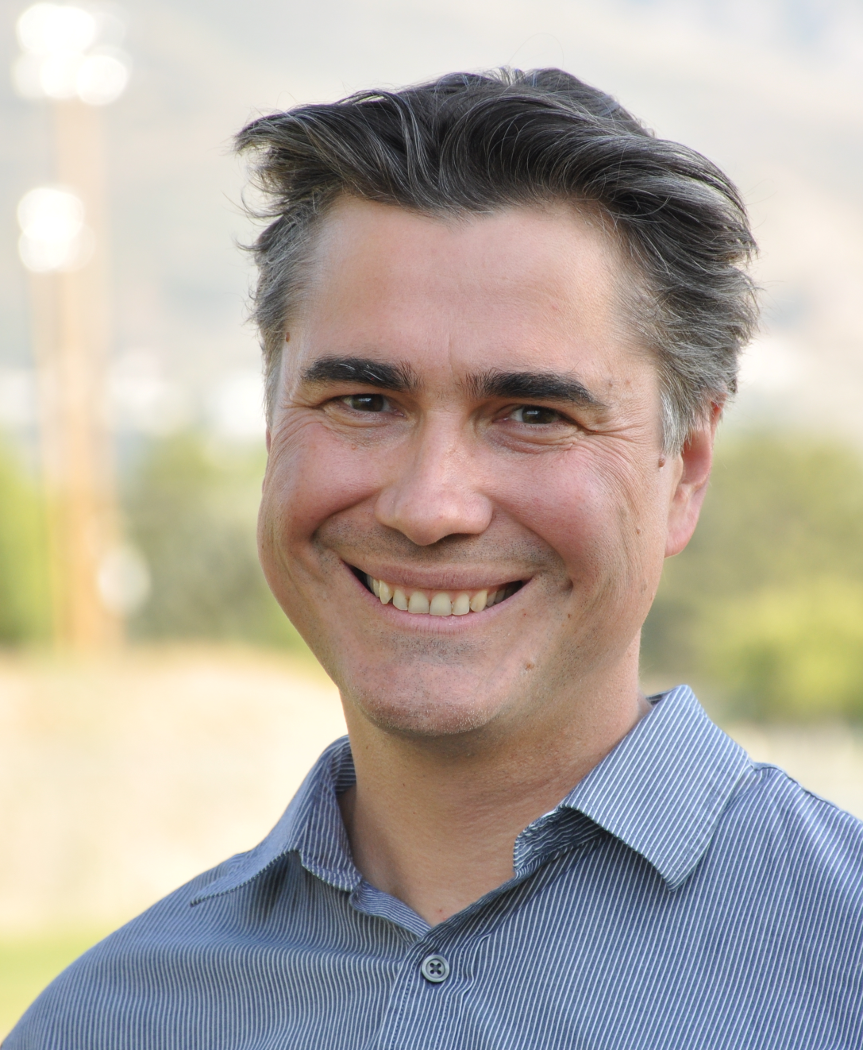
Anton Burtsev is an Associate Professor at the Kahlert School of Computing, University of Utah. His research focuses on redefining operating system architectures to address modern challenges like security attacks, data center workloads, and heterogeneous hardware. He leads the Mars Research Group, developing systems like the formally verified Atmosphere microkernel in Rust/Verus, and the high-performance DRAMHiT hash table. Key projects include Rust for Linux kernel integration, verified drivers (Veld), and isolation mechanisms like RedLeaf OS. Research interests include kernel isolation, formal verification, language safety (Rust), and overcoming the memory wall. Current work emphasizes clean-slate OS designs and retrofitted security solutions for existing kernels. Collaborative projects include Horizon (secure scientific cloud computing) and RedLeaf OS verification efforts. Advising undergraduate to PhD students interested in OS research. Notable grants include NSF CAREER (NgOS) and collaborative NSF grants on verified systems. Active in the MARS reading group and open-source contributions via repositories.
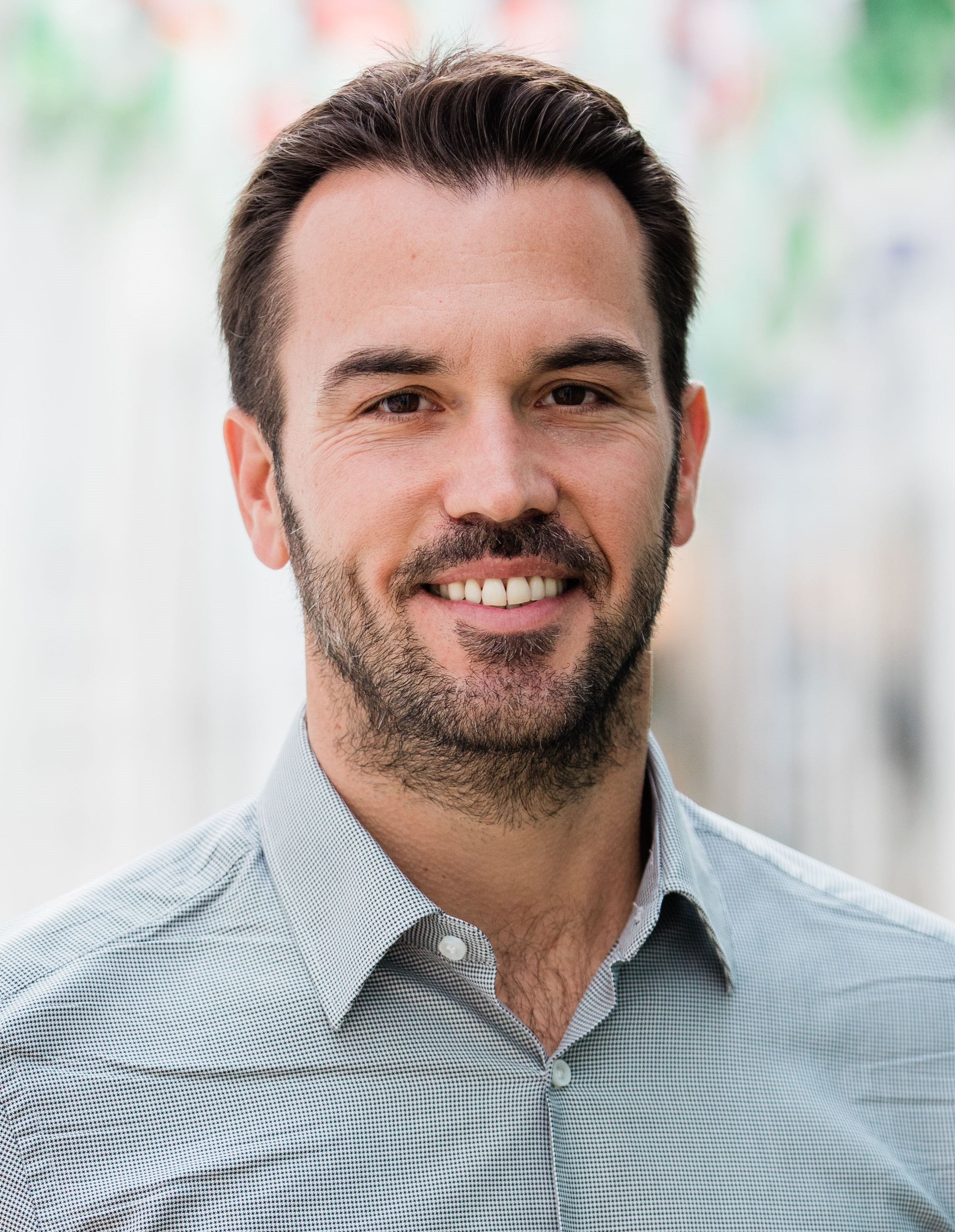
Georgios Alexandropoulos is an Associate Professor in the Department of Informatics and Telecommunications. He received the Best Paper Award at the IEEE VTC2025-Spring conference in Oslo, Norway, for his work on multi-task domain adaptation in edge-intelligence networks. His research focuses on edge computing, network optimization, and machine learning applications in telecommunications. Key contributions include advancing computation offloading techniques for edge systems, leveraging domain adaptation to improve efficiency in distributed networks. His 2025 award-winning paper addresses critical challenges in intelligent edge networks, showcasing interdisciplinary innovations at the intersection of AI and telecommunications infrastructure. Awards: IEEE VTC2025 Best Publication Award Key Article: Published in Proc. IEEE VTC-Spring 2025 (Oslo)
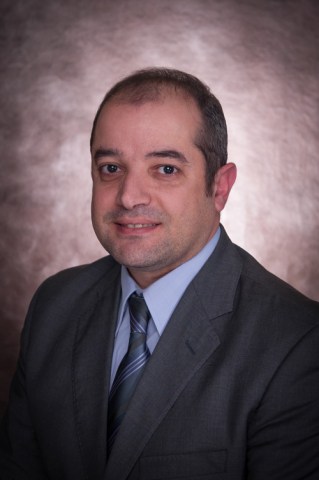
Emily Walshe is an Associate Professor at the B. Davis Schwartz Memorial Library and an Adjunct Professor in the College of Information and Computer Science at Long Island University. She serves as a Reference Librarian and is actively involved in academic discourse on digital culture and information technologies. Research Interests: Her work centers on digital ethnography, informatics, and the societal impact of digital technologies. She critically examines the role of libraries in the digital age, cognitive effects of technology reliance, digital literacy, and the ethics of digitization. Her scholarship often bridges library science with broader philosophical and educational concerns. Publication Trends: Her publications, appearing in journals like portal: Libraries and the Academy and The Christian Science Monitor , reflect a consistent theme: a critical interrogation of how digital tools reshape knowledge, memory, and academic practice. She emphasizes caution against uncritical adoption of technology in education and research. Scientific Awards: Member, Beta Phi Mu International Library and Information Studies Honor Society Phi Eta Sigma, National Honor Society for Freshman Scholarship Advising and Grants: While no formal advisees or grant funding are mentioned in the text, her active participation in honors education conferences suggests engagement with mentored learning and academic development. She is affiliated with the National Collegiate Honors Council and the National Coalition Against Censorship, indicating a commitment to academic freedom and intellectual inquiry. Labs and Teams: No specific labs or research teams are mentioned. However, her work in digital library interoperability and academic self-documentation implies collaboration within library and information systems communities, particularly around initiatives like RePEc.
Abhishek Roy is a researcher at Samsung Electronics, Suwon, South Korea , with a PhD in Software Department, Sungkyunkwan University (2010) . His work focuses on 5G/6G wireless networks , Internet of Things (IoT) , and machine learning-based network optimization . His research interests span beamforming , discontinuous reception (DRX) , device-to-device (D2D) communication , and network slicing , often integrating AI/ML for predictive analytics. Key contributions include optimizing NR-Unlicensed spectrum , enhancing V2X communication efficiency, and developing O-RAN frameworks for future networks. Recent publications analyze cross-frequency beam prediction (2024), GPS-based beam selection (2023), and predictive service automation in O-RAN (2022). His work intersects network resource management with smart grid integration and disaster connectivity .
Dr. Xiaoyi Lu is an Associate Professor in the Department of Computer Science & Engineering at the University of California, Merced (UC Merced), where he founded and directs the Parallel and Distributed Systems Laboratory (PADSYS Lab). He is affiliated with the AgAID Institute since 2023 and has authored over 170 publications, including ten Best Paper Awards or Nominations (e.g., SC 2019, IPDPS 2024). His research outcomes like OpenDOTA and MVAPICH2-Virt are used by hundreds of organizations globally. Research Interests: He focuses on scalable parallel systems for HPC, Big Data, AI, Cloud, and Edge Computing, leveraging advanced technologies like RDMA/PMEM/NVMe/GPU/DPU. His work bridges high-performance computing with applications in precision agriculture, biostatistics, and digital twin technology. Article Trends: Recent publications emphasize DPU offloading, compression-optimized collective communication, error detection in HPC, and scalable Bayesian group testing. Topics span GPU clusters, NVMe-over-Fabrics, and adaptive networks for LLM training, reflecting his expertise in heterogeneous architectures and distributed systems. Scientific Awards: NSF CAREER Award (2024) Amazon Research Award (2023) Google Research Award (2022) Meta Faculty Research Award (2022) Multiple Best Paper Nominations Professional Activities: He serves as Associate Editor for Frontiers in High Performance Computing and organizes tracks at SCAsia and HiPC. His leadership in PADSYS Lab drives innovation in systems for social good.
Francisco J. Andújar Muñoz is an Associate Professor at the University of Valladolid in the Department of Computer Science since January 2024. His career spans multiple institutions including Universidad de Castilla-La Mancha (2008-2015) and Universitat Politècnica de València (2017-2018), with academic roles ranging from Research Assistant to Juan de la Cierva Formación Researcher. PhD in Advanced Computer Science Technologies (2011-2015) MsC in Advanced Computer Science Technologies (2010-2011) Computer Science Engineering (2008-2010) Computer Science Technical Engineering (2004-2008) His research focuses on high-performance interconnection networks , with significant contributions to quality-of-service mechanisms, energy-efficient network topologies, and heterogeneous programming optimization. He maintains the open-source VEF Traces framework for network workload modeling. Recent publications (2023-2025) demonstrate expertise in FPGA high-level synthesis portability, SYCL-based GPU optimization, and machine learning applications for Twitch streaming analysis. His work combines theoretical network design with practical implementations in the Journal of Supercomputing and IEEE Transactions on Computers .
Constandinos Mavromoustakis is a Professor at the Department of Computer Science, University of Nicosia (School of Sciences and Engineering). He leads the Mobile Systems Lab (MOSys Lab) and holds leadership roles in IEEE, including Vice-Chair of the Cyprus Section and Chair of the Computer Society Chapter. He actively contributes to IEEE Communications Society committees and standardization groups like IEEE-SA SCC42 WG2040. Education includes: Dipl.Eng in Electronic and Computer Engineering from Technical University of Crete MSc in Telecommunications from University College London PhD from Aristotle University of Thessaloniki His research integrates Mobile Systems, IoT, and Wireless Communications, with emphasis on: 5G/6G network security using AI-driven strategies Resource optimization in cloud-edge ecosystems UAV-assisted networks for critical infrastructure Healthcare applications via IoMT and data analytics Recent publications (2024-2025) demonstrate strong focus on securing next-gen networks (O-RAN, 6G), optimizing edge computing for VR/IoT, and advancing smart healthcare/cities. Dominant themes include Deep Reinforcement Learning, quantum-inspired optimization, and latency minimization techniques. He participates in EU-funded initiatives including FP7, H2020, Eureka, and national projects. Industrial collaborations include consultancy for Intel Corporation. He directs the MOSys Lab, which researches mobile systems, IoT interoperability, and network security, with projects spanning UAV communications, medical IoT, and sustainable computing.
Professor Yue Chen is a distinguished academic at the School of Electronic Engineering and Computer Science , Queen Mary University of London , holding the title of Professor of Telecommunications Engineering and serving as Director of Education . With expertise in wireless networking and smart energy systems, his research bridges theoretical innovation with practical applications in telecommunications infrastructure. BEng, MEng, PhD Member of Institution of Engineering and Technology (MIET) Senior Member of IEEE (SMIEEE) His research interests focus on Intelligent Radio Resource Management for wireless networks, cognitive and cooperative networking, heterogeneous networks (HetNet), smart energy systems, and Internet of Things (IoT) integration. His work emphasizes machine learning-driven optimization for next-generation communication systems and energy-efficient networks. Recent publications highlight trends in reinforcement learning for UAV-NOMA networks , energy-efficient IoT systems , and data-driven educational methodologies . These demonstrate cross-disciplinary innovation, merging telecommunications research with pedagogical experimentation and smart grid optimization.
Voravit Tanyingyong is a Lecturer at Kungliga Tekniska Högskolan (KTH Royal Institute of Technology) working in the Division of Communication Systems within the School of Electrical Engineering and Computer Science. He has been working at KTH since 2003, demonstrating a long-standing commitment to the institution. His contact information includes telephone number +46 8 790 42 08 and email voravit@kth.se, with his office located at Malvinas Väg 10. Dr. Tanyingyong received his PhD in Information and Communication Technology from KTH in 2021, with his doctoral thesis titled "Performance, Availability, and Scalability in Open Networking Platforms for Internet Services." Prior to that, he completed his Licentiate thesis at KTH in 2014 titled "Performance and Reliability in Open Router Platforms for Software-Defined Networking," establishing a strong foundation in networking research. Dr. Tanyingyong's research interests span computer systems, network applications, protocols, architectures, and the Internet of Things (IoT). His work demonstrates a consistent focus on practical implementations of networking technologies with applications in various domains including environmental monitoring, healthcare, and smart grids. His research bridges theoretical networking concepts with real-world implementations, particularly in the area of IoT systems where he has developed testbeds for air quality monitoring and smart grid applications. A significant portion of his work addresses performance, reliability, and scalability challenges in modern networking environments. Analysis of Dr. Tanyingyong's publication history reveals a clear evolution in his research focus. Early work centered on router/server performance and OpenFlow switching, reflecting the emergence of Software-Defined Networking. More recently, his research has shifted toward IoT applications, with publications on scalable IoT sensing systems, air quality monitoring, and IoT for smart DC grids. His work consistently addresses practical implementation challenges while maintaining theoretical rigor, with a particular emphasis on system performance, reliability, and scalability. The interdisciplinary nature of his research connects computer networking with environmental science, healthcare, and energy systems. Advanced Internetworking (IK2215) - Teacher Internet of Things (IK1332) - Teacher Networks and Communication (IK1203) - Teacher Ethics and Sustainable Development for Engineers (II2210) - Course Responsible Projects and Project Methods (II1302) - Course Responsible Multiple degree projects as examiner across Computer Engineering, Computer Science and Electrical Engineering specializations Dr. Tanyingyong has established himself as a dedicated educator who bridges theoretical networking concepts with practical implementations. His teaching portfolio reflects his research expertise while covering essential networking fundamentals and emerging IoT technologies. As course responsible for Ethics and Sustainable Development for Engineers, he demonstrates commitment to broader engineering principles beyond technical skills.
Anders Västberg is a Lecturer at KTH Royal Institute of Technology within the Department of Communication Systems. His work spans teaching and examination roles across various courses in computer science, electrical engineering, and information and communication technology (ICT) innovation, including Wireless Communication Systems , Mobile Networks , and Programming of Parallel Systems . Teaches courses like Internet of Things and Introduction to Computer Security . Examiner for advanced-level degree projects in embedded systems and communication systems. Focuses on wireless networking, heterogeneous networks, and energy-efficient network design. His research interests include energy efficiency in telecommunications , green radio systems , and network optimization . Recent work explores power consumption in backhaul systems , heterogeneous network deployment , and signal propagation in ionospheric channels . Articles highlight trends in green networking , starting with 2016 studies on cell DTX and heterogeneous networks , followed by 2013 work on backhaul optimization and wideband efficiency . Earlier papers (1997–2008) focus on ionospheric signal distortion and HF channel analysis .
Dr. Marios Avgeris is an Assistant Professor at the Informatics Institute, University of Amsterdam, affiliated with the Multiscale Networked Systems (MNS) group. His research focuses on next-generation network orchestration using machine learning and control theory to develop self-adaptive architectures for 5G/6G networks, edge robotics, and IoT systems. He collaborates with industry partners including Ericsson and holds a PhD from the National Technical University of Athens. Education: PhD in Electrical and Computer Engineering, National Technical University of Athens (2021) Diploma in Electrical and Computer Engineering, National Technical University of Athens (2016) Research Interests: Marios develops intelligent frameworks for network optimization, leveraging reinforcement learning and control theory. His work enables semantic communication, digital twinning, and zero-touch service management in edge-cloud environments. Key innovations include adaptive resource allocation, NFV placement, and energy-aware task offloading for distributed systems. Publications Focus: Recent works emphasize AI-driven network management, with articles on federated learning for edge computing, satellite network optimization, and green communications. His publications consistently integrate theoretical rigor with practical applications in telecommunications infrastructure. Awards: CU-PSAC Postdoctoral Fellow Research Award Affiliations: Leads research in the MNS Lab. Previously worked at NETMODE Lab (NTUA), Carleton University, École de Technologie Supérieure (ÉTS), and Ericsson Canada.
Rik Smit is a Researcher at the Faculty of Arts , affiliated with the Research Centre for Media and Journalism Studies (CMJS) . His work bridges Digital Humanities , Media Studies , and Discourse Analysis , focusing on how Artificial Intelligence and algorithmic memory technologies shape societal narratives and individual memory practices. Key research themes : Interdisciplinary analysis of AI in journalistic discourse Memory as a digital and sociotechnical practice Platformization of cultural and entrepreneurial activities His publications address cross-cultural discourses on AI, algorithmic memory , and early web entrepreneurship , reflecting collaborations across institutions in the Netherlands, Brazil, and the US. Activities include academic presentations at international conferences and contributions to datasets like the Devising DigiD project.
Ella Peltonen is an Assistant Professor at the M3S research unit, University of Oulu, Finland. She joined the Ubicomp Oulu research centre and 6Genesis research programme in November 2018. Prior to this position, she was a postdoctoral researcher at the Insight Centre for Data Analytics in Cork, Ireland. She completed her PhD in the Nodes group at the University of Helsinki, Finland, working on the Carat project of collaborative energy diagnostics for mobile devices. Her educational background includes: PhD in Computer Science, University of Helsinki, Finland (Carat project on collaborative energy diagnostics) Ella Peltonen's research focuses on ubiquitous computing, large-scale data analysis, and applied machine learning. Her work particularly emphasizes everyday sensing and mobile and wearable devices. She aims to apply machine learning algorithms to large, complex data in real-time systems, with a focus on distributed machine learning and data analysis of smart devices. Her research spans various applications including energy consumption monitoring of mobile devices, wearable technology for measuring physiological signals, and exploring future sensing technologies. Peltonen has expressed interest in how future devices might sense human states, become smarter, and provide greater benefits, potentially through innovations like augmented reality glasses or subcutaneous chips. Analysis of her recent publications shows a strong focus on edge computing, vehicular networks, and sustainable computing systems. Her work bridges the gap between theoretical machine learning approaches and practical applications in transportation, healthcare, and environmental monitoring. Many of her papers address challenges in distributed systems, real-time data processing, and privacy-preserving techniques for edge intelligence. Her notable scientific awards include: Nominated to the list of 10 Rising Stars in Networking and Communications by N2 Women 2017 Selected as one of 50 Finnish Researchers by the Finnish Union of University Researchers and Teachers Nokia Scholarship 2015 and 2016 Jorma Ollila Grant 2018 Young Teacher of the Year 2012 Young Researcher of the Year 2015 Peltonen is actively involved in teaching and mentoring, with a teaching philosophy focused on supporting students' independent learning rather than lecturing from above. She enjoys guiding small groups where she can discuss topics together with students and get to know them personally. As a researcher, she describes herself as precise, detail-oriented, and committed to verifying the correctness of her work carefully. She values the combination of mathematical work with experimental work and creativity in technology, noting that research tasks are diverse and can apply different types of methodology. She is part of international research collaborations with several major universities worldwide, as required by Finnish Academy funding. Peltonen is also an advocate for diversity in technology fields, noting that technology is used by all kinds of people from various backgrounds, yet the producers of technology lack diversity. She has highlighted the importance of encouraging more women to pursue technology careers from an early age.
Feride KULALI ÖZDEK serves as an Associate Professor at Uskudar University's School of Health and Medical Sciences in the Department of Nuclear Technology and Radiation Safety. She holds dual leadership roles as Deputy Director of SHMYO and Director of ÜSMERA, while also heading the Radiotherapy and Audiometry programs. Her academic journey began with undergraduate studies in Physics at Süleyman Demirel University (2005), followed by a Master's (2009) and Doctorate (2016) in Nuclear Physics from the same institution. She joined Uskudar University as a PhD Lecturer in 2018. Her research spans Radiation Protection , Nuclear Physics , and Earthquake Prediction Methods , with particular expertise in radon monitoring systems and gamma-ray shielding materials. Key projects include investigating radon concentration correlations with seismic activity, developing radiation shielding composites, and assessing radiation exposure in medical and environmental contexts. Her work bridges nuclear physics with practical applications in public health and disaster prediction. Analysis of her 15 most recent publications (2014-2025) reveals three dominant research streams: (1) Radon-based seismological prediction systems (40% of output), (2) Radiation shielding materials development (30%), and (3) Medical radiation dosimetry applications (20%). Her work demonstrates strong interdisciplinary connections between nuclear physics, environmental science, and medical applications. Administrative leadership includes significant roles across 17 committees (2018-2025), particularly in curriculum development, quality assurance, and international student affairs. She has supervised one master's thesis on AI applications for nuclear power plant safety and teaches 16 undergraduate courses including Reactor Theory, Radiation Physics, and Accelerator Physics.
Dimitrios Dechouniotis is an Assistant Professor at the Department of Electrical and Computer Engineering within the School of Electrical and Computer Engineering at the University of Patras . His career spans roles in academia, research institutions, and public administration. 2004: Diploma in Electrical Engineering (University of Patras) 2006: MSc in Automation Systems (NTUA) 2014: PhD in Electrical and Computer Engineering (University of Patras) His research focuses on Systems & Control Theory , Cyber-Physical Systems , Robotics , Cloud Computing , and 5G Communications . Recent publications highlight work in edge computing , network slicing , and resource orchestration for IoT and robotics applications. He has participated in over 10 national and European research projects related to telecommunications and Industry 4.0. His technical contributions include frameworks for edge-cloud continuum orchestration , blockchain-based slice orchestration , and energy-aware resource allocation , with a strong emphasis on system modeling and control-theoretic approaches. Contact: dechouniotis@uop.gr | Office: Building Z, 2nd Floor