Christos Anagnostopoulos is Reader (Associate Professor) in Distributed Computing & Data Engineering Systems at the University of Glasgow, where he directs the MSc Information Technology and MSc Software Development programmes. His research focuses on distributed computing, federated learning, and edge intelligence for large-scale systems. Research interests span: Distributed ML/AI for edge environments Federated learning optimization Proactive data management in pervasive systems Edge-centric predictive analytics Funded projects include EU Horizon grants TERRA, COIN-3D, ELLIE, and TRACE, focusing on intelligent platforms for climate services, 3D VLSI reliability, cultural heritage technologies, and logistics optimization. Additional support comes from EPSRC, Royal Academy of Engineering, and industry partners including BMW and NXP. Recent publications (2024-2012) demonstrate innovations in edge-based task allocation, federated learning efficiency, distributed query processing, and mobile edge offloading. Article trends show consistent development of resource-aware distributed intelligence algorithms. Serves as Editor-in-Chief of Open Computer Science and Associate Editor of IEEE Access, and General Chair of IEEE ICDCS 2025. Leads the Knowledge and Data Engineering Systems research group.
Professor Dimitrios Pezaros is a full Professor of Computer Networks and holds the Royal Academy of Engineering Research Chair in Digital Resilience for Critical National Infrastructure at the University of Glasgow's School of Computing Science. He leads the Networked Systems Research Laboratory (Netlab) and directs the Glasgow Cyberdefence Lab. His roles include former Head of the Glasgow Systems Section (GLASS) and visiting professor at the University of Athens. Education: BSc (Hons) and PhD in Computer Science from Lancaster University Doctoral fellow of Agilent Technologies Inc. (2000–2004) Research Interests: Focuses on network and service management, digital resilience of critical infrastructures, and next-generation networking technologies like NFV and SDN. His work emphasizes cybersecurity for industrial systems, programmable networks, and edge computing. Grants & Funding: Secured major grants from EPSRC, EC, Dstl, RAEng, and industry partners (BT, EDF, NXP). Currently serves on the EPSRC Digital Security and Resilience Strategic Advisory Team. Labs & Teams: Leads Netlab and Glasgow Cyber Defence Lab, advancing research in programmable network architectures, OT security, and resilience engineering. Active in industry partnerships for applied research.
Dr. Awais Aziz Shah is a Lecturer in the School of Computing Science at the University of Glasgow, affiliated with the Glasgow Systems Section (GLASS) and Netlab (Networked Systems Research Laboratory). His research focuses on Software-Defined Networks (SDN), Network Function Virtualization (NFV), and resilient network architectures. He holds a PhD from Politecnico di Bari, Italy, where his thesis involved SDN-based frameworks for VNF orchestration in optical networks. He has collaborated with industry partners like SMOptics and Experis, and worked as a Research Fellow on Scotland’s 5G testbed projects. His research interests span container networking, edge computing, anomaly detection, and cybersecurity. He leads projects like COCOON (Horizon Europe) for power grid cyber protection and ECO-INSIGHT (EPSRC) for sustainability-driven AI systems. He supervises PhD students in areas like NFV orchestration and virtual reality applications. He teaches Advanced Networked Systems, Networks and Operating Systems, and Secured Software Engineering courses. Key grants include ORBICULAR (EPSRC) for satellite image recognition and COCOON for smart grid cybersecurity. His work emphasizes practical solutions for low-latency, energy-efficient networks and resilient systems.
Aravind Srinivasan is a Professor of Computer Science at the University of Maryland, College Park, USA. He holds tenure and has held academic positions at the National University of Singapore and Bell Labs. He completed his B.Tech at IIT Madras and his Ph.D. at Cornell University, with postdoctoral research at the Institute for Advanced Study and DIMACS. His research focuses on randomized algorithms, networking, social networks, combinatorial optimization, and their applications to public health, machine learning, and energy systems. He has published over 115 papers in top journals like Nature and the Journal of the ACM, and his work has received significant recognition, including 1,551 citations for his 2004 Nature paper on disease modeling. Education: B.Tech, Indian Institute of Technology Madras Ph.D., Cornell University Awarded Fellowships from ACM, AAAS, IEEE, and EATCS, he also serves as Editor-in-Chief of the ACM Transactions on Algorithms. His students have secured roles in academia, industry, and government, reflecting his impactful mentorship. His contributions span theoretical computer science and applied domains, with notable work in probabilistic methods, network science, and interdisciplinary applications.
Wendi Heinzelman is a Professor in the Department of Electrical and Computer Engineering and holds a secondary appointment in the Computer Science Department at the University of Rochester. She currently serves as the Dean of the Edmund A. Hajim School of Engineering and Applied Sciences. Her research focuses on wireless communications, mobile computing, and multimedia systems. She earned a BS from Cornell University (1995) and MS/PhD from MIT (1997/2000). EDUCATION: B.S. Electrical Engineering, Cornell University (1995) M.S. Electrical Engineering & Computer Science, MIT (1997) Ph.D. Electrical Engineering & Computer Science, MIT (2000) Her research interests span wireless sensor networks, mobile-cloud computing, and heterogeneous networking. She has pioneered work on energy-efficient protocols and RF energy harvesting systems. Over 150 publications and 55,000+ citations reflect her impactful contributions. Awards include ACM and IEEE Fellowships in Communications, Signal Processing, and Computer Societies. She co-founded N² Women to support women in engineering and is active in professional organizations like SWE and ACM Sigmobile. Her work integrates computational offloading, MIMO systems, and delay-tolerant networks for real-world applications like wildlife tracking (JumboNet) and medical condition management platforms. Current projects emphasize edge computing and multi-hop ad hoc networks.
Mirta Galesic is a Professor at the Santa Fe Institute and Resident Faculty at the Complexity Science Hub (CSH) in Vienna, where she co-leads the Collective Minds research group. She is also External Faculty at the Vermont Complex Systems Center, University of Vermont, and an Associate Researcher at the Harding Center for Risk Literacy, University of Potsdam. Her work bridges cognitive science, social psychology, and complexity science to understand how individuals and groups adapt to complex societal challenges. Her research focuses on collective adaptation , belief dynamics , social learning , and opinion formation . She develops empirically grounded computational models to study how cognitive mechanisms interact with social environments to generate complex social phenomena. Her interests include how people perceive and respond to uncertainty, how collectives solve problems, and how network structures evolve in response to changing problems. The 15 most recent publications reveal a strong trend toward integrative, interdisciplinary frameworks. They combine cognitive models with network science and data-driven analysis to explore belief change, social sampling, hate speech dynamics, and collective intelligence. A central theme is the wisdom of the crowd and its limitations, especially in polarized or complex information environments. Her work increasingly applies formal modeling to real-world issues such as election forecasting, science communication, and algorithmic fairness. ERC Advanced Grant (2024), €3 million over 5 years Mirta Galesic has received major research funding, most notably the prestigious ERC Advanced Grant in 2024, which supports her project on collective adaptation. She collaborates extensively across institutions, including the Santa Fe Institute, Max Planck Institute, and University of Potsdam. While no formal students are listed, she leads and mentors researchers within the Collective Minds group at CSH. She has been involved in organizing major events such as NetSci 2023 and CSH Winter Schools, contributing to training and community building in network and complexity sciences. She is a key figure in the Collective Minds research group at the Complexity Science Hub, which investigates how cognitive and social mechanisms give rise to collective behavior. The group uses experimental, survey, and computational methods to study belief dynamics, social influence, and adaptive problem-solving in teams and societies. Her work is highly collaborative, involving interdisciplinary teams from physics, computer science, psychology, and sociology.
Ionut Anghel is an Associate Professor at the Department of Computer Science within the Faculty of Automation and Computer Science at Technical University of Cluj-Napoca, Romania. His research spans smart energy systems, blockchain applications, healthcare technologies, and artificial intelligence, with numerous publications in high-impact journals and conferences from 2008 to 2025. He maintains strong collaborative relationships with researchers across Europe, particularly with Tudor Cioara, Ioan Salomie, and Marcel Antal. Dr. Anghel's research interests focus on the intersection of computer science and energy systems, with particular emphasis on smart grid optimization, peer-to-peer energy trading mechanisms, blockchain applications for energy management, and AI-driven solutions for healthcare. His work demonstrates a consistent trajectory from foundational research in data center optimization to current cutting-edge work on federated learning for renewable energy prediction and AI-assisted healthcare solutions. His recent publications show increasing focus on integrating large language models with digital twin technologies for energy applications. His scholarly contributions demonstrate significant impact in both theoretical frameworks and practical implementations, with publications in IEEE Access, Sensors, Future Internet, and other reputable venues. The breadth of his work spans from theoretical game theory applications to concrete healthcare platform implementations, reflecting a versatile research portfolio that bridges multiple domains. Dr. Anghel has been actively involved in European research initiatives, particularly those focused on energy systems and healthcare technologies, with recent work examining transitional care pathways and cognitive decline management through innovative technological approaches.
Sasu Tarkoma is a Professor at University of Helsinki specializing in next-generation computing systems with over two decades of research experience. His work bridges theoretical computer science with practical applications in smart cities, environmental monitoring, and industrial systems. His research interests focus on edge computing infrastructure , federated learning architectures , and AI-driven environmental monitoring systems . Tarkoma's work addresses critical challenges in distributed intelligence, particularly in resource-constrained environments where privacy, energy efficiency, and real-time processing are paramount. Recent work explores the integration of large language models with edge systems and novel approaches to 6G network architectures. The publication record reveals a strategic evolution from foundational mobile computing research to cutting-edge work at the intersection of AI, networking, and sustainability. His recent articles demonstrate particular strength in solving practical implementation challenges for federated learning in industrial settings and developing energy-efficient approaches to AI deployment in constrained environments. Tarkoma maintains an extensive collaborative network across European institutions, frequently partnering with researchers from Aalto University, University of Oulu, and international partners in Asia. His work shows increasing emphasis on environmental applications, particularly air quality monitoring systems using UAVs and mobile sensors.
Wei Liang is a researcher affiliated with Northwestern Polytechnical University , Lancaster University , and University of Southampton . His work spans wireless communication systems, with a focus on integrated sensing and communication (ISAC) , NOMA (Non-Orthogonal Multiple Access) , and UAV-assisted mobile networks . Research Interests : Designing intelligent resource allocation algorithms, secure transmission mechanisms, and cooperative communication frameworks for next-generation networks. Collaborative Focus : Frequent collaborations with Zhu Han , Soon Xin Ng , and Ang Gao on 5G/6G-enabled systems. Recent publications (2024-2025) emphasize predictive beamforming in ISAC systems, multi-UAV optimization , and deep reinforcement learning for spectrum sharing. Trends include OTFS modulation for Doppler mitigation, heterogeneous multi-agent learning , and optimal transport theory for UAV networks.
Dr. Wissam Fawaz is a professor-level academic with extensive contributions to optical networking, vehicular communication systems, and UAV-aided network solutions. His work spans over two decades, focusing on Quality of Service optimization , Free Space Optical (FSO) communications , and Mobile Edge Computing (MEC) . Key collaborations with Chadi Abou-Rjeily, Maurice Khabbaz, and Ken Chen Published in IEEE Transactions on Wireless Communications , IEEE Communications Magazine , and Computer Networks Research interests center on network reliability , resource allocation , and next-generation communication architectures . His work explores: UAV-based network repair mechanisms QoS differentiation in optical and vehicular networks Machine learning integration for MEC task offloading Buffer-aided cooperative FSO systems Recent publications (2022) demonstrate innovations in: Acoustic synchronization protocols D2D-enabled Het-MEC systems Lyapunov-optimized resource allocation
Mohamed M. Abdallah is a researcher affiliated with Hamad Bin Khalifa University in Doha, Qatar, specifically within the College of Science and Engineering . His work focuses on advanced applications of Machine Learning , Artificial Intelligence , and Cybersecurity in domains such as Smart Grids , Internet of Things , and Wireless Communication . His recent research explores Federated Learning under adversarial conditions, optimization of Multi-Agent Systems for task offloading, and Privacy-Preserving Techniques in networked environments. Key contributions include frameworks for Deep Reinforcement Learning (DRL) in Edge Computing and 6G Networks , addressing challenges in Energy Efficiency , Latency , and Data Distribution Shifts . His publications highlight collaborations with institutions like Texas A&M at Qatar and Hamad Bin Khalifa University , emphasizing solutions for Heterogeneous Networks , Blockchain Applications , and Secure Communication in IoT and critical infrastructure.
Aleksandr Ometov is a Senior Research Fellow in the Department of Electrical Engineering, focusing on cutting-edge research in wireless communications, Internet of Things (IoT), and extended reality (XR) technologies. His work bridges hardware optimization, network protocols, and applied engineering solutions. Education: Doctor of Science (Technology) in Telecommunications Technology (2018) Master of Science (Technology) in Information Technology (2016) His research explores adaptive computing, terrestrial and non-terrestrial networks, and spurious signal analysis in wireless systems. Recent publications highlight innovations in maritime IoT, XR-assisted surgery, and UWB-Wi-Fi coexistence challenges. Scientific Awards: ECIU Research Mobility Fund (2024) Mobility grant from Finland to Japan, Taiwan or Russia (2022) Nokia Scholarship (2018) Publisher of the Year Award (2022) Recognition of excellent doctoral dissertation (2019) Ometov actively contributes datasets on IoT, localization, and sensor technologies, demonstrating his commitment to open research. His collaborations span global institutions, focusing on 5G/6G, wearable devices, and mission-critical systems.
Dr. Ruhai Wang is a Professor in the Phillip M. Drayer Department of Electrical and Computer Engineering at Lamar University. He holds a Ph.D. in Electrical/Computer Engineering from New Mexico State University and leads research in space communication networks. His office is located in the Cherry Building (Rm. 2205), and he can be contacted at rwang@lamar.edu or (409) 880-1829. Research Focus: Dr. Wang specializes in Delay-/Disruption-Tolerant Networks (DTN), satellite/space communications, cybersecurity, and wireless ad hoc networks. His work bridges theoretical modeling and practical implementations for space Internet systems, with ongoing projects focused on DTN protocol development for NASA collaborations. Publication Trends: His 15 most recent publications (2016-2020) primarily analyze protocol optimization for space communications, with emphases on Licklider Transmission Protocol (LTP), Bundle Protocol efficiency, deep-space channel modeling, and integrated terrestrial-satellite networks. Key themes include disruption resilience, transmission timing optimization, and network scalability under asymmetric conditions. Awards and Honors: Distinguished Lecturer, IEEE AESS (2025) Teaching Board Member, Ph.D. Program in STIET, University of Genova (2018-Present) Best Associate Editor, IEEE Aerospace & Electronics Systems Magazine (2015) Lamar University Presidential Faculty Fellowship (2015) IEEE ComSoc Best Tutorial Paper Nominee (2009) University Merit Award (2007) Advising and Projects: Currently mentoring doctoral candidates Alaa Sabbagh and Hacer Varol, and MSEE students Qinglin Xie and Arkun Zhuang. His primary project involves developing DTN protocols for space networks through a NASA/JPL-collaborated testbed. Grant-supported research focuses on reliable data delivery in deep-space environments. Professional Service: Senior IEEE member (AESS, ComSoc), Associate Editor for IEEE Transactions on Aerospace and Electronic Systems and IEEE Aerospace & Electronics Systems Magazine. Former TPC co-chair for IEEE ICC and organizer of international workshops on satellite communications.
Vasilios Mamalis is a Professor at the Department of Informatics and Computer Engineering, University of West Attica, and a member of the Collaborating Scientific Staff at the Hellenic Open University's Informatics program. His academic career spans decades with significant contributions to parallel and distributed computing, wireless sensor networks, and cloud technologies. Education: Diploma in Computer Engineering and Informatics, University of Patras (1993) PhD in Computer Engineering and Informatics, University of Patras (1998) Research Interests focus on parallel algorithms, distributed systems, wireless sensor networks, cloud computing, and information retrieval. His work addresses energy efficiency in ad-hoc networks, optimization techniques, and educational technology applications. Publication Trends show extensive work on WSN clustering, cloud task scheduling, parallel simplex methods, and fog computing applications in education and urban systems. He combines metaheuristics with infrastructure optimization in large-scale networks. Scientific Contributions include editorial roles in the Journal of Balkan Libraries Union and program committee memberships in international conferences. He actively reviews for journals and conferences in computing. Teaching Expertise covers operating systems, parallel computing, distributed systems, and cloud technologies at both undergraduate and postgraduate levels. His Research Leadership involves EU/Greek-funded projects on communication protocols, parallel content-based retrieval, and wireless sensor networks.
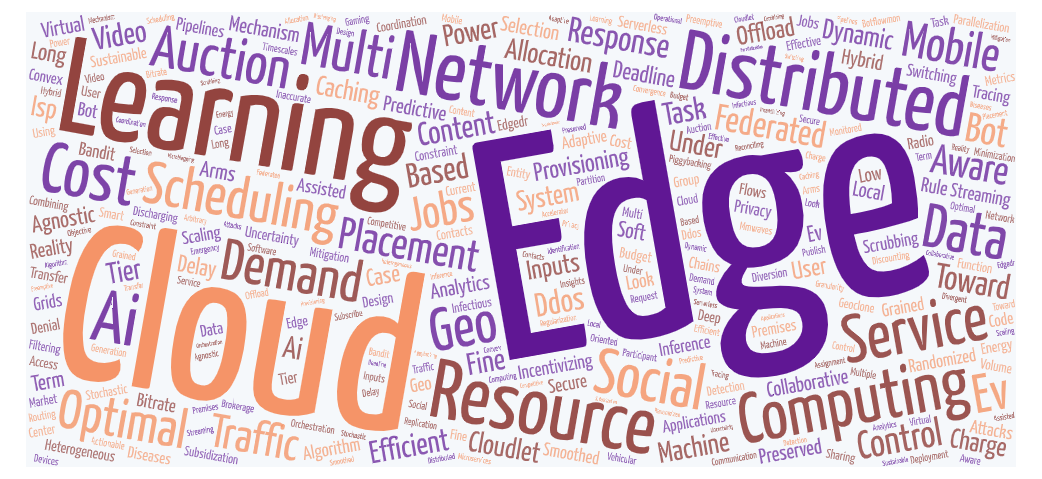
Dr. Lei Jiao is a Research Professor at the School of Computer and Data Sciences , University of Oregon, specializing in large-scale systems across cloud, edge, and NextG networks. Their interdisciplinary work integrates network optimization , machine learning , and game theory to enhance system efficiency, scalability, sustainability, and resilience. Research interests include Edge AI , Cloud Computing , Energy Systems , Cybersecurity , and Multimedia . Current affiliations: Center for Cyber Security and Privacy , University of Oregon; former role at Nokia Bell Labs , Ireland. Dr. Jiao's recent publications focus on AI systems in cloud-edge environments, resource orchestration , cybersecurity , and energy-efficient computing . Their work has earned recognition through IEEE/ACM awards and grants from the National Science Foundation and Ripple . As an educator, Dr. Jiao teaches Intermediate Algorithms , Optimization , and Edge Computing Seminars . They actively mentor PhD and MSc students across institutions like Fudan University , BUPT , and University of Oregon .