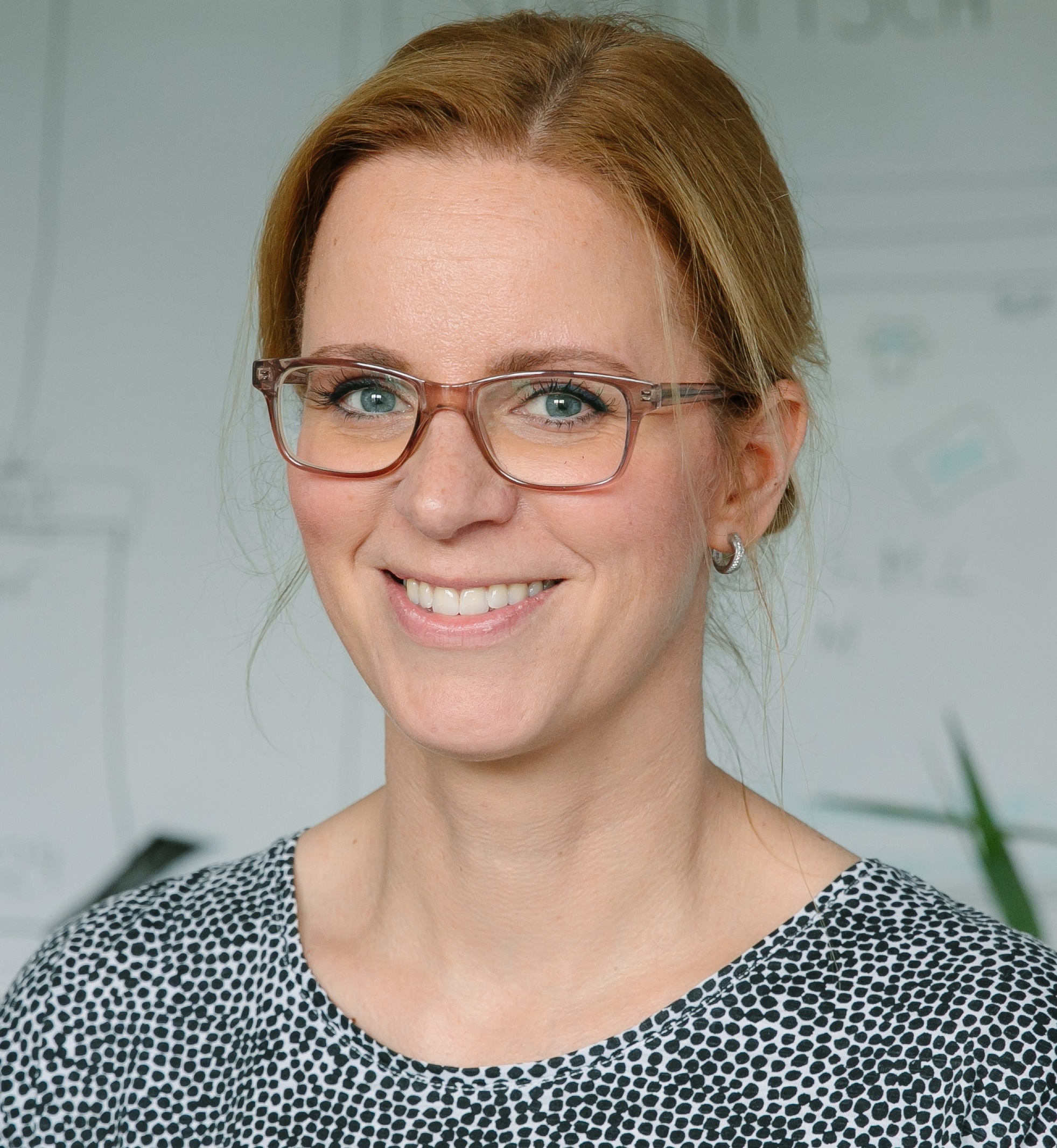
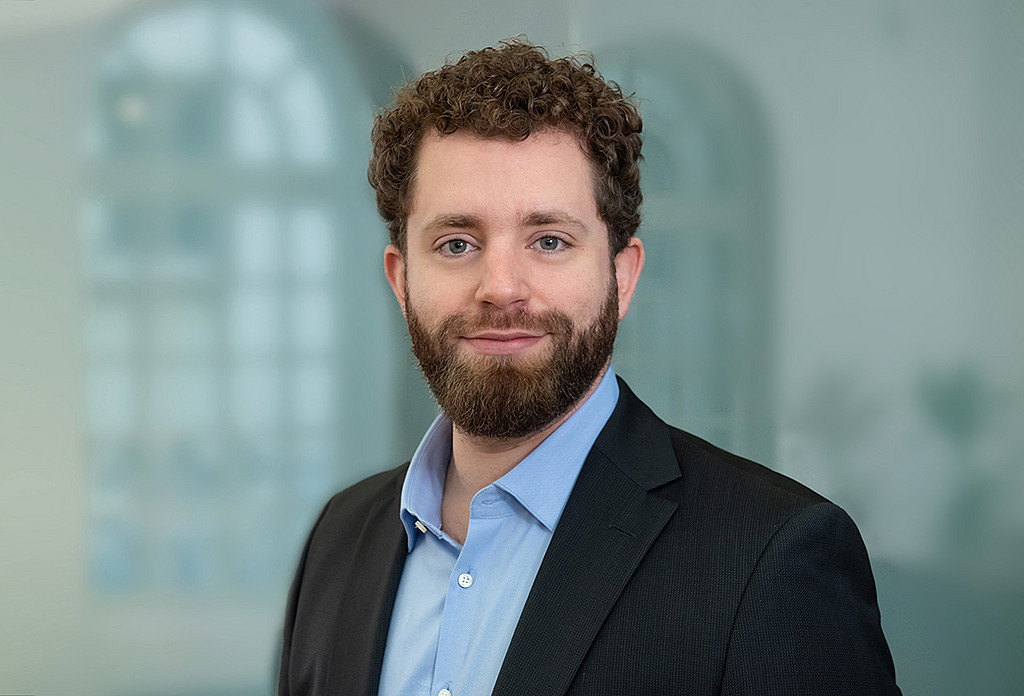
Prof. Dr. Fred Wolf is a leading scientist affiliated with the Campus Institute for Dynamics of Biological Networks (CIDBN) at Georg-August-Universität Göttingen. His research focuses on the intersection of neuroscience, computational biology, and epithelial morphogenesis, utilizing advanced imaging techniques and theoretical models to study neural circuits and tissue dynamics.
Claire Vernade is a Group Leader at the University of Tübingen in the Cluster of Excellence Machine Learning for Science. She leads an active research group focused on theoretical aspects of sequential decision making, with particular expertise in bandit problems and reinforcement learning theory. Her work bridges theoretical foundations with practical applications in scientific discovery. Her research interests span sequential decision making, bandit problems, theoretical Reinforcement Learning, Learning Theory, and principled learning algorithms. She has made significant contributions to understanding non-stationary environments, lifelong learning frameworks, and the theoretical foundations of bandit algorithms. Her work on "Eigengame: PCA as a Nash Equilibrium" received an Outstanding Paper Award at ICLR 2021. Dr. Vernade has been awarded prestigious grants including an Emmy Noether award (2022) for her FoLiReL project and an ERC Starting Grant (2024) for her ConSequentIAL project. Her current ERC project explores the role of Reinforcement Learning in developing Continual Learning agents, with applications to scientific domains like drug discovery and micro-chemistry. Emmy Noether award under the AI Initiative call (2022) ERC Starting Grant (2024) Outstanding Paper Award at ICLR 2021 She currently supervises three PhD students and actively recruits postdocs and PhD candidates through the IMPRS-IS and ELLIS doctoral programs. Her group collaborates extensively with the broader machine learning community, organizing workshops like FoRLaC at ICML 2024 and serving as co-chairs for tutorials at major conferences. Dr. Vernade is also deeply committed to diversity and inclusion in machine learning, co-leading initiatives like Women in Learning Theory and Tübingen Women in Machine Learning.
Prof. Dr. Markus Appel is a Professor and Chair holder at the Human-Computer-Media Institute at the University of Würzburg, specializing in Communication Psychology and New Media. His office is located in Room 02.004 at Campus Hubland Nord, Oswald-Külpe-Weg 82, Würzburg, Germany. Appel's research focuses on communication psychology, narrative transportation theory, social media effects, digital communication, and the psychological aspects of human-computer interaction. His work explores how media narratives influence self-concept, how digital environments shape autobiographical memory, and the psychological responses to emerging technologies like artificial intelligence. He has made significant contributions to understanding stereotype threat, media effects on cognitive processes, and the psychological mechanisms underlying narrative persuasion. His recent publications reveal a strong trend toward examining the psychological implications of artificial intelligence, particularly how people perceive and interact with AI systems. His work spans multiple disciplines including cognitive psychology, social psychology, media psychology, and human-computer interaction. Appel's research often employs experimental methodologies to investigate how digital media shapes human cognition, emotion, and behavior in the 21st century. Appel leads a research team that includes several doctoral researchers and postdoctoral fellows, including Dr. Fabian Hutmacher, Dr. Christoph Mengelkamp, and Dr. Tanja Messingschlager, among others. His work has been published in top-tier journals across multiple disciplines, demonstrating the interdisciplinary nature of his research program.
Emma Spiro is an Associate Professor at the University of Washington Information School, with adjunct appointments in the Department of Sociology and Human Centered Design & Engineering. She co-founded the Center for an Informed Public (CIP) and directs the Social Media Lab (SoMeLab) and Data Science and Analytics Lab (DataLab). Her research focuses on online communication, misinformation dynamics, and network structures in both digital and physical contexts. Dr. Spiro’s work explores social networks and computational social science, analyzing how misinformation spreads during crises and elections. Her research has been funded by the National Science Foundation and Army Research Office, and published in top journals like PNAS, Social Networks, and Information, Communication & Society. She holds a Ph.D. in Sociology from UC Irvine and dual B.A.s in Applied Mathematics and Science, Technology & Society from Pomona College. As a Data Science Fellow at UW’s eScience Institute, she bridges technical and social science methodologies to study information integrity. Her affiliations include the UW Center for Statistics & the Social Sciences (CSSS) and the Center for Studies in Demography & Ecology (CSDE). She actively collaborates across disciplines to address strategic misinformation through labs, institutes, and multi-institutional initiatives like the Disinformation Summer Institute.
Tobias Hoßfeld is a full Professor at the Chair of Communication Networks (Informatik III) within the Faculty of Mathematics and Computer Science at the University of Würzburg, Germany, since 2018. He completed his PhD in 2009 and habilitation in 2013, both at the University of Würzburg, and previously held the Chair of Modeling of Adaptive Systems at the University of Duisburg-Essen (2014–2018). His research focuses on network technologies, including 5G/6G, Quality of Experience (QoE), Green Communication Networks, and Software Defined Networking. His work has been recognized with awards such as the Fred W. Ellersick Prize (2013), multiple best paper and reviewer awards, and the GI/ITG MMB 2010 PhD Award. He contributes to editorial boards of journals like IEEE Communications Surveys & Tutorials and serves on committees including the ITG/VDE expert group on Communication Networks and Systems. Research Interests: Network and Service Management, Green Communication Networks, 5G/6G, QoE, IoT, and Queueing Theory. Awards: 10+ major awards, including IEEE Fred W. Ellersick Prize and multiple best paper awards. Leadership Roles: Head of Chair of Communication Networks (2018–present), Chair of Modeling of Adaptive Systems (2014–2018), and TPC Co-Chair for international conferences. Education: Habilitation (2013), PhD (2009), and Diplom in Computer Science (2003), all at University of Würzburg. Tools & Datasets: Authored an open-access textbook on performance modeling with interactive notebooks for numerical implementations.
Prof. Dr. Sebastian von Mammen is a tenured professor at the University of Würzburg's Institute for Computer Science, where he heads the Games Engineering research group and contributes to the Chair for Human-Computer Interaction. His group leads the Games Engineering academic program. Previously, he completed his habilitation (2012-2016) at the University of Augsburg's Chair of Organic Computing and was a postdoctoral fellow at the University of Calgary. His research spans: Real-Time Interactive Systems : Visual programming, immersion techniques, software engineering Interactive Simulations : Serious games for healthcare/logistics/construction Artificial Life : Self-organisation, adaptive systems, evolutionary computation Artificial Intelligence : Agent-based modeling, procedural content generation Recent publications (2023-2025) demonstrate strong focus on: Virtual reality applications in education (femtoPro optics simulator, BrainBuilder neuroanatomy) Healthcare technology platforms (VIA-VR for medical serious games) Game mechanics analysis (Match-3, Jump'n'Run flow) AI-driven emotion recognition and interactive systems Computational modeling of biological systems He leads the Games Engineering research group and previously participated in the Evolutionary and Swarm Design group (Calgary) and LINDSAY project. His lab develops VR simulations for scientific training and serious games applications.
Mert Kiray is a researcher at the Department of Informatics, Technical University of Munich (TUM), affiliated with the Chair of Computer Aided Medical Procedures under Prof. Nassir Navab. He is based at Campus Garching and actively contributes to research in computer vision, medical imaging, and surgical robotics. His research focuses on Computer Vision , Deep Learning , and Medical Image Analysis , with applications in Augmented Reality , Generative Models , and Robotics . Current projects include surgical data science, 3D reconstruction, and vision-language integration. Recent publications highlight his work on Multimodal Human Action Recognition (2025) and Text-to-3D Gaussian Animation (2025), reflecting expertise in combining 3D Computer Vision with Medical Applications .
Judith Fauth is a researcher at the Technical University of Munich's Chair of Computing in Civil and Building Engineering, where she pioneers digital transformation in building permit processes through Building Information Modeling (BIM) and digital twin technologies. Her work bridges civil engineering, computer science, and public policy to streamline regulatory compliance across international contexts. Her research expertise spans Building Permit Processes , Digital Building Permits , Ontology Engineering , and Process Modeling , with emphasis on developing standardized frameworks for global permit system benchmarking. She investigates how semantic technologies and digital twins can automate regulatory compliance while accommodating regional variations in construction law and administrative practices. Analysis of her 2023-2025 publications reveals three dominant trends: (1) integration of digital building permits with digital building logbooks for lifecycle data management, (2) development of ontologies like OBPA for automated permit reviews, and (3) creation of taxonomies and process models (e.g., PACE-BP framework) enabling cross-national comparisons of permit systems. This work increasingly incorporates sustainability metrics and stakeholder-specific KPIs. Within TUM's research infrastructure, Dr. Fauth contributes to the BIM Lab and Digital Twinning research groups, collaborating on projects involving Gaia-X-based data frameworks and semantic modeling of the built environment. She teaches practical software development skills through the SoftwareLab course, preparing engineering students for digital construction workflows.
Aslan Askarov is an Associate Professor in the Department of Computer Science at Aarhus University, where he leads research in computer security and programming languages. He is a member of the Logic and Semantics Group and maintains an active research program with several ongoing projects. Dr. Askarov's research interests span computer security and privacy, with a focus on foundations, information-flow, covert channels, metadata privacy, and formal methods for security. He also works extensively in programming languages, particularly in semantics, design, type systems, and program analysis. His work bridges theoretical foundations with practical security applications, particularly in web and mobile security contexts. His active projects include Troupe, a programming language for concurrent and distributed programming with dynamic information flow control, and DenIM, a protocol for secure instant messaging with metadata privacy. These projects reflect his commitment to developing practical security solutions grounded in formal methods. Dr. Askarov has published extensively in top security and programming languages venues, with recent work focusing on metadata privacy in instant messaging, separation logic for virtual machine security, and oblivious execution techniques for reactive programs. His research demonstrates a consistent pattern of addressing fundamental security challenges through formal methods and language-based approaches. CSF 2026 ESOP 2026 PLDI 2025 CSF 2025 CSF 2022 CSF 2021 CSF 2020 PriSC 2020 Nordsec 2019 (co-chair) POST 2019 Euro S&P 2018 PLAS 2017 FCS 2017 (co-chair) HotSpot 2017 FCS 2016 (co-chair) CSF 2016 ESSOS 2015 FCS-FCC 2014 ARES 2014 FCS 2013 ARES 2013 PLAS 2013 ARES 2012 PLAS 2011 (co-chair) ISARCS 2010 PLAS 2009 VODCA 2008 Dr. Askarov teaches advanced courses in computer science, including Compilers in Fall 2024 and Language-Based Security in Spring 2024. He is actively recruiting PhD students and postdocs to work in the areas of Programming Languages and Computer Security, demonstrating his ongoing commitment to mentoring the next generation of researchers.
Richard Kempter is a Full Professor at the Humboldt-Universität zu Berlin, where he leads the Theoretical Neuroscience research group within the Institute for Theoretical Biology, Department of Biology. His research focuses on the neural basis of learning and memory through computational and mathematical modeling of synapses, neurons, and neural networks. He is affiliated with several major research centers including the Bernstein Center for Computational Neuroscience, the Einstein Center for Neurosciences Berlin, and the CRC 1315 Memory Consolidation. Professor Kempter's research interests span theoretical and computational neuroscience with a particular focus on the neural mechanisms underlying learning and memory. His work employs biophysical modeling and mathematical analysis to study synaptic short- and long-term plasticity, the dynamics of single neurons, and the interaction of neurons in recurrently coupled networks. A key aspect of his research investigates how neural systems maintain a balance between learning susceptibility and stability against pathological activity patterns, with model systems including the hippocampus and early auditory system. His research group has made significant contributions to understanding hippocampal sharp wave-ripple events, phase precession in spatial navigation, auditory processing in barn owls, and memory consolidation mechanisms. The group's work combines theoretical approaches with computer simulations to unravel the computational principles of neural circuits, showing particular interest in how neural tissue remains susceptible to learning while maintaining robust stability against pathological activity patterns. Scholarship of the State of Bavaria (03/1994-12/1995) Emmy Noether Fellowship Part I (09/1999-08/2001), funded by the Deutsche Forschungsgemeinschaft Emmy Noether Fellowship Part II (01/2003-09/2008) Guest Professor , HU Berlin, Department of Biology (10/2008-03/2010) Professor Kempter has advised numerous PhD and Master's students throughout his career, with many continuing in neuroscience research. His group maintains strong connections with experimental laboratories to bridge computational models with empirical findings, particularly in hippocampal function and auditory processing. The Theoretical Neuroscience Lab participates in collaborative projects investigating memory consolidation and neural coding principles, contributing significantly to our understanding of how neural circuits implement computational principles underlying learning and memory.
Surjo R. Soekadar is the Einstein Professor of Clinical Neurotechnology at Charité – University Medicine Berlin. He leads the Clinical Neurotechnology Laboratory , which focuses on developing noninvasive neurotechnologies for treating neurological and psychiatric disorders through closed-loop brain stimulation and advanced brain-machine interfaces (BCI/BMI). His work integrates real-time EEG/MEG monitoring with electromagnetic stimulation to modulate pathological brain oscillations and enhance neuroplasticity in conditions like stroke, spinal cord injury, and psychiatric disorders. Education : Studied medicine in Mainz, Heidelberg, and Baltimore Clinical Training : Residency in Psychiatry and Psychotherapy at University of Tübingen Academic Journey : 2008-2011 Research Fellow at NINDS (USA); 2017 Venia Legendi at University of Tübingen; 2018 First Professor of Clinical Neurotechnology in Germany His research interests span: • Closed-loop neurostimulation combining real-time brain state monitoring with targeted intervention • Next-generation BCI using optically pumped magnetometers (OPM) for mobile MEG recordings • Neurorehabilitation through exoskeleton control and sensory feedback • Neurophysiological modeling of entropy measures and phase flows Recent publications highlight: • Adaptive deep brain stimulation protocols • Real-time phase-sensitive tACS applications • OPM-based BCI innovations • Stroke recovery mechanisms through corticospinal tract analysis Scientific recognition includes: International BCI Research Award BIOMAG Award NARSAD Young Investigator Award Funded by the European Research Council (ERC) , his lab trains doctoral students like David Haslacher (EEG/MEG integration), Khaled Nasr (multicoil TMS optimization), and Annalisa Colucci (entropy-driven BCI development). The team also explores quantum AI applications in clinical decision-making and bidirectional BCI systems using OPM and tES.
Dr. Oksana Chubykalo-Fesenko serves as a Senior Scientist at the Institute of Materials Science of Madrid, part of the Spanish National Research Council (CSIC) in Madrid, Spain. She leads the Simulation of Magnetic Nanostructured Materials (MAGSIM) research group, contributing significantly to computational approaches in magnetism. Her educational background includes: M.Sc. from Kharkov State University, Ukraine (1986) Ph.D. from Kharkov State University, Ukraine (1990) with thesis on "Soliton scattering by impurities in one-dimensional nonlinear systems" Dr. Chubykalo-Fesenko's research expertise spans: Modeling of hysteresis and dynamics in nanostructured magnetic elements Modeling of ultra-fast laser-induced magnetization dynamics Modeling of magnetic nanoparticles Multiscale modeling of magnetic materials Her international career includes positions at: Clarendon Laboratory, Oxford, UK (1989-1990) Complutense University, Madrid, Spain (1991-1993, 2000-2001) University of Milano, Como, Italy (1994) University of the Basque Country, San Sebastian, Spain (1994-1996) Almaden Research Center, IBM, San Jose, USA (1999-2000) As a Mercator Fellow for TRR227, she contributes to collaborative research on ultrafast spin systems and correlated matter, participating in workshops like the Joint Winter School on Ultrafast Spin Systems.
Felicitas Kleber is a Professor of Speech Science at the Department of Language Science and Technology, Saarland University. Her research focuses on experimental phonetics and laboratory phonology, emphasizing the interplay between speech production and perception in sound change processes. Research Areas : experimental phonetics, laboratory phonology, coarticulation dynamics, prosody and intonation, diachronic sound change, German dialects. Projects : Directed DFG-funded research on vowel/consonant quantity typology in Southern German varieties (2016–2024); DAAD-funded study on prosodic structure in Hungarian and German (2015–2016). Collaborations : Key partnerships with Jonathan Harrington (phonetics), Ulrich Reubold (acoustic analysis), and interdisciplinary teams in computational linguistics and sociophonetics. She serves as Associate Editor for the Journal of the Acoustical Society of America , integrating cognitive and social dimensions into sound change models.
Fabian Wöbbeking is an Assistant Professor at the Martin Luther University Halle-Wittenberg and leads the Data Science in Financial Economics research group at the Leibniz Institute for Economic Research Halle (IWH) . His roles include analyzing unstructured datasets using Data Science methods to generate economic indicators, with a focus on financial intermediation, systemic risk, and machine learning applications in finance. He also contributes to macroprudential policy research and correlation stress testing frameworks. Education : Studied at the Frankfurt School of Finance & Management; earned a PhD at Goethe University Frankfurt. Wöbbeking’s research bridges Data Science and Financial Economics, emphasizing machine learning for financial analytics, risk modeling, and language-based information asymmetry. His work includes measuring non-answers in earnings calls, correlation stress testing, and cryptocurrency volatility dynamics. His recent publications highlight interdisciplinary approaches to financial markets. Key trends include leveraging NLP for corporate disclosures, Bayesian methods for risk factor modeling, and blockchain analytics for volatility indices. These works demonstrate cross-domain applicability of Data Science techniques. At IWH, he collaborates with teams like the Financial Markets department, contributing to European Real Estate Index (EREI) development and macroprudential policy analysis. His projects integrate economic theory with computational methods to address systemic risks and market inefficiencies.
Prof. Dr. Chunyang Chen is a Full Professor at the Department of Computer Science, Technical University of Munich (TUM), Heilbronn, Germany. He holds the Chair of Software Engineering & AI, serves as a core member of the Munich Data Science Institute, board member of the Heilbronn Data Science Center, and Fellow at Fortiss. He also maintains an Adjunct Professor role at Monash University, Australia. Research Focus: His work bridges Software Engineering, Deep Learning, and Human-Computer Interaction (HCI), specializing in AI/ML, NLP, and program analysis for mobile app development, testing, and security. Key areas include LLM-assisted app development, robustness of deep learning models, and accessibility testing. Scientific Awards: Best Paper Honorable Mention in CHI 2024 Discovery Early Career Researcher Award (DECRA), Australian Research Council ACM SIGSOFT Early Career Researcher Award Facebook Research Award in Probability and Programming Dean's Award for Research Impact at Monash University Academic Leadership: He actively mentors PhD students, supervises postdocs, and leads research teams focusing on software security, automated testing, and LLM applications. His recent work explores the intersection of software security and large language models, with a special issue call for EMSE journal.