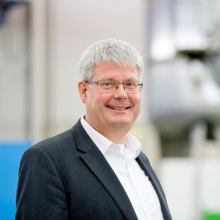
Prof. Dr.-Ing. Stephan Staudacher is the Director of the Institute of Aircraft Propulsion at the University of Stuttgart. His work focuses on aircraft propulsion systems, gas turbine performance, and turbomachinery design. He holds a professorship in the Faculty of Mechanical Engineering and Aerospace, leading research in advanced engine technologies, erosion effects, and fault detection algorithms. Research interests include engine reliability, computational fluid dynamics (CFD), and experimental validation of propulsion systems. His publications emphasize topics like neural network applications for fault detection, ice crystal icing simulations, and particle transport in additive manufacturing processes. Recent studies highlight the optimization of composite-cycle engines and assessment of mission severity caused by erosion. Key contributions include advancements in engine condition monitoring, transient performance analysis, and the development of Stuttgart University’s Altitude Test Facility (ATF). His work bridges theoretical models with industrial applications, addressing challenges in both civil and military aviation propulsion systems.
Virginia Polytechnic Institute and State UniversityUnited States
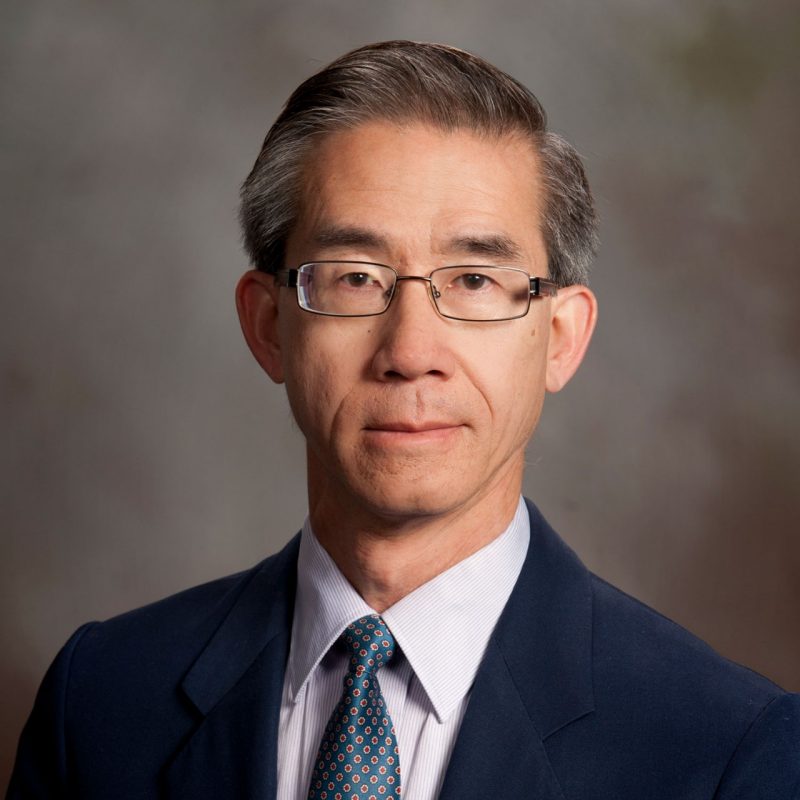
Wing Ng serves as Alumni Distinguished Professor and Chris C. Kraft Endowed Professor in Virginia Tech's Department of Mechanical Engineering within the College of Engineering. His career spans over four decades with continuous contributions to aerospace thermal systems and fluid dynamics research since joining Virginia Tech in 1984. Dr. Ng's academic foundation includes: Ph.D. in Mechanical Engineering from Massachusetts Institute of Technology (1984) M.S. in Mechanical Engineering from Massachusetts Institute of Technology (1980) B.S. in Mechanical Engineering from Northeastern University (1979) His pioneering research focuses on aeroacoustics of drones and jet engines, where he develops advanced diagnostics for turbine flow measurements and investigates transonic turbine blade aerodynamics. Current work explores aerothermal particle interactions in gas turbines and clean energy applications for wind turbines. His experimental approach bridges fundamental fluid dynamics with practical aerospace engineering solutions, particularly in cooling systems for high-temperature components. Analysis of recent publications (2024-2025) reveals three dominant research thrusts: turbine cooling optimization (film/phantom cooling configurations), particle dynamics in gas paths (impact/rebound mechanics), and novel measurement techniques (strain sensors, multiphase flow diagnostics). These studies consistently target performance enhancement and durability improvement in turbomachinery through experimental validation. Dr. Ng's exceptional contributions are recognized through: Virginia Tech Faculty Entrepreneur Hall of Fame (2017) William E. Wine Award for teaching excellence (2014) Multiple Certificates of Teaching Excellence (1985,1988,2011,2014) Dean's Award for Research Excellence (2013) Consecutive Best Paper Awards from ASME/AIAA (2001-2013) Fellow of ASME (1996) and Associate Fellow of AIAA (1992) As director of the Ng Lab, he maintains active collaborations with industry partners through Techsburg, Inc. (where he serves as Chairman) to translate research into commercial applications. His work on drone aeroacoustics and turbine diagnostics directly informs next-generation propulsion systems while addressing critical challenges in particle ingestion and thermal management.
Joseph Katz is the William F. Ward Distinguished Professor of Mechanical Engineering at Johns Hopkins University's Whiting School of Engineering and a member of the National Academy of Engineering. His research focuses on experimental fluid mechanics, multiphase flow, cavitation phenomena, and advanced optical diagnostics. He directs the Laboratory for Experimental Fluid Dynamics and co-founded the Johns Hopkins Center for Environmental and Applied Fluid Mechanics. Key research areas include: - Turbulent boundary layers and compliant wall interactions - Cavitation dynamics in turbomachinery - Environmental fluid dynamics (oil spills, oceanic flows) - Medical imaging applications of fluid mechanics - Turbomachinery flow control (axial compressors) His work has been funded by agencies including the Office of Naval Research, NSF, NASA, and DOE. Over 150+ journal papers, 220+ conference papers, and 7 patents reflect his prolific output. Notable awards include the ASME Fluids Engineering Award and fellowships from ASME and APS. Key Contributions: - Developed novel optical diagnostics techniques - Advanced understanding of tip clearance flows in compressors - Studied oil dispersion mechanisms in marine environments - Pioneered holographic PIV for 3D flow visualization
Lappeenranta-Lahti University of Technology LUTFinland
Teemu Turunen-Saaresti is a Tenured Professor at the School of Energy Systems , LUT University , Lappeenranta, Finland. His research focuses on energy technology, particularly supercritical CO2 cycles, Organic Rankine Cycles (ORC), turbomachinery, and heat pump design. PhD in Energy and Environmental Technology (2004), Lappeenranta University of Technology MSc in Energy and Environmental Technology (2001), Lappeenranta University of Technology His work spans Supercritical CO2 Power Cycles , Organic Rankine Cycle Systems , Turbomachinery Design , and Non-Equilibrium Condensation Modeling . Recent studies include printed circuit heat exchangers for transcritical cycles, high-temperature ORC thermal inertia, and centrifugal compressor design for large-scale CO2 heat pumps. Publications highlight trends in sCO2 Turbines , Tip Clearance Effects , and Multiphase Flow Simulation . Funding from the Academy of Finland and Business Finland supports his research on computational/experimental condensing flows, small-scale compressors, and green shipping energy solutions. He collaborates with international teams on projects like the International Wet Steam Modeling Project , contributing to guidelines for high-temperature heat pumps (IEA HPT Annex 58) and advancements in hydrogen compression strategies.
Professor JC Ji is a distinguished academic at the School of Mechanical and Mechatronic Engineering at the University of Technology Sydney (UTS), where he was promoted to Professor on January 3, 2025, after serving as an Associate Professor since January 1, 2016. He serves as the Theme Research Director at the Centre for Audio, Acoustics and Vibration (CAAV) at UTS and is an active member of the Faculty of Engineering and Information Technology. Professor Ji holds a PhD in Mechanical Engineering from Australia and a Graduate Certificate from UTS, along with CPEng NER certification from Engineers Australia since 2018. Professor Ji's research spans multiple interdisciplinary areas with significant practical applications. His primary research interests include Dynamics, Vibration and Vibration Control (focusing on wind turbine dynamics, rotor-bearing systems, and vibration isolation); Machine Condition Monitoring and Asset Management (specializing in fault diagnostics, prognostics, and digital twin-based modeling); Renewable Energy and Sustainability (particularly in vibration-based energy harvesting and battery circular economy); Mechanical and Vehicle Systems; Robotic and Multi-Agent Systems; and Ecological Systems. His work demonstrates a strong integration of theoretical foundations with practical engineering solutions for real-world problems. Analysis of Professor Ji's recent publications reveals a clear research trajectory focused on advanced vibration control systems, condition monitoring techniques, and digital twin applications. His work increasingly integrates machine learning with traditional mechanical engineering approaches, particularly in bearing and gear health management. A significant portion of his recent research focuses on quasi-zero stiffness vibration isolators using innovative structural designs including origami-inspired mechanisms. His publications show strong international impact with numerous high-citation articles in top mechanical engineering journals. Stanford University's World's Top 2% Scientists List for both career-long impact and single-calendar year impact in 2023 and 2024 CPEng NER Chartered Engineers certification from Engineers Australia (2018-present) Professor Ji actively supervises research students and has secured substantial funding for his work, including multiple ARC Discovery and Linkage Projects. He serves as an Associate Editor for Mechanical Systems and Signal Processing (Q1 journal), Journal of Vibration and Control (Q2 journal), and International Journal of Bifurcation and Chaos (Q2 journal). He is also an active assessor for ARC grant applications since 2007 and for international funding bodies including Hong Kong RGC, Belgium FNRS, and New Zealand MBIE. His industry collaborations include projects with Zip Heaters, Alstom Transport, and Coal Services Health and Safety Trust. As Theme Research Director at the Centre for Audio, Acoustics and Vibration (CAAV) at UTS, Professor Ji leads a research team focused on advancing vibration control technologies and their applications. His laboratory work includes developing innovative vibration isolators, condition monitoring systems for industrial machinery, and energy harvesting technologies. The research group maintains strong connections with industry partners to ensure practical implementation of their theoretical advancements.
Ricardo Martinez-Botas is a Professor of Turbomachinery and Associate Dean for Industry Partnerships at the Department of Mechanical Engineering, Imperial College London. He holds affiliations with the Electrochemical Science and Engineering, Energy Materials, Grantham Institute, Mechanics of Materials, and Network of Excellence in Air Quality. His academic career includes a DPhil from the Rolls Royce University Technology Center at the University of Oxford (1993) and an MEng in Aeronautical Engineering from Imperial College London. He also serves as a Visiting Professor at University Teknologi Malaysia. His research focuses on unsteady flow aerodynamics in turbochargers, supercritical CO2 systems, and thermal-fluids engineering. Notable contributions include advancements in turbine aerodynamics, pulsating flow control, and generative AI-driven design methodologies. He leads the Thermofluids Division and the Hybrid and Electric Vehicles Theme at the Energy Futures Lab. His work integrates computational fluid dynamics (CFD), experimental methods, and one-dimensional modeling for turbomachinery optimization. Key Awards: Dugald Clerk Prize (2011), ASME Turbomachinery Best Paper Awards (2010, 2009). Editorial Roles: Associate Editor of the Journal of Turbomachinery (ASME) and Journal of Mechanical Engineering Science (IMechE). Facility Leadership: Developed the TURBODYNA dynamic simulator for radial turbomachinery and commissioned a blowdown facility for dense gas vapor research. His research portfolio spans interdisciplinary topics like battery technology, organic Rankine cycle turbines, and sustainable automotive emissions control. He actively collaborates with industry partners to translate academic innovations into real-world applications, emphasizing energy efficiency, waste heat recovery, and low-carbon transportation solutions.
Nicolas Binder is a Professor and Head of the Turbomachinery and Propulsion Research Group at ISAE-SUPAERO . His research focuses on turbomachinery aerodynamics, unsteady flow analysis, and innovative propulsion systems for aerospace applications. Member of EuroTurbo executive committee ASME Member Associate Editor, Journal of Turbomachinery Research expertise in off-design operations and windmilling flows Research Interests : Aerodynamics of turbomachinery in severe off-design conditions Unsteady flow dynamics in turbines Innovative propulsion methods including magneto-hydrodynamics Flow analysis techniques for compressors and fans Recent publications (2024-2021) emphasize transient flow modeling in turbines, windmilling operation optimization, and variable geometry turbine performance. Articles span experimental validation of numerical models, shock wave interactions, and novel propulsion concepts like plasma-thrusters for drones.
Şit Mihail is a coordinating scientific researcher at the Institute of Energy of the Academy of Sciences of Moldova, with a distinguished publication record spanning over 15 years in the field of thermal engineering and control systems. His work primarily appears in the journal Regional Energy Problems , reflecting his deep engagement with energy solutions relevant to the Moldovan context and broader applications. His research interests center on the design and control of thermal systems and processes , with particular expertise in power boilers, gas turbine installations, heat exchangers, refrigeration systems, and heat pumps. He has made significant contributions to automatic climate maintenance systems for large volumes and microclimate control, as well as the development of control systems for mobile land objects (tracked and wheeled vehicles) and robotic devices. His work consistently bridges theoretical control systems with practical thermal engineering applications across various sectors including agriculture, food processing, and urban heating systems. Analysis of his publication trends reveals a strong focus on energy efficiency optimization through innovative heat pump designs and control strategies. His later work (2016-2020) increasingly addresses integrated energy solutions for specific applications in agriculture (poultry farming, vineyards, dairy plants) and urban environments (district heating systems). A notable technical thread throughout his career is the development of variable geometry systems and adaptive control mechanisms to maximize thermal efficiency across changing operational conditions. Dr. Şit has collaborated extensively with colleagues including Журавлев А.А., Timcenko Dmitrii, and Şit Boris across multiple projects. His research demonstrates consistent practical application, with numerous publications addressing specific industrial challenges in Moldova's energy sector, particularly in optimizing traditional heating infrastructure through modern heat pump technology and advanced control systems.
Lt Col Darrell S. Crowe, PhD, is an Assistant Professor of Aerospace Engineering in the Department of Aeronautics and Astronautics at the Air Force Institute of Technology (AFIT), part of the Graduate School of Engineering and Management at Air University. He is an active military officer and educator contributing to advanced aerospace research and graduate education within the U.S. Air Force. Education: PhD in Aeronautical Engineering, Air Force Institute of Technology, 2014 MS in Aeronautical Engineering, Air Force Institute of Technology, 2008 BS in Aerospace Engineering, Texas A&M University, 2003 Dr. Crowe's research focuses on propulsion aerodynamics, computational fluid dynamics (CFD), supersonic and hypersonic flows, jet interaction effects, and store separation dynamics. His work involves high-fidelity simulations of exhaust nozzles, thermal distortion modeling, and active flow control, often in collaboration with military and aerospace applications. He investigates complex phenomena such as hot streaks in serpentine nozzles, film cooling, and cavity acoustics, contributing to improved aircraft and propulsion system design. His recent publications demonstrate a strong trend in advancing CFD methodologies for defense-related aerospace problems, particularly in propulsion-airframe integration, weapon bay aerodynamics, and supersonic/hypersonic flow control. The articles span both experimental validation and numerical modeling, emphasizing accuracy, turbulence modeling, and multi-physics coupling in extreme environments. Scientific Awards and Honors: AFIT Dean's Distinguished Teaching Professor, 2023 AIAA Associate Fellow, 2020 Air Force Meritorious Service Medal (2018, 2021) Joint Service Commendation Medal, 2017 Southwestern Ohio Council for Higher Education Faculty Excellence Award, 2015 Field Grade Officer of the Quarter, Air University, 2015 Air Force Commendation Medal, 2011 Company Grade Officer of the Quarter (2005, 2009) Air Force Achievement Medal, 2006 Dr. Crowe advises MS thesis students in aerospace engineering and teaches graduate-level courses in his domain. He has been involved in flight testing and simulation projects, often funded through U.S. Air Force research programs. His work supports critical defense capabilities in aircraft performance, propulsion efficiency, and weapon system integration. He is actively involved in professional organizations such as the American Institute of Aeronautics and Astronautics (AIAA) and contributes to major conferences and workshops, including the Propulsion Aerodynamics Workshops. His research is conducted within AFIT’s advanced simulation and modeling environment, leveraging tools like Kestrel and BCFD for high-fidelity analysis.
Herbert Steinrück is an Associate Professor at Vienna University of Technology (TU Wien) since 1997, with multiple affiliations across the university's engineering departments. His primary appointments include the Institute of Fluid Mechanics and Heat Transfer (E307), Institute for Analysis and Scientific Computing (E322), and Institute of Engineering Design and Product Development (E101). He leads research in the Computational Fluid Mechanics research area (E322-02). Steinrück completed his Dipl.-Ing. in Mathematics at TU Wien in 1983, followed by his Dr. techn. degree between 1983-1985. He served as a Research Assistant from 1983-1989 at the Institute of Fluid Mechanics and Heat Transfer, then worked as a University Assistant from 1992-1997 before achieving Habilitation in 1991. His international experience includes a Visiting Scientist position at IBM Thomas Watson Research Center in 1989-1990. His research focuses on Computational Fluid Dynamics, Wave Dynamics, and Combustion Engineering . Steinrück's work spans rotary and gravity waves in cylindrical containers, flame propagation in confined spaces, dust explosions, and flow-induced vibrations. His approach combines experimental validation with asymptotic analysis and numerical simulation, particularly examining stability characteristics and excitation mechanisms in complex fluid systems. Recent work shows increasing focus on multiphysics problems involving fluid-structure interaction. Analysis of his 15 most recent publications reveals consistent work in wave dynamics (particularly rotary waves in cylindrical containers), with expanding applications to combustion phenomena and structural interactions. His research demonstrates strong continuity in fundamental fluid mechanics while adapting to address practical engineering challenges in compressor design, explosion safety, and aeroelasticity. Steinrück has mentored numerous graduate students through thesis supervision, with documented advisees working on topics including hydroelastic gear lubrication, circulating condensate films, dental air turbines, and flow-induced vibrations in U-beams. His collaborative work extends to conference organization, including editing proceedings for the EFRC Conference series.
Fred Schauer is an Associate Professor in the Department of Aeronautics and Astronautics at the Air Force Institute of Technology (AFIT), part of Air University at Wright-Patterson Air Force Base, Ohio. He is a leading researcher in propulsion systems, particularly in the development and analysis of detonation-based engines such as pulsed and rotating detonation engines. His work integrates experimental testing, thermodynamic modeling, and advanced diagnostics to advance aerospace propulsion technologies. His educational background includes: BS in Mechanical Engineering, University of Dayton, 1993 Ph.D. in Mechanical Engineering, University of Illinois at Urbana-Champaign, 1998 Air War College, 2008 Dr. Schauer's research focuses on energy, propulsion, and power, with special emphasis on novel thermodynamic cycles, detonation dynamics, laser diagnostics, and flame-turbulence interactions. His work has significantly contributed to understanding and optimizing rotating and pulsed detonation engines, including performance scaling, nozzle integration, and fuel injection strategies. He has explored both conventional and bio-derived fuels to enhance efficiency and sustainability in small-scale propulsion systems. The 15 most recent publications reflect a strong trend toward experimental validation of rotating detonation engines, thermodynamic modeling, and performance optimization. These works span high-speed propulsion, combustion stability, and integration with turbines and ejectors. Keywords across these articles include aerospace engineering, propulsion, combustion, and mechanical systems, with subfields such as rotating detonation, pulsed detonation, nozzle dynamics, fuel efficiency, and thermodynamic modeling. His scientific achievements have been widely recognized: AFRL Commander’s Cup and Innovation Award Two-time winner of the AFRL Science & Technology Achievement Award ASME Airbreathing Propulsion Award Finalist for the Collier Trophy Finalist for Aviation Laureate AFRL Fellow Air Force Scientist of the Year AIAA Engineer of the Year Dr. Schauer has served as a research advisor for numerous M.S. and Ph.D. students and maintains active collaborations with AFRL, NASA, DOE, and academic institutions. His research group has published extensively and led major projects, including the AFRL in-house detonation propulsion research program from 1997 to 2019. He previously led the Propulsion and Power Advanced Concepts Group, which operated the Detonation Engine Research Facility and the Small Engine Research Laboratory, driving innovation in next-generation propulsion systems. His research labs and teams include the Detonation Engine Research Facility and the Small Engine Research Laboratory, where experimental and computational studies on advanced propulsion concepts are conducted. These facilities support high-pressure, high-speed combustion research and enable the development of practical applications for military and aerospace platforms.
Professor Marko Bacic is a Professor of Engineering Science at the University of Oxford and Engineering Fellow in Control Systems and Gas Turbine Functionality at Rolls-Royce, PLC. He leads research at the Oxford Thermofluids Institute with dual focus on academic innovation and industrial gas turbine applications, holding continuous university affiliation since 2003. His educational credentials include: MEng in Engineering and Computing Science (2001), University of Oxford DPhil in Model Predictive Control (2004), University of Oxford Research spans Control Engineering , Gas Turbine Systems , and Active Flow Control , emphasizing hardware-in-the-loop simulation, thermo-mechanical systems, and fluid-structure interactions. Current projects address aerospace control, active tip clearance, and hybrid-electric propulsion through the Active Flow Control for Gas Turbines research group. Recent publications (2023-2025) reveal three dominant trends: hybrid-electric propulsion optimization for urban air mobility, acoustic excitation techniques for flow control in compressors, and thermal management innovations in turbine cooling systems, demonstrating strong industry-academia translation. Major awards include: Sir Henry Royce Award for Technical Innovation (2012) Sir Henry Royce Patent Award (2017) RAEng Silver Medal (2020) Research funding exceeds £3M through collaborations with Rolls-Royce and EPSRC: 'Active Control of Fluid Flows in Gas Turbines' (£1.1M, EPSRC/Rolls-Royce, 2014–2017) 'Advanced Transient Heat Transfer Facility' (£1.3M, Rolls-Royce/ATI, 2011-2015) 'Real-time transient disc modelling' (£72k, Rolls-Royce, 2011-2014) 'Hardware-in-the-loop simulation for UAVs' (£114k, EPSRC) 'Non-return valve failure investigation' (£126k, Rolls-Royce/EPSRC) 'Engineering applications of bird flight' ($300k, AFOSR) He directs experimental facilities including a subscale test rig for compact heat exchangers and hardware-in-the-loop simulators for gas turbine systems, with active Rolls-Royce partnerships driving patent development and market deployment.
Professor David Gillespie is an Associate Professor of Engineering Science at the University of Oxford and Deputy Head of Department for New Buildings. He is also a Fellow of St Catherine's College and affiliated with the Oxford Thermofluids Institute. His research focuses on critical aspects of gas turbine and jet engine technology, particularly in thermal management and fluid dynamics applications. Professor Gillespie attended Jesus College Oxford as an undergraduate and obtained his doctorate in 1996. He has been the Rolls-Royce Fellow in Engineering Science since 2003, demonstrating a long-standing relationship with industry in advancing gas turbine technology. His primary research interests include: Development of advanced seals for jet engines and industrial gas turbines Tip clearance control mechanisms for gas turbines using thermal activation systems Heat exchanger design for intercoolers and recuperators in jet engines Engine-realistic internal cooling systems, including dendritic cooling and ribbed passages Effects of volcanic ash ingestion on engine components Advanced instrumentation methods using thermochromic liquid crystals and IR cameras Professor Gillespie's recent publication record shows a strong focus on ice crystal icing phenomena in turbomachinery, particle deposition in gas turbines, and advanced thermal management techniques. His work combines experimental, analytical, and computational approaches to address critical challenges in gas turbine operation under extreme conditions. A significant portion of his recent work involves the development of predictive models for ice accretion and particle deposition, which have important safety implications for aircraft engines. As a key member of the Oxford Thermofluids Institute, Professor Gillespie leads research that bridges fundamental fluid dynamics with practical engineering applications in the aerospace industry.
Kazuyoshi Miyagawa is a Professor at Waseda University's Department of Applied Mechanics and Aerospace Engineering within the Faculty of Science and Engineering, School of Fundamental Science and Engineering. With a Doctor of Engineering from Osaka University, he has maintained a continuous academic career at Waseda University since 2011, progressing from Associate Professor to full Professor. His educational background includes undergraduate and graduate studies in Mechanical Engineering at Waseda University, followed by specialized research at Osaka University's Graduate School of Engineering Science. Professor Miyagawa's research focuses on Fluid Engineering, Fluid Machinery, Cavitation, and Flow Induced Vibration . His work bridges theoretical fluid dynamics with practical applications in turbomachinery, particularly in hydraulic turbines, pumps, and rocket turbopumps. His research demonstrates a consistent emphasis on improving efficiency, stability, and reliability of fluid machinery through innovative design and thorough understanding of complex flow phenomena. His extensive publication record (107 papers with 683 Scopus citations and 1543 Google Scholar citations) reveals a strong focus on draft tube flow in hydraulic turbines, cavitation phenomena, and unsteady flow characteristics in various turbomachinery applications. His recent work shows increasing attention to computational fluid dynamics validation through experimental methods and practical engineering solutions for flow instability problems. Scientific Awards Multiple Technical and Paper Awards from the Turbomachinery Society of Japan (2001-2021) Recognition for development of new water turbines, high-efficiency turbochargers, and low-noise pumps Research on Francis turbine performance and cavitation phenomena Professor Miyagawa actively contributes to the engineering community through leadership roles including President of the Turbomachinery Society of Japan (2023-present) and Board Director of The Japan Federation of Engineering Society (2025-present). His professional memberships span multiple international and Japanese engineering societies including ASME, IAHR, and The Japan Society of Mechanical Engineers.
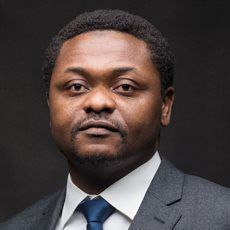
Dr. Archibong Eso Archibong is an Associate Professor in Mechanical Engineering and serves as the Programme Director for Mechanical Engineering and Academic Lead for Engineering Labs & Workshops at the University of Birmingham Dubai Campus. He is affiliated with the School of Engineering and the Department of Mechanical Engineering, contributing to both academic leadership and research innovation. Education: PGCert in Higher Education, University of Birmingham (UK), 2021 PhD in Energy Engineering (Multiphase Flows), Cranfield University (UK), 2015 MSc in Process Systems Engineering, Cranfield University (UK), 2011 BEng (Hons) in Mechanical Engineering, Cross River University of Technology (Nigeria), 2008 Archibong's research focuses on multiphase flow systems with applications in low-carbon energy, carbon removal (including Direct Air and Ocean Capture), industrial processes, and biomedical engineering. His work integrates computational modeling, experimental analysis, and economic assessment to develop sustainable solutions. Key areas include hydrogen production, hybrid energy cycles, microbial fuel cells, and fluid-structure interaction in heart valves. He also contributes to STEAM pedagogy, digital education, and curriculum design for underserved communities. The recent publications reflect a strong trend in energy sustainability, with a focus on thermodynamic efficiency, multiphase flow modeling, and clean energy integration. Articles span biomedical applications of fluid dynamics, hydrogen safety in nuclear systems, and machine learning for energy prediction in buildings, showcasing a multidisciplinary approach to engineering challenges. Scientific Awards and Honors: Senior Fellow (SFHEA), Higher Education Academy (Advance HE), 2022 Fellow (FIMechE), Institution of Mechanical Engineers, 2022 Chartered Engineer, Engineering Council (UK), 2021 MIT ETT Fellowship supported by TotalEnergies, 2019 Cranfield University/HEFCE Doctoral Studentship (2012–2015) Archibong actively advises on energy policy and delivers workshops in lean-resource settings. He has served as a grant reviewer for the British Council and sits on the Topical Advisory Board for Fluids . He is involved in UAE national initiatives on hydrogen development and waste-to-energy projects. He mentors prospective MRes and PhD researchers and collaborates with industry partners such as BP, Schlumberger, and TotalEnergies. His leadership extends to curriculum development for non-profits and humanitarian agencies aligned with the UN Sustainable Development Goals. He leads research in fluids and multiphase systems, with active projects on electrochemical hydrogen production, hybrid energy cycles, and Direct Air Capture technologies. His team employs advanced modeling and experimental techniques to address global challenges in energy, environment, and healthcare.