Nicolas Binder is a Professor and Head of the Turbomachinery and Propulsion Research Group at ISAE-SUPAERO . His research focuses on turbomachinery aerodynamics, unsteady flow analysis, and innovative propulsion systems for aerospace applications. Member of EuroTurbo executive committee ASME Member Associate Editor, Journal of Turbomachinery Research expertise in off-design operations and windmilling flows Research Interests : Aerodynamics of turbomachinery in severe off-design conditions Unsteady flow dynamics in turbines Innovative propulsion methods including magneto-hydrodynamics Flow analysis techniques for compressors and fans Recent publications (2024-2021) emphasize transient flow modeling in turbines, windmilling operation optimization, and variable geometry turbine performance. Articles span experimental validation of numerical models, shock wave interactions, and novel propulsion concepts like plasma-thrusters for drones.
Şit Mihail is a coordinating scientific researcher at the Institute of Energy of the Academy of Sciences of Moldova, with a distinguished publication record spanning over 15 years in the field of thermal engineering and control systems. His work primarily appears in the journal Regional Energy Problems , reflecting his deep engagement with energy solutions relevant to the Moldovan context and broader applications. His research interests center on the design and control of thermal systems and processes , with particular expertise in power boilers, gas turbine installations, heat exchangers, refrigeration systems, and heat pumps. He has made significant contributions to automatic climate maintenance systems for large volumes and microclimate control, as well as the development of control systems for mobile land objects (tracked and wheeled vehicles) and robotic devices. His work consistently bridges theoretical control systems with practical thermal engineering applications across various sectors including agriculture, food processing, and urban heating systems. Analysis of his publication trends reveals a strong focus on energy efficiency optimization through innovative heat pump designs and control strategies. His later work (2016-2020) increasingly addresses integrated energy solutions for specific applications in agriculture (poultry farming, vineyards, dairy plants) and urban environments (district heating systems). A notable technical thread throughout his career is the development of variable geometry systems and adaptive control mechanisms to maximize thermal efficiency across changing operational conditions. Dr. Şit has collaborated extensively with colleagues including Журавлев А.А., Timcenko Dmitrii, and Şit Boris across multiple projects. His research demonstrates consistent practical application, with numerous publications addressing specific industrial challenges in Moldova's energy sector, particularly in optimizing traditional heating infrastructure through modern heat pump technology and advanced control systems.
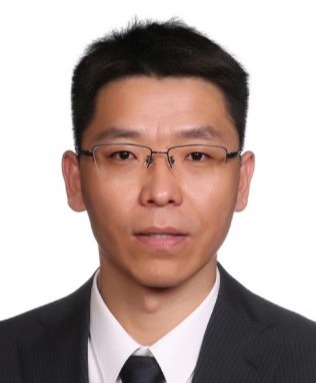
Cao Haishan is an Associate Professor at Tsinghua University, affiliated with the Department of Energy and Power Engineering in the School of Mechanical Engineering. His research focuses on cryogenic cooling systems, high heat flux thermal management, and the physics of amorphous ice formation and phase transitions. He leads a research group supported by the National Natural Science Foundation of China and industry partners including Huawei, Midea, and Lenovo. Ph.D., Mechanical Engineering, University of Twente, 2013 M.Sc., Chemical Engineering, Dalian Institute of Chemical Physics, Chinese Academy of Sciences, 2009 B.Sc., Chemical Engineering, Zhejiang University, 2006 Dr. Cao's research spans three major areas: cryogenic cooling (including micro cryocoolers and sorption systems), high heat flux electronic cooling (especially with non-condensable gases), and the formation and transformation of amorphous water ice. His work combines theoretical modeling, computational simulation, and experimental validation, often at micro and nano scales. He applies principles from thermodynamics, fluid dynamics, and materials science to solve engineering challenges in refrigeration and thermal control. The recent publications reflect a strong trend toward interdisciplinary research, integrating machine learning for heat transfer prediction, computational screening of MOFs for cryogenic switches, and fundamental studies of ice nucleation on various substrates. The articles span journals in physics, engineering, materials, and applied thermal sciences, indicating broad impact across multiple domains. Notable scientific awards include: Gustav and Ingrid Klipping Award (2016) Cryogenics Best Paper Award (2017) Annual Teaching Excellence Award, Tsinghua University (2023) Excellent Supervisor Award, Tsinghua University (2024) Multiple First Prize Advisor awards in national student contests on energy saving Dr. Cao has been principal investigator on several grants, including projects funded by the National Natural Science Foundation of China on amorphous ice lifetime and micro-cryocooling for semiconductor chips. He has also led industry-university collaborations with Huawei, Midea, and Lenovo. He advises graduate students and leads a research team focused on next-generation cooling technologies. He serves on editorial boards for Journal of Refrigeration , Vacuum and Cryogenics , and Energies , and has chaired sessions at major international conferences such as ICEC-ICMC and ACTS. His research group operates within the Institute of Thermophysics at Tsinghua University, leveraging facilities in the Lee Shau Kee Science and Technology Building. The team collaborates with national laboratories and international institutions, particularly maintaining ties with the University of Twente. Current efforts are directed toward ultra-low vibration cooling, efficient separation of non-condensable gases, and extending the stability of amorphous ice for cryobiological applications.
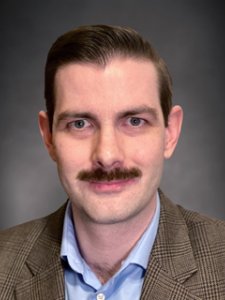
David K. Hall is an Assistant Professor in the Department of Aerospace Engineering at Pennsylvania State University, College of Engineering. His research focuses on advanced propulsion systems and aerodynamic integration for next-generation aircraft. He is actively involved in projects related to electric and hybrid-electric propulsion, boundary layer ingestion, and sustainable aviation technologies. Assistant Professor, Department of Aerospace Engineering, Penn State Researcher in Electrified Propulsion and Airframe Integration Contributor to NASA-affiliated research initiatives Dr. Hall's research interests center on improving aircraft efficiency and reducing environmental impact through innovative propulsion technologies. His work emphasizes boundary layer ingestion , distributed electric propulsion , and conceptual aircraft design optimization . He investigates how integrating propulsion systems with airframes can reduce fuel consumption and emissions, particularly in transport aircraft. The recent publications demonstrate a strong trend toward electrified and hybrid-electric aircraft systems, with a focus on mitigating flow distortion, optimizing fan-motor co-design, and assessing the environmental and economic viability of liquid hydrogen-fueled aircraft. His work bridges fundamental fluid dynamics with practical engineering applications in sustainable aviation. Dr. Hall has contributed to significant advancements in understanding the benefits and challenges of boundary layer ingestion, collaborating with leading researchers from MIT and NASA. While no formal scientific awards are listed, his publications in top-tier journals such as Journal of Turbomachinery and AIAA Journal reflect high research impact. He is likely involved in federally funded research projects, particularly through Penn State’s Vertical Lift Research Center of Excellence. He advises graduate students in aerospace research, particularly in propulsion and aerodynamics, though specific names are not listed. His lab or research group likely focuses on computational and experimental analysis of advanced propulsion concepts, possibly involving partnerships with industry and government agencies. Future work may explore cryogenic fuels, supersonic sustainable flight, and autonomy in electric aircraft.
Lt Col Darrell S. Crowe, PhD, is an Assistant Professor of Aerospace Engineering in the Department of Aeronautics and Astronautics at the Air Force Institute of Technology (AFIT), part of the Graduate School of Engineering and Management at Air University. He is an active military officer and educator contributing to advanced aerospace research and graduate education within the U.S. Air Force. Education: PhD in Aeronautical Engineering, Air Force Institute of Technology, 2014 MS in Aeronautical Engineering, Air Force Institute of Technology, 2008 BS in Aerospace Engineering, Texas A&M University, 2003 Dr. Crowe's research focuses on propulsion aerodynamics, computational fluid dynamics (CFD), supersonic and hypersonic flows, jet interaction effects, and store separation dynamics. His work involves high-fidelity simulations of exhaust nozzles, thermal distortion modeling, and active flow control, often in collaboration with military and aerospace applications. He investigates complex phenomena such as hot streaks in serpentine nozzles, film cooling, and cavity acoustics, contributing to improved aircraft and propulsion system design. His recent publications demonstrate a strong trend in advancing CFD methodologies for defense-related aerospace problems, particularly in propulsion-airframe integration, weapon bay aerodynamics, and supersonic/hypersonic flow control. The articles span both experimental validation and numerical modeling, emphasizing accuracy, turbulence modeling, and multi-physics coupling in extreme environments. Scientific Awards and Honors: AFIT Dean's Distinguished Teaching Professor, 2023 AIAA Associate Fellow, 2020 Air Force Meritorious Service Medal (2018, 2021) Joint Service Commendation Medal, 2017 Southwestern Ohio Council for Higher Education Faculty Excellence Award, 2015 Field Grade Officer of the Quarter, Air University, 2015 Air Force Commendation Medal, 2011 Company Grade Officer of the Quarter (2005, 2009) Air Force Achievement Medal, 2006 Dr. Crowe advises MS thesis students in aerospace engineering and teaches graduate-level courses in his domain. He has been involved in flight testing and simulation projects, often funded through U.S. Air Force research programs. His work supports critical defense capabilities in aircraft performance, propulsion efficiency, and weapon system integration. He is actively involved in professional organizations such as the American Institute of Aeronautics and Astronautics (AIAA) and contributes to major conferences and workshops, including the Propulsion Aerodynamics Workshops. His research is conducted within AFIT’s advanced simulation and modeling environment, leveraging tools like Kestrel and BCFD for high-fidelity analysis.
Shinji Kimura is a Professor at Waseda University's Faculty of Science and Engineering, specializing in VLSI design and electronic systems. He holds a Doctor of Engineering from Kyoto University and has been with Waseda since 2002, previously serving as Associate Professor at Nara Institute of Science and Technology (1993–2002) and Assistant Professor at Kobe University (1985–1993). Kimura's research spans low-power circuit design , approximate computing , FPGA optimization , video coding (HEVC) , and hardware acceleration for AI . His work focuses on energy-efficient architectures for applications like neural networks, computer vision, and ultra-high-definition video processing. Recent publications emphasize hardware-efficient multipliers, neural network compression, and 3D-stacked memory systems. Awards include the LSI IP Design Award (2000, 1999) and the Information Processing Society of Japan Encouragement Award (1993). He leads projects on HEVC encoding/decoding, non-volatile memory optimization, and 3D integrated circuits, with VLSI implementations achieving real-time 8K video processing.
Stanko Stankov is a researcher at the Faculty of Electronics, University of Niš, Serbia, affiliated with the Department of Automation. His work bridges academic research and industrial application in automation, control systems, and energy-efficient industrial processes. Master's Degree, Automation, Faculty of Electronics, University of Niš, 2013 Bachelor's Degree, Automation, Faculty of Electronics, University of Niš, 1987 His research focuses on industrial automation, particularly the application of PLC and SCADA systems in mineral wool production, water treatment, HVAC, and electrical installations. His work emphasizes real-time monitoring, process optimization, and energy efficiency in industrial settings. He has contributed to the design and implementation of control systems for complex technical plants, grounding, solar power, and security installations. The recent publications reveal a consistent trend in applied control engineering, with a focus on industrial process automation, data acquisition, and system integration. His work spans chemical, water, metallurgical, and energy sectors, demonstrating interdisciplinary relevance in engineering. Stanko Stankov holds professional licenses as a responsible designer and contractor in electrical and automation systems, indicating strong industry engagement. He has been involved in over 40 major design projects and the construction of more than 20 industrial facilities. He participates in national research projects and has contributed to journals such as Facta Universitatis , Tehnika , and Chemical Industry . His expertise includes solar power plants, fire protection, video surveillance, and telecommunications infrastructure.
Da Riva Enrico is an Associate Professor HES at the School of Engineering and Management of the Canton of Vaud , specializing in Heat pump and refrigeration systems , Heat exchanger design , Heat transfer , and Natural refrigerants . He leads applied research projects in energy systems and thermal dynamics. Education: MSc HES-SO in Engineering, BSc HES-SO in Energy and Environmental Techniques, BSc HES-SO in Mechanical Engineering His research focuses on two-phase flow modeling , condensation in microchannels , and thermal management of buildings , particularly with natural refrigerants and transcritical CO2 systems . Recent work includes experimental validation of low-charge heat exchangers and hybrid heat pump integration for energy-efficient buildings. He has secured grants from institutions like HES-SO , CSD Ingenieurs SA , and Vitogaz Switzerland . His projects often involve collaborations with Page Jessen , IGT , and HES-SO Valais . Da Riva is affiliated with the IE Institute (Energy Institute) and has contributed to Nuclear Technology , International Journal of Heat and Mass Transfer , and technical book chapters on Two-Phase Heat Transfer .
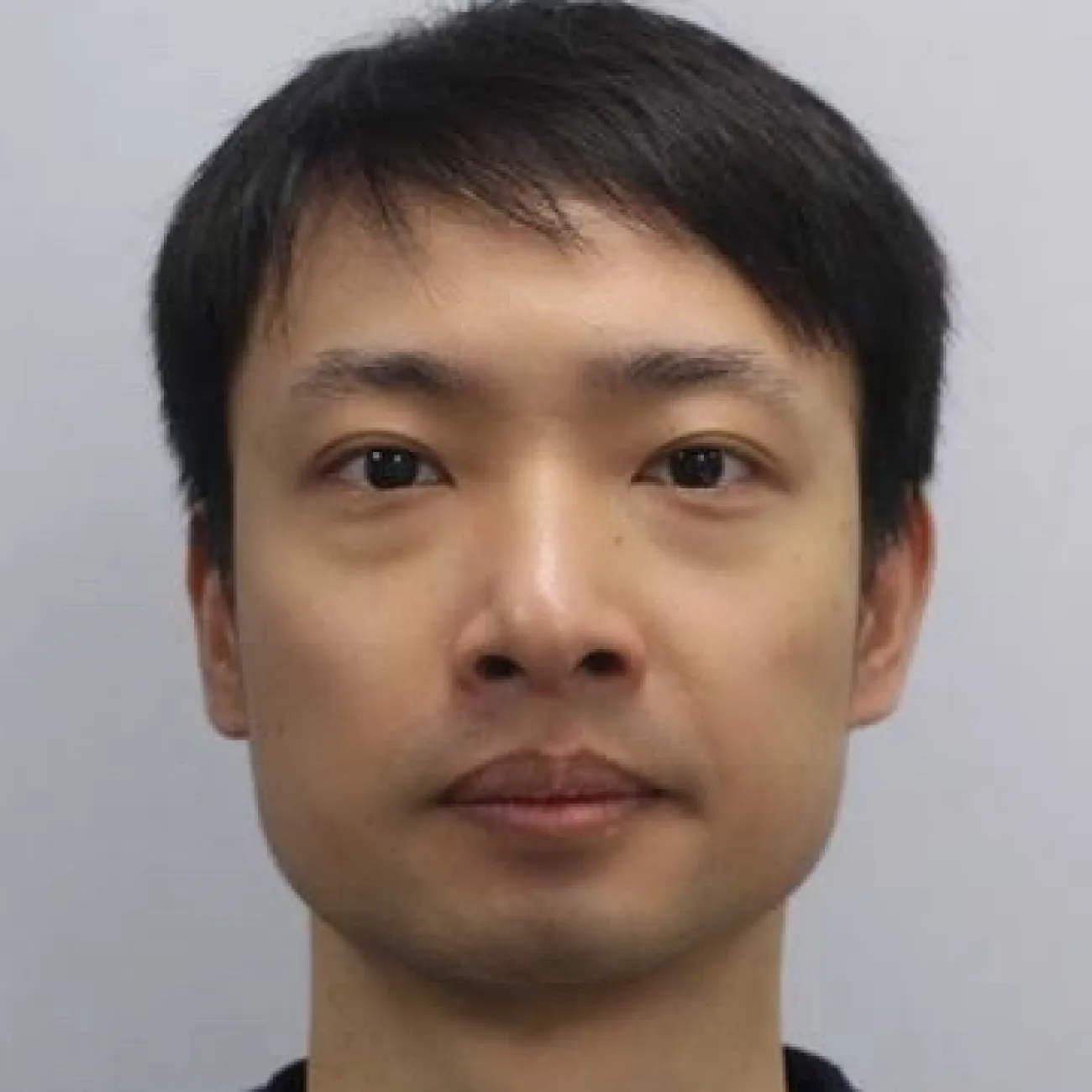
Dr Long Wu is a Senior Research Fellow at the University of Southampton specializing in aeroacoustics and computational fluid dynamics, with research focused on high-order numerical methods and design optimization for noise reduction in aerospace systems including aeroengines and turbomachinery. Holding a PhD and BEng degree, his work centers on computational techniques for simulating and mitigating aircraft engine noise through high-fidelity simulations and adjoint-based optimization of fan and compressor components. Key research areas include boundary closure stability, tone noise propagation, and nonlinear acoustic effects in engine intakes. His 2018-2024 publications demonstrate consistent expertise in computational aeroacoustics, bridging theoretical numerical methods with practical noise control solutions for turbomachinery. Recent work emphasizes stable high-order schemes and optimization frameworks for reducing buzz-saw noise and improving aerodynamic-acoustic performance. As a member of the University's Acoustics Group, Dr Wu supervises PhD student Joseph Stephen Paul Binns on aeroengine noise propagation and accepts new PhD applicants. No scientific awards or research grants are documented in his current profile.
Fred Schauer is an Associate Professor in the Department of Aeronautics and Astronautics at the Air Force Institute of Technology (AFIT), part of Air University at Wright-Patterson Air Force Base, Ohio. He is a leading researcher in propulsion systems, particularly in the development and analysis of detonation-based engines such as pulsed and rotating detonation engines. His work integrates experimental testing, thermodynamic modeling, and advanced diagnostics to advance aerospace propulsion technologies. His educational background includes: BS in Mechanical Engineering, University of Dayton, 1993 Ph.D. in Mechanical Engineering, University of Illinois at Urbana-Champaign, 1998 Air War College, 2008 Dr. Schauer's research focuses on energy, propulsion, and power, with special emphasis on novel thermodynamic cycles, detonation dynamics, laser diagnostics, and flame-turbulence interactions. His work has significantly contributed to understanding and optimizing rotating and pulsed detonation engines, including performance scaling, nozzle integration, and fuel injection strategies. He has explored both conventional and bio-derived fuels to enhance efficiency and sustainability in small-scale propulsion systems. The 15 most recent publications reflect a strong trend toward experimental validation of rotating detonation engines, thermodynamic modeling, and performance optimization. These works span high-speed propulsion, combustion stability, and integration with turbines and ejectors. Keywords across these articles include aerospace engineering, propulsion, combustion, and mechanical systems, with subfields such as rotating detonation, pulsed detonation, nozzle dynamics, fuel efficiency, and thermodynamic modeling. His scientific achievements have been widely recognized: AFRL Commander’s Cup and Innovation Award Two-time winner of the AFRL Science & Technology Achievement Award ASME Airbreathing Propulsion Award Finalist for the Collier Trophy Finalist for Aviation Laureate AFRL Fellow Air Force Scientist of the Year AIAA Engineer of the Year Dr. Schauer has served as a research advisor for numerous M.S. and Ph.D. students and maintains active collaborations with AFRL, NASA, DOE, and academic institutions. His research group has published extensively and led major projects, including the AFRL in-house detonation propulsion research program from 1997 to 2019. He previously led the Propulsion and Power Advanced Concepts Group, which operated the Detonation Engine Research Facility and the Small Engine Research Laboratory, driving innovation in next-generation propulsion systems. His research labs and teams include the Detonation Engine Research Facility and the Small Engine Research Laboratory, where experimental and computational studies on advanced propulsion concepts are conducted. These facilities support high-pressure, high-speed combustion research and enable the development of practical applications for military and aerospace platforms.
Professor Marko Bacic is a Professor of Engineering Science at the University of Oxford and Engineering Fellow in Control Systems and Gas Turbine Functionality at Rolls-Royce, PLC. He leads research at the Oxford Thermofluids Institute with dual focus on academic innovation and industrial gas turbine applications, holding continuous university affiliation since 2003. His educational credentials include: MEng in Engineering and Computing Science (2001), University of Oxford DPhil in Model Predictive Control (2004), University of Oxford Research spans Control Engineering , Gas Turbine Systems , and Active Flow Control , emphasizing hardware-in-the-loop simulation, thermo-mechanical systems, and fluid-structure interactions. Current projects address aerospace control, active tip clearance, and hybrid-electric propulsion through the Active Flow Control for Gas Turbines research group. Recent publications (2023-2025) reveal three dominant trends: hybrid-electric propulsion optimization for urban air mobility, acoustic excitation techniques for flow control in compressors, and thermal management innovations in turbine cooling systems, demonstrating strong industry-academia translation. Major awards include: Sir Henry Royce Award for Technical Innovation (2012) Sir Henry Royce Patent Award (2017) RAEng Silver Medal (2020) Research funding exceeds £3M through collaborations with Rolls-Royce and EPSRC: 'Active Control of Fluid Flows in Gas Turbines' (£1.1M, EPSRC/Rolls-Royce, 2014–2017) 'Advanced Transient Heat Transfer Facility' (£1.3M, Rolls-Royce/ATI, 2011-2015) 'Real-time transient disc modelling' (£72k, Rolls-Royce, 2011-2014) 'Hardware-in-the-loop simulation for UAVs' (£114k, EPSRC) 'Non-return valve failure investigation' (£126k, Rolls-Royce/EPSRC) 'Engineering applications of bird flight' ($300k, AFOSR) He directs experimental facilities including a subscale test rig for compact heat exchangers and hardware-in-the-loop simulators for gas turbine systems, with active Rolls-Royce partnerships driving patent development and market deployment.
Kazuyoshi Miyagawa is a Professor at Waseda University's Department of Applied Mechanics and Aerospace Engineering within the Faculty of Science and Engineering, School of Fundamental Science and Engineering. With a Doctor of Engineering from Osaka University, he has maintained a continuous academic career at Waseda University since 2011, progressing from Associate Professor to full Professor. His educational background includes undergraduate and graduate studies in Mechanical Engineering at Waseda University, followed by specialized research at Osaka University's Graduate School of Engineering Science. Professor Miyagawa's research focuses on Fluid Engineering, Fluid Machinery, Cavitation, and Flow Induced Vibration . His work bridges theoretical fluid dynamics with practical applications in turbomachinery, particularly in hydraulic turbines, pumps, and rocket turbopumps. His research demonstrates a consistent emphasis on improving efficiency, stability, and reliability of fluid machinery through innovative design and thorough understanding of complex flow phenomena. His extensive publication record (107 papers with 683 Scopus citations and 1543 Google Scholar citations) reveals a strong focus on draft tube flow in hydraulic turbines, cavitation phenomena, and unsteady flow characteristics in various turbomachinery applications. His recent work shows increasing attention to computational fluid dynamics validation through experimental methods and practical engineering solutions for flow instability problems. Scientific Awards Multiple Technical and Paper Awards from the Turbomachinery Society of Japan (2001-2021) Recognition for development of new water turbines, high-efficiency turbochargers, and low-noise pumps Research on Francis turbine performance and cavitation phenomena Professor Miyagawa actively contributes to the engineering community through leadership roles including President of the Turbomachinery Society of Japan (2023-present) and Board Director of The Japan Federation of Engineering Society (2025-present). His professional memberships span multiple international and Japanese engineering societies including ASME, IAHR, and The Japan Society of Mechanical Engineers.
Jeff Defoe is a Professor in the Department of Aerospace Engineering at the University of Windsor's Faculty of Engineering. His research focuses on advancing aerospace and mechanical engineering through computational fluid dynamics (CFD), turbomachinery optimization, and aeroacoustics. He collaborates with jet engine manufacturers to enhance aircraft efficiency and has pioneered low-cost ventilator designs for global health applications. Defoe is a recipient of the 2016 Medal of Excellence for dedication to the Faculty of Engineering. His work integrates theoretical, numerical, and experimental methods to address challenges in fan/compressor performance, automotive thermal management, and crosswind effects on aerodynamic systems. Defoe has mentored the University of Windsor Rocketry Team, which achieved third place in an international competition in 2017. His research spans applications from aerospace propulsion systems to sustainable automotive engineering solutions. Key contributions include body-force modeling techniques for turbomachinery, nonlinear control systems for automotive air conditioning, and predictive models for gas turbine dynamics. His publications emphasize innovations in CFD algorithms, turbulence modeling, and noise reduction strategies for high-performance systems.
Eckhard A. Groll is the William E. and Florence E. Perry Head of Mechanical Engineering and Reilly Distinguished Professor at Purdue University's School of Mechanical Engineering. His leadership spans academic administration and cutting-edge research in thermal sciences, HVAC&R systems, and sustainable energy technologies. Education: Doctor of Engineering (Doktor-Ingenieur), Mechanical Engineering, University of Hannover (1994) Master of Engineering (Diplom-Ingenieur), Ruhr-University Bochum (1989) Pre-Diploma in Mechanical Engineering (Diplom-Vorprüfung), Ruhr-University Bochum (1986) Research focuses on thermal systems optimization , refrigeration technology , and high-performance building solutions . His work integrates experimental analysis, numerical modeling, and system-level optimization to advance energy-efficient technologies. Notable contributions include innovations in chemical looping heat pumps , CO2-based refrigeration cycles , and smart grid integration . Recent publications explore predictive control in HVAC systems, low-GWP refrigerants, and microgravity thermal systems. Awards include the J&E Hall International Gold Medal , Purdue Innovator Hall of Fame , and multiple recognitions for teaching and service. He has advised over 50 graduate students and holds leadership roles in ASHRAE and the International Institute of Refrigeration. Current initiatives include DC nanogrid systems , electrochemical heat pumps , and spacecraft thermal management . Active collaborations span Purdue’s Center for High Performance Buildings and global institutions like Shanghai Jiao Tong University.
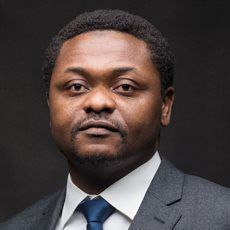
Dr. Archibong Eso Archibong is an Associate Professor in Mechanical Engineering and serves as the Programme Director for Mechanical Engineering and Academic Lead for Engineering Labs & Workshops at the University of Birmingham Dubai Campus. He is affiliated with the School of Engineering and the Department of Mechanical Engineering, contributing to both academic leadership and research innovation. Education: PGCert in Higher Education, University of Birmingham (UK), 2021 PhD in Energy Engineering (Multiphase Flows), Cranfield University (UK), 2015 MSc in Process Systems Engineering, Cranfield University (UK), 2011 BEng (Hons) in Mechanical Engineering, Cross River University of Technology (Nigeria), 2008 Archibong's research focuses on multiphase flow systems with applications in low-carbon energy, carbon removal (including Direct Air and Ocean Capture), industrial processes, and biomedical engineering. His work integrates computational modeling, experimental analysis, and economic assessment to develop sustainable solutions. Key areas include hydrogen production, hybrid energy cycles, microbial fuel cells, and fluid-structure interaction in heart valves. He also contributes to STEAM pedagogy, digital education, and curriculum design for underserved communities. The recent publications reflect a strong trend in energy sustainability, with a focus on thermodynamic efficiency, multiphase flow modeling, and clean energy integration. Articles span biomedical applications of fluid dynamics, hydrogen safety in nuclear systems, and machine learning for energy prediction in buildings, showcasing a multidisciplinary approach to engineering challenges. Scientific Awards and Honors: Senior Fellow (SFHEA), Higher Education Academy (Advance HE), 2022 Fellow (FIMechE), Institution of Mechanical Engineers, 2022 Chartered Engineer, Engineering Council (UK), 2021 MIT ETT Fellowship supported by TotalEnergies, 2019 Cranfield University/HEFCE Doctoral Studentship (2012–2015) Archibong actively advises on energy policy and delivers workshops in lean-resource settings. He has served as a grant reviewer for the British Council and sits on the Topical Advisory Board for Fluids . He is involved in UAE national initiatives on hydrogen development and waste-to-energy projects. He mentors prospective MRes and PhD researchers and collaborates with industry partners such as BP, Schlumberger, and TotalEnergies. His leadership extends to curriculum development for non-profits and humanitarian agencies aligned with the UN Sustainable Development Goals. He leads research in fluids and multiphase systems, with active projects on electrochemical hydrogen production, hybrid energy cycles, and Direct Air Capture technologies. His team employs advanced modeling and experimental techniques to address global challenges in energy, environment, and healthcare.