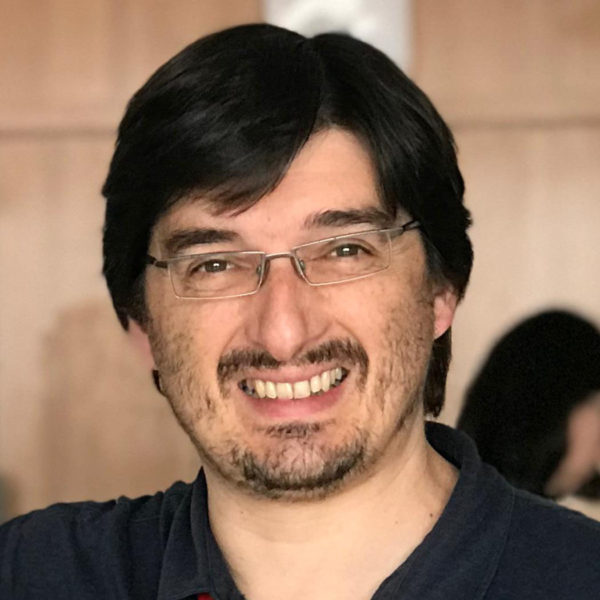
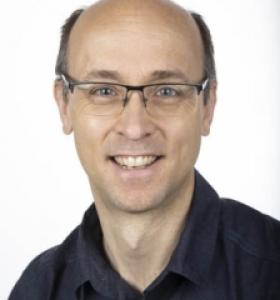
Thierry Badard is an Associate Professor at the Department of Geomatics Sciences , Université Laval, where he also serves as Director of the Center for Research in Geospatial Data and Intelligence (CRDIG) . With over 28 years of experience in geospatial science, he leads research initiatives at the intersection of GeoAI , LiDAR processing , and smart city technologies . Director, CRDIG (2016-2022) Steering Committee Member, Big Data Research Centre (CRDM) Researcher, Institute for Intelligence and Data (IID) Research Expertise spans geospatial big data, GeoNLP, and IoT applications for digital twins. His work addresses flood risk modeling , 3D urban analytics , and environmental monitoring through AI-driven solutions. Recent publications focus on contrastive learning for LiDAR segmentation and geospatial ontologies for early warning systems. Grant Leadership includes collaborative projects on smart insurance analytics (2018-2025), Arctic bioaerosol research (2019-2025), and Quebec-Morocco digital twin partnerships (2022-2023). He has advised 15+ graduate students in geomatics and related fields.
Antoine Doucet is a Full Professor at the University of La Rochelle, where he teaches in the Computer Science department of the University Institute of Technology (IUT). He conducts his research at the Computer Science, Image and Interaction Laboratory (L3i) within the 'Images and Content' team, which he has led since 2015. He is also a member of the Franco-Vietnamese laboratory ICTLab and serves as Director of the ICT Department at the University of Science and Technology of Hanoi since 2016. His research focuses on information retrieval, natural language processing, text mining, and artificial intelligence, with emphasis on automatic analysis of text in all forms across languages. His work prioritizes generic methods that work across languages without relying on language-specific linguistic resources. This approach is particularly valuable for under-resourced languages and noisy texts from sources like social media or OCR output. As coordinator of the Horizon 2020 NewsEye project, he led efforts to improve access to European historical newspapers through semantic enrichment and advanced search capabilities. His research has practical applications in epidemic surveillance, document fraud detection, and historical content analysis. The NewsEye project involved 11 teams across Europe, including 3 national libraries and multiple research groups. Best paper award from IMIA Yearbook 2016 (among 1,272 candidates) Best paper award at HCI International with Ilona Nawrot Press coverage for ACL 2013 paper in major publications Recipient of French scientific excellence award (Prime d'Excellence Scientifique) Doucet actively supervises PhD and Master's students, with recent advisees including Chloé Artaud (Document fraud detection), Paul Martin (Photograph Time-Stamping), Ilona Nawrot (Temporal and Multilingual Text Analysis), and Gaël Lejeune (Multilingual Epidemic Surveillance). His research has been funded through multiple projects including ANR Digistory, AmeliOCR, PHC Nusantara, and USTH SWARMS. He has also coordinated significant European projects like NewsEye and Embeddia. At L3i, he leads a research group of approximately 40 persons focused on Images and Digital Content. His work bridges theoretical advances in multilingual text processing with practical applications in historical document analysis, epidemic surveillance, and document security.
Michalis Vazirgiannis is a Professor at LIX, École Polytechnique in France, where he leads the Data Science and Mining group (DaSciM). He holds a degree in Physics and a PhD in Informatics from Athens University (Greece), and a Master's degree in AI from Heriot Watt University, Edinburgh (UK). His academic career spans multiple prestigious institutions including Fraunhofer and Max Planck MPI in Germany, INRIA/FUTURS in Paris, AUEB in Greece, Telecom-Paristech, ENS in France, Tsinghua and Jiaotong Shanghai in China, and Deusto University in Spain. Professor Vazirgiannis's research focuses on machine and deep learning methods for graph analysis, including community detection, graph clustering, node embeddings, and influence maximization. His work in text mining encompasses Graph of Words, word embeddings with applications to web advertising and marketing, event detection, and summarization. He has active collaborations with industrial partners in analytics and machine learning for large-scale data repositories across various application domains such as recommendations, meeting summarization, influence metrics for scientific and social networks, and predictive maintenance. His recent publications demonstrate a strong emphasis on Graph Neural Networks, multilingual NLP (particularly for French and Arabic), and applications of deep learning to diverse domains including social networks, legal text, and biomedical data. There's a clear trajectory toward developing more efficient, explainable, and specialized models that address real-world challenges in data analysis. ERCIM fellowship Marie Curie EU fellowship Tencent "Rhino-Bird International Academic Expert Award" (2017) Best Paper Award at IJCAI 2018 Best Paper Award at CIKM 2013 Professor Vazirgiannis has supervised 29 completed PhD theses and has attracted significant R&D funding from national and international sources, including research agencies and industrial partners such as Google, Airbus, Huawei, Deezer, BNP, and LVMH. He leads or has led several academic research chairs including DIGITEO (2013-15), ANR/HELAS (2020-25), and AXA (2015-2018). The DaSciM research group, which he leads at École Polytechnique, has extensive experience in real-world R&D projects involving large-scale data mining. The team maintains active collaborations with major industrial partners including AIRBUS, Google, BNP, Tencent, and Tradelab, working on cutting-edge machine learning projects. The group has co-organized major conferences such as ECML PKDD 2011 and ECML/PKDD 2017 and participates in the senior organization of AI and data mining events like AAAI and IJCAI.
José Picheral is a Professor at CentraleSupélec, affiliated with the Laboratory of Signals and Systems (L2S). He holds a PhD (2003) and HDR (2017) in high-resolution signal processing methods and inverse problems. His research focuses on array processing, source localization, acoustic imaging, and vibration analysis, with applications in aeroacoustics, automotive systems, and industrial monitoring. He has supervised multiple PhD students and contributed to projects like Valeo’s smartphone-based car key replacement system. Education: Engineering Degree: Supélec (1999) and Politecnico di Milano (1999, Erasmus-TIME) PhD: Paris Sud University (2003) Habilitation (HDR): Université Paris Sud (2017) Research Interests: High-resolution methods for distributed sources, sparse signal processing, acoustic imaging, asynchronous measurements, and sensor array design. Current projects include spatial source covariance estimation, EEG spectrum analysis, and automotive applications using smartphone localization. Key Contributions: Over 50 publications in top journals/conferences (e.g., IEEE Transactions, ICASSP). Notable work on MUSIC algorithm robustness, DAMAS optimization, and sparse approaches for tip-timing signals. Advising & Collaboration: Supervised 7 PhD students. Collaborations with SAFRAN, Valeo, and academic teams in Bayesian inference and inverse problems. Active in L2S’s Inverse Problems Group and SYCOMORE team. Labs/Teams: Member of L2S’s Signal Processing and Statistics group, leading research in systems and control, telecommunications, and energy systems.
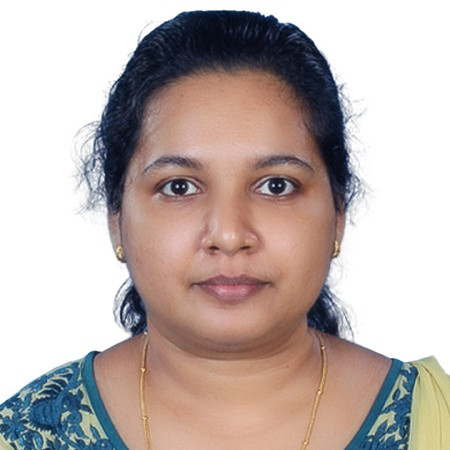
Raji Susan Mathew is an Assistant Professor at the School of Data Science, Indian Institute of Science Education and Research Thiruvananthapuram (IISER TVM). Her research focuses on regularization techniques, compressed sensing, and deep learning for medical image reconstruction, particularly in magnetic resonance imaging (MRI) and quantitative susceptibility mapping (QSM). Current affiliation: School of Data Science, IISER TVM Prior appointments: C. V. Raman Postdoctoral Fellow and Research Associate III at Indian Institute of Science, Bangalore Education: Ph.D. in MR image reconstruction from IIIT-Kerala, M.Tech in Signal Processing from Cochin University of Science and Technology, B.Tech in Electronics and Communication Engineering from Mahatma Gandhi University Her recent publications highlight expertise in AI-driven medical imaging solutions, including QSM optimization , vision transformers for nerve tracking , and unsupervised learning for corrosion analysis . She has also contributed to book chapters on parallel MRI theory and regularization frameworks. Scientific awards include the C. V. Raman Postdoctoral Fellowship and Maulana Azad National Fellowship , supporting her work on efficient algorithms for medical image processing. Dr. Mathew advises Ph.D. and BS-MS students on topics like spiking neural networks in imaging , uncertainty-aware QSM reconstruction , and lightweight AI models for disease classification . She actively reviews for journals like IEEE Transactions on Medical Imaging and conferences like ISBI and ICASSP.
Padakandla Arun is a Professor in the Communication Systems department at EURECOM. His research focuses on quantum information theory, network communication, and coding theory, with recent work on multi-terminal quantum channels and machine learning applications in quantum measurement systems. Affiliation: EURECOM - Communication Systems Academic Rank: Professor Research Interests Prof. Padakandla investigates quantum communication protocols, classical-quantum hybrid systems, and structured code design for multi-user channels. His work bridges information theory with quantum mechanics, emphasizing achievable rate regions and measurement simulation techniques. Scientific Contributions Key trends in his publications include: Quantum MAC and interference channel analysis PAC learning frameworks for POVM hypothesis classes Algebraic structures in network information theory Contact Email: Arun.Padakandla@eurecom.fr
Gilles Blanchard is a Professor at Paris-Saclay University , affiliated with the Institute of Mathematics in Orsay. His research focuses on statistical learning theory , multiple testing , kernel methods , and high-dimensional statistics . Key Contributions: Decontamination of mutually contaminated models Novelty detection with semi-supervised learning Non-Gaussian component analysis (NGCA) for dimension reduction Scientific Awards: PhD thesis award from University of Paris 6 (2004) Google Scholar h-index of 49 with over 8,000 citations Recent Research Trends: False Discovery Rate (FDR) control in structured hypothesis testing Conformal prediction for link analysis Adaptive sampling in restless bandits Statistical learning on measure spaces His work bridges theoretical statistics with practical machine learning applications, including genome-wide association studies , persistent homology in topological data analysis , and random feature moments for compressive learning . He is involved in open-source software development like μTOSS for multiple testing standardization and has advised on projects related to flow cytometry and Hadrontherapy applications.
Jérémie Chalopin is a Directeur de Recherche (DR CNRS) at LIS (Laboratoire d'Informatique et Systèmes) in Marseille, where he is a member of the DALGO research team. His position at CNRS is affiliated with Aix-Marseille University, one of France's largest multidisciplinary universities. As a senior researcher with habilitation to supervise research (awarded in 2020), he plays a significant role in the French theoretical computer science community. Chalopin's research primarily focuses on distributed algorithms and metric graph theory , with substantial contributions to understanding the theoretical foundations of distributed computing systems and the geometric properties of graphs. His work bridges theoretical computer science with practical applications in mobile agent systems, programmable matter, and network algorithms. He has developed fundamental results in areas including leader election, graph exploration, metric embeddings, and sample compression schemes for graph structures. Analysis of his recent publications reveals a strong trend toward interdisciplinary work combining distributed computing with geometric graph theory. His research on balls in graphs has applications in machine learning, while his work on programmable matter addresses cutting-edge challenges in distributed robotics. The consistent high-quality output in top theoretical venues demonstrates sustained research productivity across multiple subfields. As a habilitated researcher at CNRS, Chalopin supervises PhD students and participates in research projects, though specific details about current students or grants aren't provided in the source material. His long-standing collaboration with Victor Chepoi (appearing in numerous publications) represents a significant research partnership in metric graph theory. Chalopin is based at LIS in the TPR2 building (office 05.28, 5th floor) where he works as part of the DALGO team, which focuses on algorithms and theoretical computer science. His research environment provides strong connections to both the French and international theoretical computer science communities through collaborations with researchers across Europe and beyond.
Antoine Limasset is a Researcher (Chargé de recherche) at CNRS, affiliated with the CRIStAL research center and the BONSAI team at Université de Lille, France. His work focuses on computational methods and data structures in sequence bioinformatics, particularly addressing challenges in genome assembly, metagenomics, and third-generation sequencing data analysis. He holds a Ph.D. in Computer Science from Université de Rennes 1 (2014-2017), supervised by Pierre Peterlongo and Dominique Lavenier, followed by a postdoctoral position at Université Libre de Bruxelles (2017-2018). Key research areas include de Bruijn graph algorithms, k-mer indexing, and scalable genomic data processing. Limasset has developed tools like BLight for efficient k-mer management, STRONG for metagenomic strain resolution, and ELECTOR for evaluating long-read correction methods. He actively contributes to conference committees, including SPIRE, RECOMB, and ACM-BCB, and leads the ANR JCJC grant on graph structures for third-generation sequencing exploration. He advises two Ph.D. students: Coralie Rohmer (on multiple alignment algorithms for third-gen sequencing) and Léa Vandamme (on indexing third-gen sequencing datasets). His publications span high-impact venues like ISMB, WABI, and Genome Biology, with a focus on optimizing algorithms for genomic data scalability and accuracy.
Prof. Marc CASTELLA is a Lecturer at Telecom SudParis, part of the SOP (Signal and Optimization Processing) unit. His research focuses on signal processing, particularly in blind source separation, nonlinear reconstruction, and optimization techniques. He has extensively contributed to areas such as sparse signal recovery, neural networks, and tensor decomposition. His work often addresses challenges in noisy environments and nonlinear systems. Recent publications include advancements in clipped signal recovery, motor torque estimation, and global optimization methods. Though no specific awards are listed, his prolific publication record reflects his impactful contributions to signal processing and applied mathematics. He collaborates with researchers like Jean-Christophe Pesquet and Arthur Marmin on projects involving polynomial systems and neural network models. His work is applied in diverse fields from industrial electronics to data analysis.
Patricia Desgreys is a full professor at Institut Polytechnique de Paris , where she leads the Communication Circuits and Systems (C2S) research team within the Laboratory of Information Processing and Communication (LTCI) . Her work spans analog and mixed-signal (AMS) circuit design, cognitive radio systems, and digitally enhanced mixed-signal architectures for IoT and cyber-physical systems. Agrégation in Applied Physics, École Normale Supérieure de Cachan M.Sc. and Ph.D. in Microelectronics, University of Bordeaux (1995-1999) Her research focuses on AMS circuit design from transistor to architectural levels, including software-defined radio , cognitive radio , and neural-inspired analog-to-feature converters . She has contributed to digital predistortion techniques for power amplifiers, compressive sampling for astrophysical signals, and leadless pacemaker communication channels . Her 150+ publications highlight advancements in wireless systems, biomedical sensors, and 5G infrastructure. Recent work (2024) explores AI-driven analog design and 75 years of circuits innovation in IEEE Transactions. She has graduated 16 PhD students and co-authored the book Digitally Enhanced Mixed Signal Systems (IET, 2019). Her leadership includes Technical Program Chair roles at IEEE PRIME (2019), ICECS (2016), and NEWCAS (2012-2013), plus editorial work for IEEE TCAS-II special issues (2018-2019). She directs the ICS Master’s program (Institut Polytechnique de Paris/Paris-Saclay University) and teaches advanced electronics at SJTU-ParisTech in Shanghai . Her patents include signal sampling circuits and power amplifier linearization techniques.
Avetik Karagulyan is a CNRS Research Scientist at L2S (Laboratory of Signals and Systems) affiliated with CentraleSupélec in France. He holds a PhD from CREST (Center for Research in Economics and Statistics), Paris, under Prof. Arnak Dalalyan, and an MSc in Mathematics, Vision, Learning from ENS Paris-Saclay. His research focuses on statistical sampling methods, optimization, and their applications in machine learning, particularly federated learning and non-convex optimization. He has contributed to advancements in Langevin Monte Carlo algorithms, variance reduction techniques, and distributed optimization frameworks. Education: PhD, Statistics, CREST, Paris (2021) MSc, Mathematics, Vision, Learning, ENS Paris-Saclay (2018) BSc, Mathematics and Mechanics, Yerevan State University (2017) Research Interests: He investigates sampling algorithms (e.g., Langevin Monte Carlo), federated learning, non-convex optimization, and their theoretical guarantees. His work bridges stochastic processes, optimization theory, and machine learning applications. Labs/Teams: He is part of the L2S lab, contributing to groups like MODESTY (Modeling for Control of Dynamic Systems) and SYCOMORE (Robust Control of Complex Systems). His research aligns with transversal axes in energy and industry innovation at Paris-Saclay. Grants & Advising: No explicit grants or advisees listed, though his collaborative projects suggest involvement in funded research initiatives.
Frédéric Larue is a research engineer specializing in 3D scanning and computer graphics. He holds a PhD in Computer Science from the University of Strasbourg (2008) and has worked at ICube Lab (University of Strasbourg) from 2011 to 2020. Previously, he conducted postdoctoral research at CNR ISTI (Italy) and Fraunhofer IAIS (Germany). His expertise spans geometry processing, appearance reconstruction, and virtual reality. Education : PhD in Computer Science, University of Strasbourg, 2004–2008 Research Interests : 3D scanning technologies Cultural heritage digitization Geometry and appearance processing Real-time rendering and texture synthesis Light field acquisition Virtual reality applications Publications : Focus on 3D digitization pipelines, texture synthesis algorithms, and light field rendering techniques. Key contributions include the ExRealis software for 3D data processing and light field regularization methods. Labs/Teams : ICube Lab (University of Strasbourg), part of the Computer Graphics & Geometry group.
Michael Gide JABBOUR is an Associate Professor in Quantum Communication at Télécom SudParis, part of the Institut Polytechnique de Paris . He is affiliated with the ISTeC institute and the Department of Communications, Images, and Information Processing (CITI). His research focuses on quantum information theory, quantum optics, and mathematical physics, particularly in infinite-dimensional systems. Key areas include entropy continuity bounds, bosonic quantum channels, and quantum interference phenomena. Education and Career: PhD from École polytechnique de Bruxelles (2015), thesis: Bosonic systems in quantum information theory Postdoctoral fellowships at University of Cambridge (2016-2018), Technical University of Denmark (2018-2019), and École polytechnique de Bruxelles (F.R.S.-FNRS Senior Fellow) Joined Télécom SudParis as Associate Professor in 2020 Research Interests: Explores fundamental aspects of quantum information through entropy analysis, Gaussian channels, and bosonic systems. Recent work addresses entanglement engines, timelike quantum interference, and majorization principles in quantum phase space. His studies bridge quantum thermodynamics with mathematical rigor, emphasizing non-Gaussian operations and infinite-dimensional systems. Publications: 15+ peer-reviewed articles and preprints since 2015, including high-impact journals like Physical Review Letters , IEEE Transactions on Information Theory , and Quantum . Key themes include entropy continuity, bosonic Gaussian states, and quantum interference in time. Future Work: Current projects involve boson-fermion complementarity, complexity of Gaussian optics, and central limit theorems for distinguishable bosons. Ongoing collaborations span quantum thermodynamics and foundational entropy principles.
Jose Picheral is an active researcher at the Signals and Systems Laboratory specializing in signal processing with expertise in source localization, spectral analysis, and vibration analysis. His work bridges theoretical methodologies with practical applications in aerospace engineering, acoustics, and mechanical systems monitoring. His primary research interests include: Signal Processing Source Localization Spectral Analysis Vibration Analysis Acoustic Imaging Array Signal Processing Analysis of his 15 most recent publications (2023-2025) reveals a dominant focus on sparse signal processing techniques applied to aircraft engine vibration monitoring through tip-timing analysis, high-resolution acoustic imaging methods, and non-uniform antenna array processing. Key trends include the development of OMP-based spectral analysis for blade vibration, manifold learning approaches for impulse response reconstruction, and robust super-resolution techniques for correlated source localization in noisy environments. No scientific awards were documented in the provided source material. The text contains no information regarding student advising activities or research grant funding. He operates within the Signals and Systems Laboratory framework, which concentrates on advanced signal processing solutions for engineering challenges, particularly in aerospace vibration analysis and acoustic source mapping through innovative sparse recovery and manifold-based methodologies.