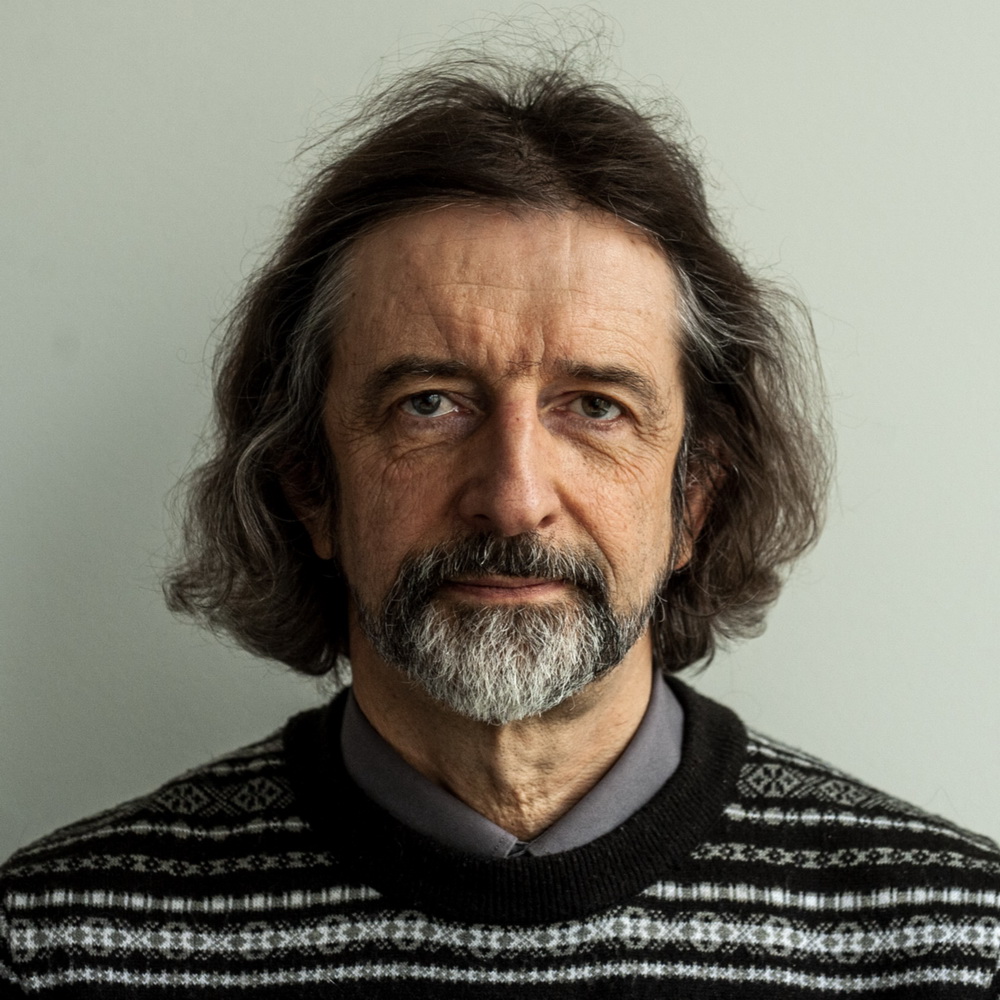
Dr. Saulius Daugėla is a Researcher at the Institute of Applied Electrodynamics and Telecommunications (IAET) within Vilnius University's Faculty of Physics. His work focuses on material engineering, particularly in the field of solid electrolytes and ionic conductors for energy applications. Dr. Daugėla's research interests include: Solid electrolytes Impedance spectroscopy XRD analysis Materials characterization Energy storage materials His teaching responsibilities include Principles of Telecommunications, bridging his materials science expertise with telecommunications engineering. Dr. Daugėla's publication record shows a progression from fundamental studies of ionic conductors toward practical energy applications, particularly in fuel cells and sodium-ion battery technology. Analysis of his recent publications reveals a strong focus on pyrophosphate compounds and ceramic electrolytes, with increasing emphasis on energy storage applications. His work demonstrates consistent collaboration with researchers like T. Šalkus, A. Kežionis, and others, spanning multiple institutions across Europe. Dr. Daugėla's research trajectory shows a clear shift toward sustainable energy solutions, with his most recent work focusing on sodium-ion battery materials for aqueous systems, addressing critical challenges in electrochemical degradation and energy density.
Dr. Vygintas Jankauskas serves as a Professor and Chief Researcher at Vilnius University's Institute of Chemical Physics within the Faculty of Physics. His research spans Physics (N 002) and Materials Engineering (T 008) disciplines, focusing on advanced materials for optoelectronic applications. His primary research interests include photo-electrical properties, charge transport mechanisms, xerographic time-of-flight measurements, drift mobility characterization, crosslinked layers development, and optoelectronic devices with particular emphasis on solar cell technologies. His work bridges fundamental physics with practical applications in renewable energy. Analysis of his publication record reveals a strong focus on perovskite solar cell technology, particularly on developing novel hole-transporting materials that enhance efficiency and stability while reducing production costs. His research demonstrates consistent innovation in molecular engineering of organic semiconductors and cross-linkable structures for photovoltaic applications. Lithuanian Science Award (2006) for work cycle "Organic optoelectronics: new organic materials, photoreceptors and physical phenomena in them" Vilnius University Rector's prices (2001, 2005, 2016) Professor Jankauskas has supervised 64 student coursework and final theses between 2008-2022, including doctoral students Egidijus Kamarauskas and Jonas Nekrasovas. He leads significant research projects including "Research of the energy levels and charge transfer parameters of new bipolar organic materials" (2015-2018) and "Development of cross-linkable structures for solar cells" (2022-2025). His teaching portfolio includes Computer design of electronic circuits and systems, Physical and technical foundations of information registration, Integrated circuits, and Wave physics laboratory work. He actively participates in academic governance as a member of the study committee for the master's program in "Life and chemical physics" (2018-2021) and promotes science through "Spaceship Earth" festival announcements (2014-2019).
Dr. Saulius Miasojedovas is a Senior Research Fellow at the Institute of Photonics and Nanotechnology (IPN) within Vilnius University. His research focuses on semiconductor materials, particularly perovskite , GaN-based compounds , and deep-UV spectroscopy , with expertise in carrier dynamics and luminescence efficiency. Current affiliation: Vilnius University (IPN) Research domains: Semiconductor Physics, Optoelectronics, Materials Science His work explores carrier diffusion , recombination processes , and exciton behavior in hybrid perovskite and III-nitride materials. Recent publications analyze additive effects on perovskite carrier transport (2018) and high-excitation luminescence in GaN (2011, 2005, 2004). Earlier studies (2004-2005) investigated optical gain in GaN structures. Dr. Miasojedovas collaborates extensively with researchers like Prof. Saulius Juršėnas and Dr. Patrik Ščajev on perovskite and GaN projects. His contributions span experimental characterization techniques including time-resolved luminescence and two-photon excitation . While no awards are explicitly mentioned, his 2017-2020 participation in 'Origins and pathways of non-radiative recombination' (RCL grant) indicates active involvement in funded research.
Roland Tomašiūnas is a Professor at Vilnius University's Faculty of Physics and a Principal Investigator at the Institute of Photonics and Nanotechnology (IPN) . His research spans Materials Engineering (T 008) and Physics (N 002) , focusing on semiconductor technologies and photonic materials. Research Focus : MOCVD technology, GaN-based compounds, perovskite materials, quantum structures, and photonic crystals. Publication Trends : Recent work explores carrier dynamics in LEDs, polarity inversion in GaN structures, and oxide film characterization. His studies integrate nanotechnology with optoelectronics , emphasizing advanced device interfaces. Academic Leadership : Coordinated international projects like SMART (2018-2021) and JSPS Japan-Lithuania joint research (2021-2023). Supervises PhD candidate Marek Kolenda and teaches graduate courses in Advanced Material Microscopy and Metamaterials . Collaborative Impact : Active in doctoral committees and standards boards, with roles in the Committee for Doctoral Studies (Materials Engineering) and Technical Committee 73 Nanotechnologies .
Dafei Yuan is a Postdoctoral Scholar at the Robert Mehrabian College of Engineering , University of California, Santa Barbara, affiliated with the Segalman Lab . His research focuses on organic semiconductors, thermoelectric materials, and polymer design for electronic applications. Research Interests Organic Electronics Thermoelectric Energy Conversion Conjugated Polymer Synthesis Charge Transport Optimization Nanoscale Material Engineering Publications (Selected Trends) : Recent work explores n-type polymer semiconductors , polymorph control in organic crystals , and interfacial doping techniques to enhance electrical conductivity and stability. Key themes include molecular architecture, heavy atom effects, and aggregation behavior in organic thermoelectrics and light-emitting transistors. Laboratory Affiliation : Works at the Segalman Lab, focusing on advanced materials for sustainable electronics and energy applications.
Luigi Cristofolini is a Full Professor in the Department of Mathematical, Physical and Computer Sciences at the University of Parma, Italy, since 2021. Previously, he served as Associate Professor (2005-2021) and Researcher (1997-2005) at the same institution. His academic journey includes a PhD in Physics from the University of Parma/Modena Consortium (1994), a postdoctoral fellowship at the University of Parma (1996-1997), and a Research Fellow position at Sussex University's School of Chemistry (1995-1996). Research Interests: Dr. Cristofolini's experimental physics research focuses on interfacial systems (foams, emulsions, nanostructures) with applications in nanomedicine and food technology. His lab employs advanced techniques like diffusing wave spectroscopy, X-ray photon correlation spectroscopy (XPCS), and atomic force microscopy (AFM) to study colloidal dynamics, glass transitions, and surface rheology. Notable collaborations include Ferrero S.p.A. (chocolate stability) and Chiesi Farmaceutici (pulmonary surfactants). Applied Research & Third Mission Activities: He leads the Molecular Nanotechnology Laboratory at the University of Parma, applying physics concepts (polymer dynamics, gel networks) to solve industrial challenges related to food shelf-life and biomedical nanotechnology. His third mission activities include public outreach at events like Notte dei Ricercatori and developing portable diagnostic tools for singlet oxygen detection in cancer therapy. Publications & Techniques: Recent work (2021-2025) explores microgravity effects on emulsions, X-ray-activated cancer nanotherapy, and fluorinated surfactant design for gene delivery. Key methodologies include diffusing wave spectroscopy, XPCS, and interfacial rheology to investigate non-equilibrium systems, dynamical arrest, and hierarchical self-assembly.
Professor Elias Stathatos is a distinguished academic at the University of Peloponnese, serving as Professor in the Electrical and Computer Engineering Department and Head of the Nanotechnology and Advanced Materials Laboratory (N&AML). Born in Patras, Greece in 1968, he received his Physics degree and PhD from the University of Patras, followed by postdoctoral research at the University of Cincinnati's Department of Civil and Environmental Engineering. He previously served as Department Head of Electrical Engineering at the Technological-Educational Institute of Patras from 2008-2010. His educational background includes a Physics degree and PhD from the University of Patras, followed by specialized postdoctoral training in the United States. This foundation has enabled his significant contributions to advanced materials science and photovoltaic technologies. Professor Stathatos' research focuses on next-generation photovoltaic technologies, particularly third and fourth generation solar cells. His work spans dye-sensitized, quantum dot, and perovskite solar cells utilizing nanostructured materials for enhanced energy conversion. He also investigates electrochromic materials for smart windows applications and solar radiation concentrators to improve conventional photovoltaic efficiency. His research extends to photocatalytic materials development for environmental protection applications, demonstrating a commitment to sustainable energy solutions that address multiple societal challenges. His extensive publication record shows a clear trajectory toward more complex, scalable, and application-focused photovoltaic technologies. Recent work emphasizes practical implementation challenges including stability enhancement, scalable manufacturing processes, and integration with agricultural systems through agrivoltaics. The research demonstrates increasing interdisciplinary collaboration, combining materials science, electrical engineering, and environmental applications. Section Editor in Chief in 'Optoelectronics' of 'Electronics' Journal (MDPI) Editorial board member for multiple prestigious journals including 'Molecules', 'Nanomaterials', and 'Materials Science for Semiconductor Processing' Recognized in Stanford University's Most Cited Author list 2020/2021 Extensive peer review contributions to over 50 international journals Professor Stathatos serves as Principal/Co-Principal Investigator for 30 funded research proposals from international and national sources. His laboratory actively participates in numerous collaborative projects focusing on advanced photovoltaic technologies and nanomaterials development. The Nanotechnology and Advanced Materials Laboratory under his leadership maintains strong industry and academic partnerships that facilitate technology transfer and practical implementation of research findings. As head of the Nanotechnology and Advanced Materials Laboratory (N&AML), Professor Stathatos oversees a dynamic research environment focused on advanced materials synthesis, characterization, and application development. The laboratory maintains state-of-the-art equipment for nanomaterial fabrication and photovoltaic device testing, supporting both fundamental research and applied technology development.
Dr. Qiang Li serves as a Reader in the School of Physics and Astronomy at Cardiff University, leading the MOCVD Research Group and collaborating with the Institute for Compound Semiconductors and EPSRC Future Compound Semiconductor Manufacturing Hub. His expertise spans semiconductor epitaxy for optoelectronic integration, with significant contributions to quantum dot lasers and silicon photonics. Education: Ph.D. in Electronic and Computer Engineering, Hong Kong University of Science and Technology (2014) B.S. in Microelectronics, Peking University (2009) Dr. Li's research focuses on four interconnected domains: epitaxy of quantum dots for lasers, nanowire optoelectronics, tunnel epitaxy for silicon photonics integration, and type-II superlattice infrared detectors. His work bridges fundamental materials science with practical device applications, emphasizing III-V semiconductor integration on silicon platforms for telecommunications and sensing. Recent publications reveal accelerating progress in dislocation-tolerant growth techniques and nanowire-based photonic devices, with increasing emphasis on manufacturable solutions for integrated photonics. Scientific Awards: Sêr Cymru Lecturer Award (2019) Dr. Li currently supervises three PhD students and has secured substantial research funding including an EPSRC New Investigator Award (2020-2023), leadership in an EPSRC standard grant on tunnel epitaxy (2025-2028), and participation in the £100M EPSRC Compound Semiconductor Manufacturing Hub. His active grants address critical challenges in III-V/silicon integration for photonic applications. He directs the MOCVD Research Group, which operates within Cardiff's Translational Research Hub and maintains strong industry partnerships through the CS Connected initiative, focusing on advancing compound semiconductor manufacturing capabilities.
Dr. Oleksandr Stroyuk is a researcher at the Helmholtz Institute Erlangen-Nürnberg (HI ERN), affiliated with the University of Erlangen-Nürnberg. His expertise spans semiconductor nanocrystals, photocatalysis, lead-free perovskites, and high-throughput synthesis methods. Current role: Researcher Institution: University of Erlangen-Nürnberg Key collaborations: Forschungszentrum Jülich (via HI ERN) Stroyuk’s research focuses on advanced materials for photovoltaics and energy conversion, including: Development of lead-free perovskite compounds High-throughput diagnostics for PV modules Quantum dot-based electron transport layers Nondestructive spectroscopy techniques Carbon nitride in optoelectronic applications His recent publications highlight trends in photovoltaic materials , quantum dot engineering , and nondestructive testing , particularly for silicon and organic solar cells.
Thomas Nelson Jackson is a Professor in the Department of Electrical Engineering at Pennsylvania State University's College of Engineering. He holds the Robert E. Kirby Chair and is affiliated with the Materials Research Institute (MRI). His research spans materials science, semiconductor devices, and biomedical engineering with a focus on thin-film transistors, ferroelectric materials, and neural interfaces. His recent work includes advancements in boron-doped aluminum nitride ferroelectric transistors (2024), GaN amplifiers for extreme temperatures (2025), and fully wireless flexible neural implants (NCS-FO grant, 2022-2026). Key research areas include: Thin-film transistor materials (ZnO, GaAs) Ferroelectric and piezoelectric devices Biophotonic sensors using microtubules Self-powered integrated sensor systems (ASSIST Center) High-resolution neural stimulation/recording arrays With 351 research outputs and 21,251 citations, Jackson's work contributes to UN Sustainable Development Goals through: Advanced biomedical implants Energy-efficient sensor systems Flexible electronics for health monitoring Current projects funded by the National Science Foundation include: 2D crystal deposition (EFRI 2-DARE, 2014-2020) Self-powered sensor integration (ASSIST Center, 2012-2024) Wireless neural implants (NCS-FO, 2022-2026)
Prof. Ann-Christin Pöppler is a Professor of Organic Structural Chemistry at the University of Würzburg, Faculty of Chemistry and Pharmacy, Institute of Organic Chemistry. She leads an active research group focused on NMR spectroscopy to investigate drug-polymer formulations and structural chemistry in biologically relevant environments. Her research centers on understanding drug molecules and their interactions in solid state and solution, synthesis and analysis of polymer platforms/hydrogels, and studying drug-matrix interactions for controlled release applications. Her group employs a versatile toolbox including 1D and 2D NMR in isotropic and anisotropic environments, diffusion NMR, solid-state NMR at various MAS speeds combined with DFT calculations and diffraction methods, DSC, and TGA. Prof. Pöppler's research spans multiple disciplines with a strong emphasis on pharmaceutical applications, materials science, and structural characterization. Her work demonstrates how NMR techniques can provide molecular-level insights into complex drug delivery systems, particularly focusing on how drugs interact with polymer matrices and biological environments. Her scientific contributions show a consistent focus on structural chemistry with applications in drug delivery, particularly examining poly(2-oxazoline) systems, bile-drug interactions, and advanced NMR methodologies for characterizing complex formulations. The publications reveal strong collaborative networks across European institutions. Prof. Pöppler actively mentors students at all levels, with numerous PhD, Master's, and Bachelor's students completing research in her group. Recent graduates have secured positions at companies like BASF and Siemens Healthineers or continued academic careers. Her laboratory combines NMR spectroscopy with complementary methods such as PXRD and quantum chemical calculations (CASTEP/GIPAW). The group utilizes 400 MHz and 600 MHz spectrometers for solution NMR and solid-state NMR capabilities up to 60 kHz magic angle spinning. They also conduct organic synthesis of drug derivatives and modified polymers to support their structural characterization work.
Dr. Piotr Dulian is an Assistant Professor at the Department of General and Inorganic Chemistry , Faculty of Chemical Engineering and Technology, Tadeusz Kościuszko Cracow University of Technology . His research focuses on mechanochemical synthesis and characterization of advanced ceramics, particularly electroceramics like perovskites and titanium oxides, for applications in sensors, photocatalysis, and energy technologies. He teaches courses in Inorganic Chemistry (Labs), Mechanochemistry (lectures), and analytical/inorganic chemistry laboratories. Research Areas : Mechanochemical synthesis, dielectric ceramics, photocatalytic materials, sol-gel thin films, solid-state reactions, oxide composites Key Projects : PRELUDIUM grant UMO-2012/05/N/ST8/03764 (2013-2015): Mechanochemical production of perovskite electroceramics for piezoelectric sensors Publications : 15 most recent works (2014-2024) cover topics like: Mechanochemical synthesis of electroceramics (BaTiO 3 , Bi 2 Mo 3 O 12 ) Photocatalytic TiO 2 modifications for organic pollutant degradation Dielectric properties of doped perovskites and vanadates Ultrasonic treatment effects on oxide composites Atomic layer deposition for optical thin films Technical Expertise : High-energy ball milling, X-ray diffraction, dielectric spectroscopy, sol-gel processing, photocatalytic reactor design
Inna Ivashchenko is a researcher at the Department of Biotechnology and Physical Chemistry within the Faculty of Chemical Engineering and Technology at Tadeusz Kościuszko Cracow University of Technology. Her work focuses on advanced materials science, particularly in the development and analysis of chalcogenide glasses, perovskite crystals, and quaternary semiconductor systems. Research areas: Photoluminescence, crystal growth, phase equilibria, and radiation detection materials. Current project: New composite perovskite materials with a double structure, lead-free, with promising luminescent properties (2023–2025). Contact: inna.ivashchenko@pk.edu.pl
Dr. Adam Węgrzynowicz is a Lecturer at the Department of Organic Chemistry and Technology within the Faculty of Chemical Engineering and Technology at Tadeusz Kościuszko Cracow University of Technology. His academic career spans fundamental and applied research in catalysis and material science. Education: M.Sc. in Physical Chemistry (2003) from Jagiellonian University Ph.D. in Zeolite Chemistry (2013) from the Institute of Catalysis and Surface Chemistry of the Polish Academy of Sciences Research focuses on catalytic systems for hydrocarbon processing, environmental remediation, and advanced material synthesis. Key areas include zeolite modification, metal oxide catalysts, and nanomaterials for energy and environmental applications. Recent publications demonstrate expertise in oxidative methane coupling, propane dehydrogenation, and spectroscopic analysis of catalytic surfaces. Teaching duties include Basics of Chemical Technology , Process Design , and Biotechnological Raw Materials courses.
Jacek Boguski is an Assistant Professor at the Military University of Technology in Warsaw , affiliated with the Faculty of Advanced Technologies and Chemistry . His research focuses on semiconductor materials engineering, particularly III-V compounds like InAs and InAsSb superlattices for infrared detectors, radiation degradation of materials, and advanced characterization techniques. Specializes in molecular beam epitaxy (MBE) growth and electrical/optical characterization Key projects: radiation aging of polymers, high-temperature infrared detectors Research Interests : Materials Engineering: radiation degradation, semiconductor passivation Applied Physics: Hall effect, mobility spectrum analysis, thermogravimetry Infrared Technology: superlattice detectors, optoelectronic stability Surface Science: chemical etching, contact resistance optimization Publication Trends : Recent work emphasizes III-V semiconductor heterostructures for infrared detection, radiation-induced material aging, and advanced characterization. Key topics include surface passivation techniques, strain effects on carrier mobility, and stability of electroplated contacts. Collaborations : Participates in multi-center publications, particularly in semiconductor physics and materials degradation studies.