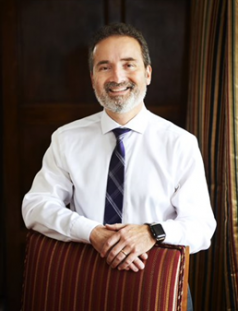
Andy Ball is a Distinguished Professor in the School of Science at RMIT University, specializing in environmental microbiology and biotechnology. He leads the ARC Training Centre for the Transformation of Australia’s Biosolids Resource and has held key roles at institutions including the University of Essex and Flinders University. His research focuses on bioremediation, organic waste treatment, and environmental pollution solutions, with over 300 peer-reviewed publications and significant industry collaboration. Andy's academic career spans 30 years, with roles such as Director of the Centre for Environment and Society at Essex and Director of Flinders Bioremediation. He has attracted >$22M in research grants, particularly in applied environmental microbiology. His awards include the Royal Society of Victoria Medal (2021) and RMIT Research Excellence Award (2018). Research interests emphasize sustainable remediation of contaminated environments, leveraging microbial ecology and biotechnology. His teaching spans environmental science and biotechnology programs at RMIT. Andy advises on projects addressing bioremediation, bioenergy, and pathogen survival, with active collaborations with industries like Shell and Melbourne Water.
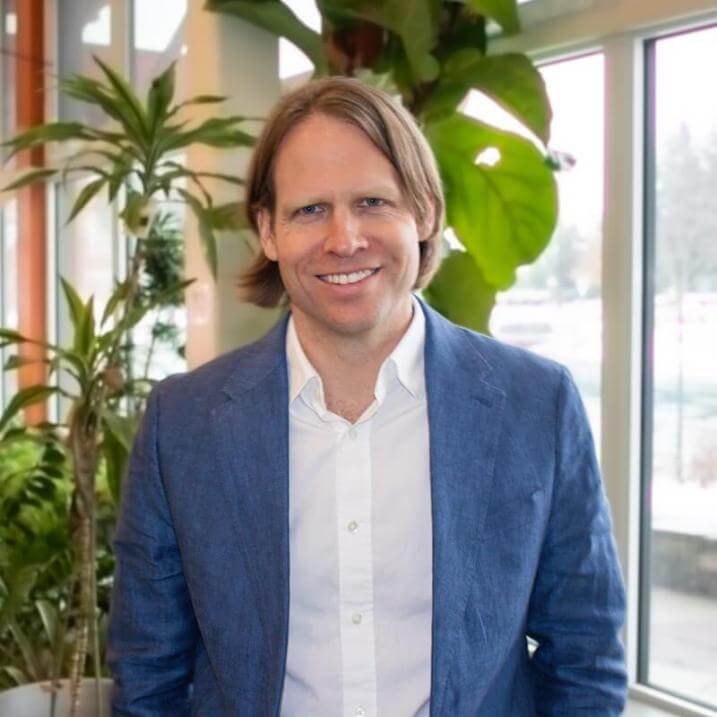
Jenny Kao-Kniffin is a Professor in the Horticulture Section of the School of Integrative Plant Science at Cornell University. Her research focuses on the belowground ecology of horticultural landscapes, particularly the ecology and management of invasive plants and weeds in horticultural landscapes, wetlands, and urban ecosystems. She applies concepts from microbial ecology to understand how soil microorganisms impact plant populations both beneficially (aiding in plant growth and fitness) and negatively (keeping populations in check). Dr. Kao-Kniffin's research interests include: Weed science and ecological management of weeds Urban ecology and urban agriculture Rhizosphere biology and plant-microbe interactions Soil microbiome selection and manipulation Ecological approaches to sustainable agriculture Her work centers on three main research areas: selection of rhizosphere microbiomes that modulate plant traits, identifying functional roles of microbiomes that mediate plant growth, and assembly of plant-microbial communities that enhance ecosystem services. She has demonstrated that microbiomes can be manipulated to alter flowering time in plants and has developed ecological approaches for weed management through soil carbon amendments. Her recent publications reveal a strong focus on urban soil microbiomes, nitrogen cycling in agroecosystems, and the application of microbial ecology to sustainable agriculture. The research spans from fundamental plant-microbe interaction studies to practical applications in urban agriculture and weed management, with particular emphasis on how soil amendments and microbial communities can be leveraged for ecological management of plant systems. Notable scientific achievements include: The White House Presidential Early Career Award for Scientists and Engineers (PECASE), 2019 Weihenstephan Science Award, International Collaboration for Early Career Scientists 2017 Cornell University CALS Award for Excellence in Mentoring Undergraduate Students in Independent Research 2013 Dr. Kao-Kniffin actively mentors graduate students and has developed extension programs focused on assisting public and private audiences with methods to manage weedy and invasive plants in horticultural landscapes. Her lab has developed a web-based software program that allows users to select weed management methods based on conventional or organic preferences. She teaches PLSCI 4900: Reflection on Plant Sciences Experiential Learning and maintains an active research program with several ongoing projects in urban agriculture, particularly working with New York City farmers to construct clean soil from local materials.
Olli Dahl is a Professor at Aalto University's Department of Forest Products Technology, specializing in Clean Technologies and Environmental Management. His work focuses on waste valorization, biorefinery processes, and sustainable resource utilization. Key areas include microplastic dynamics in composting systems, biochar applications for heavy metal decontamination, and optimization of mineral processing with recycled water. Research highlights include an international award for biorefinery innovation and groundbreaking studies on nickel recovery in flotation processes. He leads interdisciplinary projects addressing water quality impacts on ore processing and thermochemical conversion of agricultural residues into bioenergy. Dahl's recent work emphasizes closing material loops through circular bioeconomy strategies and advancing sustainable industrial practices. Awards: 2015 International Biorefinery Competition 2nd Place (Ministry of Employment & Economy, Finland) Key Themes: Waste-to-resource systems, industrial water management, bio-based materials, and metallurgical sustainability
Professor Nick Paul is a marine scientist at the University of the Sunshine Coast (UniSC), leading applied research in seaweed and algae for sustainable product development. He holds a PhD and BSc (Hons) from UNSW and a Graduate Certificate in Tertiary Education Management from the University of Melbourne. His work focuses on seaweed aquaculture innovations, including waste-to-resource biotechnology, functional foods, and environmental remediation. He leads international projects funded by organizations like ACIAR, CSIRO, and Advance Queensland. Research interests include seaweed-based solutions for livestock health, wastewater treatment, and sustainable aquaculture expansion near the Great Barrier Reef. He has pioneered commercial land-based seaweed farming and developed intellectual property in this field. Awards include the 2015 UNAA World Environment Day Award for Sustainable Water Management and the 2015 Queensland Water Innovation Forum Best Paper. He serves on the Asian Fisheries Society Council and Fiji’s National Seaweed Taskforce. Key publications span seaweed cultivation methods, marine genomics, and socio-economic impacts of aquaculture in the Pacific. Grants total over A$3.7 million for projects like diversifying Pacific Island seaweed industries and improving Indonesian seaweed production.
Gregory Michael Peck is an Associate Professor and Director of Undergraduate Studies for the Plant Sciences Major at Cornell University's School of Integrative Plant Science, Horticulture Section. His research focuses on sustainable tree-fruit production, particularly in organic apple systems , cider apple germplasm evaluation , and crop-load management through pollen tube growth modeling . Award-winning educator (2021 Cornell Teaching, Advising & Mentoring Award) 2018 Grower Advocate of the Year (American Cider Association) Active in outreach through field days, extension publications, and social media Peck's work spans tree-fruit physiology , soil health , and mechanization of orchard practices . He co-teaches Cornell's popular cider appreciation course with microbiologist Kathy Arnink, combining apple production science with fermentation expertise. His research explores phenolic development , nitrogen management , and yeast interactions in cider production systems. Recent publications highlight collaborations in rootstock effects , compost applications , and fermentation chemistry . Peck's career has included work in California, Washington, New York, and Virginia, with training spanning horticulture, plant physiology, soil science, and agricultural economics.
Rene Van Acker is a Professor in the Department of Plant Agriculture at the Ontario Agricultural College (University of Guelph). Currently serving as Interim President of the University of Guelph, he previously held the Dean and Associate Dean External positions at OAC, and chaired the Department of Plant Agriculture. With a B.Sc. and M.Sc. from University of Guelph and a PhD from University of Reading , his leadership has transformed OAC through strategic initiatives like Our Shared Priorities and OAC Space Visioning Plan . Co-founded Arrell Food Institute and Guelph Centre for Urban Organic Farming Established over 20 externally funded chairs and raised $90M+ for OAC Led creation of B.Sc. in Indigenous Environmental Science and other innovative programs His research focuses on agroecology , organic farming systems , weed science , and temperate forest garden systems . Recent publications examine herbicide effects on crops, microbial community dynamics in agroforestry, and novel crop establishment methods. Key projects include evaluating compost applications and woodchip mulching impacts on apple orchard productivity and soil microbial abundance . As an active faculty member, he supervises graduate students , co-teaches OAC capstone courses , and serves on university committees including Budget Committee and Micro-credentials Committee . Externally, he contributes to Rural Ontario Institute and leads the Deans Council (Agriculture, Food & Veterinary Medicine).
Megan Konar is an Associate Professor in the Department of Civil and Environmental Engineering at the University of Illinois Urbana-Champaign. Her research focuses on water resources, virtual water trade, and the intersection of food systems with climate change and sustainability. She has contributed to interdisciplinary studies on groundwater depletion, supply chain resilience, and the socio-hydrological dimensions of water scarcity. Her work bridges engineering, environmental science, and policy analysis. Notable research areas include analyzing virtual water flows in global trade networks, evaluating the impacts of climate shocks on agricultural systems (e.g., in Zambia and China), and assessing resilience in US agri-food transportation infrastructure. She leads projects on food-energy-water nexus dynamics and has developed datasets mapping food flows and irrigation patterns across the United States and China. Key Awards: AGU Fellow (2024) James B. Macelwane Medal (2024) NSF CAREER Award (2019) Walter L. Huber Civil Engineering Research Prize (2022) Her collaborative research extends to global partnerships, addressing water governance challenges and sustainable development goals. Recent work highlights the dual pressures of groundwater depletion and contamination in China, resilience strategies in perishable food networks, and equity considerations in wasted food models.
Sharon Moran is an Associate Professor in the Department of Environmental Studies at SUNY College of Environmental Science and Forestry (ESF). She holds affiliations with Syracuse University’s Maxwell School of Citizenship and Public Affairs, including roles as Research Associate Professor in Religion, Affiliated Faculty in Geography, and Co-director of the Certificate of Advanced Study in Sustainable Enterprise (CASSE). Her research focuses on political ecology, sustainable technologies, water policy, and post-communist environmental issues. She earned a Ph.D. in Geography from Clark University (2000), an M.S. in Political Science/Public Policy from MIT, and a B.A. in Chemistry from Boston University. Research emphasizes community engagement with environmental challenges, such as citizen science projects on lake contaminants, urban waterway restoration, and global sanitation equity. Notable collaborations include work on hurricane risk communication and dam removal impacts in Poland. Moran teaches courses in environmental justice, policy, and sustainable enterprise. She advises graduate students in ESF’s Environmental Studies and GPES programs, focusing on topics like circular economies, international environmental policies, and decolonial sanitation practices. Professional memberships include the Association of American Geographers, Society for the Social Study of Science, and International Society for Religion, Nature, and Culture. Her work bridges environmental science with humanities, advocating for interdisciplinary solutions to global sustainability challenges.
Thomas Graham is an Assistant Professor and PhytoGro Research Chair in Controlled Environment Systems at the University of Guelph, where he also serves as R&D Manager for the Controlled Environment Systems Research Facility (CESRF). His academic journey includes a BSc in Environmental Sciences from the University of Guelph and Stirling University (1997), an MSc in Horticulture (2001), and a PhD in Environmental Biology (2012), all from the University of Guelph. He completed a NASA Post-Doctoral Fellowship (2012–2015) at Kennedy Space Center, focusing on bioregenerative life-support systems for space exploration. Dr. Graham’s research expertise spans controlled environment agriculture (CEA) , space biology , medicinal crop production , and water remediation . He leads projects addressing food security, crop diversification in urban farming, and sustainable practices for high-intensity agriculture. Key initiatives include developing CEA systems for medical crops, optimizing tree crops for spaceflight, and advancing composting-based closed-loop systems. His scientific contributions are reflected in roles as Associate Editor for Gravitational and Space Research and Editor for special issues on Agriculture in Space . He collaborates with NASA, USDA, OMAFRA, and international agencies like the German Space Agency (DLR). Awards include the NASA Post-Doctoral Research Fellowship. Dr. Graham emphasizes mentorship, conducting bi-weekly graduate meetings and fostering student autonomy while providing structured support. His lab integrates interdisciplinary approaches to tackle global challenges, from climate resilience to lunar food production.
Hannes Hick is a Professor at Graz University of Technology , affiliated with the Institute of Machine Elements and Development Methodology . His research focuses on mechanical development, tribology, and systems engineering for automotive and industrial applications. He actively contributes to engineering education and methodology standardization. Research Interests Hydrogen internal combustion engines System modeling and digital twins Tribology in electric drivetrains Sustainable engineering practices MBSE (Model-Based Systems Engineering) Friction and wear analysis Article Trends His recent work emphasizes hydrogen propulsion systems, model-based approaches for interdisciplinary engineering challenges, tribological optimization for sustainable mobility, and integrating AI with mechanical design workflows. Labs and Teams He leads research at the Institute of Machine Elements, focusing on mechanical validation and development methodologies for advanced powertrain systems.
Eric Roy is an Associate Professor at the Rubenstein School of Environment and Natural Resources, University of Vermont, and Director of the Casella Center for Circular Economy and Sustainability. He is also a Fellow at the Gund Institute for Environment. His research focuses on nutrient cycling, biogeochemistry, and ecological engineering to design sustainable systems for nutrient management in food, waste, and water systems. Education: Ph.D. in Oceanography & Coastal Sciences from Louisiana State University (2013), M.S. in Food, Agricultural & Biological Engineering from Ohio State University (2008), and B.S. in Mechanical Engineering from Old Dominion University (2006). Research interests include nutrient stewardship, circular bioeconomy, and nature-based solutions. His work integrates lab and field studies with modeling to explore nutrient dynamics in engineered, urban, and agricultural ecosystems. Key themes include improving nutrient use efficiency in food systems, resource recovery, and green infrastructure design. Teaching emphasizes ecological design in water quality, waste management, and food systems. His recent publications highlight advancements in phosphorus retention modeling, floodplain function analysis, and composting system optimization. He leads the Nutrient Cycling and Ecological Design Lab, advancing interdisciplinary solutions for environmental sustainability.
Nanna Bloch Hartmann is a senior researcher at DTU Sustain (Technical University of Denmark) since 2015. She holds a PhD in ecotoxicology from DTU (2011) and has held postdoctoral roles at DTU Environment (2013–present), the European Commission’s Joint Research Centre (2011–2013), and Edinburgh Napier University (2009). Her research focuses on the environmental fate and effects of micro- and nanoplastics, with expertise in ecotoxicology, technical systems, and science communication. Education: PhD in Ecotoxicology, DTU (2007–2011) Guest PhD student, Edinburgh Napier University (2009) Research Interests: Mechanistic understanding of micro/nanoplastics’ fate, degradation, and effects in aquatic and technical systems Science communication to regulators, media, and the public Contributions to UN Sustainable Development Goals (SDGs 6, 12, 14). Grants & Projects: Combat Microplastics Pollution in the Baltic Sea (2024–2027) Sustainable Industrial Laundry Wastewater Treatment (2023–2027) Risk Evaluation of Micro/Nanoplastics (2022–2026) Recognition: Listed among Stanford’s top 2% global scientists (2021–2022). Active in promoting gender equality through roles in DTU’s Women in Engineering Science network and Equality Steering Group (2015–2018).
Peter Irga is a Senior Lecturer and ARC DECRA Fellow at the University of Technology Sydney's School of Civil and Environmental Engineering, Faculty of Engineering and Information Technology. He is globally recognized as a leader in nature-based biological air treatment technologies, particularly green wall systems (Phytosystems), with current worldwide ranking #1 in his research topic (SciVal Topic T.37087). Dr Irga's research focuses on innovative nature-based solutions for urban air pollution challenges, including phytoremediation technologies, biosolar green roofs, and agrivoltaics. His work bridges environmental engineering with practical urban applications, examining the performance of nature-based systems in real-world settings to quantify their value and identify development opportunities. His research demonstrates how living infrastructure provides cities with natural beauty while improving human health and wellbeing, addressing UN Sustainable Development Goals 11 (Sustainable Cities), 13 (Climate Action), 15 (Life on Land), and 3 (Good Health). His research portfolio includes 80+ publications with an H-index of 30 and $5.21M in research income, including ARC funding. Industry recognition includes $4.54M in high-level consultancies. His work spans multiple disciplines including atmospheric science, environmental engineering, and sustainable materials development, with particular emphasis on practical implementation of green infrastructure solutions in urban settings. Tall Poppy Science Award (2022) from the Australian Institute of Policy and Science ARC DECRA Fellow (2021-2024) Chancellor's Postdoctoral Research Fellow (2018-2021) Dr Irga actively supervises Masters and PhD students and coordinates Postgraduate Environmental Engineering and Water Engineering programs. His funded research includes Sustainable High-Performance Transitory Structures using Biobased Materials (2025-2026), Bradfield Green and Bio-Solar Roof Monitoring (2025), and Plantabox for Targeting the Urban Heat Island Challenge (2024-2025). He collaborates with industry partners including Junglefy, Ambius, Bradfield Development Authority, and City of Sydney.
Dr. Gwendolyn Hustvedt is a Professor in the Fashion Merchandising department at Texas State University’s School of Family & Consumer Sciences. Her research focuses on sustainable textiles, consumer behavior regarding eco-labeling and ethical production, and STEM education through home economics. She leads projects such as a USDA-funded study on eco-labeling for US animal fiber products and collaborates with institutions like Kansas State University and the University of Delaware. Her teaching includes Textile Science and Textile Product Analysis courses, as well as an honors course on sustainable textile supply chains. Dr. Hustvedt has received awards including the 2023 American Association of Family & Consumer Sciences Leader Award and the 2014 Presidential Distinction Award for Scholarship. She serves as President of the International Federation for Home Economics, advocating for holistic sustainability education and underrepresented groups in STEM careers. Her grants total over $750,000, supporting initiatives like climate change adaptation in Hispanic families and integrating sustainability into higher education curricula. Her research spans consumer preferences for sustainable apparel, textile innovation (e.g., UV-protective fabrics), and waste reduction through wool composting. Current projects include in vivo experiments on textiles for skin cancer prevention and collaborations with Texas natural fiber producers. She chairs events like Sustainable Fashion Week and coordinates Fashion Merchandising programs, emphasizing community engagement and industry partnerships.
Professor Luke Connal is a full professor at the Research School of Chemistry at the Australian National University (ANU), where he leads the Connal Group. He joined ANU in 2017 after serving as a Senior Lecturer at the University of Melbourne. Currently, he holds an ARC mid-career industry fellowship and serves as the chair of the Royal Australian Chemical Institute (RACI) polymer division. Professor Connal is also an associate editor for the Royal Society of Chemistry journal "Molecular Systems Design and Engineering" and co-founder of two spin-out companies focused on polymer technologies. Professor Connal received his Bachelor of Chemical Engineering and PhD in polymer chemistry from the University of Melbourne, Australia. Following his doctoral studies, he completed a post-doctoral position with Professor Frank Caruso at the University of Melbourne, developing new techniques for the self-assembly of polymers. He then held a joint Sir Keith Murdoch postdoctoral Fellowship and Australian Linkage International Fellowship at the University of California, Santa Barbara, working with Professor Craig Hawker. Professor Connal's research focuses on the development of molecular design concepts to create new materials for diverse applications, including artificial skin and tissues, sustainable polymers and surfactants, additive manufacturing electronics, and water harvesting. His core competencies center around advanced polymer design, self-assembly, and catalysis . His group explores four main research themes: Catalysis, Functional Materials and Interfaces, Soft Matter, and Supramolecular Chemistry . They develop innovative materials such as enzyme-inspired polymer catalysts, smart polymers for 3D printing, and polymer electrolytes for energy storage applications. Analysis of Professor Connal's recent publications reveals a strong focus on developing biomimetic materials and responsive polymers. His work bridges fundamental polymer chemistry with practical applications in environmental remediation, healthcare, and sustainable technologies. A notable trend is the increasing emphasis on CO2 capture technologies through enzyme-inspired catalysts and hydrogel systems. His group has also made significant contributions to 3D printing of functional materials , particularly self-healing gels and pH-responsive polymers. The research demonstrates a consistent trajectory toward creating smart, responsive materials with applications addressing global challenges in sustainability and healthcare. David Syme Research Prize (2020) Grimwade Prize in Industrial Chemistry (2019) Professor Connal actively supervises multiple PhD students including Lilian Boton, Jason Buchanan, Sandra Jestin, Saif Rahaman, Peidong Shen, Ming Li Tan, Moki Thanusing, and Jekaterina Viktorova. His current research is supported by several significant grants including projects on sustainable and compostable plastic alternatives, multimaterial 3D printed antenna arrays, developing vitrimers as next-generation reusable plastics, multi-material 3D printing, and smart materials for atmospheric water management. These projects demonstrate his commitment to translating fundamental polymer research into practical solutions for environmental and technological challenges. The Connal Group at ANU operates at the intersection of polymer chemistry and materials science, developing innovative solutions across multiple domains. Their laboratory work focuses on creating new polymers with applications spanning artificial skin development, sustainable packaging alternatives, atmospheric water harvesting, and advanced electronics. The group's unique approach combines biomimicry principles with cutting-edge polymer synthesis techniques to create materials with precisely controlled properties. Current projects include developing strong and self-healing polymer materials for biological applications, expanding 3D printing capabilities for functional materials, creating fully recyclable or compostable plastics, and designing thermoresponsive polymer desiccants for sustainable water harvesting.