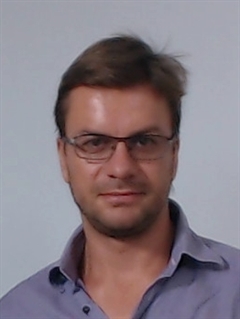
Gioele Zardini is the Rudge (1948) and Nancy Allen Assistant Professor at MIT's Department of Civil and Environmental Engineering (CEE), with affiliations to the Laboratory for Information and Decision Systems (LIDS) and the Institute for Data, Systems, and Society (IDSS). He holds a PhD from ETH Zurich and previously worked as a postdoctoral scholar at Stanford University. His research focuses on co-design of complex systems, autonomous systems, and game-theoretic modeling of transportation networks. Education: BSc and MSc in Mechanical Engineering and Robotics from ETH Zurich (2017–2019), PhD in 2023. He has held visiting roles at nuTonomy Singapore, Stanford, and MIT. Research interests include co-design methodologies, autonomous vehicle systems, compositionality in engineering, and strategic interactions in mobility networks. Recent work emphasizes scalable fleet coordination, safety-critical robotics, and user-centric transportation solutions. Notable awards include the 2024 ETH Doctoral Dissertation Award (Silver Medal), Best Paper at ITSC 2021, and federal grants for enhancing urban transit equity. He leads the Zardini Lab, fostering interdisciplinary collaboration in systems engineering and autonomy. Grants and advising: Received federal grants for transit accessibility projects. His work on Autonomy Talks has produced over 180 recorded lectures, promoting knowledge exchange in autonomous systems. Labs/Teams: Principal Investigator at LIDS, affiliate at IDSS, and founder of the Zardini Lab, focusing on systems co-design, mobility innovation, and game-theoretic frameworks.
Amir Mostafaei is Assistant Professor at Illinois Tech's Armour College of Engineering, researching metal additive manufacturing processes. His work focuses on laser powder bed fusion and binder jetting of structural alloys, shape memory materials, and biomaterials. Key areas include process optimization, microstructure control, and advanced characterization using micro-CT and synchrotron techniques. He directs the AMIR Lab investigating process-structure-property relationships in additively manufactured components. Recent projects examine sintering kinetics of binder jetted parts and fatigue behavior of non-spherical Ti-6Al-4V powder processed via laser powder bed fusion. NSF CAREER Award (2024) Multiple student research awards (URCA, RES-MATCH) The lab develops data analytics approaches for quality prediction and maintains collaborations with national labs including Argonne.
Christina M. Rost is an Assistant Professor in the Department of Materials Science and Engineering at Virginia Polytechnic Institute and State University (Virginia Tech) , part of the College of Engineering . She holds a Ph.D. in Materials Science and Engineering from North Carolina State University (2016), following a B.S. and M.S. in Physics from Indiana University of Pennsylvania. Prior to joining Virginia Tech, she served as an Assistant Professor of Physics at James Madison University. Research Focus: Atomic-level disorder in ceramics, particularly high entropy and compositionally complex systems. Key Techniques: X-ray absorption/emission spectroscopy, multi-length-scale characterization. Applications: Functional materials for extreme environments, energy, and electronics. Research Interests include designing materials with tunable properties via controlled disorder, leveraging high entropy oxides and amorphous systems. Her work integrates advanced spectroscopy, computational modeling, and machine learning to accelerate materials discovery. Recent emphases include understanding local structure- property relationships in entropy-stabilized oxides and spinel ferrites. Publications reflect a focus on high entropy materials' synthesis, thermal stability, magnetic behavior, and functional applications. Notable trends include: (1) exploring cation roles in rock salt oxides, (2) optimizing thin film growth for pyroelectric applications, and (3) studying phase evolution under thermal/mechanical stress. Scientific Awards : 2023 Provost Award for Excellence in Research (James Madison University) 2017 Postdoctoral Teaching Fellowship (University of Virginia) 2015 First Place, Best Student Presentation (ACerS) Lab Team includes 5 graduate students (e.g., John Barber, Gerald Bejger), 4 undergraduates, and former members now at institutions like Pratt & Whitney. Lab Facilities : Located in Holden Hall, equipped with state-of-the-art characterization tools.
Sean R. Agnew is the William G. Reynolds Professor of Materials Science and Engineering at the University of Virginia, with a courtesy appointment in Mechanical and Aerospace Engineering. His research focuses on metals analysis, including magnesium alloy formability, intermetallic behaviors, and aluminum alloy fatigue, employing advanced techniques such as SEM, TEM, XRD, and neutron diffraction. He earned a Ph.D. from Northwestern University (1998) and a B.S. from Cornell University (1994). Research interests span surface/interface science, metallurgy, nanomaterials, and advanced transportation materials. His team addresses challenges in corrosion resistance, microstructural control, and high-temperature alloy performance. Notably, his work on coating removal techniques for bridge infrastructure has received ARPA-E funding to develop heat-resistant turbine engine coatings. Publications emphasize magnesium alloy deformation mechanisms, neutron diffraction analysis, and multiphase alloy design. Collaborations integrate computational modeling and in-situ experimentation to advance material understanding. The Agnew Research Group actively explores applications in aerospace, energy systems, and structural materials.
Pauline Jacobson is a Professor of Linguistics at Brown University, where she has served since 1975. Her research focuses on formal semantics, particularly the syntax-semantics interface, advocating for direct compositionality and variable-free semantics. She has held visiting positions at Ohio State, Harvard, and other institutions, and has contributed to summer institutes in linguistics worldwide. She earned her BA in Anthropology (1968) and PhD in Linguistics (1977) from UC Berkeley. Her work emphasizes eliminating intermediate levels like 'Logical Form' and explores phenomena such as negation, ellipsis, and binding within a variable-free framework. Prof. Jacobson has served as editor-in-chief of Linguistics and Philosophy , chaired panels for NSF and Fulbright, and participates in editorial boards. Her research trends reflect a sustained engagement with syntactic and semantic compositionality, challenging traditional assumptions about linguistic structure. Her advising and grants include teaching both undergraduate and graduate courses on syntax, semantics, and pragmatics. She is affiliated with Brown’s Department of Linguistics and has contributed to interdisciplinary initiatives in formal linguistics and cognitive science.
Gregory Doerk is a Materials Scientist specializing in AI Accelerated Nanoscience at Brookhaven National Laboratory's Center for Functional Nanomaterials (CFN). As a key member of the Electronic Nanomaterials Group, he conducts cutting-edge research on self-assembly processes for nanofabrication applications. His work bridges fundamental polymer science with practical applications in energy, optics, and electronics manufacturing. Doerk earned his B.S. in Chemical Engineering from Case Western Reserve University (2005) and his Ph.D. in Chemical Engineering from the University of California, Berkeley (2010). His academic journey was complemented by philosophical studies that shaped his approach to scientific inquiry, recognizing both the power and limitations of scientific knowledge. Dr. Doerk's research focuses on directing the self-assembly of polymers to create tailored nano-architectures for optical, chemical, and energy applications. He specializes in block copolymer systems, developing combinatorial, high-throughput, and adaptive experimental methods to integrate self-assembly into scalable manufacturing processes. His work addresses the challenge of scaling block copolymer assembly to larger feature sizes (approaching 200nm) that can influence light for structural color applications, overcoming the natural limitations of traditional block copolymer systems. His 15 most recent publications reveal a strong trajectory toward AI-accelerated materials discovery, with increasing focus on autonomous experimentation, combinatorial approaches, and hierarchical structures. The research spans fundamental polymer science to applied nanotechnology, with applications in photonic materials, energy conversion, and advanced manufacturing. His work demonstrates a progression from basic self-assembly mechanisms to increasingly sophisticated systems incorporating machine learning and high-throughput methodologies. 2021 DOE Early Career Research Program award recipient As a senior scientist at CFN, Doerk mentors numerous users from academic and industrial institutions worldwide, helping them develop self-assembly processes for diverse applications ranging from microfluidics to biosensing. He has secured significant research funding, including the prestigious DOE Early Career award, and actively contributes to the scientific community through organizing workshops at major conferences including the American Physical Society March Meeting and the NSLS-II & CFN User Meetings. His collaborative approach has resulted in numerous interdisciplinary projects spanning multiple DOE facilities. Dr. Doerk leads research in the Electronic Nanomaterials group at CFN, where he operates specialized equipment for block copolymer self-assembly, solvent vapor annealing, and pattern transfer. His lab focuses on developing adaptive experimental methods that combine self-assembly with AI-driven discovery, creating a unique environment where traditional materials science intersects with cutting-edge computational approaches. The team regularly collaborates with researchers using Brookhaven's National Synchrotron Light Source II for in-situ characterization of self-assembly processes.
Professor Konstantinos Sarakinos holds a position at the Department of Physics, University of Helsinki, and is the Chief Scientific Officer of MIMSI Materials AB. His research focuses on thin film synthesis, surface physics, and materials engineering with applications in energy and nanotechnology. He has held roles at Linköping University (Sweden) and KTH Royal Institute of Technology. Sarakinos earned a Ph.D. from RWTH Aachen University and a Docent title from Linköping University. Education: Ph.D. in Physics (RWTH Aachen, 2008), M.Sc. in Nanosciences (Aristotle University, 2004), M.Sc. in Mechanical Engineering (Aristotle University, 2002). His work combines experimental and computational methods to study material growth mechanisms and nanostructure formation under non-equilibrium conditions. Research interests include manipulating metal film morphology on weakly-interacting substrates, developing hierarchical heterostructures, and exploring compositionally complex materials. He leads projects funded by the Academy of Finland and EU (e.g., SilverAlloyPVs/EIT project). His publications span over 79 peer-reviewed articles focusing on thin film growth dynamics, surface chemistry, and materials for energy applications.
Sam Cumming is a Professor in the Department of Philosophy at the University of California, Los Angeles. His research spans philosophy of language, semantics, and the philosophical analysis of film and narrative structures. With a Ph.D. from Rutgers University (2007), he has established himself as a significant contributor to contemporary debates in linguistic reference, truth conditions, and nominalist approaches to semantics. Dr. Cumming's research interests focus on foundational questions in the philosophy of language, particularly concerning reference, truth, and meaning. His work examines how language connects to reality through semantic content, with special attention to problematic cases like fictional entities, indefinite descriptions, and reportative constructions. He has made notable contributions to understanding the semantics of film, exploring how cinematic techniques create coherent narrative viewpoints and convey meaning through visual representation. His interdisciplinary approach bridges analytic philosophy with cognitive science and film studies, revealing how linguistic structures parallel audiovisual cognition in storytelling. Analysis of Cumming's publication record reveals a consistent trajectory from formal semantic theory toward broader applications in narrative and film. His early work focused on technical aspects of reference and indefinites, while more recent publications demonstrate increasing engagement with moral philosophy in narrative contexts and the cognitive foundations of film perception. A unifying thread throughout his career is the examination of how meaning is constructed across different representational systems, whether linguistic or audiovisual. His articles frequently address the relationship between semantic content and cognitive processing, suggesting an underlying interest in how humans make sense of complex representational structures. Dr. Cumming actively mentors graduate students, as evidenced by his students Gabe, Rory, and Koby Leff who have presented research at academic conferences. His advising appears focused on the intersection of philosophy of language with film and narrative studies, guiding students through technically rigorous analyses of cinematic representation and narrative structure. While specific grant information isn't provided in the available materials, his sustained publication record in prestigious journals suggests successful research funding throughout his career.
Jonathan M Livengood is an Associate Professor in the Philosophy Department at the University of Illinois. His research focuses on experimental philosophy, causal attribution, and the integration of empirical methods into philosophical inquiry. He explores topics such as actual causation, ethics, and the philosophy of science, with interdisciplinary engagement in neuroscience, medicine, and genetics. Key research interests include the application of experimental methods to philosophical problems, particularly in ethics (e.g., informed consent, trolley problem variants), causal reasoning, and the history of scientific experiments (e.g., chromatography). His work often bridges theoretical philosophy with empirical data, emphasizing cross-cultural and interdisciplinary approaches. Recent publications highlight his contributions to neuroethics, probabilistic reasoning in medical contexts, and the philosophical analysis of gene-environment interactions. Though not explicitly stated, his research network spans collaborations in North America and beyond, reflecting a globally engaged academic profile.
Matthieu Wyart is a Full Professor of Theoretical Physics at École polytechnique fédérale de Lausanne (EPFL), holding a position in the School of Basic Sciences within the Institute of Physics. He leads research in the Physics of Complex Systems Laboratory (PCSL) at EPFL, where he investigates fundamental questions at the intersection of condensed matter theory, statistical mechanics, and emerging connections to machine learning. Wyart completed his education at prestigious French institutions, earning his physics degree with Honors from École Polytechnique in Paris in 2001, followed by a Diploma of Advanced Studies in Theoretical Physics with highest Honors from École Normale Supérieure, Paris in 2002. He obtained his doctoral degree in Theoretical Physics and Finance from SPEC, CEA Saclay, Paris in 2006 with a thesis on electronic markets. His academic journey included postdoctoral positions at Harvard University, Janelia Farm, and Princeton University before joining New York University as an Assistant Professor in 2010, where he was promoted to Associate Professor in 2014. He moved to EPFL in July 2015 as an Associate Professor of Theoretical Physics and was promoted to Full Professor in April 2024. His research spans multiple domains including condensed matter theory, statistical mechanics, quantum information, and biophysics, with particular focus on disordered systems, glass transitions, amorphous solids, and the emerging connections between physical systems and machine learning architectures. Wyart's work often reveals deep theoretical connections between seemingly disparate fields, such as demonstrating how principles governing amorphous materials relate to the behavior of neural networks. His recent publications explore hierarchical structures in data, diffusion models, learning curves for compositional data, and the physics of creep in disordered media. Through his laboratory (PCSL), Wyart fosters interdisciplinary research that bridges traditional physics with contemporary challenges in machine learning and complex systems. His work has established important theoretical frameworks for understanding the glass transition, jamming phenomena, and the geometric principles underlying both physical and artificial learning systems.
Hanliang Zhu is an Honorary Professor at the University of Wollongong's School of Mechanical, Materials, Mechatronic and Biomedical Engineering since February 2022. His research focuses on advanced materials engineering, particularly in the development and characterization of compositionally complex alloys, additive manufacturing processes, and nuclear materials. Key areas include the optimization of Ni-based superalloys, medium entropy alloys, and radiation-resistant materials for high-temperature applications. He has contributed to understanding creep behavior, irradiation effects, and microstructural evolution in materials like Hastelloy C276 and P91 steel. His work integrates experimental techniques with computational modeling, addressing challenges in material stability, mechanical properties, and fabrication processes. Notable projects include enhancing oxidation resistance in FeCr2V-based alloys and studying helium ion irradiation effects on Zirconium alloys. Funding has included an internal grant from the University of Wollongong (2015) exploring 3D-printed TiAl alloys' radiation damage resistance. Collaborations span international institutions, with a focus on bridging fundamental materials science with industrial applications in energy and aerospace sectors. His research emphasizes translating laboratory findings into practical solutions for advanced manufacturing and nuclear reactor materials.
Richard Malak is Professor and Associate Department Head for Graduate Programs in Mechanical Engineering at Texas A&M University. His research develops computational methods for engineering systems design, including optimization, machine learning, and decision-making frameworks with applications to materials design, smart structures, and complex engineered systems. Education: PhD in Mechanical Engineering (Georgia Tech, 2008), MS in Mechanical Engineering (Georgia Tech, 2005), MS in Electrical and Computer Engineering (Carnegie Mellon, 2000), B.E. in Electrical and Computer Engineering (Stony Brook, 1998). Research focuses on computational design methodologies integrating optimization, machine learning, and control theory. Key contributions include: (1) Co-design frameworks integrating control and physical system design; (2) Computational materials design for additive manufacturing; (3) Resilient system-of-systems engineering; and (4) Parametric optimization algorithms for resource-intensive problems. Awards include multiple best paper awards from ASME conferences, teaching excellence awards, and prestigious fellowships including TEES Young Faculty Fellow and Morris E. Foster Faculty Fellow. Directs the Design Systems Laboratory which develops novel computational approaches for complex engineering challenges through interdisciplinary collaborations.
Dr. Miriam Botros serves as Group Leader for Energy Materials and Process Design within the Materials for Electrochemistry Research Unit (RU Janek) at the Institute of Nanotechnology, Karlsruhe Institute of Technology (KIT), Germany. Her laboratory operates across Buildings 640/0-354 and 717/204 at the Eggenstein-Leopoldshafen campus, with office hours conducted remotely on Tuesdays and Fridays. Her research centers on high-entropy materials and solid-state electrochemistry , specializing in compositionally complex systems for energy storage. Key focus areas include garnet-type solid electrolytes , high-entropy oxides/fluorides , and advanced cathode architectures , with particular emphasis on doping effects, grain boundary engineering, and structural transformations in battery components. Recent work demonstrates expertise in photonic synthesis techniques and mechanochemical processing for novel material discovery. Analysis of her 15 most recent publications reveals a dominant research trajectory in solid-state battery materials (73% of works), with significant contributions to high-entropy systems (60%) and electrocatalysis (27%). Her collaborative network spans 12+ international institutions, consistently publishing in high-impact journals including Nature Reviews Materials , Science , and Energy & Environmental Science . Dr. Botros maintains active laboratory operations within KIT's Institute of Nanotechnology infrastructure, directing research on energy materials synthesis and characterization. Her team employs advanced techniques including nebulized spray pyrolysis, field-assisted sintering, and in-situ electrochemical analysis to develop next-generation battery components.
Tarasankar Debroy is a Professor of Materials Science and Engineering at Pennsylvania State University, where he has been a faculty member since 1980. He currently holds appointments in the Department of Materials Science and Engineering within the College of Earth and Mineral Sciences. Dr. Debroy is also associated with the Penn State Intercollege Graduate Degree Program (IGDP) in Materials Science and Engineering. Dr. Debroy received his Ph.D. in Metallurgy from the Indian Institute of Science, Bangalore in 1974 under the supervision of Professor K. P. Abraham. He completed postdoctoral studies at Imperial College of Science and Technology, London (1974-77) with Professor D. G. C. Robertson, and at Massachusetts Institute of Technology (1978-79) with Professors T. W. Eagar and J. Szekely. Dr. Debroy's research focuses on computational materials processing, particularly the application of numerical transport phenomena and optimization in welding and additive manufacturing. His work involves developing sophisticated models that compute temperature and velocity fields, cooling rates, and solidification parameters by solving tens of billions of equations efficiently. These models are specially structured for integration with genetic algorithms and other search engines, enabling bi-directional simulations that can tailor product attributes, optimize production variables, reduce defects, and improve product quality. His contributions include the first rigorous numerical model of heat and fluid flow in 3D printing, the first comprehensive numerical model for laser-fired aluminum-silicon contact geometry, and novel experimental techniques for estimating temperatures during laser welding. Dr. Debroy's extensive publication record demonstrates significant contributions to the understanding of welding processes, additive manufacturing, and materials processing. His recent work shows a clear trend toward digital manufacturing, with a focus on developing digital twins for additive manufacturing processes, understanding residual stresses and distortion, and optimizing process parameters for improved material properties. His research spans multiple disciplines including computational mechanics, materials science, thermal engineering, and process optimization. Dr. Debroy has held numerous prestigious positions including Founding Editor of Science and Technology of Welding and Joining (1996-present), Chair of the Research and Development committee of the American Welding Society (2007-2016), and Chair or Co-Chair of multiple International Conferences on Trends in Welding Research. Throughout his career, Dr. Debroy has mentored numerous graduate students and has been actively involved in research collaborations with industry. His work has significant implications for improving manufacturing processes in aerospace, automotive, and energy sectors. He has also held visiting positions at institutions worldwide including Production Technology Center in Sweden, African University of Science and Technology in Nigeria, and the Indian Institute of Science. Dr. Debroy leads a research group focused on computational materials processing that works closely with experimentalists to validate models and develop practical solutions for industrial applications. His team collaborates with researchers across multiple disciplines to address complex challenges in materials processing and manufacturing.
Rajiv Mishra is University Distinguished Research Professor in Materials Science and Engineering at University of North Texas. His research develops innovative solid-state processing techniques including friction stir based additive manufacturing (Additive Friction Stir Deposition, SolidStir Extrusion), with applications in high-entropy alloys, metastable materials, and functional composites. Recent publications focus on overcoming strength-ductility trade-offs in transformative alloys, irradiation resistance of metastable systems, and novel processing routes for high-conductivity conductors. His patented SolidStir® technology enables energy-efficient manufacturing of complex structures.