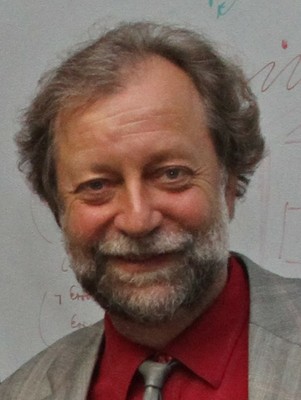
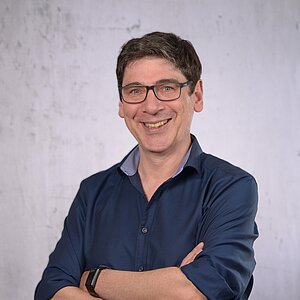
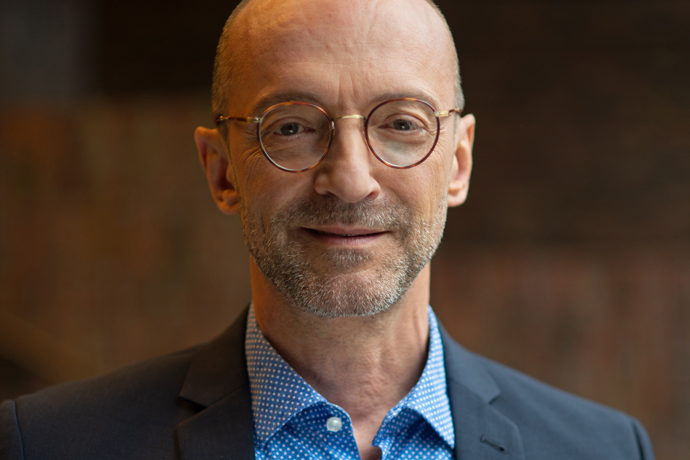
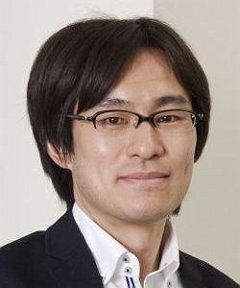
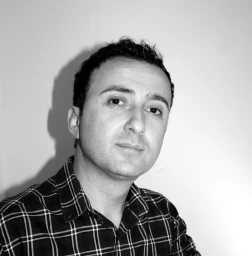
Prof. Dr. Rolf Hennicker is an Associate Professor and Academic Director at the Department of Computer Science, Ludwig-Maximilians-Universität München (LMU Munich). He leads the Software and Computational Systems Lab, focusing on formal methods, component-based software engineering, and environmental simulation systems. His research emphasizes system specifications, concurrency, and dynamic logics for verifying complex systems. He actively supervises academic activities, including lectures, seminars, and diploma theses. As project leader of GLOWA-Danube and RAJA , he develops decision support systems and authorization frameworks. Collaborations include the École Normale Supérieure de Cachan (France) on ensemble modeling and verification. His work spans theoretical contributions to formal methods and practical applications in distributed systems, environmental modeling, and autonomous computing. Recent projects involve ensemble architectures and Helena frameworks for autonomic cloud systems.
Prof. Dr. Silvia Kutscher serves as Professor for the Theory and History of Multimodal Communication at the Institute of Archaeology, Humboldt University of Berlin since March 2016, a position established within the Cluster of Excellence Topoi. Her interdisciplinary work bridges linguistics, semiotics, and archaeology with particular focus on ancient Egyptian communication systems. She leads project B03 on Register variation and asymmetric communication in Ancient Egypt within the Collaborative Research Center 1412 "Register: Language Users' Knowledge of Situational-Functional Variation". Her research centers on semiotics with emphasis on multimodal communication in ancient contexts. She has pioneered analytical methods for examining how spatial relations function as semiotic resources in pharaonistic communication, developing the theoretical framework for analyzing text-image compositions in Ancient Egypt. Her work creates crucial interdisciplinary connections between semiotic-linguistic multimodality research and Egyptology, revealing how dimensional aspects and spatial organization contribute to meaning-making in ancient artifacts. Recent publications demonstrate her sustained focus on multimodal analysis of ancient Egyptian artifacts, particularly through the CaeMmCom Corpus project. Her scholarly trajectory shows consistent development from general linguistic theory to specialized application in ancient communication systems, increasingly incorporating digital humanities methodologies. This work represents significant advancement in understanding how ancient societies structured information through combined textual and visual means. Prof. Kutscher holds leadership roles in academic organizations: Since 2018: Board member and co-leader of the Archaeology section of the German Society for Semiotics 2010-2013: Second chair of the German Linguistic Society (DGfS) 2014-2016: Advisory board member of DGfS She directs the Working Group on Multimodal Communication in Ancient Egypt, which develops theoretically grounded analytical tools by combining semiotic-linguistic approaches with Egyptological expertise. This initiative also implements technological tools for annotating and querying multimodal artifact data across the text-object-space continuum.
Michel Crucianu is a Professor at the Conservatoire national des arts et métiers (CNAM) in Paris, France, affiliated with the CEDRIC laboratory (Centre d'Études et de Recherche en Informatique et Communications). His research spans computer vision, machine learning, and multimedia information retrieval, with a focus on developing advanced techniques for image and video analysis. Crucianu's research interests include computer vision, deep learning, generative models, zero-shot learning, and cross-modal retrieval. His work often addresses fundamental challenges in representation learning, with applications ranging from fashion recognition to disaster monitoring. He has made significant contributions to GAN-based techniques, particularly in semantic editing and attribute control within latent spaces. His research combines theoretical insights with practical applications, demonstrating strong interdisciplinary connections between computer vision and machine learning. Analysis of his recent publications reveals a strong focus on generative models (particularly GANs), zero-shot learning, and compositional visual reasoning. His work shows an evolution from traditional image retrieval techniques toward more sophisticated deep learning approaches, with increasing emphasis on interpretability, multimodal representations, and efficient learning strategies. The breadth of his research spans theoretical advances in representation learning to practical applications in areas like flood detection and fashion recognition. While specific awards are not mentioned in the available information, Crucianu's extensive publication record in top-tier conferences and journals demonstrates significant recognition within the computer vision and machine learning communities. His consistent publication output over two decades reflects sustained research excellence and impact. Crucianu has collaborated extensively with researchers at CEDRIC and other institutions, particularly with colleagues like Hervé Le Borgne, Nicolas Audebert, and Marius Ferecatu. His work often involves interdisciplinary collaborations spanning computer vision, machine learning, and domain-specific applications. His research has been supported by various projects addressing multimedia indexing, content-based retrieval, and advanced learning techniques. As a member of the CEDRIC laboratory, Crucianu contributes to one of France's leading research centers in computer science and communications. The laboratory's research axes include complex data analysis, machine learning representations, data mining and statistics, and information decision systems, all areas where Crucianu has made substantial contributions through his research and collaborations.
Oliver Brock is a Professor at the Technische Universität Berlin (TU Berlin) , holding the Alexander von Humboldt Professorship since 2009. His research focuses on algorithmic foundations for robotic agents to perform complex tasks in dynamic and unstructured environments , with cross-disciplinary applications in molecular structural biology (e.g., protein folding, docking). Education: Ph.D. in Computer Science, Stanford University (2000) M.S. in Computer Science, Stanford University (1994) Diploma in Computer Science, TU Berlin (1993) Research Trends: His work spans robotics , motion planning , soft robotics , and machine learning , with recent emphasis on acoustic sensing , adaptive behavior representation , and separating learning from modeling in manipulation tasks. Publications highlight probabilistic methods , human-robot interaction , and biomimetic systems . Scientific Awards: Notable recognitions include the 2016 RSS Best Systems Paper Award , 2015 Amazon Picking Challenge First Place , and the 2006 NSF CAREER Award . Advising & Grants: As a Humboldt Professor, he has led programs like the Science of Intelligence and Cognitive Systems tracks at TU Berlin. Professional service includes editorial roles in Autonomous Robots and International Journal of Robotics and Research . Labs & Teams: He leads the Robotics and Biology Laboratory (RBO) at TU Berlin, focusing on robotic manipulation , sensor design , and biological data integration .
Angelika Zirker is an Associate Professor of English Literature at the University of Tübingen, where she also serves as Co-Dean of the Faculty of Humanities. Her academic career is deeply embedded in the Department of English within the Faculty of Humanities, where she leads significant research initiatives and contributes to major editorial projects including Connotations: A Journal for Critical Debate and Literaturwissenschaftliches Jahrbuch . Zirker completed her studies in English, French, and German at the Universities of Saarbrücken (Germany), Metz (France), and Cardiff (Wales). She earned her PhD in English Literature in July 2009 with a dissertation on The Pilgrim as a Child: Concepts of Play, Language and Salvation in Lewis Carroll's Alice Books , followed by her Habilitation William Shakespeare and John Donne: Stages of the Soul in Early Modern English Poetry published by Manchester University Press in 2019. Her research spans multiple interconnected fields with a strong focus on Shakespeare studies, Early Modern poetry, children's literature, and concepts of childhood. She has developed significant expertise in literature and religion, the theory of literary annotation, and nineteenth-century literature with emphasis on the novel. Zirker is particularly noted for her innovative work at the intersection of traditional literary scholarship and digital humanities methodologies, exploring how digital tools can enhance textual analysis and annotation practices. Analysis of her recent publications reveals a consistent trajectory toward interdisciplinary collaboration and methodological innovation. Her work increasingly bridges literary studies with computational approaches, particularly in the areas of ambiguity studies, co-creativity in pre-modern literature, and systematic annotation of literary texts. This reflects her leadership in the Tübingen CRC "Andere Ästhetik" (Different Aesthetics) where she serves as principal investigator for project C5 on "The Aesthetics of Co-Creativity in Early Modern English Literature," and in CRC 1718 "Common Ground" where she co-chairs project C5 on "Multiple Common Grounds: Literary Mechanisms for Literary Meaning." Zirker actively supervises Bachelor's and Master's theses on topics including literature from 1550-1900, digital literary studies, children's literature, poetry (medieval to present day), and literature and linguistics. Her grant portfolio demonstrates sustained success in securing major research funding, including her involvement in the successful CRC 1718 "Common Ground" proposal, her role as PI in the Tübingen CRC "Andere Ästhetik," and previous participation in GRK 1808 on Ambiguity: Production and Perception (2013-2022) and SFB 833's project A2 "Interpretability in Context" (2010-2022). She leads the digital humanities project on explanatory annotation of literary texts (annotation.es.uni-tuebingen.de) and plays a central role in the Tübingen research ecosystem through her leadership in multiple collaborative research centers focused on textual analysis, ambiguity, and co-creativity in literary production. Her work demonstrates how traditional literary scholarship can be enriched through digital methodologies while maintaining rigorous philological standards.
Professor Christian Frevel serves as Chair of Old Testament Studies in the Department of Catholic Theology at Ruhr University Bochum, Germany. He has held the position of Dean of the Faculty of Catholic Theology since 2011, following his tenure as Vice Dean from 2007-2011. Professor Frevel is also a principal investigator at the research department CERES (Bochum) and serves on the board of the German Society for the Exploration of Palestine. His academic journey began with studies in Catholic theology, orientalism, and philosophy at the University of Bonn from 1982-1989, followed by a fellowship from the Studienstiftung des Deutschen Volkes in 1989-1990. He completed his dissertation in Bonn in 1994 and earned his Habilitation in 1998. His career path includes positions as scientific collaborator and assistant at the University of Bonn (1990-2000), Professor of Biblical Theology at the University of Cologne (2000-2004), and Professor of Old Testament at Ruhr University Bochum since 2004. Professor Frevel's research focuses on Biblical Anthropology, the Pentateuch (particularly the Book of Numbers), the Religious History of Israel and Judah, and the Formation of Post-Exilic Judaism. His scholarly approach integrates textual criticism, historical analysis, archaeological evidence, and theological interpretation. His extensive publication record demonstrates consistent scholarly output across multiple disciplines within biblical studies, with particular emphasis on understanding ritual practices, historical contexts, and theological implications of the Hebrew Bible. His recent publications reveal a sustained intellectual engagement with the Book of Numbers as central to Pentateuchal studies, while also exploring broader questions of Israelite history, Yahwism in the Iron Age, and the relationship between textual evidence and archaeological findings. Professor Frevel's scholarly output spans traditional exegesis, historical analysis, anthropological perspectives, and theological reflection. As an academic leader, Professor Frevel maintains international scholarly connections through his teaching activities at the Dormition Abbey in Jerusalem since 1996 and his service on the DAAD selection board. His leadership extends to editorial roles for numerous scholarly publications and series. Professor Frevel's research department CERES provides a platform for interdisciplinary work connecting biblical studies with historical, archaeological, and theological perspectives. His ongoing scholarly contributions continue to shape contemporary understanding of the Old Testament and its historical context through rigorous methodology and innovative interpretative approaches.
Dr. Michael Bauer is a Lecturer at the Chair of Protestant Theology I - Systematic Theology and Contemporary Theological Issues at Julius-Maximilians-University Würzburg. His work focuses on systematic theology, biblical hermeneutics, and cultural theology, particularly through historical semantics of modernity in theology (495 AD–1750). He has contributed to theological ethics, media pluralism, and the interpretation of biblical texts, as seen in his publications in collaborative volumes and journals like Zeitschrift für Neuere Theologiegeschichte . Affiliation: Institute for Protestant Theology and Religious Education, University of Würzburg Education: Doctorate in Theology (University of Würzburg, 2009) His recent publications span systematic theology, ethical debates on media (e.g., Selfies als Ausdruck von Narzissmus? ), and historical-theological analysis. While his teaching and research align with theology, his Google Scholar profile shows interdisciplinary contributions to chemistry and physics, though these appear unrelated to his theological roles. Further verification is needed to confirm if these represent the same individual.
Andreas Dengel is a Professor in the Department of Computer Science at Rhineland-Palatinate University of Technology Kaiserslautern-Landau (RPTU) and Executive Director of the German Research Center for Artificial Intelligence (DFKI) in Kaiserslautern. He leads the Smart Data & Knowledge Services research area and the DFKI Deep Learning Competence Center. Doctorate from University of Stuttgart Professor since 1993 (C3), upgraded to C4 (1997) and W3 (2013) International academic appointments in Japan (Osaka Metropolitan University, Kyushu University) His research spans machine learning , pattern recognition , and semantic technologies , with applications in document analysis and earth observation. Recent publications focus on diffusion models, multi-view learning, and gaze behavior analysis. Notable awards include: Order of the Rising Sun (2021) ICDAR Outstanding Achievement Award (2019) NVIDIA Pioneer Award (2018) Gründungsförderer des Jahres (2015) He has supervised over 500 theses and secured €100 million in third-party funding. His projects include AI4DTE (Digital Twin Earth), Ageing Smart (interdisciplinary aging research), and ML4Sim (composite materials simulation).
Dr. Albert Dietz is a Research Associate and Head of the Munich Office in the long-term academy project "KIŠIB" at the Ludwig Maximilian University of Munich . Holding a doctorate in Near Eastern Archaeology (2019) and master's in Ancient Near Eastern Studies (2015), his work focuses on iconography, material culture analysis, and historical geography of the Ancient Near East. 2022–present: Temporary Academic Councillor at LMU 2019–2022: Research Associate in multiple projects 2015–2018: Doctoral fellow at Graduate School Distant Worlds Research interests center on: Storm-god iconography across cultures Cylinder seal material profiling Upper Mesopotamian historical geography Deity representation mechanics Cultural memory through material objects Publication trends show interdisciplinary work combining: Scientific analysis (Raman spectroscopy) Iconographic studies across civilizations Ceramic typology in stratified contexts Cultural exchange through visual material Historical reconstructions from travel records Fieldwork experience includes excavations at: Ur (Iraq) - 2022, 2019, 2017 Gird-i Shamlu (Iraqi Kurdistan) - 2015–2017 Tell el-Burak (Lebanon) - 2013–2015 Haft Tappeh (Iran) - 2012
Clemens Steiner-Mayr is Professor of Semantics and Pragmatics at the University of Göttingen's Department of English Philology, where he has been teaching since 2017. His office is located in Käte-Hamburger-Weg 3 (Room 0.252), and he can be contacted via phone (+49 551 39-27576) or email. Office hours are by appointment. Education includes a Mag. phil. in General Linguistics and Russian from the University of Vienna (2005), a Ph.D. in Theoretical Linguistics from Harvard University (2010), and Habilitation from Humboldt-Universität zu Berlin (2017). Research focuses on formal semantics and pragmatics, with emphasis on quantifier interpretation, question embedding, intervention effects, and semantic-pragmatic interfaces. Key projects include PI roles in Semantic constraints on interrogative embedding (ZAS Berlin, 2016-present), Questions and entailment (ZAS Berlin, 2013-2016), and the Emmy Noether Group Interpretation of quantifiers (ZAS Berlin, 2010-2012). Publications primarily explore semantics of questions, negation, quantification, and context dependence. Recent work (2016-2024) demonstrates consistent focus on formal analysis of interrogatives, exception phrases, and intervention phenomena using trivalent logic and cross-linguistic data. No awards or student advisees are documented. Professional history includes a visiting position at the University of Potsdam (2012).
Fuyuki Ishikawa is an Associate Professor at the Information Systems Architecture Science Research Division of the National Institute of Informatics (NII) in Tokyo, Japan, where he also serves as Director of the GRACE Center. Additionally, he holds positions as Associate Professor at Sokendai (The Graduate University for Advanced Studies) and Visiting Associate Professor at The University of Electro-Communications. His research program, which he describes as 'Trustworthy & Smart Software Engineering,' focuses on dependability in Cyber-Physical Systems and Machine Learning Systems through techniques of formal methods and automated test generation. He investigates verification, reasoning, optimization, automated test generation, and self-adaptation by utilizing various models for requirements, specifications, and designs. His group promotes international and industry-academia collaborations with members from different organizations. Ishikawa's recent work has increasingly concentrated on quantum program testing, autonomous driving systems verification, and quality assurance frameworks for AI systems. His publications demonstrate significant contributions to software engineering, particularly in applying formal methods to emerging domains like quantum computing and machine learning. His research often bridges theoretical foundations with practical applications in safety-critical contexts, particularly for autonomous systems. Awards for Science and Technology (Research Category) from the Minister of Education, Culture, Sports, Science and Technology (April 2024) IPSJ/IEEE Computer Society Young Researcher Award for 'Research on Intelligence-driven Engineering of Dependable Smart Systems' (March 2020) Multiple Best Paper Awards at conferences including ICFEM 2020, SEKE 2020, ICECCS 2019, and ISSRE 2019 Industry Track Best Artifact Award at ISSTA 2015 Ishikawa actively supervises research projects and interns through the ERATO-MMSD Project and MIRAI-eAI Project. He has served on numerous program committees for major software engineering conferences including ASE, ICSE, and ICST, and has organized workshops on machine learning systems engineering (SIG-MLSE) and quality assurance for AI systems (QA4AI). His laboratory provides two main research directions: generative AI for trustworthy software engineering and testing/trust exploration for AI systems, with specific focus on autonomous driving and deep learning applications.
Agim Sako (born 1982 in Divjake, Albania) is a Professor of Graphic Arts at the Academy of Fine Arts Bologna and Ravenna, specializing in printmaking techniques. He graduated from Jakov Xoxa Art School (Fier, 2000) and earned a Painting diploma from Bologna's Academy of Fine Arts (2008). His research focuses on engraving and screen printing as artistic processes, examining historical evolution, graphic language analysis, and material experimentation. He investigates sign semantics, visual composition, and multimedia integration in printmaking, emphasizing both traditional techniques and contemporary innovation. Sako maintains an active exhibition profile with 16 major international recognitions including the Diego Donati Award (2022) and Giuseppe Maestri Engraving Biennial Youth Award (2017). His pedagogical approach combines technical mastery with conceptual development, requiring students to produce original works demonstrating structured graphic research. 7th Diego Donati Award Biennial (Perugia, 2022) Giuseppe Maestri Engraving Biennial Youth Award (Ravenna, 2017) Giorgio Morandi Engraving Award (Bologna, 2007) Chalcography Award (Bergamo, 2007) Pointe et Burin exhibition (Paris, 2012) As co-founder of Officina della Stampa in Bologna and member of Associazione Liberi Incisori, he bridges academic practice with professional printmaking communities. His teaching methodology integrates laboratory work, theoretical discussions, and technical demonstrations across multiple courses in engraving and screen printing.
Luciano Baresi is a Full Professor at the Polytechnic University of Milan (Politecnico di Milano), Italy, affiliated with the Department of Electronics, Information and Bioengineering. He earned his laurea (MSc) and PhD in Computer Science from the same institution and has held visiting positions at the University of Oregon (USA), Tongji University (China), and the University of Paderborn (Germany). His research spans software engineering, with current focuses on self-adaptive systems, edge computing, and AI/ML-based software. His work integrates formal methods with practical applications, emphasizing autonomous systems, cloud-edge continuum, and federated learning. Recent publications highlight AI-driven advancements in software testing, resource optimization, and educational tools. Key research themes include: AI/ML for autonomous driving testing and data augmentation Serverless computing at the edge Federated learning system architectures Containerization and cloud resource management Awarded for impactful contributions: RE 2020 Most Influential Paper ICSOC 2020 Best Paper SEAMS 2022 Best Paper He advises 14+ PhD students and leads projects like Ketonet (health app), WHO's Essential Items Estimator, and dynaSpark. As Editor-in-Chief of Proceedings of the ACM on Software Engineering and senior editor for multiple journals, he shapes academic discourse in adaptive systems and software engineering.
Thomas Degueule is a researcher at CNRS (Centre National de la Recherche Scientifique) in France, actively contributing to software engineering research since 2015. He serves on program committees for major conferences including ASE, ICSE, and SLE, with primary research interests in Software Evolution, Empirical Software Engineering, and Domain-Specific Languages. His work focuses on breaking change analysis in APIs and libraries, client-library compatibility testing, and dependency management. He develops practical tools like Roseau for source-based breaking change detection and investigates semantic versioning impacts in ecosystems like Maven Central. His empirical approach leverages large-scale repository analysis to address real-world software maintenance challenges, particularly in Java ecosystems. Recent publications (2023-2025) show consistent contributions to breaking change analysis and compatibility testing, appearing in top venues like ASE, ICSE, and ISSTA. His research bridges theoretical insights with practical tooling for software evolution challenges, demonstrating strong empirical methodology and tool-oriented contributions. No scientific awards are documented in the available information. Degueule has advised no publicly listed students and holds no mentioned research grants. His organizational roles include Program Co-Chair for SLE 2023 and committee positions across multiple conferences, reflecting significant service to the software engineering community.