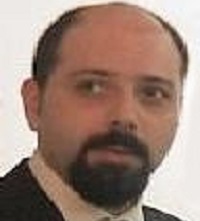
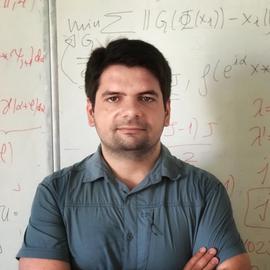
Rameez Asif is an Associate Professor at the School of Computing Sciences, University of East Anglia (UEA) since 2021. He specializes in cybersecurity, IoT, and AI, with a focus on securing interconnected systems and developing robust frameworks for threat detection and resilient IoT architectures. Previously, he held an Assistant Professor position at the University of Strathclyde (Glasgow, UK), where he researched energy systems and smart grids. He earned his PhD in Digital Backpropagation for Secure Optical Networks from Friedrich-Alexander University Erlangen-Nuremberg (Germany) in 2012, with additional research experience at DTU (Denmark) and the University of Cambridge (UK). His research interests span 5G/6G networks, wireless security, blockchain, cryptocurrencies, and metaverse technologies. He actively supervises PhD candidates and postdoctoral researchers in interdisciplinary projects. His work emphasizes practical applications, including secure localization algorithms, intrusion detection systems leveraging AI and blockchain, and optimizing IoT for smart cities. He serves on editorial boards for journals like MDPI and Frontiers Media. Rameez has over 130 publications in top-tier conferences and journals. His research addresses critical challenges in cybersecurity, edge computing, and emerging technologies, with collaborations across multiple countries and industries.
Dr. Tahir Sharif is an Associate Professor of Composite Materials and Advanced Manufacturing at the University of Derby’s College of Science and Engineering. His research focuses on composite materials, advanced manufacturing processes, and sustainable materials. He has contributed extensively to understanding the mechanical properties and failure mechanisms of 3D fiber-reinforced composites, hybrid nano-filled materials, and biobased resins. His work integrates computational modeling, experimental analysis, and innovative manufacturing techniques to address challenges in aerospace, automotive, and biomedical applications. Key research interests include nanocomposite optimization using response surface methodology, damage modeling of woven composites with manufacturing defects, and the development of cost-effective manufacturing strategies for automotive components. He also explores sustainable alternatives like biobased Polyfurfuryl Alcohol resins as environmentally friendly substitutes for traditional composites. Dr. Sharif’s articles span from 2006 to 2025, reflecting a sustained focus on composite materials, with recent emphasis on nanotechnology integration and sustainable materials. His work bridges theoretical analysis and practical applications, with notable contributions to both academic journals and industry-oriented studies. Collaborations with researchers like Shah, Choudhry, and others highlight his collaborative approach to advancing composite science and engineering. While no specific awards or grants are listed, his prolific publication record and involvement in multidisciplinary projects underscore his impact in the field. His research often emphasizes cost-effectiveness and scalability, positioning him as a key figure in advancing composite materials for real-world engineering challenges.
Dr. Suleman Khan is an Associate Professor at the University of Bradford's School of Computer Science, AI & Electronics. He holds a PhD (Distinction) in Cybersecurity from Universiti Malaya (2017) and previously worked as a Senior Network Officer at Pakistan International Airlines. His academic career includes roles at Monash University, Northumbria University, and the University of Central Lancashire. He leads the Innovate UK-funded CyberASAP project as PI and has published over 90 high-impact articles. His research focuses on cybersecurity, software-defined networks, digital forensics, IoT, and AI. Education: PhD in Cybersecurity, Universiti Malaya, Malaysia (2017) Research Interests: Network forensics, privacy preservation, trust management, SDN security, IoT security, AI-driven defense mechanisms. His work emphasizes innovative solutions for cyber threats in modern networks and intelligent systems. Awards: Fellow Member of the HEA IEEE Member Grants & Projects: Innovate UK - CyberASAP (Cyber Security Academic Startup Accelerator Programme) Teaching Areas: Cybersecurity, Networking, and Information Systems.
Dr. Luca Piras is a Senior Lecturer in Computer Science at Middlesex University, affiliated with the Faculty of Science and Technology. His primary research focuses on Privacy-by-Design, GDPR compliance, and gamification-based software acceptance solutions. He specializes in developing semi-automated tools like Agon (an acceptance requirements framework) to enhance software engagement and security. Piras also explores AI-driven approaches for detecting Android vulnerabilities and blockchain-based privacy solutions. His work bridges software engineering, requirements modeling, and behavioral science to improve system usability and security. Education & Qualifications: PhD in Information and Communication Technology (University of Trento, Italy) Research collaborations with institutions like DISI (University of Trento) and EU projects (e.g., PACAS, DEFeND) Research Interests: Privacy-preserving technologies GDPR-compliant systems Gamification in e-learning and smart communities AI-driven vulnerability detection Blockchain applications in security Federated learning for GIS systems Key Publications: Over 30 peer-reviewed papers across conferences like ENASE, IEEE RE, and workshops on system security assurance. Notable works include frameworks like Agon and tools such as ConfIs for privacy analysis. Teaching: Current courses include 'Web-Based Mobile App Development' and 'Full Stack Development.' Labs & Projects: Developed the Agon-Tool prototype for gamification requirements analysis and contributed to the DEFeND platform for GDPR compliance.
Lee Margetts is the UKAEA Chair of Digital Engineering for Fusion Energy and Director of The Fusion Engineering Centre for Doctoral Training at The University of Manchester. He holds a Professorship in Mechanical and Aerospace Engineering, leading education programs in mechanical engineering disciplines and directing the student-led MancheSTAR Fusion Society. With a background spanning geology, civil engineering, and business management, his expertise integrates high-performance computing, finite element methods, and fusion energy innovation. Education: BSc Geology (University of Durham, 1994) MSc Geotechnical Engineering (University of Manchester, 1998) PhD Civil Engineering (University of Manchester, 2002) MBA International Engineering Business Management (Alliance Manchester Business School, 2011) Research Interests: Focuses on fusion energy systems, digital engineering, and advanced manufacturing. His work bridges computational methods (e.g., ParaFEM software) with applications in aerospace materials, additive manufacturing, and biomedical engineering. Recent projects include digital twins for fusion reactors and AI-driven design workflows in NVIDIA Omniverse. Publications & Awards: Over 120 research outputs, including contributions to neutronics simulation and fusion reactor design. Notable awards include the Teaching Excellence Award 2021 and the Best Paper Prize for Simulation Technology (2019). His team’s work on fusion neutronics and CAD model optimization has gained international recognition. Leadership & Outreach: Chair of NAFEMS HPC Technical Working Group and advisor to the Biden administration on quantum computing. Promotes industrial adoption of HPC through collaborations with Oak Ridge National Laboratory and the PRACE Industrial Advisory Committee. Labs & Teams: Oversees the Fusion Engineering CDT, advancing training for 'fusioneers.' His research group develops open-source tools like ParaFEM and explores biomimetic materials inspired by pterosaur bone structures.
Dr. John Pinney is a Senior Teaching Fellow and Early Career Researcher at Imperial College London's Central Faculty. As the Data Science Skills Leader within the Graduate School, he designs and delivers training programs in programming, statistics, and machine learning for graduate students. His research focuses on computational systems biology, integrating macromolecular sequences, protein structures, and biological networks to study biological systems' evolution and function. His research interests span biochemistry, evolutionary biology, microbiology, and computational tools development. He is affiliated with the Industrial Biotechnology Hub (BIO) and contributes to interdisciplinary projects. His publications emphasize viral evolution (e.g., herpesviruses), host-pathogen interactions, and metabolic network analysis. He has developed tools like PathwayBooster and metaSHARK for metabolic pathway curation and network reconstruction. No scientific awards are explicitly mentioned in the text. He advises no listed students but collaborates widely on grants and training initiatives. His work supports the Graduate School's mission to enhance data science skills for modern research. He is part of the Industrial Biotechnology Hub, contributing to applied systems biology and biotechnology research.
Laurence Brooks is a Professor of Information Systems at the University of Sheffield’s School of Information, Journalism and Communication. Previously, he held roles as a Professor of Technology and Social Responsibility at De Montfort University (DMU) and Senior Lecturer at Brunel University London. His academic journey includes Research Associate positions at the University of Cambridge’s Judge Business School and a Lectureship at the University of York. He holds a BSc from the University of Bristol and a PhD from the University of Liverpool. His research focuses on the ethical implications of emerging technologies like AI and digital extended reality (XR), emphasizing societal impact and responsible innovation. Key areas include ICT4D, eGovernment, healthcare systems, and the interplay between technology and human behavior through theories like Structuration Theory and Actor Network Theory. Brooks has led significant projects, including the H2020-funded TechEthos and SHERPA initiatives, and coordinates the EPSRC Horizon CDT. He is a member of the REF management group at the University of Sheffield and active in professional organizations such as UKAIS and IFIP Working Groups. His teaching spans courses like ‘AI in Organisations’ and ‘Information Systems Modelling,’ reflecting his commitment to bridging academic and practical applications of technology ethics. He also serves as an external examiner for LSE and Loughborough University, furthering his influence in academic standards and ethics review.
Dr. Michael Tautschnig is a Lecturer in Theoretical Computer Science at Queen Mary University of London, School of Electronic Engineering and Computer Science. He holds a PhD from Vienna University of Technology (2011) and a Master's from TU Munich (2006). His academic roles include Director of Undergraduate Admissions and teaching modules like Programming for Artificial Intelligence and Data Science. He has extensive industry experience as a Senior Software Development Engineer at Amazon Web Services (AWS), focusing on security and verification. Research interests include software verification, concurrency, decision procedures, formal methods, and embedded systems. He has contributed to projects like CBMC (C Bounded Model Checker) and FShell, emphasizing tools for program analysis and testing. His work spans formal verification of low-level software, weak memory models, and automated testing frameworks. Publications highlight contributions to model checking, concurrency analysis, and verification competitions. Awards include a patent for API optimization and a best paper award. He has secured grants such as the Google Faculty Research Award (2014-2015) and GCHQ Small Grant (2014-2015). Active in conference organization (e.g., CAV, TACAS) and program committees, he promotes academic-industrial collaboration in software verification. Labs/Teams: Collaborations include AWS Security, University of Oxford, and TU Wien. His work bridges academia and industry, focusing on scalable verification tools for large software systems.
Jos Darling is a Senior Lecturer in the Department of Mechanical Engineering at the University of Bath, specializing in vehicle dynamics and engineering education. He serves as Undergraduate Admissions Tutor and has held leadership roles including Director of Teaching for 20 years. His research focuses on hydraulic systems, active suspensions, tilting three-wheeled vehicles, and innovative teaching methods. Education: PhD in Mechanical Engineering (pressure ripple in hydraulic pumps), followed by industry experience in automotive engineering. Research Interests: Vehicle dynamics (active suspensions, tilting vehicles), hydraulic actuation systems, and game-based learning in engineering education. His work addresses urban mobility solutions, durability loads prediction, and educational technology integration. Key Projects: Collaborations via Knowledge Transfer Partnerships (KTP) with companies like Bailey Caravans and Moulton Bicycle Co. Focused on improving manufacturing processes and product development through applied research. Awards: National Teaching Fellowship (2008), multiple teaching awards, and recognition for educational game development (Racing Academy). Labs/Centers: Affiliated with The Foundry: Centre for Digital, Manufacturing & Design Innovation, emphasizing cross-disciplinary research and innovation.
Matthew Nunes is a Professor in the Department of Mathematical Sciences at the University of Bath, affiliated with the Centre for Mathematics and Algorithms for Data (MAD) and the EPSRC Centre for Doctoral Training in Statistical Applied Mathematics (SAMBa). His research focuses on statistical methodology for nonstationary time series analysis, wavelet methods, and network data analysis. He holds a prominent role in academic leadership, supervising doctoral students and contributing to research projects funded by major organizations like the Engineering and Physical Sciences Research Council (EPSRC). His expertise spans advanced statistical techniques such as locally stationary wavelet processes, network time series models, and applications in climate science, healthcare, and economics. Recent projects include analyzing ocean temperature impacts on deep-sea ecosystems and developing forecasting methods for economic indicators like UK Gross Value Added (GVA) under pandemic shocks. Nunes is also actively involved in software development for statistical computing, contributing packages like forecastLSW and TrendLSW to the R ecosystem. Nunes’ collaborative work extends to interdisciplinary fields, including environmental monitoring of tropical cyclones using acoustic data and causal modeling of chronic pain mechanisms. His research emphasizes practical applications of statistical theory, bridging theoretical advancements with real-world challenges in healthcare, climate change, and network dynamics.
Dr Christos Kloukinas is a Reader (equivalent to Associate Professor) in the Department of Computer Science at City, University of London. He is currently the Scheme Director for the Technical Scheme of Postgraduate Courses and Course Director for the MSc in Software Engineering, overseeing programs such as Advanced Computer Science, Computer Games Technology, and e-Business Systems. Education: PhD in Informatics, University of Rennes 1, France (2002) MSc in Computer Science, University of Crete, Greece (1997) BSc in Computer Science, University of Crete, Greece (1994) Christos Kloukinas's research focuses on software engineering and embedded systems, particularly in the development of methods and tools for the analysis, optimization, and implementation of mission-critical and safety-critical real-time systems. He has significant interests in software architectures, security, formal methods, and machine learning. His recent work extends into big data assurance, cloud certification, and AI applications in healthcare. The 15 most recent publications highlight a strong trend in SLA-based assurance, runtime monitoring, formal verification, and the application of AI in health and big data contexts. His work bridges theoretical rigor with practical implementation in distributed and embedded systems. Scientific Awards: No awards listed in the provided text. Christos has served as an investigator in numerous high-impact research projects, including AERAS, Smart-Bear, CyberSure, IoT@Work, and SLA@SOI. He has also contributed to European projects such as Serenity, SeCSE, and AMETIST. He advises on postgraduate programs and is actively involved in shaping the curriculum for advanced computing education. His research has led to collaborations across Europe and industry partnerships with organizations such as France Telecom R&D and STMicroelectronics. He is affiliated with research teams focused on software architecture, runtime monitoring, and secure systems, particularly within the context of ambient intelligence and dependable computing. His lab work emphasizes formal modeling, tool development, and system integration for real-world deployment.
Professor Ahmed Kovacevic is a leading academic at City, University of London, where he holds the Howden / Royal Academy of Engineering Research Chair in Compressor Technology. He is based in the Department of Mechanical Engineering within the School of Science and Technology, and serves as Director of the Centre for Compressor Technology, a key component of the Thermo-Fluids Research Centre. He has been affiliated with City University since 1998, progressing from Research Fellow to Professor and Chair, and maintains strong industrial partnerships with Howden Compressors Ltd and the Royal Academy of Engineering. Education: PhD in Mechanical Engineering, City University London (1998–2002) MSc in Mechanical Engineering, University of Tuzla, Bosnia and Herzegovina (1995–1997) Dipl Ing in Mechanical Engineering, University of Sarajevo, Bosnia and Herzegovina (1981–1986) Professor Kovacevic’s research centers on compressor and screw machine technology, with a focus on high-fidelity computational modeling, design optimization, and performance analysis of positive displacement machines. His work integrates advanced CFD simulations, thermodynamic modeling, and experimental validation to improve the efficiency, reliability, and environmental impact of screw compressors and expanders. He is particularly known for his contributions to oil-free compression, multiphase flow modeling, and rotor profile optimization. His research often bridges academic theory with industrial applications, especially in energy recovery systems such as Organic Rankine Cycles. The recent trend in his publications shows a strong emphasis on numerical modeling, experimental validation, and optimization of rotary machines, particularly using CFD and machine learning techniques. His work spans leakage flow analysis, conjugate heat transfer, real gas effects, and oil injection dynamics in screw machines. He frequently collaborates with industry and co-authors with researchers from institutions worldwide, maintaining a high impact in mechanical and thermo-fluids engineering. Scientific Awards and Honors: James Clayton Prize (IMechE, 2020) Howden / Royal Academy of Engineering Research Chair (2020) Donald Julius Groen Prize (2016) IMechE Ludwig Mond Prize (2012) IMechE Moss Prize (2011) Geothermal Resources Council Best Paper (2007, 2004) City University President’s Award for Teaching (2017) Professor Kovacevic has supervised numerous PhD students, including Brijeshkumar Patel, Yang Lu, and Nausheen Basha, on topics ranging from leakage flows to rotor design. He has led significant research grants such as the EPSRC-funded NextORC project on ORC expanders. He is actively involved in professional service, including as Co-Editor of the Journal of Process Mechanical Engineering, Chair of the Design Education Special Interest Group, and board member of the IMechE Fluid Machinery Group. He is the initial author of the SCORG software, widely used in the compressor industry, and serves as Director of PDM Analysis Ltd, a spin-out company from City, University of London. His work in engineering design education and international collaboration further demonstrates his leadership in both research and academic development.
Dr Dan Hart is an Assistant Professor in the Department of Management at the Birmingham Business School, University of Birmingham . He teaches leadership across undergraduate, postgraduate, and MBA programmes and serves as Director of the MSc in Leadership and Management. He is also the UK representative to UNESCO’s Megacities Alliance for Water and Climate (MAWAC) and holds an Honorary Chair with The Infusion Project. Education: PhD in Management, University of Birmingham, 2015 MSc in Mechanical Engineering, Tel Aviv University, 1987 BSc in Mechanical Engineering, Tel Aviv University, 1984 Dr Hart's research focuses on leadership, careers, diplomacy, and water sciences , with a strong emphasis on social impact and urban development. His work explores leadership in smart cities, place-based leadership, and the psychological components of a 'calling' in professional life. He has also developed urban renewal models aimed at transforming underprivileged communities. His recent publications analyze leadership in smart cities, the meaning of diplomacy, and the balance between self-interest and prosocial behavior in career calling. These works reflect interdisciplinary engagement across management, urban studies, and behavioral sciences. Dr Hart is actively involved in teaching and curriculum development, leading modules such as Responsible Leadership (MBA), Leadership Development (MSc), and Fundamentals of Leadership. He also mentors MBA students in leadership practice. UK Representative to UNESCO – MAWAC (Megacities Alliance for Water and Climate) Honorary Chair – The Infusion Project Dr Hart combines academic rigor with practical experience, having founded and managed a software company for 15 years before transitioning into academia. His work bridges engineering, entrepreneurship, and leadership, contributing to both scholarly and societal advancements.
Georgios Exarchakis is a Lecturer at the University of Bath, specializing in Machine Learning, Theoretical Neuroscience, and Data Science. His research emphasizes transparent and interpretable modeling, with applications in Neuromorphic Engineering, Health Science, and Quantum Chemistry. He has held research positions at IHU Strasbourg, Institut de la Vision, and École Normale Supérieure, and earned his PhD from the University of Oldenburg. Education: Dr. rer. nat. in Machine Learning, 2016, Carl von Ossietzky University of Oldenburg M.Sc. in Computational Science, 2012, Goethe University Frankfurt Diploma in Mathematics, 2008, Aristotle University of Thessaloniki His research interests span Interpretable Machine Learning, Invariant Representations, Sparse Coding, Wavelet Scattering, Probabilistic Models, and Deep Learning . He investigates how models can extract meaningful, stable features from complex data, drawing inspiration from biological systems and theoretical neuroscience. His work often bridges theory and application, particularly in quantum chemistry and neurotechnology. His recent publications highlight a strong focus on efficient and interpretable models , including wavelet scattering for molecular property prediction, discrete sparse coding, and clustering algorithms for event-based vision. The articles show a consistent theme of developing mathematically grounded, invariant, and scalable methods for data analysis. He is the developer or a key contributor to open-source libraries such as Kymatio (Scattering Transforms in Python) and ProSper (Probabilistic Sparse Coding), which facilitate the use of advanced signal processing and learning techniques in the research community. Georgios has taught Machine Learning courses at the University of Strasbourg, École Polytechnique, and Oldenburg. He has collaborated with leading researchers like Stéphane Mallat and Jörg Lücke. His work is published in top-tier venues including CVPR, NIPS, JMLR, and JCP.
Ahsan Ikram is a Lecturer in Computer Science at the University of Gloucestershire. He holds a BE in Software Engineering from the National University of Sciences and Technology (2004) and a PhD in Computer Science from the University of the West of England (2011). His teaching focuses on core concepts in programming, software engineering, data analytics, and data mining, employing interactive lectures and tutorials. Research interests include biological/chemical computation models for self-managing systems, IoT frameworks, predictive maintenance for aerospace systems, and machine learning applications in automated essay scoring. Ikram's work integrates concepts from chemistry and biology to develop context-aware computing environments. His earlier projects include collaborations with physicists at CERN on grid-enabled analysis for handheld devices. Notable research themes span predictive maintenance optimization for aircraft landing gear, synthetic dataset creation for maintenance analytics, and AR-based mobile game design challenges. Publications emphasize interdisciplinary approaches, combining machine learning with domain-specific challenges in aviation and healthcare. No scientific awards are listed, though his contributions to adaptive computation systems and IoT modeling demonstrate significant academic impact.