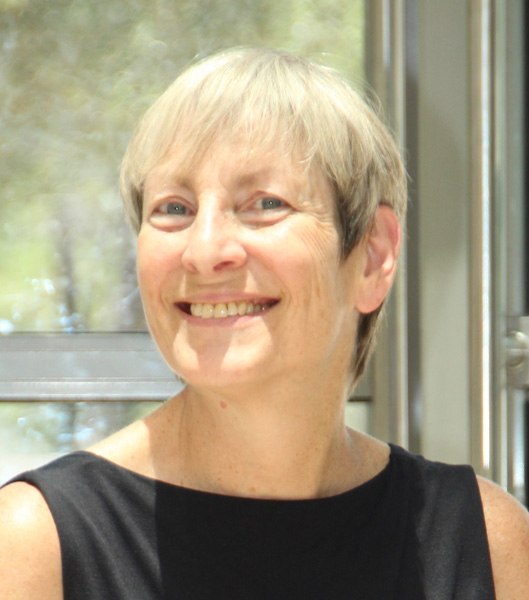
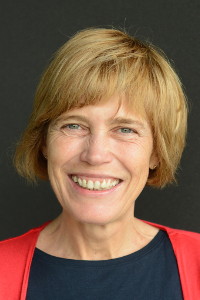
Sebastian Ordyniak is an Associate Professor in the Department of Algorithms and Complexity at TU Wien. His research focuses on parameterized complexity, algorithms, computational complexity, and applications in artificial intelligence and graph theory. He holds a PhD and the prestigious START Prize (2014–2022), a renowned Austrian award for outstanding researchers. Key projects include the ERC-funded 'Parameterized Complexity of Local Search' (2010–2014) and ongoing initiatives like 'Parameterized Analysis in Artificial Intelligence' (2021–2026). His work bridges theoretical foundations with practical applications, such as algorithmic fairness, machine learning interpretability, and graph drawing. Research highlights include contributions to SAT solving, backdoor analysis, and clustering algorithms. He has advised at least one student, Hossein Maleki, on practical algorithms for deletion to small components. His interdisciplinary approach integrates logic, computational geometry, and multi-agent systems.
Orna Grumberg is a Leumi Chair Professor in the Computer Science Department at the Technion - Israel Institute of Technology. She has held this professorship since 2005 and was awarded the Leumi Chair in Science in 2011. Professor Grumberg serves on the Steering Committee of the Computer-Aided Verification (CAV) conference and has been actively involved in the academic community through editorial boards and conference committees. Her educational background is deeply rooted at the Technion, where she received her B.Sc., M.Sc., and Ph.D. in Computer Science. Professor Grumberg's research spans several critical areas in computer science, with a primary focus on formal verification methods. Her work has significantly advanced the field of model checking and automated verification systems. She has made substantial contributions to abstraction techniques, refinement methods, and counterexample analysis in verification processes. Her research extends to compositional model checking, SAT-based approaches, distributed verification systems, and applications to security vulnerability detection. Her theoretical work on temporal logics and automata on infinite objects provides the mathematical foundation for many practical verification tools. The publication record of Professor Grumberg demonstrates a consistent research trajectory focused on improving model checking techniques. Her work shows evolution from foundational model checking approaches to more specialized techniques like abstraction-refinement, SAT-based solving, and security applications. The research spans theoretical computer science, practical software engineering applications, and hardware verification, reflecting the interdisciplinary nature of formal methods. Professor Grumberg has received recognition through her leadership roles in the field, including serving on the Steering Committee of the CAV conference and editorial boards of prestigious journals like "Information and Computation" and "Formal Methods in System Design". Her book "Model Checking" co-authored with E.M. Clarke and D. Peled has become the standard reference in the field. As an educator and mentor, Professor Grumberg has shaped the verification landscape in Israel. She served as Associate Dean for Graduate Studies at the Technion and established the software engineering track with a strong verification component. Her introductory model checking course attracts approximately 100 students annually. Her students now hold prominent positions in academia (Hebrew University, Tel-Aviv University) and industry (particularly at IBM). She maintains strong industry collaborations, with ongoing projects with IBM on UML Verification and with Rafael on Finding Security Vulnerabilities in Network Protocols. Professor Grumberg leads research groups that form the foundation for verification teams in major Israeli technology companies like IBM and Intel, demonstrating the practical impact of her academic work.
Roland Markus Hinterhölzl is a Professor at the University of Applied Sciences Wels, Department of Materials, within the Research Center Wels Center of Excellence Automotive/Mobility. His work focuses on advanced composite materials, manufacturing processes, and simulation-driven solutions for automotive and aerospace applications. He leads research projects addressing automation, lightweight design, and material defect analysis through innovative methodologies like reinforcement learning and AI-based surrogates. Education: Holds Dipl.-Ing. (FH) and Dr. techn. degrees (details not specified in text). Research Interests: Specializes in composite material processing, finite element simulations for draping and forming, and the integration of AI into manufacturing workflows. His projects aim to optimize processes such as thermoplastic welding, recycled GFRP utilization, and semi-automatic preform manufacturing. Current Projects: Pre-2-K: Developing semi-automatic processes for 3D composite components MicoWeld: Micromechanical analysis of thermoplastic composites AdiosRivet: Advanced design of welded joints for vehicle structures rGFK goes Trailer: Lightweight trailer design using recycled materials Advising & Grants: Supervises 7 research works and secures funding from programs like Future Mobility Call and Dissertationsprogramm der Fachhochschule OÖ. His research bridges process technology, simulation, and real-world applications across automotive and aerospace sectors. Labs/Teams: Active within the Research Center Wels, collaborating on cross-disciplinary projects involving materials science, automation, and advanced manufacturing techniques.
Christoph Burgstaller is a Professor at FH Wels, focusing on Materials Science and Polymer Engineering. He leads research in composite materials, thermoplastics, and sustainable manufacturing. His work contributes to UN Sustainable Development Goals related to responsible consumption and production (SDG 12) and climate action (SDG 13). Editor-in-Chief of Polymers (2022–2023) Collaborations with experts like Gernot Zitzenbacher and Christoph Hochenauer Research Interests: Development and characterization of composite materials, injection molding optimization, recycling of post-consumer plastics, and hydrogen-material interactions. His studies bridge fundamental material science with industrial applications, emphasizing eco-friendly processes. Recent work includes validating devolatilization models in extruders, analyzing bulk density of plastic granules, and investigating fiber-reinforced polypropylene composites. Articles highlight advancements in polymer processing and sustainability. Key Collaborations: Worked on projects like the H2-Zentrum (hydrogen-material interactions) and thermoforming process enhancements. Active in conferences and peer-review activities.
Enes Bajrovic is a researcher affiliated with the Faculty of Computer Science, focusing on high-performance computing (HPC), big data processing, and performance portability. His work spans task-based parallelism, runtime systems, and optimization frameworks for heterogeneous architectures. He has contributed to major European projects like PEPPHER and AutoTune, which aim to advance HPC software tools and autotuning methodologies. His research emphasizes practical applications of parallel computing in domains such as mobile networks and scientific simulations. Education: Dipl.-Ing. Dr.techn., BSc in Computer Science His research interests include developing frameworks for compute- and data-intensive applications, leveraging technologies like Kubernetes, OpenCL, and Intel Xeon Phi coprocessors. He has authored numerous peer-reviewed publications on topics such as pipeline patterns, autotuning algorithms, and hybrid execution models. His work bridges theoretical advancements in parallel computing with real-world software engineering challenges. Bajrovic has collaborated on projects funded by the European Commission’s FP7 program, contributing to deliverables like runtime systems, tuning frameworks, and benchmarking tools. His research also addresses the integration of big data processing with HPC, particularly in telecommunications and distributed computing environments.
Alexander Burka serves as Professor at the University of Applied Sciences Burgenland's School of Business, specializing in European integration dynamics and cultural diplomacy. His institutional affiliation spans both academic instruction and applied policy development within Austria's higher education framework for applied sciences. His research portfolio centers on: EU enlargement processes with Balkan and Eastern European focus Cultural diplomacy mechanisms in foreign policy Simulation-based educational tools (Planspiele) for policy engagement Language policy as soft power instrument Minority integration frameworks in European contexts Neighborhood policy implementation challenges Analysis of his 2010-2019 publications reveals consistent methodological innovation through simulation games that translate complex EU policies into experiential learning. His work demonstrates interdisciplinary convergence of political science, cultural studies, and pedagogy, with increasing emphasis on Ukraine and Balkan integration post-2014. Key thematic evolution shows progression from theoretical cultural policy analysis toward actionable educational frameworks for policymakers.
Andreas Müller is a Professor at FH Hagenberg, part of the Research Center Hagenberg. His expertise focuses on hybrid systems, formal verification, and component-based modeling. He leads research in automotive/mobility networks and systems safety. Müller has contributed to the development of verification tools like KeYmaera X and pioneered methods for component contract composition in hybrid systems. His work emphasizes practical applications of formal methods in cyber-physical systems. He is a key researcher in the pDrive project (2023-2026), investigating energy and emission savings in 2-car platoons. Müller's research spans theoretical advancements and real-world system implementation, with a focus on model complexity reduction and automated safety verification. His contributions include benchmarks for hybrid system verification and innovative approaches to handling system component interactions. Research Highlights: Hybrid systems verification, component-based modeling, formal methods, safety-critical systems Project Leadership: pDrive (Future Mobility Call - Land OÖ)
Univ.Prof. Ernst Kozeschnik is a Professor at TU Wien's Institut für Werkstoffwissenschaft und Werkstofftechnologie, specializing in materials science and metallurgy. His research focuses on phase transformations, precipitation kinetics, heat treatment optimization, and additive manufacturing of advanced alloys like nickel-based superalloys, titanium alloys, and aluminum composites. He has supervised numerous graduate students in topics such as microalloyed steel behavior, powder bed fusion processes, and material modeling. Key research areas include: Thermomechanical processing of high-performance alloys Nanometer-scale precipitate effects on recrystallization mechanisms In-situ analysis of phase transformations using advanced techniques Computational modeling of materials behavior Recent work emphasizes understanding microstructural evolution in additive-manufactured components and optimizing heat treatments for enhanced material properties. Publications highlight cross-disciplinary approaches combining experimental methods (e.g., HT-XRD) with computational modeling to advance materials design. Active collaborations include projects with industrial partners focusing on process optimization for aerospace and automotive applications.
Alice Reinbacher-Köstinger is an Associate Professor at the Institute for Fundamentals and Theory of Electrical Engineering, Graz University of Technology, Faculty of Electrical Engineering. Her research focuses on computational electromagnetics, inverse problems, and bioimpedance analysis. Role: Research and Teaching Research Areas: Transformer modeling, NFC systems, aortic dissection detection, and surrogate-based optimization Email: alice.koestinger@tugraz.at Her work combines advanced modeling techniques with machine learning, particularly in magnetic material characterization and bioimpedance signal analysis. Recent publications emphasize physics-informed neural networks, harmonic balance methods, and Bayesian experimental design. Current projects include optimizing sensor placement for magnetic property measurements and developing simulation tools for medical diagnostics. Her research bridges electrical engineering with biomedical applications through multiphysics simulations and data-driven methods.
Clemens Röhrl serves as a Research Professor at the Center of Excellence Food Technology and Nutrition within the University of Applied Sciences Upper Austria. Holding a Privatdozent qualification with Habilitation in Medical Biochemistry (2018) and PhD in Vascular Biology (2011), his academic profile demonstrates deep expertise in lipid metabolism and nutritional biochemistry at the intersection of plant science and human health. His educational background includes: Medical Biochemistry, Habilitation (Awarded January 29, 2018) Vascular Biology, PhD (Awarded March 16, 2011) Röhrl's research focuses on the molecular mechanisms of cholesterol transporters (particularly SR-B1), HDL metabolism, and the health-promoting effects of regional plants. His work bridges fundamental biochemistry with applied nutritional science, investigating how plant extracts enhance bioavailability of fat-soluble vitamins and counteract pathological processes like foam cell formation. The fingerprint analysis of his 43 research outputs reveals concentrated expertise in lipid metabolism (49%), cholesterol pathways (60%), and high-density lipoprotein research (50%), with particular emphasis on photooxidation and electron microscopy techniques. His recent publications (2024-2025) demonstrate continued innovation in nutraceutical delivery systems, with particular focus on micellization processes for fat-soluble vitamins, bioactive components of spearmint, and elderberry compounds. These studies consistently apply high-content screening and in vitro modeling to evaluate plant-based interventions for metabolic syndrome and cardiovascular health. Röhrl actively contributes to academic service through conference organization and editorial work, having chaired the Austrian Atherosclerosis Society annual meeting in 2019 and served on the editorial board of Scientific Reports (2018-2020). His current research portfolio includes two significant projects: the active Regio-Plants initiative (2023-2027) investigating health-promoting effects of regional plants across Bavaria-Tyrol-Upper Austria, and the completed TC PhytoCluster project (2019-2020) focused on in silico screening of phytogenic compounds for metabolic syndrome applications. These projects demonstrate his commitment to translating basic research into practical applications for regional health and nutrition. Röhrl leads the Research Center Wels, which functions as an interdisciplinary hub connecting food technology, nutritional science, and biochemical research. His team employs advanced techniques including high-content screening, electron microscopy, and in vitro metabolic modeling to investigate plant-based interventions for cardiovascular and metabolic health.
Christel Baier is a Full Professor for Algebraic and Logical Foundations of Computer Science at the Faculty of Computer Science, Technical University Dresden. She has held this position since 2006, following her role as Professor for Theoretical Computer Science at Rheinische-Friedrich-Wilhelms Universität Bonn (1999-2006). Her research focuses on probabilistic systems, modeling and specification formalisms, semantics of coordination languages, probabilistic model checking, quantitative analysis, temporal and modal logics, and automata theory. Her work bridges theoretical computer science with practical applications in system verification and analysis, particularly in developing formal methods for probabilistic and timed systems. Professor Baier's publications demonstrate consistent contributions to theoretical computer science with a clear trajectory from foundational work in automata theory to applied model checking techniques. Her research shows particular strength in probabilistic verification methods and their application to complex system analysis. Award for visiting professor (1 month in both years), CNRS/ENS Cachan, France (2005 and 2006) ETAPS Best Theory Paper Award (2008) Professor Baier has advised numerous PhD students throughout her career, including Alexander Asteroth, Nathalie Bertrand, Marcus Groesser, Verena Wolf, and Frank Ciesinski. She currently supervises 4 PhD students at TU Dresden. She has served as Chair of the examination board for bachelor, master and diploma programs in Computer Science at TU Dresden and has been Principal Investigator for 4 national projects funded by the German Research Foundation (DFG). Her research group at TU Dresden focuses on advancing formal verification methods for probabilistic systems. She maintains active involvement in the academic community through editorial board membership of the Journal of Universal Computer Science, steering committee participation for major conferences, and extensive program committee service for top-tier theoretical computer science venues.
Tuan Dat Trinh is a Researcher at Vienna University of Technology's Network Lab, holding a Dr.techn. degree in technical sciences. His work bridges academic research and practical data integration solutions within the university's engineering ecosystem. His primary research focuses on Linked Data processing , statistical data integration , and widget-based mashup platforms . Key contributions include the Linked Widgets framework for open data exploration and StatSpace for statistical data analysis, emphasizing user-friendly interfaces that lower technical barriers for non-experts. His methodology combines semantic web technologies with innovative interaction paradigms like drag-and-block interfaces and autocomplete annotation systems. Analysis of his 15 most recent publications (2014-2017) reveals three dominant research trajectories: (1) environmental data stream integration for real-time monitoring systems, (2) statistical data cube exploration through widget composition, and (3) collaborative mashup approaches for data journalism. His work consistently addresses the tension between data complexity and user accessibility, particularly in open government and public sector contexts. As a core member of the Network Lab, Trinh contributes to developing next-generation data integration infrastructure where semantic technologies meet practical usability requirements. His collaborative projects with researchers like Wetz, Do, and Tjoa demonstrate strong interdisciplinary engagement across computer science and domain-specific applications.
Tobias Nenning is a researcher at the Institute of Wood Technology and Renewable Resources under the University of Natural Resources and Life Sciences Vienna (BOKU) . His work focuses on advancing sustainable wood utilization through innovative material concepts and structural property analysis. Education : Doctorate (2022) from BOKU's Doctoral School BUILD.NATURE; Master's (2017-2019) and Bachelor's (2013-2017) in Wood Technology and related fields at BOKU; Erasmus+ semester in Fiber and Polymer Engineering at Aalto University (2018). His research interests span hardwood utilization, structural properties of wood, resource-efficient material transformation, and adhesive technology for timber applications. Notable projects include New Material Concept for Hardwood and WoodC.AR , emphasizing circular economy principles in forestry. Scientific awards include the Marcus Wallenberg Foundation Young Researchers' Program (2022), Klaus Fischer Innovation Award (2020), and a 2018 European Forum Alpbach scholarship. Recent articles explore hardwood branch utilization, adhesive properties under temperature variation, and computational modeling for sustainable timber applications. Collaborations with institutions like the Institute of Physics and Materials Science highlight interdisciplinary efforts. Lectures delivered in Austria, Sweden, Hungary, Portugal, and Slovenia address climate solutions through wood-based materials and structural innovations. No supervised theses or lab teams are explicitly attributed to Tobias Nenning in the provided data.
Mario Jungwirth is a Professor at the University of Applied Sciences Wels, affiliated with the College of Engineering and the Mechatronics Engineering department. His work focuses on smart mechatronics, digital twin technologies, and power electronics systems. Key research areas: Mechatronics, Power Electronics, Digital Transformation, Virtual Reality, and Engineering Education. Notable projects include the PVPLUS research initiative (2012) and collaborations across Austria, Taiwan, and international conferences like EUROCAST. Recent publications emphasize simulation-assisted design, educational innovation, and inductive component modeling. His contributions to mechatronics education and industry-academia partnerships highlight his role in advancing applied research and teaching methodologies.
Georg Weissenbacher is a Professor at Vienna University of Technology , affiliated with the Network Lab and the research area of Formal Methods in Systems Engineering . His academic work focuses on software verification , formal methods , and concurrent systems . University: Vienna University of Technology Research Area: Formal Methods in Systems Engineering Academic Rank: Professor Education: D.Phil. Univ.Prof. Dipl.-Ing. Research Interests : Weissenbacher's work centers on formal verification techniques for software and hardware systems. Key areas include: Hyperproperties : Analyzing properties of systems involving multiple execution traces, such as security and robustness. Model Checking : Applying bounded model checking to automotive software (e.g., AUTOSAR components) and concurrent systems. Symbolic Execution : Leveraging symbolic execution for bug detection in programs with complex behaviors like speculative execution. Concurrency Bugs : Formalizing heisenbugs and developing methods to extract safe thread schedules from incomplete model checking results. Automated Reasoning : Improving interpolation-based techniques and SAT solvers for program analysis and fault localization. Publication Trends : His recent articles (2024-2025) emphasize symbolic execution for hyperbug detection, machine learning in security verification, and automotive software validation. Earlier works (2023-2021) explore model checking , mutation testing , and concurrent system analysis . Projects : He leads initiatives such as: Abstraction-based Parameterized TLA Checker Bit-level Accurate Reasoning and Interpolation Tools for Concurrent and Distributed Systems LogiCs-Stipendien (Formal Methods in Computer-Aided Design) Collaboration and Supervision : Weissenbacher co-edits conference proceedings (e.g., FMCAD 2023 , CAV 2018 ) and supervises students in formal verification, including Andreas Fellner (model-based mutation testing), Emmanuel Pescosta (speculative non-interference), and Tobias Nießen (hyperproperty counterexamples).