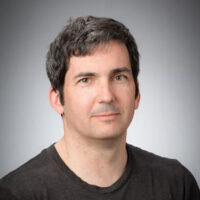
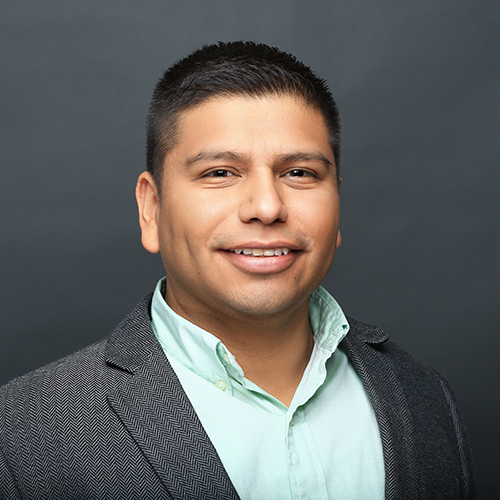
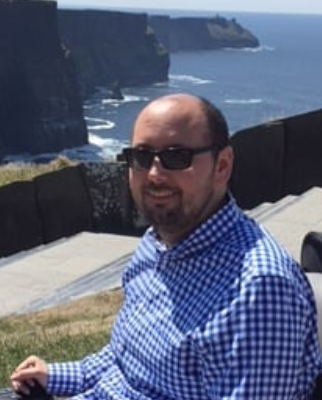
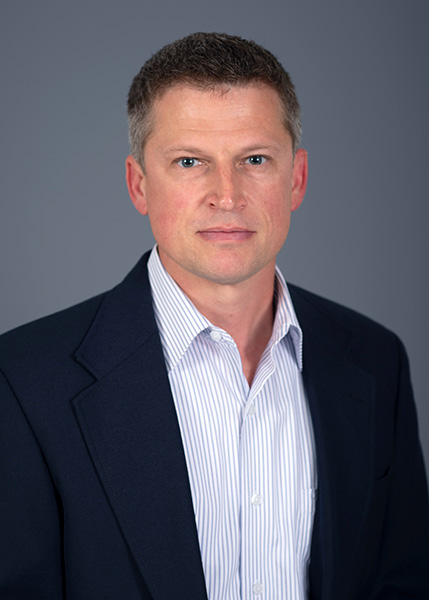
Mark Lawford is a Professor in the Department of Computing and Software at McMaster University's Faculty of Engineering. His expertise spans software engineering, safety critical systems, and model-based development, with a focus on digital & smart systems and transportation research clusters. Contact: Email: lawford@mcmaster.ca Website: www.cas.mcmaster.ca/~lawford His research explores automotive systems , formal verification , and model-driven engineering , particularly addressing challenges in automotive electrification , centralized E/E architectures , and safety assurance cases . Recent publications emphasize test case generation , change impact analysis , and model transformation tools for Simulink, SysML, and AUTOSAR. Key trends in his work include autonomous vehicle safety , real-time control systems , and integration of formal methods with industrial practices across automotive, biomedical, and nuclear domains.
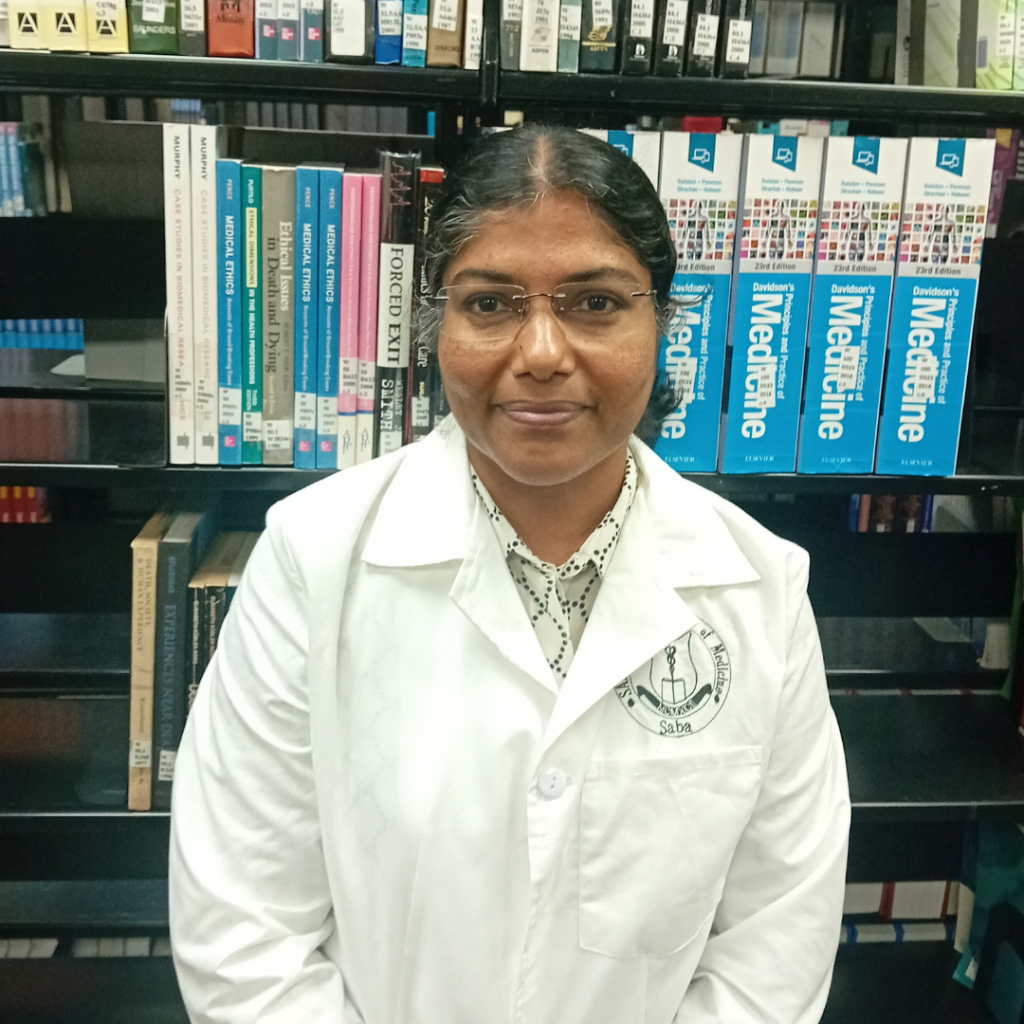
Dr. Reem Abraham is a Professor at the School of Medicine, Saba University, specializing in Pathophysiology. With over two decades of experience in medical education across India, Saudi Arabia, and the Caribbean, she focuses on teaching Medical Physiology to students in various programs, including USMLE and MBBS. Her research emphasizes Medical Physiology and Medical Education, with a particular interest in active learning strategies and curriculum design. Dr. Abraham has presented research at prestigious conferences like the American Physiological Society (APS) and Association for Medical Education in Europe (AMEE), earning numerous awards including the International Endeavour Executive Fellowship (2018) and the APS Teaching Career Enhancement Award (2014). Her publications highlight innovations in curriculum mapping, student project mentorship, and assessment methodologies. She has also been recognized for her teaching excellence by institutions like AUSOMA (American University School of Medicine Aruba) with multiple 'Best Teacher' awards. Dr. Abraham’s work integrates clinical orientation with educational research, aiming to enhance student learning outcomes through evidence-based strategies. She has contributed to faculty development programs and workshops, promoting global standards in medical education.
Diego Sevilla Ruiz is an Associate Professor at the University of Murcia's Faculty of Informatics, Department of Computer Engineering and Technology, where he leads initiatives in Software Engineering research. He completed his PhD in 2008 on distributed component models (CORBA-LC). His research focuses on database technologies, particularly schema evolution in NoSQL and relational databases, model-driven engineering approaches, and unified metamodeling. Recent work develops Skiql (a schema query language), Athena (schema definition language), and methodologies for referential integrity in graph databases. His publications advance database abstraction techniques, schema migration frameworks, and automated tools for database management and modernization.
Helen Huang is an Associate Professor in the Department of Mechanical and Aerospace Engineering at the University of Central Florida (UCF). She directs the Biomechanics, Rehabilitation, and Interdisciplinary Neuroscience (BRaIN) Laboratory, where her team—comprising students from biomedical, mechanical, and electrical engineering—investigates motor adaptation, gait neuromechanics, and rehabilitation technologies. Her lab focuses on brain dynamics during locomotion, robotic rehabilitation devices, and advanced EEG/EMG methodologies for young and older adults. Education: Huang holds a B.S. in Materials Science and Engineering from MIT and M.S./Ph.D. in Biomedical Engineering from the University of Michigan. Prior to academia, she worked as a materials engineer at Michelin and completed postdoctoral training at the University of Colorado and University of Michigan. Research Focus: Her interdisciplinary work bridges biomechanics, neuroengineering, and rehabilitation science. Key areas include: Motor adaptation and brain dynamics during gait perturbations Robotic interventions for balance and fall prevention in aging populations Novel electrophysiological methods (EEG/EMG) for movement analysis Neuromechanical factors in interlimb coordination and stability Publication Trends: Her recent articles (2018-2024) demonstrate evolving emphasis on EEG artifact mitigation, gait perturbation responses in aging, wearable sensor development, and equity in neurodiagnostics. Methodologically, they integrate biomechanical modeling, clinical psychophysiology, and rehabilitation technology validation. Awards & Honors: 2021 UCF Reach for the Stars & Research Incentive Award 2020 UCF Luminary Award and ASB President’s Award NSF CAREER Award for EEG artifact research Invitation to U.S. National Academy of Engineering symposium (2019) NIH grantsmanship fellowship (2017) Grants & Leadership: NIH/NIA R25 multi-PI for diversity in aging research (2023-2028) NIH R01 PI for gait perturbation studies (2017-2022) Leads BRaIN Lab with cross-disciplinary student teams Teaching: Courses include Advanced Biomechanics (BME 6215), Engineering Biomechanics (BME 3211), Bioinstrumentation (BME 6500), and special topics in biomedical engineering.
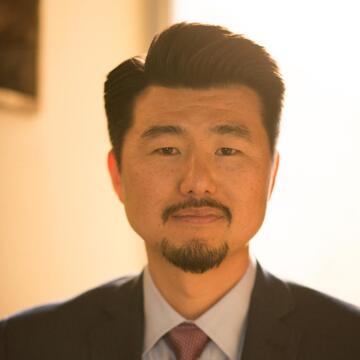
Kevin Oh serves as Professor and Department Chair at the University of San Francisco, where he maintains a full-time faculty position focused on innovative educational practices. His work bridges special education, teacher training, and emerging technologies to create inclusive learning environments that address diverse student needs through evidence-based methodologies. Dr. Oh earned his PhD in Special Education from the University of Virginia, Charlottesville, establishing the foundation for his research in disability-inclusive pedagogy and teacher preparation. His academic journey reflects a commitment to advancing educational equity through technological innovation and cross-cultural collaboration. His research program centers on collaborative teaching frameworks, assistive technology integration, and virtual reality applications in teacher training. Notably, he pioneers the use of three-dimensional immersive environments like Second Life to develop culturally responsive teaching practices and global classroom experiences, with particular emphasis on special education contexts and co-teaching models. Analysis of his publication trajectory reveals a sustained focus on virtual worlds in education since 2007, evolving from foundational technology adoption studies to sophisticated investigations of synchronous discussion facilitation and international collaboration. His work consistently addresses the intersection of teacher preparation, special education needs, and digital innovation. Dr. Oh's scientific recognition includes: Fulbright Specialist Project Award (2020) for Internationalization, Culturally Responsive, and Digitalization initiatives at the University of Applied Sciences Northwestern Switzerland USF Faculty Team Innovation Award (2013) for Creating a global classroom using virtual environments While specific details about his graduate student advising and research grants were not provided in available materials, his leadership as Department Chair and extensive publication record suggest active mentorship within his academic unit. His work with international institutions through the Fulbright program indicates significant collaborative research networks. No dedicated laboratories or specialized research teams were mentioned in the source materials, though his virtual environment research implies collaboration with educational technology specialists and international partner institutions.
Erick S. Vasquez is an Associate Professor in the Department of Chemical and Materials Engineering at the University of Dayton’s School of Engineering. His research focuses on designing advanced nanocomposite materials, particularly magnetic nanoparticles, for applications in water purification, drug delivery, and biological detection. He actively collaborates with researchers nationwide and internationally, emphasizing interdisciplinary innovation. Dr. Vasquez holds a Ph.D. in Chemical Engineering from Mississippi State University (2013), an M.S. from Clemson University (2009), and a B.S. from Universidad Centroamericana José Simeón Cañas (2007). He is a Senior Member of the American Institute of Chemical Engineers (AIChE) and a member of multiple professional organizations, including the American Chemical Society (ACS) and Sigma Xi. His research interests span nanomaterials synthesis, biomaterials interactions, and engineering education. Notable work includes developing biocompatible magnetic nanoparticles for medical applications and optimizing team-based learning in engineering labs. His studies on optothermal microbubble manufacturing and plasmonic nanostructures have advanced chemical sensing technologies. Dr. Vasquez teaches courses such as Chemical Engineering Unit Operations Laboratory and Transport Phenomena, integrating active learning and entrepreneurial mindset development. He has received recognition for his research, including a 2019 PCCP Hot Article and a 2016 Journal of Nanobiotechnology featured contribution. He has secured grants for projects like assessing global engineering competence through international collaborations and advancing ethanol extraction methods using nanocomposites. His work bridges fundamental science with practical applications, emphasizing sustainability and biomedical innovation.
Ryan T. White is an Associate Professor at Florida Institute of Technology in the Department of Mathematics and Systems Engineering within the College of Engineering and Science. He serves as Director of the NEural TransmissionS (NETS) Lab, focusing on deep learning, computer vision, and data science. He is also an Affiliate Faculty member in Electrical Engineering and Computer Science. Ph.D. in Applied Mathematics (2015) from Florida Tech His research bridges deep learning and computer vision with applications in autonomous satellite operations , physics-informed neural networks for biomedical and geoscience problems, and NLP in aerospace domains. Projects include real-time edge computing , stochastic process analysis , and generative AI for synthetic data. The NETS Lab he directs has produced 15+ recent publications in conferences like IEEE Aerospace, AIAA SCITECH, and AAS/AIAA, with funding from the U.S. Space Force, Air Force Research Lab, and NSF. His teaching spans graduate/undergraduate courses in deep learning , machine learning , probability , and honors calculus . Current advisees include Ph.D. candidates and M.S. students working on topics like 3D object detection , information-theoretic neural analysis , and geophysical signal processing . The lab’s scientific contributions include real-time satellite feature detection , physics-guided neural networks for blood flow modeling, and entropy-based visual explanations for AI interpretability. Collaborations span Georgia Tech , Mulitscale Cardiovascular Fluids Laboratory , and Engage-AI for global development projects analyzing UNDP Sustainable Development Goals.
Mark Licht is an Associate Professor and Extension Cropping Systems Specialist in the Department of Agronomy at Iowa State University. His program integrates extension, research, and teaching to optimize Iowa cropping systems for productivity, profitability, and environmental sustainability. Key focus areas include cover crop management, corn/soybean systems, nutrient management, and soil health. He leads projects addressing cereal rye cover crop BMPs, nitrogen rate optimization, and cropping system adaptation to climate change. Education details are not explicitly listed but his roles imply advanced training in agronomy. Research interests emphasize holistic cropping systems, with recent work on corn yield drag mitigation, soybean nitrogen fixation, and precision agriculture tools like the Field Operations Visualizer. He collaborates with graduate students like Ally Larson and Natan Seraglio, and oversees programs such as the Forecast and Assessment of Cropping sysTemS (FACTS). Publications (2023-2025) reflect trends in cover crop impacts, nutrient dynamics, and climate adaptation. His extension efforts include Iowa Learning Farms outreach and development of farmer-friendly soil health assessment methods. Grants and projects focus on scaling optimal practices from plot to watershed levels. Labs/teams involved include the Iowa State Agronomy Extension team and interdepartmental programs like the Seed Technology and Business Management.
Brenda Hogue is a Professor in the School of Life Sciences and the Biodesign Center for Applied Structural Discovery at Arizona State University. Her research focuses on coronavirus assembly, viroporin function, and structural biology using advanced techniques like cryo-electron microscopy and X-ray free electron lasers (XFELs). She collaborates across disciplines to develop therapeutic targets and vaccines. Education: Postdoctoral Fellowship, UCLA School of Medicine (NIH NRSA, 1987–1989) PhD, University of Tennessee, Knoxville MEd, Duke University Research Interests: Coronavirus assembly mechanisms at intracellular membranes Role of viroporins in inflammation and viral release XFEL-based structural studies of viruses and proteins Her work bridges virology, structural biology, and engineering, with applications in antiviral drug design. Articles: Focus on structural analysis of viruses using XFELs, protein localization, and vaccine component development. Awards: 2014 ASU Devils’ Advocates Apple Polishing Faculty Recognition 2013 ASU Commission on the Status of Women Award 2013 Excellence in Diversity Nominee Grants/Advising: Leads NIH- and NSF-funded projects on viral structure, collaborates with engineers, and mentors students in virology and structural biology. Labs/Teams: Active in the Biodesign Center and XFEL facilities at SLAC and European XFEL.
Dr. Hossein Derakhshan is a Senior Lecturer in the School of Civil & Environmental Engineering at Queensland University of Technology. His research focuses on seismic risk assessment of unreinforced masonry structures using advanced technologies like AI and finite element analysis. He leads projects on community resilience against earthquakes and green concrete applications. PhD (Civil Engineering) - University of Auckland MSc (Civil/Structural) - University of Tehran MSc (Civil) - Shiraz University Research interests include: Seismic Evaluation of Masonry Components Artificial Intelligence in Structural Assessment Heritage Building Conservation Computational Mechanics Applications Recent publications analyze: 2025: Compressive strength models for grouted masonry 2025: Seismic fragility functions for reinforced masonry 2024: Vulnerability assessment of historical buildings 2023: Numerical modeling of masonry interactions Scientific recognition includes: 2018: ARC DECRA Fellowship 2016: F. Stan Shaw Best Paper Award 2015: Otto Glogau Practice Paper Award 2009: H.W.H. Timber West Award He supervises multiple PhD candidates and collaborates with the Centre for Materials Science , while serving as Associate Editor for the Structures journal.
Andrew Ritenour is an Assistant Professor in the School of Engineering and Technology at Western Carolina University (WCU). He joined WCU in 2018 after a decade in industry, where he managed and developed innovative technologies in semiconductor devices, RF surface acoustic wave (SAW) filters, and flexible electronic displays. He holds 30 patents and has published in IEEE and AIP journals. Ritenour earned his Ph.D. and S.M. from MIT in Electrical Engineering (2007 and 1999) and a B.S.E.E. from the University of Virginia (1997). Education : Ph.D., Electrical Engineering, Massachusetts Institute of Technology (2007) S.M., Electrical Engineering, Massachusetts Institute of Technology (1999) B.S.E.E., Electrical Engineering, University of Virginia (1997) Research Interests : Ritenour focuses on smart structures, additive manufacturing for electronic devices, microelectronics (including SAW devices), and sustainable energy solutions. His work bridges academic research with industrial applications, emphasizing semiconductor device innovation and high-efficiency power electronics. Teaching & Outreach : He coordinates the senior engineering capstone program, fostering multidisciplinary projects with industry partners. His teaching emphasizes professional skills development and industrial collaboration. Labs/Teams : His research involves advanced semiconductor fabrication, power device design, and sustainable energy systems. Collaborations include developing GaN and SiC-based power devices for renewable energy applications.
Dr. Gail Austen is the Leverhulme Space for Nature Doctoral Scholars Support Officer at the University of Kent, affiliated with the Durrell Institute of Conservation and Ecology (DICE). She holds a PhD in species identification accuracy and has conducted post-doctoral research on the RELATE project linking biodiversity to human wellbeing. Her work focuses on understanding how biodiversity components influence wellbeing and improving species identification methods through interdisciplinary approaches. Her current research includes a collaborative project with the Woodland Trust exploring woodland biodiversity's impact on human wellbeing across socioeconomic gradients. She has contributed to developing the BIO-WELL wellbeing scale and investigating sensory interactions with nature (e.g., colors, smells, sounds). Her research spans participatory data methodologies, public perception of biodiversity, and conservation communication challenges. Dr. Austen has published widely on biodiversity-wellbeing linkages, conservation policy, and species identification accuracy. Her work emphasizes integrating ecological and social dimensions to address conservation challenges. She actively participates in the Kent Reptile and Amphibian Group and contributes to biological recording efforts in the region.
Necla Bektaş is a Lecturer in the Department of Chemistry at Istanbul Technical University. Her research focuses on supramolecular chemistry, molecular recognition systems, and their applications in drug delivery and sensor technologies. She contributes to UN Sustainable Development Goals related to health and environmental sustainability through her work with functional materials. Her recent research explores the design of calix[4]pyrrole-based systems for drug encapsulation, supramolecular polymers with pillarene components, and colorimetric sensors for toxic ions in aqueous media. Collaborative projects include developing materials for biomedical and environmental applications. No scientific awards or formal advisees are listed in the provided profile. Her work has been published in journals like Journal of Molecular Liquids , New Journal of Chemistry , and ACS Applied Polymer Materials .
Jarkko Isotalo is a University Lecturer in the Department of Computing Sciences at Tampere University, Finland. His affiliation is within the Faculty of Information Technology and Communication Sciences, focusing on theoretical and applied statistical research. His research interests span linear statistical models , covariance analysis , biostatistics , and computational statistics . Notably, he explores topics like the Best Linear Unbiased Estimator (BLUE), mixed models, and their applications in clinical trials and ecological studies. Recent work includes studies on permissible covariance structures in linear models, treatment outcomes for gambling disorder (using randomized controlled trials), and partitioning of forest CO2 emissions. His articles often emphasize theoretical foundations while addressing practical implications in health and environmental sciences. Isotalo has contributed to methodological advancements in statistical modeling without explicitly mentioned awards or grants. His research often involves interdisciplinary collaborations, bridging mathematics, computing, and applied sciences.
Jiwei Wang is a Research Fellow in the Department of Mechanical and Industrial Engineering at Northeastern University . His research focuses on advanced energy storage systems, particularly solid-state batteries, nanomaterials, and 3D printing applications in battery design. He explores topics such as electrode engineering, electrolyte stability, and novel battery architectures to enhance energy density and cycle life. His work emphasizes interdisciplinary approaches, combining materials science, electrochemistry, and additive manufacturing. Key themes include sulfur-based cathodes, nickel-rich cathode stabilization, and chiral sensing materials for battery components. He has contributed to innovations like porous garnet/gel electrolytes and free-standing air electrodes for sodium-oxygen batteries. Publications span from 2019 to 2025, highlighting advancements in solid-state battery mechanisms, 3D-printed electrodes, and multielectron redox reactions. Current efforts aim to address challenges in anode-free designs and proton-insertion dynamics in aqueous systems.