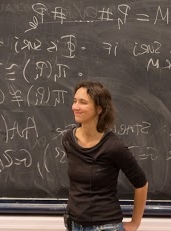
Nathalie Wahl is a Professor at the Department of Mathematical Sciences, University of Copenhagen, and serves as the Center Director for the Copenhagen Centre for Geometry and Topology (GeoTop). Her research focuses on algebraic topology, particularly mapping class groups of surfaces and 3-manifolds, homological stability, topological field theory, and loop spaces. PhD from Oxford University (2001) Current leadership of GeoTop (since 2020) Her recent work explores homological stability across automorphism groups, string topology, and structured algebras. Key collaborations include Allen Hatcher, Craig Westerland, and Nancy Hingston. She has received prestigious awards such as the ERC Consolidator Grant and the Young Elite Researcher Award. ERC Consolidator Grant (2018-2023) Female Research Leader Scholarship (2009-2013) Marie Curie European Fellowship (2003-2004)
Carsten Greve serves as Professor of Public Management and Governance and Head of the Department of Organization at Copenhagen Business School (CBS), where he maintains an office in room KIL/14.A-4.75 with contact number +4538153598. His academic leadership extends to directing departmental operations while maintaining an active research profile focused on the intersection of public sector management and private sector collaboration. At CBS, he teaches core courses including Leading Reform and Change for the Master of Public Governance program and Strategic Public Management Across the Public Sector , shaping the next generation of public sector leaders. Greve's research program centers on four interconnected domains: public management and governance systems, public management reform trajectories, public-private partnership frameworks, and market-based governance mechanisms. His work critically examines how privatization processes transform public service delivery, particularly in Nordic contexts where traditional welfare state models confront market-oriented reforms. Through comparative analyses of infrastructure projects and elderly care systems, he investigates the tension between efficiency-driven market mechanisms and democratic accountability requirements in public administration. His scholarship consistently bridges theoretical frameworks with Danish policy implementation challenges, especially in healthcare and transportation sectors. Recent publications reveal evolving research trajectories toward regulatory capitalism frameworks and agile governance models, with the 2025 Research Handbook on Privatisation synthesizing global privatization debates while the 2023 Handbook on Strategic Public Management advances collaborative governance approaches. His article corpus demonstrates increasing focus on temporal dimensions of reform implementation, risk allocation in complex partnerships, and the adaptation of public management practices in digitally transforming administrations. The recurrent Nordic case studies highlight distinctive administrative traditions navigating privatization pressures while maintaining public value commitments. No scientific awards or formal honors are documented in the available materials. Greve's supervisory record includes 10 successfully completed PhD dissertations at CBS, though specific student names and dissertation topics remain unlisted. His research activities generate substantial external engagement through presentations at national institutions including Rigsrevisionen (National Audit Office), Aalborg University, and Danske Professionshøjskoler, alongside international contributions to European Union policy reports. While grant funding details are unspecified, his prolific publication output across edited volumes, book chapters, and peer-reviewed journals indicates sustained research productivity.
Romualdo Pastor-Satorras is an Associate Professor of Applied Physics at the Universitat Politècnica de Catalunya (UPC) since 2006. He earned his PhD in Condensed Matter Physics from the Universitat de Barcelona in 1995, followed by postdoctoral research at MIT (1996–1998) and The Abdus Salam International Centre for Theoretical Physics (1998–2000). His extensive international collaborations include visiting positions at Yale University, University of Notre Dame, Kavli Institute for Theoretical Physics, Helsinky University of Technology, Indiana University, and the ISI Foundation. Research Focus His interdisciplinary work spans statistical physics, network theory, and dynamical systems. Primary research areas include: Modeling epidemic spreading in complex networks Random walks and diffusion processes in temporal networks Social and biological applications of network science Glassy dynamics and energy landscapes His research combines mathematical rigor with data-driven approaches to address problems in public health, social dynamics, and complex system behavior. Publications Overview With over 100 peer-reviewed publications, Pastor-Satorras's work demonstrates consistent focus on network dynamics and epidemic modeling. Recent articles explore COVID-19 herd immunity thresholds (2020), echo chambers in political networks (2019), and non-Poissonian temporal networks (2019). His foundational 2015 review on epidemic processes in networks is highly influential. Publications frequently involve interdisciplinary collaborations across physics, data science, and computational biology. Awards and Distinctions Fellow of Universitat Politècnica de Catalunya ICREA Academia Prize (awarded twice by the Government of Catalonia) Research Infrastructure He maintains active collaborations through visiting positions at leading global institutions. His work involves theoretical modeling and computational analysis, though specific laboratory details are unspecified in the provided text.
Niels Martin Larsen is an Associate Professor at the Aarhus School of Architecture, affiliated with Research Laboratory 2: Technology, Building Cultures and Settlement. He holds a PhD in algorithmic design and has been part of academic staff since 2009. His roles include teaching and research in technology-driven architectural design. Education and Career: PhD student at Aarhus School of Architecture (2009–present) Master's and Bachelor's teaching assistant (2002–2008) Worked at architectural firms including Stuff Aps and 3XNielsen A/S (1999–2008) Graduated from Aarhus School of Architecture (1992–1998) with an internship at Enrique Miralles in Barcelona (1996) Research Interests: Focus on technology and digital design , including algorithmic design, architectural geometry, and sustainable materials. Recent work explores building reuse, digital fabrication, and timber structures. His projects bridge computational methods with practical architectural applications. Awards: 2012: Best Paper Award at Advances In Architectural Geometry for 'Engineering of complex geometry' Grants and Projects: Key roles in projects like 'Recycling on the Land Register' (2023–2025) and 'Material Imagination: Reconnecting with the Matter of Architecture' (2017–2021). Collaborates on Nordic networks for digital fabrication and timber innovation. Labs/Teams: Active in Research Laboratory 2, focusing on technology-driven solutions for building cultures and habitation.
Fabio Caccioli is a Professor of Complex Systems at University College London (UCL), where he conducts interdisciplinary research at the intersection of physics, economics, and network science. His research focuses on complex systems and statistical mechanics , with applications to economic and financial systems . Key interests include systemic risk , complex networks , science of science , and non-equilibrium statistical mechanics . His work aims to model and understand emergent phenomena in socio-economic systems using tools from theoretical physics. Fabio Caccioli earned his PhD in Statistical Physics from the International School for Advanced Studies (SISSA) in Trieste, Italy. He previously held research positions at the Centre for Risk Studies at the University of Cambridge and as a Postdoctoral Fellow at the Santa Fe Institute. His career reflects a strong trajectory in complexity science applied to real-world systems, particularly financial networks and risk propagation. Though publication titles are not listed, his ongoing work appears consistently published from 2010 through 2025, indicating sustained scholarly output in his domain. f.caccioli@ucl.ac.uk
Giulio Cimini is Associate Professor of Theoretical Physics in the Department of Physics at the University of Rome Tor Vergata and a Research Associate at the 'Enrico Fermi' Research Center. He is a statistical physicist with a strong interdisciplinary focus on complex networks and their applications in socio-economic systems. His research interests include: Statistical Physics of Complex Networks Reconstruction and Validation of Economic Networks Social Network Interactions and Financial Markets Systemic Risk and Financial Contagion Scientific Success, Fitness, and Complexity Adaptive Social Recommendation Codon Usage Bias and Protein Interaction Networks His recent publications reveal a strong trend in applying statistical physics to real-world networks, particularly in finance and social systems. Key themes include the modeling of systemic risk in supply chains and financial networks, the dynamics of collective action on platforms like Reddit (e.g., the GameStop short squeeze), and the development of network reconstruction methods using maximum entropy and optimal transport frameworks. His work often combines empirical analysis with theoretical modeling. Scientific awards and recognitions include: Associate Editor, Frontiers in Physics – Interdisciplinary Physics Board Member, Network Science Society Member, Council of the Complex Systems Society Steering Committee, CCS/Italy He has advised or collaborated with numerous researchers, particularly in projects related to economic networks and complex systems. His work has been supported by Italian national grants such as PRIN and PNRR. He leads or co-leads research projects including RENet and C2T. His research is conducted within interdisciplinary teams involving physicists, economists, and computer scientists, often in collaboration with institutions like ISC-CNR, IMT Lucca, and the Network Science community.
Troels Schultz Larsen is an Associate Professor in the Department of Social Sciences and Business at Roskilde University, specializing in Social Dynamics and Change. With a PhD and MSc in Public Administration, he has been with Roskilde University since 2005, progressing from PhD fellow to his current position as Associate Professor since 2014. His work focuses on urban sociology, territorial stigmatization, and the dynamics of marginalized urban areas within the Danish welfare state context. Dr. Schultz Larsen's academic journey includes: 2014-Present: Associate Professor, Department of Social Sciences and Business, Roskilde University 2009-2014: Assistant Professor/Post-Doc, Department of Society and Globalization, Roskilde University 2005-2009: PhD Fellow, Department of Society and Globalization, Roskilde University 1998-2005: MSc (Public Administration equivalent), Department of Social Science, Roskilde University Identifying his theoretical position as "Historically-Specific Praxis-Theory," Dr. Schultz Larsen draws inspiration from Bourdieu, Wacquant, Gramsci, and other critical theorists. His research spans urban sociology, territorial stigmatization, welfare state dynamics, and public innovation. He examines how marginalized urban areas are produced and maintained through intersecting social, economic, and political processes, with particular attention to the Danish context and its "ghetto list" policies. His work challenges simplistic interpretations of urban marginality, emphasizing the complex interplay between housing markets, labor markets, education systems, and family structures in reproducing spatial inequalities. Dr. Schultz Larsen's recent publications reveal a deepening focus on territorial stigmatization as both a theoretical concept and practical policy issue. His 2024-2025 work, including the book "Fragmenting Cities: The State, Territorial Stigmatization and Urban Marginality," develops a comprehensive framework for understanding how state policies actively produce spatial inequalities. He critically analyzes Denmark's controversial "ghetto list" policy, demonstrating how such classifications function as mechanisms of dehumanization and social exclusion. His research increasingly adopts comparative perspectives, connecting Danish urban marginality to broader European and global patterns of spatial inequality. Dr. Schultz Larsen's scholarly contributions include: Active participation in major research projects including EU-HORIZON24's RURALITIC Membership in the Royal Danish Academy (2025-2027) Extensive media engagement on urban policy issues With over 15 years of teaching experience at Roskilde University, Dr. Schultz Larsen has supervised numerous student projects across social sciences, politics, and public administration. His supervision spans diverse topics including urban policy, social integration, housing, labor market policies, and public innovation. He has been involved in several significant research grants, most notably as a participant in the CLIPS project (Collaborative Innovation in the Public Sector), a major multi-institutional collaboration examining innovation in public services. His current research includes the EU-HORIZON24 project RURALITIC and the BOSID project on housing stigmatization in Denmark. Dr. Schultz Larsen is actively involved in research networks focused on urban marginality and territorial stigmatization. He collaborates closely with Dr. Katrine Nørgaard Delica on multiple projects and publications, including their forthcoming book "Fragmenting Cities." His work with the North Seeland Police Department on the "TRYK Politi" initiative represents a significant practice-oriented research partnership examining citizen engagement in crime prevention. As a member of the Royal Danish Academy (2025-2027), he contributes to national scholarly discussions on urban policy and social governance.
Filippo Menczer is a Professor of Informatics and Computer Science and Director of the Center for Complex Networks and Systems Research at Indiana University School of Informatics and Computing. He maintains courtesy appointments in Cognitive Science and Physics, and is affiliated with the Center for Data and Search Informatics and the Biocomplexity Institute. Additionally, he holds a Fellowship at the ISI Foundation in Torino, Italy. His research spans computational analysis of digital ecosystems with emphasis on: Web Science: structural and behavioral analysis of internet-scale systems Social Media Dynamics: information diffusion, meme competition, and attention economy modeling Complex Networks: traffic pattern analysis, popularity dynamics, and social link prediction Publications from 2009-2012 reveal consistent focus on social network analytics and information diffusion mechanisms. Key trends include modeling attention-limited meme competition, bursty popularity patterns in social media, and social link prediction through metadata analysis. His work integrates network science, computational social science, and data mining to decode online behavior. His scientific recognition includes: Fellow of ISI Foundation (2013) He leads the NaN research group within the Center for Complex Networks and Systems Research, focusing on interdisciplinary approaches to complex information networks and social media analytics.
John Rand is a Professor in Development Economics at the Department of Economics, University of Copenhagen, where he has been employed since 2021. He previously served as Professor (mso) at the Faculty of Social Sciences (2015-2020) and Faculty of Science (2011-2014), Associate Professor (2008-2011), and Assistant Research Professor (2005-2008) at the same institution. He is currently Vice-chair of The Consultative Research Committee for Development Research (FFU) and co-director of the Development Economics Research Group (DERG). Professor Rand's research focuses primarily on development economics, with specific expertise in applied econometrics, impact measurement, industrial economics, and interdisciplinary methods. His work spans topics including climate-smart agriculture, economic policy in developing countries, trade and productivity, and governance issues. He leads multiple externally funded research projects including 'Energy transition and climate-smart agriculture in Vietnam', 'Economic Research and Policy Making in Kenya', and 'Sedentarization and climate change resilience in Nigeria'. His extensive publication record shows a strong focus on empirical research in developing countries, particularly in Africa and Southeast Asia. His recent work demonstrates consistent attention to practical policy implications, with a growing emphasis on climate change adaptation, resource allocation efficiency, and the intersection of economic development with environmental sustainability. His research often employs rigorous quantitative methods to address real-world development challenges. Professor Rand is actively involved in several research networks including the Copenhagen Center for Disaster Research (COPE) as part of the steering group and the UCPH Migration Research Platform. He serves as Head of Studies for Global Development and teaches Development Economics (BA) and Theories, Facts and Current Issues (MSc Global Development). He has presented his research at numerous international conferences including UNU WIDER conferences, Nordic Conference in Development Economics, and various country-specific development forums. His work has been referenced in policy sources and picked up by news outlets, indicating its relevance to current development debates.
Søren Galatius is a Visiting Professor at the Department of Mathematical Sciences, University of Copenhagen. His research focuses on algebraic topology with an emphasis on moduli spaces, homology spheres, K-theory, and cobordism categories. He holds a PhD and has established himself as a leading figure in geometric topology and algebraic structures in mathematics. Recent research has explored topics such as general linear groups over finite fields, Pontryagin classes, and tropical geometry applications to moduli spaces. His work bridges pure algebraic topology with geometric and combinatorial methods, contributing foundational insights into modern mathematical frameworks. Key collaborations include projects with Oscar Randal-Williams and Martin Hairer, advancing understanding of cobordism categories and topological field theories. His articles consistently appear in top-tier journals like Annales Scientifiques de l'Ecole Normale Superieure and Inventiones Mathematicae . No scientific awards or grants are explicitly listed in the provided materials, though his publication record speaks to significant academic contributions. No advisee students are documented here.
Kantaro Fujiwara serves as Associate Professor at the Graduate School of Medicine, The University of Tokyo, with concurrent appointments at the International Research Center for Neurointelligence (IRCN) and the Department of Mathematical Informatics, Graduate School of Information Science and Technology. He also manages the Data Science Core infrastructure for IRCN. His academic background includes a Ph.D. in Information Science and Technology from the University of Tokyo (2008), followed by postdoctoral research at the University of Tokyo (JSPS) and University of Cambridge, then assistant professorships at Saitama University and Tokyo University of Science before joining the University of Tokyo faculty. Dr. Fujiwara's research bridges computational neuroscience and neural data analysis through mathematical modeling of neural networks, development of neural data analysis methodologies, and exploration of brain-inspired machine learning. His work extends to biological information processing with specific applications in pancreatic beta cell modeling for diabetes research, establishing connections between theoretical frameworks and experimental neuroscience. His publication record (2017-2023) reveals consistent interdisciplinary contributions applying echo state networks, recurrence analysis, and nonlinear dynamics to neural data classification, physiological signal processing, and disease modeling. These works demonstrate strong integration of computer science, neuroscience, and biomedical engineering methodologies to solve complex neurobiological problems. As Data Science Core Manager at IRCN, he oversees computational infrastructure and software resources that enable advanced neurointelligence research across the University of Tokyo ecosystem, providing critical support for data-intensive neuroscience projects.
Christian Erik Kampmann is an Associate Professor at the Department of Strategy and Innovation, Copenhagen Business School. He holds a Ph.D. in Management from MIT and an engineering background from DTU, bridging technical rigor with socio-economic research. Education: MIT (Ph.D. in Management), DTU (Engineering) Research Interests focus on system dynamics as applied to sustainable energy transitions, electric mobility, and green urban mobility. His methodological work enhances structural dominance analysis and eigenvalue techniques for complex system modeling. Recent publications address feedback loop gains, market misperceptions of feedback, and comprehensive analytical approaches for policy modeling, reflecting his interdisciplinary focus on sustainability challenges. Teaching includes courses on system dynamics, sustainable business strategy, and quantitative business research, with supervision of theses on electric mobility and product-service sustainability. External engagements involve board membership (Magasin du Nord, 2018-2020) and computer modeling consultancy (Zerolytics, Whitebox).
Matias Thuen Jørgensen is an Associate Professor and head of the Center for Tourism Research at Roskilde University, Denmark, within the Department of Social Sciences and Business. His interdisciplinary research bridges business studies, sociology, and human geography to examine tourism's societal impacts, with empirical focus on Chinese tourism markets and Nordic destinations. He holds a PhD in Tourism Management from The Hong Kong Polytechnic University (2017), awarded through the competitive Hong Kong PhD Fellowship Scheme. His educational foundation combines rigorous academic training with field expertise in tourism phenomena. The PhD research at Hong Kong Polytechnic University established his methodological approach to analyzing tourism distribution systems through Activity Theory and Actor-Network Theory frameworks. Jørgensen's research critically examines tourism's role in sustainable community development, emphasizing how mundane everyday experiences create destination value in Nordic contexts. His work explores social value creation through tourist-resident interactions, regenerative tourism models like CopenPay, and the socio-economic implications of tourism transitions in peri-urban areas. Key themes include the ethical dimensions of tourism development, community mobilization through social entrepreneurship, and the complex interplay between tourism policy and local realities. Analysis of his 15 most recent publications reveals dominant trends in regenerative tourism frameworks, micro-level host-guest interactions, and policy responses to overtourism challenges. His scholarship increasingly focuses on climate-responsive tourism models, ethical pricing mechanisms in aviation, and regulatory approaches to short-term rentals, demonstrating consistent evolution toward solution-oriented sustainability research. Notable recognitions include: Hong Kong PhD Fellowship Scheme (2014) Nomination for Danish National University Teaching Award (2023) Peter Keller Award (2022) Roskilde University Teaching Prize (2022) Teacher of the Year Award, Roskilde University (2022) As principal investigator on seven research projects totaling over 3 million DKK in funding, Jørgensen has secured grants from diverse sources including industry partnerships and public research councils. Current projects include the SeNSE initiative on sustainable nature-based tourism entrepreneurship and the Tourism Business Model Tool development. He actively supervises doctoral research on social value creation in urban tourism encounters while contributing to policy formulation through UNWTO engagements and frequent media commentary. Leading the Center for Tourism Research (CFTR), he fosters cross-disciplinary collaboration between academics, industry stakeholders, and policymakers. His recent activities include organizing the 2025 Academy of Management symposium on tourism transitions and establishing the 'Tourism and Everyday Life in Cities' research network, positioning CFTR at the forefront of contemporary tourism scholarship.
Derek Beach is a Professor at the Department of Political Science, Aarhus University. His expertise lies in advancing process tracing methodology for academic research and policy evaluation, with a focus on European integration processes, voter behavior, and case study methods. He is currently leading a four-year project on Mechanisms and Mechanistic Evidence in the Social Sciences. Research Interests: Beach specializes in methodological development of process tracing, applying it to both academic and policy contexts. His substantive research explores EU crisis negotiations, the role of analogical reasoning in policy analysis, and evidential pluralism in social science research. He has co-authored a textbook on foreign policy analysis and process tracing in Danish. Collaborations & Consultancy: Beach collaborates with the Wellbeing Investments in Schools and Enterprises (WISE) project at the University of Birmingham and has worked with the World Bank's Independent Evaluation Group and the Joint Data Center (World Bank/UNHCR) on policy evaluations. His consultancy work spans UN agencies and global institutions. Teaching: He teaches across all levels (BA to PhD), including courses on Methods, US Presidential Election Simulation Models, and Case-Based Methods. His pedagogical focus aligns with his methodological research, emphasizing process tracing and evaluation techniques. Publications & Contributions: His scholarly work includes foundational texts on process tracing and empirical studies on EU integration. He has contributed to journals like European Journal of Political Research , Synthese , and Sociological Methods & Research , though specific publication years are not listed in the provided data.
Rasmus Pagh is a Professor at the Department of Computer Science, University of Copenhagen, specializing in algorithms and complexity. His career includes a 2002 PhD from Aarhus University under Peter Bro Miltersen and a tenure at IT University of Copenhagen until 2020. He leads theoretical research with practical applications in big data, databases, and modern computer architecture parallelism. His research interests span algorithms, data structures, and privacy-preserving computing. Recent work includes the ERC-funded project on Scalable Similarity Search and contributions to the BARC center for basic algorithms research. He has collaborated with Google Research (2019-2020) and focuses on theoretical foundations with real-world impact. Key research trends in his 2023-2024 publications include privacy-preserving data analysis probabilistic data structures distributed secure computation noise-robust coding hashing efficiency continual privacy mechanisms Scientific recognition includes 2024 ACM Fellowship ERC grant leadership multiple top-tier conference publications