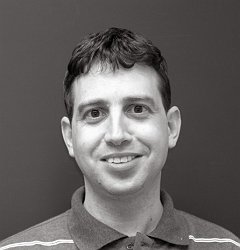
Prof. Dr. Rolf Hennicker is an Associate Professor and Academic Director at the Department of Computer Science, Ludwig-Maximilians-Universität München (LMU Munich). He leads the Software and Computational Systems Lab, focusing on formal methods, component-based software engineering, and environmental simulation systems. His research emphasizes system specifications, concurrency, and dynamic logics for verifying complex systems. He actively supervises academic activities, including lectures, seminars, and diploma theses. As project leader of GLOWA-Danube and RAJA , he develops decision support systems and authorization frameworks. Collaborations include the École Normale Supérieure de Cachan (France) on ensemble modeling and verification. His work spans theoretical contributions to formal methods and practical applications in distributed systems, environmental modeling, and autonomous computing. Recent projects involve ensemble architectures and Helena frameworks for autonomic cloud systems.
Waltraud Paul is a Research Director at the French National Center for Scientific Research (CNRS), affiliated with the Center for Linguistic Research on East Asia (CRLAO) since 1994. She is a member of Research Team II focusing on Formal Syntax and Semantics of Contemporary East Asian Languages: Chinese, Korean, Japanese and Vietnamese. Her work is centered at the Condorcet Campus in Aubervilliers, France. Dr. Paul's primary research focuses on the syntax of modern Mandarin Chinese, with additional work in diachronic syntax of Chinese. Her specific interests include the structure of the extended VP in Mandarin, the ba-construction, focus cleft constructions (shi...de), left periphery and low IP areas including topic markers and sentence-final particles, adjective vs verb distinctions, adjectival modification, double object constructions, syntax/semantics mismatches, and serial verb constructions. She has made significant contributions to understanding the formal structure of Chinese syntax within broader linguistic theory. Her recent publications demonstrate continued engagement with fundamental questions in Chinese syntax, particularly regarding sentence-final particles, aspect marking, small clauses, and topic prominence. Her work consistently bridges theoretical linguistics with detailed empirical analysis of Chinese language phenomena. Dr. Paul serves on the editorial boards of several prestigious linguistics journals, including Glossa (associate editor since 2016, interim co-editor-in-chief in 2015), Linguistic Inquiry (associate editorial board since 2018), and previously Lingua (2010-2015) and Linguistics Notebooks – Asia - Oriental (co-editor-in-chief 1992-2000). She has authored two influential books: "New Perspectives on Chinese Syntax" (2015) and "The Syntax of Verb-Object Phrases in Chinese: Constraints and Reanalysis" (1988), both contributing significantly to the field of Chinese linguistics and theoretical syntax more broadly.
Mardale Alexandru is a University Professor at Inalco , affiliated with the Europe Department and the SeDyL research center. His work focuses on the syntax–semantics–discourse interface, particularly in heritage Romanian contexts, differential object marking, and the grammaticalization of prepositions in Romance languages. Research Interests: His expertise spans heritage language acquisition, linguistic expression of displacement, and modality in Romanian. He examines how language contact and reduced input affect syntactic structures, with a strong emphasis on grammaticalization processes and case-preposition interactions. 2024-2023 publications highlight his work on heritage Romanian in France, differential object marking, and clitic doubling. 2022-2003 contributions explore complex prepositions, animacy effects, and diachronic changes in Romanian syntax. Administrative Roles: He serves as Head of Romanian Studies and Educational Manager of the cross-disciplinary Linguistics course (LGE) at Inalco. He holds key positions in institutional governance, including membership in the Scientific Council and Research Commission.
Zafeirakis Zafeirakopoulos is a researcher at the National and Kapodistrian University of Athens (Greece) in the ELIDEK project led by Prof. Maria Chlouveraki. His academic career includes roles as an assistant professor at Gebze Technical University (2016-2022) and postdoctoral research at University of Athens (Greece), Galatasaray University (Turkey), and University of Geneva (Switzerland) under the Eccellenza project of Prof. Jehanne Dousse. PhD in RISC - Research Institute for Symbolic Computation (supervised by Prof. Peter Paule and Prof. Matthias Beck) Current affiliations: Mathematics department of National and Kapodistrian University of Athens Service roles: Information Director of ACM SIGSAM, Associate Editor of ACM CCA His research focuses on symbolic computation, discrete mathematics, and computational geometry. He has developed algorithms for parametric curve topology (PTOPO) and linear Diophantine systems (Polyhedral Omega), emphasizing efficiency and geometric interpretations. Recent work involves Julia/Maple implementations for practical applications. Publication trends highlight interdisciplinary work in symbolic algorithms, polyhedral geometry, and combinatorial optimization. He actively contributes to international conferences like ACA 2025 (co-organizer) and SCALE 2022.
Marijana Marelj is an Associate Professor at the Utrecht University , affiliated with the Department of Languages, Literature and Communication and the Institute for Language Sciences. Her research focuses on the lexicon-syntax-semantics interfaces , particularly causality and volitionality in natural language, and she contributes to projects like Dynamics of Youth and Human-centered Artificial Intelligence . PhD in Theoretical Linguistics (cum laude), Utrecht University (UiL OTS), supervised by Tanya Reinhart and Eric Reuland Postdoctoral Researcher, University of Connecticut (USA) and Utrecht University Her recent work explores clitics at syntax-phonology interfaces , cognate objects , and derivational complexity . She has co-edited major works like Concepts, Syntax and their Interfaces: The Theta System (MIT Press) and contributed to journals including Linguistic Inquiry , Syntax , and Theoretical Linguistics . Marelj is actively involved in Slavic linguistics , Romance-Slavic comparative studies , and psych verbs at interfaces . She serves on the LOT Curriculum Committee and the Linguistic Inquiry Associate Editorial Board .
Leslie Kaelbling serves as the Panasonic Professor in MIT's Department of Electrical Engineering and Computer Science (EECS) and Director of Research for the MIT Quest for Intelligence, while also holding an investigator position at the Computer Science and Artificial Intelligence Laboratory (CSAIL). Her academic background includes a BA in philosophy and PhD in computer science, both earned at Stanford University. Professor Kaelbling's research centers on building intelligent robots capable of operating in uncertain environments through advanced learning, state estimation, and planning techniques. Her work bridges theoretical AI foundations with practical robotics applications, focusing on creating systems that adapt to complex real-world scenarios through probabilistic reasoning and decision-making under uncertainty. Analysis of her recent publications reveals a strong trajectory toward integrating foundation models with robotic planning systems, particularly leveraging vision-language models for constraint inference and diffusion models for task-motion planning. Her research increasingly emphasizes uncertainty quantification, neuro-symbolic representations, and sample-efficient learning methods for long-horizon manipulation tasks. Key scientific recognitions include: Fellow of the Association for the Advancement of Artificial Intelligence (AAAI) Founder and inaugural Editor-in-Chief of the Journal of Machine Learning Research As Director of Research for the MIT Quest for Intelligence, she leads strategic initiatives advancing human and machine intelligence research, fostering cross-laboratory collaborations between CSAIL, neuroscience, and cognitive science groups to develop next-generation AI systems. Her leadership extends to shaping research directions in embodied intelligence and foundational learning algorithms.
Igor Bessmertny is a Professor and Doctor of Technical Sciences at the Faculty of Software Engineering and Computer Systems, ITMO University. He is also an Associate Professor and contributes to international research initiatives such as the "Non-linear and adaptive control systems" international research center and the "Architecture and design methods of embedded systems and systems on chip" international laboratory. Education: Graduated from Riga Civil Aviation Engineers Institute (1976) with a degree in electronic computers; earned a Doctor of Technical Sciences degree (1986) in computers, complexes, systems, and networks; awarded a Doctor of Technical Sciences degree (2015) in mathematical and computer software. His research focuses on intellectual systems based on knowledge production models and natural language text processing. He has developed key technologies, including the registered "Semantic program" (2011) and "Library of fast Prolog predicates for list processing" (2012). Dr. Bessmertny teaches disciplines such as "Intelligent systems," "Computer graphics," "Artificial intelligence systems," and "Logical programming." He has previously taught "Modern problems of computer science and engineering" and "Expert systems." Awards: Medal "300 years of the Russian Navy" (1996) Ministry of Education of the Russian Federation Diploma (2013) He has extensive professional experience, including automation of operational management at Pulkovo airport, postgraduate studies at LITMO (1985), and leadership roles in the banking and retail sectors. His work includes creating an information system supporting 29 major global clothing stores.
Shachar Itzhaky is an Associate Professor in the Department of Computer Science at Technion - Israel Institute of Technology, Haifa. His research spans multiple areas of programming languages, formal methods, and software engineering, with a focus on making program development and verification more accessible and efficient. He has served on program committees for numerous prestigious conferences including PLDI, POPL, SPLASH, and ICFP. Dr. Itzhaky's research interests center around program synthesis, automated reasoning, and formal verification. His work in program synthesis explores techniques for automatically generating programs from high-level specifications, with applications in end-user programming and software development. In automated reasoning, he has made significant contributions to e-graph based reasoning, invariant inference, and property-directed verification. His research in formal methods focuses on practical applications for program verification, particularly for data structures and security properties. An analysis of his recent publications reveals a strong focus on leveraging advanced formal techniques for practical program understanding and generation. His work consistently bridges theoretical foundations with practical applications, particularly in program synthesis, verification, and end-user programming tools. The trend shows increasing integration of machine learning techniques with traditional formal methods, as well as expanding applications to security and privacy domains. ACM SIGPLAN John C. Reynolds Doctoral Dissertation Award Dr. Itzhaky has been actively involved in the programming languages research community, serving on numerous program committees and contributing to the advancement of formal methods and program synthesis. His work has practical implications for software development tools, security analysis, and end-user programming environments. While specific grant information isn't detailed in the provided text, his extensive publication record in top-tier venues suggests successful funding for his research endeavors. His work on projects like Object Spreadsheets and Lifty demonstrates a commitment to creating practical tools that address real-world programming challenges. Dr. Itzhaky's research is conducted within the vibrant programming languages and formal methods group at Technion's Computer Science department. His work intersects with multiple research threads including program synthesis, verification, and security, suggesting collaboration across these areas within the department. His tools like EPR-based Verification, PDR∀, and VeriCon represent significant technical contributions that likely form the basis of ongoing research projects with students and collaborators.
Prof. Dr. Malte Zimmermann is a Full Professor of Semantics and Theory of Grammar at the Department of Linguistics, University of Potsdam. He is also a faculty and board member of the African Linguistics School (ALS), which biannually convenes in West African countries to advance formal linguistics knowledge among African scholars. His editorial roles include Associate Editor for Natural Language and Linguistic Theory and former Associate Editor for Linguistics and Philosophy . His educational background includes: Ph.D. in General Linguistics, Universiteit van Amsterdam (2002) M.A. in German Language and Linguistics/English/Anglistic/Philosophy, Universität zu Köln (1998) Abitur, Gymnasium Athenaeum, Stade/Niedersachsen (1989) Zimmermann's research centers on the interface between linguistic form and meaning, with specialization in formal semantics and grammar theory. His work spans quantification, tense, question semantics, discourse particles, and information structure, with particular emphasis on semantically under-researched West African languages (Chadic, Kwa, Grassfield Bantu). His research combines theoretical analysis with experimental methods, notably through projects like 'ExQ' examining embedded question interpretation across European and Non-European languages. He has led field research in Ghana, Cameroon, and Nigeria, challenging assumptions about language universals through empirical investigation of linguistic diversity. His publication trajectory reveals consistent focus on cross-linguistic semantic variation, particularly in focus interpretation, quantifier scope, and information structure phenomena. Recent work demonstrates growing integration of experimental methodologies with traditional formal approaches, with frequent comparisons between German, English, and diverse African languages. His investigations into serial verb constructions have been especially influential, uncovering hidden syntactic variability beneath surface similarities across languages like Akan and Igbo. As a supervisor, Zimmermann has guided numerous doctoral students to completion, with recent graduates including Giuliano Armenante (2024), Eva Shipova (2024), and Mareike Philipp (2023). His research has been supported by substantial funding including: SFB1287 Limits of Variability in Language, 'Limits of variability in interpretation' (2017-2021) SPP 1727 XPRAG.de, 'Exhaustiveness in embedded questions across languages' (2017-2020) SPP 1727 XPRAG.de, 'Exhaustivity in it-clefts' (2014-2017) DFG-Network 'Questions in Discourse' (2012-2016) SFB632 Information Structure projects (2007-2015) He leads the Potsdam semantics group (including Peter Sutton, Giuliano Armenante, Jeanne Lecavelier, Anna Struck, and Carla Bombi) which conducts fieldwork in West Africa. Currently, he co-directs the SFB-project on the 'Limits of Variability in Interpretation,' examining scope ambiguities, reconstruction, and bare NP interpretation across German, English, Akan, Igbo, and Medumba. His collaborative work with Edgar Onea (Graz) and Tatjana Scheffler exemplifies his commitment to bridging theoretical linguistics with empirical fieldwork and experimental validation.
Gregory S Moss is currently Associate Professor of Philosophy at The Chinese University of Hong Kong (CUHK), where he was first appointed in the fall of 2016. Prior to joining CUHK, he served as a lecturer in philosophy at Clemson University from 2014-2016. He completed his PhD in philosophy in August 2014 under the supervision of Distinguished Research Professor. Moss's research primarily focuses on German Idealism, particularly Hegel and Schelling, and comparative philosophy between Western and Eastern traditions, especially the Kyoto School of Japanese philosophy. His work explores complex philosophical concepts including absolute dialetheism, negation, mythical symbolism, and the intersections between Zen Buddhism and German philosophical traditions. He has made significant contributions to understanding how concepts from German philosophy were appropriated and transformed within non-Western frameworks. Moss's scholarly output demonstrates a consistent engagement with metaphysical questions, particularly concerning the nature of being, contradiction, and absolute knowledge. His publications reveal a trajectory from examining German philosophical traditions to developing comparative frameworks that bridge Eastern and Western thought. A notable pattern in his work is the exploration of how philosophical traditions can transcend their original cultural contexts while maintaining distinctive insights. Winner of the 2022 Hegel PD Prize Awarded a Special Mention by the Metaphysical Society of America for the 2024 Findlay Prize Moss has established himself as a significant voice in comparative philosophy, particularly in the dialogue between German Idealism and Kyoto School thought. His work bridges analytical precision with continental philosophical traditions, creating productive dialogues between seemingly disparate philosophical systems. Through his editorial work and collaborative projects, he has fostered scholarly communities focused on post-Kantian philosophy and East-West philosophical encounters.
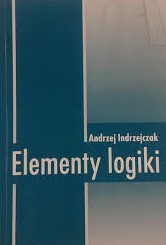
Professor Andrzej Indrzejczak is a distinguished academic at the University of Lodz, where he serves as Head of the Department of Logic and Methodology of Sciences within the Faculty of Philosophy and History. With a career spanning over three decades, he has established himself as a leading expert in proof theory, sequent calculus, and non-classical logics. His educational background includes a Master's degree in Cultural Studies (1989), a Master of Philosophy (1993), a PhD in Philosophy (1997) with dissertation on "Sequential and assumption formalizations of propositional modal logics," and habilitation in 2007 with thesis "Hybrid deductive systems in modal logics." He was awarded the title of Professor of Humanities in 2015. Professor Indrzejczak's research focuses on proof theory for non-classical logics, particularly practical applications of proof methods and their combinations (hybrid systems), natural proof search methods, and algorithms. His work encompasses sequent calculus methodology, cut elimination techniques extended to non-classical logics, and anti-realist approaches to the problem of meaning of logical constants. He also investigates applications of non-classical logics in formal analysis of traditional philosophical problems, argumentation theory, and methodology of social sciences. His publications reveal deep expertise in modal logics, free logics, and the theoretical foundations of logical systems. His extensive publication record shows a strong trend toward developing proof-theoretic approaches to definite descriptions and complex terms, with recent work focusing on bisequent calculi, cut elimination theorems, and formalization of multi-valued logics. His research bridges philosophical questions with rigorous logical formalization, particularly in the areas of hybrid logic, temporal reasoning, and logical ontology. The progression from modal logics to definite descriptions demonstrates his expanding research scope while maintaining technical rigor. Professor Indrzejczak has received significant research funding, including an ERC Advanced Grant for his "Coming to Terms: Proof Theory Extended to Definite Descriptions and other Terms" project (2022-2027), valued at 1.6 million EUR, along with multiple National Science Center grants totaling over 470,000 PLN. This ERC project represents a major advancement in extending proof theory to handle complex terms. He currently supervises doctoral students and has served as a promoter for at least one doctoral thesis. His research team includes several collaborators including Dr. Nils Kürbis, Dr. Przemysław Wałęga, and Dr. Michał Zawidzki. He has led multiple research projects including "80 years of research on natural deduction and sequent calculi" and "Sequent and tableau deductive systems for non-classical logics." Professor Indrzejczak actively contributes to the academic community as Editor-in-Chief of Bulletin of the Section of Logic and Chairman of the Editorial Board for Studia Logica. He has organized numerous conferences including the "Non-Classical Logics. Theory and Applications" series spanning over 15 years, demonstrating his leadership in the international logic community.
Maryam Nourzaei is an Affiliated Researcher in Iranian Languages at the Department of Linguistics and Philology, Uppsala University. Her academic work centers on documenting endangered languages and cultural traditions in Iran, with particular focus on minority communities whose linguistic heritage is at risk of disappearing. She maintains active research collaborations across international academic networks and has established herself as a specialist in Iranian minority languages and oral traditions. Dr. Nourzaei's research spans across languages belonging to three different language families in Iran: Indo-Aryan (Jadgali), Dravidian (Brahui), and Iranian languages (Balochi dialects). Her work prioritizes documentation of highly endangered languages while simultaneously investigating complex language contact phenomena between Iranian and Indo-Aryan languages, as well as Iranian and Dravidian languages. She employs interdisciplinary methodologies that bridge linguistics with anthropology and ethnomusicology. Her scholarly output demonstrates a consistent focus on language documentation, particularly through corpus-based approaches to Balochi dialects (Koroshi, Coastal, Sistani) and other minority languages. A distinctive aspect of her research program involves the documentation of Afro-Baloch cultural practices, particularly lullabies (Mamabies) and healing rituals, which represents a unique contribution to the understanding of African diaspora communities in Iran. Her publications show increasing integration of linguistic analysis with ethnomusicological and anthropological perspectives. Dr. Nourzaei has produced an extensive body of work including monographs, journal articles, book chapters, and digital archives. Her research methodology emphasizes fieldwork-based documentation, often working directly with community members to record and analyze linguistic data and cultural practices. She has contributed significantly to the Online Atlas of the Languages of Iran project and maintains active documentation of endangered language varieties through systematic data collection and archiving.