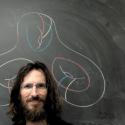
Prof. Sebastian Hensel is a Professor of Pure Mathematics at Ludwig Maximilian University of Munich (LMU), serving as Dean of Studies at the Mathematical Institute. His research focuses on low-dimensional topology, geometric group theory, and their interplay with mapping class groups, handlebody groups, and diffeomorphism groups of surfaces. He holds a PhD from the University of Bonn (2011) and has held positions at the University of Chicago as a Dickson Instructor and in Bonn before joining LMU. Research interests include algebraic and geometric properties of mapping class groups, handlebody groups, and their actions on geometric spaces. Recent work explores applications of geometric group theory to surface diffeomorphism groups. Preprints and publications span topics like thick laminations, curve graphs, and handlebody group rigidity. Teaching responsibilities include courses on geometric group theory, Riemannian geometry, and topology. He co-organizes advanced seminars such as the Geometry and Dynamics of Homeomorphisms and Representation Theory block seminars. His work also extends to pedagogical projects, including a textbook on representation theory for students and translations of foundational papers like Hilbert's ninth-degree equation. Current sabbatical (Winter 2024/25) involves collaboration on seminars while maintaining research output. The Geometry and Topology Working Group at LMU is central to his academic activities.
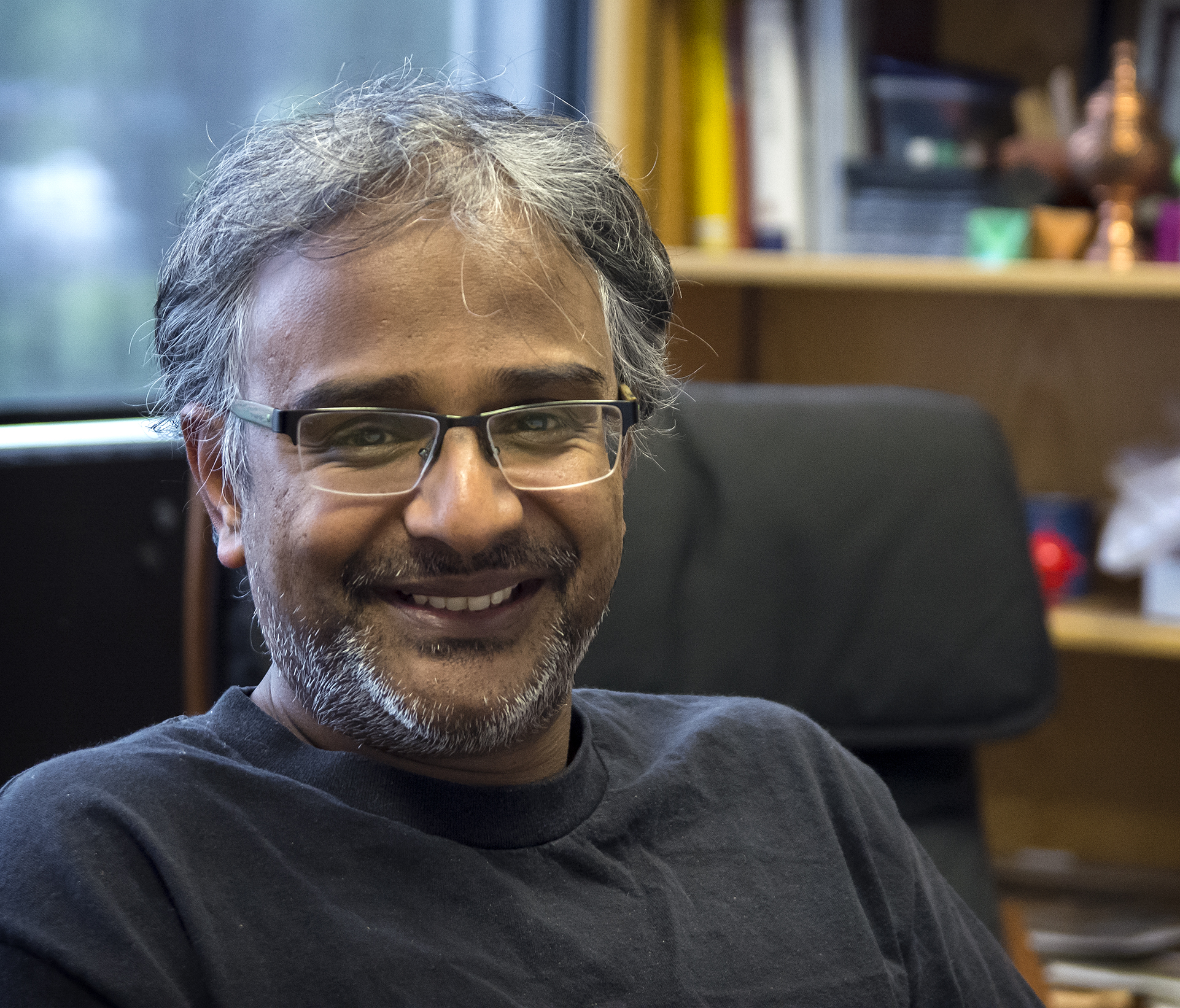
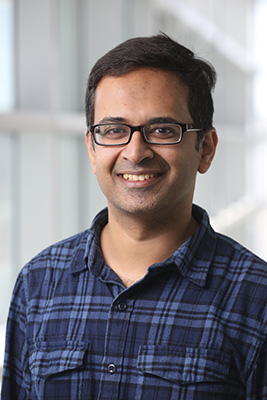
Suresh Venkatasubramanian is a Professor at Brown University, previously at the University of Utah's School of Computing. His research focuses on algorithmic fairness, automated decision systems, computational geometry, and the societal impacts of AI. He co-founded the FAT* conference and sits on the ACLU of Utah board. He holds a B.Tech from IIT Kanpur and a Ph.D. from Stanford University. Education : B.Tech (Computer Science, IIT Kanpur), Ph.D. (Stanford University). Key Roles : Member of Computing Community Consortium Council, Research Advisory Council for NYC's FTA Tool, and First Judicial District of Pennsylvania. Research interests emphasize fairness, accountability, and transparency in algorithms. Notable contributions include work on predictive policing biases, Shapley-value critiques, and information access gaps. Awards include an NSF CAREER Award and an ICDE Test-of-Time Award. Grants : Mozilla Foundation, NSF BIGDATA, DARPA A4V. Teaching : Advanced Algorithms, Ethics of Data Science, and courses on algorithmic fairness. Service roles include organizing conferences like FAT* and ALENEX, and advising on algorithmic governance in criminal justice systems.
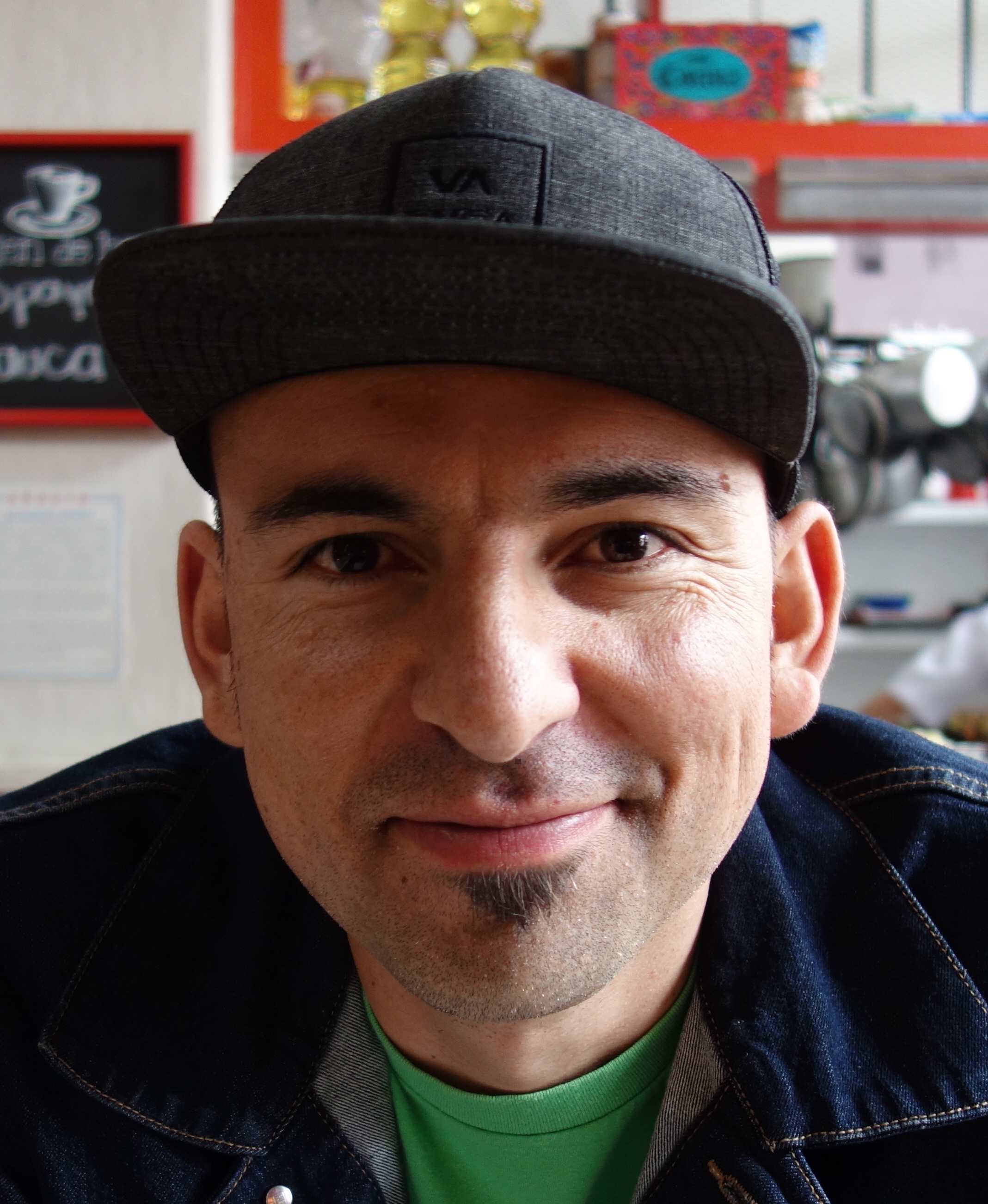
Federico Ardila-Mantilla is a Professor of Mathematics at San Francisco State University and an Adjunct Professor at Universidad de los Andes, Colombia. His research focuses on combinatorics and its connections to geometry, algebra, and topology, with notable contributions to matroid theory, polytopes, and tropical geometry. He is also deeply involved in promoting equitable and inclusive mathematics education through initiatives like the SFSU-Colombia Combinatorics Initiative . His work bridges pure mathematics and applications, particularly in robotics and discrete geometry. He has held visiting positions including at the Institute for Advanced Study (Princeton, 2024-25). His research spans over 60 publications, emphasizing interdisciplinary approaches to combinatorial problems. Ardila advocates for accessibility in mathematics through axioms such as 'Mathematical potential is equally present in all groups' (cited widely in educational contexts). Key areas of research include algebraic structures on polytopes, Lagrangian geometry of matroids, and geometric enumeration. He collaborates internationally and mentors students across institutions. His outreach efforts aim to make mathematics accessible to underrepresented communities.
Hsiao-Dong Chiang is a Professor in the School of Electrical and Computer Engineering at Cornell University. He holds a Ph.D. in Electrical Engineering from the University of California, Berkeley, and has made significant contributions to nonlinear system theory and power system stability. His research spans theoretical development and practical applications in electric power systems, nonlinear optimization, and machine learning. B.S., Electrical Engineering, National Taiwan University, 1979 M.S., Electrical Engineering, National Taiwan University, 1981 Ph.D., Electrical Engineering, University of California, Berkeley, 1986 Chiang's research interests focus on nonlinear system theory , power system stability and control , nonlinear optimization , and their applications to modern power grids with high penetration of inverter-based resources. He is renowned for developing the BCU method and TRUST-TECH methodology , which have enabled fast direct stability assessment and global optimization in complex systems. His work bridges fundamental theory with industrial deployment through his companies, Bigwood Systems, Inc. and Global Optimal Technology, Inc. His recent publications (2024–2025) reflect a strong trend toward integrating machine learning and deep neural networks with power system analysis , particularly in state estimation, optimal power flow, and voltage control. There is a clear emphasis on handling uncertainty, non-convexity, and multi-scale dynamics in active distribution networks and integrated energy systems . His work increasingly focuses on resilience , real-time control , and user-centered methodologies for modern grid operations. Chiang has received numerous scientific honors, including: IEEE Fellow (1997) United States Presidential Young Investigator Award (1989) Multiple DOE Grid Optimization Challenge Awards (2020–2023) Best Paper Awards from IEEE Transactions and Conferences Outstanding Education Award, Cornell University (1990) He has successfully managed over 100 research projects and holds 28 U.S. and international patents. As the founder of Bigwood Systems, Inc., he has commercialized advanced software for utility companies across the U.S. and Japan. His team has published over 480 refereed papers and received more than 17,500 citations. He advises a large research group and leads innovations in computational methods for energy systems. His lab is actively involved in developing next-generation tools for grid security, optimization, and machine learning integration.
Anders Brandt is an Associate Professor (Docent) in Geospatial Information Science and Senior Lecturer in Geomatics at the University of Gävle, Sweden, within the Department of Computer and Geospatial Sciences under the Faculty of Engineering and Sustainable Development. His research focuses on flood risk mapping uncertainties, agent-based modeling of pedestrian movement, and spatial decision-support systems for sustainable urban planning. He holds a PhD in Physical Geography from the University of Copenhagen and has extensive international collaboration experience. Education: PhD in Physical Geography (University of Copenhagen, Denmark), focusing on fluvial geomorphology of Costa Rica’s Reventazón River Master’s Degree in Physical Geography (Uppsala University, Sweden) Research Interests: Brandt’s work addresses uncertainties in flood modeling, spatial decision analysis, and geospatial data applications for urban resilience. His projects include the 'Big Data Methodology for Experiential and Cognitively Sustainable Urban Growth' initiative, emphasizing ecosystem service mapping and spatial MCDA methods. His agent-based modeling research explores emergent urban path systems to optimize pedestrian infrastructure. Publications Trends: Recent work spans flood risk visualization, blue-green infrastructure roles in climate resilience, and urban form complexity metrics. His 2025 papers highlight innovative applications of agent-based modeling and systematic reviews of climate hazard mitigation strategies. Advising & Grants: While no formal advisee list is provided, his collaborative publications suggest involvement in student projects. His grants include international initiatives like Mongolia’s land administration capacity-building programs. Labs/Teams: Co-founded GeoVega , a consulting firm specializing in flood risk mapping and geospatial solutions. Active in educational initiatives like harmonizing GIS curricula in Swedish universities.
Hamidreza Mahyar is an Assistant Professor at the Faculty of Engineering , McMaster University , and an Associate Member of the Computing and Software department. His academic journey includes postdoctoral work at Boston University and TU Wien , and a Ph.D. in Computer Science from Sharif University of Technology . Research Focus: Mahyar's work bridges machine learning and network science , emphasizing graph neural networks for applications in social networks , recommendation systems , drug discovery , and generative AI . His research spans industrial AI (Industry 4.0 projects at Infineon Technologies), biomedical engineering (organoid morphology analysis), and semiconductor manufacturing (wafermap modeling). Scientific Recognition: McMaster Teaching Merit Award (2022) Vector Scholarship in AI (2023) NSERC USRA Award (2022) Google Cloud Platform for Research Award (2018) Best Paper Selection, Complex Networks (2018) Academic Leadership: He mentors PhD students (Taraneh Ghandi) and MSc students (Reza Namazi, Mohammad Khodadad, Ali Shiraei), while leading AI initiatives at Mind Lab 56 and BrainMaven . Former mentees include industry leaders at Google, Accenture, and ETH Zurich.
Søren Eilers is a Professor at the Department of Mathematical Sciences , University of Copenhagen. His research focuses on Operator Algebras , particularly the classification of C*-algebras related to discrete and low-dimensional structures. He is a member of the FNU network 'Automorphisms and Invariants for Operator Algebras' and advocates for experimental mathematics using computational methods in pure mathematics. Education: MS in Mathematics and Computer Science, University of Copenhagen (1993) PhD in Mathematics, University of Copenhagen (1995) Research Interests: Operator Algebras K-theory Symbolic Dynamics Discrete Mathematics Experimental Mathematics Recent Publications (2016-2024) demonstrate expertise in graph C*-algebras , symbolic dynamics , and computational approaches to pure mathematics, with key collaborations in Denmark, Japan, Canada, and the U.S. Scientific Leadership: President, Danish Mathematical Society (2006-2008) Principal Investigator, Villum Fonden (2012-2016) Main Organizer, Mittag-Leffler Institute Program (2016) Advisory Roles: Supervised 28 master's theses and mentored 9 PhD students/postdocs (2003-2022) across institutions in Denmark, Canada, Japan, and the U.S.
Luca D'Acci is an Associate Professor in Sustainable Urban Forms and Evaluations at the Polytechnic of Turin, affiliated with the Interuniversity Department of Territorial Sciences, Planning and Policies (DIST). He holds additional affiliations as a Senior Research Fellow at the University of Portsmouth and as a member of research networks at the University of Birmingham and Erasmus University Rotterdam. His academic journey includes international roles such as Head of Urban Environment at Erasmus University Rotterdam and visiting researcher positions at the University of Oxford, University of Cambridge, and ETH Zurich. Education: MSc in Architecture-Science of Cities, Polytechnic of Turin (2003, cum laude) PhD in Economic Assessments, Polytechnic of Turin (2007) BSc in Mathematics, University of Turin (2007) BSc in Construction Engineering, Polytechnic of Turin (2009, cum laude) Post-PhD in Urbanism, University of Campinas (2010) Anthropology, University of Oxford (2020, 20 credits) Luca D'Acci’s research focuses on urban morphology, urban allometry, isobenefit urbanism, and the socio-economic-environmental impacts of urban form. His work bridges humanistic and quantitative approaches, integrating engineering, architecture, economics, and anthropology. He investigates how urbanicity, urban form, and spatial configuration influence well-being, sustainability, and resilience. His recent publications (2023–2025) reveal a strong trend toward computational modeling and simulation of urban growth, particularly through the lens of isobenefit urbanism —a concept he has pioneered. These works combine cellular automata, agent-based modeling, and morphogenetic frameworks to simulate sustainable urban futures. He also explores fractal patterns in housing markets, the psychology of urban living, and the mental costs of urbanicity. His research spans disciplines including urban science, environmental psychology, urban economics, and complex systems. Scientific Awards and Honors: Fellow, Erasmus Happiness Economics Research Organisation (EHERO), Erasmus University Rotterdam (2022–) Senior Research Fellow, University of Portsmouth (2017–) Fellow, Cluster for Sustainable Cities, University of Portsmouth (2017–2020) Fellow, Urban Morphology Research Group, University of Birmingham (2016–2021) Member, Cambridge Networks Network, University of Cambridge (2016–) Honorary Fellow, University of Birmingham (2016–) Luca D'Acci actively advises PhD students as a member of the Doctoral Collegium for Urban and Regional Development at Politecnico di Torino (2020–2024). He has secured and contributed to significant research grants, including projects funded by the World Bank, Asian Development Bank, European Commission, EPSRC, Lincoln Institute of Land Policy, and University College London (Future Urban Growth Lab). His editorial roles include membership on the boards of PLOS ONE , PLOS Mental Health , and Humanities & Social Sciences Communications . Labs and Research Networks: Future Urban Growth Lab (UCL, 2019–) LEUr Urban Ecology Lab (UFSC, 2022–) URban Evolution Morphology (UReM, 2024–) Erasmus Universiteit Rotterdam (EHERO, 2022–2024) Spatial Intelligence Unit (SPIN Unit), Estonia (2013–) International Society of Biourbanism (2013–)
Cynthia Vinzant is an Associate Professor in the Department of Mathematics at the University of Washington, College of Arts and Sciences. Her research lies at the intersection of real algebraic geometry, combinatorics, and convex optimization, with a focus on polynomials, determinants, and matroids. Ph.D., Mathematics, UC Berkeley, 2011 B.A., Mathematics and Neuroscience, Oberlin College, 2007 Her research interests include real algebraic geometry, combinatorics, convex optimization, tropical geometry, and spectrahedra. She studies the algebraic and combinatorial structures underlying optimization problems and geometric objects, particularly through the lens of hyperbolic and log-concave polynomials. Her recent publications span topics such as tropicalization of principal minors, determinantal representations, Fourier quasicrystals, and log-concave polynomials. These works demonstrate strong interdisciplinary connections across algebraic geometry, combinatorics, optimization, and mathematical physics. Sloan Research Fellowship (2020) Best Paper Award, STOC (2019) von Neumann Fellowship, IAS (2020–2021) Bernard Friedman Prize, UC Berkeley (2011) Rebecca Cary Orr Prize, Oberlin College (2007) She has advised several Ph.D. students including Tracy Chin, Jonathan Niño-Cortes, Joseph Rogge, Faye Pasley Simon, Michael Ruddy, Georgy Scholten, and Abeer Al Ahmadieh. She has received significant NSF funding, including a CAREER award (2020–2025) on determinantal, hyperbolic, and log-concave polynomials. She has taught courses in tropical geometry, convex algebraic geometry, and optimization at both the University of Washington and North Carolina State University.
David Gay is a Professor and Director of Graduate Studies in the Department of Mathematics at the University of Georgia, where he has been a faculty member since 2011. His academic journey includes postdoctoral positions at the University of Arizona, Nankai Institute of Mathematics, and the University of Quebec, a Senior Lectureship at the University of Cape Town, and a visiting Hirzebruch Research Chair at the Max Planck Institute for Mathematics in Bonn (2019–2020). David Gay earned his PhD in Mathematics from UC Berkeley in 1999 under the supervision of Rob Kirby, following an undergraduate degree in Mathematics from Harvard College in 1991. He also gained professional experience working for the National Park Service for two years, which he considers an important part of his education. His research centers on topology and geometry, with a particular emphasis on visual and illustrative methods in mathematics. He is passionate about illustrating mathematical concepts and uses topological pictures to explore and explain complex ideas. His work intersects geometric topology and low-dimensional topology, often focusing on intuitive and visual representations. Although recent publications are not listed in the provided text, his research trajectory suggests continued engagement with geometric and topological structures, likely involving visualization techniques and interdisciplinary applications. Creative Teaching Award (2020) David Gay has advised graduate students as part of his role as Director of Graduate Studies, though specific names are not listed. He has received support for educational activities including lectures and travel, contributing to student and faculty development. His leadership in graduate education and innovation in teaching highlight his commitment to academic mentorship and pedagogical excellence. David Gay is actively involved in the academic community through seminars and research collaborations. His recent visit to the Max Planck Institute and leadership role in the graduate program indicate ongoing engagement with both research and educational initiatives.
Dr. Xiaoli Li is an Associate Professor in the Department of Chemical and Petroleum Engineering at the University of Kansas. Her research laboratory (PVT Lab) focuses on complex fluid behavior in energy systems, with particular emphasis on phase equilibria, gas transport phenomena, and enhanced hydrocarbon recovery techniques. She maintains active research programs in unconventional reservoirs, CO 2 geostorage, hydrate technology, and nanoscale fluid dynamics. Her core research domains include: Confined phase behavior: Thermodynamics of fluids in nanoporous media Gas transport mechanisms: Rarefied flow and apparent permeability modeling Hydrate science: Structure stability and phase boundaries CO 2 utilization: Enhanced oil recovery and geological sequestration Asphaltene dynamics: Precipitation mechanisms in EOR processes Dr. Li teaches across the petroleum engineering curriculum, including core courses: Chemical Engineering Thermodynamics (C&PE 221), Reservoir Engineering (C&PE 327), Well Logging (C&PE 528), and Petroleum Engineering Design (C&PE 628). Her instructional portfolio emphasizes fundamental thermodynamics, reservoir characterization, and practical field applications. Her publication record (35+ articles) demonstrates consistent focus on reservoir thermodynamics and transport phenomena, with recent emphasis on: CO 2 -oil interactions (2020-2023), gas hydrate stability (2020-2022), shale gas transport (2019-2021), and equation of state modifications for confined fluids (2018-2020). Research methodologies combine molecular simulations, experimental studies, and novel thermodynamic modeling approaches.
Jennifer Johnson-Leung serves as Professor in the Department of Mathematics and Statistical Science within the College of Science at the University of Idaho, with additional affiliation as Participating Faculty at the Institute for Modeling Collaboration and Innovation under the Office of Research and Economic Development. Her academic credentials include: PhD in Mathematics from the California Institute of Technology (2005) BS in Chemistry and Mathematics from the College of William and Mary (1998) Professor Johnson-Leung maintains a dual research focus bridging pure mathematics and applied epidemiology. In theoretical mathematics, she investigates Siegel modular forms, paramodular forms, Hecke algebras, and representation theory, advancing understanding of automorphic forms and their connections to algebraic geometry. Her applied work develops spatial statistical models for sociodemographic risk assessment in public health crises, particularly during the COVID-19 pandemic, utilizing techniques like elastic net regression to analyze vaccination behavior and mortality patterns. Analysis of her recent publications reveals equal emphasis on deep theoretical number theory problems and urgent public health applications. The mathematical works explore structural properties of modular forms and representation theory, while epidemiological studies dissect complex interactions between political ideology, social vulnerability, and pandemic outcomes across U.S. populations. No specific scientific awards were documented in the provided materials. Information regarding graduate student advising and research grant funding remains unspecified in the available documentation. No dedicated research laboratories or specialized collaborative teams were mentioned in the source materials.
Leif Kobbelt serves as a University Professor at RWTH Aachen University, leading the Computer Graphics Group within the Department of Computer Science (Informatik 8). His research focuses on advancing geometry processing, interactive visualization, and computer graphics through innovative algorithmic solutions and interdisciplinary collaborations. Professor Kobbelt's research program centers on geometry acquisition and processing, with significant contributions to mesh generation, surface reconstruction, and neural rendering techniques. His work bridges theoretical geometry with practical applications in computer vision, photo-realistic image synthesis, and multimedia data transmission, often involving collaborations with industry partners and international research teams funded by DFG and EU sources. Recent publications (2023-2025) reveal a strategic integration of deep learning with traditional geometry processing, particularly in Gaussian splatting for real-time rendering, NeRF-based 4D content generation, and robust mesh Boolean operations. His group maintains leadership in quad mesh optimization and surface mapping while expanding into immersive visualization techniques for complex data analysis. The group has earned recognition through prestigious awards: Günter Enderle Best Paper Award at Eurographics 2023 Best Paper Award (1st place) at Symposium on Geometry Processing 2022 Honorable Mention for Best Paper at ACM Symposium on Virtual Reality Software and Technology Funding from Deutsche Forschungsgemeinschaft and European Union programs supports the group's research infrastructure and international collaborations. The team actively supervises graduate theses while developing open-source software tools that translate theoretical advances into practical industry applications, particularly in digital fabrication and immersive visualization systems. The Computer Graphics Group operates as a central hub for visual computing research at RWTH Aachen, maintaining strong ties with both academic institutions and technology companies. Their recent work on virtual reality educational tools and high-fidelity 3D reconstruction systems demonstrates commitment to knowledge transfer and real-world impact beyond traditional publication venues.
Shantanu Jadhav is a Professor of Psychology at Brandeis University, with affiliations to the Neuroscience Program, the Volen National Center for Complex Systems, and the Sloan-Swartz Center for Theoretical Neurobiology. He earned his B.Tech. from IIT Bombay, Ph.D. from UC San Diego, and completed postdoctoral training at UCSF and UC Berkeley. Research Focus: Neural mechanisms of learning, memory, and decision-making in rodent models Investigation of hippocampal-prefrontal interactions via multielectrode recordings, optogenetics, and computational analysis Role of neural oscillations (theta, gamma, sharp-wave ripples) in memory consolidation and cognitive flexibility Implications for neurological disorders like Alzheimer’s, autism, and schizophrenia Recent work highlights the coordination of dopamine activity with rule representations in the prefrontal cortex and hippocampus, the role of prefrontal ripples in suppressing hippocampal reactivation during sleep, and geometric transformations in cognitive maps enabling cross-environment generalization. His lab has shown that awake sharp-wave ripples are critical for spatial memory and that cross-region neural synchronization underpins memory-guided decisions. Scientific Recognition: Peter and Patricia Gruber International Research Award (2013) Sloan Research Fellow (2015-2017) NARSAD Young Investigator Award (2015-2018) Whitehall Foundation Award (2016-2020) SFARI Core Member (2022-2025) The Jadhav Lab at Brandeis trains postdoctoral fellows, graduate students (via the Neuroscience and Psychology Graduate Programs), and research assistants. Current studies explore hippocampal-prefrontal network dynamics, dopamine signaling in cognitive flexibility, and geometric representations in memory abstraction.
Dr Leok Lee is a Lecturer in the School of Electrical and Mechanical Engineering at the University of Adelaide . He is also an active member of the Centre for Energy Technology , contributing to cutting-edge research in renewable energy systems. Research Interests: Renewable energy systems, with a focus on solar thermal energy and energy storage. System integration and optimisation of complex transient energy systems. Computational fluid dynamics (CFD) and experimental design for energy applications. Decarbonisation of heavy industry through clean energy technologies. His research spans from fundamental studies in heat transfer and fluid mechanics to applied engineering solutions for decarbonising industrial processes. He has led and contributed to projects funded by ARENA and HILT CRC, targeting the integration of concentrated solar thermal energy into industrial applications such as the Bayer Alumina process. Supervision & Mentorship: Dr Lee is eligible to supervise Masters and PhD students and actively mentors undergraduate, Masters, and PhD candidates. He encourages prospective students to contact him via email to discuss research opportunities. Contact: Email: leok.lee@adelaide.edu.au Location: Room 3, Engineering South, North Terrace Campus