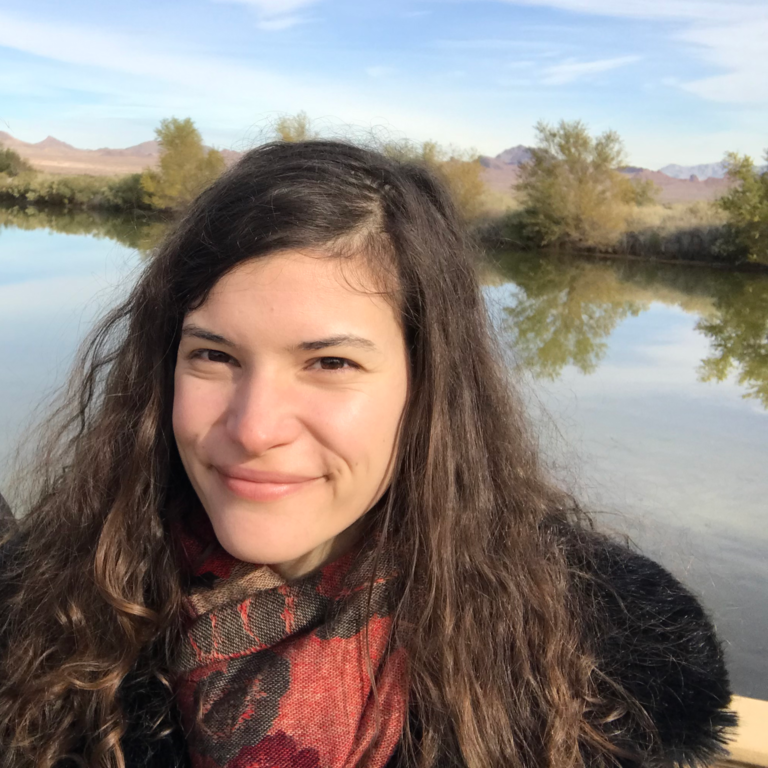
Prof. Dr. Georg Petschenka is a Professor and Head of the Department of Applied Entomology at the University of Hohenheim's Institute of Phytomedicine. His research focuses on plant-insect interactions, particularly toxin sequestration in herbivorous insects, ecotoxicology of agricultural chemicals, and chemical ecology. He leads courses on insect biology, pest management, and ecological field practices. Notable contributions include studies on monarch butterfly cardenolide dynamics, neonicotinoid impacts on grassland insects, and RNA interference in pest control. Research interests emphasize how insects adapt to toxic plant compounds, coevolutionary arms races between plants and herbivores, and applications in sustainable agriculture. Recent work highlights the ecological risks of neonicotinoids, innovative pest control methods using RNAi, and the role of artificial stress in crop resilience. Teaching includes modules on applied entomology, plant protection, and field observation techniques. He actively organizes international symposia on insect-plant relationships and collaborates on projects assessing pesticide efficacy and environmental impacts.
Prof. Chris-Carolin Schön is a full Professor of Plant Breeding at the Technical University of Munich (TUM), holding her position since 2007. She is affiliated with the TUM School of Life Sciences and leads research on molecular biology integration in agricultural processes, focusing on molecular markers in crop breeding, biodiversity characterization, and optimized breeding strategies for complex traits. Her academic journey includes studies in agricultural sciences at Hohenheim University and Oregon State University, followed by postdoctoral work at Hohenheim University and a leadership role at the State Plant Breeding Institute there. Prof. Schön’s research emphasizes enhancing crop resilience through genomic tools, particularly in maize, with studies on drought tolerance, cold adaptation, and genetic diversity utilization. She pioneered Synbreed, an interdisciplinary network for genome-based breeding research in plants and animals. Her awards include the Bavarian State Medal (2024), an Honorary Doctorate from Heinrich-Heine-University (2024), and the Bavarian Order of Merit (2018). Her work spans genomic prediction models, haplotype analysis, and improving imputation quality in genomic data. Key projects include exploiting European maize landraces for resistance traits and developing libraries of doubled-haploid lines to safeguard genetic resources. She collaborates on initiatives like AgroClustEr for synergistic plant and animal breeding, and her lab focuses on traits like photosynthetic efficiency, root system adaptation, and protein networks in crops.
Saharon Rosset is a Professor and Chair in Modern Statistics and Data Science at the Department of Statistics and Operations Research, School of Mathematical Sciences, Tel Aviv University, since 2007. His expertise spans statistical learning theory, machine learning, and computational biology, with a focus on integrating statistical methods into biological and data science applications. Research Interests: Statistical Learning, Computational Biology, Genomics, Data Science Teaching: Statistics of Big Data, Statistical Genetics, Bootstrap Methods, Data Science His recent publications explore diverse applications including ATP production mechanisms, SARS-CoV-2 evolution, gene-environment interactions, and music structure analysis. He employs methodologies from high-dimensional statistics, random effects modeling, and multiple hypothesis testing. Scientific Awards : Best paper award at KDD-2011 KDD Cup 2007 Winner Best application paper award at KDD-02 He has mentored numerous PhD and MSc students, including Oren Yuval, Giora Simchoni, and Rajesh Karmakar. His collaborative work appears in journals like PNAS , Biometrics , and Journal of Machine Learning Research .
Susanne Gerber is a Professor at iDNA and Adjunct Director at the Institute of Molecular Biology (IMB), Johannes Gutenberg University Mainz (JGU), affiliated with the Faculty of Biology's Bioinformatics department. Her academic journey includes an Assistant Professorship in Bioinformatics at JGU (2015-2020) and postdoctoral research at Università della Svizzera italiana. Her educational background comprises a PhD in Biophysics from Humboldt University of Berlin (2011), an M.Sc. in Bioinformatics from Free University of Berlin and Konrad Zuse Institute (2007), and a B.Sc. in Bioinformatics from Free University of Berlin and Max Planck Institute (2004). Dr. Gerber's research spans Bioinformatics, Computational Genomics, Systems Biology, Molecular Evolution, and Neuroinformatics , focusing on developing computational frameworks for genomic analysis, neurodegenerative disease modeling, and microbiome interactions. Her work integrates machine learning with multi-omics data to address complex biological questions in molecular evolution and neural systems. Analysis of her 15 most recent publications (2024-2025) reveals a strong emphasis on nanopore sequencing applications for RNA modification detection, deep learning frameworks for genomic data enhancement, and neurobehavioral modeling using AI-driven approaches. Key thematic clusters include epitranscriptomics, chromatin dynamics, and computational psychiatry with ethical AI considerations. Her methodological innovations include tools like COMET for network analysis, CCUT for chromatin data enhancement, and ModiDeC for RNA modification classification, demonstrating translational impact across genomics and neuroscience. Dr. Gerber leads research groups at IMB and iDNA focusing on computational genomics, advising students in bioinformatics and securing grants for AI-driven genomic analysis. Her labs develop open-source tools for nanopore data processing and neuroimaging analysis, fostering collaboration between computational and experimental biologists.
Dr. Neda Barghi is a Research Group Leader at the Max Planck Institute for Evolutionary Biology in Plön, Germany. She heads the research group Evolution of polygenic traits , focusing on understanding complex trait evolution through interdisciplinary approaches. Research Interests Evolutionary Biology Genetics Quantitative Trait Analysis Contact Phone: +49 4522 763-298 Address: August-Thienemann-Str. 2, 24306 Plön, Germany
Dr. Sebastian Teichert is an Akademischer Rat (Senior Lecturer) at the Chair of Paleoenvironment within the Faculty of Natural Sciences at Friedrich-Alexander University Erlangen-Nuremberg. He is affiliated with the GeoZentrum Nordbayern and has been a member of the university faculty since completing his doctorate in 2013. His research focuses on paleoenvironmental reconstruction using marine organisms, particularly coralline red algae as climate proxies in polar regions. Dr. Teichert's academic background includes: Doctorate (Dr. rer. nat.) in Geosciences from FAU (2013), supervised by Prof. Dr. André Freiwald Diplom-Geologe (Master's equivalent) from FAU (2009), supervised by Prof. Dr. Alexander Nützel His research interests center around using coralline red algae as environmental and climate proxies, with particular emphasis on Arctic ecosystems. Dr. Teichert investigates how these "ecosystem engineers" respond to climate change, their role in biodiversity maintenance, and their potential as indicators for historical climate conditions. His work bridges paleontology, marine ecology, and climate science, with fieldwork conducted in polar regions including Svalbard and New Zealand. Through his research on rhodolith beds, he has documented how these structures serve as biodiversity hotspots in the Arctic and how they are threatened by climate change and microplastic pollution. Dr. Teichert has received recognition for his work, including: Reinhard Rieger-Award in Zoomorphology (2020) As an active researcher, Dr. Teichert has secured multiple competitive grants from the German Research Foundation (DFG), including a current project (2024-2026) investigating "The potential of coralline algae as indicators of climate in the Southern Hemisphere." He serves as a peer reviewer for numerous high-impact journals in marine science, paleontology, and climate research. His leadership extends to institutional roles, including membership on the Faculty Council of the Faculty of Natural Sciences and the Board of Directors of GeoZentrum Nordbayern since 2023. Dr. Teichert is actively involved in science communication, having given numerous public lectures about Arctic ecosystems and coral reef analogs in polar regions. He has been featured in media outlets including GEO Magazine, Bild der Wissenschaft, and ARDalpha Campus TALKS, making complex scientific concepts accessible to the general public. His outreach efforts include participation in television programs like "Frag doch mal die Maus" and public speaking engagements at venues such as the "Collegium Alexandrinum" and "Wissenschaft im Schloss."
Mariya Logacheva is an Associate Professor at the Skolkovo Institute of Science and Technology, where she leads a research group at the Center for Molecular and Cellular Biology. Her work focuses on understanding plant genome dynamics with applications to both fundamental and practical aspects of plant biology. Dr. Logacheva's primary research interests include: Genomics of non-photosynthetic plants Genomics of invasive plants Buckwheat genomics and mapping genes for agriculturally important traits Her research addresses the enormous complexity of plant genomes characterized by segmental and whole-genome duplications, as well as the activity of transposable elements. She employs high-throughput sequencing approaches to study genome evolution in challenging plant systems, particularly mycoheterotrophic species that have undergone significant genome reduction. Dr. Logacheva's publication record shows consistent contributions to plant genomics, with recent work spanning from 2015 to 2022. Her research demonstrates interdisciplinary connections between molecular biology, evolutionary studies, and practical agricultural applications, particularly in buckwheat genomics. She actively collaborates with international researchers from institutions across Russia, Czech Republic, Netherlands, Thailand, and Japan, reflecting the global nature of contemporary genomic research.
Dominik Deffner serves as a Qualifikationsprofessur (W1, Tenure Track W2) for Computational Modeling of Behavior at the Department of Psychology, Philipps University of Marburg. His research group, Computational Modeling of Behavior (AG Deffner), is housed in the Institute Building at Gutenbergstraße 18 in Marburg. Deffner's work bridges cognitive science, evolutionary anthropology, and social psychology through interdisciplinary approaches combining dynamic group experiments, cultural evolution studies, and computational modeling. Deffner's educational background includes a PhD (Dr.rer.nat.) from the Max-Planck-Institute for Evolutionary Anthropology in Leipzig (2018-2021), an MSc in Evolutionary and Comparative Psychology from the University of St Andrews, UK (2016-2017), and dual undergraduate degrees in Psychology and Comparative Cultural and Religious Studies, Philosophy from Philipps-University Marburg (2012-2016). Prior to his current position, he worked as a postdoc at the Max-Planck-Institute for Human Development and Science of Intelligence Cluster in Berlin (2021-2024). His research interests focus on understanding how individuals and collectives adapt to changing and uncertain environments through cognitive processes and social/cultural dynamics. Deffner's work primarily investigates collective dynamics and cultural evolution, cognitive modeling and Bayesian statistics, causal inference, cross-cultural comparative methods, and collective foraging. He combines immersive computer games, field research, and statistical modeling to study social cognition in naturalistic groups, particularly examining how visual-spatial dynamics drive adaptive social learning in complex environments. Analysis of Deffner's recent publications reveals a strong emphasis on interdisciplinary research that bridges theoretical frameworks with empirical data. His work spans computational approaches to cultural evolution, collective decision-making processes, risk-sensitive learning strategies, and causal inference methodologies. A notable trend is his integration of Bayesian statistics with agent-based modeling to understand social learning dynamics across different contexts, from human groups to animal behavior studies. His research increasingly focuses on developing statistical workflows that enable robust causal inferences in cross-cultural research. As an academic advisor, Deffner offers thesis opportunities in both empirical work (interactive group experiments, data analysis) and statistical/theoretical modeling (cognitive modeling, collective behavior, cultural evolution). His research group welcomes students interested in social learning, decision research, cultural evolution, group processes, and advanced Bayesian data analysis methods. While specific grant information isn't detailed in the provided texts, his affiliation with the Max Planck Society and publication in high-impact journals suggest successful funding acquisition for his research program. Deffner leads the Computational Modeling of Behavior research group, which investigates cognitive decision-making processes in groups interacting in natural and complex environments. The group combines immersive computer games and field research with statistical modeling to better understand collective dynamics in real-world contexts. Current research directions include social cognition in naturalistic groups, social learning and cultural evolution, causal inference and statistical workflows, and flexibility and adaptation in both human and non-human animals.
Rubén Garrido-Oter serves as a Group Leader in the Department of Plant Microbe Interactions at the Max Planck Institute for Plant Breeding Research in Cologne, Germany. His research program focuses on understanding the evolutionary and ecological principles governing complex microbial communities associated with photosynthetic organisms. His research interests center on microbial ecology and host-microbe interactions, particularly examining how microbiota establish, maintain stability, and evolve within plant hosts. Using reductionist experimental approaches and computational tools with tractable microbial culture collections, his lab develops mechanistic understanding of microbe-microbe and host-microbe interactions. His work spans evolutionary biology, ecological dynamics, and computational analysis of microbial communities. Analysis of his recent publications reveals a strong focus on plant root microbiomes, host specificity, and microbial community assembly. His work frequently employs model systems like Arabidopsis thaliana and Lotus japonicus, examining how microbial communities differ between wild and domesticated plants. His research bridges fundamental microbial ecology with potential applications in sustainable agriculture. European Research Council (ERC) Funding Dr. Garrido-Oter's research is supported by significant funding from the European Research Council (ERC), the German Research Foundation (DFG), and the Max Planck Society. He is actively recruiting PhD and postdoctoral scientists for his research group. His lab is part of the Cluster of Excellence in Plant Sciences (CEPLAS), contributing to collaborative research on plant-microbe interactions. His laboratory employs both experimental and computational approaches to study host-associated microbial communities, developing reductionist systems based on large-scale microbial culture collections. The group contributes to theoretical plant biology and data science through development of tools like Rbec for analyzing amplicon sequencing data from synthetic microbial communities.
Dr. Christian Siadjeu is a Researcher in the Department of Biology at Johannes Gutenberg University of Mainz (JGU), where he has held the position of Research Associate since July 2024. Previously, he was a Postdoctoral Researcher at Ludwig-Maximilians-Universität München (LMU) from April 2021 to June 2024. He earned his PhD (Dr.rer.nat) in Molecular Genetics from Carl von Ossietzky University of Oldenburg in 2021. His research focuses on plant molecular genetics, comparative genomics, and the molecular mechanisms underlying complex traits and their evolution, particularly in Duckweed using single-cell genomics approaches. Education: PhD in Molecular Genetics, Carl von Ossietzky University of Oldenburg, Germany (2017–2021) Research Interests: Dr. Siadjeu investigates photosynthesis mechanisms (C4 and CAM pathways), evolutionary biology, and genomic studies in medicinal plants. His work integrates transcriptomics and comparative genomics to understand plant development and stress responses. Current projects include analyzing gene expression patterns in Duckweed and exploring metabolic adaptations in plants like Sesuvium sesuvioides and Dioscorea dumetorum . Publications: His recent work highlights studies on C4-like photosynthesis in Sesuvium sesuvioides , medicinal plant genomics applications, and RNA-Seq-based insights into C2/C4 photosynthesis regulation. These studies emphasize translational research in plant biology and agricultural genomics. Advising/Grants: No specific advising roles or grants are listed in the provided text, though his research likely involves collaborative projects in genomics and plant biology.
Marie I. Kaiser is a Professor at the Faculty of History, Philosophy and Theology at Bielefeld University since 2018, previously serving as a junior professor there. Her research bridges Philosophy of Science with Philosophy of Biology , focusing on reductive explanation, biological individuality, ecological niches, and animal personality. Education: Philosophy & Biology (University of Münster), PhD (University of Cologne) Key Grants: TRR-SFB 212 (DFG), RTG 2073 (DFG), Professorinnenprogramm III (Federal & State Funding) Her work emphasizes interdisciplinary integration , particularly between philosophy and life sciences. Recent publications analyze individualized niches (2025) and reductive methods in biology. She leads projects on cross-sectional concept formation (2025) and serves as Vice Rector for Human Resources Development at Bielefeld University. Notable collaborations include co-editorship of Explanation in the Special Sciences (Springer, 2014) and contributions to anthologies like Philip Kitcher: Pragmatic Naturalism (De Gruyter, 2013). Her methodological focus spans mechanistic explanation , causality , and normativity in science .
Pauline Kamath is an Associate Professor of Animal Health at the School of Food and Agriculture , University of Maine System, with a research focus on Wildlife Disease Ecology and Microbial Genomics . Her work bridges Environmental Microbiology and Pathogen Transmission Dynamics , addressing critical questions in Conservation Genetics and zoonotic disease management. 2016-Present: Associate Professor, University of Maine System Research Interests: Wildlife disease dynamics, pathogen persistence, microbiome interactions Her research leverages genomic approaches to investigate bacterial pathogens like Bacillus anthracis , viral outbreaks in wildlife populations, and microbiome composition across migratory species. Recent work explores metagenomic methods for pathogen detection, tick-borne disease co-infections, and environmental factors affecting spore longevity . She contributes extensively to peer review, evaluating work in Molecular Ecology , PloS One , and other journals.
Angela-Maria Chira is a postdoctoral researcher at the Max Planck Institute for Evolutionary Anthropology, specializing in the Department of Linguistic and Cultural Evolution . She is a core member of the Comparative Oceanic Linguistics (CoOL) team , focusing on cross-cultural and linguistic evolution across Oceania. Her interdisciplinary work bridges macroevolutionary biology and cultural evolution , using computational methods to model large-scale patterns. Education: PhD in Evolutionary Biology, University of Sheffield (2018) MBiolSci in Zoology, University of Sheffield (2014) Her research leverages graph algorithms to quantify travel costs in prehistoric societies and applies evolutionary principles to understand cultural and linguistic diversification. She has developed models to test Jared Diamond’s geographic hypotheses and investigate the role of alcohol in societal complexity. Angela-Maria’s publications span journals like Science Advances , Scientific Reports , and Nature , reflecting her expertise in both biological and cultural evolution. Her work on avian trait competition and linguistic disparity highlights her methodological diversity in phylogenetic analysis and ecological modeling . She collaborates with interdisciplinary teams and has presented at conferences including the Cultural Evolution Society and International Conference on Historical Linguistics . Her hobbies include birdwatching and attending cultural events, aligning with her academic interests in nature and human practices.
André Luiz de Oliveira is a Researcher at the Department of Symbiosis, Max Planck Institute for Marine Microbiology. His work explores the evolutionary and developmental impacts of host-symbiont interactions, focusing on germ-free animal models like gutless oligochaetes ( Olavius algarvensis and O. ilvae ), which lack traditional digestive systems and rely entirely on bacterial symbionts for survival. Research Interests Host-microbe interactions Eco-Evo-Devo (Ecological Evolutionary Developmental Biology) Comparative genomics of symbiotic organisms Morphological diversification in marine annelids Methodologies Integrates 'omics approaches Compares developmental biology and morphology Uses fluorescence in-situ hybridization The 10 listed publications (2015-2024) span disciplines including Marine Biology, Genomics, Developmental Biology, and Evolutionary Ecology. Key subfields include deep-sea symbiosis, Hox gene regulation in mollusks, microbial adaptation mechanisms, and comparative transcriptomics of chemosynthetic environments.
Christine Sabine Sheppard is a Privatdozent (Priv.-Doz.) and Senior Research Associate in the Landscape Ecology and Vegetation Science group at the Institute of Landscape and Plant Ecology, University of Hohenheim, Germany. She specializes in plant ecology with a research focus on biological invasions and biotic interactions. Starting September 2025, she will assume a position as Full Professor of Botany and Vegetation Ecology at BOKU University in Vienna, Austria. Her work combines multi-species experiments and macroecological analyses to understand eco-evolutionary dynamics of plant invasions. Dr. Sheppard completed her Habilitation and venia legendi in Plant Ecology at the University of Hohenheim in April 2022 with a thesis on 'Eco-evolutionary dynamics of plant invasions in novel biotic and abiotic contexts.' Prior to this, she earned her PhD in Biological Sciences from The University of Auckland, New Zealand in 2014 with a thesis on 'Potential distribution and invasiveness of recently naturalised alien plants under climate change,' for which she received The University of Auckland International Doctoral Scholarship. She also holds a Master of Science ETH in Environmental Sciences from the Swiss Federal Institute of Technology Zurich, with a major in Ecology and Evolution. Her research focuses on understanding biotic interactions between alien plants and native communities, including plants, pollinators, herbivores, and soil organisms, as well as among multiple invaders. She investigates the long-term dynamics of plant invasions and tests potential synergistic effects of plant invasions with various factors of global change such as climate change. Her work takes a functional trait approach to obtain generalizations on eco-evolutionary dynamics of alien and native plants. She leads several research projects including 'From novel to native: long-term dynamics of biotic interactions (Nov-Nat)', 'Performance of and interactions among multiple co-occurring plant invaders', and 'Temporal dynamics of plant invasions: the role of residence time mediated by abiotic and biotic dissimilarity.' Analysis of her recent publications reveals a strong emphasis on understanding how residence time affects invasion dynamics, competitive hierarchies among alien species, and the role of biotic resistance in determining invasion success. Her work spans experimental ecology, field studies, and macroecological analyses, with particular attention to how global change factors interact with invasion processes. She frequently employs multi-species experimental approaches to generate generalizable insights about invasion mechanisms. University of Auckland International Doctoral Scholarship Eliteprogramme for Postdocs Baden-Württemberg Stiftung Dr. Sheppard has been actively involved in multiple research projects funded by various organizations including the German Research Foundation (DFG) and the Baden-Württemberg Stiftung. Her laboratory work includes large-scale mesocosm experiments at the Heidfeldhof experimental field site in Stuttgart, involving 1250 mesocosms for long-term dynamics of plant invasions and 1400 pots for alien-alien interactions experiments. She collaborates extensively with researchers across Europe and New Zealand, contributing to large collaborative efforts such as the TRY plant trait database project. Her research team focuses on understanding the complex interactions between multiple invasive plant species and native communities under changing environmental conditions. The team combines experimental approaches with macroecological analyses to generate insights applicable to invasion management and conservation planning in the context of global change.