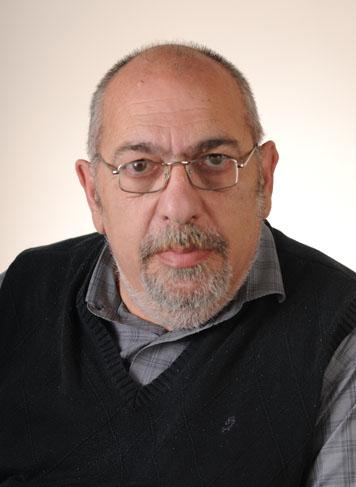
Professor Brian Z. Tamanaha is a distinguished scholar in jurisprudence and law and society at Washington University School of Law. With over 75 publications, his work spans legal realism, rule of law, and legal pluralism, earning international acclaim. Education: Doctorate of Juridical Science (Harvard Law School), Juris Doctor (Boston University), Bachelor of Science (University of Oregon) Research Interests: Focused on the intersection of legal theory, historical analysis, and societal impacts, Tamanaha’s scholarship critiques formalist approaches while exploring the evolution of legal systems across cultures. Scientific Awards: 2019 IVR Book Prize 2018 Prose Awards Honorable Mention Dennis Leslie Mahoney Prize in Legal Theory (2006) Herbert Jacob Book Prize (2002) Special Recognition Award (1998, Law and Society Association) Key Speaking Engagements: Cotterrell Lecture (2015), Kobe Memorial Lecture (2014), Julius Stone Address (2008), and multiple international keynote addresses. Grants & Fellowships: Ferdinand Braudel Senior Fellowship (European University Institute), Institute for Advanced Study Membership (Princeton), and Visiting Professor Fellowship (Queen Mary University).
Alexandra Paige Fischer is an Associate Professor at the University of Michigan School for Environment and Sustainability (SEAS) . Her research focuses on the human dimensions of environmental change , with emphasis on climate change adaptation , wildfire risk governance , and collective action in forested ecosystems . She collaborates with interdisciplinary teams and serves as a contributing author to the IPCC Sixth Assessment Report . PhD, Oregon State University (Forest Resources Social Science) MS, Oregon State University (Forest Resources Social Science) BA, Hampshire College (Cultural Anthropology) Her research integrates theories from natural resource sociology and human-environment geography , employing qualitative interviews , quantitative surveys , and social network analysis . She leads the Western Forest and Fire Initiative and investigates socio-ecological systems in fire-prone regions and coastal communities. Her work spans the U.S. West and Chile , where she explores global wildfire challenges and flammable plantation impacts. Recent publications highlight her contributions to climate adaptation frameworks , collective risk mitigation , and socio-ecological network analysis . She has received recognition as a Fulbright Scholar and leading fire science researcher . Fulbright Scholar, Facultad de Ciencias Forestales y Recursos Naturales, Universidad Austral de Chile 50 Female Leading Scholars in Fire Science Grants include USDA Forest Service projects on climate change impacts on family forestlands and forestry responses to climate change . She actively contributes to Nature Sustainability , Global Environmental Change , and serves as Associate Editor for Ecology and Society and Frontiers in Climate .
Camillo J. Taylor is the Raymond S. Markowitz President’s Distinguished Professor in the Department of Computer and Information Science at the University of Pennsylvania , where he has been a faculty member since 1997. He also serves as Associate Dean for Diversity, Equity, and Inclusion at the School of Engineering and Applied Science. His research focuses on Computer Vision and Robotics , particularly in 3D reconstruction, semantic mapping, and autonomous navigation. Education: A.B. in Electrical Computer and Systems Engineering, Harvard College (1988) M.S. and Ph.D. in Computer Science, Yale University (1990, 1994) Research Interests: Dr. Taylor’s work bridges Computer Vision and Robotics to enable autonomous systems to perceive and navigate complex environments. Key themes include semantic SLAM, event camera applications, and meta-learning for adaptive controllers. His projects often integrate vision, physics, and multi-agent collaboration, as seen in systems like EvMAPPER and OCCAM . Recent Article Trends: His 2024–2025 publications focus on semantic mapping , event-based vision , and multi-agent LLM systems , reflecting his lab’s emphasis on real-time perception, physics-informed reconstruction, and rational decision-making in robotics. These works span applications from solar eclipse imaging to wildfire analysis and natural hazard resilience. Awards: NSF CAREER Award (1998) Lindback Minority Junior Faculty Award (2001) IEEE WACV Best Paper Award (2012) Lindback Distinguished Teaching Award (2012) Advising and Service: Dr. Taylor has advised numerous PhD students, including Jason Hughes and Bowen Jiang. He has served as a Program Chair for CVPR (2006, 2017) and General Chair for ICCV (2021). His contributions to the GRASP Laboratory have advanced autonomous micro-UAVs and semantic SLAM.
University of Illinois Urbana-ChampaignUnited States
Justin Yim is an Assistant Professor at the Department of Mechanical Science and Engineering at the University of Illinois Urbana-Champaign (UIUC), where he runs the Novel Mobile Robots Lab (NMbL). His research focuses on enabling high-performance locomotion in robots through concurrent design of mechanisms and controllers, inspired by biological systems. He previously earned his PhD in Electrical Engineering from UC Berkeley (2020) and dual BS degrees in Mechanical Engineering and Applied Mechanics/Electrical Engineering from the University of Pennsylvania (2015), followed by a postdoctoral researcher role at Carnegie Mellon University (2020-2022). PhD, Electrical Engineering, University of California, Berkeley (2020) MSE, Robotics, University of Pennsylvania (2015) BSE, Mechanical Engineering and Applied Mechanics/Electrical Engineering, University of Pennsylvania (2015) His research explores legged robot design, bioinspired robotics, and locomotion dynamics, with a focus on overcoming terrain challenges through minimalist mechanical systems and control strategies. Recent work emphasizes squirrel-inspired jumping and landing mechanics, programmable substrates for locomotion studies, and energy-efficient robot mobility. Selected article trends highlight innovations in monopedal hopping with series-elastic actuators, bioinspired balance control, underactuated bipedal walkers, and cooperative cable-driven modular robots. His work bridges theoretical insights with practical applications in extreme-terrain mobility. NSF CAREER Award (2025): 'Extreme Robot Walking: Speed, Agility, and Efficiency via Reduced Degrees of Freedom' NASA Innovative Advanced Concepts Fellow (2025) Justin Yim actively mentors graduate students and leads research projects in the NMbL lab, which develops robots capable of walking, hopping, and rolling in complex environments. Recent lab achievements include a Best Demo award at the 2nd Unconventional Robots Workshop (2025) and awards for outstanding locomotion papers. He teaches courses such as ME 370 Mechanical Design I and SE 422 (ME 446, ECE 489) Robot Dynamics and Control.
Dima Arinkin is a Professor in the Department of Mathematics at the University of Wisconsin–Madison, specializing in algebraic geometry with significant contributions to geometric representation theory and mathematical physics. His research focuses on: Geometric Langlands Program: Developing frameworks connecting automorphic forms and Galois representations through geometric methods Moduli Spaces: Analyzing spaces of algebraic connections, Higgs bundles, and their compactifications D-modules: Studying systems of linear differential equations via algebraic geometry Integrable Systems: Investigating geometric structures in soliton theory and Painlevé equations Irregular Singularities: Exploring connections with irregular behavior on algebraic curves Analysis of his publications (2008-2016) reveals consistent advancement in geometric Langlands through derived algebraic geometry techniques, particularly in relating singular support of sheaves to automorphic forms and establishing oper structures for connections. No scientific awards are documented in the provided materials. No information regarding student advisement or research grants appears in the source texts.
Swiss Federal Institute of Technology in LausanneSwitzerland
Gianni Franchi is an Assistant Professor at ENSTA Paris, part of Institut Polytechnique de Paris. His research focuses on robust computer vision, uncertainty quantification, and explainable AI (XAI). He has been teaching Deep Learning, Computer Vision, and Machine Learning courses since 2020 at ENSTA Paris and Télécom Paris. PhD in Fusion of Information, Machine Learning, and Image Processing (2016) from Mines de Paris Postdoctoral experience at Paris Saclay University (2018-2020) and Seigen University (2016-2018) Current PhD students: Rémi Kazmierczak, Olivier Laurent, Adrien Lafage, Mouïn Ben Ammar Alumni: Xuanlong Yu (2020-2023) Research interests include robust computer vision, anomaly detection, uncertainty quantification, out-of-distribution detection, certifiable AI, and explainable AI. He leads the development of the PyTorch library Torch Uncertainty for uncertainty quantification in deep learning. Recent publications span uncertainty quantification in foundation models, trajectory forecasting, vision-language adaptation, and explainability benchmarks. Gianni actively collaborates on multimodal autonomous driving datasets and uncertainty-aware systems for human-agent interaction.
Karl Henrik Johansson is a Professor at the School of Electrical Engineering and Computer Science, KTH Royal Institute of Technology in Stockholm, Sweden, where he also serves as the Founding Director of Digital Futures. He is a Fellow of both IEEE and the Royal Swedish Academy of Engineering Sciences, and has held leadership positions including Immediate Past President of the European Control Association and IEEE Control Systems Society Vice President Diversity, Outreach & Development. Dr. Johansson earned his MSc in Electrical Engineering and PhD in Automatic Control from Lund University. His academic journey includes visiting positions at prestigious institutions such as UC Berkeley, Caltech, and NTU. His research focuses on networked control systems and cyber-physical systems with applications in transportation, energy, and automation networks. His work investigates fundamental challenges in connecting physical world systems through communication networks, exploring how wireless communication and sensor technology can enhance system robustness, reliability, energy efficiency, and safety. Current research directions include security of cyber-physical systems, distributed optimization, multi-agent systems, and applications to intelligent transportation and energy networks. Analysis of his recent publications reveals a strong focus on distributed optimization algorithms, secure networked control, multi-agent systems, and applications to transportation and energy networks. His work increasingly integrates machine learning techniques with traditional control theory, addressing challenges in privacy-preserving distributed computation, resilient state estimation, and resource allocation in complex networked systems. IEEE Control Systems Society Hendrik W. Bode Lecture Prize (2024) Swedish Research Council Distinguished Professor (2018-2027) Wallenberg Scholar (2009-2026) IFAC Young Author Prize IEEE CSS Distinguished Lecturer (2017-2019) IFAC Outstanding Service Award IEEE Fellow Dr. Johansson has supervised over 100 postdocs and PhD students, with many now holding prominent positions at institutions worldwide. His research has been supported by significant grants including the Swedish Research Council Distinguished Professor Grant (2018-2027), multiple Wallenberg Foundation grants, and numerous EU and national research projects. He has directed major research centers including ACCESS Linnaeus Centre (2009-2016) and Strategic Research Area ICT TNG (2013-2020). His research group operates within the Digital Futures initiative and maintains strong connections with industry partners through projects like the Integrated Transport Research Lab (supported by Scania and Ericsson) and Smart Mobility Lab. The group actively collaborates with international institutions and participates in major EU-funded projects addressing challenges in cyber-physical systems, transportation, and energy networks.
Christian Moormann serves as Director and Full Professor of the Institute of Geotechnics at the University of Stuttgart, where he has held his position since 2010. His leadership extends to national and international geotechnical organizations, including serving as Chairman of the German Geotechnical Society (DGGT) since 2022. His educational background includes a distinguished Diplom in Civil Engineering from Leibniz University Hannover (1989-1994), followed by doctoral studies at TU Darmstadt where he earned his Dr.-Ing. with distinction in 2002 for research on soil-groundwater interaction in deep excavations. He completed his habilitation at TU Darmstadt in 2009 on optimization of geotechnical composite structures. Professor Moormann's research spans the critical intersection of theoretical geomechanics and practical engineering applications. His work focuses on material behavior of semi-solid and variable-strength rocks, numerical methods in geotechnics, and reliability analyses for geotechnical composite structures. He has made significant contributions to deep foundation systems, pile-raft foundations, and the application of geosynthetics in construction. His recent work increasingly addresses sustainable applications including near-surface geothermal energy systems and innovative ground improvement techniques. With over 350 publications throughout his career, Moormann's scholarly output demonstrates consistent focus on practical geotechnical challenges. His publication themes reveal evolving emphasis from fundamental soil mechanics to complex system behavior, with growing attention to sustainability and reliability-based design approaches in geotechnical engineering. Professor Moormann holds numerous leadership positions that reflect his standing in the field: Chairman of the German Geotechnical Society (DGGT) since 2022 Head of the "Earth and Foundation Engineering" section of DGGT since 2018 German Delegate to Eurocode 7 Technical Committee (TC 250/SC 7) Chair of the DIN Standards Committee "Piles" (NABau 005-05-07) Member of the Professional Image Committee of ISSMGE His professional activities extend to significant consulting work through his own firm "Prof. Moormann Geotechnik Consult" established in 2010, and leadership of the PÜZ certification office. Moormann serves as an officially appointed expert for earthworks, foundation engineering, and rock engineering. His work on developing practical engineering standards through multiple DIN committees and Eurocode 7 implementation demonstrates his commitment to bridging academic research with practical engineering applications. The Institute of Geotechnics under Professor Moormann's leadership maintains strong connections with industry through its COMMAS program and extensive field testing capabilities. His team actively participates in developing practical engineering solutions for complex geotechnical challenges, particularly in deep foundation systems, excavation support, and sustainable geotechnical applications including geothermal energy systems.
Leslie Valiant is the T. Jefferson Coolidge Professor of Computer Science and Applied Mathematics in Harvard University's School of Engineering and Applied Sciences, where he has held a faculty position since 1982. A foundational figure in theoretical computer science, his work bridges artificial and natural computational phenomena across multiple disciplines. His academic background includes education at: King's College, Cambridge Imperial College, London Ph.D. in Computer Science from Warwick University (1974) Valiant's research spans computational complexity , machine learning theory , parallel systems , and computational neuroscience . He pioneered the PAC (Probably Approximately Correct) learning framework that established computational learning theory as a rigorous field. His holographic algorithms work revealed deep connections between computational complexity and statistical physics, while his neuroidal model and evolvability theory provide computational explanations for cognitive processes and biological evolution. Current investigations focus on cortical computation primitives and knowledge infusion architectures. His publication trends show increasing integration of neuroscience with computational theory since 2010, with dominant themes in holographic computation (2006-2018), cortical modeling (2012-2018), and evolvability (2009-2017). The work consistently applies computational complexity analysis to biological and cognitive systems. Major recognitions include: Nevanlinna Prize (1986) for mathematical aspects of computer science Knuth Award (1997) for foundational algorithms contributions EATCS Award (2008) for theoretical computer science impact Turing Award (2010) for computational learning theory and complexity Fellowship in the Royal Society and National Academy of Sciences Valiant's research has been supported by NSF and international grants enabling cross-disciplinary work in computational neuroscience and evolutionary algorithms. While specific advisees aren't documented in source materials, his theoretical frameworks have shaped generations of researchers in machine learning and complexity theory. His current research group explores neuroidal architectures for cognitive computation, investigating how cortical circuits achieve robust information processing through in-circuit testing methodologies. Ongoing projects aim to identify fundamental computational primitives in neural systems and develop biologically inspired AI frameworks.
Oscar Tomico Plasencia is an Associate Professor at the Department of Industrial Design at Eindhoven University of Technology (TU/e), specializing in Design Research Methodologies for Posthuman Sustainability. His research challenges anthropocentric design paradigms by positioning designers within complex ecological systems and exploring collaborations with non-human actors like plants. Education: MSc in Industrial Engineering and PhD cum laude from Polytechnic University of Catalonia (Spain). Prior Roles: Assistant Professor at TU/e (2007–2023), Head of Industrial Design Bachelor’s program at ELISAVA (Spain), Co-director of Design for Emerging Futures Master Program, and Co-editor-in-chief of Temes de Disseny Journal . His research focuses on decentering human agency in design through First-person methodologies for ecological engagement Design practices for multi-species cohabitation Regenerative socio-ecological-technical systems Critical fabulation with non-human stakeholders Temporal analysis of design events Recent publications analyze plant studios as dynamic constituencies (2025), backyard practices for urban sustainability (2025), and nature-entangled methodological repositories (2024). His work emphasizes transparency in experimental design processes and ecological accountability. Scientific Awards & Funding: NSERC Discovery Grant #RGPIN-2023-04600 SSHRC Insight Grant #435-2024-0783 Collaborative projects involve institutions across Spain, Japan, Sweden, and New Zealand. He leads the Making With… research group at TU/e and contributes to the EAISI (Eindhoven Artificial Intelligence Systems Institute).
Graeme J. Kennedy is an associate professor in the Daniel Guggenheim School of Aerospace Engineering at the Georgia Institute of Technology where he leads the Simulation-based Multidisciplinary Design Optimization (SMDO) research group. His research focuses on developing numerical optimization techniques for structural and multidisciplinary design problems, particularly for fixed-wing aircraft analysis and design. Dr. Kennedy received his PhD from the University of Toronto Institute for Aerospace Studies (UTIAS) in 2012, followed by a postdoctoral research fellowship at the University of Michigan in the Department of Aerospace Engineering. His research spans several critical areas in aerospace design optimization: Development of advanced numerical optimization techniques for structural design Large-scale topology optimization for aerospace structures Aeroelastic and aerothermoelastic optimization of flexible aircraft Optimization of composite structures with manufacturing constraints Electric motor optimization for electric vertical take-off and landing (eVTOL) vehicles He has developed multiple open-source research codes including TACS (parallel finite-element solver), ParOpt (optimization toolkit), TMR (mesh generation tool), and FUNtoFEM (aeroelastic coupling framework). Dr. Kennedy is particularly interested in designing structures that manage heat from battery packs in air taxis while achieving optimal aeroelastic performance. His publications reveal a strong focus on computational methods for solving large-scale optimization problems in aerospace design. The research shows progressive development from fundamental optimization algorithms toward increasingly complex multidisciplinary applications, with particular emphasis on making high-fidelity simulation-based optimization practical for industrial design cycles through high-performance computing approaches. Dr. Kennedy actively mentors numerous graduate students, including six current PhD candidates and multiple former PhD and MS students who have completed their degrees under his supervision. His research group maintains strong connections with industry through various grants supporting the development of computational tools for aerospace design. The SMDO group also engages in educational outreach through 'Optimization through Intuition,' providing accessible learning modules about optimization concepts for middle and high school students, demonstrating Dr. Kennedy's commitment to broadening participation in engineering education.
Professor John L Provis is a leading expert in cement materials science at the University of Sheffield 's School of Chemical, Materials and Biological Engineering. He also holds a Visiting Professor position at Luleå University of Technology's Building Materials division. PhD in Chemical Engineering (University of Melbourne) 2013 RILEM Robert L'Hermite Medal 2015 Honorary Doctorate from Hasselt University Editor-in-Chief of Materials and Structures His research focuses on alkali-activated materials and geopolymer binders for sustainable construction, with key themes in chemical speciation , waste immobilization , and novel cement systems for nuclear applications. Recent publications highlight 15 representative articles spanning topics: Radiation-resistant cementitious matrices Geopolymer synthesis for heavy metal containment Thermodynamic modeling of binder systems Corrosion mechanisms in alkali-activated concretes Low-carbon cement alternatives Microstructural analysis via advanced spectroscopy Scientific Recognition : RILEM Robert L'Hermite Medal recipient Hasselt University Honorary Doctorate Editorial leadership roles in major journals Contact: j.provis@sheffield.ac.uk | Sir Robert Hadfield Building, University of Sheffield
Arkadi Nemirovski is the John P. Hunter, Jr. Chair and Professor at the H. Milton Stewart School of Industrial and Systems Engineering, Georgia Tech. He holds a Ph.D. in Mathematics (1974) from Moscow State University, a Doctor of Sciences in Mathematics (1990) from the USSR Supreme Attestation Board, and an honorary Doctor of Mathematics from the University of Waterloo (2009). Ph.D. in Mathematics, Moscow State University (1974) Doctor of Sciences in Mathematics, USSR Supreme Attestation Board (1990) Doctor of Mathematics (Honoris Causa), University of Waterloo (2009) His research focuses on Optimization Theory and Algorithms , with emphasis on complexity analysis, efficient methods for nonlinear convex programs, robust optimization, optimization under uncertainty, and applications in engineering and nonparametric statistics. He has pioneered advancements in interior-point methods, semidefinite programming, and stochastic approximation, shaping modern convex optimization. His article trends highlight a trajectory from foundational interior-point algorithms (1990s) to robust optimization (2000s) and recent works on first-order methods, polyhedral estimates, and applications in machine learning, signal processing, and tomography. Key subfields include matrix norms , large-scale optimization , and stochastic uncertainty handling . Scientific awards include: 1982 Fulkerson Prize (joint with L. Khachiyan and D. Yudin) 1991 Dantzig Prize (joint with M. Grotschel) 2003 John von Neumann Theory Prize (joint with M. Todd) 2017 Member, National Academy of Engineering 2018 Fellow, American Academy of Arts and Sciences 2020 Norbert Wiener Prize (joint with M. Berger) He has supervised students like Dmitry Gabelev (polynomial-time cutting plane algorithms), Daureen Steinberg (matrix norms in robust optimization), and Eitan Rubinstein (SVMs via advanced optimization), with their works later formalized in academic journals.
Swiss Federal Institute of Technology in LausanneSwitzerland
George Candea is an Associate Professor at the École polytechnique fédérale de Lausanne (EPFL) and heads the Dependable Systems Laboratory (DSLAB). He also holds teaching roles in the School of Computer and Communication Sciences, focusing on computer science, communication systems, and software engineering. Education: PhD in Computer Science (2005) from Stanford University; B.S. and M.Eng. in Electrical Engineering and Computer Science (1997, 1998) from MIT. His research centers on achieving reliability, security, and predictable performance in complex software systems. He has pioneered concepts like 'crash-only software' and 'microrebooting' to enhance system resilience. His work spans theoretical foundations and practical implementations, addressing scalability challenges in real-world systems. George has co-founded two technology companies: Cyberhaven (2016, cybersecurity) and Aster Data Systems (now Teradata Vantage , big-data analytics). He actively contributes to academic governance as a member of EPFL's Innovation Council (2017-2021) and Innogrant committee (2018-2022). Scientific Awards: 2024: ACM Mark Weiser Award 2014: ACM Eurosys Jochen Liedtke Young Researcher Award 2005: MIT TR35 Young Innovators Award 2011: ERC Starting Grant Multiple Best Paper Awards at ASPLOS, USENIX NT, and SIGCOMM KBNets He has advised numerous PhD students and served on program committees for top conferences like SOSP, OSDI, and ASPLOS. His work bridges academia and industry through startups and collaborations with tech giants.
Andreas Jentys is a Professor at the Department of Technical Chemistry within the TUM School of Natural Sciences at Technische Universität München (TUM). His research focuses on understanding surface reactions and transport phenomena in mesostructured, micro- and mesoporous oxides with acid/base or redox properties, as well as supported metal catalysts for gas and condensed phase reactions. He prepares materials with tailored functionality and studies their sorptive and catalytic properties using in situ electron and vibrational spectroscopy combined with microkinetic experiments. Education: PhD (Dr. techn.) in Chemistry from TU Wien (1991) Postdoctoral: Royal Institution of Great Britain (1992-1993) with Prof. Richard Catlow Academic Career: TU Wien (1998: Associate Professor), TUM (1999: Senior Scientist; 2011: Professor) Teaching: Active in TUM Asia since 2006 Research interests span catalysis, surface chemistry, material science, and chemical reaction engineering. He specializes in zeolites, bimetallic catalysts, and in situ spectroscopic methods. Recent work examines: Hydrogen evolution and carbon-carbon coupling on Cu Methane activation via Co²⁺ sites in ZSM-5 Photocatalytic systems using metal-organic frameworks Solvent effects in palladium-catalyzed hydrogenation CO₂ hydrogenation over bifunctional catalysts Publications trend toward heterogeneous catalysis, with emphasis on: Design of mesoporous and microporous materials Characterization of metal clusters and oxo species Microkinetic modeling of catalytic systems Environmental applications (NOx/CO₂ reduction) Hydrogen and hydrocarbon processing Teaching includes courses on: Reaction Engineering and Kinetics Industrial Chemical Processes I & II Fundamentals of Catalysis TC Praktikum (internship)