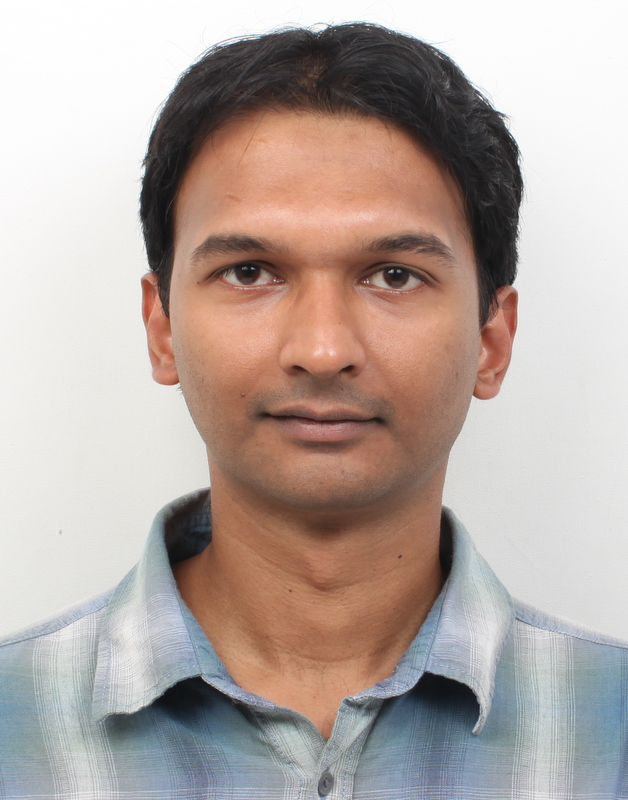
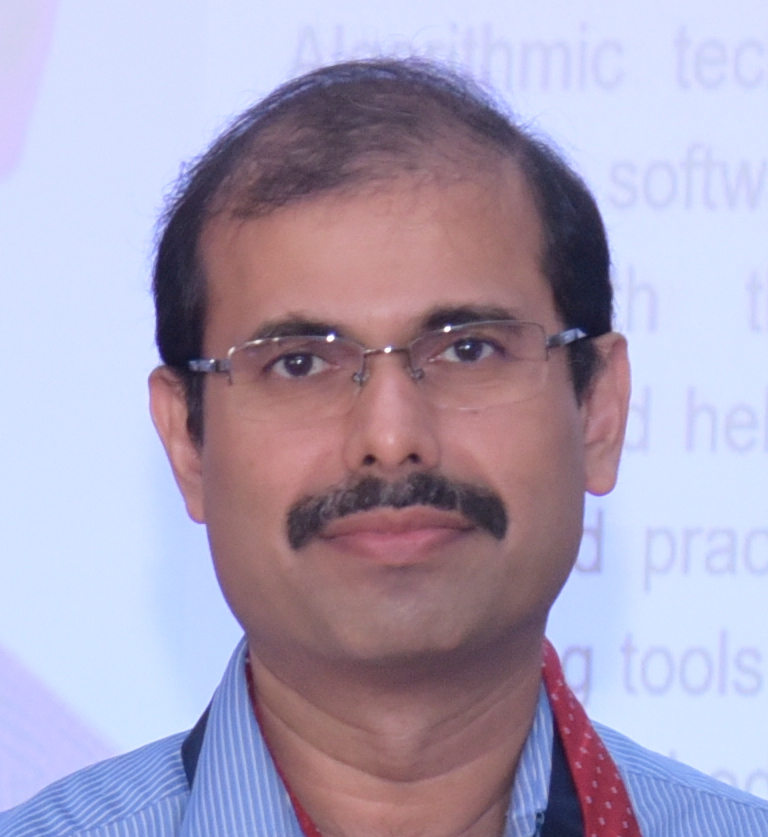
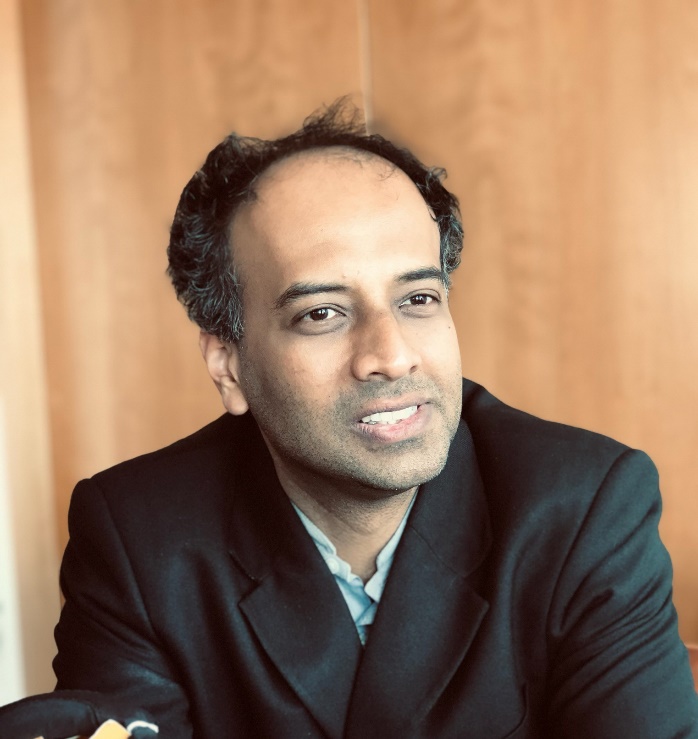
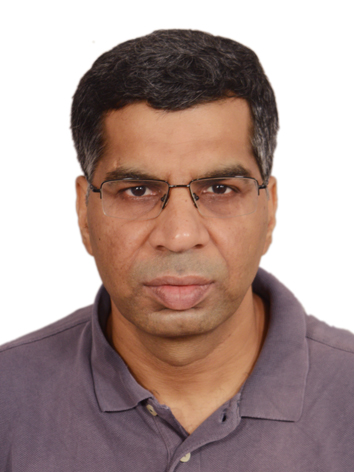
Shivaram Kalyanakrishnan is an Associate Professor at the Department of Computer Science and Engineering , Indian Institute of Technology Bombay , specialising in Artificial Intelligence and Machine Learning . His research spans sequential decision making , multiagent learning , multi-armed bandits , and humanoid robotics , with applications in robot soccer , computer games , and online advertising . He teaches advanced courses like CS 747: Foundations of Intelligent and Learning Agents and CS 748: Advances in Intelligent and Learning Agents , focusing on end-to-end system design and theoretical analysis. His scientific awards include the Best Student Paper Award at RoboCup International Symposium 2006 and nomination for Best Student Paper Award at AAMAS 2007 . His work on reinforcement learning and policy iteration has been published in leading venues such as IJCAI , ICML , and COLT , with recent contributions to railway scheduling and bandit algorithms. While no explicit list of advisees is provided, his research projects and publications suggest mentorship of students in collaborative efforts. Contact : shivaram@cse.iitb.ac.in .
Ishan Sharma is a Professor in the Department of Mechanical Engineering at the Indian Institute of Technology Kanpur (IIT Kanpur), specializing in Mechanics and Applied Mathematics. His research focuses on granular materials, planetary science, contact mechanics and adhesion, soft materials, dynamics, structural vibrations, wave propagation, stability, and fluid-structure interaction. Dr. Sharma's research interests include modeling granular systems for geophysical and industrial applications, with specific emphasis on dynamics of granular minor planets and segregation in granular mixtures. His work bridges theoretical mechanics with practical applications in both space science and engineering contexts. The research spans multiple disciplines, connecting planetary science, materials science, and mechanical engineering through mathematical modeling and computational approaches. His scholarly contributions demonstrate significant trends in applying mechanical principles to celestial bodies and industrial processes. The work on granular materials has important implications for understanding asteroid formation, while his contact mechanics research informs material science and engineering design. His publications reveal a consistent focus on stability phenomena across different physical systems. INAE Young Engineer Award Dr. Sharma leads the Mechanics and Applied Mathematics research group at IIT Kanpur, supervising research projects that examine fundamental properties of materials under various mechanical conditions. His work combines theoretical analysis with computational methods to address complex mechanical problems with both academic and practical significance. He maintains an active research program with ongoing projects examining the mechanical behavior of granular systems in space environments. Based in office NL-102 in the Department of Mechanical Engineering, Dr. Sharma contributes significantly to the academic community through his teaching, research supervision, and scholarly publications in high-impact journals.
Soumya Dutta is an Assistant Professor in the Department of Computer Science and Engineering at the Indian Institute of Technology Kanpur (IITK), where he leads the INSIGHT: Intelligent Scientific and Visual Computing of Big Data Research Group. He joined IIT Kanpur in October 2022 after working as a Scientist II at Los Alamos National Laboratory (LANL) from July 2019 to August 2022, and previously as a Postdoctoral Research Associate at LANL from June 2018 to July 2019. His educational background includes a Ph.D. and M.S. in Computer Science and Engineering from The Ohio State University (2011-2018), where he was part of the GRAVITY research group, and a B.Tech. in Electronics and Communication Engineering from West Bengal University of Technology, India (2005-2009). Research Interests: Dr. Dutta's research focuses on the intersection of machine learning, visual computing, big data, and high-performance computing. His primary research areas include Machine Learning for Visual Computing and Image Analysis, Big Data Visualization and Analytics, Data Science and HPC, Machine Learning for Scientific Computing, and Explainability and Interpretability of AI Models. His work addresses various big data characteristics including the 5 Vs: Volume, Velocity, Variety, Veracity, and Value. He develops techniques that make complex machine learning models more interpretable and explainable, enabling their effective adoption in real-life applications across scientific domains, social media, IoT, healthcare, and industry applications. Dr. Dutta's research group has secured multiple funded projects including: DAVi: An Intelligent Data Analytics and Visualization Framework (funded by ISRO), Intelligent Visual Computing of Extreme-scale Data for Accelerating Scientific Discovery (IIT Kanpur Initiation Grant), Enabling Interactive Big Data Analytics and Visualization at Exascale (SERB), Development of AI-Enabled National Portal for Efficient Search of Missing People (C3iHub), and Proactive and Generalized Deepfake Defense Mechanisms (C3iHub). Best Reviewer, Honorary Mention Award for IEEE Transactions on Visualization & Computer Graphics (TVCG), 2021 Best Paper Award at ISAV 2021, co-located with Supercomputing (SC) LAAP Award at Los Alamos National Laboratory, 2021 Best Paper Award at TopoInVis 2019 Best Paper Award at ISAV 2018, co-located with Supercomputing (SC) Best Poster Award in 12th Annual CSE Student Poster Exhibition, The Ohio State University, 2018 Best Poster Award in 11th Annual CSE Student Poster Exhibition, The Ohio State University, 2017 Best Paper Honorable Mention Award at IEEE Visualization Conference (IEEE VIS) 2016 Dr. Dutta actively mentors a large group of students including Ph.D., M.Tech., and B.Tech. students. His current Ph.D. students include Shanu Saklani, Sankhadeep Bhowmick, Ananya Chaturvedi, Arpita Santra, Anubhav Dixit (co-supervised), and Robin Shah. He has supervised numerous M.Tech. students with thesis topics ranging from uncertainty-aware neural networks to deepfake detection. Dr. Dutta currently teaches courses including CS360 - Introduction to Computer Graphics and CS661 - Big Data Visual Analytics. The INSIGHT research group collaborates internationally with researchers from Meta, Oak Ridge National Laboratory, and National Taiwan Normal University. The group's work focuses on building machine learning and data science-based solutions to analyze large-scale multifaceted data in a scalable way, enabling interactive and interpretable analytics of complex data from scientific simulations, social media, IoT, healthcare, and other application domains.
Supratik Chakraborty serves as the Bajaj Group Chair Professor in the Department of Computer Science and Engineering at Indian Institute of Technology Bombay. He maintains dual affiliations with the Centre for Formal Design and Verification of Software and the Centre for Liberal Education at IIT Bombay, demonstrating his cross-disciplinary engagement. Professor Chakraborty's research spans formal methods with focus on formal verification, rigorous analysis of system models, and automated synthesis of systems from specifications. His work bridges theoretical foundations with practical applications, particularly in developing mathematically provable guarantees for increasingly complex hardware, software, and intelligent systems. Current research interests include constrained counting and sampling, scalable formal verification of software and hardware systems, automated synthesis of programs and circuits, and applications of automata, logic and finite model theory to practical verification challenges. His publication trajectory shows a significant evolution from traditional hardware and software verification toward addressing verification challenges in machine learning and AI systems. Recent work increasingly focuses on interpretability of black-box models, verification of neural networks, and synthesis techniques applicable to intelligent systems. The research demonstrates strong interdisciplinary connections between formal methods, programming languages, and artificial intelligence. IIT Bombay Excellence in Thesis (CSE) Award 2011 (for Bhargav Gulavani's thesis) IIT Bombay Excellence in Thesis (CSE) Award 2017 (for Abhisekh Sankaran's thesis) Best Paper in Algorithms and Architecture track at IEEE International Conference on Computer Design: VLSI in Computers and Processors, 1998 Professor Chakraborty has successfully supervised 11 doctoral students, with research spanning formal verification techniques, Boolean functional synthesis, constrained counting, and applications to hardware and software systems. His students have gone on to positions at major institutions including Microsoft Research, TCS Research, Georgia Tech, and BARC, reflecting the strong industry and academic impact of his mentorship. Current research directions show increasing emphasis on verification challenges posed by machine learning systems and AI. His research group at IIT Bombay, while not explicitly named in the materials, appears to focus on formal methods with strong connections to the Centre for Formal Design and Verification of Software. The group maintains active collaborations with international researchers including Moshe Y. Vardi at Rice University, and has made significant contributions to verification tools like VeriAbs that bridge theoretical advances with practical applications.
Ashis K. Patra is a full-time Professor in the Department of Chemistry at the Indian Institute of Technology Kanpur (IIT Kanpur). After obtaining his Ph.D. from the Indian Institute of Science (IISc) Bangalore in 2008, he carried out post-doctoral research at Harvard University and the University of Georgia before joining IIT Kanpur in 2012. Education & Academic Training Ph.D. (2008), Indian Institute of Science (IISc), Bangalore M.Sc. (2002), The University of Burdwan Research Interests Professor Patra leads an interdisciplinary program that sits at the interface of inorganic chemistry, chemical biology, and medicinal chemistry. His work is organized into three principal thrusts: Therapeutic Applications of Metal Complexes: Design and mechanistic evaluation of cytotoxic transition-metal complexes that target nucleic acids and proteins, aiming to overcome multidrug resistance in cancer. Nitric Oxide Delivery from Transition Metal Nitrosyls: Development of photo- and redox-triggered metal nitrosyl complexes for controlled NO release to biological targets such as hemoglobin, myoglobin, and glutathione. Luminescent Lanthanide Complexes: Synthesis and photophysical characterization of Eu(III) and Tb(III) complexes that serve as luminescent probes and theranostic agents. Research Output & Impact His group has published extensively in leading journals including Dalton Transactions , Inorganic Chemistry , Chemical Science , and Journal of Inorganic Biochemistry . The collective work demonstrates a clear trajectory from fundamental coordination chemistry to translational applications in drug delivery and bioimaging, with recurring themes of redox control, light activation, and biological targeting. Scientific Awards & Fellowships CSIR Junior & Senior Research Fellowships (2001, 2003) West Bengal SLET Qualification (2001) International Travel Grants from CSIR & INSA (2006) DST Fast-Track Fellowship for Young Scientists (2013) Erasmus Mundus NAMASTE Scholarship for Academic Staff (2014) JSPS Invitation Fellowship (2016) Teaching & Mentoring Professor Patra teaches core and advanced courses in inorganic chemistry, including Inorganic Chemistry Laboratory, Bioinorganic Chemistry, and Frontiers in Inorganic Chemistry. He actively mentors Ph.D. and master’s students (full list available on his lab website ) and has established the Laboratory of Inorganic Chemical Biology in the Old Core Lab complex at IIT Kanpur.
Malay Banerjee is a Professor in the Department of Mathematics and Statistics at the Indian Institute of Technology Kanpur (IIT Kanpur) . His academic career is anchored in mathematical ecology and nonlinear dynamics, with a focus on modeling ecological and epidemiological systems. Education: Ph.D. (2005), University of Calcutta, India M.Sc. (1998), University of Calcutta, India Research Interests: His research spans Mathematical Ecology , Eco-epidemiology , and Nonlinear Dynamics . He applies differential equations and stochastic modeling to understand predator-prey dynamics, phytoplankton competition, and the impact of allelopathy and Allee effects on ecosystem stability. Publications Overview: His recent publications (2011–2014) focus on advanced modeling of ecological systems, including stochastic phytoplankton dynamics, bifurcation in predator-prey systems, and spatial self-organization. These works are published in leading journals like Mathematical Biosciences , Ecological Complexity , and Theoretical Ecology . Awards and Honors: Junior Research Fellowship (JRF), CSIR India Contact & Office: Office: FB-526, Department of Mathematics and Statistics, IIT Kanpur, Kanpur 208016 Phone: 0512-259-6157 (O) Email: malayb@iitk.ac.in
Rahul Mangal serves as an Associate Professor in the Department of Chemical Engineering at the Indian Institute of Technology Kanpur (IIT Kanpur). His academic profile demonstrates expertise in polymer physics, colloids, complex fluids, nanocomposites, active matter, and liquid crystals. Dr. Mangal completed his PhD at Cornell University in 2016, followed by a post-doctoral fellowship at the University of Wisconsin Madison (2016-2017). He earned his B Tech-M Tech dual degree from IIT Kanpur in 2010. Prior to his academic career, he gained industry experience as a Manager at Reliance Industries Limited in Jamnagar, Gujarat from July 2010 to July 2012. His research program focuses on the experimental investigation of colloid-polymer interactions in nanocomposite systems. Specifically, his group studies how colloids (1-1000 nm) interact with polymeric hosts to influence fundamental properties including phase behavior, rheology, and colloidal diffusion. His work explores the novel properties that emerge when colloids are added to polymer melts, block copolymers, and liquid crystals, with applications in energy devices, photonics, and bio-medicines. Dr. Mangal's research has produced significant publications in high-impact journals including Nature Communications, Langmuir, and Macromolecules, demonstrating his contributions to understanding polymer-nanoparticle systems and their applications in energy storage technologies. Outstanding Graduate Teaching Assistant, Robert Frederick Smith School of Chemical and Biomolecular Engineering, Cornell University (2016) McMullen Fellowship, Robert Frederick Smith School of Chemical and Biomolecular Engineering, Cornell University (2012) His work bridges fundamental polymer physics with practical applications, particularly in developing advanced materials for energy storage solutions. Dr. Mangal maintains an active research program that continues to explore the complex behavior of polymer-nanoparticle systems to engineer materials with precisely controlled properties for targeted applications.
Y. N. Singh is a Professor in the Department of Electrical Engineering at Indian Institute of Technology Kanpur . He holds a PhD and M.Tech from IIT Delhi and a B.Tech from REC Hamirpur . Education PhD, IIT Delhi (1997) M.Tech, IIT Delhi (1992) B.Tech, REC Hamirpur (1991) His research focuses on telecom networks , optical networks , complex networks , and wireless sensor networks , with significant contributions to network protection protocols, rumor propagation modeling, and optical memory design. His work on p-cycles has advanced telecom network survivability techniques. Selected publications include key papers in IEEE/OSA Journal of Lightwave Technology and Acta Physica Polonica B . He has received the AICTE Young Teacher Award (2002) and the Dr. M.N. Saha Memorial Award (2006). Contact details Office: EE/ACES, IIT Kanpur, UP, India-208016 Phone: 0512-[679/392/259]-7944 (O) Lab: 0512-[679/392/259]-7841, 7070 Fax: 0512-259-0063
Krishna Jagannathan is a full-time Professor in the Department of Electrical Engineering at the Indian Institute of Technology Madras (IIT Madras), India. He specializes in stochastic modeling, communication networks, information theory, and queuing theory. He obtained his B.Tech from IIT Madras in 2004, followed by S.M. and Ph.D. degrees from MIT in 2006 and 2010, respectively. After post-doctoral positions at Caltech and MIT, he joined IIT Madras in 2011. Education: B.Tech in Electrical Engineering, IIT Madras (2004) S.M. in Electrical Engineering and Computer Science, MIT (2006) Ph.D. in Electrical Engineering and Computer Science, MIT (2010) Research Interests: His research focuses on stochastic modeling and analysis of communication networks , information theory , and queuing theory . He has made significant contributions to understanding network performance, resource allocation, and risk-aware decision-making in complex systems. He leads the Networks and Stochastic Systems lab at IIT Madras, mentoring a large cohort of Ph.D. and M.S. students working on cutting-edge problems in networking, optimization, and stochastic systems. Scientific Awards: Best Paper Award at WiOpt 2013, Tsukuba, Japan Young Faculty Recognition Award for Excellence in Teaching and Research, IIT Madras (2014) Teaching & Mentorship: He has taught a wide range of courses including Probability Foundations , Stochastic Modeling and Queuing Theory , Convex Optimization , and Signals & Systems , consistently receiving high teaching evaluations. He has supervised over 15 Ph.D. and M.S. students to completion and continues to guide several active researchers.
Rahul Varman is a Professor in the Department of Management Sciences at the Indian Institute of Technology Kanpur. He holds a Fellow in Management from IIM Ahmedabad (1994), an M.Tech from IIT Kharagpur (1987), and a B.Tech from Pantnagar (1985). His research focuses on the political economy of corporations, globalization and working classes, and governance of global value chains. His work critically examines corporate power, market structures, and the impact of globalization on labor and society. Professor Varman's approach integrates political economy perspectives with organizational analysis to reveal the underlying power dynamics in contemporary capitalism. Professor Varman's recent publications (2023-2024) analyze the digitalization of education, the political economy of India's telecom industry, corporate governance issues, and the impact of global value chains on labor conditions. His work demonstrates consistent critical engagement with mainstream economic theories, particularly challenging neoliberal assumptions about market efficiency and corporate responsibility. His scholarly contributions appear in journals such as Monthly Review, Economic & Political Weekly, and Aspects of India's Economy, reflecting both academic rigor and engagement with policy-relevant issues. Professor Varman frequently collaborates with researchers like Manali Chakrabarti on studies examining industrial clusters and labor conditions in India. He teaches courses including MBA 611: Organisation Structure & Behaviour, MBA 617: Socio-political & Ethical Environment of Business, MBA 716: Introduction to Corporations, and MBA 717: Governance of Global Value Chains, emphasizing critical perspectives on business and society. Professor Varman is actively involved in social initiatives including Hamara Manch and the IIT Kanpur Citizen's Forum, demonstrating his commitment to connecting academic work with social concerns and public discourse on economic policy and corporate governance.
Angshuman Karmakar is an Assistant Professor in the Department of Computer Science and Engineering at the Indian Institute of Technology Kanpur, India. His research focuses primarily on Post-Quantum Cryptography (PQC) and Computation On Encrypted Data (COED), which are critical areas in modern cryptography and computer security. Dr. Karmakar received his Ph.D. from Katholieke Universiteit Leuven (KU Leuven), Belgium, where he worked under Prof. Ingrid Verbauwhede in the COSIC research group. He was awarded the prestigious Erasmus Mundus fellowship for his doctoral studies and the FWO (Fonds voor Wetenschappelijk Onderzoek – Vlaanderen) fellowship for his post-doctoral research at KU Leuven. His research spans theoretical development of cryptographic schemes, implementation algorithms, side-channel and fault attack analysis, and countermeasure development. Dr. Karmakar has established extensive international collaborations with researchers and engineers worldwide to address complex challenges in cryptography and security. Recent publications demonstrate a strong focus on practical post-quantum cryptographic implementations with particular attention to hardware and software efficiency, side-channel resistance, and novel attack methodologies. His work bridges theoretical cryptography with real-world implementation challenges across diverse platforms from IoT devices to high-performance computing systems. Erasmus Mundus fellowship for doctoral studies at KU Leuven FWO fellowship for post-doctoral study at KU Leuven Google India Research Award for work on practical transition to post-quantum cryptography Dr. Karmakar is actively seeking graduate students and postdoctoral researchers to collaborate on cutting-edge research in cryptography and computer security. His work has significant implications for securing future communication systems against quantum computing threats, with applications spanning blockchain technologies, IoT security, and general-purpose computing systems.
Professor Partha Sarathi Mukherjee is a distinguished faculty member in the Department of Inorganic and Physical Chemistry at the Indian Institute of Science (IISc), Bangalore. With 28 years of research experience in inorganic chemistry and 22 years of teaching at honors/PG levels, he has established himself as a leading researcher in supramolecular chemistry and related fields. His work focuses on designing complex molecular architectures through coordination-driven self-assembly and exploring their applications in catalysis and molecular recognition. Educational Background: Doctor of Philosophy (Indian Association for the Cultivation of Science, Kolkata) MSc (Jadavpur University, Kolkata) BSc (Burdwan University) Professor Mukherjee's research interests center around supramolecular chemistry, catalysis in confined spaces, light-harvesting systems for photocatalysis, and organic materials for separation of isomers and enantiomers. His work demonstrates how subtle design modifications in molecular building blocks can yield complex supramolecular architectures with tailored properties for specific applications. He has made significant contributions to understanding how the geometry and functionality of molecular cavities influence host-guest chemistry and catalytic activity. His recent publications reveal a strong trend toward creating water-soluble coordination cages with precisely controlled geometries for applications in molecular recognition, selective catalysis, and separation science. The research shows how angular modulation of ligands can dramatically affect the orientation of functional groups within molecular cavities, thereby controlling their host-guest properties. Many of his recent papers focus on Pd(II) and Pt(II) based architectures with applications in photocatalysis, selective oxidation, and molecular separation. Professor Mukherjee has mentored 24 PhD students and 25 postdoctoral fellows, many of whom have gone on to become faculty members at leading institutions including NISER, IISER, IIT, NITs, and various universities. His research group has published 231 peer-reviewed articles and he has delivered over 280 lectures worldwide. His laboratory focuses on the self-assembly of complex molecular architectures, particularly metal-organic cages and barrels, and their applications in catalysis, molecular recognition, and separation science. The group employs a range of techniques including X-ray crystallography, NMR spectroscopy, mass spectrometry, and computational methods to characterize these systems and understand their properties.
Om P. Damani is a Professor in the Department of Computer Science and Engineering at Indian Institute of Technology Bombay. He serves as Faculty In-Charge of the Sustainable Development unit of the Center for Policy Studies and is also associated with the Centre for Technology Alternatives for Rural Areas (CTARA). His work bridges computer science with social development challenges, focusing on practical applications for rural communities. Dr. Damani's research interests span Technology for Development of the bottom 80%, System Dynamics: Modeling and Simulation for Social Development, System Architecture, and Data Science. His work demonstrates how computational approaches can address complex development challenges through projects like GramDrishti (for detecting rural infrastructure in satellite images), JalTantra (for optimizing water distribution networks), and FAI (Farm Assessment Index for holistic farming practice evaluation). His publications reveal a consistent focus on applying computer science to solve real-world problems in water management, agricultural systems, and rural infrastructure. His research has been recognized with significant awards including the IIT Bombay Industrial Impact Award 2010, IIT Bombay Impactful Research Award 2019, and Best Poster Award at Agriculture Science Congress 2017. Dr. Damani has successfully translated theoretical research into practical tools that address development challenges, particularly in water resource management and agricultural systems. As an educator, he has mentored numerous PhD students including Chintan Tundia, Shreenivas Kunte, Nikhil Hooda, Sivamuthu Prakash Murugan, Dipak L. Chaudhari, Prateek Kapadia, and Manoj K. Chinnakotla. His teaching portfolio includes courses on System Dynamics: Modeling and Simulation for Development (CS 752), Program Derivation (CS 420), and ICT for Development. Dr. Damani's educational background includes a Ph.D. in Computer Sciences from the University of Texas at Austin (1994-1999), B.Tech. in Computer Science and Engineering from IIT Kanpur (1990-1994), and prior professional experience at IBM T J Watson Research Lab and Akamai Technologies.
Indranil Chowdhury is an Assistant Professor in the Department of Mathematics and Statistics at the Indian Institute of Technology Kanpur. He holds a Ph.D. from Tata Institute of Fundamental Research, Centre for Applicable Mathematics in Bengaluru (2017) and has previously served as a Postdoctoral Researcher at University of Zagreb, Croatia (2020-2022) and Norwegian University of Science and Technology, Trondheim, Norway (2018-2020). Ph.D: Tata Institute of Fundamental Research, Centre for Applicable Mathematics, Bengaluru, India (2017) PG: Tata Institute of Fundamental Research, Centre for Applicable Mathematics, Bengaluru, India (2012) UG: St. Xavier's College, Kolkata, India (2010) Dr. Chowdhury's research focuses on the theory and numerical analysis of partial differential equations, with particular expertise in nonlocal and fractional order problems and fully nonlinear equations. His work bridges theoretical mathematics with practical applications in areas such as mean field games, optimal control, and mathematical modeling. His research program demonstrates a consistent trajectory of advancing the mathematical understanding of complex nonlocal phenomena through rigorous analytical techniques and innovative numerical methods. His publication record reveals a strong focus on fractional calculus, nonlocal diffusion processes, and mean field games. The research shows progression from foundational work on fractional Poincaré inequalities to increasingly sophisticated studies of fully nonlinear mean field games with both local and nonlocal diffusions. His recent work (2023-2025) demonstrates continued innovation in the field, particularly in addressing strongly degenerate cases and establishing precise error bounds for numerical approximations. Dr. Chowdhury maintains an active research program with consistent publication output in high-impact journals such as Foundations of Computational Mathematics, SIAM Journal on Numerical Analysis, and Discrete and Continuous Dynamical Systems. His collaborative work with researchers across international institutions reflects the global significance of his contributions to the field of nonlocal partial differential equations.
Naren Naik is a Professor in the Department of Electrical Engineering at the Indian Institute of Technology (IIT) Kanpur, specializing in computational tomographic reconstructions and analysis for subsurface imaging and shape/target tracking. His educational background includes: PhD from the Indian Institute of Science (IISc) Bangalore in 2000 M.E. in Electronics and Communication Engineering from IISc Bangalore in 1992 B.Sc. from Bangalore in 1988 Professor Naik's research focuses on development and analysis of reconstruction algorithms for nonlinear tomography , with particular emphasis on shape-based and dynamic tomography, tracking and battlefield surveillance, and numerical solutions to partial differential equations in electromagnetics. His work spans multiple imaging modalities including subsurface imaging with Ground Penetrating Radar (GPR), fluorescence optics, electrical impedance tomography, and photoacoustic tomography. His research bridges theoretical mathematics with practical applications in electromagnetic imaging and target tracking systems, addressing complex inverse problems in computational imaging. His publication record shows a clear progression from electromagnetic tomography to advanced Kalman filtering techniques for target tracking applications. The most recent works focus on wireless sensor networks and maneuvering target tracking, demonstrating his ability to adapt theoretical frameworks to evolving technological contexts while maintaining mathematical rigor in solving inverse problems. His professional recognition includes: Invited presentation at the special session on advances in model based inversion at the 2011 IEEE AP-S International Symposium on Antennas and Propagation Professor Naik maintains an active research program with consistent publication output in high-impact journals and conferences. His work demonstrates strong interdisciplinary collaboration, particularly with researchers in electromagnetics, signal processing, and imaging sciences. His research has significant applications in defense technology (battlefield surveillance), medical imaging, and subsurface exploration systems, contributing to both theoretical advances and practical implementations in these fields. He is based in Office 303A ACES (Advanced Centre for Electronic Systems) at the Department of Electrical Engineering, IIT Kanpur, where he leads research activities in computational imaging and tomographic reconstruction.