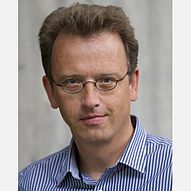
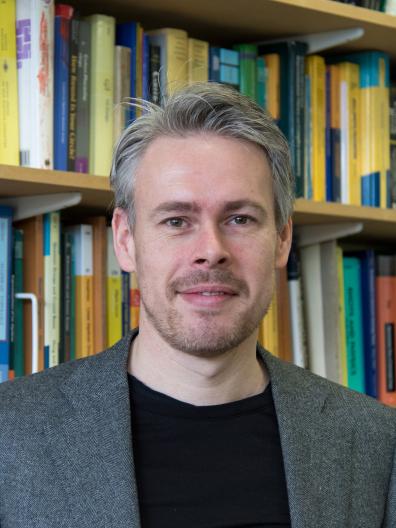
Prof. Dr. Ferdinand Evers is a Chair of Computational Condensed Matter Theory at the Institute of Theoretical Physics , University of Regensburg. His research spans quantum transport , spintronics , molecular electronics , and many-body localization , with a focus on ab initio and DFT-based modeling of nanostructures and low-dimensional systems . Key Research Areas: Quantum transport in molecular junctions Spin-orbit coupling and chiral effects Multifractality at quantum phase transitions Electronic structure of topological materials Ultrafast laser-driven electron dynamics Anderson localization and disorder Recent Article Trends (2021–2024): High-harmonic generation in topological insulators Spin-selective transport in chiral systems Mechanical torque in molecular rotors Self-consistent GW methods for molecular electronics Quantum interference in graphene nanoribbons Teaching: Lecturer for Theoretical Physics I-IV , Advanced Quantum Mechanics , and Scientific Perspectives courses at the University of Regensburg Focus on statistical mechanics , quantum transport , and computational nanoscience
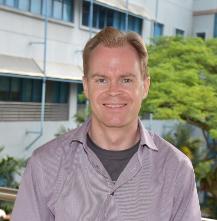
Dr. Graeme Peter Desmond Wilkin is a Lecturer in Pure Mathematics at the University of York, where he serves as Undergraduate Admissions Officer for the Department of Mathematics. He completed his undergraduate studies at the University of Melbourne and earned his PhD from Brown University in 2006. Prior to joining York, he held academic positions at Johns Hopkins University, the University of Colorado, and the National University of Singapore. His educational background includes: Undergraduate studies at the University of Melbourne PhD from Brown University (2006) Dr. Wilkin specializes in the topology and geometry of moduli spaces that arise in gauge theory, with particular focus on Higgs bundles and quiver varieties . His research employs diverse techniques from differential geometry, geometric analysis, algebraic geometry, and representation theory, with special emphasis on Morse theory and geometric flows . His work has significant connections to theoretical physics, particularly in areas related to quantum field theory and string theory. Analysis of his recent publications reveals a consistent focus on the geometric and topological properties of moduli spaces, with increasing attention to the analytical aspects of Morse theory on singular spaces. His research demonstrates strong connections between pure mathematics and theoretical physics, particularly in how geometric structures relate to physical phenomena. While maintaining a strong theoretical foundation, his recent work shows growing interest in computational aspects of these complex geometric structures. Dr. Wilkin actively supervises graduate students and has secured multiple research grants. His current project "Geometry of very stable and wobbly bundles" runs from October 2024 to September 2025. Previous projects include "Algebraic and Analytic Methods in Gauge Theory" and "Geometry and Topology of Singular Spaces." Principal Investigator on "Geometry of very stable and wobbly bundles" (2024-2025) Principal Investigator on "Algebraic and Analytic Methods in Gauge Theory" (2024) Researcher on "Geometry and Topology of Singular Spaces" (2018-2019) He is an active member of the "Geometry and Analysis" research group at the University of York and frequently participates in international conferences and collaborative research projects across multiple countries. His upcoming activities include organizing the "New Frontiers in Gauge Theory, Topology and Physics" conference scheduled for September-October 2026.
Grigory Mikhalkin is a Full Professor at the University of Geneva, where he has been a faculty member since 2008. He is considered one of the founders of Tropical Geometry, a domain of algebraic geometry governed by (max,+)-calculus where geometric objects degenerate to their piecewise-linear limits. He leads the "ALGEBRA AND GEOMETRY" research group at the university. Mikhalkin studied at Leningrad and Michigan State University under the supervision of Oleg Viro and Selman Akbulut. After receiving his PhD in 1993, he completed postdoctoral training at Princeton, Bonn, Toronto, Berkeley, and Harvard (1993-2000). He served as associate and then full Professor at the University of Utah before moving to the University of Toronto, eventually joining the University of Geneva in 2008. Mikhalkin's primary research areas are Geometry and Topology, with a particular focus on Tropical Geometry. His work bridges algebraic geometry with combinatorial structures, exploring how complex geometric objects can be understood through their piecewise-linear tropical counterparts. This approach has proven fruitful in solving problems in enumerative geometry and has connections to mathematical physics through the study of sandpile models and self-organized criticality. His research group actively explores the connections between tropical geometry, symplectic geometry, and real algebraic geometry, organizing regular seminars including the "Séminaire Fables Géométriques." The recent publications of Professor Mikhalkin demonstrate a strong focus on the intersection of tropical geometry with sandpile models and self-organized criticality. His work has evolved to examine tropical aspects of number theory, lattice sums, and even applications to economics through auction theory. A significant portion of his recent research explores the patterns and structures that emerge in sandpile models across various lattices and dimensions, connecting discrete mathematics with continuum limits through tropical techniques. Prize of the St. Petersburg Mathematical Society (1999) Silver Medal of the Mexican Mathematical Society (2011) Canada Research Chair (2004-2009) Friedrich-Wilhelm-Bessel Research Award of the Alexander-von-Humboldt Foundation (2007-2008) European Research Council Advanced Grant (2010-2015) Chair of Fondation Sciences Mathématiques de Paris (2013-2015) Mikhalkin has successfully advised several PhD students to completion, including Kristin Shaw (2011), Lionel Lang (2014), Nikita Kalinin (2015), Mikhail Shkolnikov (2017), and Johannes Josi (2018). His research has been supported by prestigious grants including the ERC Advanced Grant and the Canada Research Chair. He presented his work at the Bourbaki seminar in 2003 and was selected as a Geometry speaker at the International Congress of Mathematicians in 2006, highlighting the significance of his contributions to the field. Professor Mikhalkin leads the "ALGEBRA AND GEOMETRY" research group at the University of Geneva, which includes current members Thomas Blomme, Francesca Carocci, Aloïs Demory, Gurvan Mével, and Antoine Toussaint. The group has a strong track record of postdoctoral fellows and alumni, including notable researchers such as Ivan Bazhov, Johan Bjorklund, Rémi Crétois, and others. They organize several seminars including the "Séminaire Fables Géométriques" and have historical connections to the Battelle Seminar and Tropical working group Seminar.
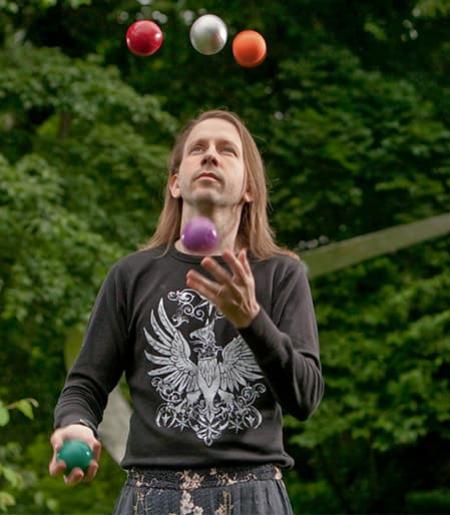
Roland Ketzmerick is a Professor of Computational Physics at Technische Universität Dresden since 2002, with a Max Planck Fellow position at the Max Planck Institute for the Physics of Complex Systems (2010–2020). He was spokesperson for the DFG Forschergruppe FOR760 on Scattering Systems with Complex Dynamics (2010–2013). His research focuses on quantum chaos in mixed systems, power-law trapping in Hamiltonian systems, Floquet systems , Hamiltonian ratchets , mesoscopic physics , fractal spectra , and Bloch electrons in magnetic fields . His work bridges classical and quantum dynamics, exploring tunneling, wavefunction statistics, and nonequilibrium phenomena. His publications demonstrate a strong emphasis on chaotic resonance states , dynamical tunneling , multifractal analysis , and quantum transport in complex systems. Recent articles (2022–2025) address dielectric cavities, ultracold atom entanglement, and 4D Hamiltonian structures. Scientific Awards : Otto-Klung-Prize (1999)
Prof. Allen Knutson is a Professor of Mathematics at Cornell University, affiliated with the College of Arts and Sciences. He earned his Ph.D. from the Massachusetts Institute of Technology in 1996. His research focuses on algebraic geometry, algebraic combinatorics, and geometric representation theory, with an emphasis on Schubert calculus, quiver varieties, and the combinatorial structures underlying geometric problems. Education: Ph.D. (1996) from MIT. His work often involves degenerating complex algebraic varieties into simpler combinatorial pieces, bridging geometry and discrete mathematics. Notable contributions include foundational results in Schubert calculus, honeycomb models, and the use of puzzles in cohomology computations. Research Interests: Algebraic geometry, algebraic combinatorics, Schubert calculus, quiver varieties, geometric representation theory, and applications to integrable systems. His interdisciplinary approach integrates algebraic, geometric, and combinatorial methods to solve problems in mathematics and theoretical physics. Advising: Current students include Portia Anderson, Raj Gandhi, and others. Past advisees have contributed to areas like flag manifolds, Frobenius splitting, and Bruhat atlases. He has taught advanced courses on topics such as symplectic resolutions, differentiable manifolds, and algebraic geometry. Labs/Teams: Collaborates widely, with contributions to projects like the ICM 2022 paper on Schubert calculus and quiver varieties. His work often involves visual tools like puzzles and pipe dreams to encode geometric invariants.
Iain Gordon is a Professor and Head of the School of Mathematics at the University of Edinburgh. He holds a BSc in Mathematics from the University of Bristol and a Part III Mathematics degree from the University of Cambridge. His research focuses on representation theory, Lie algebras, quantum groups, and Cherednik algebras, with notable contributions to the study of symplectic reflection algebras and categorification. He has held positions at the University of Glasgow and Bielefeld University, and received the Seggie Brown Fellowship during his postdoc. As Head of School, he oversees the School’s academic mission, including the expansion of the Bayes Centre and the International Centre for Mathematical Sciences (ICMS). Education: BSc Mathematics, University of Bristol Part III Mathematics (MASt), University of Cambridge Key Roles: Professor of Mathematics, University of Edinburgh (2006–present) Head of School of Mathematics, University of Edinburgh (since 2017) His research interests revolve around algebraic structures with geometric interpretations, particularly Cherednik algebras and their connections to representation theory, combinatorics, and mathematical physics. Notably, he proved a significant combinatorial theorem linking noncommutative algebras and combinatorics, earning recognition in the mathematical community. His work has fostered interdisciplinary collaborations, bridging pure mathematics with emerging fields like quantum algebra and geometric representation theory. The School’s growth under his leadership, including the Bayes Centre’s expansion and ICMS initiatives, reflects his commitment to advancing mathematical research and education. Awards: Seggie Brown Fellowship, University of Edinburgh (Postdoc, early career support) Research Contributions: Pioneering studies on rational Cherednik algebras and their categories Geometric approaches to representation theory Applications of Cherednik algebras to symmetric functions and combinatorics His leadership emphasizes balancing research excellence with societal impact, exemplified by the School’s role in major UK government-funded initiatives for mathematical sciences.
Richard Webb is a Lecturer in Pure Mathematics at the University of Manchester, specializing in geometric group theory, topology, and dynamics. His research explores interactions between these fields, particularly concerning mapping class groups, hyperbolic geometry, and surface topology. Key research examines quasi-morphisms on diffeomorphism groups, geometric structures of curve complexes, and the dynamics of group actions on surfaces. His work contributes to understanding non-CAT(0) hyperbolic complexes and Teichmüller disc embeddings. Publication Trends: Recent articles focus on geometric invariants of surface dynamics, with emphasis on constructive counterexamples in non-positive curvature and algebraic structures of diffeomorphism groups.
Rob Silversmith is a Warwick Zeeman Lecturer in the Warwick Mathematics Institute at the University of Warwick, with a focus on algebraic geometry and combinatorics. Starting Fall 2025, he will transition to an Assistant Professor role at Emory University. His academic journey includes a Ph.D. from the University of Michigan (2017), advised by Yongbin Ruan, and postdoctoral positions at Northeastern University and the Simons Center for Geometry and Physics. His research interests span algebraic geometry—particularly moduli spaces of curves, tropical geometry, and combinatorial structures—as well as connections to string theory, geometric rigidity, and dynamics. Key contributions include work on Gromov-Witten invariants, cross-ratio degrees, and the T-graph of Hilbert schemes. His recent publications (2021–2025) explore topics such as moduli spaces, tropical geometry, and combinatorial algebraic geometry, reflecting a blend of geometric and computational methods. Notable collaborations include work with R. Cavalieri, T. Kelly, and R. Ramadas on projects like Genus-zero r-spin theory and Equations at infinity for critical-orbit-relation families of rational maps . Rob has advised no listed graduate students but has contributed to interdisciplinary projects involving computer-aided conjecture-making. His scholarly activities include organizing seminars and maintaining an active presence in geometric research communities. He is affiliated with the Warwick Mathematics Institute and holds a position in the Zeeman Building. His work frequently intersects with combinatorial and computational approaches to algebraic geometry, emphasizing explicit polynomial constructions and data-driven conjectures.
Guangbo Xu is an Associate Professor in the Department of Mathematics at Rutgers University. He is actively involved in research within symplectic geometry and related fields. Affiliation: Department of Mathematics, Rutgers University Contact: gx49@math.rutgers.edu Research Interests: His work focuses on advanced topics in symplectic geometry, gauge theory, and quantum field theory, addressing problems in Floer homology, Gromov-Witten invariants, and moduli spaces of holomorphic curves. Recent Publications: Guangbo Xu's recent publications explore the intersection of symplectic geometry with theoretical physics, particularly the Gauged Linear Sigma Model (GLSM), virtual cycles, and cohomological splitting. His studies also delve into gluing techniques for vortices and the adiabatic limit of geometric equations. Grants: He is currently supported by an NSF grant (DMS-2345030) for his research. Organizational Roles: Xu co-organizes the Rutgers Symplectic Seminar and contributes to symplectic summer school events.
Rasul Shafikov is a Professor in the Department of Mathematics at Western University's Faculty of Science. He has maintained an active research program in complex analysis and geometry while teaching a range of undergraduate and graduate mathematics courses including Calculus, Real Analysis, Complex Analysis, and Functional Analysis over multiple academic years. Dr. Shafikov's research focuses on several complex variables and complex geometry, with particular interest in polynomial and rational convexity of real submanifolds in complex spaces, geometric properties of holomorphic mappings and functions, and holomorphic foliations on Levi-flat hypersurfaces. His work represents significant contributions to understanding the boundary behavior of holomorphic functions, convexity properties in complex spaces, and the geometric structure of complex manifolds. An analysis of his recent publications reveals a consistent trajectory in advancing the theory of complex analysis in several variables, with increasing focus on the interplay between complex geometry, CR geometry, and convexity properties. His work often involves collaborations with researchers across international institutions, demonstrating the global relevance of his research in complex analysis. Dr. Shafikov has supervised multiple PhD students and postdoctoral researchers who have gone on to academic positions at institutions worldwide, including the University of Arkansas, Indian Institute of Science in Bangalore, Masaryk University in Czech Republic, and Central Michigan University. His mentorship has produced scholars who continue to contribute to the field of complex analysis. He has co-authored a book titled 'Geometry of Holomorphic Mappings' (Birkhäuser, 2023) with S. Pinchuk and A. Sukhov, which serves as a significant contribution to the literature in complex analysis. His teaching portfolio includes advanced graduate courses such as Complex Analysis, Functional Analysis, and Real Analysis, demonstrating his expertise across multiple mathematical disciplines.
Eva Miranda Galceran is a Full Professor at the Facultat de Matemàtiques i Estadística (FME) of the Universitat Politècnica de Catalunya (UPC) , where she leads the GEOMVAP research group and directs the Laboratory of Geometry and Dynamical Systems . She holds affiliations as a Chercheur Affilié at the Observatoire de Paris , an ICMAT Honorary Vinculado , and a member of the BGSMath network. Research: Her work bridges Symplectic and Poisson Geometry with Hamiltonian Dynamics , Fluid Dynamics , and Computer Science . Key themes include geometric quantization , integrable systems , singular manifolds , and universality in Euler flows , including the construction of Turing complete fluid systems . She has advanced the singular Weinstein conjecture and explored b-symplectic and E-symplectic manifolds with applications to celestial mechanics. Awards: ICREA Academia Prizes (2016, 2021) François Deruyts Prize 2022 Friedrich Wilhelm Bessel-Forschungspreis 2022 Gauss Professor 2025 Advising: She mentors 2 Ph.D. students ( Pablo Nicolás , Søren Dyhr ) and has supervised 9 Ph.D. graduates, including Anastasia Matveeva (2022, InPHINIT La Caixa), Joaquim Brugués (2024, FI-AGAUR), and Mir Garcia (2024). Her team spans Mathematical Physics , Geometric Quantization , and Computational Complexity . Grants: Principal Investigator for projects AQUACELL (AEI-DFG, €350,000), INTERGAP (PID2023-146936NB-I00, €293,750), COMPLEXFLUIDS (BBVA, €150,000), and the ICREA Academia 2021 (€120,000). She co-leads the Maria de Maeztu CEX2020-001084-M program (€2M) at the Centre de Recerca Matemàtica (CRM) .
Prof. Sebastian Hensel is a Professor of Pure Mathematics at Ludwig Maximilian University of Munich (LMU), serving as Dean of Studies at the Mathematical Institute. His research focuses on low-dimensional topology, geometric group theory, and their interplay with mapping class groups, handlebody groups, and diffeomorphism groups of surfaces. He holds a PhD from the University of Bonn (2011) and has held positions at the University of Chicago as a Dickson Instructor and in Bonn before joining LMU. Research interests include algebraic and geometric properties of mapping class groups, handlebody groups, and their actions on geometric spaces. Recent work explores applications of geometric group theory to surface diffeomorphism groups. Preprints and publications span topics like thick laminations, curve graphs, and handlebody group rigidity. Teaching responsibilities include courses on geometric group theory, Riemannian geometry, and topology. He co-organizes advanced seminars such as the Geometry and Dynamics of Homeomorphisms and Representation Theory block seminars. His work also extends to pedagogical projects, including a textbook on representation theory for students and translations of foundational papers like Hilbert's ninth-degree equation. Current sabbatical (Winter 2024/25) involves collaboration on seminars while maintaining research output. The Geometry and Topology Working Group at LMU is central to his academic activities.
Jennifer Johnson-Leung serves as Professor in the Department of Mathematics and Statistical Science within the College of Science at the University of Idaho, with additional affiliation as Participating Faculty at the Institute for Modeling Collaboration and Innovation under the Office of Research and Economic Development. Her academic credentials include: PhD in Mathematics from the California Institute of Technology (2005) BS in Chemistry and Mathematics from the College of William and Mary (1998) Professor Johnson-Leung maintains a dual research focus bridging pure mathematics and applied epidemiology. In theoretical mathematics, she investigates Siegel modular forms, paramodular forms, Hecke algebras, and representation theory, advancing understanding of automorphic forms and their connections to algebraic geometry. Her applied work develops spatial statistical models for sociodemographic risk assessment in public health crises, particularly during the COVID-19 pandemic, utilizing techniques like elastic net regression to analyze vaccination behavior and mortality patterns. Analysis of her recent publications reveals equal emphasis on deep theoretical number theory problems and urgent public health applications. The mathematical works explore structural properties of modular forms and representation theory, while epidemiological studies dissect complex interactions between political ideology, social vulnerability, and pandemic outcomes across U.S. populations. No specific scientific awards were documented in the provided materials. Information regarding graduate student advising and research grant funding remains unspecified in the available documentation. No dedicated research laboratories or specialized collaborative teams were mentioned in the source materials.
Professor Ailsa Keating is a faculty member in the Department of Pure Mathematics and Mathematical Statistics (DPMMS) at the University of Cambridge. Her research focuses on symplectic geometry and homological mirror symmetry, with significant contributions to understanding symplectic structures, mapping class groups, and geometric topology. Current position: Professor, University of Cambridge Research areas: Symplectic Geometry, Homological Mirror Symmetry, Topology Her research explores symplectic stabilisations, Dehn twists, Lagrangian submanifolds, and mirror symmetry for singularities and Calabi-Yau surfaces. She has published extensively on these topics, with recent work addressing four-dimensional manifolds, exotic discs, and Brieskorn-Pham hypersurfaces. Notable scientific awards include the EPSRC Open Fellowship EP/W001780/1 and the ERC Starting Grant SingSymp (2023–24). Her work is supported by institutions like the London Mathematical Society and the University of Vienna. PhD Students: José Luis Narbona Valiente, Yoon Jae (Nick) Nho, Amanda Hirschi Grants: EPSRC Open Fellowship, ERC Starting Grant She serves on editorial boards for Annales Scientifiques de l'École Normale Supérieure and Journal de l'École Polytechnique . Her office is located in E1.02 at DPMMS, Wilberforce Road, Cambridge.
Matthew Edward Hedden is a Professor in the Department of Mathematics at Michigan State University's College of Natural Science, where he maintains an active research program in low-dimensional topology. His office is located in D325 Wells Hall, and he holds regular office hours via Zoom on Wednesdays and Thursdays. Hedden has established himself as a leading researcher in Heegaard Floer homology and its applications to knot theory and 4-manifold topology. Hedden's research centers on low-dimensional topology, with emphases on Heegaard Floer homology, knot concordance, and connections between symplectic topology and gauge theory. His work explores deep relationships between knot invariants, 3- and 4-manifold structures, and complex curves in Stein domains. He has made significant contributions to understanding how Floer-theoretic invariants detect geometric properties of knots and 3-manifolds, particularly through his investigations of cabling operations, satellite constructions, and concordance invariants. His research often bridges abstract topological frameworks with concrete computational techniques in knot theory. Hedden's publication record demonstrates consistent innovation in low-dimensional topology over the past two decades. His work shows a clear trajectory from foundational studies in knot Floer homology toward increasingly sophisticated applications in 4-manifold topology and connections with symplectic geometry. Key thematic developments include the systematic exploration of concordance invariants, the geometric interpretation of Floer homology through pillowcase geometry, and the extension of these techniques to study complex curves in Stein domains. His collaborative work spans multiple subfields, reflecting the interdisciplinary nature of modern geometric topology. Hedden has received significant recognition for his research, most notably the prestigious Alfred P. Sloan Research Fellowship (2011-2013). His work has been supported by multiple National Science Foundation grants, including a CAREER award. Hedden has directed substantial research funding through six National Science Foundation grants spanning 2005-2020, including the CAREER grant DMS-1150872 on Floer Homology and Low-Dimensional Topology (2012-2018) and the research grant DMS-1709016 on Floer Homology, Concordance, and Complex Curves (2017-2020). His research program has fostered numerous collaborations across the topology community, resulting in over 30 publications in top mathematics journals. Through his extensive lecture notes and resource compilations on Heegaard Floer homology, Hedden has significantly contributed to the education and training of new researchers in the field.