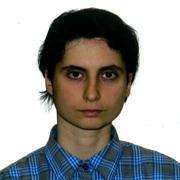
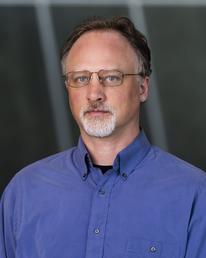
Dr. Sara Tukachinsky is a Senior Lecturer at the School of Mathematical Sciences , Tel Aviv University , specializing in Symplectic Geometry and Gromov-Witten Theory . Her research bridges complex and symplectic geometry, focusing on open Gromov-Witten invariants, Floer theory, and quantum cohomology. Academic Appointments: Senior Lecturer, Tel Aviv University (2021–present) Institute for Advanced Study, Princeton (2017–2021) Postdoctoral Fellow, Université de Montréal (2016–2017) Member, MSRI, Berkeley (2018) Research: Explores stratified subspaces, A-infinity algebras, and Lagrangian submanifolds. Collaborates closely with Jake P. Solomon on foundational aspects of open Gromov-Witten theory. Seminars: Co-organizes the Symplectic Zoominar and the Tel Aviv Seminar in Real and Complex Geometry. Publications analyze symplectic invariants, including WDVV equations for open invariants, differential forms on orbifolds, and relative quantum cohomology. Recurring themes: mirror symmetry , Fukaya categories , and moduli spaces .
Dr. Thomas Bendokat is a researcher at the Max Planck Institute for Dynamics of Complex Technical Systems in Magdeburg, Germany. He specializes in computational methods for systems and control theory, with a focus on geometric approaches to dynamical systems and manifold structures. Research Interests: Hamiltonian systems, symplectic geometry, Grassmann and Stiefel manifolds, model reduction, geometric optimization, and data-driven identification of nonlinear systems. Contact: Email: bendokat@mpi-magdeburg.mpg.de His work bridges theoretical mathematics with practical applications in gas network modeling, computer vision, and structure-preserving computational methods. He has contributed to open-source software like phgasnets for port-Hamiltonian system simulations.
Marshall Hampton is a Professor in the Department of Mathematics and Statistics at the University of Minnesota Duluth, part of the Swenson College of Science and Engineering. He holds a Ph.D. in Mathematics from the University of Washington (2002) and a B.S. in Mathematics and Physics from Stanford University (1994). His academic career includes positions as Assistant Professor (2005-2011), Associate Professor (2011-2016), and Professor (2016-present) at UMD, along with visiting positions at institutions in China, France, and South Africa. Ph.D., Mathematics, University of Washington, Seattle, WA (2002) Thesis: Concave Central Configurations in the Four-Body Problem Advisor: C. Robin Graham B.S., Mathematics and Honors in Physics, Stanford University (1994) Honors Thesis: On the electronic structure, magnetism, and spectroscopy of manganese catalase enzyme models Hampton's primary research interests span Mathematical Biology/Bioinformatics, Dynamical Systems, Celestial Mechanics, Vortex Dynamics, Convex Geometry, and Computational Algebra and Geometry . His work bridges pure mathematics with biological applications, particularly in the areas of nectar biochemistry, trypanosome biology, and celestial mechanics. He has developed mathematical models for hibernation physiology, RNA processing in parasites, and plant-pollinator interactions. His interdisciplinary approach combines computational methods with theoretical frameworks to address complex biological questions. Hampton's research output shows a clear trend toward interdisciplinary collaborations, particularly between mathematics and biology. His recent publications demonstrate expertise in both theoretical mathematics (central configurations in celestial mechanics) and applied bioinformatics (RNA processing in trypanosomes, nectar biochemistry). The mathematical techniques he employs range from algebraic geometry and dynamical systems to statistical modeling and computational algorithms. His work often involves close collaboration with biologists, reflecting his commitment to solving real-world scientific problems through mathematical approaches. University of Minnesota Informatics Institute Transdisciplinary Fellowship (2015) Swenson College of Science and Engineering Young Teacher Award (2011) Red Socks Award, SIAM Dynamical Systems meeting (2007) University of Washington NSF VIGRE Graduate Fellowship (1999-2001) Hampton has supervised numerous graduate and undergraduate students, with projects spanning mathematical biology, celestial mechanics, and computational mathematics. His research has been supported by multiple NSF grants (as co-PI on projects related to plant biology), NIH grants (focusing on trypanosome biology), and other funding sources. He has served as Director of Graduate Studies for the Mathematics Department (2020-2023) and on the SCSE Executive Committee (2016-2022). Hampton is actively involved in the Sage mathematical software project and has developed educational materials including "Mathematical Foundations of Bioinformatics" and "Introduction to Differential Equations with Sage." He has organized departmental demonstrations for UMD Science Day and participated in "Math on a Stick" at the Minnesota State Fair, demonstrating his commitment to mathematics education and public outreach.
Sharon M. Frechette is an Associate Professor in the Department of Mathematics & Computer Science at the College of the Holy Cross, where she teaches across the undergraduate curriculum and develops innovative interdisciplinary seminars. Her educational background includes: Ph.D. in Mathematics from Dartmouth College (1997), thesis: "Decomposition of Spaces of Half-Integral Weight Cusp Forms" under Thomas Shemanske A.M. from Dartmouth College (1994) B.A. from Boston University (1988) with senior thesis advised by Paul Blanchard Frechette's research bridges number theory and combinatorics, with deep investigations into modular forms, L-functions, multiple Dirichlet series, and hypergeometric functions over finite fields. She explores connections between algebraic combinatorics and representation theory, and examines the relationship between elliptic curves and modular forms. Her work often reveals combinatorial structures within analytic number theory problems, particularly through the lens of Hecke operators and their traces. Analysis of her publication timeline (2000-2018) shows evolution from foundational work on half-integral weight modular forms to sophisticated studies of multiple Dirichlet series and finite-field hypergeometric functions, with consistent emphasis on combinatorial interpretations of number-theoretic objects. As an educator, Frechette has created the distinctive Montserrat cryptology sequence combining historical narrative with mathematical rigor, and regularly teaches advanced courses like Modern Algebra and Number Theory. Her commitment to undergraduate research is evident through supervision of senior theses and development of course-based research opportunities.
Holger R. Dullin is a Professor of Applied Mathematics at the University of Sydney's School of Mathematics and Statistics. His research spans multiple areas of dynamical systems theory with particular emphasis on Hamiltonian systems. He maintains an active research program with consistent publications in top mathematical physics journals and teaches advanced courses including Lagrangian and Hamiltonian Dynamics (MATH3977), Nonlinear ODEs (MATH3063), and Linear Algebra (MATH1902). Dullin's research focuses on Hamiltonian Dynamical Systems , with significant contributions to Integrable Systems (particularly topology, action-angle variables, and Hamiltonian/Quantum Monodromy), Classical Mechanics (N-body problems, rigid body dynamics), Bifurcation Theory (twistless bifurcations, Hamiltonian Hopf), and Fluid Dynamics (Euler equations). His work often bridges pure mathematics with physical applications, especially in celestial mechanics and biomechanics. He has developed novel approaches to understanding geometric phases, symplectic invariants, and the dynamics of Hamiltonian maps including billiards. Analysis of his recent publications reveals a consistent focus on monodromy phenomena across different physical systems, regularization techniques for singularities in dynamical systems, and stability analysis of fluid flows. His work shows increasing interdisciplinary connections between mathematical physics, quantum mechanics, and celestial mechanics, with several papers exploring the geometric structure of integrable systems and their quantum counterparts. The research demonstrates sophisticated mathematical techniques applied to concrete physical problems. Dullin maintains an active research group evidenced by numerous collaborations with mathematicians internationally. His work on the Kovalevskaya top, documented in his PhD thesis and subsequent publications, remains influential in the field of integrable systems. He has developed visualization techniques for complex dynamical systems, including Poincaré sections and energy surfaces in action space.