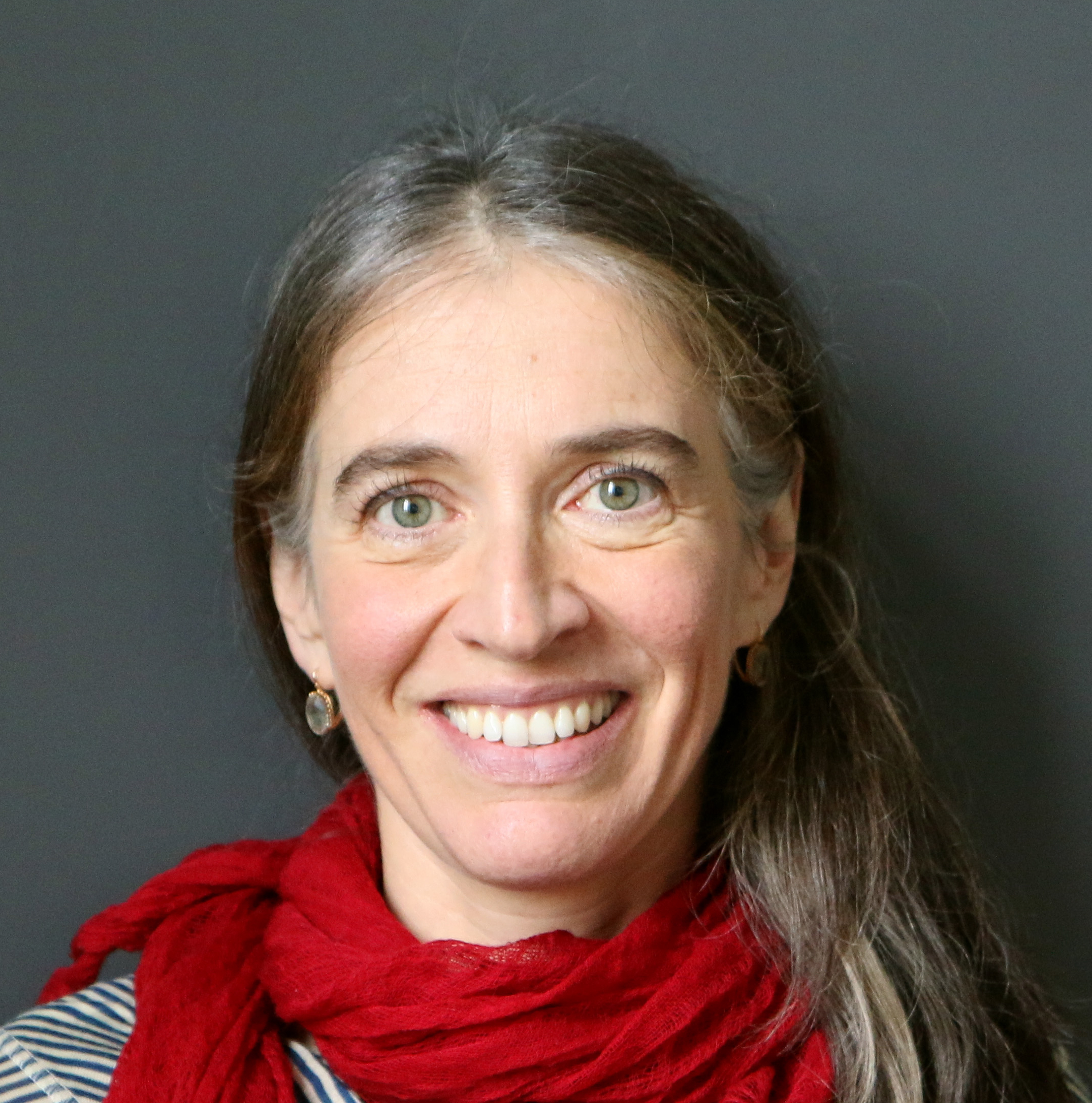
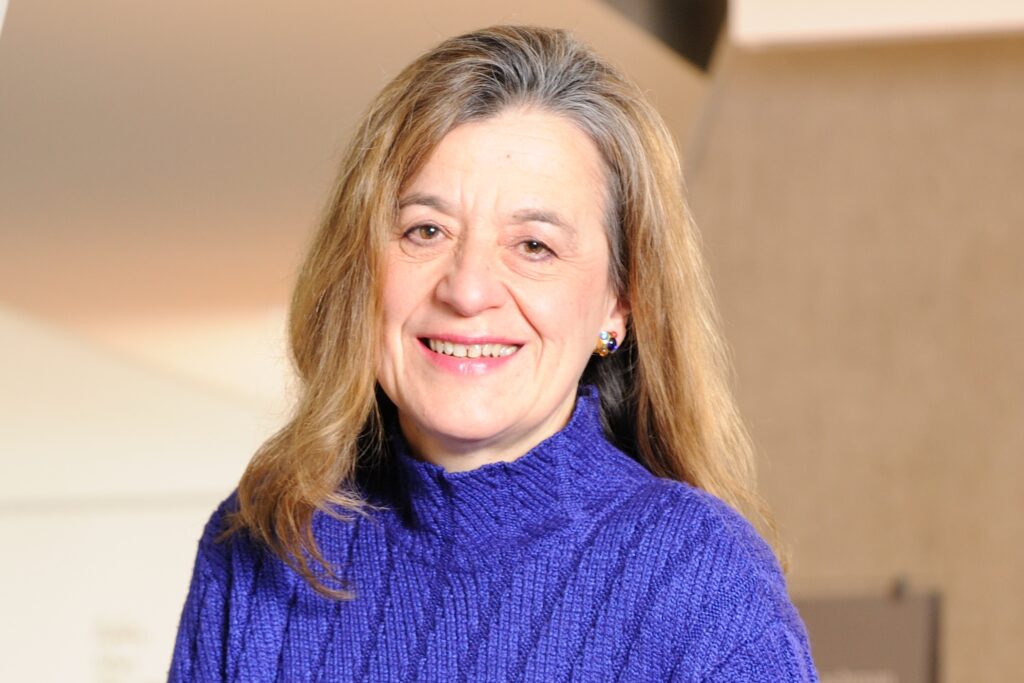
Rafe Mazzeo is a Professor of Mathematics and the Cassius Lamb Professor in Natural Sciences at Stanford University. He is affiliated with the Department of Mathematics, specializing in geometric analysis, partial differential equations, and differential geometry. His research focuses on areas such as Hitchin moduli spaces, Ricci flow, minimal surfaces, and geometric inverse problems. His expertise includes microlocal analysis, geometric PDE, and the analysis of singularities in geometric structures. Notable contributions involve the study of conical metrics on Riemann surfaces, the compactification of Hitchin moduli spaces, and the analysis of Ricci flow on manifolds with bounded geometry. His work often bridges geometric analysis with applications in physics, such as geometric inverse problems related to astrophysical systems. Publications highlight advancements in nonlinear flows, scattering theory on wave-guides, and the topological properties of moduli spaces. His research spans theoretical developments in spectral geometry, operator theory, and the geometric analysis of singular spaces. Mazzeo's work has implications for understanding geometric structures in both pure and applied contexts, including contributions to mathematical physics and geometric topology.
Jonathan Doye is a Professor of Theoretical Chemistry at the University of Oxford, affiliated with Queens College. He holds positions in the Department of Chemistry and collaborates with the Brandeis Bioinspired Soft Materials MRSEC. His research focuses on theoretical and computational studies of soft matter and biomolecular systems, including DNA biophysics, DNA nanotechnology, liquid crystals, and quasicrystals. He co-developed the oxDNA coarse-grained model for DNA simulations, widely used in nanotechnology research. Education: Bachelor’s and PhD in Theoretical Chemistry from the University of Cambridge Postdoctoral research at FOM Institute in Amsterdam (1996–1998) Research Interests: Coarse-grained modeling of DNA and RNA Patchy-particle self-assembly (including quasicrystals) Prokaryotic S-layer structural analysis Liquid crystal phase behavior of DNA origami rods Key Achievements: Discovery of one-component icosahedral quasicrystals via patchy particles Development of oxDNA model for DNA origami simulations Structural elucidation of S-layers across prokaryotes Awards: Royal Society of Chemistry Harrison Memorial Prize (2000) Labs/Teams: Jonathan Doye's Research Group focuses on computational studies of soft matter systems, with experimental collaborations in DNA nanotechnology and materials science.
Associate Professor Jason Thompson holds an Associate Professor position in the Department of Psychiatry at the University of Melbourne. He is affiliated with the Faculty of Medicine, Dentistry and Health Sciences and previously served as Co-Director of the Transport, Health and Urban Systems (THUS) Research Laboratory at the Melbourne School of Design. He earned a PhD in Medicine (2015) from Deakin University, a Master's in Clinical Psychology, and a Bachelor of Science with Honours. His research focuses on computational social science applied to injury rehabilitation, compensation systems, and healthcare design. He has attracted over $5M in research funding and published over 100 articles. Key areas include agent-based modeling, systems dynamics, and policy analysis for public health challenges such as pandemic response and urban mobility. Thompson currently leads the NHMRC Centre of Excellence in Compensable Injury after Road Crashes. Grants: ARC Future Fellowship (2022), DECRA (2017) Awards: Best Paper Award (Computational Social Science Society of the Americas, 2017) Labs: THUS Research Lab (until 2024) His work bridges epidemiological modeling (e.g., influencing Victoria's 2020 pandemic exit strategy) and complex systems analysis for injury prevention and health system design.
Celia Reina is an Associate Professor in the Department of Mechanical Engineering and Applied Mechanics at the University of Pennsylvania’s School of Engineering and Applied Science (SEAS). Her research focuses on multiscale modeling of materials, bridging statistical mechanics, thermodynamics, and machine learning. She develops novel frameworks for predicting non-equilibrium material behavior using data-driven methods and uncertainty quantification. Her work emphasizes integrating computational tools like neural networks (Stat-PINNs, VONNs) with physical principles to model dissipative systems, phase transitions, and mesoscale dynamics. Key areas include coarse-graining techniques, epistemic uncertainty analysis, and predictive modeling of complex materials under dynamic loading. Recent publications highlight advancements in stochastic systems, resonant metamaterials, and the derivation of thermodynamic models from particle-level fluctuations. She leads efforts in experimental-simulation co-design to enhance predictive capabilities in materials science.
Andrea Collevecchio is a Professor in the School of Mathematics at Monash University, Australia, where he has been a faculty member since 2012. His research focuses on the intersection of Probability, Mathematical Physics, and Statistical Mechanics, with particular expertise in stochastic processes and theoretical modeling. He earned his PhD in Statistics from Purdue University in 2004, followed by postdoctoral positions in Italy and Germany. In 2006, he became Assistant Professor at Ca’Foscari University in Venice before joining Monash University. Collevecchio specializes in Reinforced Processes and Large Deviations, investigating complex systems through random walk models. His work bridges abstract probability theory with applications in statistical mechanics, examining phenomena like memory effects in stochastic processes and phase transitions in lattice systems. Recent research emphasizes hypercube structures, non-reversible dynamics, and reinforcement mechanisms. His 2021-2025 publications reveal a concentrated focus on hypercube random walks, with increasing exploration of non-reversible processes, vertex-reinforced dynamics, and bootstrap methods. These works consistently apply probabilistic frameworks to problems in mathematical physics, demonstrating strong connections between theoretical probability and physical modeling. Collevecchio has secured multiple research grants including ARC-funded projects on self-interacting random walks (2023-2026) and random walks with long memory (2018-2022). He contributes to interdisciplinary initiatives like the Smart Vehicles project for dementia support (2025-2027) and actively organizes academic events including the AIM Day series connecting mathematics, AI, and industry applications.
Kengo Deguchi is a Senior Lecturer in the School of Mathematics at Monash University. His research focuses on fluid dynamics, magnetohydrodynamics, and turbulence phenomena. He leads and collaborates on ARC-funded projects exploring flow control via topography, vortex dynamics in complex flows, and mathematical descriptions of magneto-hydrodynamic turbulence. Notable awards include the 2018 Faculty of Science Research Excellence Award and Vice-Chancellor’s Early Career Excellence Award. Education: Doctorate in Fluid Dynamics (details not specified in text) His research interests emphasize nonlinear instabilities, vortex dynamics, and coherent structures in shear flows. Recent work investigates Taylor-Couette flow chaos, subcritical transitions, and MHD dynamos. Over 40 publications span topics like turbulence statistics, chaotic patterns, and fluid instabilities. Key projects include investigating vortex persistence in counter-rotating systems and developing mathematical frameworks for MHD turbulence. He has secured funding through ARC grants (2017-2026) and collaborates internationally with experts like Prof. Hall and Prof. Blackburn. Grants: $A 2.6M+ in ARC funding (2017-2026) Labs/Teams: Collaborative fluid dynamics research groups focused on experimental and computational turbulence studies
Yves Bourgault is a Full Professor in the Department of Mathematics and Statistics at the University of Ottawa. He holds a MSc and PhD from Laval University. His research focuses on computational fluid dynamics, numerical methods, finite element techniques, and continuum mechanics modeling, with applications in cardiac electrophysiology and ecological systems. Dr. Bourgault has supervised several graduate students, including Edward Boey (co-supervised), Sana Keita, Saint-Cyr Koyagurebo-Ime, and Kak Choon Loy. His work integrates advanced numerical techniques to address complex problems in biomedical engineering, environmental science, and mathematical physics. Key methodologies include finite element methods, deferred correction schemes, and anisotropic mesh adaptation. His research group is part of the Applied Mathematics division at the University of Ottawa, emphasizing interdisciplinary applications. Recent work explores climate change impacts on ecological systems, cardiac tissue modeling using high-resolution MRI data, and robust numerical methods for reaction-diffusion equations. Publications span topics such as bidomain models for cardiac electrophysiology, fluid-structure interaction in heart mechanics, and mathematical modeling of fuel cells. His contributions bridge theoretical numerical analysis with real-world biomedical and environmental challenges.
Ronald Coifman is the Sterling Professor of Mathematics and Professor of Computer Science at Yale University. His research focuses on nonlinear analysis, scattering theory, complex analysis, numerical analysis, and their applications in data science, signal processing, and biomedical imaging. He holds the National Medal of Science and is a member of the National Academy of Sciences and the American Academy of Arts and Sciences. Coifman's work bridges pure mathematics and applied sciences, emphasizing harmonic analysis, manifold learning, and data-driven modeling. His contributions include foundational advancements in wavelet theory, diffusion maps, and nonlinear dimensionality reduction techniques. Key innovations include the development of empirical intrinsic geometry for analyzing complex systems and the use of Wasserstein distances in high-dimensional data analysis. His academic portfolio includes over 250 publications since the 1960s, spanning topics from theoretical mathematics to practical medical diagnostics. Notable applications include methods for stroke detection, medical imaging analysis, and anomaly detection in dynamic systems. Coifman collaborates across disciplines, integrating computational methods with domain-specific challenges in biology, chemistry, and engineering. Education: Ph.D. in Mathematics from the University of Geneva (1965) Awards: National Medal of Science (2001), Member of NAS (1993), Member of AAAS (2006) Key Projects: Development of diffusion maps, manifold learning algorithms, and empirical geometry frameworks Coifman's current research explores the intersection of machine learning and mathematical analysis, with recent focus on intrinsic data organization, emergent dynamical models, and scalable computational methods for large datasets.
Dr. Arno Onken is a Lecturer (Assistant Professor) in Data Science for Life Sciences at the School of Informatics, University of Edinburgh, where he is also affiliated with the Institute for Adaptive and Neural Computation. He leads a research group focused on developing machine learning and statistical methods for modeling neural activity and analyzing large-scale neuroscience data. His work bridges artificial intelligence and computational neuroscience. His research interests lie at the intersection of machine learning, statistics, and neuroscience. He develops flexible probabilistic models such as copulas and Gaussian processes, deep learning architectures like Vision Transformers for brain activity prediction, and matrix/tensor factorization techniques for dimensionality reduction in neural datasets. His group aims to uncover interpretable structure in complex neural recordings and understand how behavior and cognition are encoded in population activity. The recent publications reflect a strong trend in combining modern deep learning with classical statistical modeling to analyze large-scale neural recordings. His work spans from foundational methods in copula modeling and information theory to applications in predicting visual cortex responses and modeling brainstem-hippocampus interactions across sleep states. The research has been published in top venues including NeurIPS, CVPR, eLife, and PLoS Computational Biology. Dr. Onken actively supervises PhD students and has developed several open-source scientific software packages, including the Mixed Vine Toolbox and Population Spike Train Factorization Toolbox. He teaches core courses in Machine Learning and Pattern Recognition and Data Mining and Exploration at the University of Edinburgh.
Jean-François Godbout is a Professor in the Department of Political Science at the Université de Montréal and an Associate Academic Member of Mila - the Quebec AI Institute. He directs the undergraduate program in Big Data Analytics in Social Sciences and Humanities at UdeM and conducts interdisciplinary research through the Complex Data Lab. Affiliated with IVADO (AI Consortium) Member of CÉRIUM (International Research Centre) and CECD (Democratic Citizenship Centre) His research focuses on: Data Science applications in political institutions AI Safety and generative AI's impact on political attitudes Misinformation Mitigation through large language models Comparative Political Development in Canadian and Lower Canada contexts Legislative Institutions and voting records analysis Political Polarization in online societies Recent publications analyze social media disinformation, AI persuasion on harmful topics, and education-focused text simplification. His articles frequently combine graph mining , machine learning , and political science methodologies. Scientific collaborations include: Mila researchers (Andreea Musulan, Maximilian Puelma Touzel) IVADO data science initiatives McGill University interdisciplinary projects He supervises students in: Political science (Julien Robin, Matthew Taylor) Artificial Intelligence (Kellin Pelrine, Camille Thibault) Computational social science applications
Alberto Macii is a Full Professor in the Department of Control and Computer Science (DAUIN) at Polytechnic University of Turin. He is also a member of the Interdepartmental Center IAM@PoliTo - Integrated Additive Manufacturing and serves on two colleges: College of Computer, Film and Mechatronics Engineering and College of Mechanical, Aerospace and Automotive Engineering. His research interests include: Digital circuits and systems Electronic systems, modeling, and simulation Energy-efficient circuits and systems Energy management and battery systems Embedded systems and cyber-physical systems Low energy building technologies His work aligns with several Sustainable Development Goals including affordable and clean energy (Goal 7), industry innovation and infrastructure (Goal 9), and sustainable cities and communities (Goal 11). His publication record shows a consistent focus on energy efficiency in electronic systems spanning over two decades, with particular emphasis on battery modeling and power management. Recent work has expanded into environmental applications with transformer neural networks for flood forecasting, demonstrating the evolution of his research into new application domains while maintaining core expertise in energy optimization. His scientific awards include: Best paper award ACM/IEEE Great Lakes Symposium on VLSI (2008) IEEE Fellow (2007-) Senior Member IEEE He has served as Editor-in-Chief for the Journal of Embedded Computing (2005) and as Program Chair for EUC2005: Embedded & Ubiquitous Computing. Professor Macii has advised PhD students including Alberto Bocca (2019-2023) whose thesis focused on compact modeling techniques for energy analysis and optimization of complex systems. He has led numerous research projects including CANP (2018-2020), R3-PowerUP (2017-2021), SERENA (2017-2020), AMable (2017-2021), and STAMP (2016-2019), demonstrating sustained research leadership across multiple funding mechanisms. He is active in the EDA - Electronic Design Automation research group and LAB 4 research laboratory at DAUIN, with research spanning VLSI-CAD, Smart City technologies, and Industry 4.0 applications. His work bridges theoretical computer engineering with practical applications in energy conservation across multiple domains.
Ana Cannas da Silva is a Lecturer in the Department of Mathematics at ETH Zurich (Switzerland). She specializes in Symplectic Geometry , Geometric Topology , and Geometric Analysis . Her academic work includes research on symplectic toric manifolds, folded symplectic structures, and geometric quantization, with notable publications in journals like Pure and Applied Mathematics Quarterly and Mathematical Research Letters . Research Interests Symplectic Geometry Geometric Topology Geometric Analysis Hamiltonian Group Actions Toric Manifolds Recent Academic Activities Co-organized Symplectic Geometry Seminar (2021-2023) Supervised student theses on topics like contact toric manifolds, Hamiltonian actions, and symplectic linear algebra Authored research on Dedekind sums via Atiyah-Bott-Lefschetz theory (2023) and symplectic origami (2011) Teaching Lecturer for Mathematics I (2024), covering differential calculus and linear algebra Lecturer for Mathematics II (2024), focusing on multivariable calculus and partial differential equations Co-taught seminars on symplectic/contact geometry with Bahar Acu Academic Contributions Advised 20+ MSc/BSc theses at ETH Zurich since 2012 Co-organized conferences like D-Days (2013) and LP-60 (2023) Authored outreach book: Step by Step Symmetry (2016)
Professor Partha Sarathi Mukherjee is a distinguished faculty member in the Department of Inorganic and Physical Chemistry at the Indian Institute of Science (IISc), Bangalore. With 28 years of research experience in inorganic chemistry and 22 years of teaching at honors/PG levels, he has established himself as a leading researcher in supramolecular chemistry and related fields. His work focuses on designing complex molecular architectures through coordination-driven self-assembly and exploring their applications in catalysis and molecular recognition. Educational Background: Doctor of Philosophy (Indian Association for the Cultivation of Science, Kolkata) MSc (Jadavpur University, Kolkata) BSc (Burdwan University) Professor Mukherjee's research interests center around supramolecular chemistry, catalysis in confined spaces, light-harvesting systems for photocatalysis, and organic materials for separation of isomers and enantiomers. His work demonstrates how subtle design modifications in molecular building blocks can yield complex supramolecular architectures with tailored properties for specific applications. He has made significant contributions to understanding how the geometry and functionality of molecular cavities influence host-guest chemistry and catalytic activity. His recent publications reveal a strong trend toward creating water-soluble coordination cages with precisely controlled geometries for applications in molecular recognition, selective catalysis, and separation science. The research shows how angular modulation of ligands can dramatically affect the orientation of functional groups within molecular cavities, thereby controlling their host-guest properties. Many of his recent papers focus on Pd(II) and Pt(II) based architectures with applications in photocatalysis, selective oxidation, and molecular separation. Professor Mukherjee has mentored 24 PhD students and 25 postdoctoral fellows, many of whom have gone on to become faculty members at leading institutions including NISER, IISER, IIT, NITs, and various universities. His research group has published 231 peer-reviewed articles and he has delivered over 280 lectures worldwide. His laboratory focuses on the self-assembly of complex molecular architectures, particularly metal-organic cages and barrels, and their applications in catalysis, molecular recognition, and separation science. The group employs a range of techniques including X-ray crystallography, NMR spectroscopy, mass spectrometry, and computational methods to characterize these systems and understand their properties.
Anna C. Balazs is Distinguished Professor and John A. Swanson Chair of Engineering in the Department of Chemical Engineering at the University of Pittsburgh, with an adjunct appointment in Chemistry and visiting professorships at Scripps Research Institute, UT-Austin and Oxford University. In 2025 she receives the €10,000 Gutenberg Research Award from Johannes Gutenberg University Mainz (JGU) for her pioneering theoretical work on smart soft materials. She earned an A.B. in Physics from Bryn Mawr College (1975) and a Ph.D. in Materials Science from MIT (1981), followed by post-doctoral research at Brandeis, MIT and UMass. Research interests span theoretical and computational soft-matter physics, focusing on: Statistical-mechanical modelling of polymer blends and composites Self-oscillating and chemo-responsive hydrogels Active matter, enzyme-powered swimmers and self-propelling sheets Self-healing, shape-morphing and bio-inspired materials Computer simulation of colloidal and interfacial phenomena Recent publications (2023-2025) demonstrate a clear trend toward integrating chemistry, fluid mechanics and elasticity to create life-like, autonomous soft machines. Key contributions include: Harnessing enzyme pumps to drive macroscopic sheet locomotion Designing chemically communicating micro-post arrays Creating dissipative materials with programmable, hierarchical 3-D architectures Scientific awards include: Gutenberg Research Award 2025 Polymer Physics Prize, American Physical Society SF Boys-A. Rahman Award, Royal Society of Chemistry Langmuir Lectureship Award, American Chemical Society Election to the U.S. National Academy of Sciences (2021) She serves on the Advisory Board of the DOE-BES Materials Council and on editorial boards for Langmuir , Soft Matter and Polymer Reviews . Her group collaborates closely with experimental teams world-wide, including the DFG-NSF “Confine” partnership with JGU and the CoM2Life Cluster of Excellence initiative.
Professor Ross King is a faculty member at the University of Cambridge, affiliated with the Department of Chemical Engineering and Biotechnology. His research focuses on the automation of scientific discovery, machine learning applications in biology and chemistry, and DNA computing. Developed the first autonomous 'Robot Scientist' systems (Adam, Eve, Genesis) capable of hypothesis generation, experimental design, and execution using AI Pioneer in DNA computing, demonstrating the first physical Nondeterministic Universal Turing Machine (NUTM) 35+ years of expertise in machine learning, particularly relational learning for complex biological/chemical data Organizer of the international 'Nobel Turing Grand Challenge' for AI scientists His work in computational biology spans eukaryotic cell modeling, cancer signaling pathways, and AI-driven drug discovery for neglected tropical diseases like malaria and Chagas disease. The Genesis system aims to automate 10,000 simultaneous closed-loop experiments using micro-chemostats to model cellular complexity. The DNA computing research demonstrates exponential theoretical advantages over classical and quantum computing architectures for NP-complete problems, utilizing Thue string rewriting systems and polymerase chain reaction techniques. This work has significant implications for computer science, physics, and practical computing resource utilization. King's machine learning contributions include active learning strategies for compound selection in drug design and meta-learning approaches to optimize ML applications in bioinformatics and chemoinformatics.