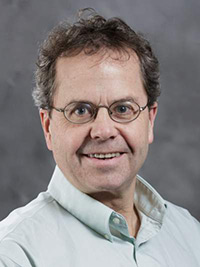
Scott Dunham is a Professor in the Department of Electrical & Computer Engineering at the University of Washington's College of Engineering. He also serves as an adjunct faculty member in Physics and Materials Science & Engineering. His research focuses on the fundamental understanding and modeling of complex materials, nanofabrication processes, and electronic and optoelectronic devices. Dr. Dunham received his B.S. in Electrical Engineering from Cornell University in 1979, followed by M.S. and Ph.D. degrees in Electrical Engineering from Stanford University in 1980 and 1985. He was a faculty member at Boston University from 1985 to 1999 before joining the University of Washington in 1999. His research spans multiple areas including Photonics and Nano Devices and Power and Energy Systems . He leads the Nanotechnology Modeling Laboratory, which focuses on obtaining basic understanding of nanofabrication processes and device operation. His work applies knowledge of materials science and computational modeling to produce better semiconductor devices, particularly for photovoltaic applications. He is associated with the Institute for Nano-engineered Systems, the Clean Energy Institute, and the Molecular Engineering Materials Center at UW. Analysis of Professor Dunham's recent publications (2013-2018) reveals a strong focus on computational modeling of semiconductor materials for photovoltaic applications. His work spans multiple scales from atomistic simulations to device-level modeling, with particular emphasis on chalcopyrite and kesterite solar cell materials, silicon processing for photovoltaics, and strain engineering in semiconductor devices. His research integrates ab initio calculations, kinetic Monte Carlo simulations, and experimental validation to understand fundamental material properties. Professor Dunham teaches EE 539A (Nanotechnology Modeling), which covers computational methods for modeling nanoscale material systems across multiple scales (atomic, mesoscale, continuum). His laboratory conducts experimental work in UW's Washington Nanofabrication Facility and Molecular Analysis Facility, often in collaboration with academic, industry, and government research labs.