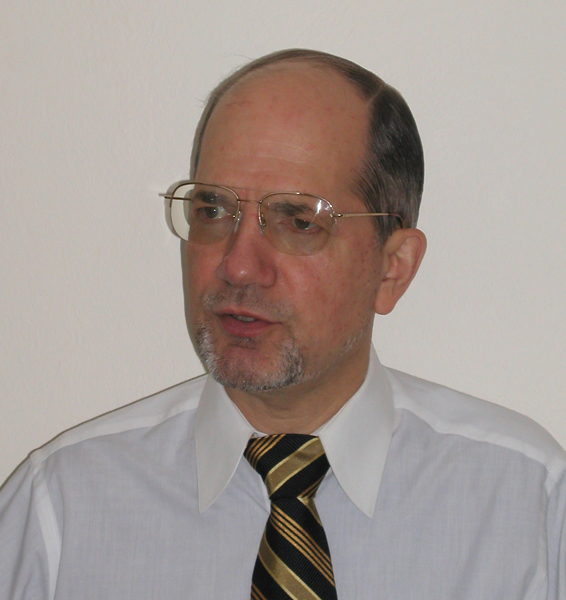
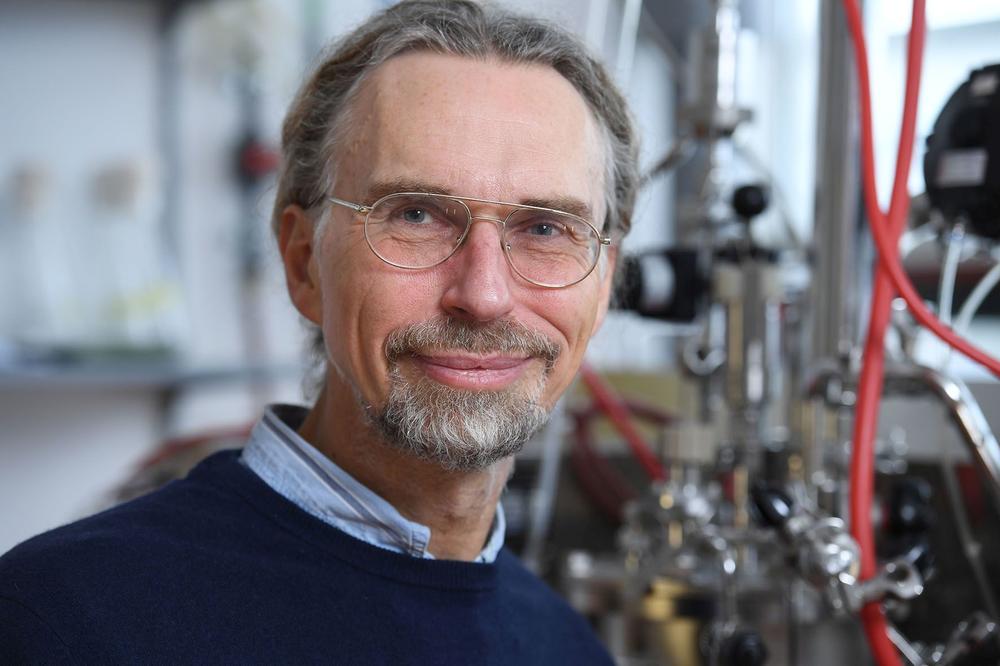
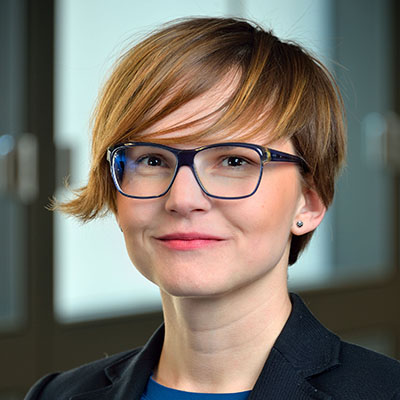
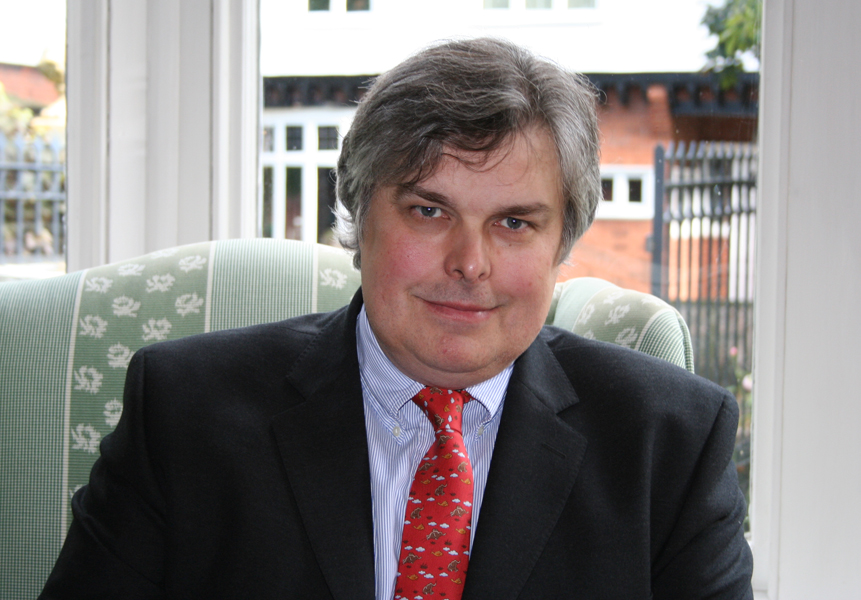
Ivan Bozovic is a Professor at Belgrade University, Serbia, and an Adjunct Professor at Yale University, USA. He has been a Senior Scientist and Group Leader at Brookhaven National Laboratory (BNL) since 2003. His academic career spans multiple institutions, including Varian Research Center, Oxxel GmbH, and Stanford University. PhD in Solid State Physics from Belgrade University (1975) Docent (1978) and Physics Department Head at Belgrade University (1979–1985) Bozovic's research focuses on condensed matter physics, interface superconductivity, and atomic-scale thin film synthesis. He pioneered ALL-MBE techniques and advanced the understanding of high-temperature superconductors and mesoscopic phenomena. His scientific accolades include the Max Planck Medal (2013), Bernd Matthias Prize (2012), and fellowships from the American Physical Society and SPIE. He has published over 240 papers, 17 in Science and Nature , and holds six patents. Refereed for leading journals like Science and Nature Chair of 20 international conferences Over 250 invited/keynote talks globally As MBE Group Leader at BNL, he oversees cutting-edge research in molecular beam epitaxy and superconductor characterization.
Professor Holger Dau, Ph.D. in Physics, leads the Biophysics and Photosynthesis group at Freie Universität Berlin's Department of Physics. His research focuses on biological and artificial solar energy conversion, particularly water oxidation in photosynthesis and electrocatalysis for solar fuels. Current affiliation: Freie Universität Berlin Research areas: Photosynthesis, Solar Energy, Electrocatalysis, Artificial Photosynthesis, Nanomaterials Recent publications highlight his work on: Electrocatalyst design for oxygen evolution Time-resolved spectroscopy in photosynthetic systems Biologically inspired metal complexes for energy conversion Stability of heterostructures in catalytic environments Phosphorus-doped nanostructures for hydrogen production His group employs advanced techniques including X-ray absorption, Raman spectroscopy, and molecular precursor approaches to study catalytic mechanisms and materials optimization.
Dr. Aurelian Catalin GALCA is a Senior Researcher I at the National Institute of Materials Physics (NIMP) in Magurele, Romania, where he works in the Laboratory of Complex Heterostructures and Multifunctional Materials (HeCoMat). He serves as NIMP's responsible for international collaborations with the Agence universitaire de la Francophonie (AUF) since 2016, managing administrative procedures and educational, training, and research activities for foreign PhD students and postdocs. Dr. GALCA's educational background includes: PhD in Physics from the University of Twente, Netherlands (2006) Master's degree in Solid State Physics from the University of Bucharest, Romania (2002) Bachelor's degree in Physics from the University of Bucharest, Romania (2002) Dr. GALCA's research focuses on the non-destructive characterization of nanoscaled materials using advanced techniques including spectroscopic ellipsometry, X-ray diffraction, UV-Vis and infrared spectroscopy, and Raman spectroscopy. His work also encompasses the preparation of dielectric/semiconductor/metallic thin films by physical vapor deposition methods and the development and testing of optoelectronic devices . His expertise spans materials science, nanotechnology, photovoltaics, and magnetooptics, with particular emphasis on thin film characterization and engineering for solar cell applications, memory devices, and other electronic applications. Analysis of Dr. GALCA's recent publications reveals a strong focus on advanced materials for energy applications , particularly photovoltaics and energy storage. His work spans thin film solar cells (CZTS, CBTS), perovskite solar cells, supercapacitors, and magnetocaloric materials. A common thread is the precise engineering of material properties through composition control, phase transitions, and surface morphology optimization. His research increasingly incorporates computational methods to complement experimental findings, demonstrating an interdisciplinary approach to materials science. Dr. GALCA has received notable recognition for his work, including: RADU GRIGOROVICI prize awarded by the Romanian Academy in 2011 for contributions to the optical characterization of oxide systems As a research leader, Dr. GALCA has coordinated three national projects, two of which as Principal Investigator, including the "Science and engineering of kesterites for the next generation of solar cells" project. He has also contributed to economic projects with CyberSwarm Inc. and Honeywell Romania. His expertise is sought after as a scientific reviewer for top journals including Scientific Reports, ACS Applied Materials & Interfaces, and Applied Surface Science, and as an Expert Evaluator for the European Commission (H2020), ANR (France), CNR (Italy), and Romanian funding agencies. Dr. GALCA leads research activities at the Laboratory of Complex Heterostructures and Multifunctional Materials (HeCoMat) at NIMP, where his team focuses on the characterization and development of advanced materials for optoelectronic applications. The laboratory is equipped with state-of-the-art instrumentation for thin film deposition and characterization, supporting research in photovoltaics, memory devices, and other electronic applications. Dr. GALCA's team collaborates extensively with international partners, reflecting his role as NIMP's responsible for AUF collaborations.
Dr. Jae-Chun Jeon is a leading experimental physicist at the Max Planck Institute of Microstructure Physics in Halle, Germany, where he works within the NISE department (Nano-Systems from ions, spins and electrons). He joined the institute in 2018 after completing his postdoctoral fellowship at the University of Alberta, Canada. His research focuses on spintronics, unconventional computing devices, and cryogenic systems, with emphasis on developing novel memory and logic technologies for next-generation computing. Dr. Jeon earned his Ph.D. in condensed matter physics from the University of Alberta, Edmonton, Canada, in 2016. He continued his research as a postdoctoral fellow at the same institution, focusing on strongly correlated magnetic oxide materials for spintronic and neuromorphic applications before joining the Max Planck Institute. Dr. Jeon's research centers on unraveling the physics of complex systems including spintronics, correlated oxides, and atomically engineered materials to discover their advanced functionalities. He specializes in manipulating spin textures and states using spin electrons, with particular focus on current-induced domain wall motion and spin-orbit torque-induced magnetization switching for memory and logic applications. His work explores the potential of racetrack memory for both conventional binary memory and unconventional analogue systems such as probabilistic-bit and neuromorphic devices. His recent publications demonstrate a strong focus on advanced spintronic devices, particularly racetrack memory systems, domain wall logic, and Josephson junctions for quantum applications. The research spans fundamental physics of chiral domain walls, spin-orbit torque effects, and novel materials for spin-based computing. His work frequently appears in high-impact journals including Science, Nature family journals, and Advanced Materials, reflecting the significance of his contributions to the field. Dr. Jeon's research is supported by cutting-edge facilities including atomically thin film deposition systems, state-of-the-art electronics, and advanced device fabrication techniques such as electron beam lithography and ion beam etching/deposition. His work involves close collaboration with the research group led by Prof. Stuart Parkin, a director at the Max Planck Institute of Microstructure Physics.
Jun Yan is an Associate Professor in the Department of Physics at the University of Massachusetts Amherst, College of Natural Sciences. His research focuses on experimental condensed matter physics, particularly exploring quantum materials, 2D materials, and nanoelectronics. He holds a Ph.D. from Columbia University (2009) and has contributed to advancements in valleytronics, excitonics, and topological materials. His work emphasizes phenomena such as valley polarization in heterojunctions, magnetophonon resonance in graphene systems, and pressure-induced phase transitions in novel materials. Recognized for award-winning teaching, Yan’s research also spans experimental techniques like Raman spectroscopy and ultrastrong light-matter coupling. Key themes include quantum transport in low-dimensional systems and the interplay between electronic, magnetic, and optical properties in emerging materials. Research interests extend to exploring excitonic states in twisted bilayer graphene, interfacial effects in heterostructures, and the development of novel detectors for terahertz and optical frequencies. His studies often address fundamental questions in condensed matter physics with implications for next-generation electronics and optoelectronics. Awards highlight both his research and pedagogical contributions to the field.
Chang-beom Eom is the Raymond R. Holton Chair and Theodore H. Geballe Professor in the Department of Materials Science & Engineering at the University of Wisconsin-Madison. His research group specializes in heteroepitaxy of complex oxide thin films, nanostructures, and device applications, focusing on atomic-scale control for electronic, magnetic, and optical innovations. Education: PhD, Stanford University (1991) MS, Korea Advanced Institute of Science and Technology (KAIST, 1983) MS, Hanyang University (1981) Research Interests: Prof. Eom explores nanostructure fabrication, heteroepitaxy of complex oxides (e.g., ferroelectrics, superconductors), and oxide nanoelectronics. His work targets piezoelectric MEMS/NEMS, magnetoelectric devices, and 2D electron gases at oxide interfaces, emphasizing atomic-layer precision for next-generation quantum materials. Publication Trends: Recent articles (2023–2025) highlight advances in oxide heterostructures, spin transport, and quantum phenomena. Key themes include symmetry-controlled magnetism, noncollinear antiferromagnets, oxide interface engineering, and flexoelectric effects, with applications in spintronics, energy-efficient computing, and terahertz technology. Awards: Honorary Doctorate (DTU, 2023) MRS David Turnbull Lectureship (2022) Vannevar Bush Fellowship (2020) Moore Foundation EPiQS Investigator (2019) Packard Fellowship (1995) Research Group: Leads a team developing oxide thin-film synthesis, characterization, and nano-fabrication techniques. Collaborates globally on projects involving superconducting nanowires, multiferroic heterostructures, and terahertz magnonics. Secured grants from NSF, Moore Foundation, and DARPA for quantum material innovation.
Jürgen Eckert is a Professor and Director at the Erich Schmid Institute of Materials Science of the OAW and holds the Chair of Materials Physics at the University of Leoben . He is a Corresponding Member of the Division of Mathematics and Natural Sciences in Austria since 2017. His research spans Materials Science , Condensed Matter Physics , and Metallurgy , focusing on metallic glasses , high-entropy alloys , microstructure engineering , and additive manufacturing . He has pioneered work on crystallization kinetics , phase transformations , and mechanical property optimization . Recent publications (2024-2025) highlight advances in 3D-printed titanium alloys , nitrogen-stabilized nanocrystalline alloys , and multi-stage heterostructures , reflecting his interdisciplinary approach combining experimental physics , computational modeling , and materials engineering . THERMEC 2023 Distinguished Award Gottfried Wilhelm Leibniz-Preis (2009) ERC-Advanced Grant (2013) DGM-Preis der Deutschen Gesellschaft für Materialkunde (2014) Dr. honoris causa, Slovak Technical University (2018) He leads the ERC Project INTELHYB and collaborates with institutions in India , Germany , and Europe , advancing heterogeneous materials design and sustainable metallurgical solutions .
Aleksandra Vojvodic serves as Professor in the Department of Chemical and Biomolecular Engineering at the University of Pennsylvania and Director of the Penn Institute for Computational Science (PICS). Her research program centers on computational materials design for energy applications, utilizing theoretical frameworks to model surface and interface properties of complex materials. Her lab specializes in developing predictive models for chemical transformations and energy conversion processes, with demonstrated success in catalyst discovery. Key research thrusts include computational surface science of 2D materials (particularly MXenes), mineral carbonation for carbon capture, electrocatalysis for hydrogen evolution and water splitting, and stability mechanisms of nanomaterials under operational conditions. Recent work integrates machine learning potentials with molecular dynamics to unravel complex reaction pathways. Analysis of her 2022-2025 publications reveals dominant focus areas: MXene oxidation behavior (23% of recent work), mineral carbonation strategies (17%), and electrocatalyst design for ammonia synthesis and hydrogen production (30%). Her methodology consistently combines first-principles simulations with experimental validation, emphasizing industrially relevant conditions like aqueous environments and high-temperature operations. Vojvodic leads the Vojvodic Lab focused on computational materials discovery and co-founded 'The Highly Operational Team (HOT)' for f-Block materials research. Through PICS leadership, she oversees university-wide computational science initiatives spanning quantum materials, energy systems, and climate modeling.
Professor Martin Schroder is a leading materials chemist currently serving as Vice President and Dean of the Faculty of Science and Engineering at the University of Manchester. He previously held executive and academic roles at the University of Nottingham (1995-2015) and the University of Edinburgh (1982-1995), culminating in his appointment as Professor of Chemistry at Manchester (2015-present). His career spans over four decades with significant contributions to porous metal-organic frameworks (MOFs) for energy and environmental applications. PhD in Chemistry from Imperial College London (1978) BSc in Chemistry from the University of Sheffield (1975) Professor Schroder's research focuses on materials chemistry , particularly metal-organic frameworks (MOFs) for gas separation and capture. His work addresses CO2 reduction , toxic gas removal , and proton conductivity through innovative framework design and functionalization. Recent publications highlight MOF applications for hydrogen storage , SO2 capture , and NO2 conversion . His 15 most recent publications (2016-2020) demonstrate sustained expertise in porous materials engineering , showing consistent focus on gas adsorption mechanisms , supramolecular interactions , and environmental remediation through MOF technology. Key trends include CO2 selectivity , dynamic framework behavior , and electrochemical sensor development . Awarded numerous honors including: Royal Society of Chemistry Nyholm Prize (2020) Tilden Lectureship & Medal (2001/02) Multiple RSC awards (2003, 2008) Honorary Doctorates (2005, 2017) Fellowships (FRSE, FRSC) He has organized major international conferences like the 1st International Conference on Metal-Organic Frameworks (2008) and led the Royal Society Discussion Meeting on 'The New Chemistry of the Elements' (2014). His work bridges fundamental inorganic chemistry with practical solutions for clean air technologies and carbon capture .
Titel Jurca is an Associate Professor in the Department of Chemistry at the University of Central Florida, College of Sciences. His research focuses on synthetic inorganic chemistry for catalytic organic transformations and thin film materials chemistry, with emphasis on developing novel main-group metal catalysts and chemical precursors for atomic layer deposition (ALD). Research areas include: Design of inorganic precursors for ALD growth of metal oxides and transition metal dichalcogenides Development of sustainable nanocatalysts for fine chemical transformations Convergence of molecular synthesis, thin film deposition, and heterogeneous catalysis Application of green chemistry principles in materials synthesis His recent publications demonstrate strong focus on vapor deposition techniques (ALD, CVD), catalytic nanomaterials, surface analysis, and structure-property relationships in inorganic systems. Research frequently employs spectroscopic characterization, computational modeling, and nanofabrication approaches. Dr. Jurca currently advises graduate students in inorganic synthesis and materials characterization techniques, while maintaining active collaborations in energy and nanotechnology research.
Yayoi Takamura is a Professor in the Department of Materials Science and Engineering at the University of California, Davis, where she has been since 2006. She earned her B.S. from Cornell University (1998) and M.S./Ph.D. from Stanford University (2000/2004) in Materials Science and Engineering, followed by postdoctoral research at UC Berkeley. As Department Chair (since 2020), her research focuses on complex oxide thin films, heterostructures, nanostructures, and their interface-driven functional properties, particularly magnetic spin textures. B.S., Materials Science and Engineering, Cornell University (1998) M.S./Ph.D., Materials Science and Engineering, Stanford University (2000/2004) Her work bridges materials synthesis and characterization, emphasizing magnetism and solid-state physics. She has received prestigious awards, including the NSF CAREER Award, DARPA Young Faculty Award, and UC Davis Mid-Career Research Award. NSF CAREER Award DARPA Young Faculty Award UC Davis Mid-Career Research Award IEEE Magnetics Society Distinguished Lecturer (2025–2026) Prof. Takamura actively contributes to professional service, serving as General Chair of the 2022 MMM Conference, Program Co-Chair of the 2017 MMM Conference, and Member-at-Large of the American Physical Society’s GMAG. She is a Senior IEEE Member, former IEEE Magnetics Society Membership Chair, and Associate Chair for Conference Finances. She also serves as an editor for Journal of Alloys and Compounds and on the Editorial Advisory Board of Journal of Applied Physics .
Professor Carlos Ponce De Leon Albarran is a Professor of Electrochemical Engineering at the University of Southampton , affiliated with the Faculty of Engineering and Physical Sciences . He leads the Energy Technology Group and coordinates the MSc program in Sustainable Energy Technologies . His work bridges electrochemical energy conversion and water treatment technology , with a focus on innovative reactor design and sustainable energy systems. Industrial experience in quality control, fuel cell testing, and precious metal recovery Principal investigator for EU-funded projects (H2020-RIA CO2EXIDE, Necobaut EU FP7, EPSRC's ELEVATE) Over 180 peer-reviewed publications with h-index 44 (7445 citations) Active in redox flow battery development and 3D-printing of electrochemical systems His research interests center on electrochemical engineering for energy and environmental applications, including: Electrochemical energy storage systems (aluminum-polymer batteries, solid polymer electrolytes) Carbon dioxide reduction technologies (gas diffusion electrodes, catalyst development) Advanced reactor design (3D-printed titanium electrodes, mass transport characterization) Water treatment innovations through electrochemical decontamination Scientific awards include the 2010 Westinghouse Prize from the Institute of Metal Finishing. He has supervised over 30 MSc and 18 PhD students and served as chairman of the Electrochem 2013 conference with 230 delegates. His work emphasizes industrial collaboration and practical applications of electrochemical research.
Dr. Urmimala Dey is a Postdoctoral Research Associate (PDRA) in the Department of Physics at Durham University, specializing in condensed matter physics and materials science with emphasis on magnetoelectric materials, high-pressure phenomena, and computational materials design. Her research explores structural and electronic properties of materials under extreme conditions, including pressure-induced orbital reordering, magnetoelectric coupling mechanisms in complex oxides, and spin-splitting manipulation in semiconductors. She employs advanced computational techniques and high-pressure diffraction methods to investigate novel physical behaviors in transition metal compounds, perovskites, and layered materials. Dr. Dey's publication record demonstrates consistent contributions to top-tier physics journals, with recent work focusing on pressure-driven phase transitions, room-temperature magnetization control in layered oxides, and Rashba effect engineering. Her interdisciplinary approach bridges experimental and theoretical physics to advance multifunctional material development for next-generation spintronic and electronic devices. No scientific awards were documented in the provided materials. Information regarding student supervision, grant funding, or laboratory affiliations was not specified in the source content.
Dr. Ekaterina Khestanova is a Research Fellow at the Institute of Photonic Sciences (ICFO), specifically in the Quantum Nano-Optoelectronics research group. She holds a PhD in Condensed Matter Physics from the University of Manchester (UK). Her research focuses on quantum materials, particularly 2D materials and van der Waals heterostructures, with an emphasis on optoelectronic properties, superconductivity, and nonlinear optical phenomena. Her work explores topics such as interlayer excitons in transition metal dichalcogenides, quantum geometry in twisted bilayer graphene, and the mechanical and electronic properties of atomically thin materials. She has contributed to advancements in precision transfer techniques for 2D materials and the study of topological polaritons in monolayers. Key contributions include experimental revelations of intrinsic superconductivity at material interfaces, nonlinear polariton effects, and strain-induced phenomena in nanomaterials. Her research bridges fundamental physics with nanotechnology applications, particularly in optoelectronic device development and interface engineering.
Dr. Andreas Wagner is a leading researcher at the Helmholtz-Zentrum Dresden-Rossendorf (HZDR), serving as Head of the Nuclear Physics Division and Head of the Radiation Source ELBE. His work focuses on applied nuclear physics, including nuclear astrophysics, detector development, and radiation technology. He leads the R3B collaboration at GSI/FAIR and chairs the Helmholtz portfolio initiative for Detector Technologies and Systems. His research spans nuclear data applications, materials science using positron annihilation spectroscopy, and medical physics applications in proton therapy verification. Dr. Wagner collaborates internationally, with projects at HZDR, GSI, and TU Dresden. He has contributed to advanced experimental facilities like the ELBE Linac and the Radiation Source ELBE. Teaching activities include courses on nuclear astrophysics, particle accelerators, and detector technologies at TU Dresden. His work bridges fundamental physics with applied technologies, emphasizing interdisciplinary research in energy, materials, and medical physics.