Professor Paul C. Bressloff holds the Chair in Applied Mathematics and Stochastic Processes at Imperial College London's Department of Mathematics within the Faculty of Natural Sciences. His research focuses on stochastic and non-equilibrium processes, particularly in molecular and cell biology, utilizing tools from probability theory, statistical physics, and dynamical systems. He authored a seminal textbook Stochastic Processes in Cell Biology (Springer), with a 2nd edition published in 2022. Previously, he led the graduate program in mathematical biology at the University of Utah from 2001 to 2023. Research interests include stochastic multi-particle systems, active particles, phase separation, and diffusion across semi-permeable interfaces. His work spans applications in neural field theory, cytoneme-mediated morphogenesis, and protein trafficking. He is affiliated with the Biomathematics Group and Mathematical Physics Group at Imperial. Recent articles explore stochastic resetting in search processes, narrow-capture problems, and hybrid models of switching diffusions. His advising includes over 20 graduate students, many now faculty in mathematical biology. His contributions bridge applied mathematics and biological systems, emphasizing interdisciplinary approaches to complex stochastic phenomena.
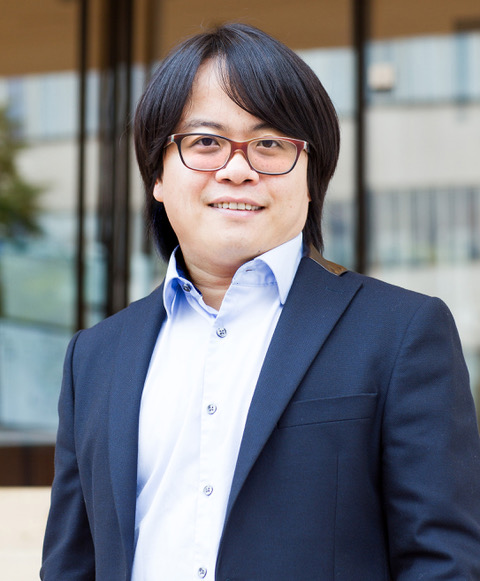
Tianxi Li is an Assistant Professor in the Department of Statistics at the University of Minnesota, Twin Cities, within the College of Science and Engineering. Their research integrates statistical methodology with applications in network science, data privacy, and biomedical data analysis. Their research interests lie at the intersection of statistics and network science, focusing on statistical modeling of complex networks , data privacy , network security , and biomedical applications such as neuroimaging and genomics. They develop adaptive and scalable methods for network estimation, community detection, and differential correlation analysis. The recent publications demonstrate a consistent focus on advancing statistical tools for network-structured data, with increasing applications in neuroscience and cancer genomics. The work spans theoretical development (e.g., network growth models) and practical applications (e.g., glioblastoma gene modules), reflecting a balance between methodology and real-world impact. Tianxi Li leads an active research program funded by the National Science Foundation, indicating recognition and support for their innovative work. Principal Investigator, Statistical tools for network security protection: from data privacy to threat detection , NSF (2024–2025) They advise graduate students in statistics and data science, though specific advisees are not listed. Their collaborative network includes researchers in biostatistics, computer science, and machine learning, as evidenced by co-authorships and interdisciplinary projects. Li's work contributes to the UN Sustainable Development Goals, particularly through advancements in data-driven solutions for secure and ethical data analysis.
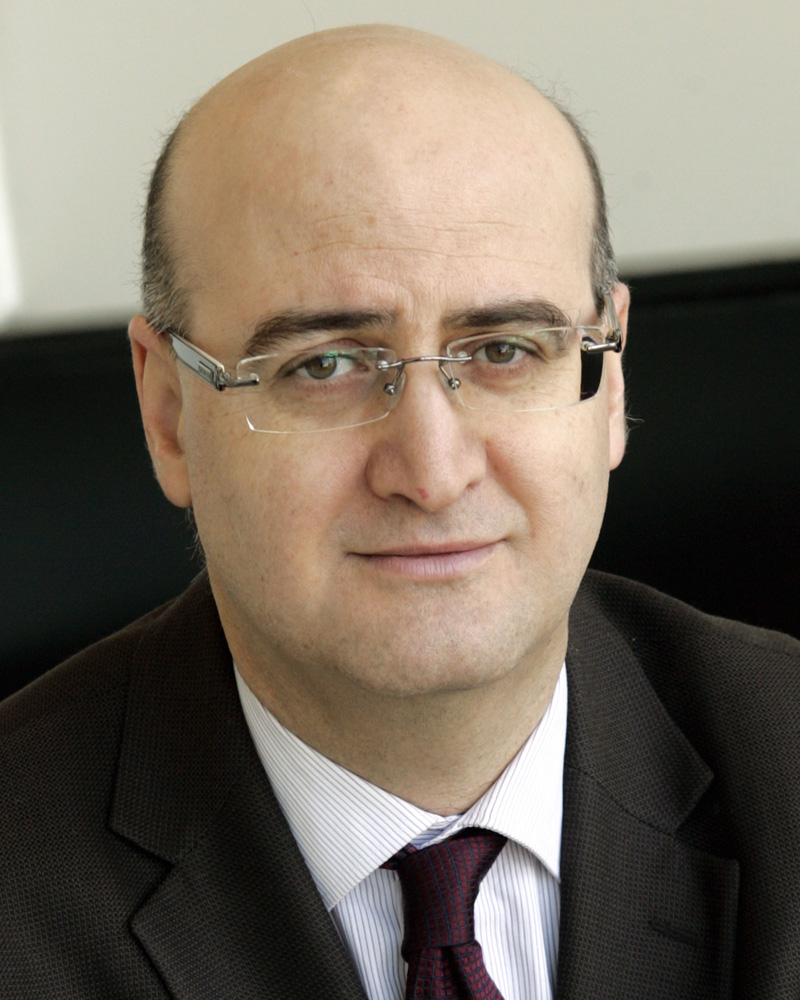
Prof. Fatih Terzi is a faculty member in the Department of Urban and Regional Planning at Istanbul Technical University's Faculty of Architecture. His research focuses on sustainable urban development, resilience, ecology, GIS applications, and smart cities. He has held visiting researcher positions at Clemson University (USA), University College London, and Technical University Berlin. He has led projects supported by EU, TÜBİTAK, and others, addressing ecological planning, risk reduction, and urban regeneration. His work bridges academic research with practical urban planning, including projects with municipalities and the Ministry of Environment. He has received multiple awards for research and design, including the Best Paper Award (2025) and TÜBİTAK recognitions. Education: PhD in Urban and Regional Planning from Istanbul Technical University (2010), MSc in Urban Planning (2004), BSc in Urban and Regional Planning from Yıldız Technical University (2000). Research interests include spatial strategic planning, ecological cities, and climate-sensitive urban design. He uses urban modeling and GIS to address sustainability challenges. His recent projects include Istanbul's flood risk analysis, green space strategies, and sustainable city planning in Kayseri and Malatya. Notable awards include the 2024 TÜBİTAK award for urban resilience projects and the 2023 Istanbul Technical University Academic Performance Award. He has also been recognized for design competitions, including the İzmir Ecological Living Area Project (2021) and the 2017 Balkan Architectural Biennale Urbanism Grand Prix. Prof. Terzi holds administrative roles at Istanbul Technical University, including Merkez Danışma Kurulu Üyeliği (2023–present). He oversees academic projects on urban resilience, smart cities, and ecological planning, contributing to both national and international initiatives.
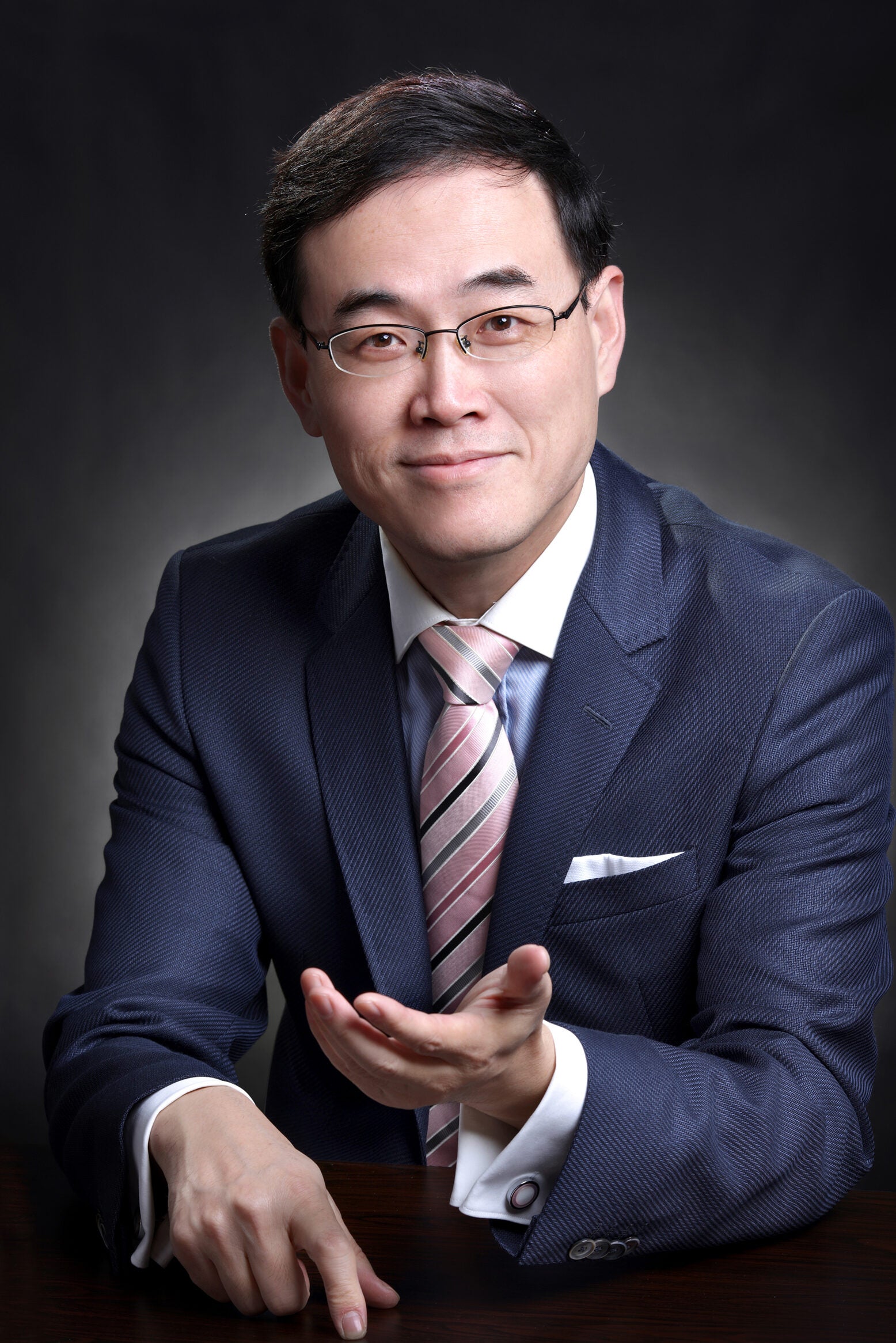
Professor Moncef Gabbouj is a distinguished academic and researcher currently serving as Professor of Signal Processing at the Department of Computing Sciences, Faculty of Information Technology and Communication Sciences, Tampere University, Finland. Previously, he held the same position at Tampere University of Technology before the merger in 2019. He has also held visiting professorships at prestigious institutions including Hong Kong University of Technology and Science, University of Southern California, and Purdue University. Ph.D. and MSc. in Electrical Engineering from Purdue University, USA (1989 and 1986) B.Sc. in Electrical Engineering from Oklahoma State University, USA (1985) Prof. Gabbouj's research spans multiple domains within signal and image processing, with a strong focus on machine learning applications. His primary research interests include artificial intelligence, machine learning, Big Data analytics, multimedia content-based analysis, indexing and retrieval, nonlinear signal and image processing, voice conversion, and video processing and coding. His work bridges theoretical advancements with practical applications across various industries, particularly in multimedia communications and biomedical applications. His extensive publication record demonstrates a clear evolution from traditional signal processing techniques toward more sophisticated machine learning and deep learning approaches. Recent work shows increasing focus on convolutional neural networks for various applications including ECG classification, video processing, financial time-series analysis, and image recognition tasks, reflecting the broader trend in the field toward deep learning methodologies while maintaining strong foundations in signal processing theory. IEEE Fellow (2011) Member, Finnish Academy of Science and Letters (2014) Knight, First Class, of the Order of the White Rose of Finland (2006) Nokia Foundation Recognition Award (2005) Nokia Foundation Visiting Professor Award (2012) Finnish Cultural Foundation for Art and Science Award (2017) TUT Foundation Grand Award (2015) Prof. Gabbouj has supervised 64 doctoral and 72 Master's theses, demonstrating his significant contribution to academic mentoring. His research has been supported by substantial funding, including research grants totaling 8.5 million Euro (2001-2015). He has served as Academy of Finland Professor during 2011-2015 and has been involved in numerous EU research projects including Horizon, ESPRIT, HCM, IST, COST, Tempus and Erasmus programs. As Editor, Guest Editor or member of the Editorial Board of 6 international scientific journals, he has significantly influenced the academic discourse in his field. He leads the Signal Analysis and Machine Intelligence (SAMI) research group at Tampere University and serves as the Finland Site Director of the NSF IUCRC funded Center for Visual and Decision Informatics. His research unit focuses on applying advanced machine learning techniques to solve complex problems in signal processing, computer vision, and multimedia analytics, with applications ranging from healthcare to multimedia communications and financial analysis.
Hui Pan is a distinguished academic holding dual positions as Nokia Chair in Data Science and Professor of Computer Science at the University of Helsinki, and Chair Professor of Computational Media and Arts at the Hong Kong University of Science and Technology (HKUST). His research spans networking, mobile computing, augmented reality, and computational social science. He earned his Ph.D. in Computer Science from the University of Cambridge in 2007. His work bridges social networks with mobile systems, pioneering fields like mobile social networks and opportunistic forwarding algorithms. Research interests include data science, complex networks, and innovative applications of augmented reality. His recent publications focus on low-latency AR frameworks, blockchain for computation offloading, and mobile web visualization. He has received prestigious awards, including IEEE Fellow (2018), ACM Distinguished Scientist (2016), and the Nokia Chair Endowment (2017). He has supervised over 15 PhD and 12 MPhil graduates, with 13 current Ph.D. students and 2 MPhil students. His editorial roles include Associate Editorships at IEEE Transactions journals and guest editorships at top venues like IEEE JSAC and ACM Transactions. He has organized conferences such as WWW Track Chair and ExtremeCom General Chair.
Chris Marone is a Full Professor (Professore Ordinario) at La Sapienza Università di Roma since 2020, with prior roles as Professor of Geophysics at The Pennsylvania State University (2003–2020) and Associate/Assistant Professor at MIT (1997–2000, 1992–1997). His research spans earthquake physics, geomechanics, and rock deformation. Ph.D. in Geophysics from Columbia University (1988) 40+ years of academic experience across multiple institutions His work focuses on frictional mechanics, slow earthquakes, and fault slip behaviors, integrating laboratory experiments and field observations. Recent themes include rate-state friction laws, rock-fluid interactions, and granular mechanics. Key trends in his publications reveal interdisciplinary approaches combining deep learning (2022), high-frequency seismic signatures (2022), and poromechanics (2022) with traditional geophysical methods. His research has dominated fault healing and stress dynamics for decades. ERC Advanced Grant: TECTONIC Louis Néel Medal (European Geosciences Union) Fellow of the American Geophysical Union Paul F. Robertson Award for Breakthrough of the Year Kerr-McGee Career Development Professorship
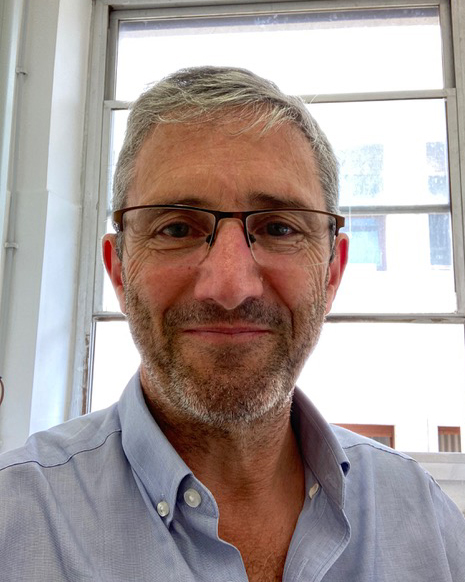
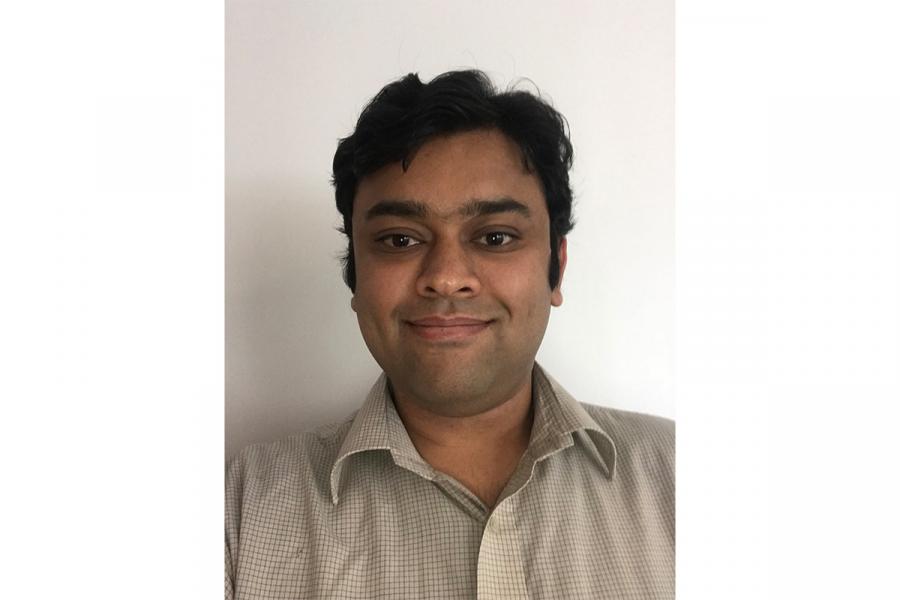
Dr. Mahesh Tripunitara is a Professor in the Department of Electrical and Computer Engineering at the University of Waterloo, serving as Associate Chair for Undergraduate Studies. He holds a PhD (2005) and Master's (1995) in Computer Science from Purdue University, along with a BSc (1993) in Computer Science from Dalhousie University. His research focuses on information security, authorization mechanisms, cryptographic key management, and hardware security, with industry experience at Motorola's R&D labs and Silicon Valley. His work spans theoretical advancements like access control policy analysis and practical applications such as secure payments systems and IoT device reliability. Notable awards include the Best Student Paper at Usenix Security 2013 and Best Paper at ACM SACMAT 2013. He actively serves on program committees for major security conferences including CCS, CODASPY, and SACMAT. Recent publications highlight innovations in cellular security (SUCI-Catchers defense), role-mining optimization, and blockchain smart contract auditing. Teaching includes advanced algorithm design courses (ECE 406/606) and digital computation (BME 121). His research emphasizes balancing security rigor with usability in authorization systems and hardware protection mechanisms.
Bryan Tripp is an Associate Professor at the University of Waterloo, specializing in computational neuroscience, deep learning, robotics, and medical AI. He leads the BRAIN Lab, which focuses on developing neural system models that interact with the physical world through robots. His research integrates neurobiological models with advanced machine learning techniques to study visuomotor processes and robotic applications. Tripp teaches courses such as Computational Neuroscience (SYDE 552), Deep Learning (SYDE 577), and Biomedical Engineering Design Workshops (BME 461/462). His lab has achieved milestones including the OREO robotic head, the first spiking neural network model for complex action planning, and comprehensive datasets for robotic grasping. His recent work emphasizes Medical AI applications, with graduate positions available. The BRAIN Lab is affiliated with the Centre for Theoretical Neuroscience and Waterloo.AI, contributing to interdisciplinary AI research initiatives.
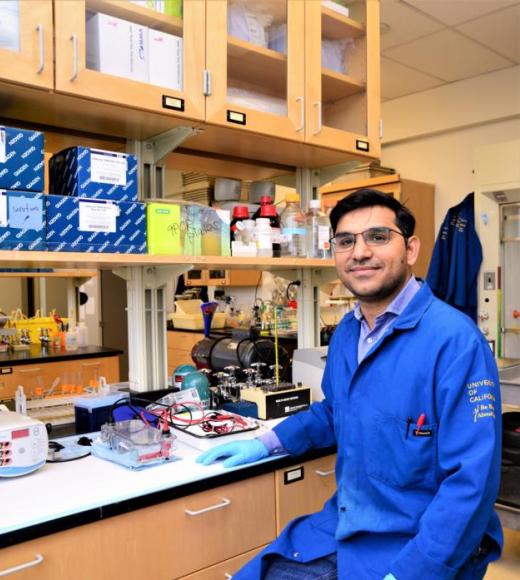
Shahid Siddique is an Associate Professor in the Department of Entomology and Nematology at the University of California, Davis. His research focuses on understanding molecular and applied aspects of plant-parasitic nematode interactions with host plants. He aims to develop sustainable strategies to mitigate nematode-induced crop losses through genetic, biochemical, and biotechnological approaches. His lab is particularly interested in host resistance mechanisms, nematode effector proteins, and biocontrol solutions. Education: MSc, Bahauddin Zakariya University, Multan, Pakistan PhD, University of Natural Resources and Life Sciences, Vienna, Austria Habilitation, University of Bonn, Germany Research Interests: Siddique’s work bridges basic and applied research, including cell surface signaling in plant-parasitic nematode interactions, functional characterization of secretory proteins, molecular diagnostics for nematodes, and biocontrol strategies. Current projects explore recombination hotspots in nematode genomes, CRISPR-based resistance engineering, and redox signaling mechanisms. Teaching: General Plant Nematology (NEM100) in Spring 2020 Labs/Teams: The Siddique Lab focuses on translating molecular discoveries into practical pest management solutions. Collaborations involve genomic analysis, proteomics, and field trials to address global agricultural challenges.
Shen Wei is the KoGuan Distinguished Professor of Law at the Shanghai Jiao Tong University Law School, with a concurrent role as Visiting Professor (2025). His academic career spans legal practice and academia, focusing on international investment law, corporate governance, financial regulation, and international commercial arbitration. Concurrently, his research extends into computational and mathematical domains, including machine learning, deep neural networks, and approximation theory. He teaches international investment law, international financial regulation, company law, and international economic law. His interdisciplinary work bridges legal scholarship with advanced mathematical modeling and algorithmic analysis. Recent research emphasizes neural network architecture, optimization techniques, and approximation theory applied to complex systems. Notable contributions include studies on deep network expressivity, gradient methods, and wavelet-based image restoration. Awards and grants are not explicitly mentioned, but his work reflects significant contributions to both legal and computational fields.
Dr. Luke Fleming is an Associate Professor in the Department of Anthropology at the University of Montreal's Faculty of Arts and Sciences. His research focuses on comparative linguistic anthropology, particularly the typology of honorific systems, kinship-related linguistic avoidance practices, and sociolinguistic dynamics in indigenous and small-scale societies. He has authored over 20 peer-reviewed publications and led numerous research projects funded by the Social Sciences and Humanities Research Council of Canada (SSHRC) and international institutions. Teaching responsibilities include courses on sociolinguistics, linguistic anthropology, and language and culture. He supervises graduate students engaged in interdisciplinary research spanning from Sri Lanka to the Amazon basin. Current projects investigate honorific pronoun systems across Theravada Buddhist communities and Tamil language usage in South Asia. Lead researcher for SSHRC-funded projects studying honorific systems and small-scale sociolinguistics Published in Journal of Linguistic Anthropology , Language in Society , and Anthropological Linguistics Advisor to 9 graduate students since 2018 Research networks include collaborative projects with Patagonian language speakers and ongoing comparative studies linking Southeast Asian honorifics to African avoidance practices. His forthcoming book On Speaking Terms examines kinship-related linguistic avoidance worldwide. Active in program development for interdisciplinary anthropology degrees, contributing to 15 academic programs at undergraduate and graduate levels.
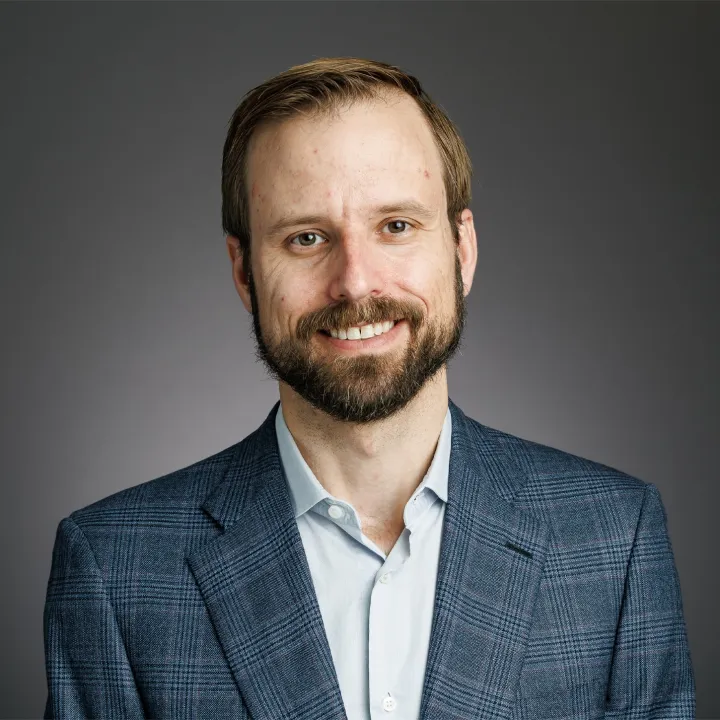
Drew R. Gentner is an Associate Professor of Chemical & Environmental Engineering at Yale University, with an additional appointment in the School of the Environment. His research focuses on air quality, atmospheric chemistry, and their intersections with climate, energy, and health. He holds a B.S. from Northwestern University and a Ph.D. from UC Berkeley. Affiliations: Yale School of Engineering & Applied Science, Yale School of the Environment Research Interests: Complex organic mixtures, urban air quality, non-traditional emissions (e.g., volatile chemical products), indoor air pollution, climate impacts of energy systems. Dr. Gentner leads the Gentner Research Group, which employs advanced analytical techniques and sensor networks to study atmospheric processes. Recent work highlights the role of asphalt and commercial cooking emissions in urban pollution. His team collaborates on large-scale field campaigns like AEROMMA and ASCENT. Key findings include identifying gaps in emissions reporting and demonstrating the health risks of aged wildfire smoke. His group develops low-cost sensors and calibration methods for high-spatiotemporal air quality monitoring. Grants & Funding: NSF, NOAA, EPA, and private foundations support his work on energy efficiency, sensor networks, and pollution mitigation. Labs/Teams: SEARCH Center at Yale, Atmospheric Science and Chemistry mEasurement NeTwork (ASCENT), and collaborations with Environment and Climate Change Canada.
Hamid Mansoor is an Assistant Professor in the Department of Computer Science at the University of Manitoba. He holds a PhD in Computer Science from Worcester Polytechnic Institute under Prof. Emmanuel Agu, and was part of the DARPA-funded WASH project. His research focuses on data visualization, digital health, and smartphone-based behavioral analysis. He previously served as a Postdoctoral Fellow at the VIXI Lab, University of Victoria, Canada, under Prof. Miguel Nacenta. Education: PhD in Computer Science, Worcester Polytechnic Institute Research Interests: Interactive data visualization frameworks for health monitoring Mobile and ubiquitous computing for behavioral analysis Smartphone-sensed human behavior and health informatics Visual representation of text-based and sensor data Publications highlight trends in visual analytics for healthcare, including tools like ARGUS and INPHOVIS for detecting bio-behavioral disruptions and smartphone-based phenotyping. His work integrates machine learning with visualization to address challenges in health data interpretation. Awards: Best short paper honorable mention (EuroVis 2020) His contributions span academic collaborations in health informatics and mobile computing, with a focus on bridging theory and practical applications in healthcare technology.
Prof. Heinz Koeppl is a Professor in the Department of Electrical Engineering and Information Technology at TU Darmstadt. His research focuses on self-organizing systems, systems biology, and control theory, with applications in synthetic biology, robotics, and stochastic processes. He explores interdisciplinary topics such as genetic circuit design, UAV swarm dynamics, and machine learning-driven modeling of biochemical systems. Key research areas include the development of deep learning frameworks for kinetic modeling, Bayesian optimization for riboswitch design, and mean field control theory for sparse networks. His work bridges theoretical foundations with practical engineering solutions, addressing challenges in molecular communication, gene regulation, and robotic swarm coordination. Publications from 2023–2025 highlight advancements in bio-inspired algorithms, swarm intelligence, and computational biology. Notable contributions include studies on RNA-based circuits, active matter dynamics, and optimization strategies for large-scale systems. His research emphasizes interdisciplinary collaboration, leveraging tools from electrical engineering, mathematics, and life sciences. No scientific awards are explicitly listed in the provided text. Advising and grants details are not available. Prof. Koeppl’s lab focuses on integrating systems biology approaches with engineering principles to solve complex problems in healthcare, environmental sustainability, and technological innovation.
Dr. Eleanor Power is an Associate Professor in the Department of Methodology at the London School of Economics and Political Science (LSE). Her research focuses on the interplay between belief, practice, identity, and social relationships, with a particular emphasis on how reputational dynamics shape social inequality and cooperation. She combines ethnographic methods with social network analysis to study these phenomena in South India and cross-culturally. Education: Eleanor holds a PhD in Anthropology from Stanford University (2015). Prior to joining LSE in 2017, she was an Omidyar Postdoctoral Fellow at the Santa Fe Institute. She is fluent in English and Tamil. Research Interests: Eleanor examines signaling theory, religious practice, and the micro-dynamics of social inequality, including the 'reputational poverty trap.' Her current projects include co-directing the ENDOW project on social and economic inequality and leading the Rep2SI project on reputational dynamics. Her work bridges anthropology, sociology, and computational social science. Publications: Her recent work explores latent network models, cooperative behavior in South Indian communities, and the role of reputation in human social networks. She also collaborates on interdisciplinary projects, such as analyzing reproductive inequality across species and the impact of art workshops on prisoners' well-being. Awards: While no specific awards are listed, her research has been highlighted in LSE's 30th Anniversary celebrations for its interdisciplinary innovation and collaborative nature. Grants and Labs: Eleanor leads the Rep2SI project and co-directs the ENDOW project, indicating active grant-funded research. She is affiliated with LSE's Department of Methodology and has collaborated with institutions like the Santa Fe Institute.